Thursday, July 9, 2026
Home Blog Page 9

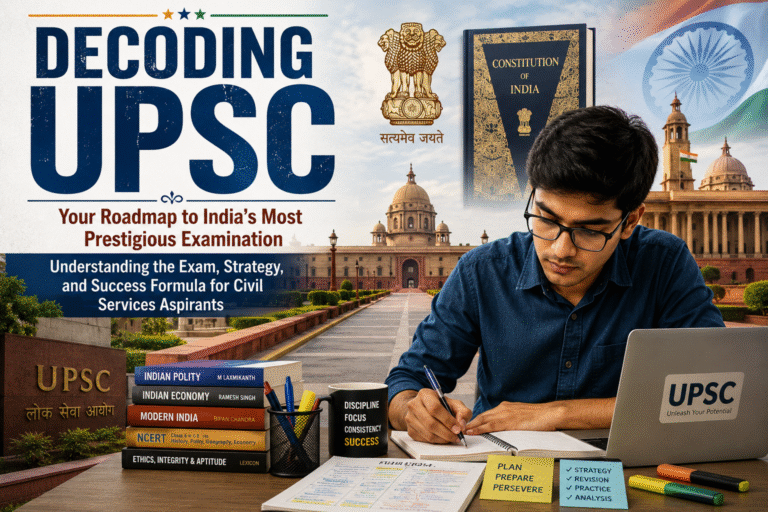
Decoding UPSC: Understanding India’s Toughest Competitive Examination

India’s Digital Public Infrastructure Model Gains Global Recognition


Daily Current Affairs Analysis – 15 June 2026

India’s Digital Public Infrastructure Model Gains Global Recognition

Why in News?

India’s Digital Public Infrastructure (DPI) model, comprising platforms such as Aadhaar, UPI, DigiLocker, and CoWIN, continues to receive international attention as several countries explore adopting similar digital governance.

Digital Public Infrastructure refers to foundational digital systems that enable citizens, businesses, and governments to interact efficiently through secure and interoperable  platforms.

Key Components of India’s DPI

  • Aadhaar for digital identity
  • Unified Payments Interface (UPI) for digital payments
  • DigiLocker for document storage
  • CoWIN for vaccination management
  • FASTag for toll collection

Significance

  • Promotes financial inclusion
  • Enhances transparency in governance
  • Reduces leakages in welfare delivery
  • Improves ease of doing business
  • Strengthens digital economy

Challenges

  • Data privacy concerns
  • Digital literacy gaps
  • Cybersecurity threats
  • Internet accessibility in remote areas

UPSC Relevance

GS Paper II: Governance, e-Governance, Welfare Schemes

Prelims Fact

UPI transactions have become one of the largest real-time digital payment systems globally.

Mains Question

“Digital Public Infrastructure has transformed governance and service delivery in India.” Discuss.

NDA Govt Focused On Improving Ordinary Citizens’ Quality Of Life In 12 Yrs: PM Modi

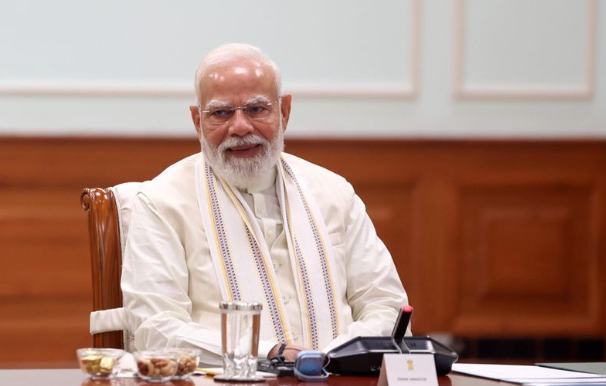
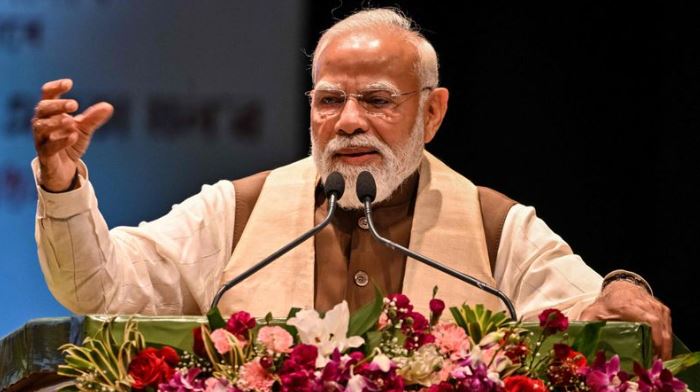
Prime Minister Narendra Modi on Monday said the NDA government has increasingly focused on improving ordinary citizens’ quality of life over 12 years and worked on easier access to opportunities, better infrastructure, improved public services and quality education, among others.

Terming his dispensation “a government for the middle class”, Modi further said it a privilege to be working towards fulfilling the aspirations of the middle class as they have contributed to nation-building in countless ways.

“Over the last decade, governance has increasingly focused on improving the quality of life of ordinary citizens. Our efforts are about easier access to opportunities, better infrastructure, improved public services, affordable healthcare, quality education, cleaner cities and reduced burdens in everyday life,” Modi said in a post on X.

The ‘MyGov India’, a flagship citizen engagement platform of the central government, stated that under Modi’s leadership, India’s middle class has seen a strong rise in living standards over the past 12 years, supported by better infrastructure, improved connectivity, tax relief measures, and expanded public services.

From smoother transport to stronger digital access, everyday life has become more efficient and opportunity-rich for millions of families across the nation, it said.

According to the platform, connectivity has reached unprecedented levels with internet penetration expanding across rural and urban India.

With over 103 crore connections and drastically reduced data costs, citizens now enjoy seamless access to education, employment opportunities, digital payments and entertainment at minimal cost, it said.

The MyGov India said rail travel has become faster and more comfortable with the expansion of Vande Bharat services and with 164 operational trains and over 9 crore passengers already served, travel time has reduced significantly across key routes.

New services like sleeper variants are further improving long-distance travel convenience for millions of Indians, it said.

The platform further said urban mobility has improved with rapid metro expansion across major Indian cities, and the growing network is reducing traffic congestion, improving travel reliability and enabling faster movement for millions of working professionals and students every day.

“India’s road infrastructure has become more efficient with improved highways and streamlined toll systems, significantly reducing travel delays. This has boosted logistics performance and made intercity travel smoother and more predictable for commuters and businesses alike,” it said. (Agencies)

Supreme Court Stays High Court Proceedings on Challenges to Transgender Rights Amendment Act, 2026

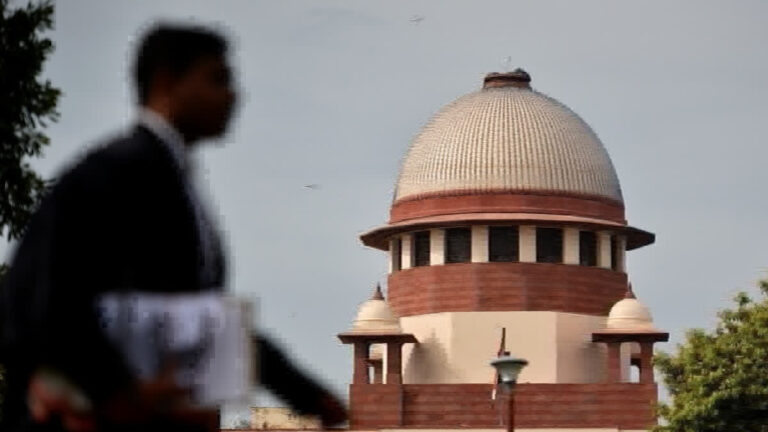
The Supreme Court on Monday stayed further proceedings before various High Courts on petitions challenging the constitutional validity of the Transgender Persons (Protection of Rights) Amendment Act, 2026. The order was passed by a bench comprising Chief Justice Surya Kant and Justice V. Mohana while hearing the Centre’s plea seeking transfer of all pending petitions to the apex court.

The Centre, represented by Solicitor General Tushar Mehta, argued that since multiple High Courts were examining the validity of the same Central legislation, there was a possibility of conflicting judgments. Accepting the submission, the Supreme Court issued notice on the transfer petitions and directed that all proceedings before the High Courts remain stayed until further orders.

The Amendment Act has come under criticism from human rights groups and members of the LGBTQ+ community, who contend that it dilutes the right to self-identification of gender recognized by the Supreme Court in its landmark 2014 NALSA judgment. Petitioners argue that the amended law requires medical or administrative interventions for legal gender recognition, violating constitutional rights related to dignity, privacy, equality, and bodily autonomy.

The legislation was passed by Parliament on March 25 and received Presidential assent on March 30. While the Act introduces graded punishments for offences against transgender persons, critics maintain that certain provisions undermine protections guaranteed to the transgender community.

The Supreme Court is expected to hear the matter in detail in the coming weeks, with the outcome likely to have significant implications for transgender rights and gender recognition laws across the country.

BJP Bigwig Jumps Ship to Annamalai’s ‘We the Leader’ Initiative, Sparking Political Tremors in Tamil Nadu

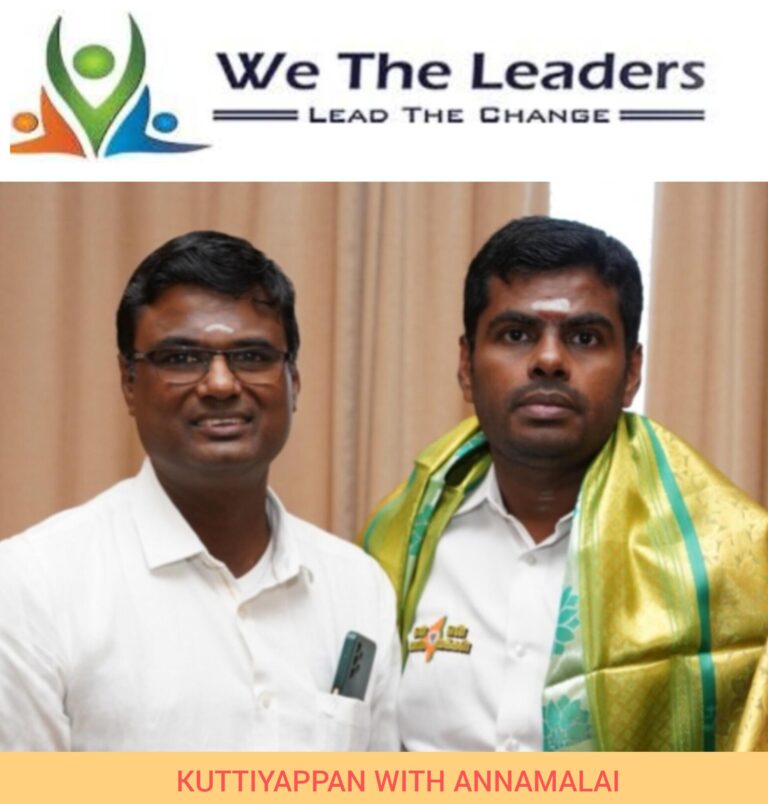
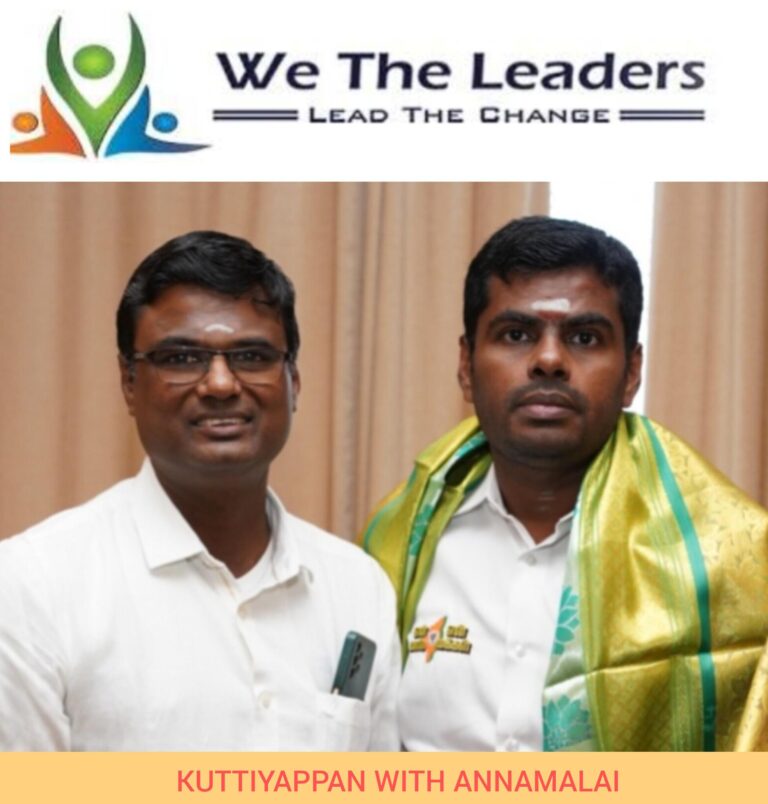
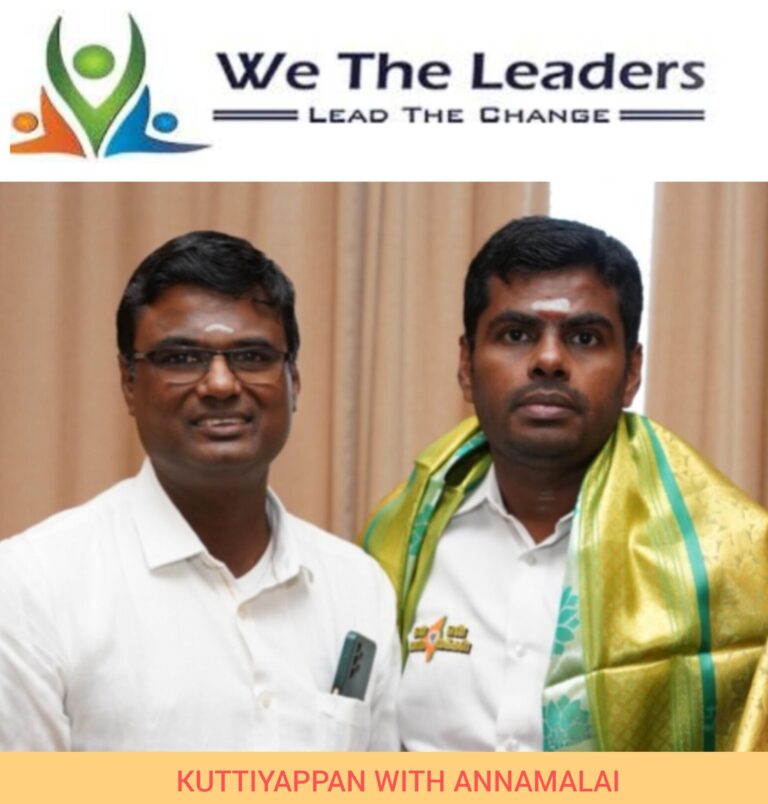
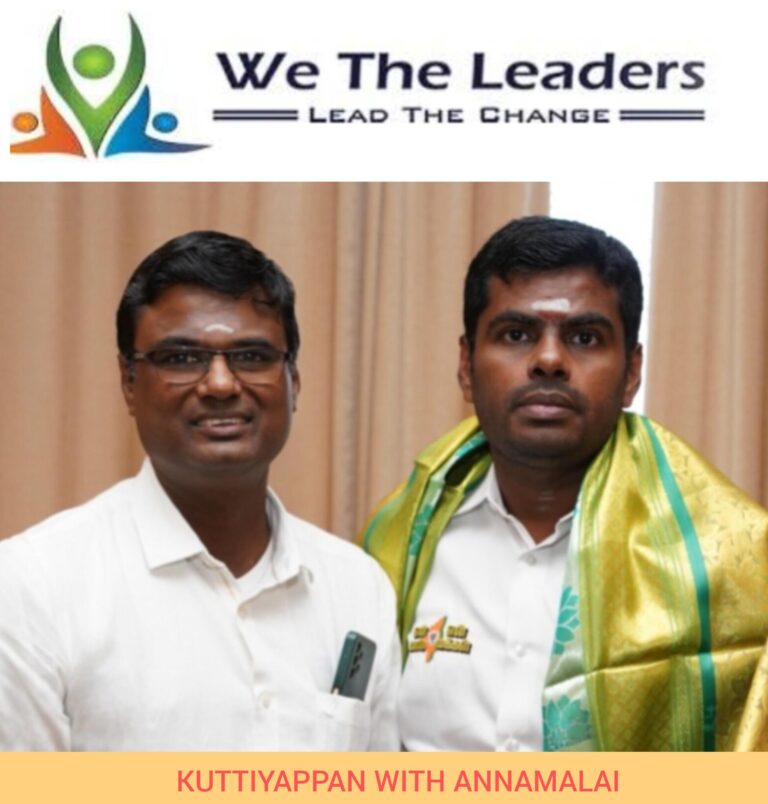
In a development that has sent shockwaves through the political corridors of Tamil Nadu, Kuttiyappan, a heavyweight of the state BJP’s OBC wing executive committee, has dramatically aligned himself with former BJP state chief K. Annamalai’s burgeoning civil society movement, ‘We the Leader’. Leading a substantial cohort of loyalists into the fold in Tiruppur, Kuttiyappan’s defection is less of a routine political migration and more of an ideological declaration of war against the status quo. In a blistering post-joining manifesto, the veteran organizer launched a scathing critique against the state’s deeply entrenched political culture, declaring that the era of cinematic charisma and theatrical platform oratory must come to an end. For decades, Tamil Nadu’s political narrative has been heavily scripted by silver-screen icons, a phenomenon Kuttiyappan claims ‘We the Leader’ is designed to smash with sledgehammer force. Asserting that the populace no longer requires cinematic illusions but grounded leadership capable of addressing grassroots grievances, he emphasized that this new platform rejects flashy showbiz public relations in favor of raw grit and meritocracy. Central to this political pivot is the rising appeal of data-driven, intellectual politics among an increasingly aware and tech-savvy youth demographic, a domain Annamalai has systematically cultivated with his analytical, data-heavy rhetoric. By bypassing the rigid, top-down hierarchies characteristic of traditional party structures, the movement promises absolute operational freedom to advocate for the educational, economic, and existential advancement of backward classes and marginalized communities. Ultimately, this high-profile integration underscores a significant paradigm shift, signaling that for a growing segment of the electorate, policy substance and institutional reform are beginning to eclipse traditional party loyalty and theatrical star power.

BJP Bigwig Jumps Ship to Annamalai’s ‘We the Leader’ Initiative, Sparking Political Tremors in Tamil Nadu

In a development that has sent shockwaves through the political corridors of Tamil Nadu, Kuttiyappan, a heavyweight of the state BJP’s OBC wing executive committee, has dramatically aligned himself with former BJP state chief K. Annamalai’s burgeoning civil society movement, ‘We the Leader’. Leading a substantial cohort of loyalists into the fold in Tiruppur, Kuttiyappan’s defection is less of a routine political migration and more of an ideological declaration of war against the status quo. In a blistering post-joining manifesto, the veteran organizer launched a scathing critique against the state’s deeply entrenched political culture, declaring that the era of cinematic charisma and theatrical platform oratory must come to an end. For decades, Tamil Nadu’s political narrative has been heavily scripted by silver-screen icons, a phenomenon Kuttiyappan claims ‘We the Leader’ is designed to smash with sledgehammer force. Asserting that the populace no longer requires cinematic illusions but grounded leadership capable of addressing grassroots grievances, he emphasized that this new platform rejects flashy showbiz public relations in favor of raw grit and meritocracy. Central to this political pivot is the rising appeal of data-driven, intellectual politics among an increasingly aware and tech-savvy youth demographic, a domain Annamalai has systematically cultivated with his analytical, data-heavy rhetoric. By bypassing the rigid, top-down hierarchies characteristic of traditional party structures, the movement promises absolute operational freedom to advocate for the educational, economic, and existential advancement of backward classes and marginalized communities. Ultimately, this high-profile integration underscores a significant paradigm shift, signaling that for a growing segment of the electorate, policy substance and institutional reform are beginning to eclipse traditional party loyalty and theatrical star power.

BJP Bigwig Jumps Ship to Annamalai’s ‘We the Leader’ Initiative, Sparking Political Tremors in Tamil Nadu

In a development that has sent shockwaves through the political corridors of Tamil Nadu, Kuttiyappan, a heavyweight of the state BJP’s OBC wing executive committee, has dramatically aligned himself with former BJP state chief K. Annamalai’s burgeoning civil society movement, ‘We the Leader’. Leading a substantial cohort of loyalists into the fold in Tiruppur, Kuttiyappan’s defection is less of a routine political migration and more of an ideological declaration of war against the status quo. In a blistering post-joining manifesto, the veteran organizer launched a scathing critique against the state’s deeply entrenched political culture, declaring that the era of cinematic charisma and theatrical platform oratory must come to an end. For decades, Tamil Nadu’s political narrative has been heavily scripted by silver-screen icons, a phenomenon Kuttiyappan claims ‘We the Leader’ is designed to smash with sledgehammer force. Asserting that the populace no longer requires cinematic illusions but grounded leadership capable of addressing grassroots grievances, he emphasized that this new platform rejects flashy showbiz public relations in favor of raw grit and meritocracy. Central to this political pivot is the rising appeal of data-driven, intellectual politics among an increasingly aware and tech-savvy youth demographic, a domain Annamalai has systematically cultivated with his analytical, data-heavy rhetoric. By bypassing the rigid, top-down hierarchies characteristic of traditional party structures, the movement promises absolute operational freedom to advocate for the educational, economic, and existential advancement of backward classes and marginalized communities. Ultimately, this high-profile integration underscores a significant paradigm shift, signaling that for a growing segment of the electorate, policy substance and institutional reform are beginning to eclipse traditional party loyalty and theatrical star power.

BJP Bigwig Jumps Ship to Annamalai’s ‘We the Leader’ Initiative, Sparking Political Tremors in Tamil Nadu

In a development that has sent shockwaves through the political corridors of Tamil Nadu, Kuttiyappan, a heavyweight of the state BJP’s OBC wing executive committee, has dramatically aligned himself with former BJP state chief K. Annamalai’s burgeoning civil society movement, ‘We the Leader’. Leading a substantial cohort of loyalists into the fold in Tiruppur, Kuttiyappan’s defection is less of a routine political migration and more of an ideological declaration of war against the status quo. In a blistering post-joining manifesto, the veteran organizer launched a scathing critique against the state’s deeply entrenched political culture, declaring that the era of cinematic charisma and theatrical platform oratory must come to an end. For decades, Tamil Nadu’s political narrative has been heavily scripted by silver-screen icons, a phenomenon Kuttiyappan claims ‘We the Leader’ is designed to smash with sledgehammer force. Asserting that the populace no longer requires cinematic illusions but grounded leadership capable of addressing grassroots grievances, he emphasized that this new platform rejects flashy showbiz public relations in favor of raw grit and meritocracy. Central to this political pivot is the rising appeal of data-driven, intellectual politics among an increasingly aware and tech-savvy youth demographic, a domain Annamalai has systematically cultivated with his analytical, data-heavy rhetoric. By bypassing the rigid, top-down hierarchies characteristic of traditional party structures, the movement promises absolute operational freedom to advocate for the educational, economic, and existential advancement of backward classes and marginalized communities. Ultimately, this high-profile integration underscores a significant paradigm shift, signaling that for a growing segment of the electorate, policy substance and institutional reform are beginning to eclipse traditional party loyalty and theatrical star power.

NDA Govt Created Environment For Women To Realise Full Potential: PM Modi

Prime Minister Narendra Modi on Friday said the NDA government’s efforts are rooted in dignity, opportunity and empowerment, and these have helped create an environment where women can realise their full potential and contribute even more strongly to nation-building.

Modi said that over the last 12 years, the NDA government has worked to further women-led development, and this is visible across sectors.

He said from financial inclusion and entrepreneurship to education, healthcare, sanitation, housing, sports, science and governance, women are playing a prominent role across diverse sectors.

“The efforts of the NDA government are rooted in dignity, opportunity and empowerment. They have helped create an environment where women can realise their full potential and contribute even more strongly to nation-building,” he wrote on social media platform X.

The Prime Minister said he was particularly happy to see India’s “nari shakti” (women) make a mark in sectors like science, space and innovation.

The growing participation of women in emerging fields such as drone technology is opening new avenues of opportunity and transforming the development landscape across the nation, he said.

“Our government is actively supporting Self-Help Groups, which are going a long way in making women financially independent,” he said.

The Modi government has completed 12 years in power.

Modi took oath as the Prime Minister of India for the first time on May 26, 2014, becoming the first-ever prime minister to be born after India attained Independence.

His second term began on May 30, 2019, while he was sworn in as prime minister for the third consecutive time on June 9, 2024, following another decisive victory in the 2024 Parliamentary elections.

On Wednesday, Modi also crossed the record of first prime minister Jawaharlal Nehru’s 4,398 days in power as an elected prime minister following the 1952 general elections.

Nehru’s stint from 1947 to 1952 was as head of an interim government as elections were not held till 1952. (Agencies)

BJP’s ‘Operation Lotus’ has failed, claims Kirti Azad as TMC turmoil continues

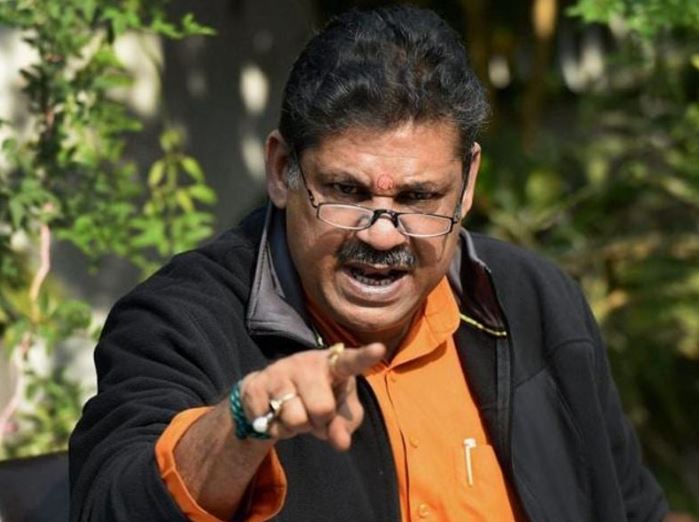
Trinamool Congress MP Kirti Azad on Friday alleged that the BJP was trying to engineer defections from the Mamata Banerjee-led party through “Operation Lotus”, claiming that efforts to split the party has failed so far.
In an X post, Azad cited the resignation of Rajya Sabha MP Prakash Chik Baraik and his media interaction outside BJP leader Nishikant Dubey’s Delhi residence, dissident TMC MPs’ meeting at the residence of Union minister Bhupender Yadav, and BJP leader Suvendu Adhikari’s visit to the residence of TMC MP Satabdi Roy as evidence of “an organised attempt” to weaken the party.
“Operation Lotus under the guidance of (Home Minister) Amit Shah is underway,” Azad said, claiming that it has failed so far.
Amid a churn in the party, a purported list carrying the names and signatures of 19 TMC Lok Sabha MPs was circulated online, though the purported letter to Lok Sabha Speaker Om Birla was not in the public domain.
Dissident TMC leaders claimed that the document, which could not be verified independently, reflected support for their move.
Signatures on the list belonged to Kakoli Ghosh Dastidar, Satabdi Roy, Bapi Haldar, Sharmila Sarkar, Prasun Bandyopadhyay, Jagadish Barma Basunia, Asit Kumar Mal, Arup Chakraborty, Rachna Banerjee, Saayoni Ghosh, Khalilur Rahaman, Abu Taher Khan, Yusuf Pathan, Mitali Bag, Mala Roy, Kalipada Soren, Deepak Adhikari, June Malia and Partha Bhowmick.
TMC plunged into a crisis following the party’s defeat in the West Bengal assembly elections, and rebellion by a large section of its legislators.
The turmoil later spread to Parliament, with dissident MPs claiming the support of more than 20 Lok Sabha members.
On Thursday, Rajya Sabha MP Prakash Chik Baraik became the third TMC parliamentarian to resign from both the party and the Upper House this week, after Sukhendu Sekhar Ray and Sushmita Dev.
The crisis also exposed internal fault lines in the party.
Senior TMC leader Kalyan Banerjee on Thursday launched a sharp attack on party national general secretary Abhishek Banerjee and declared that he would remain in the party only if Abhishek is removed from all leadership positions.
Seeking to downplay the significance of Kalyan Banerjee’s remarks, Azad said the veteran MP remained committed to Mamata Banerjee.
“Everything is okay, there’s no problem. Kalyan Banerjee is emotional. He has been with Didi through bad times; he can never betray her or stab her in the back,” Azad told PTI Videos.
Even as the rebellion gathered momentum, several senior leaders publicly reaffirmed their support for Mamata Banerjee. Lok Sabha MPs, including Sougata Roy, Shatrughan Sinha, Pratima Mondal and Rajya Sabha MP Babul Supriyo — all denied being part of a dissident grouping, asserting that they would remain with the party.
Azad also alleged that pressure was being exerted on TMC leaders through the withdrawal of security personnel but asserted that such measures would not intimidate him.
“Do you think we’re the kind of people who get scared? If we have entered politics for a struggle, then we will fight that struggle,” he said.
“I am also an international cricketer, and I have my own identity and reputation. Kirti is not someone who gets frightened,” he added. (PTI)