Wednesday, July 8, 2026
Home Blog

‘Nun Chai Talks’ encourages Bandipora youth to Dream Big as Entrepreneur Jibran Khan shares Inspiring Journey

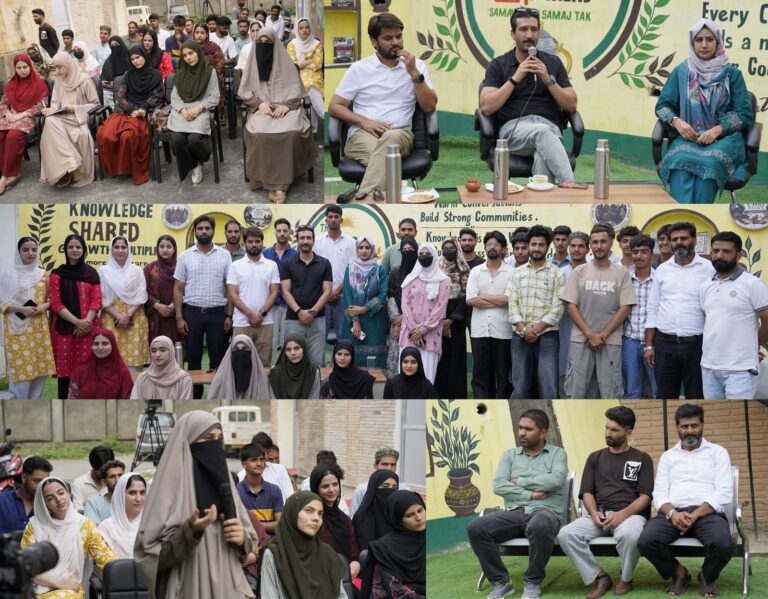
BANDIPORA, JULY 08: Stories of perseverance, ambition and resilience took centre stage at the latest edition of Nun Chai Talks , organised by the District Administration Bandipora at the Waqar Knowledge Centre, Mini Secretariat, where young participants had the opportunity to interact with Local entrepreneur Jibran Khan, founder of the renowned restaurant chain Zero Miles.

Bringing together students from HKM Degree College Bandipora, HSS Mantrigam and youth from across the district, the session created a vibrant platform for open conversations on entrepreneurship, career choices and the importance of believing in one’s potential.

In a candid interaction, Jibran Khan spoke about the humble beginnings of his professional journey, recalling how he worked in different jobs before taking the bold step of starting his own venture. He shared the setbacks, uncertainties and lessons that shaped his path, telling participants that success is rarely achieved overnight but is built through patience, hard work and the courage to keep moving forward despite challenges.

Encouraging the youth to think beyond conventional career paths, he urged them to see entrepreneurship not merely as a business opportunity but as a way to create employment and contribute to society. He advised aspiring entrepreneurs to remain innovative, embrace challenges with confidence and make effective use of the support available through various government schemes.

Assistant Commissioner Development (ACD) Bandipora, Dr. Suhaib wani also addressed the gathering and encouraged participants to strengthen their skills, remain focused on their goals and take advantage of government initiatives that promote innovation, self-employment and sustainable livelihoods.

Adding to the discussion, resource person from Waqar Knowledge Centre, Dr. Zulfi, familiarised the participants with the services and opportunities available at the Waqar Knowledge Centre. He explained how young entrepreneurs can benefit from mentorship, capacity-building programmes, skill development initiatives and financial assistance to transform their ideas into successful enterprises.

The interaction remained lively throughout, with students and young participants raising questions on business planning, overcoming initial hurdles, accessing financial support and identifying opportunities in the changing economic landscape.

The speakers responded with practical suggestions and real-life experiences, making the discussion both informative and inspiring.

Speaking on the occasion, BDO Aloosa and Nodal Officer, Waqar Knowledge Centre, Ulfat Ali, thanked Jibran Khan for sharing his remarkable journey and motivating the youth to pursue their aspirations with confidence. She said that the ‘Nun Chai Talks’ initiative has emerged as an important platform where young people can learn directly from individuals who have transformed determination into success, while reaffirming the District Administration’s commitment to organising more such interactive sessions for the youth of Bandipora.
CS assesses preparations for first-ever household enumeration to identify multidimensionally poor families across J&K

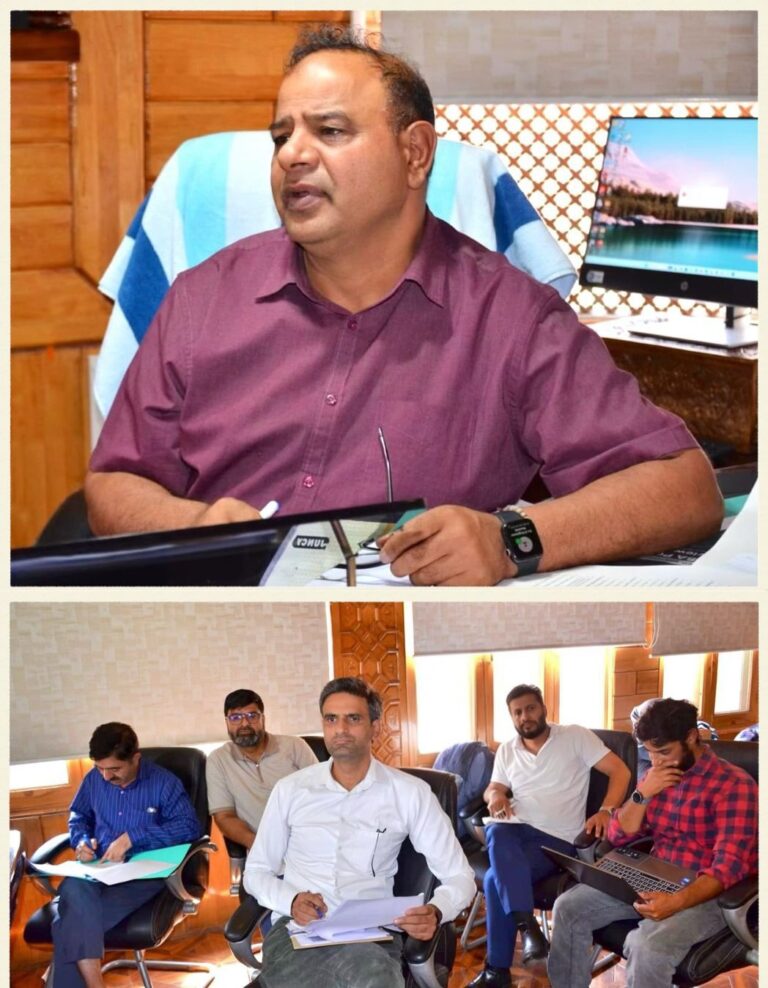
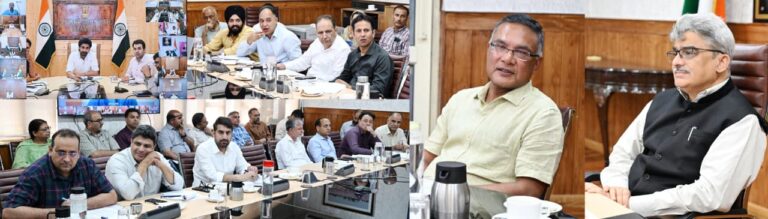
SRINAGAR, JULY 08: In a major policy initiative aimed at further strengthening inclusive governance and ensuring that government welfare schemes reach the most deserving families, the Chief Secretary, Atal Dulloo today chaired a meeting of Planning, Development & Monitoring Department (PD&MD) to have first hand appraisal of the proposed household-level enumeration of multidimensionally poor families across J&K.

The meeting was attended by the concerned Administrative Heads including ACS Finance; Commissioner Secretary, PD&MD; Commissioner Secretary, FCS&CA; Commissioner Secretary, Social Welfare; Secretary, RDD; HoDs of the Planning Department and other concerned officers.

Deputy Commissioners attended the meeting through video conferencing.

Speaking on the proposed initiative, the Chief Secretary maintained that the proposed household enumeration represents the next logical step in our development journey. He remarked that this initiative seeks to identify the actual households that continue to experience multiple deprivations with an objective to create a scientifically validated and technology-enabled database that will help Government departments deliver welfare benefits with greater precision, improve inter-departmental convergence and ensure that no deserving family is left behind.

He further stated that the proposed exercise is the first step towards data-driven governance, transparency and inclusive development, and would provide an institutional framework for identifying and addressing pockets of deprivation across Jammu & Kashmir.

He impressed upon the Deputy Commissioners to work out the human resource requirements in coordination with the Planning Department. He also directed the Department to frame capacity building programmes for these resources so that the exercise is taken up after the culmination of the 2 phases of the Census operations across the UT including the pastoral populations of J&K.

The proposal, presented by the Commissioner Secretary, Planning, Development & Monitoring Department, R Alice Vaz lays down a scientifically designed framework for identifying households experiencing multiple deprivations across health, education and living standards as per the GoI norms.

She added that the proposal is founded on the National Multidimensional Poverty Index (MPI) framework developed by NITI Aayog in collaboration with the United Nations Development Programme (UNDP), while adapting it for household-level identification of poor families within Jammu & Kashmir. Unlike sample-based national surveys that provide only macro-level poverty estimates, the proposed exercise seeks to identify the actual households behind the statistics, thereby facilitating direct and targeted government intervention.

As proposed, the enumeration shall initially cover the most vulnerable categories already available in government databases, namely Antyodaya Anna Yojana (AAY) households, covering approximately 2.19 lakh beneficiary households across all twenty districts of Jammu & Kashmir.

The proposed methodology follows the nationally accepted Multidimensional Poverty Index framework by assessing every household across three dimensions including Health, Education and Standard of Living, through twelve carefully defined indicators.

These include nutrition, child and adolescent mortality, maternal health, years of schooling, school attendance, cooking fuel, sanitation, drinking water, electricity, housing, household assets and financial inclusion. A scientifically weighted deprivation score would be generated automatically through a digital application, and households crossing the prescribed deprivation threshold would be identified as multidimensionally poor.

To ensure comprehensive assessment, two structured digital schedules have been proposed. The first schedule would collect household information required for automated computation of the MPI score, while the second schedule, applicable only to households identified as multidimensionally poor, would capture the reasons for deprivation, gaps in access to government schemes, awareness levels and barriers preventing families from availing benefits. The information generated would enable departments to design targeted interventions based on district-specific and household-specific needs.

The household database generated through the exercise was said to become a robust decision-support system for Government, enabling convergence of welfare schemes relating to health, education, housing, drinking water, sanitation, clean energy, financial inclusion, livelihoods and social protection. It would also facilitate more efficient utilisation of public resources, strengthen monitoring of Sustainable Development Goals and support evidence-based district planning.

DC Ramban reviews Telecom Services, Directs expedited coverage of shadow areas


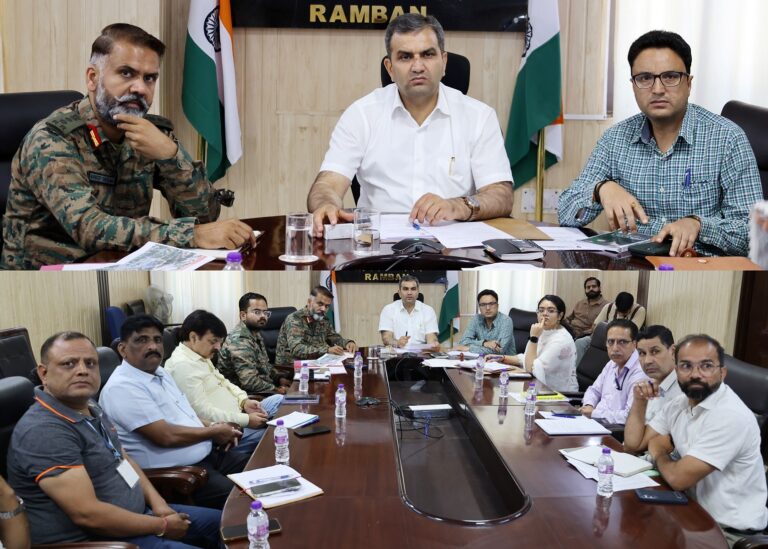
RAMBAN, JULY 08: Deputy Commissioner Ramban Mohammad Alyas Khan, today chaired a meeting of the District Level Telecom Committee to review the overall telecom services and signal coverage scenario across the district. The meeting focused on ensuring seamless and reliable connectivity, particularly in remote areas and along the National Highway.

The meeting was attended by Colonel Mandeep Sheokand, Additional Deputy Commissioner Varunjeet Singh Charak, Divisional Engineer, BSNL, Luxmi Narayan Saini, Dy. SP Police Telecom Mushtaq, Tehsildar Headquarters Reejuta Mahajan, Divisional Forest Officers, Executive Engineer PWD (R&B), senior Army officers and other concerned officers. Sub-Divisional Magistrates, Tehsildars, departmental officers and representatives of private telecom companies participated virtually.

While reviewing the progress of ongoing telecom infrastructure projects, the Deputy Commissioner directed BSNL and private telecom service providers, including Reliance Jio and Bharti Airtel, to expedite their efforts to provide reliable signal coverage in all identified shadow areas, including in tunnels, tourist destinations and local pilgrimage routes identified by the District Administration in coordination with the Police, Army and other departments.

The Deputy Commissioner emphasized the need to strengthen telecom connectivity during the ongoing SANJY-2026, particularly along the NH-44 stretch from Nashri to Banihal, as well as at vulnerable and strategically important locations and other potential religious and public gathering sites. He further instructed telecom operators to reassess the coverage range of existing towers to maximize service outreach and improve network availability.

Meanwhile, Army officers highlighted issues related to poor mobile signal coverage in certain areas. The Deputy Commissioner directed all telecom operators to take immediate corrective measures to improve network connectivity in these locations.

The DC also instructed telecom operators to ensure adequate power backup and fuel arrangements at tower sites to maintain uninterrupted services during adverse weather conditions and natural calamities, thereby preventing communication disruptions during emergencies.

Director Panchayati Raj reviews RGSA progress, orders time-bound completion of PGs

Mandates SDG-aligned GPDP plans before deadline

SRINAGAR, JULY 08: Director Panchayati Raj, Jammu and Kashmir, Riyaz Ahmad Wani, today chaired a comprehensive review meeting to assess the physical and financial progress of various components under the Rashtriya Gram Swaraj Abhiyan (RGSA) and set firm deadlines for the completion of pending works and targets.

The meeting was attended by Assistant Commissioners Panchayat (ACPs), Under Secretary, Mohammad Arshad, Executive Engineers and SPRC/DPRC team.

The Director reviewed the status of Panchayat Ghars, Panchayat Learning Centres, Gram Panchayat Development Plans, Mera Gaon Meri Dharohar initiative and fund utilisation.

Reviewing the progress of Panchayat Ghars, the Director was informed that against a target of 640, land has been identified for 577 sites, 269 Panchayat Ghars have either been completed or reached advanced stages of completion.

He directed the districts to resolve pending land issues on priority, expedite tendering and execution, and ensure timely completion of all ongoing works.

The Director further instructed that districts should identify and report all Panchayat Ghar sites where construction is stalled due to land disputes or non-availability of land.

Riyaz Wani sought a detailed report clearly indicating each affected location, along with the Deputy Commissioner’s comments and certification confirming that land is unavailable or that the site is under dispute. These cases will then be taken up with the Government for resolution.

Districts were asked to continue pursuing the matter with the Deputy Commissioner to resolve disputes and secure alternate land wherever possible. Where land is being donated, all legal formalities and written declarations should be completed to ensure there are no future claims or disputes.

Officers were also directed to provide realistic timelines for completion of Panchayat Ghars where work has already been taken up and separately indicate cases that remain pending due to unresolved land issues.

Regarding Panchayat Learning Centres, 20 PLCs sanctioned earlier are functional across the Union Territory, and 41 additional PLCs have been sanctioned in the current phase.

The Director directed that functional PLCs be regularly utilised for capacity building, digital learning and training of Panchayati Raj Institutions, Self Help Groups and other grassroots stakeholders.

Reviewing the Gram Panchayat Development Plan 2026–27, the Director instructed all districts to ensure timely conduct of Gram Sabhas, prepare quality, inclusive and SDG-aligned plans, and upload them on the e-GramSwaraj portal well before the deadline.

He also reviewed the Quality GPDP initiative being implemented with technical support from NIRDPR in 285 selected Gram Panchayats and called for full utilisation of the handholding support.

Under the Mera Gaon Meri Dharohar (MGMD) initiative, documentation of village heritage has been completed in 6,419 out of 7,465 villages. The Director directed the remaining districts to prepare action plans and achieve 100 per cent completion at the earliest. He also reviewed fund release and expenditure under RGSA, asking officers to expedite bill processing and ensure timely financial reporting for optimal utilisation of funds.

Addressing the officers after the detailed review, Riyaz Ahmad Wani outlined the commitments made during the meeting and set clear timelines.

“We discussed here the physical and financial progress related to the Panchayats and the commitments that have been made. I hope everyone will honour their commitments. I expect all of you to complete the work and ensure that the files are finalized on priority,” he said.

The Director reiterated that strengthening Panchayati Raj Institutions through quality infrastructure, effective participatory planning, capacity building and improved service delivery remains a key priority, and called upon all officers to work with dedication to achieve the programme objectives within the set timelines.

PM Modi Pays Tribute to Swami Vivekananda on His Death Anniversary, Hails His Enduring Legacy

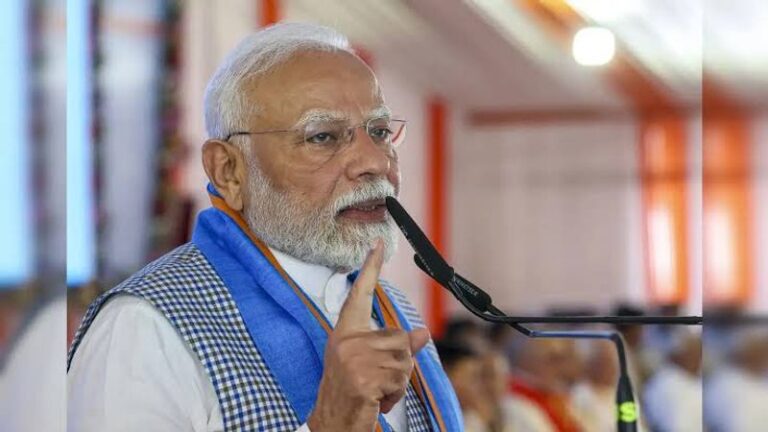
Prime Minister Narendra Modi on Saturday paid heartfelt tributes to Swami Vivekananda on the occasion of his death anniversary, describing his contribution to promoting Indian culture, spirituality, and national consciousness on the global stage as unparalleled.

Swami Vivekananda, who was born on January 12, 1863, and attained Mahasamadhi (Nirvana) on July 4, 1902, is remembered as one of India’s most influential spiritual leaders and social reformers.

In a post on X, Prime Minister Modi said, “Millions of salutations to Swami Vivekananda Ji on his Nirvana Diwas. His contribution to giving global recognition to Indian culture, spirituality, and national consciousness is incomparable.”

The Prime Minister noted that Swami Vivekananda’s extraordinary intellect and inspiring ideas continue to motivate millions of young people across the country.

He further said that the revered monk’s spiritual teachings would continue to provide fresh energy and direction to the nation in achieving the vision of a Viksit Bharat (Developed India).

Born as Narendranath Datta, Swami Vivekananda was the founder of the Ramakrishna Mission, an organization dedicated to spiritual growth, social service, education, and humanitarian work.

Swami Vivekananda gained worldwide recognition through his historic address at the World’s Parliament of Religions held in Chicago in 1893, where he introduced the world to India’s spiritual heritage and emphasized the values of universal brotherhood, humanitarianism, and selfless service as the highest ideals of human life.

His teachings and philosophy continue to inspire generations in India and across the world, making him one of the most revered figures in the country’s spiritual and intellectual history.

PM Modi Inaugurates New Jodhpur Airport Terminal, Launches Modified UDAN Scheme

Prime Minister Narendra Modi on Saturday inaugurated the newly constructed terminal building at Jodhpur Airport and launched the Modified UDAN (Ude Desh Ka Aam Nagrik) Scheme, marking a significant step towards strengthening India’s regional air connectivity and aviation infrastructure.

Prime Minister Modi arrived in Jodhpur earlier in the day and was received at the airport by Rajasthan Governor Haribhau Bagade, Union Minister and Jodhpur MP Gajendra Singh Shekhawat, and Chief Minister Bhajanlal Sharma.

During the inauguration ceremony, the Prime Minister unveiled the plaque for the new terminal by pressing a remote button before taking a tour of the state-of-the-art facility.

On the occasion, he also launched the Modified UDAN Scheme, which has been allocated ₹28,840 crore for implementation over the next 10 years. The revamped scheme aims to accelerate the next phase of aviation-led development across the country by expanding regional air connectivity and improving access to underserved and unserved destinations.

According to officials, the modified scheme incorporates multiple strategic components designed to ensure comprehensive, sustainable, and inclusive growth in the aviation sector while enhancing connectivity to remote regions.

The newly inaugurated terminal building at Jodhpur Airport has been developed at a cost of ₹480 crore. Spread across more than 23,000 square metres, the modern facility has the capacity to handle up to 20 lakh passengers annually.

The terminal has been equipped with a range of modern passenger amenities to provide travellers with a seamless, efficient, and comfortable airport experience.

Reflecting Rajasthan’s rich cultural heritage, the architectural design of the terminal draws inspiration from the state’s royal legacy by incorporating traditional elements such as arches and jharokhas, while seamlessly blending them with contemporary design features.

The inauguration ceremony also featured cultural performances by local folk artistes, showcasing Rajasthan’s vibrant traditions and adding a cultural touch to the Prime Minister’s visit to the newly inaugurated terminal.

J&K Police Head Constable Dies After Collapsing During Training at SKPA Udhampur

A Head Constable of the Jammu and Kashmir Police died after collapsing during a training session at the Sher-i-Kashmir Police Academy (SKPA) in Udhampur on Saturday, officials said.

According to officials, the police personnel suddenly fell unconscious while undergoing training at the academy. He was immediately rushed to a nearby hospital for medical treatment. However, doctors declared him brought dead upon arrival.

The deceased has been identified as Head Constable Bashir Anjum, a resident of Gursai village in the Mendhar area of Poonch district. He was undergoing training at the Sher-i-Kashmir Police Academy at the time of the incident.

Police have taken cognizance of the incident and have initiated the necessary proceedings to ascertain the exact cause of death. Officials said the circumstances surrounding the incident are being verified, and further investigation is underway.

Centre Designates 23 Pakistan-Based Individuals as Terrorists Under UAPA, Total Number Rises to 80

The Union Ministry of Home Affairs (MHA) on Saturday designated 23 Pakistan-based individuals linked to terrorist organisations, including Jaish-e-Mohammad (JeM), Lashkar-e-Taiba (LeT), and other extremist groups, as “designated terrorists” under the provisions of the Unlawful Activities (Prevention) Act (UAPA), 1967, according to an official government order.

The UAPA empowers the Central Government to notify an individual as a designated terrorist if it is satisfied that the person is involved in terrorist activities. The inclusion of an individual’s name in the designated terrorist list enables investigative agencies, including the National Investigation Agency (NIA), to take action such as freezing financial assets, imposing restrictions on arms-related transactions, and initiating the seizure of properties linked to the individual.

The provision to designate individuals as terrorists was introduced through an amendment to the anti-terror law in 2019. Prior to this amendment, only organisations could be notified as terrorist entities under the UAPA.

With the latest notification, 23 Pakistan-based individuals, including those allegedly involved in attacks on security forces in Jammu and Kashmir, have been added to the designated terrorist list. This takes the total number of individuals notified as designated terrorists under the UAPA to 80.

Among those designated are Jaish-e-Mohammad (JeM) operatives Masood Ilyas Kashmiri, Mohammad Mussadiq alias Doctor, Mufti Muhammad Asghar Khan alias Abu Saad, Hafiz Abdul Shakoor alias Qari Zarrar, Abdullah Jehadi, Ghulam Fareed, Maulana Imdad Ullah Makki, and Waseem Noor Jat.

The notification also includes Lashkar-e-Taiba (LeT) operatives Firdous Ahmad Bhat, Haroon Rashid Ganai, Bilal Ahmad Mir, Abid Quyoom Lone, Nazir Ahmed Gujjar, Abdul Rauf alias Hafiz Abdul Rauf, Ashfaq Ahmad, Hafiz Khalid Waleed, Maulana Saifullah Khalid, Mohammad Yaqoob, Maulana Yousaf Taibi, Owais Farooz, Qari Yaqub Sheikh, Rana Iftikhar, and Mohammed Shaheed Faisal, who has also been linked to Al-Qaeda and ISIS, according to the government order.

The latest move is part of the Centre’s continuing efforts to strengthen the legal framework against terrorism by identifying and targeting individuals allegedly involved in terror-related activities, alongside proscribed organisations, under the provisions of the UAPA.

Administration Urges Amarnath Pilgrims to Travel Only on Registered Dates

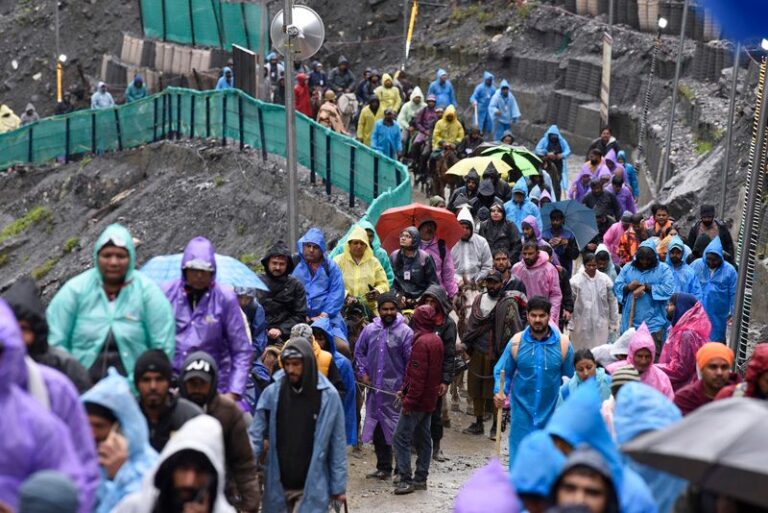
The Jammu and Kashmir administration has observed that a significant number of registered Amarnath pilgrims are reaching the Union Territory before the date allotted to them for undertaking the pilgrimage.

In an official advisory, the administration clarified that no pilgrim will be allowed to proceed with the Yatra before the date mentioned in their registration. Pilgrims have been requested to begin their journey strictly on their assigned travel date. The advisory further appealed to devotees who have arrived in Jammu and Kashmir without completing the registration process to remain patient and wait until their turn comes.

The administration also reassured devotees that every registered pilgrim would be provided an opportunity to undertake the holy Amarnath Yatra. However, it emphasized that the pilgrimage would be conducted strictly in accordance with the prescribed procedures and the available carrying capacity to ensure smooth management.

Appealing for cooperation from all devotees, the advisory urged pilgrims to maintain discipline and support the administration in ensuring the safety and security of everyone participating in the pilgrimage.

Meanwhile, the influx of unregistered pilgrims into Jammu from various parts of the country continues to increase steadily. A large number of devotees have been seen standing in long queues at the registration and token issuance counters established along the Tawi riverfront as they wait to complete the formalities for undertaking the annual pilgrimage.

Kathua Records Highest Rainfall as Showers Lash Parts of Jammu and Kashmir

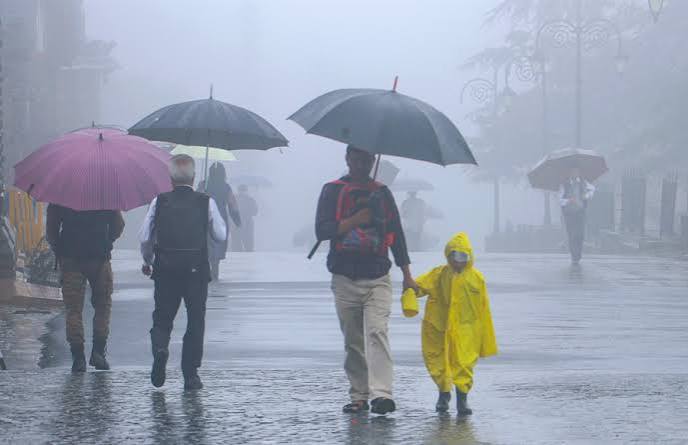
Several parts of Jammu and Kashmir received light to heavy rainfall during the past 24 hours, with Kathua recording the highest precipitation at 85.8 mm, according to the latest rainfall data.

In the Kashmir Division, Konibal recorded the highest rainfall at 24.5 mm, followed by Pahalgam (13.2 mm), Kukernag (11.7 mm), Qazigund (9.0 mm), Gulmarg (4.8 mm) and Srinagar (2.4 mm). Kupwara did not record any rainfall during the period.

In the Jammu Division, Kathua topped the rainfall chart with 85.8 mm, followed by Katra (39.0 mm), Bhadarwah (8.0 mm), Banihal (5.9 mm), Batote (2.4 mm) and Jammu (1.8 mm).

According to data from Automatic Weather Stations (AWS) and other observatories, Ramban received 34.5 mm of rainfall, followed by Kishtwar (25.0 mm), Samba (20.5 mm), Udhampur (16.0 mm), Sonamarg (11.5 mm), Jammu (10.0 mm), Awantipora (6.8 mm) and Rajouri (4.8 mm).

Other stations recorded comparatively lower rainfall, including Srinagar (2.4 mm), Anantnag (2.0 mm), Budgam (1.0 mm), Poonch (1.0 mm), Bandipora (1.0 mm), Doda (1.0 mm) and Baramulla (0.5 mm). No rainfall was recorded at Pulwama, Shopian and Kulgam during the reporting period.

The rainfall brought relief from the prevailing heat in several areas, while authorities continue to monitor weather conditions, particularly in districts vulnerable to landslides and flash floods during the monsoon season.