Sunday, July 12, 2026
Home Blog Page 84

Mufti Asks Omar To Rethink Allotting ‘Fertile’ Land To BSF For Camp In Pulwama

0

PDP president Mehbooba Mufti on Thursday asked Jammu and Kashmir Chief Minister Omar Abdullah to reconsider allotting “fertile” land to the BSF for setting up a security camp in Pulwama district.

“This is fertile land located in the middle of the village. It should not be given to the BSF for establishing a camp as the livelihoods of many people are attached to this land,” Mufti told reporters after visiting Pochal village in Pulwama.

The former chief minister was accompanied by the party’s Pulwama MLA, Waheed Para.

“Omar Abdullah is the chief minister, and he should intervene to protect the interests of the people. The BSF can be given infertile land,” Mufti said, adding that she will also raise the issue with the defence minister.

The PDP recently brought a Bill in the Assembly that would have protected these lands, but Abdullah branded it as a Bill for land grabbers, Mufti said.

“Demolitions have intensified since the rejection of the PDP’s land protection Bill, leaving people fearful and vulnerable,” the PDP chief alleged. (Agencies)

Air India Express Flight Diverts to Kochi After Tyre Damage

An Air India Express flight bound for Kozhikode carried 160 passengers and made a precautionary landing at Cochin International Airport on Thursday following reports of suspected tyre damage. The incident occurred after the crew detected a possible tyre-related issue during the flight.

The flight, designated as IX 398, originated from Jeddah and was diverted to Kochi after signs of a tyre problem were observed. An Air India Express spokesperson stated, “The aircraft made a precautionary landing due to suspected damage to the aircraft’s tyre, likely caused by a foreign object on the runway at Jeddah airport.”

The spokesperson clarified that only the tyres were affected and emphasized, “There was no issue with the landing gear.” He highlighted that the diversion was a safety measure since Kozhikode’s Karipur airport operates as a tabletop airport, which can complicate emergency landings.

The precautionary landing took place smoothly, ensuring the safety of all passengers aboard. “All guests are being connected to Kozhikode by road. We regret the inconvenience caused and reiterate that safety remains our highest priority,” the spokesperson added.

Cochin International Airport Limited (CIAL) reported the aircraft landed safely at around 9.07 am. They noted that the flight was redirected due to a technical issue concerning the right main landing gear and tyre failure. Emergency services activated in advance confirmed no injuries occurred among the passengers or the crew.

A CIAL spokesperson later mentioned, “Post-landing inspection confirmed that both right-side tyres had burst.” Following this incident, the airport authority swiftly conducted a thorough inspection of the runway, which was subsequently cleared for normal operations.

Supreme Court Flags Growing Trend of Judges’ Pre-Retirement Orders

0

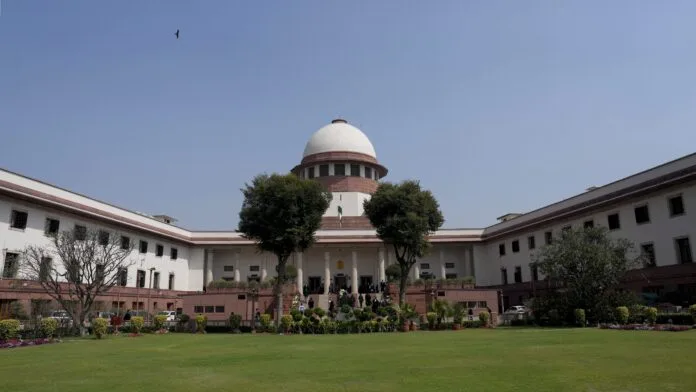
The Supreme Court of India has raised significant concerns regarding a disturbing trend where judges issue multiple judicial orders immediately before their retirement. This phenomenon, characterized by judges passing orders akin to a batter ‘hitting sixes in the final overs,’ has garnered increasing attention from legal authorities and practitioners.

The remarks came from a Bench led by Chief Justice of India (CJI) Surya Kant, during the hearing of a petition filed by a Principal District and Sessions Judge from Madhya Pradesh. The judge challenged his suspension, which occurred just ten days ahead of his scheduled retirement.

“It is an unfortunate trend. There is a growing tendency of judges passing so many orders just before retirement,” CJI Surya Kant stated solemnly during proceedings.

The Bench, consisting of Justices Joymalya Bagchi and Vipul M. Pancholi, expressed their discontent over this issue. They compared such actions to a cricket player trying to score last-minute runs, suggesting a sense of urgency behind these decisions.

The suspended officer was due to retire on November 30, 2023, but faced suspension following a Full Court decision from the Madhya Pradesh High Court on November 19. Allegedly, this suspension arose from two specific judicial orders he issued shortly prior to his retirement.

Appearing on behalf of the petitioner, senior advocate Vipin Sanghi defended the judicial officer, emphasizing his exemplary service record and highlighting commendable ratings in his Annual Confidential Reports (ACRs). Sanghi argued that disciplinary action based purely on judicial orders is unwarranted, stating, “How can an officer be suspended for judicial orders which are appealable and can be corrected by higher courts?

The Supreme Court judges concurred with Sanghi’s argument, asserting that ordinarily, disciplinary proceedings do not arise from judicial errors. However, CJI Surya Kant probed deeper, asking, “What if the orders are palpably dishonest?” This distinction underscores the fine line between an honest judicial error and actual misconduct.

Moreover, on November 20, the Supreme Court decided to enhance the retirement age for judicial officers from 60 to 61 years. Consequently, this decision altered the petitioner’s retirement date to November 30, 2026. The CJI noted that the judicial officer was not privy to this crucial extension when he issued the contested orders, which influences the context of the suspension.

The Bench questioned why the officer had not sought legal recourse through the High Court to contest his suspension. Sanghi clarified that since the suspension resulted from a Full Court decision, the petitioner opted to approach the Supreme Court directly. However, the justices acknowledged past instances when Full Court decisions were overturned by High Courts in judicial proceedings.

The Court also criticized the officer’s method of seeking information regarding his suspension via applications under the Right to Information (RTI) Act. They expressed that it is not befitting of a senior judicial officer to pursue information through such channels when a formal representation could have sufficed.

The Supreme Court ultimately declined to entertain the petition but granted the judicial officer the liberty to submit a representation to the Madhya Pradesh High Court, requesting a reconsideration of the suspension order. The Bench instructed the High Court to review and make a decision on this representation within four weeks.

Omar Abdullah Calls J&K Chief Minister’s Office ‘Disempowerment’

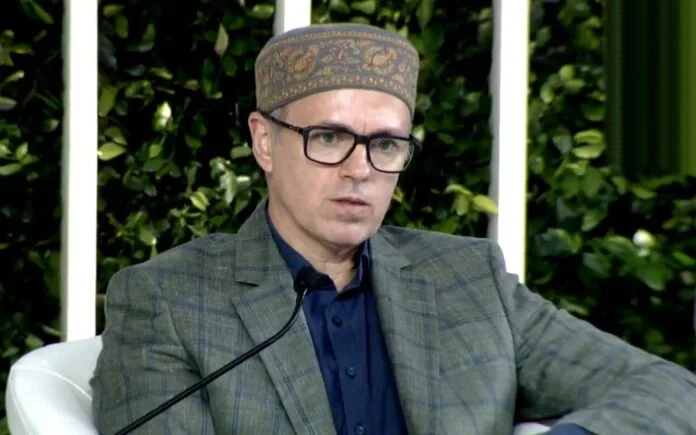
On Wednesday, Jammu and Kashmir Chief Minister Omar Abdullah described his office as a seat of “disempowerment.” He remarked that he faces the unique misfortune of overseeing a Union Territory with far fewer powers than any other Chief Minister in the country.

At an event organized by a prominent national newspaper, Abdullah delivered a forthright critique of the administrative setup in Jammu and Kashmir. He alleged that the ongoing interference from the Lieutenant Governor’s office hampers effective governance, and he reiterated his demand for a defined timeline for restoring statehood.

“I find it very difficult to reconcile the terms ‘Union Territory’ and ‘Jammu and Kashmir’ in the same breath,” Abdullah stated emphatically. He added that while officials seldom emphasized the term ‘State’ during his first tenure, the current Union Territory status has become inescapably prominent.

Abdullah highlighted the ongoing power struggle with the Lieutenant Governor, Manoj Sinha. He claimed that Sinha continues to assume roles traditionally reserved for an elected government, such as chairing the Jammu and Kashmir Power Development Corporation.

“What business does someone responsible for security have holding a tourism meeting?” Abdullah questioned, referring to Sinha’s recent convening of a tourism event in Gulmarg.

He also criticized the appointment of an IAS officer to a position meant for Jammu and Kashmir Administrative Services (JKAS), arguing it denies the elected government control over the Information Department.

Abdullah expressed frustration over the numerous pending cabinet decisions, including vital modifications to reservation policies, which remain stagnant under the Lieutenant Governor’s authority. He emphasized the disparity in power distribution between the elected officials and unelected representatives.

Turning to the topic of statehood, Abdullah reminded the Centre of its three-step roadmap: delimitation, elections, and then statehood. “Two of the steps have been completed. Why are we still waiting for the third?” he asked pointedly.

Abdullah insisted that the Centre must clarify what it means by an “appropriate time” for restoring statehood. “If it hinges on political circumstances, like when the BJP comes to power, then be honest and let people decide accordingly,” he stated.

On the topic of restoring Article 370, Abdullah expressed skepticism, suggesting that political changes at the Centre would be necessary for any reinstatement. “It is futile to expect the same people who revoked it to restore it,” he said, reaffirming his commitment to preserving Special Status while avoiding unrealistic promises to the public.

The Chief Minister raised concerns over increasing radicalization, attributing it to hyper-nationalism and punitive measures taken against communities. He mentioned the demolitions following terrorist attacks, questioning the effectiveness of collective punishment. “If the residents are radicalized, what leads us to believe it’s not our own doing?” he posed.

Abdullah also highlighted recent controversies regarding sporting events and medical college admissions where the selection of majority Muslim candidates stirred public uproar. He asked, “When an entire community feels marginalized, how can we expect no backlash?”

On the national political landscape, Abdullah characterized the INDIA bloc as being in precarious condition. He admitted that critical issues, including Article 370, have predominantly fallen off the bloc’s agenda.

Defending Congress leader Rahul Gandhi for his muted stance on these issues, he pointed out, “He should focus on winning an election before tackling such sensitive topics.” Abdullah noted that the current political environment does not favor raising these contentious matters.

Abdullah distanced himself from his father’s views regarding EVM tampering, stating, “I believe we must own our defeats and understand our shortcomings instead of attributing them to external factors like machines. The real issue lies in constituency delimitation.”

Earlier in his speech, Abdullah discussed environmental concerns such as pollution and prolonged dry spells affecting Srinagar, noting that its geography exacerbates smog-related issues. He emphasized correcting misconceptions surrounding tourism as the primary economic driver for Jammu and Kashmir, clarifying that agriculture, horticulture, and industry contribute more significantly to the Gross State Domestic Product.

India Sees Decline in Terrorism; LG Manoj Sinha Reports Progress

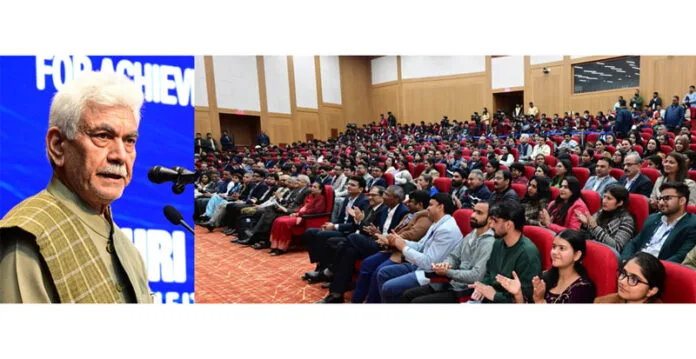
Lieutenant Governor Manoj Sinha reported on Monday that large segments of India have freed themselves from terrorism, particularly highlighting the noteworthy improvement in the northeastern states. Speaking at the Strategic Management Forum Conference in Jammu, Sinha emphasized that local recruitment into terrorist ranks in Jammu and Kashmir has seen a drastic decline.

Sinha addressed attendees at the Indian Institute of Management (IIM), Jammu, stating that while a few pockets still face threats, much of the northeast has become terrorism-free. He pointed out that the once-menacing issue of left-wing extremism and Naxalism has shrunk significantly, now confined to just two or three districts.

“Large parts of the country have been freed from terrorism. The threat of left-wing extremism has diminished,” Sinha declared during the conference focused on achieving Viksit Bharat by 2047.

Specifically discussing the situation in Jammu and Kashmir, Sinha asserted that no top commanders of terrorist organizations remain active in the region today. “Local recruitment into terrorism has observed a sharp decline, with hardly one or two youths being recruited now,” he confirmed.

However, he raised concerns about Pakistan’s ongoing attempts to infiltrate terrorists into Indian territory. “Those coming from across the border hide in dense forests and rugged terrain. I assure you they will be eliminated,” he added, committing to a strong stance against cross-border terrorism.

Sinha pointed out that the landscape of terrorism has transformed, with educated individuals increasingly becoming involved. He stressed that combating terrorism requires the contribution of society in addition to security forces in Jammu and Kashmir, as well as in parts of Karnataka and Kerala.

“The security forces can’t do it alone; society and specific administration sectors must also play their roles,” he encouraged.

In a strong call to action, Sinha urged the audience to move away from the divisive “insider-outsider” narrative that hampers development progress. “Such thinking creates hurdles. We must foster unity to ensure holistic development,” he stated emphatically.

Highlighting India’s progress toward Viksit Bharat 2047, Sinha called for policymakers and business leaders to navigate the evolving challenges and opportunities present in today’s global landscape. He stressed the need for macroeconomic stability, future investments in education and health, and the adoption of digital tools.

He credited Prime Minister Narendra Modi with driving unprecedented growth in India, fostering renewed confidence among industry leaders. Sinha noted, “Our manufacturing and services sectors are now competing on a global scale, thanks to the Prime Minister’s emphasis on Swadeshi.”

The Lieutenant Governor also highlighted the untapped economic potential of Jammu and Kashmir, pointing out its rich reserves of minerals such as limestone, sapphire, and lithium. “With strategic planning, we can generate an annual revenue of Rs 15,000 crore to Rs 20,000 crore within the next five to seven years,” he predicted.

He advised maximizing the hydropower sector and proposed amendments to the Holistic Agriculture Development Programme to meet changing economic needs.

Moreover, on this occasion, Sinha unveiled the Basohli Painting Exhibition and presided over the valedictory session of the associated workshop, acknowledging the significance of Basohli Painting as a vital component of India’s artistic heritage. “This culture holds immense value for present and future generations,” he stated, commending both IIM Jammu and the Indira Gandhi National Centre for the Arts for their efforts.

The event also saw the participation of prominent figures including Prof. B.S. Sahay (Director, IIM Jammu), R.K. Chaudhary (Chairman, JERC J&K and Ladakh), and several other academicians, policymakers, industry leaders, and artists, all collaborating towards a vision of sustainable development and progress.

Delhi High Court Denies PIL for Increased Compensation for IndiGo Cancellations

0

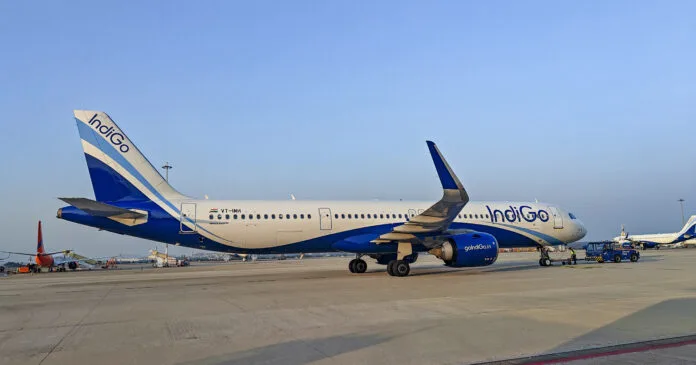
The Delhi High Court on Wednesday dismissed a public interest litigation (PIL) that sought directives for the Centre and IndiGo airline to compensate passengers four times their ticket price for flights cancelled during November and December 2022. The cancellations coincided with the implementation of new Flight Duty Time Limitation (FDTL) regulations.

A Division Bench, led by Chief Justice Devendra Kumar Upadhyaya and Justice Tushar Rao Gedela, noted that the court has already acknowledged similar concerns in another pending PIL. The bench stated that the petitioner could seek intervention in the existing matter.

“We do not see any reason as to why the concerns raised here cannot be taken up in the earlier petition. The jurisprudence developed by the Supreme Court and High Courts permits the court to expand the scope of a petition in public interest,” the bench expressed.

“We decline to entertain this petition with liberty to the petitioner to seek intervention in the pending petition. The writ petition stands disposed of,” the court added while issuing its order.

The PIL came from the Centre for Accountability and Systemic Change (CASC), represented by its president, Prof Vikram Singh. The petition highlighted the far-reaching implications of IndiGo’s flight cancellations, which prompted significant concern within India’s aviation sector. The abrupt disruptions led to thousands of flights being cancelled, causing severe inconvenience to numerous stranded passengers.

Advocate Virag Gupta, representing the petitioner, highlighted the chaos at airports, citing issues such as misdirected baggage, extensive delays, insufficient airline communication, and confusion surrounding refunds and re-booking options.

The PIL also demanded an independent inquiry by either a retired judge or the Lokpal to investigate alleged negligence and lapses by the Directorate General of Civil Aviation (DGCA) in managing the crisis. This inquiry would aim to identify the root causes of the widespread flight cancellations.

Earlier, on December 10, the Delhi High Court engaged with the Central Government concerning its lack of timely intervention during the crisis triggered by IndiGo’s mass flight cancellations. The court questioned why the situation escalated to the extent that lakhs of passengers found themselves stranded, while other airlines purportedly charged exorbitant fares.

Criticism surrounding IndiGo has intensified since December 2, when the airline cancelled numerous flights under the new FDTL regulations concerning pilots’ duty and rest periods. The unexpected alterations to flight schedules caught many passengers off guard, resulting in significant travel disruptions.

The Delhi High Court’s recent ruling underscores the need for improved regulatory oversight in India’s aviation sector. As passengers continue to express their frustrations, industry experts advocate for enhanced measures to ensure that airlines provide timely information and satisfactory compensation in cases of flight disruptions.

The ongoing discourse around the IndiGo cancellations calls attention to the broader implications of regulatory changes on airline operations and passenger rights. Understanding these dynamics is crucial as the aviation industry adapts to evolving regulations while striving to serve the needs and expectations of travelers.

MLFF Toll System and AI Highway Management Set for 2026 Rollout

0

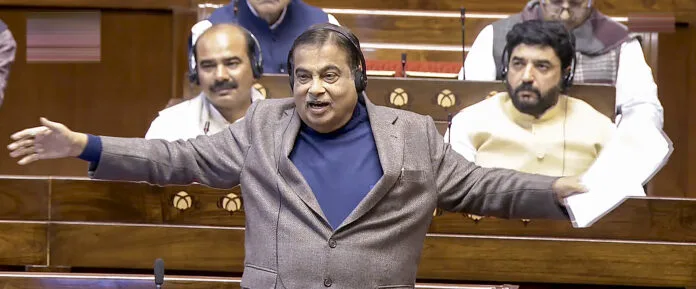
Union Minister for Road Transport and Highways Nitin Gadkari announced plans to implement the Multi-Lane Free Flow (MLFF) toll system and AI-driven highway management technology across India by the end of 2026. This innovative system aims to eliminate waiting time at toll plazas, enhancing the travel experience for millions.

During a session in Rajya Sabha, Gadkari detailed how the new tolling mechanism will leverage artificial intelligence, satellite technology, and number plate recognition. This initiative promises seamless movement for vehicles without the need to halt at toll booths. “With MLFF, commuters will not have to stop at toll plazas, allowing vehicles to pass toll points at speeds of up to 80 km per hour,” he said.

The MLFF system will replace the current FASTag mechanism. The Minister highlighted that previous toll payments could take anywhere from three to ten minutes. Now, with the existing FASTag system, those times have significantly dropped to less than a minute. “The introduction of FASTag increased our revenue by at least ₹5,000 crore,” he stated.

Gadkari emphasized the potential benefits of the MLFF system, aiming to reduce toll wait times to zero minutes. He projected substantial savings of ₹1,500 crore in fuel and an additional ₹6,000 crore in government revenue, while also completely eradicating toll leakage and theft.

“By 2026, we aim for 100% completion of this project,” Gadkari stated confidently. He reassured members of Parliament that the new system would eliminate toll theft and enhance transparency, indicating that commuters would no longer experience any delays at toll plazas.

The Minister also addressed the importance of AI-enabled technology, explaining how it would streamline travel times and improve overall efficiency on national highways. He defined the scope of the initiative, noting that the central government is responsible specifically for national highways and does not oversee state highways or city roads. “Problems related to state and urban roads often circulate on social media, leading to misinformation about national highways,” he clarified.

“We are committed to establishing a transparent, efficient, and corruption-free system for our nation’s highways,” Gadkari concluded, reinforcing the government’s dedication to modernizing India’s highway infrastructure.

This announcement serves as a major step toward enhancing the travel experience for millions of road users across India, paving the way for a future where lengthy toll waits become a thing of the past.

Jammu’s Inclusive Development Progresses Under Omar Abdullah

Former Chief Minister and National Conference president Dr. Farooq Abdullah stated that Jammu is now poised for inclusive development under the leadership of Chief Minister Omar Abdullah. This shift comes as the region experiences renewed efforts towards sustainable progress, moving away from a history of unmet promises.

Dr. Abdullah made these remarks while interacting with a delegation from the National Conference, emphasizing that the current government has renewed public confidence in democratic processes. The administration has made significant strides in making the corridors of power accessible to the common citizen, fostering a sense of ownership and participation.

During this meeting, the delegation raised various long-standing public issues that have persisted over the past decade, attributing these challenges to the misrule of the previous BJP administration. The delegation commended the remedial and developmental actions initiated by the Omar Abdullah-led government to counteract the setbacks faced by Jammu over recent years.

In discussing party structure and other organizational matters, Dr. Abdullah acknowledged the challenges that citizens endured during what many describe as years of undemocratic governance. He assured the gathering that the National Conference remains committed to addressing the public’s hardships.

“The Omar Abdullah-led government is making rapid strides to restore people’s faith in democratic institutions,” he asserted, reflecting a renewed sense of optimism among party members.

Dr. Abdullah further remarked on the widely discussed Smart City project, indicating that recent rains and subsequent waterlogging had cast doubt on its feasibility. This observation highlights ongoing concerns regarding infrastructure challenges despite official claims of progress.

He also pointed to initiatives undertaken by the present government aimed at preserving and revitalizing the historic Mubarak Mandi heritage complex, which has suffered from neglect for too long. The government has introduced free transport services for women, easing mobility challenges, along with additional ration quotas aiming to alleviate the financial burden on economically disadvantaged families. Moreover, the revival of the Darbar Move has stimulated economic activities, providing much-needed relief to traders in Jammu.

Dr. Abdullah outlined ongoing projects, including the construction of ropeways and the development of riversides and urban lakes. These efforts are set to position Jammu prominently on the national tourism map, highlighting the region’s potential.

As the upcoming Urban Local Body (ULB) and Panchayat elections approach, Dr. Abdullah urged party workers to strengthen outreach efforts. He stressed the importance of ensuring representation for youth and women in governance processes, aligning decision-making with the aspirations of these significant demographics.

Meanwhile, Chief Minister Omar Abdullah, during a recent address at the Gurjar Desh Charitable Trust in Jammu, underscored the need for scientific research on climate change impacts affecting the Gujjar-Bakerwal community. He stated that such studies would be instrumental in shaping effective future policies that directly address community challenges.

Addressing the gathering on the third death anniversary of the esteemed Dr. Masud Ahmed Choudhary, a former Vice-Chancellor at Baba Ghulam Shah Badshah University, Omar Abdullah acknowledged the immense talent present in Gujjar institutions. He highlighted the significance of directing this talent toward researching climate change, particularly due to the nomadic lifestyle of the Gujjar-Bakerwal community, which renders them highly vulnerable to environmental changes.

Omar Abdullah emphasized the importance of bolstering educational initiatives such as Gujjar hostels, schools, and mobile educational units while calling for a careful assessment of the current reservation policies.

“We have discussed reservation for years, but serious studies on its actual benefits remain absent,” he remarked.

Dr. Farooq Abdullah also encouraged the Gujjar community to prioritize unity and education, showcasing them as pivotal tools for securing a prosperous future for the upcoming generations.

The event saw active participation from several ministers, MLAs, former ministers, senior advocates, civil society members, and representatives of the Gujjar community, reflecting a broader interest in the political discourse surrounding Jammu’s development.

LG Manoj Sinha Unveils 108-Foot National Flag at Akhnoor on Vijay Diwas

On the occasion of Vijay Diwas, Lieutenant Governor Manoj Sinha today unveiled a 108-feet high mast national flag at Kachrial in the Akhnoor sector, paying tribute to the indomitable spirit and supreme sacrifice of India’s armed forces.

The Lieutenant Governor paid homage to the martyrs, soldiers and officers who brought glory to the nation through their valour and sacrifice during the 1971 war. He also felicitated war veterans and veer naris, saluting their courage, resilience and unwavering contribution to the nation.

Addressing the gathering, Sinha said that the land of Kachrial holds immense historical and emotional significance for the country. “Every inch of this sacred land remembers with gratitude the brave soldiers who laid down their lives while safeguarding the sovereignty and integrity of the nation during the 1965 and 1971 wars,” he said.

The Lieutenant Governor congratulated Lieutenant General P.K. Mishra, General Officer Commanding, White Knight Corps (16 Corps), for the thoughtful initiative of installing the 108-feet high mast national flag. He also lauded the Flag Foundation of India for its commendable contribution to the historic initiative.

“May our beloved and victorious Tricolour always fly high across the world. Our national flag symbolises our freedom, self-respect, and the sacrifices and martyrdom of countless heroes. Together, we must move forward to realise the vision of a developed India,” Sinha said.

The event was attended by Satish Sharma, Minister for Youth Services & Sports, Food, Civil Supplies & Consumer Affairs, Transport, Science & Technology, Information Technology, ARI & Trainings; Lieutenant General Pratik Sharma, General Officer Commanding-in-Chief, Northern Command; Lieutenant General P.K. Mishra, GOC White Knight Corps (16 Corps); Major General H.S. Brar, GOC 10 RAPID; Brigadier Dayanand Sharma, Commander Pallanwala Brigade; Major General Ashim Kohli (Retd), Chief Executive Officer, Flag Foundation of India; senior civil and military officials, war veterans, veer naris, and students.

The ceremony reaffirmed the nation’s deep respect for its armed forces and highlighted the enduring legacy of courage and sacrifice associated with Vijay Diwas.

Nearly 500 Cases of Crimes Against Women, Children Pending in J&K Fast Track Courts

Jammu and Kashmir continues to witness a high pendency of cases related to crimes against women and children, with nearly 500 cases pending in Fast Track Special Courts (FTSCs), according to data released by the Union Ministry of Law and Justice.

While the disposal of cases has shown some improvement, official figures indicate that the backlog in the Union Territory’s special courts has remained persistently high over the past three years, largely due to limited judicial capacity and other systemic constraints.

The data shows that J&K had 453 pending cases at the end of 2023, which increased to 509 cases by December 2024. As of September 2025, the pendency stood at 494 cases, reflecting only a marginal reduction despite ongoing disposals.

Limited Number of FTSCs in J&K

At present, Jammu and Kashmir operates four Fast Track Special Courts, including two exclusive POCSO courts, which deal with cases of rape and child sexual abuse. This number is significantly lower compared to larger States such as Uttar Pradesh, which has 218 FTSCs, and Madhya Pradesh, which operates 67 such courts.

Nationwide, a total of 773 FTSCs, including 400 exclusive POCSO courts, are functional across 29 States and Union Territories, the data revealed.

Rising Case Registrations

The figures also indicate a steady rise in new case registrations in J&K. The Union Territory recorded 76 new cases in 2023, followed by a sharp increase to 164 cases in 2024. In the first nine months of 2025, another 60 fresh cases were registered.

On the disposal front, J&K’s FTSCs disposed of 41 cases in 2023, 112 cases in 2024, and 75 cases between January and September 2025. However, these disposal rates have not been sufficient to significantly reduce the overall backlog.

About the FTSC Scheme

The Centrally Sponsored Scheme for the establishment of Fast Track Special Courts, including exclusive POCSO (ePOCSO) courts, was launched in October 2019 following the Criminal Law (Amendment) Act, 2018 and a suo motu direction of the Supreme Court.

The scheme aims to ensure time-bound trials and speedy disposal of pending cases related to rape and offences under the Protection of Children from Sexual Offences (POCSO) Act, 2012. It envisaged the setting up of 790 FTSCs across the country and has been extended twice, with the current phase valid until March 31, 2026.

The total financial outlay under the scheme is Rs 1,952.23 crore, including a Central share of Rs 1,207.24 crore from the Nirbhaya Fund.

States Responsible for Implementation

The Ministry of Law and Justice clarified that while funding is provided under the Centrally Sponsored Scheme, the responsibility for operationalising and expanding FTSCs lies with States and Union Territories in consultation with their respective High Courts. Recruitment of judges, prosecutors and supporting staff, including women officers, is also a State-level responsibility under the constitutional framework.

Experts noted that although FTSCs across the country have disposed of over 3.5 lakh cases since their inception, smaller States and Union Territories like J&K require urgent expansion of judicial infrastructure.

“Enhanced judicial capacity is essential to reduce pendency and ensure timely justice in sensitive cases involving women and children,” experts said.