Sunday, July 12, 2026
Home Blog Page 83

NFJM Launches Central Helpline 011-69269620 to Connect Public with Media

Dr. Tahir Rufayee, National Chairman of the National Foundation For Journalism and Media (NFJM), today announced the launch of a Central Helpline – 011-69269620 aimed at enabling the general public to directly connect with the media.

Dr. Rufayee said that the helpline has been established to provide a credible and structured platform where citizens can share public interest issues, social concerns, grievances, and important information with responsible media outlets.

He informed that NFJM currently has around 150 registered media houses from Jammu and Kashmir as its members, making it one of the largest collective platforms of media organizations in the region. Through this helpline, public concerns will be appropriately routed to relevant and verified media institutions for responsible reporting.

The National Chairman emphasized that the initiative is intended to strengthen transparency, amplify public voices, and promote ethical journalism by creating a constructive link between citizens and media professionals.

Dr. Rufayee further stated that NFJM remains committed to democratic values, public accountability, and empowering citizens through credible and responsible journalism.

Helpline Number: 011-69269620

SMVDIME Seat Allotment Row: Sangarsh Samiti Delegation Meets Union Health Minister J.P. Nadda

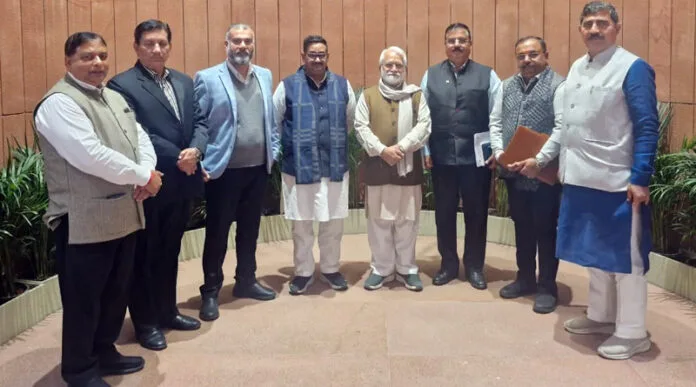
Amid the ongoing public concern and agitation over the allotment of seats at the Shree Mata Vaishno Devi Institute of Medical Excellence (SMVDIME), a high-level delegation of the Shree Mata Vaishno Devi Sangarsh Samiti on Friday met the Union Minister for Health and Family Welfare, Jagat Prakash Nadda, at Parliament House here.

The delegation apprised the Union Minister in detail about the widespread resentment prevailing across Jammu over the seat-allotment issue and highlighted its serious socio-legal and regional implications. The members conveyed that the controversy has deeply hurt public sentiment, particularly as the institution has been established under the revered name of Shree Mata Vaishno Devi, from which the people of Jammu have high expectations.

The concerns were presented firmly yet constructively, emphasising the need for fairness, transparency, and sensitivity in addressing the issue.

Union Health Minister J.P. Nadda gave a patient and attentive hearing to the delegation and acknowledged the seriousness of the matter. He assured the members that both the Union Government and the BJP leadership are fully sensitive to the concerns raised.

The Minister categorically stated that the issue would be examined with due seriousness and that a resolution would be arrived at very shortly, keeping in view the legitimate aspirations and sentiments of the people of Jammu.

The delegation comprised Col. (Retd) Sukhvir Mankotia, Convener, Shree Mata Vaishno Devi Sangarsh Samiti; Purshotam Dhadhichi, President, Sanatan Dharam Sabha, Jammu & Kashmir; Abhishek Gupta, State Secretary, Vishwa Hindu Parishad; R.K. Chibbar, Member, Advisory Committee, POJK Sewa Samiti; and Deepak Sharma.

Expressing satisfaction over the constructive response of the Union Health Minister, the Sangarsh Samiti reiterated its resolve to pursue the issue in a lawful, democratic and principled manner until a just and acceptable solution is achieved.

Later, the delegation also met Jugal Kishore Sharma, Lok Sabha MP from Jammu, and Sat Sharma, Rajya Sabha MP and BJP State President. Both MPs assured the Sangarsh Samiti that its demands would be raised at appropriate forums for early resolution.

The delegation further met Delhi-based members of the Shri Mata Vaishno Devi Shrine Board and apprised them of the prevailing situation and public concerns in Jammu.

Centre Clears Promotion of J&K AGMUT Cadre IPS Officers; Three Elevated as IGPs

The Ministry of Home Affairs (MHA), Government of India, has approved the promotion of a number of AGMUT cadre Indian Police Service (IPS) officers of the Jammu and Kashmir segment to higher ranks, including three officers to the rank of Inspector General of Police (IGP), eight to Deputy Inspector General of Police (DIGP), besides granting Selection Grade to nine officers and Junior Administrative Grade (JAG) to six others.

Separate orders issued in this regard stated that all promotions will take effect from January 1, 2026, or from the date of assumption of charge, whichever is earlier.

Promotions to IGP Rank

As per the order, the officers promoted to the rank of Inspector General of Police (Level-14) are:

  • Tejinder Singh, presently posted as DIG Rajouri-Poonch
  • Abdul Jabbar (on Central deputation)
  • Udaybhaskar Billa (on Central deputation)

Abdul Jabbar and Udaybhaskar Billa have been granted proforma promotion.

Promotions to DIGP Rank

Officers promoted to the rank of Deputy Inspector General of Police (Level-13A) include:

  • Sargun Shukla, CO IR-15th Battalion
  • Sandeep Wazir, AIG Personnel, PHQ
  • Anita Sharma, CO IR-1st Battalion
  • Jatinder Singh Johar, Director Police Telecom, J&K
  • Swarn Singh Kotwal, Director SSF J&K
  • Zahid Nasim Manhas, CO SDRF-2nd Battalion, Jammu
  • Dr Koushal Kumar Sharma, SSP PCR Jammu
  • Sandeep Choudhary, currently on Central deputation as SSP NIA (granted proforma promotion)

Selection Grade Granted

The officers granted Selection Grade (Level-13) are:

  • Ashish Kumar Mishra (transferred to Delhi on September 9, 2024)
  • Nagpure Amod Ashok, SSP Udhampur
  • Gurinder Pal Singh, SSP Baramulla
  • Altaf Ahmed Shah, on deputation to UT of Ladakh
  • Bakar Hussain Samoon, CO IR-23rd Battalion
  • Ajaz Ahmad Bhat, SSP Traffic City Srinagar
  • Ranjit Singh Samyal, Principal PTTI Vijaypur
  • Mohammad Yaseen Kichloo, Principal STC Talwara
  • Chandan Kohli, former SSP Jammu, presently on Central deputation (proforma)

Junior Administrative Grade (JAG)

As per another order, the following officers have been granted Junior Administrative Grade:

  • Bisma Qazi, CO 2nd Women Battalion
  • Tanushree, SSP Pulwama
  • Sahil Sarangal, SSP Handwara
  • Anayat Ali Choudhary, SSP Kulgam
  • Nikhil Borkar, SSP Budgam
  • Mohita Sharma, SSP Kathua

Gopal Vittal to become Executive Vice Chairman; Shashwat Sharma to succeed him as MD & CEO in January 2026

0

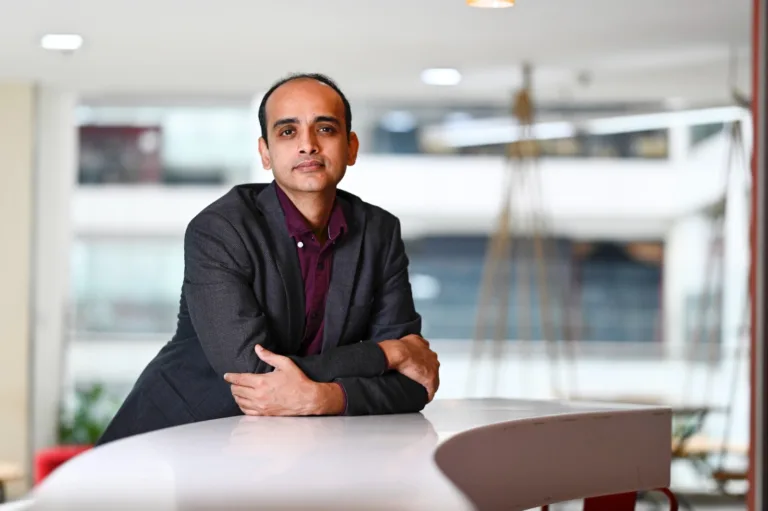
Gopal Vittal has led Bharti Airtel as Managing Director & CEO for the last thirteen years. As part of a structured succession process, Gopal, in addition to being the Managing Director, was appointed Vice Chairman of Bharti Airtel Ltd in October 2024. Shashwat Sharma was appointed CEO designate of the Company.

In line with the planned succession, Gopal Vittal will move into the role of Executive Vice Chairman of Bharti Airtel on the 1st of January 2026 overseeing Bharti Airtel and all its subsidiaries.

In his new role, besides oversight of the companies, Gopal will also be responsible for driving group synergies in the areas of digital and technology, network strategy, procurement and talent. He will also focus on Group strategy and future proofing the organization for the next evolution of its development.

Following a well-structured and successful transition process, Gopal will be succeeded by Shashwat Sharma as MD and CEO of Bharti Airtel India on the 1st of January 2026. In his role as CEO designate, Shashwat has over the past twelve months, spent considerable time working alongside Gopal across the business in preparation for the role. Shashwat will report to Gopal.

Additionally, Soumen Ray, currently the Chief Financial Officer for Bharti Airtel India, will be appointed as Group Chief Financial Officer reporting to Gopal. Soumen has been on his current role for about 4 years and has been instrumental in guiding Bharti Airtel financial performance.

Akhil Garg, currently Financial Controller, Bharti Airtel will be appointed as Chief Financial Officer for Bharti Airtel India. Akhil has been with Airtel for nearly 12 years and has held multiple roles leading several business projects including the Hexacom IPO. In his new role, Akhil will report to Shashwat and Soumen.

Rohit Puri, currently Joint Company Secretary C Compliance Officer, will be appointed as Company Secretary C Compliance Officer for Bharti Airtel. Pankaj Tewari, who is the Group Company Secretary, will continue to provide leadership and oversight at a group level.

Sunil Bharti Mittal, Chairman, Bharti Airtel said: ‘I am extremely pleased with the succession and transition of leadership at Airtel and there could not have been a better time, where change and continuity will go hand in hand. I have no doubt both Gopal and Shashwat will continue to build on the momentum and I wish them much success in their roles.

As an organization we pride ourselves with our highly energised and professional management team, which combined with our entrepreneurial flair, brings to hundreds of millions of customers, the best technology and services across the geographies we operate. I look forward to working alongside Gopal and the team to continue this pursuit as we drive towards our ambition of building the best global Telcom company’

Rahul Gandhi Slams VB-G RAM G Bill, Says Modi Govt ‘Demolished 20 Years of MGNREGA in One Day’

0

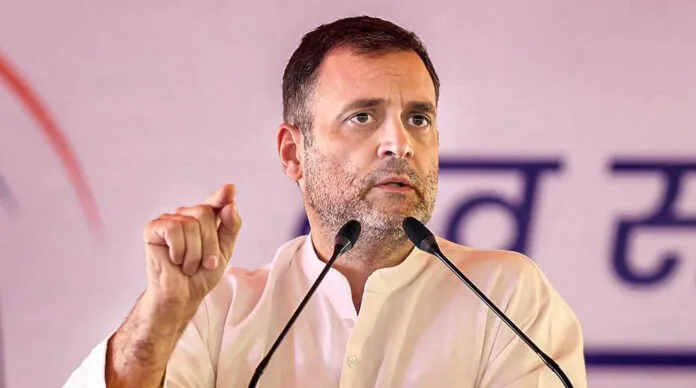
Congress leader and Leader of Opposition in the Lok Sabha Rahul Gandhi on Friday strongly criticised the Modi government over the passage of the Viksit Bharat Guarantee for Rozgar and Ajeevika Mission (Gramin) (VB-G RAM G) Bill, alleging that it has effectively dismantled the 20-year-old Mahatma Gandhi National Rural Employment Guarantee Act (MGNREGA).

In a post on X, Gandhi said the new law was not a revamp of MGNREGA but a fundamental dilution of its core principles.

“Last night, the Modi government demolished twenty years of MGNREGA in one day,” he said.

He alleged that the new legislation converts a rights-based, demand-driven employment guarantee into a rationed, centrally controlled scheme, describing it as “anti-state and anti-village by design”.

‘Breaks Bargaining Power of Rural Workers’

Gandhi said MGNREGA had empowered rural workers by giving them bargaining power.

“With real options, exploitation and distress migration fell, wages increased and working conditions improved, while rural infrastructure was created and revived,” he said, alleging that this leverage is what the government now seeks to dismantle.

He claimed that by capping employment days and creating more grounds to deny work, the new law weakens the only safety net available to the rural poor.

“We saw the importance of MGNREGA during Covid. When livelihoods collapsed, it prevented crores from falling into hunger and debt,” he said.

Impact on Women and Marginalised Communities

Gandhi said women benefitted the most from MGNREGA, noting that they accounted for more than half of the total person-days generated every year.

“When you ration a jobs programme, women, Dalits, Adivasis, landless workers and the poorest OBC communities are the first to be pushed out,” he said.

Criticism Over Parliamentary Process

The Congress leader also objected to the manner in which the Bill was passed, alleging that it was pushed through Parliament without adequate scrutiny.

“The opposition’s demand to send the Bill to a standing committee was rejected. A law that rewires the rural social contract affecting crores of workers should not be rammed through without expert consultation and public hearings,” he said.

Accusing the government of centralising power, Gandhi said,

“The targets are clear: weaken labour, weaken rural India’s leverage—especially of Dalits, OBCs and Adivasis—and then sell slogans as reform.”

Congress Vows Opposition

Asserting that MGNREGA was among the most successful poverty-alleviation programmes globally, Gandhi said the Congress would oppose the new law.

“We will not allow the government to destroy the rural poor’s last line of defence. We will stand with workers, panchayats and states to defeat this move and ensure this law is withdrawn,” he said.

Background

Parliament on Thursday night passed the VB-G RAM G Bill, which seeks to replace MGNREGA and guarantees 125 days of rural wage employment per year. The Bill was passed by the Rajya Sabha through a voice vote hours after being cleared by the Lok Sabha, amid strong protests by opposition parties.

The opposition has objected to the removal of Mahatma Gandhi’s name from the scheme and accused the Centre of shifting the financial burden onto states.

CJI Surya Kant to Sit on Dec 22 During Court Holidays to Hear Urgent Matters

Chief Justice of India (CJI) Justice Surya Kant on Friday said he is willing to sit on December 22, the first day of the Supreme Court’s Christmas and New Year holidays, to hear urgent matters.

A Bench headed by the CJI and comprising Justices Joymalya Bagchi and Vipul M. Pancholi made the observation while hearing requests for urgent listing of cases. The Bench said the Supreme Court Registry would verify the urgency of matters and list them accordingly.

“We will sit on Monday. We are not going to burden other Supreme Court judges, who have to study case files late at night to hear new cases. I will not bother any other Bench,” the CJI said.

He added that the decision on whether one or more Benches would sit on December 22 would depend on the number of urgent matters found fit for listing.

“We are not sure whether one or two Benches will sit. It will depend on the number of cases. Appropriate orders will be passed for constitution of the Bench,” Justice Kant said.

The CJI-led Bench also encouraged junior lawyers to argue their own cases if listed on December 22.

“We will hear this case on Monday only if you argue your matter,” the CJI told a junior advocate mentioning a case for urgent hearing.

The Supreme Court will remain closed for Christmas and New Year holidays from December 22 till January 2, 2026, reopening thereafter.

LG Manoj Sinha Chairs UT-Level Security Conference, Calls for Whole-of-Government Approach to Counter Terrorism

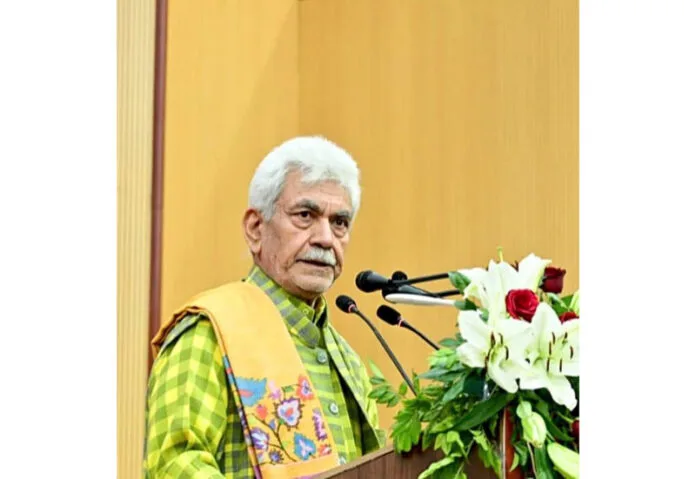
Lieutenant Governor Manoj Sinha on Thursday chaired a Union Territory-level security conference on the lines of the DGPs/IGPs Conference, stressing the need for a coordinated, whole-of-government approach to counter terrorism in all its forms.

Addressing the conference, the Lieutenant Governor said that under the leadership of Prime Minister Narendra Modi and Union Home Minister Amit Shah, such security deliberations have become a vital platform for collaboration among security and civil administration agencies.

He recalled that detailed discussions were held during the DGPs/IGPs Conference in Raipur earlier this year on the theme “Viksit Bharat: Security Dimensions”, reflecting the Government of India’s commitment to modernising policing institutions to meet emerging security challenges.

Focus on Terror Ecosystem

The Lieutenant Governor underlined the need for coordinated action against terrorists, their enablers and ideological supporters to completely dismantle the terror ecosystem and eliminate safe havens.

“The real security gains achieved since 2019 must be defended. Every single terrorist and their supporter operating in the Valley, forests, hills or villages must be neutralised,” he said.

Sinha said that over the past six years, strengthening of the security grid and close coordination among the Jammu and Kashmir Police, Army, Intelligence agencies and Central Armed Police Forces (CAPFs) have resulted in a significant decline in terrorist violence, the number of active terrorists and local recruitment.

“Armed terrorists, their supporters, overground workers (OGWs) and elements intimidating common citizens must be treated alike. We must ensure they pay a very heavy price for their actions,” he asserted.

Adapting to New-Age Threats

The Lieutenant Governor also discussed strategies to tackle evolving threats, enhance intelligence capabilities and build a next-level security grid to address new-age challenges.

“The landscape of security threats has changed profoundly. We need to move from reactive to proactive strategies and employ advanced tools such as Artificial Intelligence to counter terrorism, terror financing, radicalisation and narco-terrorism,” he said.

The one-day UT-level security conference was attended by senior officers of the J&K Police, Intelligence agencies, Civil Administration and CAPFs.

Omar Abdullah Demands Apology from Nitish Kumar Over Veil Incident

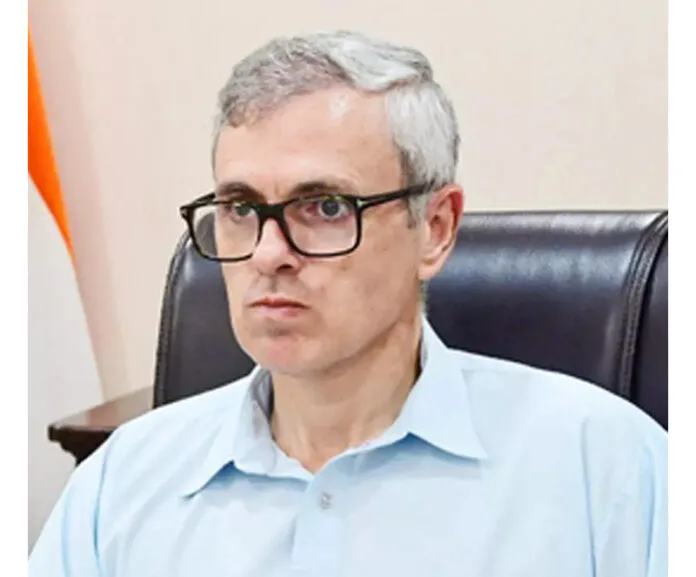
Jammu and Kashmir Chief Minister Omar Abdullah on Thursday demanded that Bihar Chief Minister Nitish Kumar apologize to a woman doctor whose veil was pulled down during a government event, escalating a controversy that has sparked public outrage.

The incident, which occurred on Monday at the Bihar Secretariat during an appointment letter distribution ceremony for AYUSH doctors, drew widespread criticism after Kumar allegedly removed the woman doctor’s naqab and remarked, “What is this?” Abdullah condemned the act as unacceptable.

Speaking to reporters, Abdullah emphasized that no justification exists for Kumar’s actions. “How can anyone touch a woman’s clothes like this?” he asked. Abdullah revealed that the affected doctor has since declined her appointment and expressed her intention not to join government service.

“Nitish Kumar should apologize to her and persuade her to take up the job,” Abdullah stated, underscoring the importance of dignity in such public interactions. He further criticized the BJP’s response, referencing Union Minister and BJP leader Giriraj Singh, who defended Kumar’s behavior.

Abdullah drew attention to the double standards in how similar incidents might play out in different contexts. “If a Muslim leader had touched the veil of a Hindu woman in Haryana or Rajasthan, there would have been a huge uproar. But since the woman here is Muslim, the BJP finds nothing wrong,” he remarked.

Clarifying his stance, Abdullah declared that the matter transcends religion and focuses on respect and decorum in public life. He urged Kumar to recognize the gravity of his mistake and offer a public apology.

On broader political issues, Abdullah responded to Congress leader Prithviraj Chavan‘s commentary regarding a perceived “total defeat” in the aerial fight with Pakistan during Operation Sindoor. He asserted that Chavan’s views reflect only personal opinion and do not encapsulate the Congress party’s official stance.

“The Congress and other opposition parties stood firmly with the government and the defense forces after the Pahalgam terror attack,” he affirmed, emphasizing national unity over partisan politics.

During his visit, Abdullah participated in the 11th edition of the India’s International Movement to Unite Nations (IIMUN) Role Model Series, where he highlighted the concept of an inclusive “idea of India.” He reflected on Jammu and Kashmir’s historical decision to accede to India, reinforcing the state’s identity within the national framework.

“I come from a Muslim-majority State which could have gone with Pakistan at the time of Partition, especially because it shared a border. Yet Jammu and Kashmir chose India. That choice defines the idea of India we must protect,” he stated.

Abdullah acknowledged the diverse interpretations of the “idea of India” but asserted that democracy and majority rule must coexist with respectful debate, even as he expressed concern about specific developments.

He also addressed current controversies surrounding admissions and selections in Jammu and Kashmir, criticizing discussions framed by religious identity. Abdullah cited a recent instance where 42 out of 50 students in the Vaishno Devi Medical College’s first MBBS batch were Muslim, alongside debates regarding the J&K football team selections for the Santosh Trophy.

“The only balance that should matter is between the talented and the untalented,” he argued passionately. “The India I want for our children is one where merit alone decides how far they go—nothing else. If someone passes the exam or plays football well, their religion should be irrelevant.”

Dry Spell to End Soon as Snowfall and Rain Forecast in Kashmir

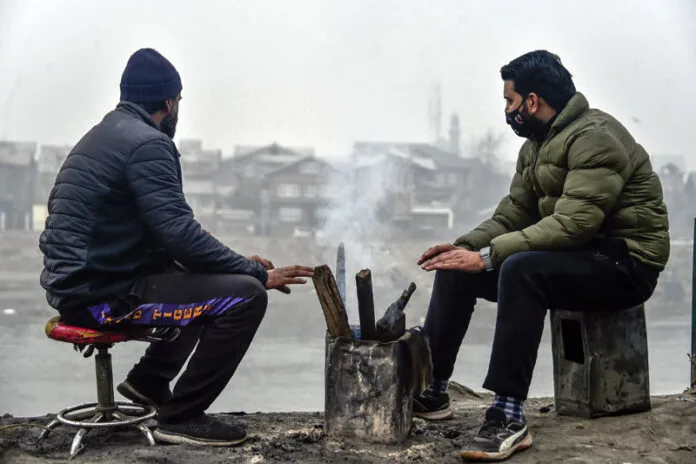
The prolonged dry spell in Kashmir is likely to end as the region prepares for Chille Kalan. The India Meteorological Department (IMD) forecasts snowfall in higher reaches and rain in the plains after nearly two weeks of dry weather. Weather conditions are expected to change from December 18 to 19, bringing partly to generally cloudy skies.

An official from the Meteorological Department stated that residents might experience very light snowfall at isolated higher reaches of North and Central Kashmir. The active western disturbance is predicted to influence the area from late night of December 20 to December 21, resulting in light to moderate snowfall in higher altitudes and light to moderate rain in many areas of Jammu and Kashmir.

The forecast anticipates that the weather on December 22 will remain generally cloudy, with light rain or snowfall scattered across the region. From December 23 to 29, the skies may be partly to generally cloudy, while December 30 and 31 could bring the possibility of light snowfall at isolated higher reaches.

In light of the potential weather changes, the MeT Department has issued a snowfall advisory, predicting that significant snowfall may impact higher reaches of Kupwara, Bandipora, and Ganderbal districts, especially on December 21. The department has urged travelers and transporters to plan their journeys carefully, adhering to traffic and administrative advisories.

As this weather pattern approaches, it’s noteworthy that temperatures across Jammu and Kashmir have remained above normal. In Srinagar, the maximum temperature recorded was 10.6°C, approximately 1.2°C above average, while the minimum temperature settled at 0.2°C. The famous tourist destination, Gulmarg, recorded a maximum of 8.8°C, nearly 4°C above normal, and a minimum of 1.6°C.

In northern Kashmir, Kupwara registered a maximum of 10.8°C and minimum of -1.0°C. Nearby, Pahalgam noted 11.2°C and 0.4°C, while Qazigund recorded 13.0°C and 0.8°C.

In the Jammu region, Jammu city saw higher temperatures with a maximum of 22.3°C and minimum of 11.0°C. However, the MeT Department did confirm that no rainfall has been recorded across any station in the past 24 hours.

No Compromise On Safeguard Mechanism In Nuclear Bill: Jitendra Singh

0

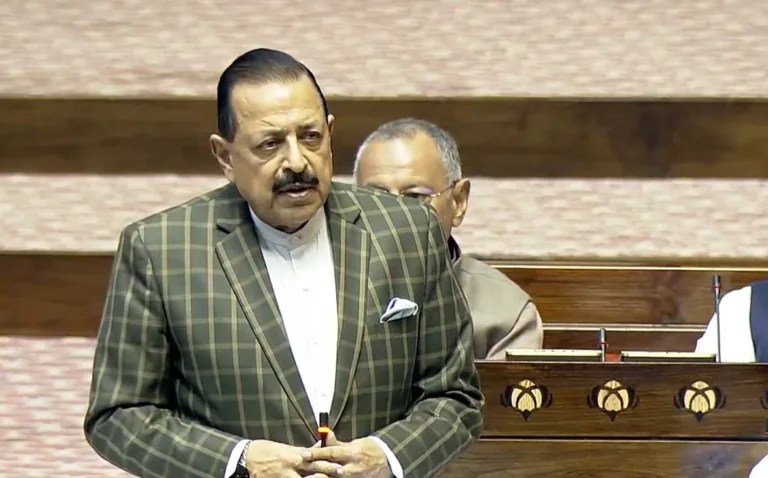
The Rajya Sabha on Thursday took up a discussion on the nuclear energy bill, with Union Jitendra Singh asserting that no compromise will be made with the safeguard mechanism in place.

Singh, the Minister of State, Department of Atomic Energy, moved the Sustainable Harnessing and Advancement of Nuclear Energy for Transforming India (SHANTI) Bill, which seeks to open the tightly-controlled civil nuclear sector for private participation.

The bill was passed in the Lok Sabha on Wednesday.

The minister stated that nuclear is a reliable 24×7 power supply source, which is not so in the case of other renewable energy options.

“In the last 10-11 years, India has assumed a global role for itself. India is no longer following others as it happened earlier…we are the first line nation. We are no longer followers. India is offering cues for others to follow,” he said.

It is for the first time after 2014, priority being given to global concerns, whether it is climate, energy, energy security or clean energy, he added.

He told the House that there will be a diversion towards clean energy for a number of reasons because the entire world is moving towards that, and it is also important for us to achieve the goal in toto, so that India becomes less and less dependent on petroleum resources or fossil fuel sources.

“We also require nuclear energy, which is a reliable 24×7 energy source, unlike other renewable energy options,” Singh said.

He informed the House that a lot has been done to upscale nuclear energy. Before 2014, the budget of the atomic energy department was just Rs 13,879 crore, which has now increased to Rs 37,483 crore in the current year.

He said that in 2015, this government took another bold decision and opened the nuclear sector for joint ventures, but those were limited to PSUs only and not to the private (players).

In 2017, in a cabinet decision, a bulk approval was given to set up 10 reactors. In September 2025, the Prime Minister laid the foundation of four nuclear reactors, he added.

When this (NDA) government came to power in 2014, the nuclear power capacity was just 4.7 GW; now it is 8.9GW, he pointed out.

He informed that this capacity is just 3 per cent of the required power generation, and to scale it up to at least 10 per cent by 2047, a nuclear energy mission was launched in this budget.

The important component of the mission is opening up nuclear energy for the private sector, but with certain safeguards and other surveillance mechanisms in place.

Referring to the bill, he said some adjustments and modifications are needed to accommodate private players.

He also informed that the regulatory board is also part of this bill and is being given statutory status.

“Let me assure that no compromise will be made with the safeguard (mechanism),” he said. (Agencies)