Kashmiri Pandits Protest In Jammu Against NFSA Integration, Minor Scuffle With Police
PDP Chief Mehbooba Mufti Criticizes National Conference’s Tactics
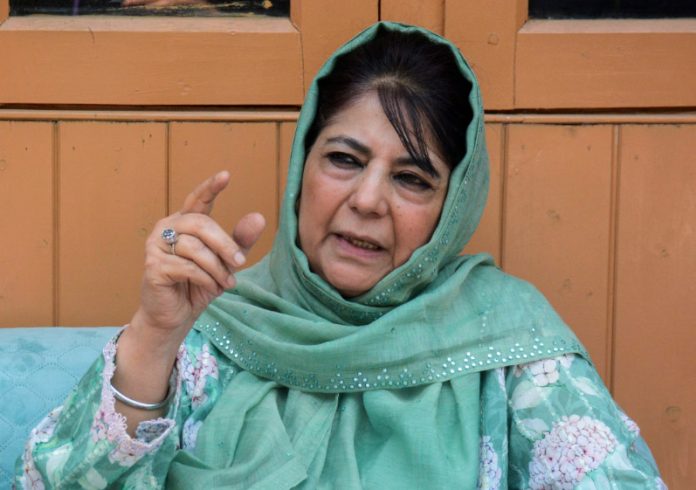
SRINAGAR, May 6: People’s Democratic Party (PDP) president Mehbooba Mufti criticized the National Conference (NC) on Wednesday for utilizing religious scripture to shift focus away from its governance failures. Mufti condemned the ruling party’s methods, asserting that their actions stem from desperation and disillusionment among the populace.
At a press conference in Srinagar, Mufti addressed NC’s chief spokesman Tanvir Sadiq and MLA Zadibal, who demanded she swear by the Quran, claiming her party supported the BJP in the Rajya Sabha polls last year. “For God’s sake, do not drag Quran into politics,” Mufti urged. “They are doing this to hide their failures over the past two years in government. People are disheartened with them,” she added.
Mufti’s comments follow a Right to Information (RTI) response indicating that the PDP did not appoint a chief agent for the Rajya Sabha elections held in October last year. This revelation fueled the NC’s allegations that three PDP MLAs had voted for the BJP in those elections.
Mehbooba Mufti emphasized the pressing issues the state faces, stating, “Houses are being demolished under the pretext of fighting drugs. Earlier, the same tactic was employed to combat terrorism.” She expressed concern over the plight of employees being dismissed unexpectedly and highlighted the struggles of students who excel through open merit.
“This government has become a mute spectator to the distressing conditions of our people,” Mufti lamented. She reinforced that while her party welcomes political competition, it should not invoke religious texts to make its case. “They should keep religious scriptures out of political disputes,” she firmly stated.
The former chief minister’s statements resonate with citizens feeling the brunt of inadequate governance and her call for a more ethical approach to political discourse underscores the divisive tactics of current political strategies.
As the political landscape in Jammu and Kashmir continues to evolve, Mehbooba Mufti’s remarks elevate discussions surrounding the ethical responsibilities of political parties amidst growing public scrutiny.
Oath-Taking Ceremony For New BJP Govt In Bengal To Be Held On May 9: Party State Unit Chief
‘Low Intensity’ Amritsar Blast Part Of Pak ISI’s Designs On Op Sindoor Anniversary: Punjab DGP
Op Sindoor Paid Dividends, But War Not Sustainable, Says Farooq Abdullah
Cong Declares Support To TVK, Says Alliance Covers Future Polls As Well
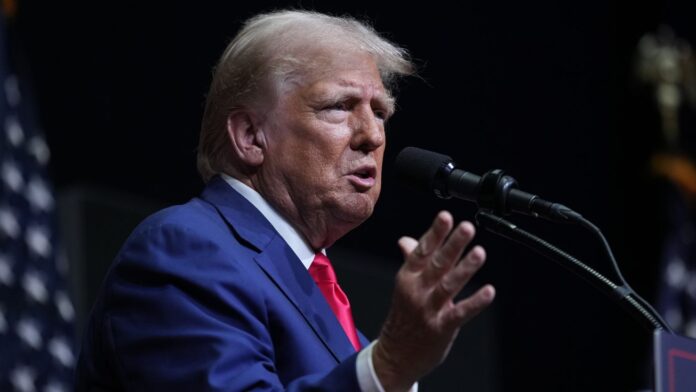
Trump Halts ‘Project Freedom’ Amid Iran Negotiation Progress
President Donald Trump announced on Tuesday that he has paused ‘Project Freedom’, aimed at escorting ships through the strategic Strait of Hormuz. This decision follows his claim of significant progress in negotiations with Iran, which seeks to formalize a peace agreement to end the ongoing conflict.
In a detailed post on Truth Social, Trump conveyed, “Great progress has been made toward a complete and final agreement with representatives of Iran.” He noted that Pakistan and other allied nations have requested this brief suspension of the project to facilitate the negotiation process.
“Given the military successes achieved during our campaign against Iran, we have mutually decided to pause Project Freedom, although the blockade will remain intact,” Trump elaborated. This project was initiated on Monday to assist ships stranded due to the closure of the Strait of Hormuz. Trump had earlier announced the operation on Sunday, and it was quickly put into action by the US Central Command.
However, the initiation of Project Freedom created tensions in the region. The Strait of Hormuz is a critical artery for global oil transportation, handling approximately one-fifth of the world’s oil supplies. The United Arab Emirates (UAE) reported that Iranian forces attacked its ships, while the US also claimed to have destroyed a number of Iranian small boats.
Trump’s announcement came shortly after US Secretary of State Marco Rubio declared the conclusion of Operation Epic Fury, which began on February 28. Rubio noted that the operation met its objectives, stating, “We’re not cheering for an additional situation to occur. We would prefer the path of peace. What @POTUS would prefer is a deal… that is, so far, not the route that Iran has chosen.”
During a press conference, Rubio clarified the humanitarian goals behind Project Freedom. “Our mission was to rescue nearly 23,000 civilians from 87 different countries left abandoned by the Iranian regime,” he explained. He emphasized that this initiative is defensive rather than offensive: “This is not an offensive operation. If no one attacks us, there will be no shooting.”
As the situation develops, diplomatic observers will be keenly watching how these negotiations will shape future relations between the United States and Iran. The potential for a formal agreement raises questions about regional stability and the safety of maritime operations in the strategically vital Gulf.
While many await the outcome of these negotiations, the intricacies of military and diplomatic strategy continue to unfold in the tense atmosphere surrounding the Strait of Hormuz. With the conflict reaching a pivotal moment, stakeholders across the globe hope for a resolution that prioritizes peace and security in the region.
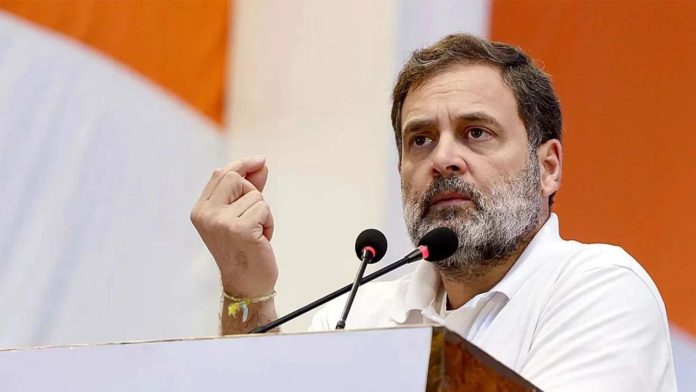
Rahul Gandhi Claims Every 6th BJP MP Elected via ‘Vote Chori’
Congress leader Rahul Gandhi recently claimed that every sixth Member of Parliament (MP) from the Bharatiya Janata Party (BJP) in the Lok Sabha achieved their seat through vote chori, a term implying electoral fraud. Speaking on X, he challenged the BJP’s election integrity, suggesting that these MPs deserve to be labeled ‘ghuspethiya’, or infiltrators, according to the party’s own linguistic framework.
Gandhi’s comments, made on Wednesday, came amidst a broader critique of the BJP’s electoral practices. He expressed concerns regarding the legitimacy of the BJP’s parliamentary representation, stating, “If fair elections took place now, they would struggle to secure even 140 seats.”
The Leader of Opposition in the Lok Sabha said, “When vote chori occurs, sometimes individual seats are stolen, while at other times, entire governments fall prey. Of the 240 BJP MPs in the Lok Sabha, approximately every sixth MP secured their seat through these means.”
Continuing his criticism, Gandhi stressed the importance of accountability and transparency within electoral processes. He remarked, “They are not hard to identify. Should we, in the BJP’s own parlance, label them ‘ghuspethiya’? And what about Haryana? The entire government there is an ‘ghuspethiya’.”
His pointed remarks reflect a growing frustration with the BJP’s governance tactics and electoral practices that, according to him, manipulate various democratic institutions for political gain. Gandhi underscored his argument by accusing BJP of distorting voter lists and sacrificing electoral integrity for power.
In the wake of the BJP’s significant victories in the Bengal and Assam assembly polls, Gandhi referred to the outcomes as a “theft” of the public mandate. He alleged that these results are symptomatic of the BJP’s intent to undermine democracy in India. “The theft of Assam and Bengal’s mandate is a big step forward by the BJP in its mission to destroy Indian democracy,” he stated.
Gandhi’s comments extended beyond party lines, urging supporters and rivals alike to reassess their perspectives. He implored those who revel in the Trinamool Congress’s (TMC) setbacks to consider the broader implications. “This is not about one party or another. This is about India,” he emphasized on X.
The BJP notably ousted the TMC from power in West Bengal and maintained its stronghold in Assam in the recent assembly poll results, which could further intensify political debates and future elections.
Political analysts suggest that Gandhi’s focus on electoral integrity may resonate with a voter base increasingly attuned to issues of transparency and accountability in governance. Whispers of ‘vote chori’ echo concerns within a significant segment of the electorate as parties prepare for future encounters at the ballot box.
In conclusion, Gandhi’s allegations highlight ongoing tensions in Indian politics, where electoral integrity and democratic processes remain pivotal in influencing public sentiment and party fortunes. His challenge to the BJP to uphold democratic values serves as a reminder of the intricate dance of power in the ever-evolving political landscape of India.
Shah Named BJP’s Central Observer For Election Of Legislative Party Leader In West Bengal
Srinagar Police Attach ₹1.20 Crore Property of Drug Peddler
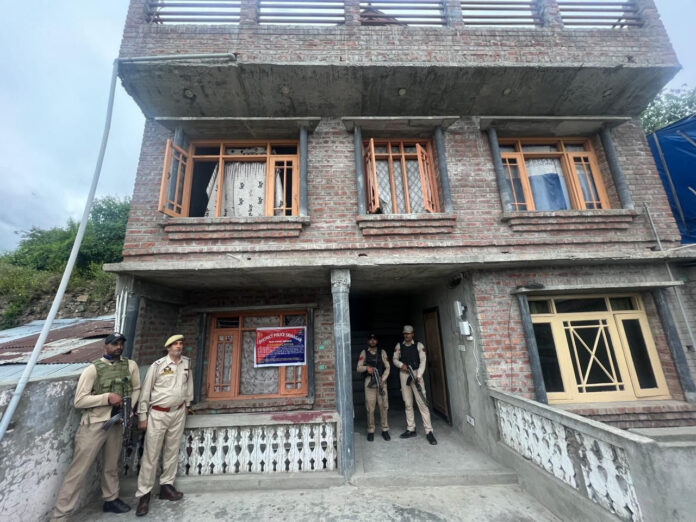
In a significant crackdown on drug trafficking, Srinagar Police attached immovable property worth ₹1.20 crore belonging to notorious drug peddler Nisar Ahmad Sheikh on Tuesday. This action forms part of the ongoing 100 Days Campaign under the Nasha Mukt Jammu & Kashmir Abhiyaan.
The police initiated the attachment under Section 68-F of the NDPS Act, connecting it to FIR No. 61/2019 registered under Sections 8/20 of the NDPS Act. The attached assets include a three-storey fully renovated residential house, a single-storey concrete kitchen block with three washrooms, and land measuring 09 marlas.
Nisar Ahmad Sheikh, son of Habibullah Sheikh and a resident of Kani Dewar, Sheikh Mohallah, Hawal, Srinagar, has been linked to these properties through illicit drug-related activities. Investigations revealed that Sheikh acquired this property through the proceeds of drug trafficking.
The Srinagar Police’s decisive action underscores their unwavering commitment to dismantling the financial infrastructure of drug networks. By targeting properties acquired from illegal activities, they aim to challenge the operations of drug peddlers vigorously. Authorities stated that such measures not only disrupt drug trafficking networks but also foster community safety.
Following due legal procedures, the assets have been identified as illegally acquired based on thorough investigations, and they now face attachment under the provisions of the NDPS Act. This decisive move sends a strong message to others involved in similar illegal activities.
Officials emphasized their resolve to intensify operations against drug peddlers and to engage the community in this battle. They encouraged citizens to cooperate by reporting any information pertinent to drug abuse or trafficking. Encouraging public participation plays a critical role in combating the drug menace.
The Nasha Mukt Jammu & Kashmir campaign, launched by the local administration, focuses on eradicating drugs from the region, making communities safer and healthier. This initiative aims to raise awareness about the dangers of narcotics and promote rehabilitation for those affected by drug addiction.
Reports indicate that Jammu & Kashmir continues to grapple with significant drug abuse issues. This operation signifies the authorities’ vigorous commitment to tackling these challenges head-on and serving justice against those who undermine societal well-being.
This move aligns with a broader national agenda to control drug trafficking that has plagued numerous states across India. The popularity and reach of various narcotics have necessitated stringent measures, which include community awareness drives and legal actions against offenders.
Through swift actions, such as the attachment of significant properties linked to drug trafficking, law enforcement agencies aim to disrupt and dismantle the apparatus supporting these crimes. The Srinagar Police have set a precedent by taking strong action against drug-related offenses, showcasing their dedication to a drug-free society.