Thursday, July 9, 2026
Home Blog Page 15

Operation Sheruwali | Fire Assault Launched On Suspected Hideouts In J&K’s Rajouri

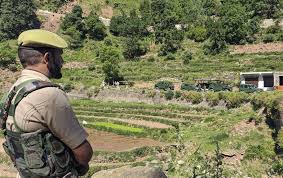
Security forces on Tuesday launched a fire assault on specific hideouts and inducted additional troops as the operation to track down terrorists believed to be hiding in the dense forests of Jammu and Kashmir’s Rajouri district entered the fourth day, officials said.
The assault was launched on suspected hideouts in the Dorimal-Gambhir Moghla belt of Manjakote area amid intensified efforts to flush out the terrorists, they said.

Officials said plumes of smoke were seen rising from the forested areas following the assault, indicating that targeted locations were struck during the operation.

Security forces are also tracking blood stains believed to have been left behind by the fleeing terrorists after a hideout was destroyed during an assault carried out on Monday, they said.

Backed by helicopters, drones and sniffer dogs, joint teams of the Army, Jammu and Kashmir Police and paramilitary forces are conducting extensive searches in adjoining areas. The cordon around the operation zone has been further strengthened with the induction of additional troops, officials said.

More reinforcements have been rushed to the forests of Dori Maal in the Gambhir Moghla area, where the anti-terror operation is underway. Additional operational teams have also been deployed to expand the search area and intensify efforts to track and eliminate the terrorists, they added.

An encounter had broken out between terrorists and security forces in the Dorimal-Gambhir Moghla belt on Saturday after a joint team launched Operation Sheruwali following intelligence inputs about the presence of terrorists in the Singhpora-Chatroo area.

A joint team of the Army, Jammu and Kashmir Police and the Central Reserve Police Force (CRPF) had launched a massive cordon-and-search operation in the area on Saturday based on specific information about the movement of suspected terrorists.

The operation led to a brief exchange of fire after contact was established with the terrorists, prompting security forces to continue extensive searches in the rugged and heavily forested terrain.

According to preliminary reports, two to three terrorists, including a commander, are believed to be hiding in the area. The Army’s White Knight Corps had said that contact was established with terrorists on Saturday in the general area of Gambhir Moghla during an intelligence-based joint operation carried out with the police and CRPF. (Agencies)
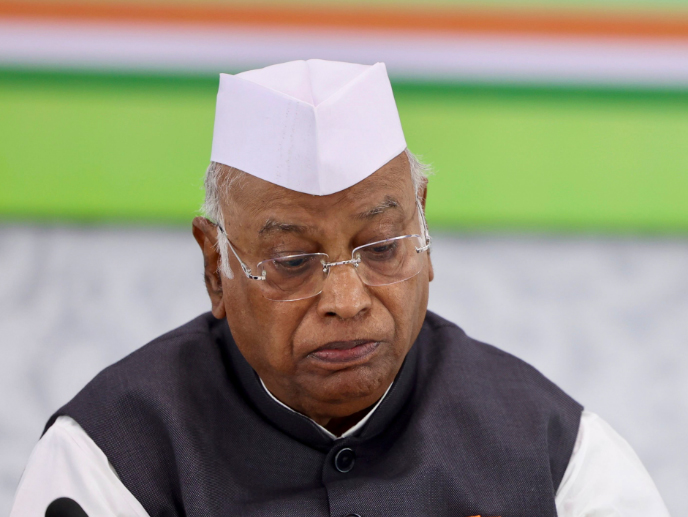
When Crude Oil Prices Fell, Why Did Petrol, Diesel Become More Expensive, Asks Kharge

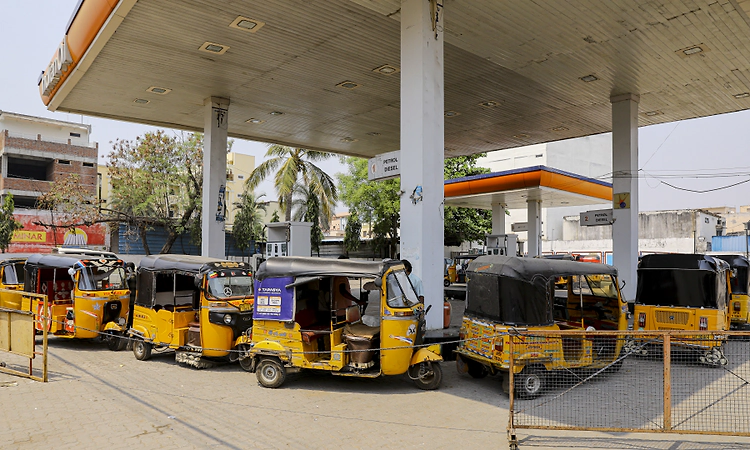
Congress president Mallikarjun Kharge attacked the Modi government on Tuesday over the rising fuel prices and asked why relief was not provided to people when crude oil prices fell during the last 12 years.
Kharge cited an official statement by the PIB to state that exactly 12 years ago today — on May 26, 2014 — when Prime Minister Narendra Modi assumed office, the price of crude oil in the Indian basket stood at USD 108.05 per barrel, and the Dollar-Rupee exchange rate was Rs 58.59.

At that time, petrol was available at Rs 71.51 per litre, and diesel at Rs 56.71 per liter, he said in his post in Hindi on X.
Today, the price of crude oil is below USD 99 per barrel; yet, the prices of petrol and diesel have surged to Rs 102.12 and Rs 95.20 per litre, respectively, Kharge said.
In other words, while crude oil has become cheaper, petrol has become approximately 42.8% more expensive, and diesel about 67.9% more expensive, he said.
“Every economist knows that the rising cost of petrol and diesel impacts every sector. From transportation to food commodities, the burden of inflation on the common man continues to intensify. Despite this, the government’s profiteering continues unabated,” Kharge said.

“The question is straightforward: When crude oil prices have fallen, why have petrol and diesel become more expensive?” he said.

Why is there no relief for the public, Kharge asked.
The Congress on Monday launched a scathing attack on Prime Minister Narendra Modi over the latest fuel hike, with Rahul Gandhi alleging that the “mehangai manav” has struck again and he has just one job of making promises during elections and attacking people’s pockets at other times.
Kharge also lashed out at the Modi government over the issue and asked who is benefitting from this “daily robbery”.

Petrol and diesel prices were raised by Rs 2.61-2.71 per litre on Monday, marking the fourth increase in less than two weeks as state-owned fuel retailers continued to pass on rising international oil prices to consumers. (Agencies)

J&K Administration Conducts Anti-Encroachment Drive In Udhampur

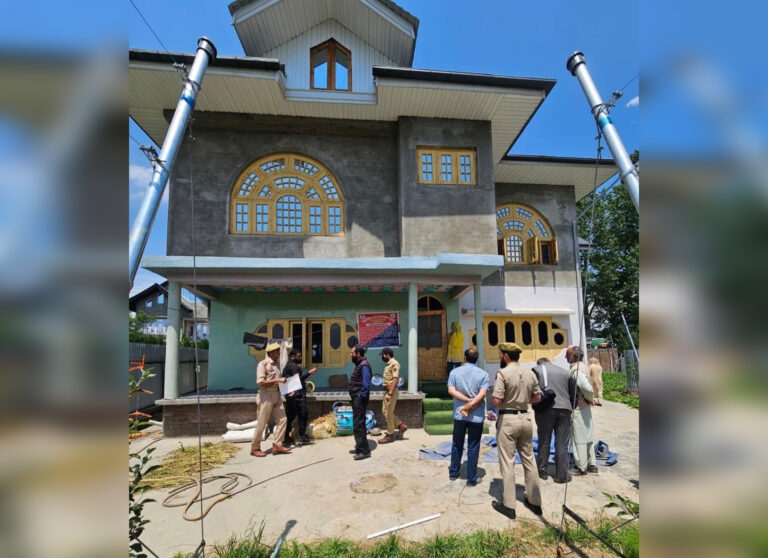
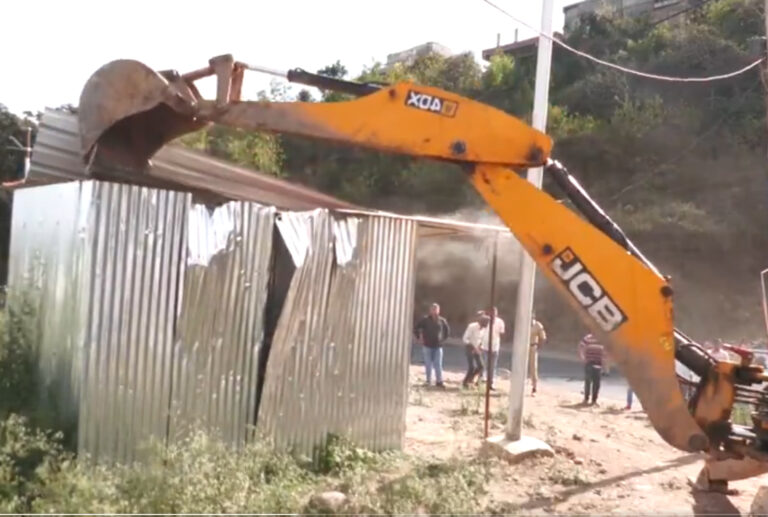
An anti-encroachment drive was carried out by the administration on the Dhar Road near Mian Bagh, which is located close to the Air Force Road in Jammu and Kashmir’s Udhampur.
During the operation, several temporary tin sheds that were constructed illegally to sell goods on the roadside were completely demolished and dismantled.

As per Naib Tehsildar Roun Maroof Khan, the issue had been persisting in the region for a long period of time, and many people had filed complaints regarding the same in the Tehsildar’s office.
“This issue was ongoing for a long time. Many people were filing complaints in the DC office and to the tehsildar that many people have set up temporary sheds on state land. This is a highway, and people used to gather here in the evening, which poses a risk of accidents,” Khan said.
Focusing on the sensitivity of the region, the official said out of the total seven sheds, five were removed by the public themselves; meanwhile, the other two were demolished by the administration.

“Recently, on the request of the Air Force and the Police, they brought to our notice that out of the seven sheds here, two have CCTV cameras installed, which focus on the road. This is a sensitive area. There are Air Force stations here. Movement of other security establishments also takes place here. We have removed those temporary sheds today after issuing them a notice beforehand. Five of the sheds were removed by themselves. We have removed the remaining two sheds today,” he added.

In a similar case on May 23, the district administration of Jammu launched a demolition drive against properties allegedly linked to drug smugglers in the Miran Sahib area as part of an ongoing crackdown on narcotics-related activities.
Bulldozer action against the alleged illegal properties was underway, with a large number of police personnel and administrative officials deployed at the site to maintain law and order during the operation. (Agencies)

Property Worth Rs 1 Crore Of Alleged Drug Peddler Attached In J&K’s Anantnag

Property worth around Rs 1 Crore belonging to an alleged drug peddler was attached in Jammu and Kashmir’s Anantnag district, police said on Tuesday.
A police spokesman said Srinagar Police attached an immovable property belonging to a “notorious drug peddler” in connection with a narcotics case registered here.
He said the action was part of the police’s sustained crackdown on narcotics trafficking under the ongoing ‘Nasha Mukt J-K Abhiyan’.
The attached property is a residential house belonging to Aamir Hassan Mir, a resident of Bonpora Dupatyar in the Bijbehara area of the south Kashmir’s Anantnag district, he said.
The property has an estimated market value of approximately Rs 1 crore, he said.
The action was carried out under Section 68(F) of the Narcotic Drugs and Psychotropic Substances Act, the spokesman said.
The attachment proceedings were executed in the presence of the Executive Magistrate First Class, Bijbehara, he said.

The spokesman said the property shall neither be sold, transferred, or otherwise dealt with without prior permission from the competent authority.

Police Attach Rs 1.25 Cr Property Of Alleged Drug Peddler In J&K’s Kathua

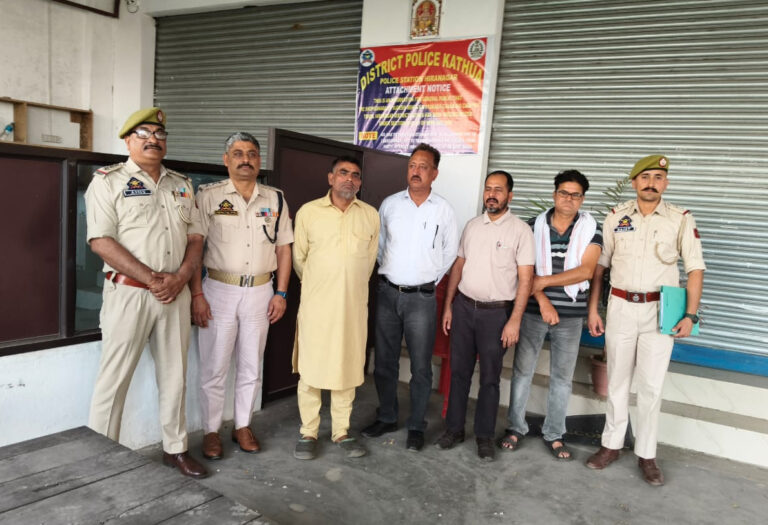
Police on Tuesday attached an immovable property worth around Rs 1.25 crore belonging to an alleged drug peddler in Jammu and Kashmir’s Kathua district under the provisions of the NDPS Act, officials said.
The attached property comprises shops and a dhaba located at Chapper Morh in Hiranagar and belongs to Sudesh Mehta, son of Parkash Chand, a resident of Chapper village in the district, they said.
According to police, the property was identified as illegally acquired during the course of an investigation and was prima facie found to have been purchased using proceeds generated from illicit trafficking of narcotic drugs and psychotropic substances.
Officials said that the attachment was carried out under relevant sections of the Narcotic Drugs and Psychotropic Substances (NDPS) Act. A police team formally attached the property in the presence of officials from the Revenue, Public Works, and Roads and Buildings (R&B) departments, they said.
During the investigation, it surfaced that the property, with an estimated market value of Rs 1.25 crore, had allegedly been acquired through income generated from narcotics-related activities, police said.
Local residents welcomed the move, describing it as a significant step in curbing the drug menace and dismantling the financial networks of drug traffickers in the district.
Police reiterated their commitment to intensifying the crackdown on drug trafficking by targeting both narcotics networks and assets allegedly created through the proceeds of the illegal trade. (Agencies)

Eye On China: Quad Ramps Up Indo-Pacific Surveillance, Critical Mineral Cooperation

The Quad grouping on Tuesday expanded cooperation in critical minerals and energy while unveiling new measures to boost maritime surveillance and port infrastructure across the Indo-Pacific against the backdrop of China’s growing military posturing in the region.
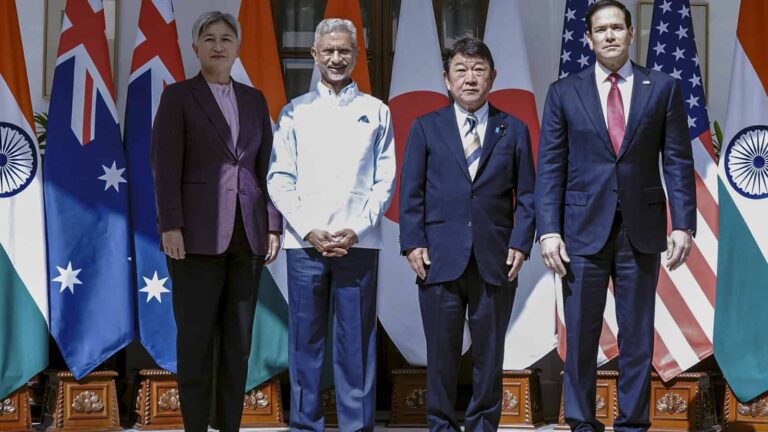
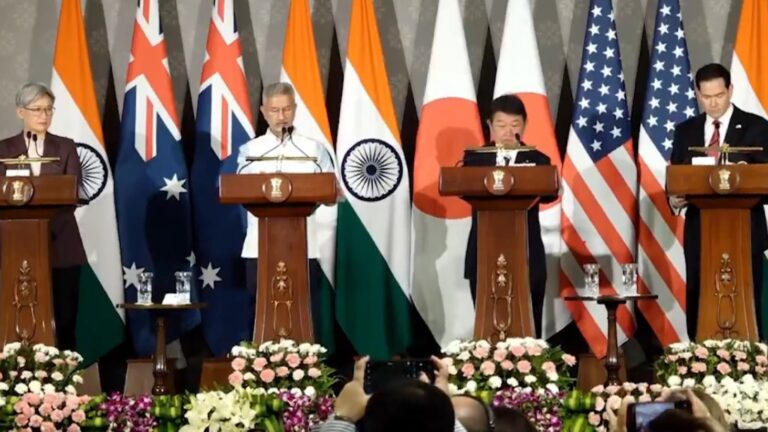
The new measures were announced following a meeting of the grouping’s foreign ministers in New Delhi. The meeting was chaired by External Affairs Minister S Jaishankar and attended by US Secretary of State Marco Rubio, Australian Foreign Minister Penny Wong and Japanese Foreign Minister Toshimitsu Motegi.
In his media statement, Jaishankar announced a critical minerals framework and an Indo-Pacific energy security initiative under the broader Quad agenda to confront major challenges facing the region.
“Much of the discussions and indeed the bilateral exchanges were devoted to the current state of the world,” Jaishankar said at the end of the meeting.
Naturally, the focus of the deliberations was on issues of relevance to the Indo-Pacific, he said.
“Because we are four maritime democracies located at different ends of the Indo-Pacific, the exchange of perspectives was an exercise of considerable value.”
“We spent some time on the question of safe and unimpeded maritime commerce and reaffirmed the significance of scrupulously observing international law,” the minister said.
Jaishankar said a free and open Indo-Pacific has many dimensions and facets and the Quad meeting took stock of the progress in many of them.
We believe strongly that economic resilience should be promoted and supply chains should be strengthened, he noted, adding that the deliberations also touched upon current energy and fertiliser availability and that of critical minerals.
“In the coming days, whether it is economic activity, energy trade or maritime commerce, the Indo-Pacific will become even more important to the world. The responsibilities of the Quad will grow commensurately, and we must prepare for that,” he said.
Countering the common threat of terrorism also figured in the talks, the external affairs minister said.
“There must be zero tolerance for terrorism, and nations subject to terrorist attacks have the right to defend themselves,” he said.
In his media statement, US Secretary of State Rubio said the Quad meeting decided to launch an Indo-Pacific Maritime Surveillance Cooperation
 Initiative It will leverage each of our country’s maritime surveillance capabilities in the Indo-Pacific, he said.
Rubio also announced expansion of the Indo-Pacific Maritime Domain Awareness Initiative among the Quad nations.
“We’re announcing plans to work with Fiji to advance that country’s port infrastructure. It’ll be the first time that the Quad partners work together on a port infrastructure project,” he said.
Australian Foreign Minister Wong said the Quad recognised efforts towards a diplomatic resolution to ensure freedom of navigation in the Strait of Hormuz.
“We recognised the importance of maintaining the principle of freedom of navigation and our opposition to any tolling proposition,” she said, referring to Iran’s plan to demand fees for transiting the Strait.
We are working together to strengthen cooperation against scam centres, particularly in Southeast Asia, Wong said.
The Australian foreign minister said the Quad will be coordinating on maritime surveillance efforts initially in the Indian Ocean. (Agencies)

CNG Price Hiked By Rs 2 Per Kg

CNG price in the national capital was hiked by Rs 2 per kg on Tuesday, the fourth increase in less than two weeks.
CNG will now cost Rs 83.09 per kg, according to Indraprastha Gas Ltd.

This is the fourth such increase since May 15, taking the cumulative hike to Rs 4 per kg. (Agencies)

Indo-Pacific Must Remain Driver For Global Growth: Jaishankar At Quad Meet

The Indo-Pacific must remain a driver for global growth and stability, and the Quad must work towards ensuring maritime security and promoting economic choices in the region, External Affairs Minister S Jaishankar said on Tuesday.
In his opening remarks at the Quad foreign ministers’ meeting, he specifically called for “trusted and transparent” partnerships to bring peace and prosperity to the Indo-Pacific.
The New Delhi meeting was attended by US Secretary of State Marco Rubio, Australian Foreign Minister Penny Wong, and Japanese Foreign Minister Toshimitsu Motegi, with Jaishankar presiding over it.
The Quad meeting came amid rising global concerns over China’s increasing military muscle-flexing in the Indo-Pacific.
“Our focus will clearly be on the Indo-Pacific, which is the specific limit of the Quad,” the external affairs minister said in his televised opening remarks.
“At the global level, we have to address issues like supply chain resilience, connectivity choke points, manufacturing and resource concentrations and gaps in critical infrastructure. Each one of them offers a new argument for more partnerships,” he said.
Jaishankar, without elaborating, also talked about specific “concerns” facing the Indo-Pacific.
“This will require enhancing strategic confidence, ensuring maritime security, promoting economic choices, and fostering a deeper collaborative ethos. And that is best done by promoting trusted and transparent partnerships,” he said.
The external affairs minister added, “As maritime democracies, pluralistic societies and market economies, we share the responsibility towards a free and open Indo-Pacific. The region must remain a driver for global growth and stability.”
Australian Foreign Minister Penny Wong called for making the Quad as strong and as effective as possible.
We are determined to continue the momentum of the Quad, and we want a peaceful, stable, prosperous Indo-Pacific, she said.
Rubio said the areas in which the Quad has been working together became more relevant because of recent events around the world.

Quad can address some of the most significant problems facing the world, including in areas of energy security, freedom of navigation, and critical minerals, he said. (Agencies)

WAsia Crisis: FM Urges Focus On Fuel, Fertiliser, Forex; Hits Out At Critics For Peddling Pessimism

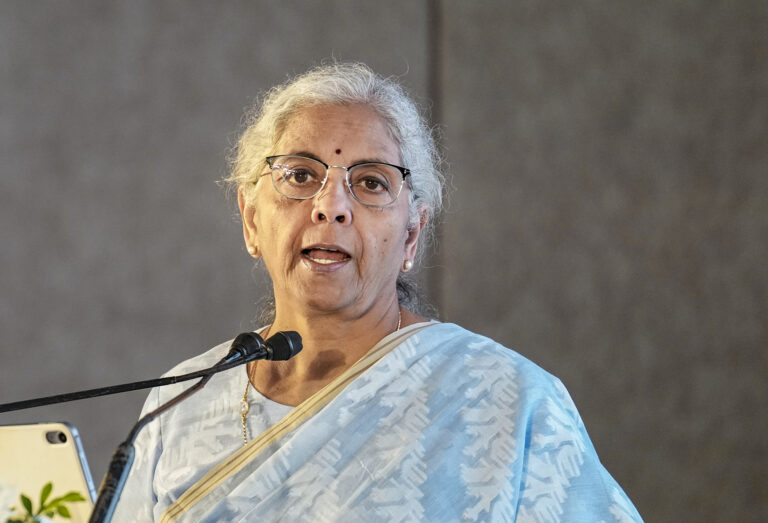
Union Finance Minister Nirmala Sitharaman on Monday called for increased focus on 3Fs — fuel, fertiliser and forex — amid the West Asia crisis, underlining that the domestic economy continues to be resilient.
Speaking at an event to celebrate the 37th anniversary of SIDBI here, the FM hit out at naysayers for creating a cynical and pessimistic narrative after PM Narendra Modi’s appeals on altruism, pointing out that India cannot afford fearmongering and that giving the confidence to people is necessary.
Stating that India’s policy response has been calibrated to preserve domestic growth, FM said the cut in diesel and petrol excise duties will lead to a revenue impact of Rs 1 lakh crore.
Apart from rising crude prices, the fertiliser prices have hit “unimaginable” levels, the FM said, adding that high gold prices are creating “some challenges” on the external front.
There is a need to focus on the three Fs of fuel, fertiliser and forex, Sitharaman said, pointing out that PM Modi’s appeals are in this context.
However, some “naysayers” have jumped into the situation, claiming that everything is “crumbling”, which is not just right, the FM said.
“‘All the good that is being done by the common people themselves, that is forgotten. And a pessimistic, cynical narrative is generated, which is just not right,” she said.
“We should appreciate that the challenges are more externally driven. We must also recognise that India’s domestic economic situation remains positive and resilient even today,” the FM said.
“India cannot afford fearmongering. We need to give confidence to the people with our words and with our actions,” she said.

FM also highlighted that the issue of Rs 8.1 lakh crore locked in delayed payments for MSMEs is impacting their working capital and growth. She urged public sector undertakings not to exceed the 45-day window to make payments to MSMEs. (Agencies)

‘Mehangai Manav’ Strikes Again: Rahul Slams PM On Fuel Hike

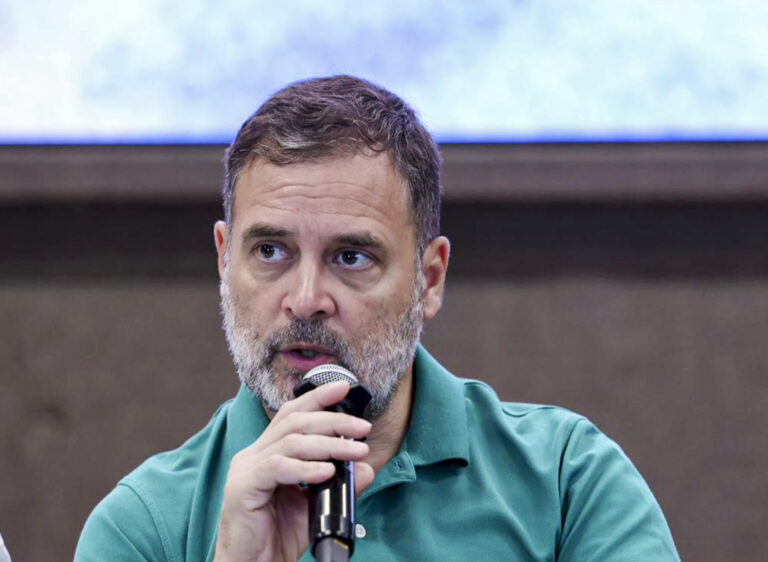
Congress leader Rahul Gandhi on Monday launched a scathing attack on Prime Minister Narendra Modi over the latest fuel hike, saying ‘mehangai manav’ has struck again and he has just one job of making promises during elections and attacking people’s pockets at other times.
Petrol and diesel prices were raised by Rs 2.61-2.71 per litre on Monday, marking the fourth increase in less than two weeks as state-owned fuel retailers continued to pass on rising international oil prices to “Mehangai manav’ Modi strikes again. He raises petrol and diesel prices in installments – ensuring that your pockets are quietly picked, bit by bit,” Gandhi said in his post in Hindi on X.

“For months, I had been warning of an impending economic storm. But Modi Ji, true to form, was busy with elections at the time and the moment the elections ended, he hiked the prices of petrol and diesel by Rs 8,” the Leader of Opposition in the Lok Sabha said.
And, this upward trend will only continue, he added. “‘Mehangai manav’ Modi has just one job: promises during elections, and attacking people’s pockets at other times,” Gandhi said. With the latest revision, cumulative increases in petrol and diesel prices have nearly touched Rs 7.5 per litre since fuel price revisions resumed on May 15 after a prolonged freeze, stoking concerns over inflationary pressures and higher transportation costs across the economy.

The latest revision pushed petrol prices higher by Rs 2.61 per litre and diesel by Rs 2.71, according to industry sources.
Petrol prices were raised to Rs 102.12 a litre in Delhi from Rs 99.51 previously, while diesel rates were increased to Rs 95.20 per litre from Rs 92.49.
The back-to-back increases follow a prolonged freeze in retail fuel prices and come amid elevated crude oil prices in the global market, tightening refining margins, and a weaker rupee, which have sharply raised the cost of imports.
Petrol and diesel prices were increased on May 15 by Rs 3 per litre each, and on May 19 by 90 paise a litre. This was followed by an 87-paise per litre increase in petrol and a 91-paise hike in diesel rates on May 23.
After Monday’s increase, petrol at PSU pumps in Mumbai now costs Rs 111.21 per litre and diesel Rs 97.83, while prices in Kolkata rose to Rs 113.51 and Rs 99.82, respectively. In Chennai, petrol is priced at Rs 107.77 and diesel at Rs 99.55.
Prices vary across states due to local taxes.
State-owned Indian Oil Corporation (IOC), Bharat Petroleum Corporation Ltd (BPCL) and Hindustan Petroleum Corporation Ltd (HPCL) together control 90 per cent of India’s fuel market.
The back-to-back increases come after global crude oil prices surged more than 50 per cent since late February following US-Israeli strikes on Iran and disruptions to shipments through the Strait of Hormuz, a critical global oil transit route.
Fuel retailers had in the first two-and-half-months of the conflict kept pump prices low despite rising input costs, a move the government said was aimed at shielding consumers from inflation. Opposition parties, however, accused the government of delaying price revisions until after key state elections.
The May 15 increase came after the ruling Bharatiya Janata Party (BJP) expanded its electoral footprint by winning three of five state and UT elections, including West Bengal. (AGENCIES)