Author: Himalayan Express

  • Teacher Suspended Over Student Harassment Allegations In J&K’s Ramban

    Teacher Suspended Over Student Harassment Allegations In J&K’s Ramban

    A government school teacher has been placed under immediate suspension following allegations of harassment of a female student in Jammu and Kashmir’s Ramban district, officials said.

    The action was taken against Raiz Ahmed, posted at Government High School Harroge in Zone Gool, following a formal report submitted by an inquiry committee constituted on September 14, they said.

    The probe was ordered by authorities following complaints by a girl student alleging harassment by the teacher at the school.

    According to an order issued by the Chief Education Officer, Ramban, the teacher was suspended under rule 31 of the Jammu and Kashmir Civil Services (Classification, Control & Appeal) Rules, 1956.

    During the suspension period, Ahmed will remain attached to Government Primary School Bhatta in Zone Khari, the order said.

    Further administrative action will be taken based on the findings of the inquiry, officials said.

  • 100 Per Cent Case Of Dismissal: SC On Suspended Punjab Police DIG’s Bail Plea

    100 Per Cent Case Of Dismissal: SC On Suspended Punjab Police DIG’s Bail Plea

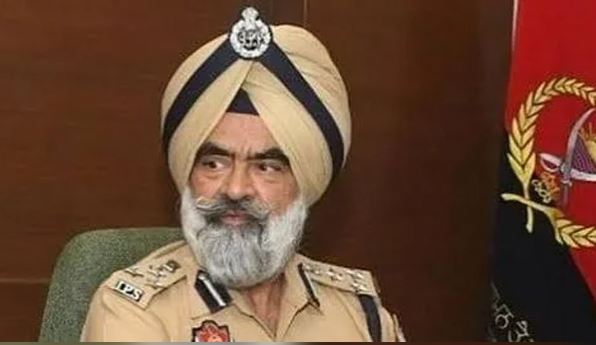
    “It’s 100 per cent case of dismissal,” the Supreme Court said on Tuesday while hearing the second bail plea of suspended Punjab Police DIG Harcharan Singh Bhullar who was arrested by the CBI in October last year in connection with a corruption case.

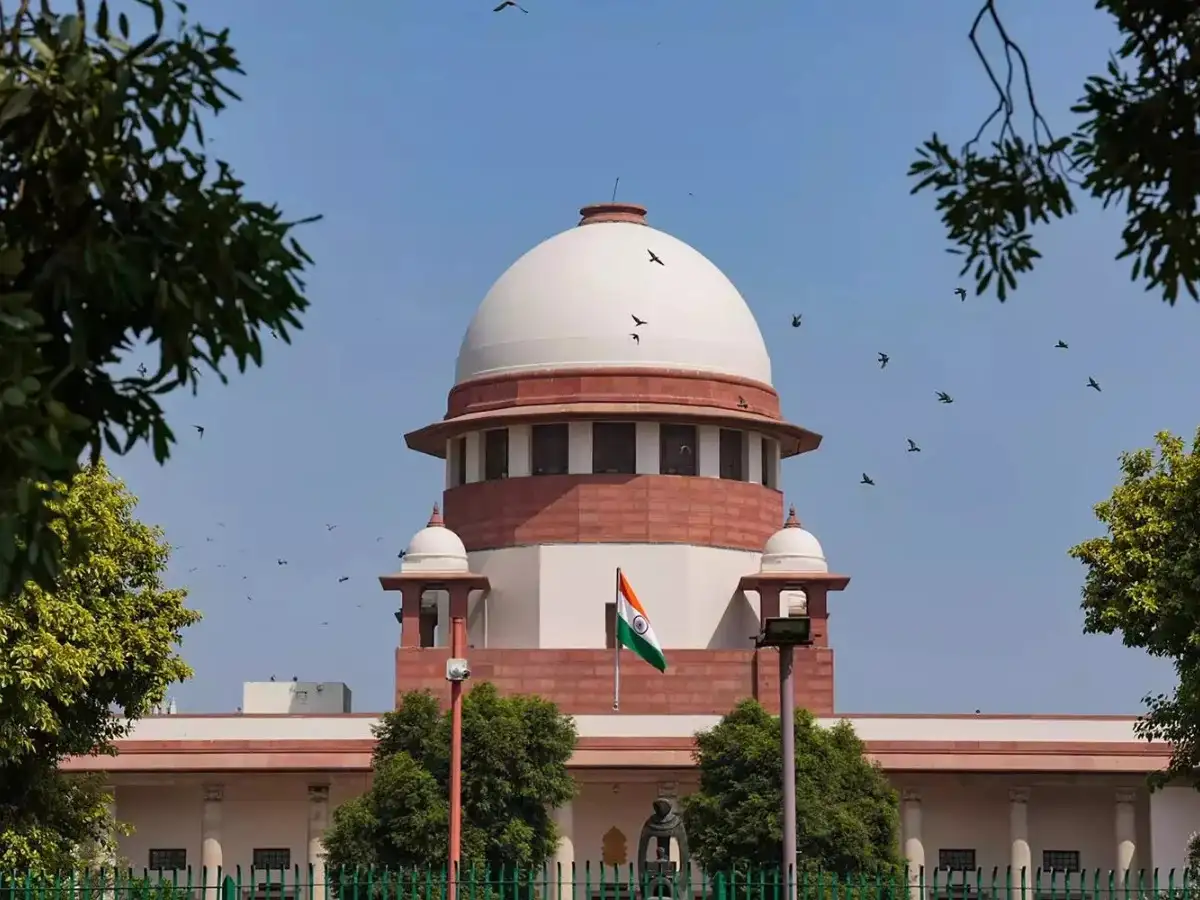
    A bench of Chief Justice Surya Kant and Justices Joymalya Bagchi and V Mohana posted the matter for hearing after four weeks, and also indicated that it would examine the bail plea after certain material witnesses had been examined.

    “It’s 100 per cent case of dismissal! You want dismissal now or later?” the CJI asked.

    Bhullar’s counsel submitted that the complainant and some material witnesses had not yet been examined, while statements of some were recorded.

    Bhullar has challenged the dismissal of his bail plea by the Punjab and Haryana High Court on August 10.

    On April 10, the top court refused to entertain his bail plea in the case. It granted Bhullar the liberty to approach the high court for bail if the trial in the case did not begin within two months.

    A complaint was filed in October last year. It alleged that Bhullar, who was posted as DIG of Ropar range, demanded illegal gratification through a private intermediary to secure favourable treatment in an FIR registered at Sirhind police station.

    An FIR was registered and a trap was laid on October 16 last year in Chandigarh where a co-accused was apprehended while allegedly accepting Rs 5 lakh as part of the demanded bribe.

    Bhullar was arrested in the case. Later in January, a special CBI court in Chandigarh dismissed his plea seeking bail. (Agencies)

  • 88 Killed and Over 1,000 Injured in Jammu Road Accidents

    88 Killed and Over 1,000 Injured in Jammu Road Accidents

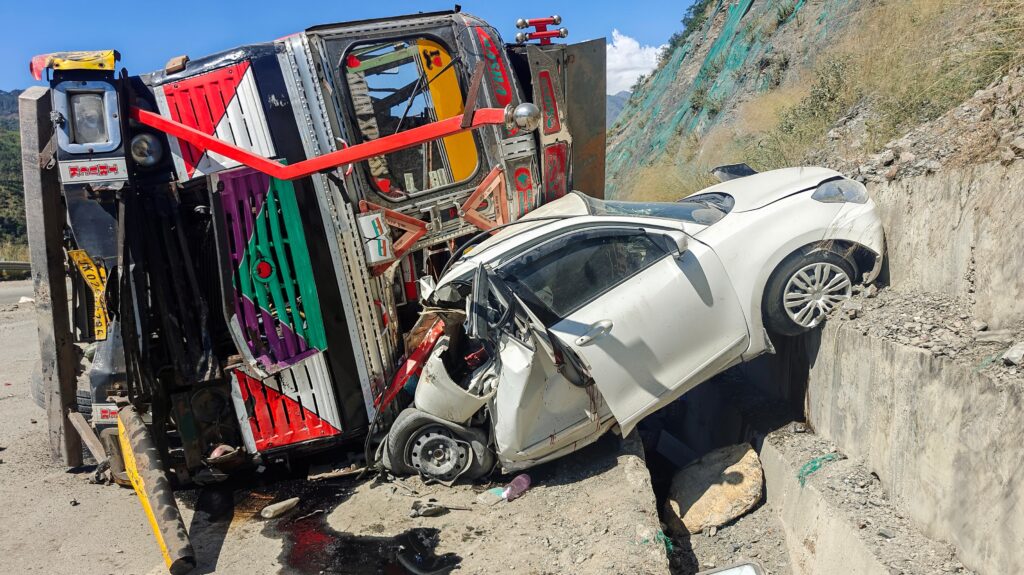
    In a grim report from Jammu, 88 individuals lost their lives and over 1,000 sustained injuries due to 699 road accidents in Kathua, Samba, Rajouri, and Poonch during the first seven months of 2023. The Traffic Police Rural Jammu launched a focused campaign against two-wheeler violations, accounting for 44 percent of these incidents, which resulted in the issuance of 8,675 fines.

    The heightened enforcement campaign, conducted from September 1 to 14, emerged after a detailed analysis of accident data which revealed alarming trends regarding two-wheeler involvement in road collisions, according to a traffic police spokesperson.

    Traffic Police Rural Jammu’s analysis, covering the period from January 1 to July 31, indicated that two-wheeler riders were involved in 309 accidents, leading to 39 fatalities and injuring 384 individuals. In these statistics, 144 of these were single-vehicle accidents.

    National Highways also reported concerning numbers, with 102 accidents (41 percent) involving two-wheelers. Other roads experienced 210 accidents (47 percent) linked to two-wheelers. Alarmingly, 27 percent of the victims were below the age of 26.

    Over this period, 445 accidents (64 percent) occurred with only single vehicles. As incidents continue to rise, Traffic Police Rural Jammu responded with rigorous awareness and enforcement campaigns targeting riders across all four districts.

    The campaign not only involved strict penalties, with traffic authorities issuing a total of 8,675 violators during the period, but also included educational initiatives. The breakdown of violations shows that 5,767 riders were penalized for riding without helmets, while 1,152 pillion riders faced fines for the same reason. Additionally, 1106 cases were recorded for triple riding.

    Furthermore, Traffic Police scrutinized other behaviours on the roads. This included 188 riders for using mobile devices while driving, 260 for dangerous driving, and 146 for lacking valid driving licenses. Notably, three minors operating two-wheelers illegally had their vehicles seized, as did 50 riders for illegal modifications.

    During the enforcement drive, a total of 187 vehicles were confiscated due to various traffic violations. The initiative also extended beyond enforcement. Traffic Police conducted 267 awareness programmes across educational institutions, bus stands, and public spaces, targeting youth and the community to promote road safety.

    Innovative outreach included on-road safety counselling sessions in Rajouri and Poonch. Officers set up dedicated canopies where road users, particularly two-wheeler riders, could receive guidance on helmet usage and safe driving practices under the “no-challan, only counseling” concept. This approach intentionally focused on dialogue, allowing law enforcement to sensitise riders without issuing fines during this education phase.

    Senior Superintendent of Police, Traffic Rural Jammu, Farooq Qaiser, expressed the need for ongoing vigilance, announcing plans for similar outreach focused on other vehicles, including Light Motor Vehicles (LMVs) in the near future. He strongly urged all motorists to comply with traffic laws and warned that stringent actions against violators would persist in the interest of public safety.

  • SC Asks Centre To Consider Extending Tenure Of Retiring Members Of Tribunals

    SC Asks Centre To Consider Extending Tenure Of Retiring Members Of Tribunals

    Observing that tribunals should not become defunct owing to vacancies, the Supreme Court on Tuesday asked the Centre to consider extending the tenure of retiring presiding officers and members of such quasi-judicial bodies for a month or so till fresh appointments are made.

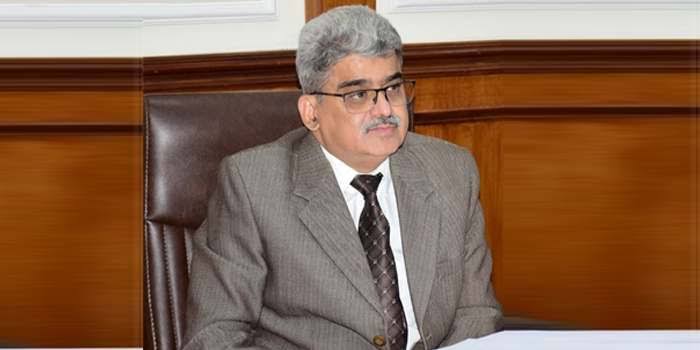
    A bench comprising Chief Justice Surya Kant and justices Joymalya Bagchi and V Mohana was urged by the Centre through Attorney General R Venkataramani that the process for fresh appointments has been set in motion and no such pleas for ad hoc extensions should be considered.

    The top law officer was responding to the submissions of a lawyer pertaining to vacancies in various tribunals, including the DRAT (Debt Recovery Appellate Tribunal where some members are retiring soon.

    “Now that everything is set in motion. These IAs (interim applications) may not be entertained any longer. A month or two should not make a difference,” the attorney general said.

    “Can you make a decision at your end that you will increase ad hoc arrangement for a month or so,” the CJI asked, adding, “You need to give us a definite response that the posts will be filled. The moment we dispose of these petitions, and a fresh appointment is not made, another round will start.”

    The law officer said now the new Tribunal Reforms Act has come into being and it provides for the appointment process.

    We don’t want tribunals to become defunct. Current arrangement may continue on ad hoc,” the CJI said and listed the plea for hearing on Wednesday.

    On September 8, the Centre informed the bench that 248 members of different tribunals have been found eligible for extension under the Tribunal Reforms Act, 2026 and their services were being extended.

    The government said that eligible tribunal members would continue in office until they completed the five-year tenure prescribed under the new law or attained the applicable maximum age limit.

    The bench also took note of the submissions that three members, two judicial and one technical, of the National Green Tribunal are demitting offices and it will have adverse impact on the functioning of the green tribunal.

    The bench, as an interim measure, extended the tenure of three NGT members till appointments are made to their posts.

    With regard to other tribunals, the bench asked the Centre to take up the issue of appointment in accordance with the 2026 Act without any delay.

    The attorney general had informed the bench that 248 members of different tribunals had been found eligible for extension under Section 24 of the new law.

    The bench recorded that eligible members would continue in office until they completed the five-year tenure prescribed under the new regime or attained the applicable maximum age limit.

    The issue had arisen against the backdrop of the earlier order of May 19, when the top court had extended until September 8 the tenure of tribunal chairpersons, presidents and members whose terms were due to expire before that date to ensure that the functioning of tribunals was not disrupted. (Agencies)

  • Sports Opening New Avenues For Jammu And Kashmir Youth: CS Atal Dulloo

    Sports Opening New Avenues For Jammu And Kashmir Youth: CS Atal Dulloo

    The growing participation of youth in sports reflects a positive change in Jammu and Kashmir, with youngsters increasingly using sporting platforms to pursue their dreams, Chief Secretary Atal Dulloo said on Tuesday.

    Addressing the concluding ceremony of the CPL at General Bipin Rawat Stadium in Baramulla, Dulloo said sports are emerging as a launchpad for youth to realise their dreams, while playgrounds serve as classrooms of life where youngsters learn valuable lessons and get opportunities to showcase their talent and prove their mettle.

    He lauded the Indian Army’s Dagger Division for organising the league and providing young sportspersons with a platform to pursue their ambitions through cricket.

    Dulloo said around 1,600 players from more than 10 districts participated in the tournament. He also appreciated the parents for supporting their children and encouraging them to utilise such platforms to pursue their sporting aspirations.

    The Chief Secretary said the government would further upgrade the infrastructure at General Bipin Rawat Stadium to provide players with better facilities and enhance the experience of spectators, particularly during day-and-night sporting events.

    He added that sporting initiatives of this nature help youngsters develop discipline, confidence, teamwork and other qualities that remain valuable beyond the playing field. (KNO)

  • HDFC Bank Refunds Rs 4.5 Cr To 13 Depositors In J&K’s Shopian Fraud Case

    HDFC Bank Refunds Rs 4.5 Cr To 13 Depositors In J&K’s Shopian Fraud Case

    HDFC Bank has refunded around Rs 4.50 crore to 13 depositors affected by a financial fraud unearthed by the Economic Offences Wing (EOW) of the Jammu and Kashmir Crime Branch at its branch in Shopian district, officials said.

    The refunds followed a “swift and time-bound” investigation and prompt action by the EOW Kashmir in the Shopian HDFC Bank irregularities case, the agency said in a statement.

    The EOW said the matter pertains to an FIR registered under relevant provisions of the Bharatiya Nyaya Sanhita (BNS) and the Information Technology Act following a complaint regarding financial irregularities at the bank’s Shopian branch.

    The case was later transferred to the Crime Branch J&K on the directions of Police Headquarters (PHQ), J&K, for detailed investigation.

    During the probe, the EOW Kashmir identified five principal accused, including former branch managers and employees of HDFC Bank posted in Shopian and Pulwama. All five were arrested on February 18, 2026, the statement said.

    The EOW subsequently filed a chargesheet against 11 accused persons before the Court of the Chief Judicial Magistrate, Shopian, in May 2026, it said.

    The criminal proceedings are continuing before the competent court, the statement added. (Agencies)

  • Meta To Report Child Safety Cases Directly To India’s Cyber Crime Portal Amid Govt Crackdown

    Meta To Report Child Safety Cases Directly To India’s Cyber Crime Portal Amid Govt Crackdown

    Facebook and Instagram owner Meta has agreed to report child safety-related matters directly to the cybercrime portal managed by the Indian Cyber Crime Coordination Centre (I4C), as the government pushes social media platforms for stronger safeguards and greater accountability amid a crackdown on child sexual abuse material and other harmful content online.

    Protecting children on the platforms is a priority for the company, a Meta spokesperson said, adding, “We’re committed to working with the government to ensure that the perpetrators of these crimes are held responsible.

    “To collectively strengthen our efforts to combat this harm, Meta will now report child safety matters directly to the cybercrime portal managed by I4C,” the spokesperson said.

    Meta, headquartered in the United States, is the first major tech intermediary to commit to establishing a direct reporting pipeline to Indian law enforcement. Until now, Meta has reported child safety cases to the US-based National Center for Missing and Exploited Children.

    Earlier on Tuesday, Government sources said Meta had agreed to report child safety-related matters to appropriate law enforcement agencies. The sources said the online safety of children is a “fundamental principle” for any social media platform operating in India and is absolutely “non-negotiable.”

    The Government will take action against platforms that fail to take proactive steps to ensure children’s safety online, the sources said, underscoring its tough stance on platforms’ responsibility to protect minors from harmful content and activity. The government remains engaged with other online platforms to ensure they proactively identify and remove such content, the sources added.

    According to the sources, Meta’s pledge to report child sexual abuse material cases to law enforcement agencies is a first step towards making the platforms safer for children, and much more needs to be done. The government is continuously engaging with social media platforms to curb harmful content, with efforts underway to ensure all platforms proactively identify and remove such material, the sources said.

    The Government has stepped up scrutiny of social media platforms over harmful and illegal online content, including child sexual abuse material and deepfakes. It has issued notices to Meta over its handling of such content and recently summoned the company’s global executives to India, as the Centre pressed platforms for faster takedown of harmful content, stronger safeguards and greater accountability – warning them that failure to comply with Indian law will not be tolerated.

    In July, the Government issued a notice to Meta on Child Sexual Exploitative and Abuse Material (CSEAM) in paid advertisements on Instagram. The Ministry of Electronics and Information Technology (MeitY) ordered Instagram to disable all ads and content promoting and facilitating access to CSEAM, and demanded a detailed explanation. Multiple rounds of discussions with Meta’s top executives followed, in which the IT Ministry made it unequivocally clear that such content constitutes a violation and cannot be covered by safe-harbour protection.

    Earlier this month, the National Commission for Protection of Child Rights (NCPCR) summoned the Managing Director and Head of Meta India in connection with its inquiry into alleged CSEAM-related advertisements on the platform. The child rights body had taken suo motu cognisance of a BBC Eye media report on the alleged advertisements and sought an explanation from Meta.

    BBC Eye investigation, published in early July, alleged that Instagram had carried paid advertisements promoting CSAM, some of which directed users to Telegram channels hosting sexually explicit content involving children. The investigation also found that Meta’s recommendation systems were amplifying videos containing such material.

    India’s IT Ministry (MeitY) responded by ordering Instagram to disable the advertisements and demanded a detailed explanation within seven days. The National Human Rights Commission separately directed Delhi Police to investigate whether Meta had complied with mandatory reporting obligations under the Protection of Children from Sexual Offences (POCSO) Act, and issued a follow-up notice in early August seeking action-taken reports from MeitY, police authorities and Meta.

    The I4C, set up by India’s Ministry of Home Affairs, operates the National Cyber Crime Reporting Portal (cybercrime.gov.in) with a special focus on crimes against women and children. The I4C has separately built the Sahyog portal to route content takedown requests to social media platforms, and has earlier directed intermediaries to nominate nodal officers for child sexual abuse material reporting and deploy AI tools to detect and remove such material.

    Direct reporting to the I4C portal would mark a shift for Meta, which has until now routed child safety reports primarily through NCMEC in the United States, under a system that has drawn criticism in India for adding extra steps between platforms and domestic law enforcement. (PTI)

  • Whales: Giants of the Ocean

    Whales: Giants of the Ocean

    Whales are among the largest and most remarkable animals on Earth. These marine mammals live in oceans around the world, from warm tropical waters to the cold seas surrounding the poles.

    Life Beneath the Surface

    Although whales spend their lives in water, they breathe air through blowholes located on top of their heads. They must regularly return to the surface to breathe before diving again in search of food or traveling through the ocean.

    Whales are warm-blooded, give birth to live young, and nurse their calves with milk. A thick layer of fat called blubber helps protect them from cold water and stores energy during long migrations.

    Two Main Groups

    Whales are generally divided into baleen whales and toothed whales. Baleen whales filter small animals from the water using flexible plates inside their mouths. This group includes blue whales, humpback whales, and gray whales.

    Toothed whales use teeth to catch fish, squid, and other prey. Many of them also use echolocation, producing sounds and listening for returning echoes to understand their surroundings. Sperm whales, belugas, and orcas belong to this group.

    The Blue Whale

    The blue whale is the largest known animal to have ever lived. An adult can grow longer than a city bus and weigh well over one hundred tonnes. Despite its enormous size, it feeds mainly on tiny crustaceans called krill.

    Communication and Migration

    Whales communicate using clicks, whistles, pulses, and complex songs. Some sounds can travel across great distances underwater. Humpback whales are especially famous for their long, patterned songs.

    Many species migrate thousands of kilometres each year. They often feed in cold, nutrient-rich waters before traveling to warmer regions where they mate and give birth.

    Protecting Whales

    Commercial hunting once caused severe declines in many whale populations. Today, whales also face threats from fishing gear, ship collisions, underwater noise, pollution, and changes to ocean ecosystems.

    Conservation programs, safer fishing practices, protected habitats, and international cooperation can help whale populations recover. Protecting whales also supports healthier oceans because these animals play an important role in marine food webs and nutrient cycles.

  • Whales: Giants of the Ocean

    Whales: Giants of the Ocean

    Whales are among the largest and most remarkable animals on Earth. These marine mammals live in oceans around the world, from warm tropical waters to the cold seas surrounding the poles.

    Life Beneath the Surface

    Although whales spend their lives in water, they breathe air through blowholes located on top of their heads. They must regularly return to the surface to breathe before diving again in search of food or traveling through the ocean.

    Whales are warm-blooded, give birth to live young, and nurse their calves with milk. A thick layer of fat called blubber helps protect them from cold water and stores energy during long migrations.

    Two Main Groups

    Whales are generally divided into baleen whales and toothed whales. Baleen whales filter small animals from the water using flexible plates inside their mouths. This group includes blue whales, humpback whales, and gray whales.

    Toothed whales use teeth to catch fish, squid, and other prey. Many of them also use echolocation, producing sounds and listening for returning echoes to understand their surroundings. Sperm whales, belugas, and orcas belong to this group.

    The Blue Whale

    The blue whale is the largest known animal to have ever lived. An adult can grow longer than a city bus and weigh well over one hundred tonnes. Despite its enormous size, it feeds mainly on tiny crustaceans called krill.

    Communication and Migration

    Whales communicate using clicks, whistles, pulses, and complex songs. Some sounds can travel across great distances underwater. Humpback whales are especially famous for their long, patterned songs.

    Many species migrate thousands of kilometres each year. They often feed in cold, nutrient-rich waters before traveling to warmer regions where they mate and give birth.

    Protecting Whales

    Commercial hunting once caused severe declines in many whale populations. Today, whales also face threats from fishing gear, ship collisions, underwater noise, pollution, and changes to ocean ecosystems.

    Conservation programs, safer fishing practices, protected habitats, and international cooperation can help whale populations recover. Protecting whales also supports healthier oceans because these animals play an important role in marine food webs and nutrient cycles.

  • Whales: Giants of the Ocean

    Whales: Giants of the Ocean

    Whales are among the largest and most remarkable animals on Earth. These marine mammals live in oceans around the world, from warm tropical waters to the cold seas surrounding the poles.

    Life Beneath the Surface

    Although whales spend their lives in water, they breathe air through blowholes located on top of their heads. They must regularly return to the surface to breathe before diving again in search of food or traveling through the ocean.

    Whales are warm-blooded, give birth to live young, and nurse their calves with milk. A thick layer of fat called blubber helps protect them from cold water and stores energy during long migrations.

    Two Main Groups

    Whales are generally divided into baleen whales and toothed whales. Baleen whales filter small animals from the water using flexible plates inside their mouths. This group includes blue whales, humpback whales, and gray whales.

    Toothed whales use teeth to catch fish, squid, and other prey. Many of them also use echolocation, producing sounds and listening for returning echoes to understand their surroundings. Sperm whales, belugas, and orcas belong to this group.

    The Blue Whale

    The blue whale is the largest known animal to have ever lived. An adult can grow longer than a city bus and weigh well over one hundred tonnes. Despite its enormous size, it feeds mainly on tiny crustaceans called krill.

    Communication and Migration

    Whales communicate using clicks, whistles, pulses, and complex songs. Some sounds can travel across great distances underwater. Humpback whales are especially famous for their long, patterned songs.

    Many species migrate thousands of kilometres each year. They often feed in cold, nutrient-rich waters before traveling to warmer regions where they mate and give birth.

    Protecting Whales

    Commercial hunting once caused severe declines in many whale populations. Today, whales also face threats from fishing gear, ship collisions, underwater noise, pollution, and changes to ocean ecosystems.

    Conservation programs, safer fishing practices, protected habitats, and international cooperation can help whale populations recover. Protecting whales also supports healthier oceans because these animals play an important role in marine food webs and nutrient cycles.