Author: Himalayan Express

  • Power Tariff Hike Puts Rs 251 Crore Burden On Consumers, Govt Admits In Assembly

    Power Tariff Hike Puts Rs 251 Crore Burden On Consumers, Govt Admits In Assembly

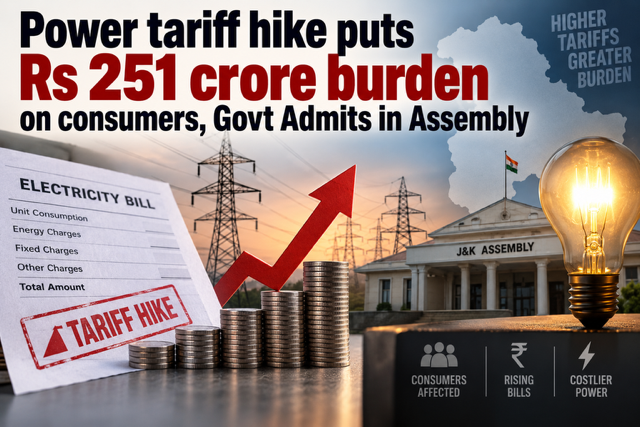
    Consumers in Jammu and Kashmir will have to pay an additional Rs 251 crore due to recent tariff hike, the government admitted in the Legislative Assembly on Tuesday.

    In a written reply to a question by MLA Sajad Gani Lone, the Power Development Department said the 6.83% tariff hike, recently notified by the Joint Electricity Regulatory Commission (JERC), is expected to generate Rs 251 crore in additional revenue for DISCOMs during 2026-27.

    The government said the tariff revision was long overdue and was required to bridge the gap between the cost of electricity supply and revenue realised and to meet the Annual Revenue Requirement (ARR) of the DISCOMs.

    The government said it would still have to bear more than Rs 4,500 crore as subsidy to meet the power purchase cost of the DISCOMs.

    The department also revealed that power tariff dues amounting to Rs 4385.30 crore are outstanding against Jammu and Kashmir and Central Government departments.

    On revenue collection, the government informed that domestic consumers in Kashmir Valley generated Rs 1,455.90 crore in 2025-26, compared to Rs 1,238.07 crore in 2024-25.

    During 2026-27 up to August, the revenue stood at Rs 547.79 crore, including Rs 383.08 crore from metered consumers and Rs 164.71 crore from flat-rate consumers.

    The government further said the scheme providing 200 units of free electricity to eligible AAY households is being implemented through a RESCO-based rooftop solar scheme under the PM Surya Ghar: Muft Bijli Yojana. The tendering process is under evaluation, and eligible households will start receiving the benefit after commissioning of the rooftop solar systems.

  • Super Motors EV Launches Electric Mobility in Jammu & Kashmir

    Super Motors EV Launches Electric Mobility in Jammu & Kashmir

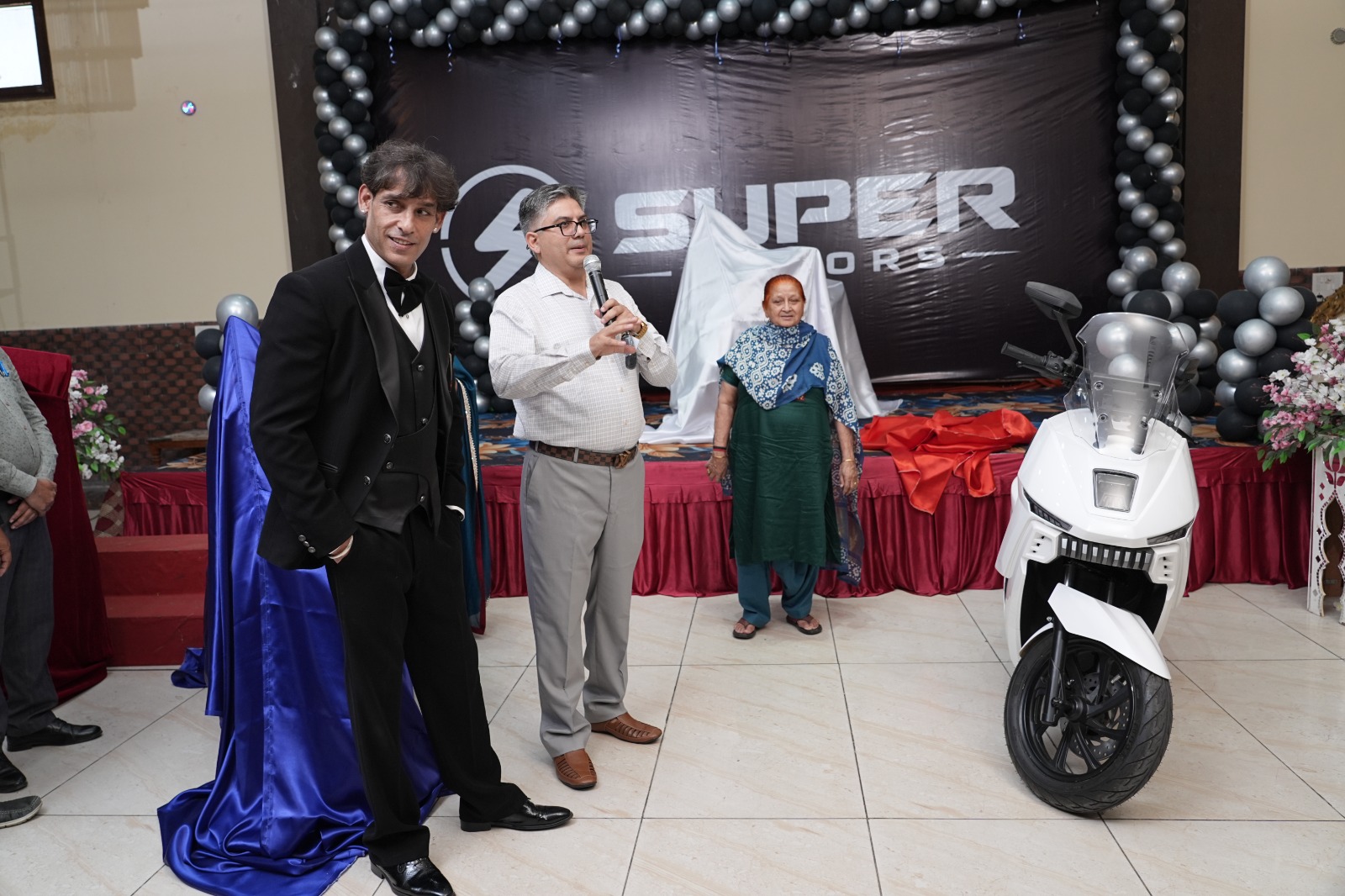
    Super Motors EV Private Limited, a burgeoning electric mobility startup from Jammu & Kashmir, officially initiated its electric journey on September 21, 2026. The launch in Jammu highlights the company’s commitment to the expanding electric two-wheeler segment and aims to foster local youth and entrepreneurial growth.

    Super Motors EV Launch in Jammu & Kashmir

    At the event, Super Motors EV introduced the Early Buyer and Partner Participation Programme, featuring various initiatives designed for customers and potential business partners. The Founders Club will extend special benefits to the first 500 eligible buyers. These perks include an optional vehicle buyback programme after five years, contingent on specific ownership criteria and programme terms.

    Additionally, early customers will gain access to the First-Buyer PIN Code Allocation, which reserves a dedicated PIN code under the Super Motors Quota.

    The company also unveiled SMEVC, a digital community utility token built on the BNB Smart Chain. This initiative seeks to enhance customer loyalty, encourage community participation, and establish governance structures that include riders and network partners.

    Further solidifying its community-centric approach, the Partner Participation Programme (PSOP) targets local entrepreneurs and service professionals by offering training, business partnerships, and opportunities for regional distribution.

    During the launch, Sushant Bakshi, Managing Director of Super Motors EV, expressed his vision for the company. “Our journey starts in Jammu & Kashmir because we want our growth to symbolize more than just a vehicle brand. We aim to create an ecosystem where local youth can acquire technical skills, build careers, and engage in the flourishing clean mobility sector,” he stated.

    Madhu Sudan, Director of Super Motors, noted the firm’s commitment to community engagement. “Through SMEVC and our partner programmes, we are finding innovative ways to connect riders, service providers, and the Super Motors ecosystem,” he explained.

    Following the launch, Amit Rampal, a celebrated actor and TV personality, showcased the new electric vehicle during a public demonstration, further adding glamour to the event.

    The launch event concluded with heartfelt thanks from Shweta Bakshi, who conducted the programme.

    Super Motors EV Private Limited stands as a pivotal force in the Jammu & Kashmir electric mobility landscape. The startup aims not only to produce accessible electric vehicles but also to enhance the region’s automotive and technical infrastructure. By focusing on sustainable mobility, the company aspires to unlock opportunities for local entrepreneurs, technicians, and young professionals.

    For more information about Super Motors EV Private Limited, please visit their official website at www.supermotorsev.com or reach out via email at support@supermotorsev.com.

    Contact details:
    Phone: +91 60064 52441
    Follow us on social media:
    Facebook: SuperMotorsEV,
    Instagram: SuperMotorsEV,
    X (Twitter): SuperMotorsEV.

  • Lieutenant Governor Inaugurates National Dialogue on Millets for Health: Building Healthy Ecosystems, Climate-Resilient Agriculture and Sustainable Food Systems

    Lieutenant Governor Inaugurates National Dialogue on Millets for Health: Building Healthy Ecosystems, Climate-Resilient Agriculture and Sustainable Food Systems

    Millets were part of our agricultural memory for centuries. The time has now come to restore them to the consciousness of society: LG
    Countries across the world that are facing the challenge of climate change are also realising that the food of the future will not merely be food that can be produced in large quantities. It will have to be nutritious, profitable for farmers and sustainable for the planet: LG Sinha
    Under the Holistic Agriculture Development Plan, we prepared a strategy three to four years ago to ensure the health of future generations, the prosperity of our farmers and the protection of our earth: LG

    h_lI believe that millet cultivation can give marginal farmers in Jammu Kashmir a new sense of confidence while also helping reduce the risks associated with farming: LG Sinha
    Millets offer us a simple lesson from nature: the solutions to many health challenges due to modern lifestyle of today lie within our own traditions: LG
    Lieutenant Governor called upon every household to give millet products a place on their plate and strengthen farmers, empower women, and ensure a healthier future for generations
    I see Millet’s cultivation as powerful means of empowering women, promoting dignity and respect for women, and reviving the rural economy. The value-added products can shape the region’s next economic success story: LG Sinha
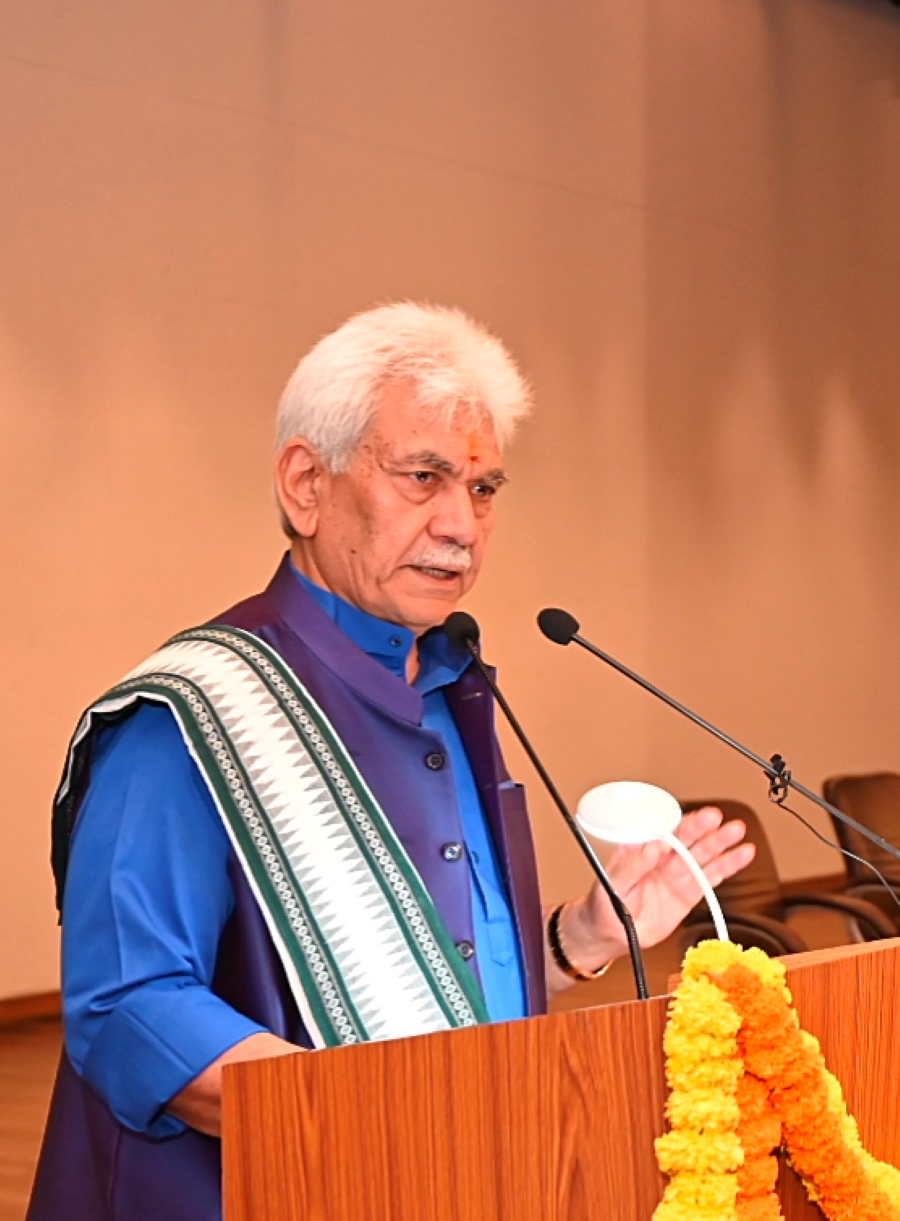
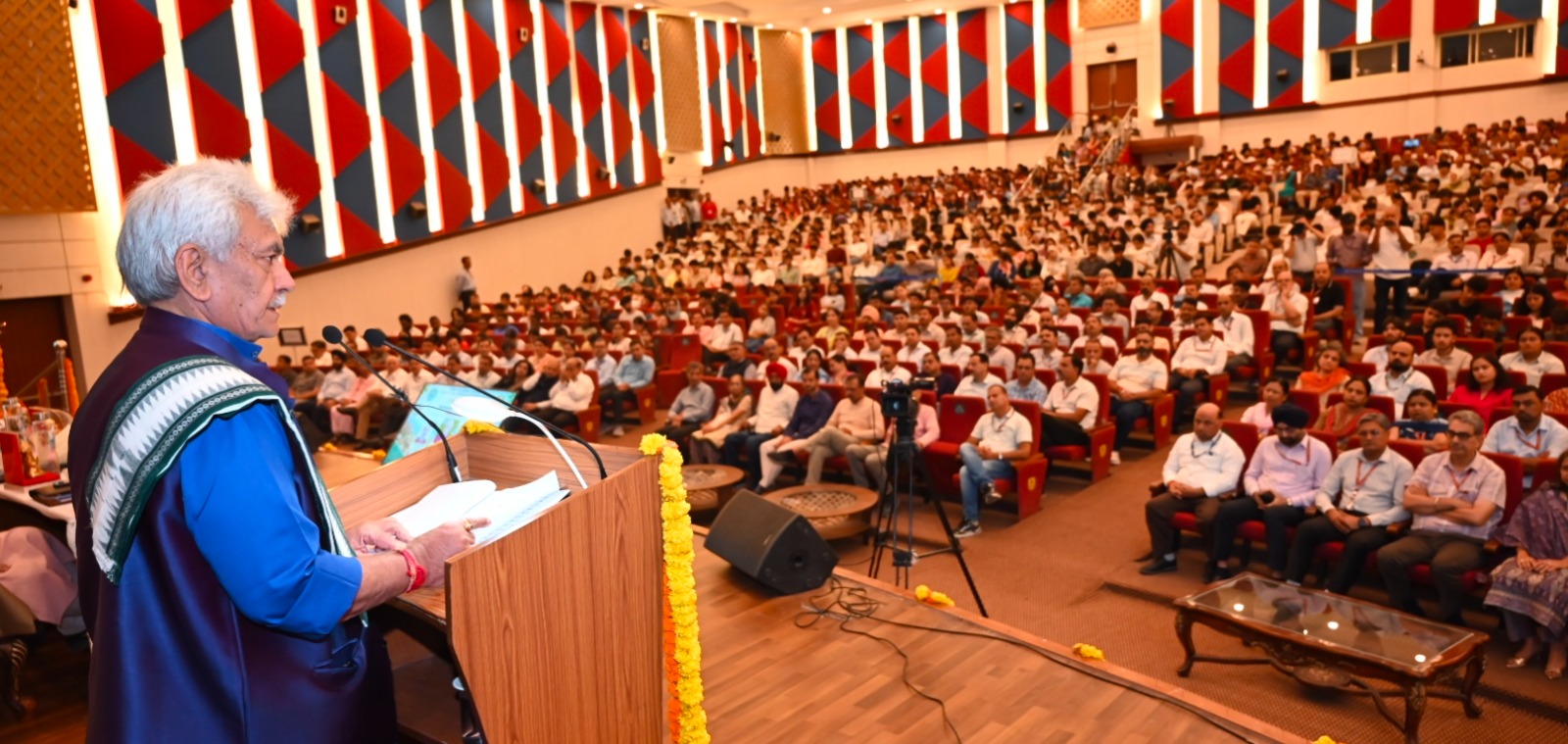
    JAMMU, SEPTEMBER 21: The Lieutenant Governor, Shri Manoj Sinha today inaugurated the National Dialogue on Millets for Health: Building Healthy Ecosystems, Climate-Resilient Agriculture and Sustainable Food Systems at SKUAST, Jammu.
    Expressing gratitude to Padma Shri Dr. Khadar Vali, popularly known as the “Millet Man of India” and Shri Umendra Dutt of Kheti Virasat Mission, the Lieutenant Governor lauded their efforts in creating a new awakening through the Millets Mission in UT of Jammu Kashmir. He emphasized that the occasion was not merely a seminar but a celebration of a revolution rooted in India’s villages.

    The Lieutenant Governor said that the pioneering role of the Hon’ble Prime Minister, Shri Narendra Modi, who declared millets as “nutri-cereals” in 2018 and gave them the name Shree Anna, will be remembered by history. Hon’ble Prime Minister’s initiatives led to the United Nations declaring 2023 as the International Year of Millets, bringing global recognition to India’s traditional wisdom.
    Tracing the heritage of millets, the Lieutenant Governor noted that sorghum, pearl millet, finger millet, kodo millet, little millet, foxtail millet, and barnyard millet have nourished generations of farmers and families. Once sidelined as “food of the poor,” millets are now reclaiming their place at the intersection of tradition and modern science. He reiterated the ancient wisdom—“Annam Brahma”-food is divine, and healthy food builds healthy citizens, strong societies, and resilient nations.
    “The experts are aware that millets nourished the families of small and marginal farmers in different parts of the country for many decades. At that time, modern irrigation facilities were not available. Marginal farmers had neither access to fertilisers nor accurate weather forecasts. However, millet crops did not require these to the same extent, because they could grow even in the most difficult weather conditions and provide support to families.
    Today, science is understanding this traditional wisdom through new research and evidence. Countries across the world that are facing the challenge of climate change are also realising that the food of the future will not merely be food that can be produced in large quantities. It will have to be nutritious, profitable for farmers and sustainable for the planet,” he said.
    Highlighting the relevance of millets for Jammu Kashmir, the Lieutenant Governor underscored that over 80% of the region’s farmers are small and marginal, dependent on uncertain weather. Millets, requiring less water and fewer inputs, offer them confidence and sustainability. He urged farmers to embrace millet cultivation as a pathway to self-reliance and resilience against climate change.
    “I see the Millets Mission as the greatest hope for the smallest farmer in our villages. Under the Holistic Agriculture Development Plan, we prepared a strategy 3-4 years ago to ensure the health of future generations, the prosperity of our farmers and the protection of our earth.
    I believe that millet cultivation can give marginal farmers in Jammu Kashmir a new sense of confidence while also helping reduce the risks associated with farming. On this occasion, I would like to tell all our marginal farmers that although the size of your landholding may be small, your contribution to building a self-reliant Jammu Kashmir can never be small,” he said.
    The Lieutenant Governor also emphasized the health benefits of millets, noting their dietary fibre, low glycaemic index, and rich nutrients such as iron, calcium, magnesium, and zinc. He called upon citizens to bring millet-based foods like bajra rotis, ragi dishes, and barnyard millet rice back to their plates to combat lifestyle diseases such as diabetes, obesity, and hypertension.
    On the economic front, the Lieutenant Governor highlighted the Hon’ble Prime Minister’s vision of creating a millet economy from farm to market.
    “With India producing 18 million tonnes of millets in 2024–25 and accounting for 38% of global production, the importance of value-added millet products is immense. We must encourage women’s self-help groups and young entrepreneurs in Jammu Kashmir to innovate with millet-based enterprises, packaging, and branding under initiatives like One District, One Product,” he said.
    The Lieutenant Governor urged all stakeholders including farmers, researchers, doctors, entrepreneurs, and citizens, to make food systems diverse, nutritious, sustainable, and resilient.
    “I call upon every household to give millet products a place on their plate and strengthen farmers, empower women, and ensure a healthier future for generations. I also want all of you to carry this message to the villages that millets are not merely a heritage of the past but they are a strategy for the future of Jammu Kashmir. Let us work together to ensure that every village has opportunities and future generations inherit a healthy planet,” the Lieutenant Governor said.
    On the occasion, the Lieutenant Governor released several publications including ‘A Laboratory Manual on Soil Microbiology’; ‘Fundamentals of Geographical Information Systems and Remote Sensing’, and ‘Package of Practices for Minor Millets’.
    Padam Shri Dr Khadar Vali; Prof BN Tripathi, Vice Chancellor, SKUAST Jammu; Shri Umendra Dutt, Executive Director, Kheti Virasat Mission; Dr. Anjani Kumar, IFPRI; Prof. SK Gupta Director Research, SKUAST Jammu; experts, policy makers, researchers; senior officials, progressive farmers, agri-preneurs, members of Self-Help Groups, faculty and students attended the inaugural ceremony.

  • Village Heads Of Ladakh Get More Than Three-Fold Hike In Emoluments

    Village Heads Of Ladakh Get More Than Three-Fold Hike In Emoluments

    Monthly emoluments of village heads, locally known as ‘gobas’, in the Union territory of Ladakh have been hiked more than three-fold from Rs 1,500 to Rs 5,000, after Lieutenant Governor Vinai Kumar Saxena gave his approval.

    The increase in emoluments by over 233 per cent is the first revision in the last 10 years, which will benefit 247 ‘gobas’ across Ladakh, officials said.

    The lieutenant governor said the decision would provide greater financial support to village heads, also known as ‘nambardars’ and strengthen participatory governance at the grassroots level, particularly in remote and difficult-to-access areas.

    The revised emoluments will come into force from the date of publication of the notification in the official gazette.

    The officials said that the decision follows a long-standing demand of ‘nambardars’ to increase their emoluments.

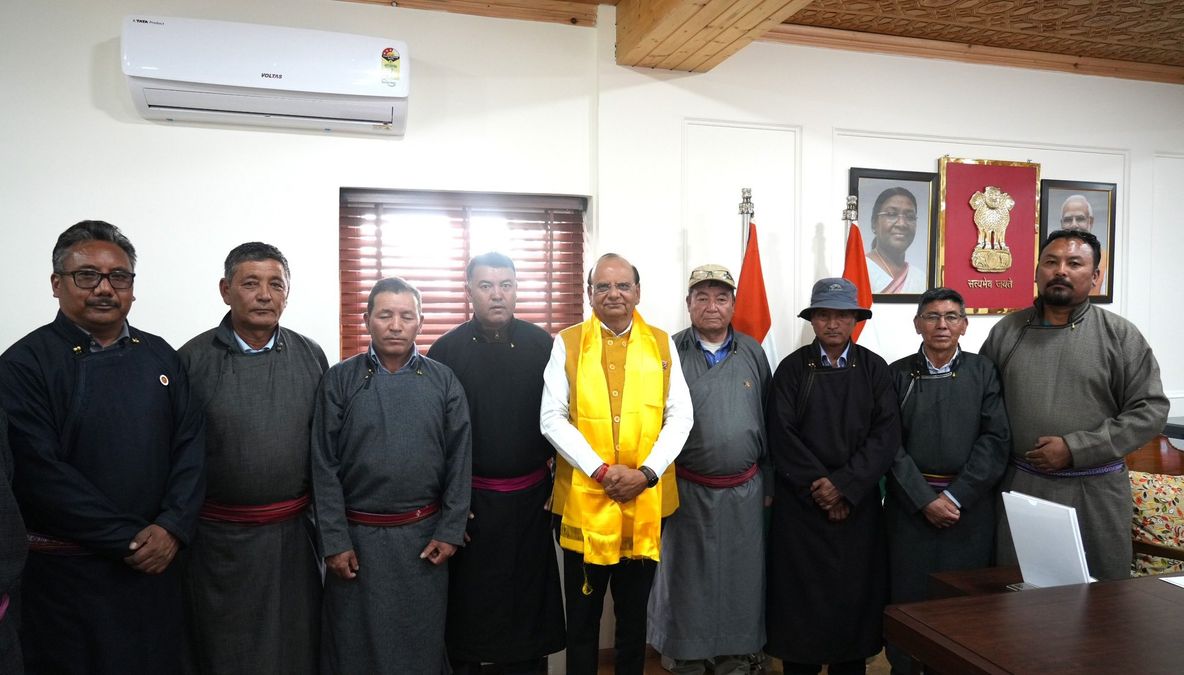
    “During his visits to villages across Ladakh, Saxena had received representations from ‘gobas’ regarding the issue. On September 19, a delegation of ‘nambardars’ from different villages also met the LG and sought an increase, citing their responsibilities and the inadequacy of the existing emoluments,” they said.

    Taking note of their concerns, Saxena directed the chief secretary to examine the matter and address the issue.

    “Nambardars occupy an important position at the grassroots level and act as a link between the administration and villagers,” they said. Their role has assumed greater significance with the focus on last-mile delivery of public services and implementation of government initiatives, they added.

    The officials said their regular engagement with villagers helps communicate local requirements to authorities while enabling people to access various government schemes and services.

    The LG also noted the proactive role played by ‘nambardars’ in highlighting local issues. “Several water-related issues addressed in villages through initiatives undertaken by him were based on inputs provided by the gobas”, they said.

    “The role of nambardars is crucial because they remain closely connected with the people and serve as a vital link between the administration and our villages. The enhancement from Rs 1,500 to Rs 5,000 per month recognises their responsibilities and long-standing demand,” Saxena said.

    “I am confident this step will further strengthen their role in ensuring that development programmes, welfare schemes and government services reach every household in a timely and effective manner, while further strengthening participatory governance,” he said.

    The revised emoluments have been fixed under the provisions of the Jammu and Kashmir Lambardari Act, 1972 and the Jammu and Kashmir Lambardari Rules, 1980, as applicable to the Union Territory of Ladakh. (Agencies)

  • Gold Futures Decline To Rs 1,53,608/10gm

    Gold Futures Decline To Rs 1,53,608/10gm

    Gold prices on Monday dropped by Rs 773 to Rs 1,53,608 per 10 grams in futures trade amid a fall in spot demand.

    On the Multi Commodity Exchange, yellow metal contracts for October delivery traded lower by Rs 773, or 0.5 per cent, at Rs 1,53,608 per 10 grams in a business turnover of 998 lots.

    Analysts attributed the decline in precious metal prices to weaker spot demand.

    Globally, gold futures declined by 0.53 per cent to USD 4,355.59 per ounce in New York.

  • J&K Assembly: Deputy CM Surinder Choudhary Hits Out At BJP MLAs Over Protest

    J&K Assembly: Deputy CM Surinder Choudhary Hits Out At BJP MLAs Over Protest

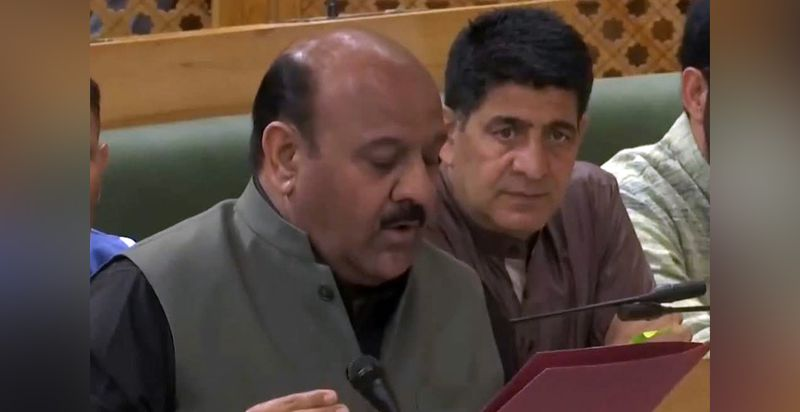
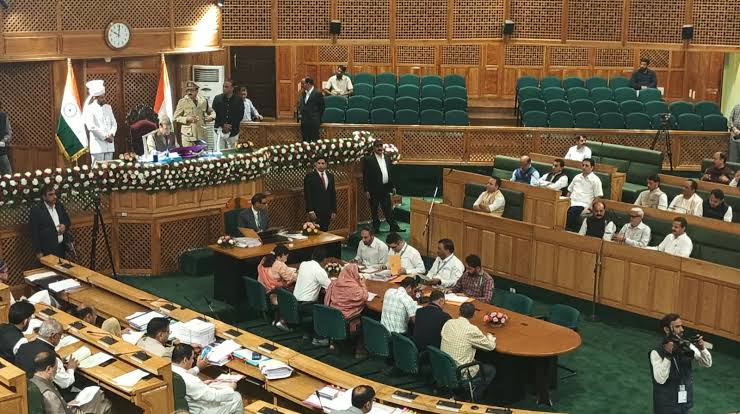
    Jammu and Kashmir Deputy Chief Minister Surinder Choudhary on Monday criticised the protesting BJP legislators during the opening day of the seven-day Autumn Session of the Jammu and Kashmir Legislative Assembly.

    Reacting to the protests staged by BJP members inside the House, Choudhary said the government was prepared to respond to questions and concerns raised by legislators on issues affecting the people of Jammu and Kashmir.

    “Our ministers are here to give answers on any issue, but these people are not ready to listen,” the Deputy Chief Minister said, referring to the protesting BJP legislators.

    Choudhary appealed to the people of Jammu and Kashmir to take note of the conduct of the BJP legislators in the Assembly.

    “I appeal to the people of J&K to see the real face of the BJP MLAs who do not want public welfare works to be done,” he said.

    The remarks came amid protests by BJP legislators on the first day of the Autumn Session, with various issues being raised inside the House.

    The seven-day session is expected to witness discussions on a range of public, developmental and governance-related matters, with legislators from both the treasury and opposition benches raising issues concerning their respective constituencies and Jammu and Kashmir as a whole. (KNC)

  • 899 New Posts Created Across J&K Departments Since October 2024: Govt

    899 New Posts Created Across J&K Departments Since October 2024: Govt

    Only 899 new posts have been created across various departments in Jammu and Kashmir Government since October 16, 2024, the Government informed the Legislative Assembly on Monday.

    In response to a question by MLA Handwara, Sajad Gani Lone, Government data states that the Health & Medical Education Department accounts for the highest number of 485 new posts created, followed by Housing and Urban Development with 266 posts and Law, Justice and Parliamentary Affairs with 82 posts.

    The Jal Shakti Department has created 43 posts, while the Department of Disaster Management, Relief, Rehabilitation and Reconstruction (DMRRR) has created 16 posts.

    The remaining posts include three in Cooperatives, two in Food, Civil Supplies and Consumer Affairs, and one each in ARI & Trainings and Transport Departments.

    The House was also informed that a total of 7580 selections have been finalised by the Jammu and Kashmir Public Service Commission (JKPSC) and the Jammu and Kashmir Services Selection Board (JKSSB) since October 2024.

    The Government said JKPSC finalised 1768 selections, while JKSSB finalised 5812 selections during the period.

    As per the category—wise details of vacancies referred to the two recruitment agencies during the period, the Government said for JKPSC, a total of 1,852 vacancies were referred. These included 855 under Open Merit (OM), 198 Scheduled Caste (SC), 166 ST-1, 156 ST-2, 114 OBC, 65 ALC/IB,149 RBA, 139 EWS, four PSP and six ST backlog vacancies.

    For JKSSB, 12,418 vacancies were referred. These comprised 5173 Open Merit, 1104 SC, 1248 ST-1, 1212 ST-2, 933 OBC, 495 ALC/IB, 1174 RBA and 1079 EWS vacancies.

    The two recruitment agencies received 14270 vacancies for recruitment during the period, according to the Government reply. (KNO)

  • Team Red NGO Restructures Framework for Better Impact

    Team Red NGO Restructures Framework for Better Impact

    Srinagar, September 20, 2026: Team Red Foundation convened a significant organizational meeting today to restructure its framework and redefine leadership roles. This strategic meeting aimed to bolster the NGO’s operational efficiency, enhance on-ground coordination, and delineate responsibilities across various functions.

    The organization undertook a comprehensive review of its members’ strengths and organizational needs, resulting in a clear division between executive focus areas, operational roles, and district-level coordination.

    Chairman Saadat Nasir Wani emphasized the importance of this restructuring. “This initiative is not merely about titles,” he stated. “It is about empowering our members with responsibility and ownership, fostering growth, and creating an accountable system.”

    The newly assigned leadership within Team Red features a range of experienced individuals across diverse functional areas.

    Core Leadership:

    Chairman: Saadat Nasir Wani
    General Secretary: Sarmad Nasir Wani
    Additional General Secretaries: Dr. Ashiq Rashid, Mufti Mohammad Aamir
    Advisor to Chairman: Abrar Ul Mehraj

    In the core executive wings, leaders have been appointed to focus on specific areas essential to the foundation’s mission. In sports, Maqsood Rather leads with several deputy heads assisting. Dr. Ashiq Rashid also oversees health concerns, while Saniya Bilal heads donation drives and relief operations.

    Women’s initiatives have been entrusted to Feema Farooq, and environmental concerns will be led by Mudasir Kambay. The foundation also places significant emphasis on educational outreach and administrative functions, ensuring a comprehensive approach to its mission.

    Operational Functionaries:

    Within the internal wings, Zahid Moon heads Administration and HR, while event management, public relations, media, and financials have specific heads and deputy roles dedicated to ensuring smooth operations.

    Further, regulatory and security concerns are framed through a structured hierarchy, ensuring that all legal and safety compliance needs are met adequately, as outlined by Reshi Aslam.

    The meeting also highlighted the formation of a zonal and district-level operation to strengthen Team Red’s field presence across Kashmir. Zonal coordinators have been appointed in North, Central, and South Kashmir, along with district coordinators for critical regions, ensuring local need fulfillment directly on the ground.

    Team Red’s newly revitalized structure aims to improve accountability, member participation, and effective execution of its social initiatives. The leadership conveyed a heartfelt message during the meeting, urging every member to commit to selfless service and dedication.

    The call to action reinforced the community’s collaborative spirit. “Together, we serve. Together, we build. Together, we make the change begin,” concluded the statement, intertwining Team Red’s mission with a vision of united progress for the greater good.

    As one of the key NGOs operating in Kashmir, Team Red remains dedicated to enhancing the lives of the people it serves through active engagement and impactful social initiatives. With this organizational restructuring, the foundation looks forward to achieving a higher level of operational excellence and community impact.

  • One Day sensitization Programme on “Issues Related to Narcotics” held at J&K Judicial Academy Sgr

    One Day sensitization Programme on “Issues Related to Narcotics” held at J&K Judicial Academy Sgr

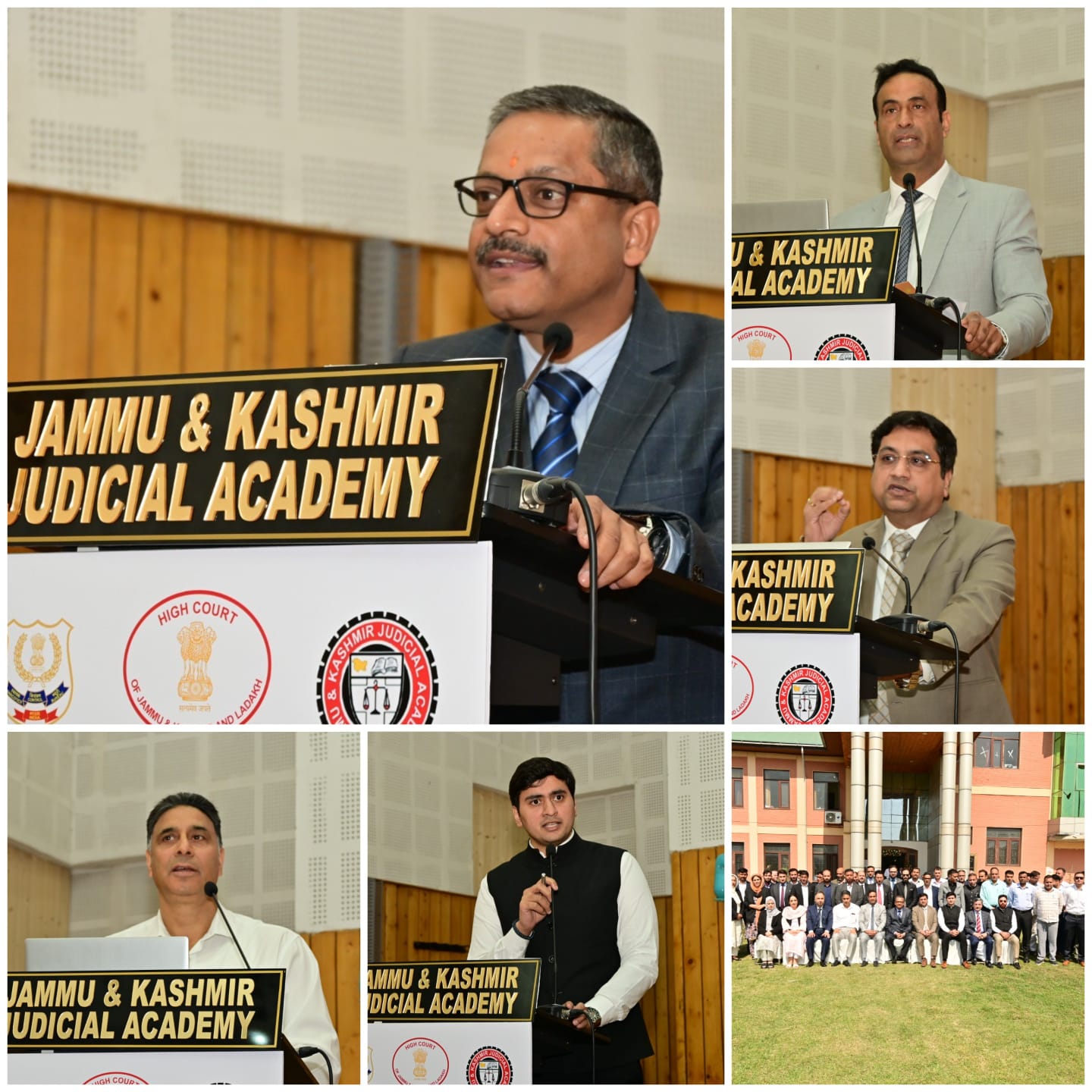
    SRINAGAR, SEPTEMBER 19: Under the patronage of Dr. Justice Pushpendra Singh Bhati, Chief Justice, High Court of Jammu & Kashmir and Ladakh (Patron-in-Chief, J&K Judicial Academy), and under the guidance of the Chairman and Members of the Governing Committee of the J&K Judicial Academy, a One Day Sensitization Programme on “Issues Related to Narcotics” was conducted today at the Jammu & Kashmir Judicial Academy, Mominabad, here in collaboration with the Narcotics Control Bureau, Srinagar Zonal Unit.
    The programme aimed to sensitize judicial officers, prosecutors, investigating officers and other stakeholders on the legal, investigative and evidentiary issues arising under the Narcotic Drugs and Psychotropic Substances Act, 1985 (NDPS Act).
    The Keynote Address was delivered by Justice Rajnesh Oswal, Judge, High Court of J&K and Ladakh and Chairman, Governing Committee, J&K Judicial Academy. He emphasized that the stringent provisions of the NDPS Act require strict adherence to statutory safeguards and highlighted the importance of lawful search and seizure, reliable evidence, proper chain of custody and fair investigation. 
    Referring to Sections 42, 50, 52A, 67 and 37 of the Act, Justice Rajnesh Oswal stressed the need for proper documentation, corroborative and digital evidence, and truthful investigation. 
    He also underscored the importance of a human-centred approach towards persons suffering from substance dependence while maintaining firm enforcement against organized trafficking.
    Director, J&K Judicial Academy, Naseer Ahmad Dar, in his Welcome and Introductory Address, emphasized the importance of coordinated efforts among investigators, prosecutors and the judiciary in effectively addressing NDPS cases. He highlighted the need for lawful investigation, strict compliance with statutory safeguards and proper preservation of evidence to ensure effective and timely adjudication.
    Sambit Mishra, IRS, DDG, NCB-NWR, emphasized the importance of interaction among investigators, prosecutors and the judiciary so that each stakeholder understands the expectations and constraints of the others. He stressed that effective prosecution depends not only on the evidence collected but also on strict compliance with procedural requirements and proper presentation of the case before the court.
    In his Special Address, Abdul Qayoom, DIG Crime Branch, highlighted the growing challenge of drug abuse and emphasized coordinated efforts by police, prosecution and judiciary. He stressed capacity building, procedural compliance, proper documentation and preservation of chain of custody, besides the need to investigate the forward and backward linkages of drug trafficking networks rather than limiting investigations to persons found carrying contraband.
    During Session-I, titled “Challenges Faced in Investigation of NDPS Cases (IO Perspective)”, Kubra Nazir, DySP, ANTF Kashmir, highlighted challenges relating to Sections 42 and 50, searches, independent witnesses, videography, inventory, chain of custody, sampling, forensic delays and collection of digital and financial evidence. 
    She emphasized timely compliance and proper documentation, particularly in view of the geographical and cross-border trafficking challenges in Jammu & Kashmir.
    Session-II, titled “Identification of Investigation Gaps Affecting Prosecution and Evidentiary Strength”, was conducted by Aftab Jeelani Wani, Public Prosecutor, NCB, Srinagar Zonal Unit. He emphasized that the strength of an NDPS prosecution depends substantially upon the quality and legality of investigation, particularly compliance with statutory requirements, proper search and seizure, documentation, chain of evidence and establishment of foundational facts before reliance on statutory presumptions.
    Session-III, titled “Appreciation of Evidence and Common Grounds Leading to Acquittals; Coordination between Investigators, Prosecutors and Judiciary for Strengthening Cases”, was conducted by Justice Mohammad Yaqoob Mir, Former Chief Justice, High Court of Meghalaya, with focus on appreciation of evidence and coordination among the stakeholders for strengthening NDPS cases.
    During Session-IV, Srinivasan Gopal, Former Assistant Director, Directorate of Revenue Intelligence, highlighted the mandatory compliance framework governing search, seizure and arrest under the NDPS Act. He emphasized proper sampling, inventory, documentation and maintenance of an unbroken chain of custody from seizure through forensic examination and production before the court.
    Session-V, conducted by Naseer Ahmad Dar, Director, J&K Judicial Academy, focused on the judicial approach to bail under Section 37 of the NDPS Act, including the twin conditions applicable in commercial-quantity cases. He emphasized that the bail stage should not become a mini-trial and highlighted measures for timely disposal of cases, including effective witness management, case tracking, prompt Section 52A compliance and FSL reports, reduction of unnecessary adjournments, time-bound charge framing and greater use of video conferencing.
    The programme brought together the judiciary, prosecution, police, NCB, ANTF and other enforcement stakeholders, facilitating an interdisciplinary exchange aimed at strengthening investigation, evidence preservation, prosecution and adjudication of NDPS cases.
    The programme concluded with Concluding Remarks by Piyush Kumar Ankit, Zonal Director, Narcotics Control Bureau, Srinagar, followed by the Vote of Thanks by Naseer Ahmad Dar, Director, J&K Judicial Academy.
    The proceedings of the day were moderated by Mufti Nahida, Additional Mobile Magistrate (T), Srinagar.
  • Sakeena Itoo inaugurates girls sports competition at Kulgam, new road projects at Aharbal, Manzgam areas

    Sakeena Itoo inaugurates girls sports competition at Kulgam, new road projects at Aharbal, Manzgam areas

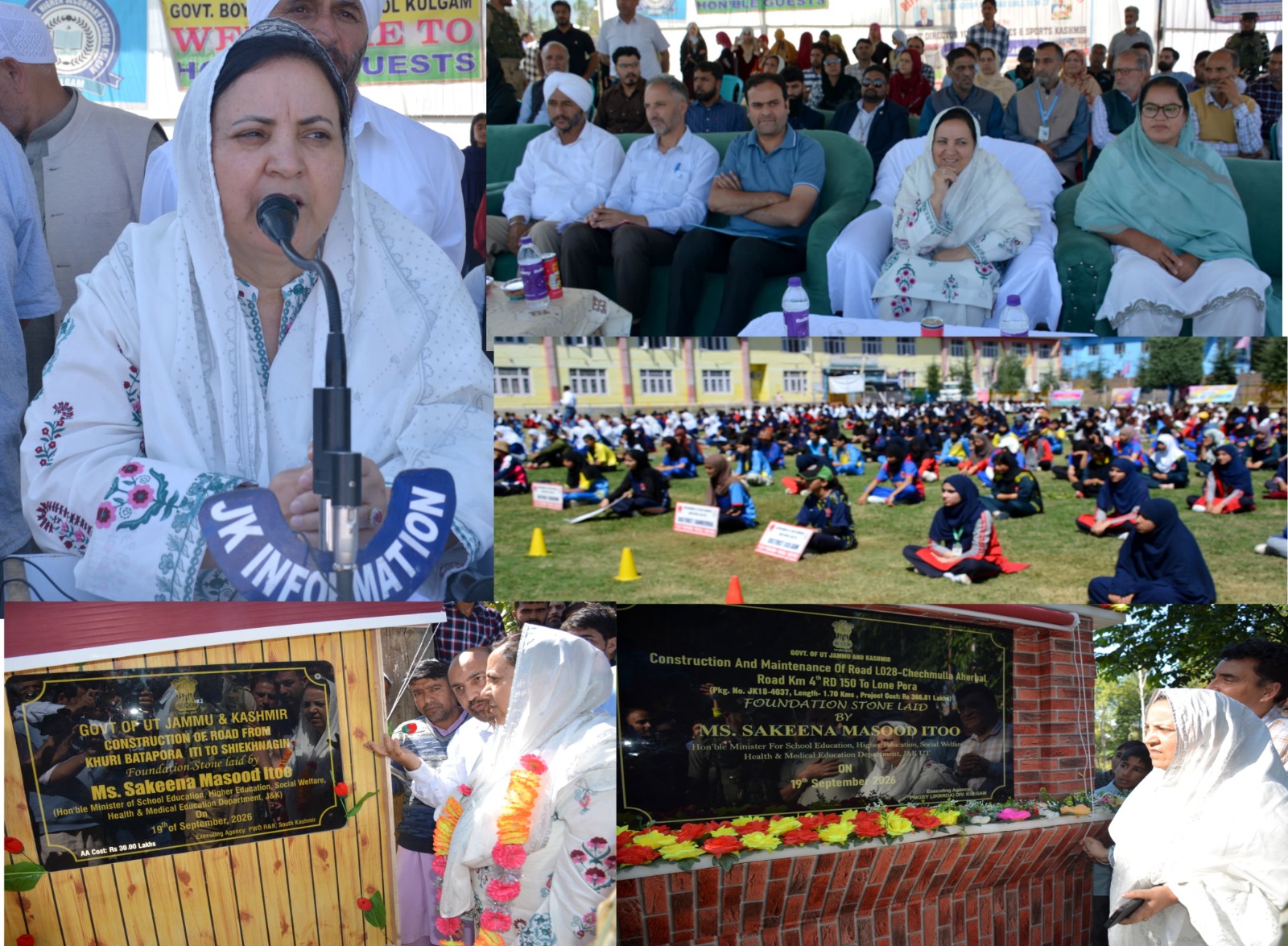
    KULGAM, SEPTEMBER 19: Minister for Education, Social Welfare, Health and Medical Education, Sakeena Itoo, today visited Kulgam district and participated in a series of programmes besides inaugural and foundation laying events aimed at strengthening the sports, healthcare and road connectivity infrastructure.
    Earlier in the day, the Minister inaugurated U/19 girls Base Ball inter-district tournament at L/NK Shri Nazir Ahmad Wani, Government Boys Higher Secondary School, Kulgam. The tournament was being hosted by the Youth Services and Sports Department, Kulgam with participation from all districts of the Kashmir Division.
    Speaking on the occasion, the Minister appreciated the efforts of the Youth Services and Sports Department in providing young athletes with opportunities to showcase their talent. She encouraged the youth of Jammu and Kashmir to actively participate in sports and contribute positively for the overall development of the society.
    During the extensive tour, the Minister laid the foundation stones for construction of a Health Sub-Centre at Gandwani, to be constructed at an estimated cost of Rs. 40.00 lakh.
    The foundation stones for construction and maintenance of the road from Chechmulla– Aharbal road to Lonepora, with an estimated cost of Rs.366.81 lakh; construction of road from Khuri Batapora ITI to Sheikhnagin with an estimated cost of Rs 30.00 lakh; construction of Aharbal Main road to Chandar Manzgam-A with an estimated cost of Rs. 18.00 lakh and construction of road from H/o Bashir Mirza to Gujar Basti kawtaqri with an estimated cost of Rs 15.00 lakh were also formally laid by the Minister.
    The projects are aimed at improving the road connectivity, easing transportation and facilitating smoother movement of people in the adjoining areas of the district.
    Sakeena Itoo spoke with the people and enquired about the public welfare issues and provision of government extended services to them. She emphasized directed sectoral and district heads to regularly monitor the works and ensure the timely completion.
    The Minister was accompanied by District Programme Officer, ICDS Zaheer Ahmad Kafi, Kulgam, SDM DH Pora, Bashir-ul- Hassan, Assistant Commissioner Development Kulgam, Bilal Kamgar, Chief Medical Officer, Chief Education Officer, Executive Engineers of PDD, Jal Shakti, Irrigation and Flood Control Kulgam, Executive Engineer (R&B) DH Pora, besides other concerned officers and officials in presence of huge gathering of local people.