Monday, July 13, 2026
Home Blog Page 96

NIA Arrests Key Co-Conspirator in Red Fort Car Blast

0

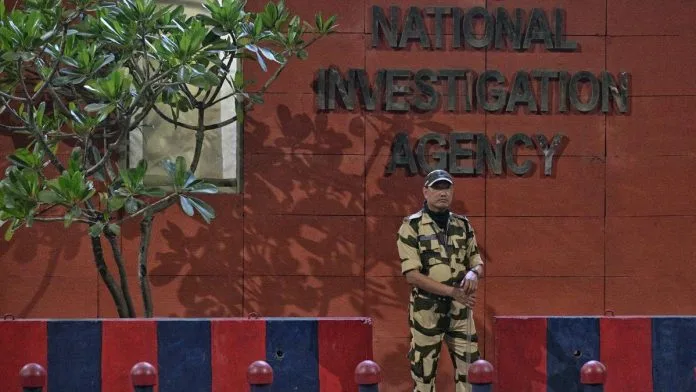
The National Investigation Agency (NIA) has arrested Jasir Bilal Wani, an alleged key co-conspirator linked to the Red Fort car blast, which claimed 13 lives on November 10. The agency took Wani into custody in Srinagar after he allegedly collaborated with suicide bomber Umar un Nabi.

Wani, a resident of Qazigund in Anantnag district of Jammu and Kashmir, provided technical support for terror operations. His role included modifying drones and trying to fabricate rockets ahead of the tragic explosion. According to the NIA, Wani operates under the alias Danish.

The investigation into the Red Fort car blast expands as the NIA aims to unravel the conspiracy behind this heinous act. Investigators are probing multiple leads to identify all individuals associated with the terror plot, underscoring concerns about an interstate network linked to Jaish-e-Mohammed.

In earlier interrogations, Wani revealed that Umar had radicalised him over several months, convincing him to become a suicide bomber. The two met at a mosque in Kulgam last year. Their ensuing discussions led Wani to a rented accommodation near Al Falah University in Faridabad, Haryana.

Wani’s initial task was to function as an over-ground worker (OGW) for Jaish-e-Mohammed. However, Umar pushed him towards conducting a suicide attack. Wani ultimately backed out in April, citing financial struggles and his belief that suicide violated Islamic teachings.

This new arrest sheds light on the ongoing probe into a sophisticated interstate terrorist network linked to Jaish-e-Mohammed. Law enforcement agencies are urgently seeking further connections and possible future threats.

Umar, a 28-year-old from Pulwama, emerged as a significant figure within this network, which spans across Kashmir, Haryana, and Uttar Pradesh. Authorities believe he was planning a powerful VBIED (vehicle-borne improvised explosive device) attack, which could coincide with the December 6 anniversary of the Babri Masjid demolition.

According to officials, Umar aimed to detonate the bomb either at a bustling location in Delhi or at a crowded religious site—and then disappear into the night.

Wani’s interrogation indicates that Umar’s radicalisation intensified following a 2021 trip to Turkiye with fellow accused Dr. Muzammil Ahmad Ganaie. Upon their return, the two, who are both associated with Al Falah University, began acquiring large amounts of chemicals, including 360 kg of ammonium nitrate and other explosive materials.

The December plot’s collapse began with a police investigation that led to Ganaie’s arrest and the recovery of explosives. This prompted panic within Umar’s ranks and culminated in the Red Fort blast, which tragically took 13 lives.

The unraveling of this interstate terror network started on October 19, following the appearance of Jaish-e-Mohammed posters in Bunpora and Nowgam areas near Srinagar. Police response, including a review of CCTV footage, resulted in the arrest of three locals who had been involved in past stone-pelting incidents.

The interrogation of these individuals led to the arrest of a former paramedic-turned-Imam, Maulvi Irfan Ahmad, from Shopian. Authorities allege that he played a crucial role in disseminating the posters and radicalising the doctors involved in the terror plans.

The NIA continues its extensive inquiry, focusing on dismantling the operational capabilities of Jaish-e-Mohammed in India.
Home Minister Amit Shah Chairs Northern Zonal Council Meet

0

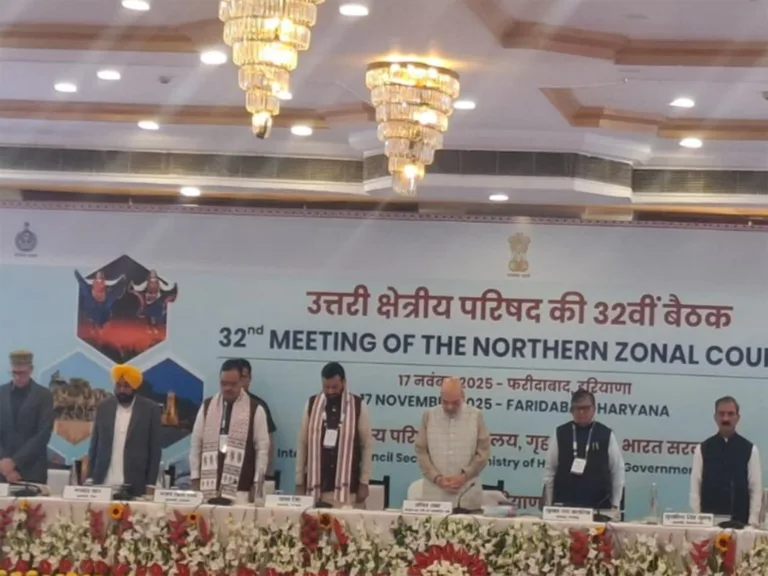
Union Home Minister Amit Shah on Monday chaired the 32nd meeting of the Northern Zonal Council here and discussed issues concerning the states and Union territories of the region.

The Northern Zonal Council comprises the states and Union territories of Haryana, Himachal Pradesh, Punjab, Rajasthan, Delhi, Jammu and Kashmir, Ladakh and Chandigarh.

Chief Ministers Nayab Singh Saini (Haryana), Sukhvinder Singh Sukhu (Himachal Pradesh), Bhagwant Mann (Punjab), Bhajan Lal Sharma (Rajasthan), Rekha Gupta (Delhi), Omar Abdullah (J&K), Punjab Governor and Administrator of Chandigarh Gulab Chand Kataria, Lieutenant Governors Manoj Sinha (J&K) and V K Saxena (Delhi) attended the meeting, officials said.

Issues like education, health, water, electricity, speedy investigation of cases of sexual offences against women and children, among others were discussed at the meeting, they said.

At the outset, the meeting observed a minute of silence to pay respect to those who lost their lives in the November 10 blast near the Red Fort.

Senior officials from the central and state governments and Union territories also attended the meeting.

The zonal councils provide an excellent forum for resolving and progressing issues and disputes between the Centre and the member states and Union territories, among the member states and Union territories, and within the zone, an official said.

In the meeting of the zonal council, broad issues of national importance, including the speedy investigation of cases of sexual offences against women and children and the implementation of Fast Track Special Courts (FTSC) for their swift disposal are discussed.

Various regional-level common interest issues, such as strengthening nutrition, education, health, electricity, urban planning, and the cooperative system are also be discussed in the meeting.

The Northern Zonal Council is among the five zonal councils established under sections 15 to 22 of the States Reorganisation Act, 1956.

The Union home minister is the chairperson of the Northern Zonal Council. The chief minister of one member state (rotating every year) acts as the vice-chairperson.

From each member state, the governor nominates two ministers as members of the council.

Each Zonal Council has also formed a permanent committee at the level of chief secretaries.

Issues proposed by the states are initially presented to the permanent committee of the Zonal Council concerned for discussion. After consideration by the permanent committee, the remaining issues are then presented to the Zonal Council meeting for further deliberation.

The role of the zonal councils is advisory. However, over the past few years, these councils have proven to be an important factor in promoting healthy bonds of mutual understanding and cooperation in various fields.

With the cooperation of all state governments, central ministries and departments, a total of 63 meetings of the various zonal councils and their permanent committees have been held in the last 11 years, the official said. (Agencies)

J&K | Truck Catches Fire In Kwar Hydroelectric Project Tunnel, No Loss Of Life

0

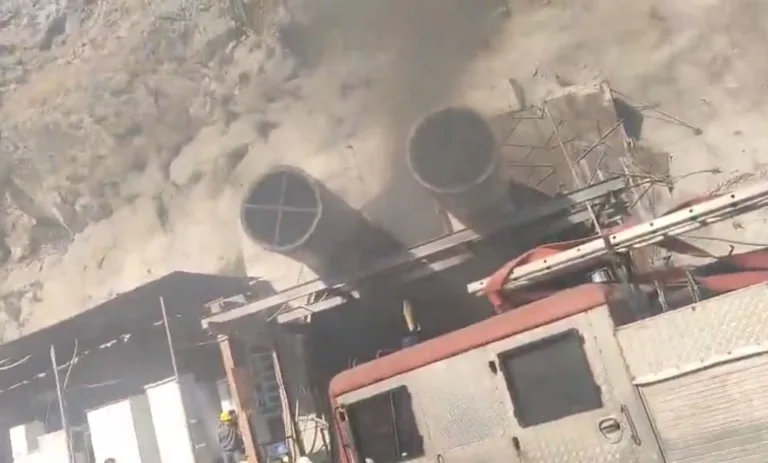
Several labourers were rescued safely on Monday after a truck caught fire inside a tunnel at the Kwar hydroelectric power project on the Chenab river in Jammu and Kashmir’s Kishtwar district, officials said.

They said there was no loss of life in the incident.

A fire broke out in the under-construction tunnel when a dumper caught fire while several labourers were engaged in tunnelling work at the project site in the Padyarna area, they said.

The Fire and Emergency Services Department rushed to the spot and, along with project officials, rescued all the workers safely, they added.

There was no loss of life in the incident, they said. (Agencies)

Sunil Sethi Resigns from JKCA, Alleges Back-Dated Orders

0

In a significant turn of events in the Jammu & Kashmir Cricket Association (JKCA), Sunil Sethi, the Member–Legal Affairs, has officially resigned from the JKCA Sub-Committee. He cites the issuance of “back-dated orders” by the former Ombudsman as his main concern. Sethi, who has served on the Sub-Committee since 2021, submitted his resignation letter to BCCI President Mithun Manhas.

This resignation arrives in the wake of the Supreme Court’s order dated 27 October, mandating that JKCA elections occur within 12 weeks under the guidance of former Chief Election Commissioner Achal Kumar Joti. Sethi’s departure raises questions about the integrity of the ongoing governance within the association.

In his resignation letter, Sethi expressed his concerns regarding the electoral process and the implications of the alleged actions of the former Ombudsman. He noted, “As the Supreme Court has directed holding of elections of JKCA and the effort to appoint a new Ombudsman has not been approved by the Election Officer until the General Body’s formation, it is unfortunate that back-dated orders are being issued by the former Ombudsman now, dating them to March 2025. No such order was passed or reported to me.”

Sethi underscored the potential ramifications of these back-dated orders, indicating they significantly alter club management and voting rights within JKCA. He argued that these changes aim to modify the voting nomenclature—an initiative he categorically opposes. “These orders are changing the club management and voting rights. This is to change the voting nomenclature, which I do not wish to be party to,” he stated in his letter.

Concluding his resignation, Sethi expressed gratitude for his tenure, stating, “As such, I tender my resignation from Member Sub-Committee. Please accept and relieve me. I am thankful for the opportunity the Board has bestowed on me.” His exit from JKCA raises further scrutiny on the association’s governance structure and the upcoming electoral process, prompting calls for transparency and accountability.

Assam Locals Detain 44 Labourers From Jammu And Kashmir

0

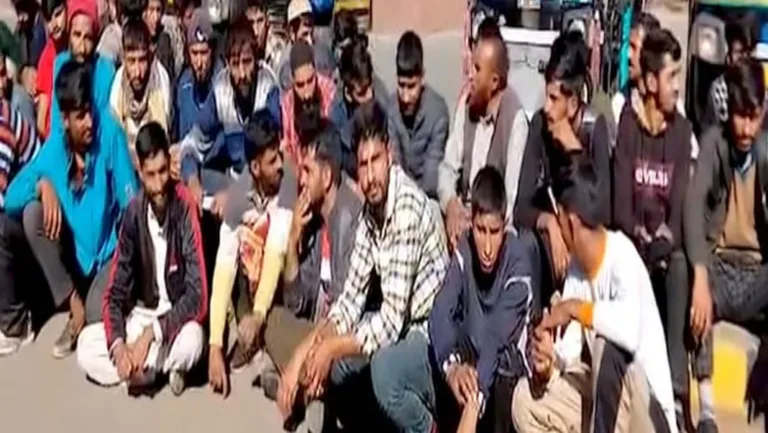
Locals in Assam’s Tinsukia district detained 44 individuals from Jammu and Kashmir on Monday morning after finding them moving around the Tinsukia Railway Station. The group was later handed over to the Railway Police Force for verification.

According to locals, the men were brought by a contractor for work in Arunachal Pradesh. “The group appeared suspicious to them in the backdrop of the recent blast in Delhi. We handed them over to Railway Police for verification,” the locals were quoted by a section of media as having said.

The detained group, however, said they were wage labourers who had come for transmission line work. They stated that most of them belonged to Doda and Kishtwar districts of Jammu and Kashmir and had arrived by train earlier in the day.

Officials said verification of the individuals was still underway. (KNT)

Heavy Rush at Sabarimala as Mandalam-Makaravilakku Season Begins

0

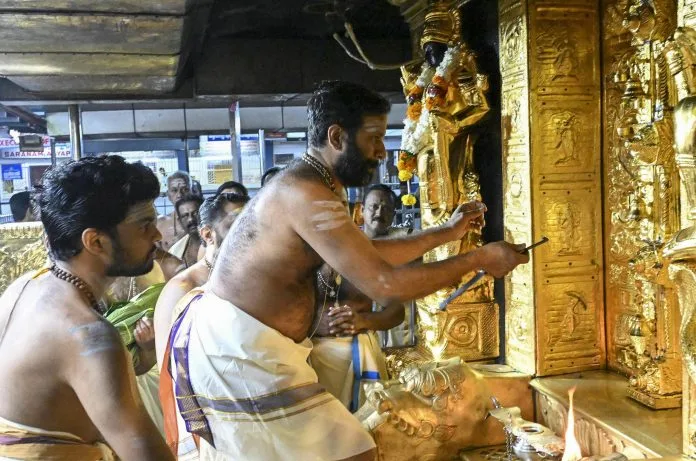
Hundreds of devotees thronged the Lord Ayyappa Temple at Sabarimala on Monday, marking the auspicious first day of the Malayalam month Vrischikam and the beginning of the annual Mandalam-Makaravilakku pilgrimage season. The temple witnessed a heavy rush of pilgrims from various states, eagerly waiting to offer prayers and seek blessings.

Pilgrims dressed in traditional black attire carried the sacred irumudikkettu, a symbolic offering for the deity. Starting just before dawn, the temple gates opened at 3 a.m., officiated by the newly appointed melsanthi, E.D. Prasad Namboothiri, amid the melodious chants of Lord Ayyappa’s hymns echoing through the temple complex.

The auspicious opening ceremony included the presence of tantri Kantararu Mahesh Mohanaru and officials from the Travancore Devaswom Board (TDB). TDB Secretary P.N. Ganeswaran Potti and Sabarimala Executive Officer O.G. Biju joined the festivities, highlighting the robust preparations made ahead of the high holy season.

The newly opened shrine witnessed long queues that stretched across the nadapandal, the sacred pathway leading to the temple, and the sopanam, the holy steps. After the opening, the rituals commenced with Nirmalya Abhishekam, Ganapathi Homam, and Neyyabhishekam, creating a spiritually enriching atmosphere.

As part of the pilgrimage schedule, the Sabarimala temple will have a unique timetable, closing at 1 p.m. and reopening at 3 p.m., eventually concluding the day with the chanting of “Harivarasanam,” the sacred lullaby of Lord Ayyappa, at 11 p.m. This year’s pilgrimage season will run for two months, attracting a multitude of devotees from across the globe.

Prior to Monday’s opening, a ceremonial opening took place on Sunday evening to welcome the pilgrims. The TDB anticipates even greater crowds this year, capping the number of daily pilgrims at 90,000 to ensure a smooth experience. This includes a mix of 70,000 through a virtual queue system and 20,000 available for spot bookings.

The Mandalam-Makaravilakku pilgrimage season stands as a significant event in the religious calendar, drawing thousands who consider it a sacred journey. For many devotees, this pilgrimage symbolizes faith, devotion, and the pursuit of spiritual enlightenment.

NIA Presents Amir Rashid Ali in Red Fort Blast Case Hearing

0

The National Investigation Agency (NIA) presented an accused in the Red Fort blast case, Amir Rashid Ali, before a Delhi court on Monday. The court hearing took place amid stringent security protocols to ensure the safety and integrity of the proceedings, reflecting the serious nature of the allegations.

Amir Rashid Ali’s appearance before the Principal District and Sessions Judge marks a significant moment in this high-profile case. Media personnel were barred from entering the courtroom, preventing any revelations about the case details during the preliminary hearings. The court’s decision on further procedures remains pending, and updates are awaited.

The incident at the heart of this case occurred on November 10, when an explosives-laden vehicle detonated near the historic Red Fort in Delhi. The explosion tragically resulted in the death of 13 individuals and injured numerous others, causing widespread panic and raising severe security concerns.

According to investigations, officials identified the vehicle’s driver as Umar Nabi, a doctor from the Pulwama district of Jammu and Kashmir. Law enforcement agencies have linked Nabi to a “white-collar” terror module that was dismantled following the recovery of explosives in Faridabad, Haryana. This connection raises critical questions regarding the depth and reach of terror networks operating in the region.

This case underscores the increasing complexities surrounding national security and how such incidents affect public safety and trust. The NIA’s thorough investigations aim to uncover more about the network behind the bombing and the motivations for the attack.

As the case continues to unfold, officials emphasize the importance of maintaining security and vigilance in sensitive areas like the Red Fort, a significant historical site in India. The NIA remains under pressure to provide clarity on the developments, as both the media and public anticipate further disclosures.

In the coming days, legal experts and analysts will likely monitor the proceedings closely, given the potential implications for national security policies. The outcome of Amir Rashid Ali’s case could pave the way for broader discussions on counter-terrorism strategies within India’s judicial framework.

Further updates regarding this ongoing investigation are expected. The NIA continues to pursue all leads to ensure accountability and justice concerning this devastating attack.

Northern Army Commander Reviews Counter-Terror Grid in Udhampur; Calls for Heightened Vigilance

0

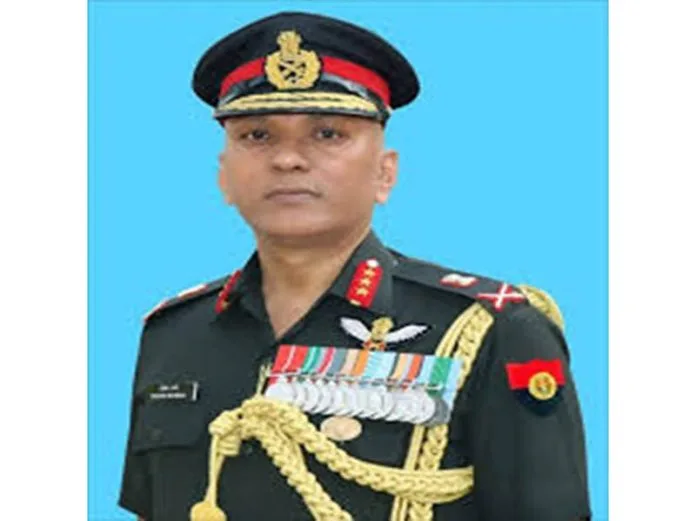
Army’s Northern Commander, Lieutenant General Pratik Sharmathecounter-terrorism gridin Udhampuvigilant and proactive against emerging threats in the hinterland.

The General Officer Commanding-in-Chief (GOC-in-C), Northern Command, visited Basantgarh and Rampur, areas that have witnessed multiple terror-related incidents in recent years.

According to the Northern Command, Lt Gen Sharma assessed the operational readiness on ground, interacted with deployed units, and emphasized the need for uninterrupted alertness in view of the changing security dynamics.

“During the visit, he interacted with troops, lauding their professionalism and unwavering commitment to keep Jammu and Kashmir terror-free,” the Northern Command said in a statement on X.

A day earlier, the Army Commander visited Nowshera and Hooch sectors in Rajouri district to review the along the Line of Control (LoC).

A wstrong defensive posture.

Lt Gen Sharma commended the soldiers for their high morale, professionalism and sustained efficiency in face of continued security challenges.

Delhi Police Summons Al Falah Chairman In Terror Module, Fake Documents Probes

0

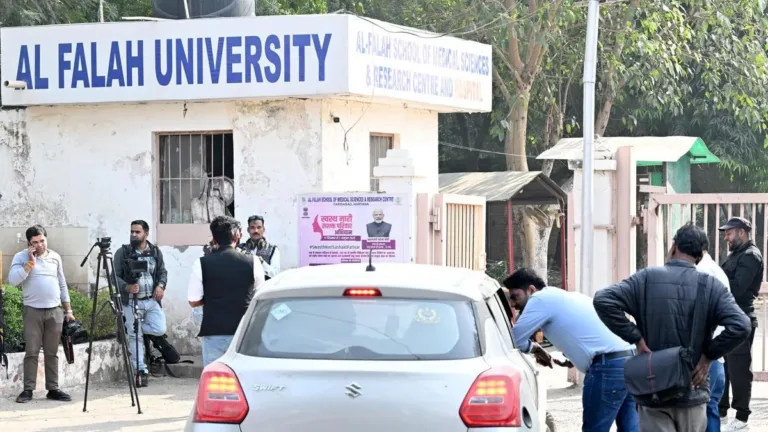
The Delhi Police has issued two summons to Al Falah University chairman in connection with the ongoing probe into the Faridabad terror module case and the two cases registered against the university for forgery and cheating, an official said on Monday.

The summons were sent after investigators found that the university’s chairman Javed Ahmad Siddiqui’s statement was crucial for clarifying several inconsistencies linked to the functioning of the university and the activities of individuals associated with the institution.

The Crime Branch has already registered two FIRs against the Haryana-based university for cheating and forgery, following serious red flags raised by the University Grants Commission (UGC) and the National Assessment and Accreditation Council (NAAC) on Saturday.

Officials said both regulatory bodies flagged “major irregularities” after reviewing the university’s accreditation claims and submitted their findings to law enforcement agencies.

“The FIRs pertain to alleged false accreditation documents and claims made by the university. The matter is being investigated in detail,” a senior officer said.

Police sources said that the issuance of summons to Siddiqui is part of a wider line of inquiry that overlaps with the ongoing investigation into the blast near the Red Fort last week.

Several suspects linked to the blast are believed to have had associations with the university, prompting investigators to examine institutional records, financial transactions and administrative approvals.

Further investigation is underway. (Agencies)

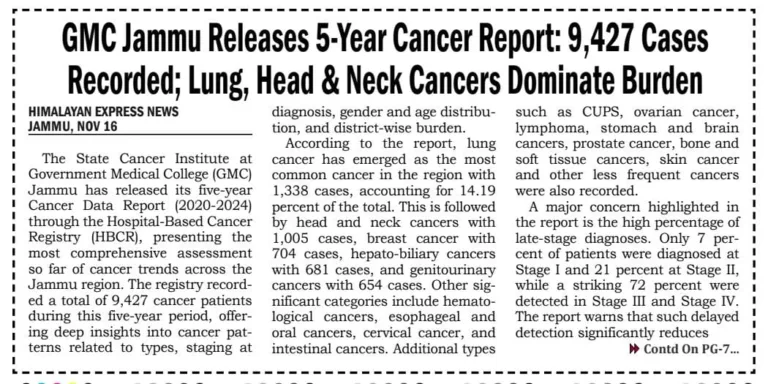
GMC Jammu Releases 5-Year Cancer Report: 9,427 Cases Recorded; Lung, Head & Neck Cancers Dominate Burden

0


Himalayan Express Exclusive 

Jammu, Nov 2025:
The State Cancer Institute, Government Medical College (GMC) Jammu, has published its five-year Cancer Data Report (2020-2024) through the Hospital Based Cancer Registry (HBCR), offering the most extensive analysis yet of cancer trends in the Jammu region. A total of 9,427 cancer patients were registered between 2020 and 2024, revealing significant patterns in cancer types, staging, gender distribution, age groups, and district-wise burden.


Lung Cancer Is the Most Common Cancer in Jammu Region

The HBCR data shows that Lung Cancer is the leading cancer site with 1,338 cases (14.19%).
It is followed by:

Head & Neck: 1,005 cases (10.66%)

Breast Cancer: 704 cases (7.47%)

Hepato-biliary: 681 cases (7.22%)

Genito-urinary: 654 cases (6.94%)

Hematological: 653 cases (6.93%)

Esophagus: 519 cases (5.51%)

Oral: 519 cases (5.51%)

Cervix: 494 cases (5.24%)

Intestinal: 456 cases (4.84%)

Other cancers include:

CUPS: 410 cases (4.35%)

Ovary: 354 cases (3.76%)

Lymphoma: 305 cases (3.24%)

Stomach: 279 cases (2.96%)

Brain: 263 cases (2.79%)

Prostate: 233 cases (2.47%)

Bone & soft tissue: 210 cases (2.23%)

Other female cancers: 186 cases (1.97%)

Skin: 111 cases (1.18%)

Others: 53 cases (0.56%)


Majority of Patients Reached Hospital at Advanced Stages

The staging of registered patients shows a concerning pattern of late detection:

Stage I: 696 cases (7%)

Stage II: 1,958 cases (21%)

Stage III: 2,744 cases (29%)

Stage IV: 4,029 cases (43%)

The report states that the majority of patients presented in Stage III and Stage IV, reducing chances of timely and effective intervention.

District-Wise Cancer Burden: Jammu Accounts for 38.94% Cases

The distribution of cases across districts shows:

Jammu: 3,671 cases (38.94%)

Udhampur: 943 cases (10%)

Kathua: 855 cases (9.07%)

Doda: 694 cases (7.36%)

Rajouri: 675 cases (7.16%)

Samba: 580 cases (6.15%)

Reasi: 532 cases (5.72%)

Poonch: 424 cases (5.64%)

Kishtwar: 292 cases (4.50%)

Ramban: 222 cases (3.10%)

Others: 539 cases (2.35%)

The Jammu district alone contributes nearly two-fifths of all cancers registered in the region.

Significant Burden Among Middle-Aged and Elderly

The age-wise breakdown reveals:

60–80 years: 4,234 patients (44.91%)

40–60 years: 3,669 patients (38.92%)

20–40 years: 964 patients (10.23%)

0–20 years: 104 patients (1.10%)

Above 80: 456 patients (4.84%)

The data clearly indicates that cancer incidence peaks in senior age brackets, though nearly 1 in 10 patients are from the 20-40 age group.


Gender Distribution: Male Cases Higher

Out of 9,427 total cases:

Male patients: 5,351 (56.76%)

Female patients: 4,076 (43.23%)

The male-to-female ratio stands at 1.31:1, indicating notably higher prevalence among males.


Top Five Cancers Overall

Across both men and women, the five most common cancers are:

1. Lung Cancer: 30%

2. Head & Neck: 23%

3. Breast Cancer: 16%

4. Hepato-biliary: 16%

5. Genitourinary: 15%


Top Five Cancers in Males

The top male cancer sites include:

Lung: 1010 cases (32%)

Head & Neck: 810 cases (25%)

Genitourinary: 544 cases (17%)

Oral: 460 cases (14%)

Hematological: 369 cases (12%)


Top Five Cancers in Females

Among female patients, the leading cancers are:

Breast Cancer: 681 cases (30%)

Cervix: 494 cases (22%)

Hepato-biliary: 375 cases (17%)

Ovary: 354 cases (16%)

Lung: 328 cases (15%)

Breast cancer remains the most common cancer among women in the region.


Understanding the Registry Process

The HBCR at GMC Jammu functions under the National Cancer Registry Programme (NCRP) of ICMR, initiated in 1981. Data collection follows a stringent, standardized process:

1. Data Collection: HBCR staff record each case using detailed forms.

2. Software Entry: Information is digitized into ICMR-NCDIR software.

3. Directory Publication: Data is published annually in NCDIR directories.

4. International Transmission: Data is shared with IARC, France.

5. Global Publication: Included in Cancer Incidence in Five Continents (CI5) series.


The report states that the registry “ensures accuracy, consistency, and contributes to national and global cancer epidemiology.”


Conclusion: Late Detection, High Lung Cancer Burden Major Concerns

The GMC Jammu’s five-year analysis highlights:

High burden of lung cancer, particularly among males.

Late-stage detection in 72% cases, indicating screening gaps.

Majority of cases from Jammu district, followed by Udhampur and Kathua.

Predominant impact on elderly, though younger age groups are not untouched.

Higher cancer incidence among males.

The HBCR emphasizes the need for enhanced screening programs, early diagnosis initiatives, preventive awareness campaigns, and region-wise cancer control strategies.