Sunday, July 12, 2026
Home Blog Page 96

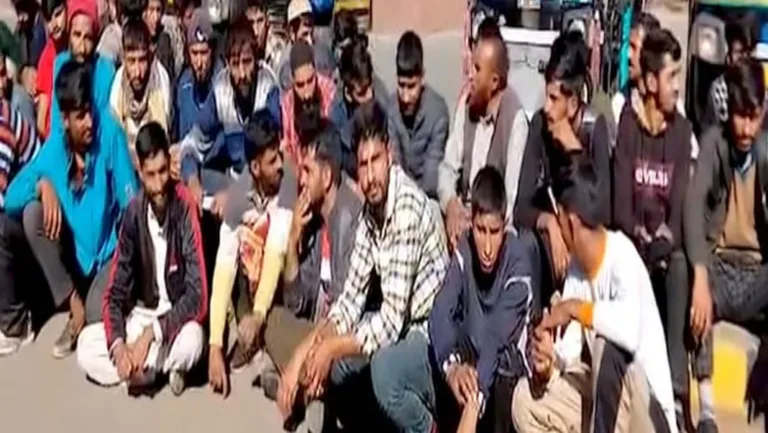
Assam Locals Detain 44 Labourers From Jammu And Kashmir

0

Locals in Assam’s Tinsukia district detained 44 individuals from Jammu and Kashmir on Monday morning after finding them moving around the Tinsukia Railway Station. The group was later handed over to the Railway Police Force for verification.

According to locals, the men were brought by a contractor for work in Arunachal Pradesh. “The group appeared suspicious to them in the backdrop of the recent blast in Delhi. We handed them over to Railway Police for verification,” the locals were quoted by a section of media as having said.

The detained group, however, said they were wage labourers who had come for transmission line work. They stated that most of them belonged to Doda and Kishtwar districts of Jammu and Kashmir and had arrived by train earlier in the day.

Officials said verification of the individuals was still underway. (KNT)

Heavy Rush at Sabarimala as Mandalam-Makaravilakku Season Begins

0

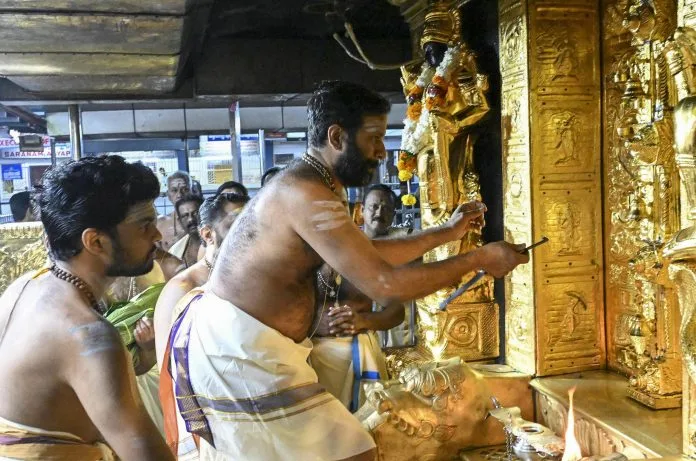
Hundreds of devotees thronged the Lord Ayyappa Temple at Sabarimala on Monday, marking the auspicious first day of the Malayalam month Vrischikam and the beginning of the annual Mandalam-Makaravilakku pilgrimage season. The temple witnessed a heavy rush of pilgrims from various states, eagerly waiting to offer prayers and seek blessings.

Pilgrims dressed in traditional black attire carried the sacred irumudikkettu, a symbolic offering for the deity. Starting just before dawn, the temple gates opened at 3 a.m., officiated by the newly appointed melsanthi, E.D. Prasad Namboothiri, amid the melodious chants of Lord Ayyappa’s hymns echoing through the temple complex.

The auspicious opening ceremony included the presence of tantri Kantararu Mahesh Mohanaru and officials from the Travancore Devaswom Board (TDB). TDB Secretary P.N. Ganeswaran Potti and Sabarimala Executive Officer O.G. Biju joined the festivities, highlighting the robust preparations made ahead of the high holy season.

The newly opened shrine witnessed long queues that stretched across the nadapandal, the sacred pathway leading to the temple, and the sopanam, the holy steps. After the opening, the rituals commenced with Nirmalya Abhishekam, Ganapathi Homam, and Neyyabhishekam, creating a spiritually enriching atmosphere.

As part of the pilgrimage schedule, the Sabarimala temple will have a unique timetable, closing at 1 p.m. and reopening at 3 p.m., eventually concluding the day with the chanting of “Harivarasanam,” the sacred lullaby of Lord Ayyappa, at 11 p.m. This year’s pilgrimage season will run for two months, attracting a multitude of devotees from across the globe.

Prior to Monday’s opening, a ceremonial opening took place on Sunday evening to welcome the pilgrims. The TDB anticipates even greater crowds this year, capping the number of daily pilgrims at 90,000 to ensure a smooth experience. This includes a mix of 70,000 through a virtual queue system and 20,000 available for spot bookings.

The Mandalam-Makaravilakku pilgrimage season stands as a significant event in the religious calendar, drawing thousands who consider it a sacred journey. For many devotees, this pilgrimage symbolizes faith, devotion, and the pursuit of spiritual enlightenment.

NIA Presents Amir Rashid Ali in Red Fort Blast Case Hearing

0

The National Investigation Agency (NIA) presented an accused in the Red Fort blast case, Amir Rashid Ali, before a Delhi court on Monday. The court hearing took place amid stringent security protocols to ensure the safety and integrity of the proceedings, reflecting the serious nature of the allegations.

Amir Rashid Ali’s appearance before the Principal District and Sessions Judge marks a significant moment in this high-profile case. Media personnel were barred from entering the courtroom, preventing any revelations about the case details during the preliminary hearings. The court’s decision on further procedures remains pending, and updates are awaited.

The incident at the heart of this case occurred on November 10, when an explosives-laden vehicle detonated near the historic Red Fort in Delhi. The explosion tragically resulted in the death of 13 individuals and injured numerous others, causing widespread panic and raising severe security concerns.

According to investigations, officials identified the vehicle’s driver as Umar Nabi, a doctor from the Pulwama district of Jammu and Kashmir. Law enforcement agencies have linked Nabi to a “white-collar” terror module that was dismantled following the recovery of explosives in Faridabad, Haryana. This connection raises critical questions regarding the depth and reach of terror networks operating in the region.

This case underscores the increasing complexities surrounding national security and how such incidents affect public safety and trust. The NIA’s thorough investigations aim to uncover more about the network behind the bombing and the motivations for the attack.

As the case continues to unfold, officials emphasize the importance of maintaining security and vigilance in sensitive areas like the Red Fort, a significant historical site in India. The NIA remains under pressure to provide clarity on the developments, as both the media and public anticipate further disclosures.

In the coming days, legal experts and analysts will likely monitor the proceedings closely, given the potential implications for national security policies. The outcome of Amir Rashid Ali’s case could pave the way for broader discussions on counter-terrorism strategies within India’s judicial framework.

Further updates regarding this ongoing investigation are expected. The NIA continues to pursue all leads to ensure accountability and justice concerning this devastating attack.

Northern Army Commander Reviews Counter-Terror Grid in Udhampur; Calls for Heightened Vigilance

0

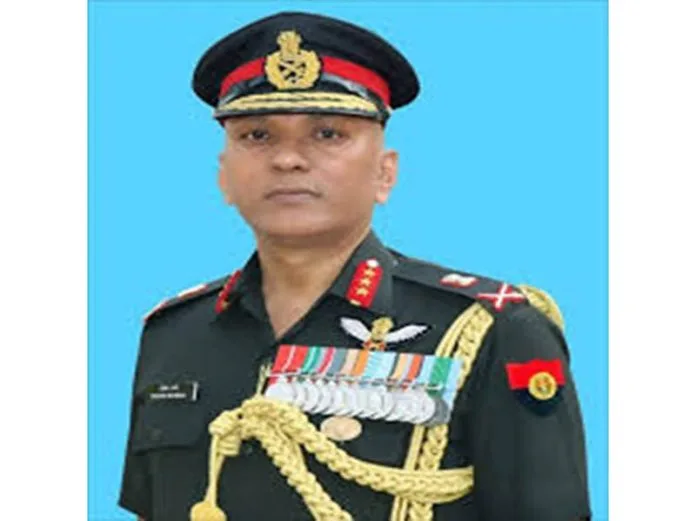
Army’s Northern Commander, Lieutenant General Pratik Sharmathecounter-terrorism gridin Udhampuvigilant and proactive against emerging threats in the hinterland.

The General Officer Commanding-in-Chief (GOC-in-C), Northern Command, visited Basantgarh and Rampur, areas that have witnessed multiple terror-related incidents in recent years.

According to the Northern Command, Lt Gen Sharma assessed the operational readiness on ground, interacted with deployed units, and emphasized the need for uninterrupted alertness in view of the changing security dynamics.

“During the visit, he interacted with troops, lauding their professionalism and unwavering commitment to keep Jammu and Kashmir terror-free,” the Northern Command said in a statement on X.

A day earlier, the Army Commander visited Nowshera and Hooch sectors in Rajouri district to review the along the Line of Control (LoC).

A wstrong defensive posture.

Lt Gen Sharma commended the soldiers for their high morale, professionalism and sustained efficiency in face of continued security challenges.

Delhi Police Summons Al Falah Chairman In Terror Module, Fake Documents Probes

0

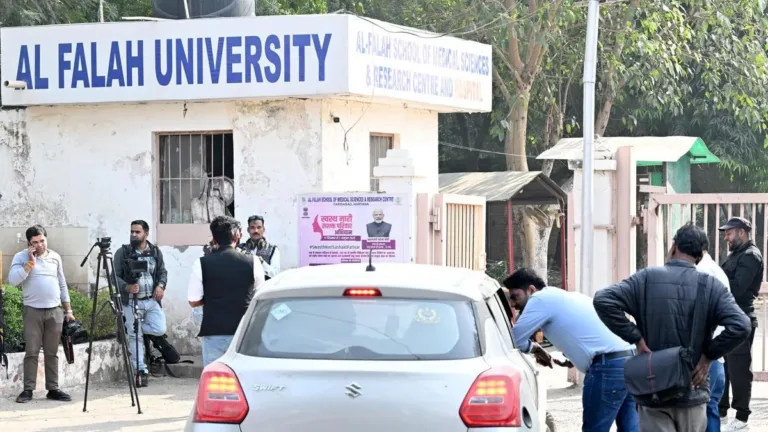
The Delhi Police has issued two summons to Al Falah University chairman in connection with the ongoing probe into the Faridabad terror module case and the two cases registered against the university for forgery and cheating, an official said on Monday.

The summons were sent after investigators found that the university’s chairman Javed Ahmad Siddiqui’s statement was crucial for clarifying several inconsistencies linked to the functioning of the university and the activities of individuals associated with the institution.

The Crime Branch has already registered two FIRs against the Haryana-based university for cheating and forgery, following serious red flags raised by the University Grants Commission (UGC) and the National Assessment and Accreditation Council (NAAC) on Saturday.

Officials said both regulatory bodies flagged “major irregularities” after reviewing the university’s accreditation claims and submitted their findings to law enforcement agencies.

“The FIRs pertain to alleged false accreditation documents and claims made by the university. The matter is being investigated in detail,” a senior officer said.

Police sources said that the issuance of summons to Siddiqui is part of a wider line of inquiry that overlaps with the ongoing investigation into the blast near the Red Fort last week.

Several suspects linked to the blast are believed to have had associations with the university, prompting investigators to examine institutional records, financial transactions and administrative approvals.

Further investigation is underway. (Agencies)

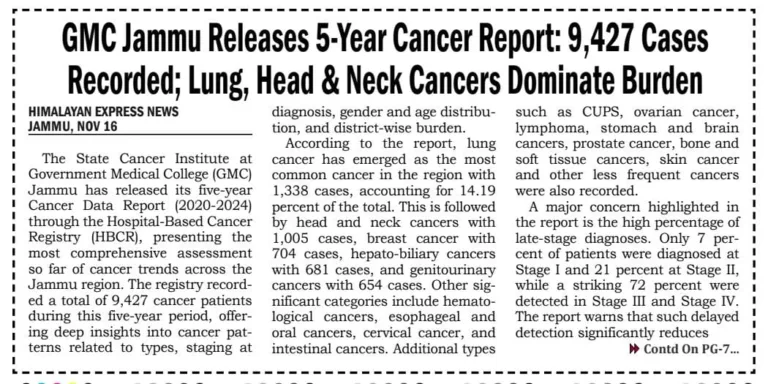
GMC Jammu Releases 5-Year Cancer Report: 9,427 Cases Recorded; Lung, Head & Neck Cancers Dominate Burden

0


Himalayan Express Exclusive 

Jammu, Nov 2025:
The State Cancer Institute, Government Medical College (GMC) Jammu, has published its five-year Cancer Data Report (2020-2024) through the Hospital Based Cancer Registry (HBCR), offering the most extensive analysis yet of cancer trends in the Jammu region. A total of 9,427 cancer patients were registered between 2020 and 2024, revealing significant patterns in cancer types, staging, gender distribution, age groups, and district-wise burden.


Lung Cancer Is the Most Common Cancer in Jammu Region

The HBCR data shows that Lung Cancer is the leading cancer site with 1,338 cases (14.19%).
It is followed by:

Head & Neck: 1,005 cases (10.66%)

Breast Cancer: 704 cases (7.47%)

Hepato-biliary: 681 cases (7.22%)

Genito-urinary: 654 cases (6.94%)

Hematological: 653 cases (6.93%)

Esophagus: 519 cases (5.51%)

Oral: 519 cases (5.51%)

Cervix: 494 cases (5.24%)

Intestinal: 456 cases (4.84%)

Other cancers include:

CUPS: 410 cases (4.35%)

Ovary: 354 cases (3.76%)

Lymphoma: 305 cases (3.24%)

Stomach: 279 cases (2.96%)

Brain: 263 cases (2.79%)

Prostate: 233 cases (2.47%)

Bone & soft tissue: 210 cases (2.23%)

Other female cancers: 186 cases (1.97%)

Skin: 111 cases (1.18%)

Others: 53 cases (0.56%)


Majority of Patients Reached Hospital at Advanced Stages

The staging of registered patients shows a concerning pattern of late detection:

Stage I: 696 cases (7%)

Stage II: 1,958 cases (21%)

Stage III: 2,744 cases (29%)

Stage IV: 4,029 cases (43%)

The report states that the majority of patients presented in Stage III and Stage IV, reducing chances of timely and effective intervention.

District-Wise Cancer Burden: Jammu Accounts for 38.94% Cases

The distribution of cases across districts shows:

Jammu: 3,671 cases (38.94%)

Udhampur: 943 cases (10%)

Kathua: 855 cases (9.07%)

Doda: 694 cases (7.36%)

Rajouri: 675 cases (7.16%)

Samba: 580 cases (6.15%)

Reasi: 532 cases (5.72%)

Poonch: 424 cases (5.64%)

Kishtwar: 292 cases (4.50%)

Ramban: 222 cases (3.10%)

Others: 539 cases (2.35%)

The Jammu district alone contributes nearly two-fifths of all cancers registered in the region.

Significant Burden Among Middle-Aged and Elderly

The age-wise breakdown reveals:

60–80 years: 4,234 patients (44.91%)

40–60 years: 3,669 patients (38.92%)

20–40 years: 964 patients (10.23%)

0–20 years: 104 patients (1.10%)

Above 80: 456 patients (4.84%)

The data clearly indicates that cancer incidence peaks in senior age brackets, though nearly 1 in 10 patients are from the 20-40 age group.


Gender Distribution: Male Cases Higher

Out of 9,427 total cases:

Male patients: 5,351 (56.76%)

Female patients: 4,076 (43.23%)

The male-to-female ratio stands at 1.31:1, indicating notably higher prevalence among males.


Top Five Cancers Overall

Across both men and women, the five most common cancers are:

1. Lung Cancer: 30%

2. Head & Neck: 23%

3. Breast Cancer: 16%

4. Hepato-biliary: 16%

5. Genitourinary: 15%


Top Five Cancers in Males

The top male cancer sites include:

Lung: 1010 cases (32%)

Head & Neck: 810 cases (25%)

Genitourinary: 544 cases (17%)

Oral: 460 cases (14%)

Hematological: 369 cases (12%)


Top Five Cancers in Females

Among female patients, the leading cancers are:

Breast Cancer: 681 cases (30%)

Cervix: 494 cases (22%)

Hepato-biliary: 375 cases (17%)

Ovary: 354 cases (16%)

Lung: 328 cases (15%)

Breast cancer remains the most common cancer among women in the region.


Understanding the Registry Process

The HBCR at GMC Jammu functions under the National Cancer Registry Programme (NCRP) of ICMR, initiated in 1981. Data collection follows a stringent, standardized process:

1. Data Collection: HBCR staff record each case using detailed forms.

2. Software Entry: Information is digitized into ICMR-NCDIR software.

3. Directory Publication: Data is published annually in NCDIR directories.

4. International Transmission: Data is shared with IARC, France.

5. Global Publication: Included in Cancer Incidence in Five Continents (CI5) series.


The report states that the registry “ensures accuracy, consistency, and contributes to national and global cancer epidemiology.”


Conclusion: Late Detection, High Lung Cancer Burden Major Concerns

The GMC Jammu’s five-year analysis highlights:

High burden of lung cancer, particularly among males.

Late-stage detection in 72% cases, indicating screening gaps.

Majority of cases from Jammu district, followed by Udhampur and Kathua.

Predominant impact on elderly, though younger age groups are not untouched.

Higher cancer incidence among males.

The HBCR emphasizes the need for enhanced screening programs, early diagnosis initiatives, preventive awareness campaigns, and region-wise cancer control strategies.

AAP Performs Poorly in J&K By-Elections

0

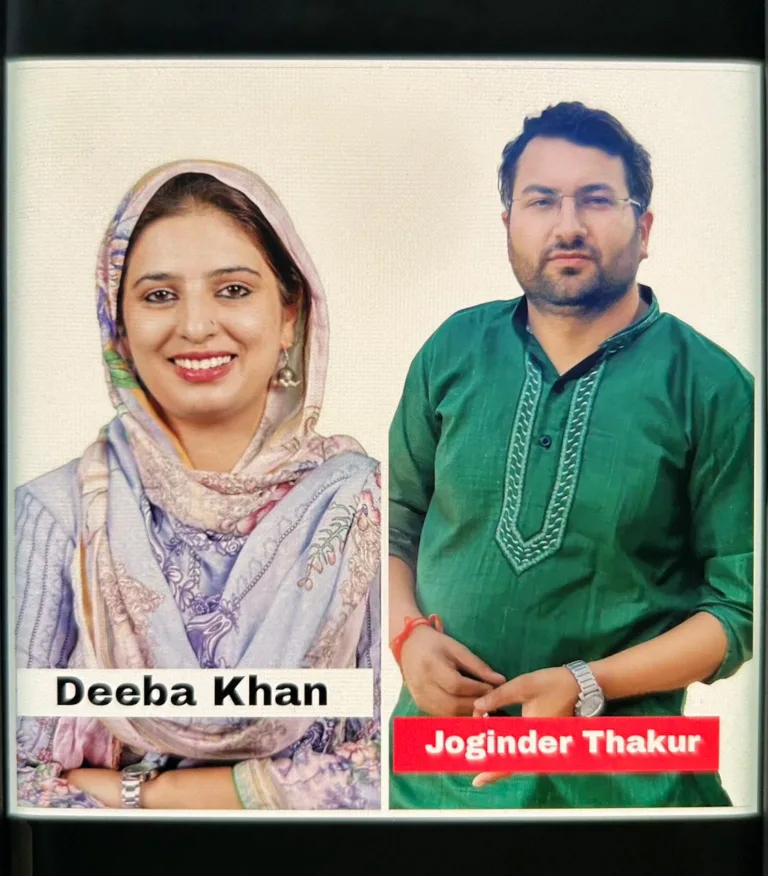
Joginder Singh Thakur gets 359 votes in Nagrota; Deeba Khan secures 459 votes in Budgam as AAP fails to gain even 1% vote share in both seats


Jammu, Nov 15: The Aam Aadmi Party (AAP) suffered a major political setback in the recently held by-elections in Jammu and Kashmir, with the party registering one of its weakest performances since entering the Union Territory’s electoral arena. Despite extensive campaigning on social media and repeated claims of strengthening its organisational structure, the party failed to make any impact on the ground.


In the Nagrota Assembly Constituency, AAP candidate Joginder Singh Thakur secured only 359 votes out of 73,833 votes polled, amounting to a mere 0.48% vote share. This outcome highlights the party’s inability to resonate with voters in a key constituency of the Jammu region, where traditional parties continue to dominate political sentiment.

A similar picture emerged in central Kashmir’s Budgam seat, where AAP’s Deeba Khan managed just 459 votes from 63,099 votes polled, translating to 0.72% of the total share. The figures reflect the party’s limited acceptance among voters despite its ongoing efforts to project itself as an emerging political alternative.


Political observers say the results underline a widening gap between AAP’s online narrative and its ground reality in Jammu and Kashmir. While the party maintains active engagement on digital platforms, the by-election outcome confirms that its social-media strength has not translated into a workable grassroots presence. Analysts note that without reliable booth-level cadres, a broader public outreach programme, and stronger local leadership, AAP is unlikely to gain traction in the competitive political landscape of J&K.

The by-election performances in both Nagrota and Budgam reaffirm that AAP currently lacks a significant voter base in the Union Territory, raising serious questions about its future strategy and relevance in the region’s evolving political dynamics.

NFJM Launches 6-Month Leadership & Media Internship Program

0

Jammu, November 15 — The National Foundation for Journalism & Media (NFJM) has launched an exciting 6-month Leadership & Media Internship Programme today. This programme offers young graduates and post-graduates a chance to gain hands-on experience in journalism and governance, directly under the mentorship of Dr. Tahir Rufayee, the National Chairman of NFJM.

Designed to develop the next generation of media leaders, this internship provides interns with exposure to real newsroom work, public engagement, and high-level media governance activities. As the media industry continuously evolves, initiatives like this are essential to ensure that aspiring journalists are well-equipped to navigate the challenges ahead.

Selected candidates will work closely with senior NFJM teams and immerse themselves in various tasks, including:

  • On-ground reporting and journalism
  • Media research, press note drafting, and fact-checking
  • Engagement in public policy and governance assignments
  • Creation of digital content such as videos, reels, and campaigns
  • Community outreach and event coordination

Interns will not only gain practical experience but also valuable insights from esteemed professionals. They will enjoy:

  • Real newsroom exposure to actual media processes
  • Direct mentorship from Dr. Tahir Rufayee
  • Participation in NFJM’s national-level initiatives
  • Opportunities for field visits and public interactions
  • A certificate of internship along with a stipend

Dr. Rufayee emphasized the importance of this initiative, stating, “The future of journalism belongs to informed, trained, and ethically-grounded youth. NFJM is committed to giving them the right platform to grow.” This reflects a strong commitment from NFJM to nurture upcoming talent in the field.

Students and recent graduates interested in applying for this internship can submit their CVs to:

📧 nfjm.org@gmail.com

📱 WhatsApp: 7006515407

NFJM has highlighted that seats for this prestigious internship are limited. Selection will be based on interviews and application screening, ensuring that the most passionate candidates get the opportunity.

This announcement has received a positive response in media circles, offering structured, real-world exposure to aspiring journalists when the media landscape is changing rapidly. NFJM’s initiative fosters the development of capable and skilled media professionals who can significantly contribute to the industry.

For more details about the internship and to stay updated about NFJM initiatives, candidates can visit the official website: www.nfjm.in

Punjab Govt Suspends SSP For ‘Failing’ To Act Against Gangsters

0

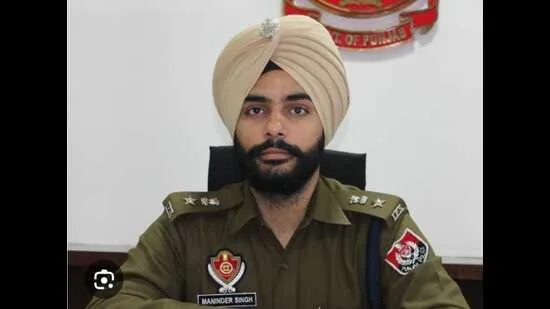
The Punjab Government on Saturday ordered the suspension of Amritsar (Rural) SSP Maninder Singh for his alleged failure in taking strict action against gangsters.

While ordering his suspension, Chief Minister Bhagwant Mann said in a statement that no laxity of any kind will be tolerated in action against gangsters.

This is the major action taken by the AAP Government against an IPS officer.

The AAP government has been facing flak from opposition parties over the issue of law and order, following extortion bids and firing incidents by gangsters and criminals.

During campaigning for the Tarn Taran bypoll, AAP national convener Arvind Kejriwal had vowed to rid the state of gangsters and also warned them to leave the state within a week. (Agencies)

India Calls For Greater Transparency In Functioning Of UNSC Subsidiary Organs

0

India has called for “greater transparency” in the functioning of the subsidiary organs of the UN Security Council, citing the “obscure” manner in which requests to designate entities and individuals are rejected.

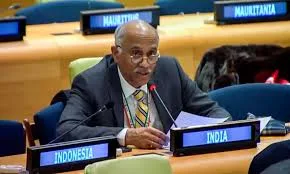
Addressing the UNSC open debate on Working Methods on Friday (local time), India’s Permanent Representative to the UN Ambassador Parvathaneni Harish said that the Security Council is central in the UN architecture as the principal organ that is primarily tasked with the responsibility of maintenance of international peace and security.

“As a UN organ whose sphere of functions covers a range of areas, but membership limited to only 15 members, working methods of the Security Council are critical to its credibility, efficacy, efficiency and transparency. This gains particular salience in a world beset with multiple crises and facing numerous challenges,” Harish added.

He underscored the need for greater transparency in the functioning of the subsidiary organs.

“A case in point is the manner in which listing requests are rejected. Unlike de-listing decisions, these are done in a rather obscure manner, with member states that are not on the Council not being privy to details,” he said.

Harish also pointed out that chairs and pen-holderships of the Council’s committees and subsidiary organs are privileges that come with major responsibilities.

“Discussions in the Council on distribution of Chairs and pen-holderships must prevent Council members with vested interests from being accorded these privileges. Obvious and outright conflicts of interest can have no place in the Council,” he said.

Calling for reform of the powerful 15-nation UN organ, Harish said “the overall endeavour needs to be on redesigning the eight-decade-old architecture to make the United Nations Security Council fit-for-purpose, equipped to meet the ongoing and future challenges and discharge its functions purposefully.”

He stressed the expansion in both permanent and non-permanent categories of the Council membership with adequate representation for under-represented and non-represented geographies, through text-based negotiations in a time-bound manner.

India also called for greater coordination of the Council with other UN organs, particularly the General Assembly.

“A useful tool in this regard is the discussion of the annual United Nations Security Council report in GA. However, this must not be treated as a mere procedural exercise. The report must be more than a record of the Council proceedings and meetings during the year,” he said.

Matters on which the Council is seized are also to be reviewed from time to time based on their relevance and utility, he said.

India reiterated its call to make the annual United Nations Security Council report analytical in nature.

On peacekeeping, Harish said that as the largest cumulative troop contributor, India stresses the need for factoring in the inputs of the Troop Contributing Countries and Police Contributing Countries for better implementation of peacekeeping mandates.

“Continuation of mandates that have outlived their utility for narrow political interests of certain states must not be allowed. This continued existence in a resource-constrained scenario is a drain on the UN and member states,” he said.

At a time when member states are striving for greater streamlining and better rationalisation under the UN80 framework, Harish urged the Council to undertake necessary measures on this front to bring about sunset clauses. (Agencies)