Thursday, July 9, 2026
Home Blog Page 9

1,046 Candidates Shortlisted for Indian Forest Service (Main) Examination 2026

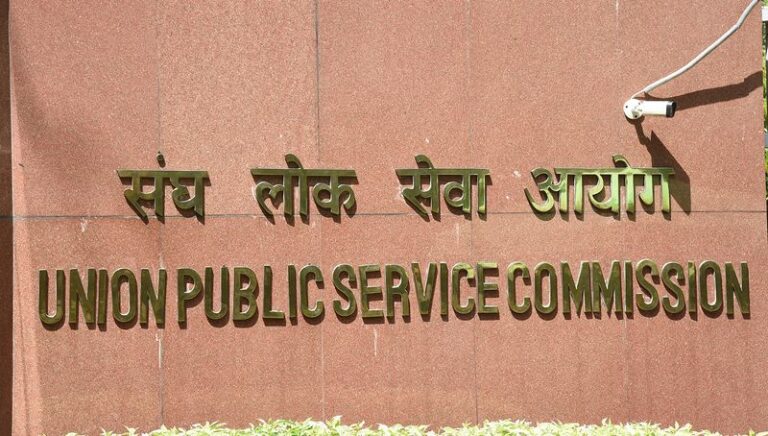
 The Union Public Service Commission (UPSC) on Tuesday announced that 1,046 candidates have been shortlisted for admission to the Indian Forest Service (Main) Examination, 2026.

The candidates have been selected on the basis of the screening test conducted through the Civil Services (Preliminary) Examination, 2026, which was held on May 24.

According to the Commission, the shortlisted candidates will compete for 80 vacancies notified for the Indian Forest Service Examination, 2026.

“This year, a total of 1,046 candidates have been shortlisted for the Indian Forest Service (Main) Examination, 2026 against 80 vacancies notified for the Indian Forest Service Examination, 2026,” the UPSC said in an official statement.

The number marks a significant decline from last year, when 2,116 candidates had qualified for the Indian Forest Service (Main) Examination against 150 vacancies.

Application Window and Fee Submission

UPSC said all qualified candidates will be provided an online window to furnish or update their details and submit the prescribed admission fee of Rs 200 for the Main Examination.

However, female candidates, Persons with Benchmark Disabilities (PwBD), and candidates belonging to Scheduled Castes (SC) and Scheduled Tribes (ST) categories are exempted from paying the fee.

Candidates will also be required to provide details regarding:

  • Scribe requirements;
  • Assistive devices;
  • Question papers in large font (for eligible candidates);
  • Cadre preference.

The dates for opening the online application window will be notified separately on the UPSC website.

Mandatory Submission for Admit Card

The Commission emphasised that all shortlisted candidates must log in to the UPSC portal and complete the application process by verifying or updating their details.

Failure to submit the application form within the stipulated period will result in the candidate not being issued an e-admit card, thereby rendering them ineligible to appear for the Main Examination.

Even those candidates who had uploaded documents earlier and have no changes to make must complete the final submission process after verification to receive their admit cards.

Result Withheld

UPSC further informed that the result of one candidate bearing Roll Number 6300119 has been withheld pending the outcome of an ongoing court case.

The Commission also stated that the marks, cut-off marks and answer keys of the screening test conducted through the Civil Services (Preliminary) Examination, 2026, will be uploaded on its website after the declaration of the final result.

Candidates seeking clarification regarding the result may contact the UPSC Facilitation Counter at 011-40303444 or 011-24041001 between 9 a.m. and 8 p.m.

Suspected Pakistani Drone Sighted Over Rajouri Border Village; Search Operation Finds No Payload

Security forces launched a search operation in a forward village along the International Border in Jammu and Kashmir’s Rajouri district after a suspected Pakistani drone was spotted crossing into Indian territory, officials said on Tuesday.

According to officials, the drone-like object, fitted with a blinking light, was noticed late Monday night in the Sunderbani sector. It was seen entering from the Pakistan-occupied Kashmir side and moving towards the Indian side before briefly hovering between the Mahadev Gap and Kalal village areas.

The suspicious aerial object later returned towards the Pakistan side without any engagement, officials added.

Acting swiftly, security personnel conducted an extensive search operation in the area on Tuesday morning to ascertain whether the drone had dropped any consignment, including narcotics, weapons or other contraband.

“Nothing objectionable was recovered during the search operation,” officials said, adding that the area has been thoroughly sanitised.

The incident has once again highlighted the growing challenge posed by cross-border drone activity along the Jammu frontier. In recent years, security agencies have reported several instances of drones being used to smuggle arms, ammunition, explosives and narcotics into Indian territory.

Security forces remain on high alert and are closely monitoring the border region to prevent any attempts aimed at disrupting peace and security. Investigations are underway to determine the exact nature and origin of the aerial object.

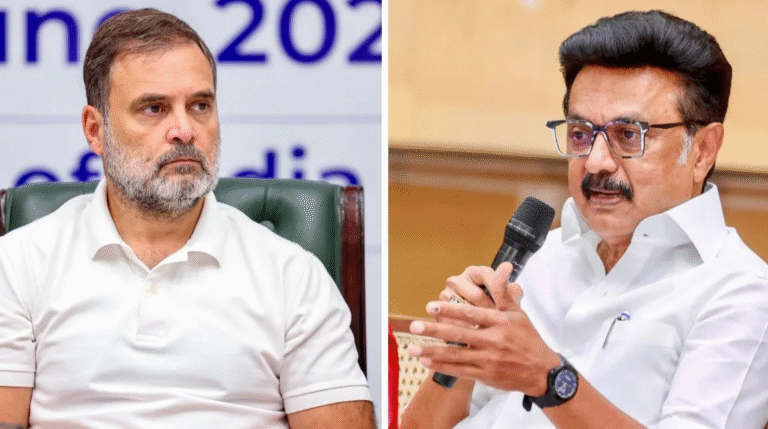
‘Political immaturity, dishonesty’: DMK’s scathing attack on Rahul Gandhi over INDIA bloc cracks

The rift within the INDIA bloc widened on Tuesday as the DMK launched a sharp attack on Congress leader and Leader of Opposition in Lok Sabha Rahul Gandhi, accusing him of mishandling relations with alliance partners and failing to address growing dissatisfaction within the opposition camp.

In a strongly worded editorial published in its party mouthpiece Murasoli, the DMK alleged that Congress has repeatedly worked against regional allies during assembly elections while expecting their support during Lok Sabha polls in the name of opposing the BJP.

The publication argued that Congress has often prevented alliance partners from gaining political ground in states where assembly elections are held.

According to the editorial, this contradiction has fuelled resentment among several INDIA bloc constituents.

The DMK claimed that concerns over Congress’s conduct surfaced during the INDIA bloc meeting held on June 8, where several leaders reportedly voiced dissatisfaction over the party’s handling of alliance relationships.

The editorial alleged that Congress unexpectedly found itself facing criticism at a gathering convened to strengthen opposition unity.

“Rahul Gandhi apparently did not anticipate such criticism. At a meeting convened to discuss opposition unity against the BJP, Congress itself became the principal target of criticism. The responsibility for that lies with Rahul Gandhi’s political immaturity and dishonesty,” Murasoli said.

The latest confrontation comes in the aftermath of the Tamil Nadu Assembly elections.

Relations between the DMK and Congress have become strained after Congress extended support to the Tamilaga Vettri Kazhagam (TVK), which emerged as the single-largest party in the state elections.

The DMK has viewed the move as a betrayal and said it has caused anger among party workers.

Amid the dispute, the party chose to stay away from the recent INDIA bloc meeting.

The unease is not limited to the DMK. The CPI(M) has also conveyed its concerns to Congress over what it described as a “systematic campaign” against its leadership during the Kerala Assembly elections.

However, unlike the DMK, the Left party participated in the INDIA bloc meeting and was represented by MP John Brittas.

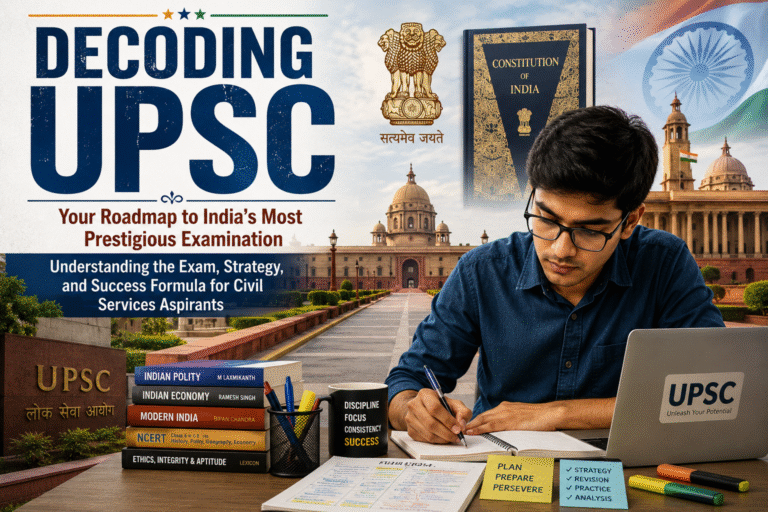
Decoding UPSC: Understanding India’s Toughest Competitive Examination

India’s Digital Public Infrastructure Model Gains Global Recognition


Daily Current Affairs Analysis – 15 June 2026

India’s Digital Public Infrastructure Model Gains Global Recognition

Why in News?

India’s Digital Public Infrastructure (DPI) model, comprising platforms such as Aadhaar, UPI, DigiLocker, and CoWIN, continues to receive international attention as several countries explore adopting similar digital governance.

Digital Public Infrastructure refers to foundational digital systems that enable citizens, businesses, and governments to interact efficiently through secure and interoperable  platforms.

Key Components of India’s DPI

  • Aadhaar for digital identity
  • Unified Payments Interface (UPI) for digital payments
  • DigiLocker for document storage
  • CoWIN for vaccination management
  • FASTag for toll collection

Significance

  • Promotes financial inclusion
  • Enhances transparency in governance
  • Reduces leakages in welfare delivery
  • Improves ease of doing business
  • Strengthens digital economy

Challenges

  • Data privacy concerns
  • Digital literacy gaps
  • Cybersecurity threats
  • Internet accessibility in remote areas

UPSC Relevance

GS Paper II: Governance, e-Governance, Welfare Schemes

Prelims Fact

UPI transactions have become one of the largest real-time digital payment systems globally.

Mains Question

“Digital Public Infrastructure has transformed governance and service delivery in India.” Discuss.

NDA Govt Focused On Improving Ordinary Citizens’ Quality Of Life In 12 Yrs: PM Modi

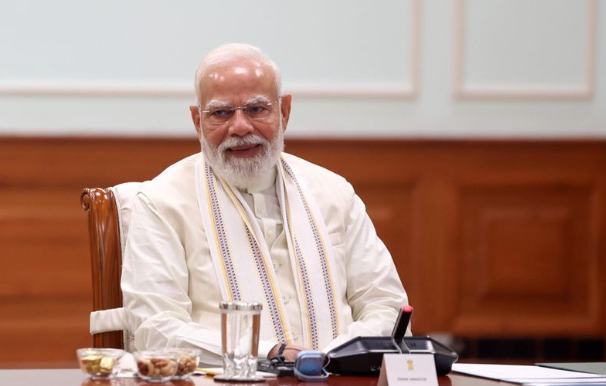
Prime Minister Narendra Modi on Monday said the NDA government has increasingly focused on improving ordinary citizens’ quality of life over 12 years and worked on easier access to opportunities, better infrastructure, improved public services and quality education, among others.

Terming his dispensation “a government for the middle class”, Modi further said it a privilege to be working towards fulfilling the aspirations of the middle class as they have contributed to nation-building in countless ways.

“Over the last decade, governance has increasingly focused on improving the quality of life of ordinary citizens. Our efforts are about easier access to opportunities, better infrastructure, improved public services, affordable healthcare, quality education, cleaner cities and reduced burdens in everyday life,” Modi said in a post on X.

The ‘MyGov India’, a flagship citizen engagement platform of the central government, stated that under Modi’s leadership, India’s middle class has seen a strong rise in living standards over the past 12 years, supported by better infrastructure, improved connectivity, tax relief measures, and expanded public services.

From smoother transport to stronger digital access, everyday life has become more efficient and opportunity-rich for millions of families across the nation, it said.

According to the platform, connectivity has reached unprecedented levels with internet penetration expanding across rural and urban India.

With over 103 crore connections and drastically reduced data costs, citizens now enjoy seamless access to education, employment opportunities, digital payments and entertainment at minimal cost, it said.

The MyGov India said rail travel has become faster and more comfortable with the expansion of Vande Bharat services and with 164 operational trains and over 9 crore passengers already served, travel time has reduced significantly across key routes.

New services like sleeper variants are further improving long-distance travel convenience for millions of Indians, it said.

The platform further said urban mobility has improved with rapid metro expansion across major Indian cities, and the growing network is reducing traffic congestion, improving travel reliability and enabling faster movement for millions of working professionals and students every day.

“India’s road infrastructure has become more efficient with improved highways and streamlined toll systems, significantly reducing travel delays. This has boosted logistics performance and made intercity travel smoother and more predictable for commuters and businesses alike,” it said. (Agencies)

Supreme Court Stays High Court Proceedings on Challenges to Transgender Rights Amendment Act, 2026

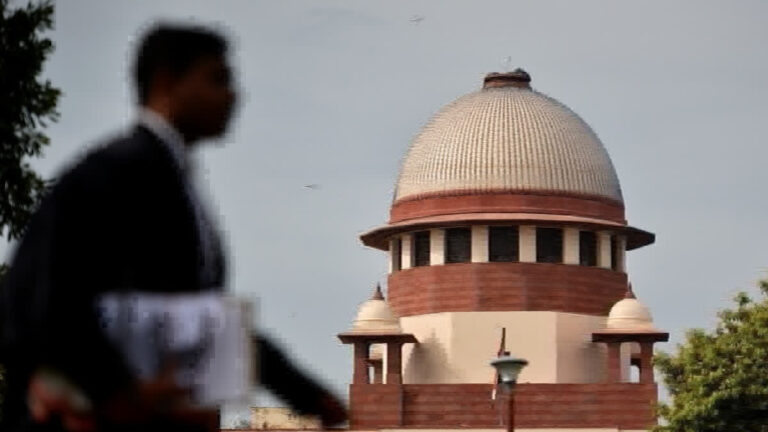
The Supreme Court on Monday stayed further proceedings before various High Courts on petitions challenging the constitutional validity of the Transgender Persons (Protection of Rights) Amendment Act, 2026. The order was passed by a bench comprising Chief Justice Surya Kant and Justice V. Mohana while hearing the Centre’s plea seeking transfer of all pending petitions to the apex court.

The Centre, represented by Solicitor General Tushar Mehta, argued that since multiple High Courts were examining the validity of the same Central legislation, there was a possibility of conflicting judgments. Accepting the submission, the Supreme Court issued notice on the transfer petitions and directed that all proceedings before the High Courts remain stayed until further orders.

The Amendment Act has come under criticism from human rights groups and members of the LGBTQ+ community, who contend that it dilutes the right to self-identification of gender recognized by the Supreme Court in its landmark 2014 NALSA judgment. Petitioners argue that the amended law requires medical or administrative interventions for legal gender recognition, violating constitutional rights related to dignity, privacy, equality, and bodily autonomy.

The legislation was passed by Parliament on March 25 and received Presidential assent on March 30. While the Act introduces graded punishments for offences against transgender persons, critics maintain that certain provisions undermine protections guaranteed to the transgender community.

The Supreme Court is expected to hear the matter in detail in the coming weeks, with the outcome likely to have significant implications for transgender rights and gender recognition laws across the country.

BJP Bigwig Jumps Ship to Annamalai’s ‘We the Leader’ Initiative, Sparking Political Tremors in Tamil Nadu

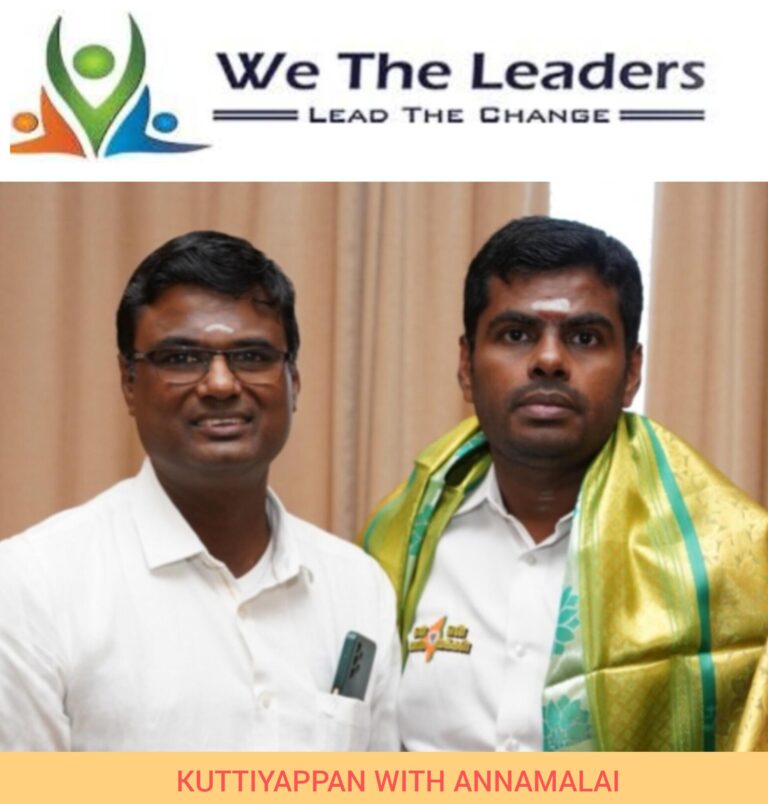
In a development that has sent shockwaves through the political corridors of Tamil Nadu, Kuttiyappan, a heavyweight of the state BJP’s OBC wing executive committee, has dramatically aligned himself with former BJP state chief K. Annamalai’s burgeoning civil society movement, ‘We the Leader’. Leading a substantial cohort of loyalists into the fold in Tiruppur, Kuttiyappan’s defection is less of a routine political migration and more of an ideological declaration of war against the status quo. In a blistering post-joining manifesto, the veteran organizer launched a scathing critique against the state’s deeply entrenched political culture, declaring that the era of cinematic charisma and theatrical platform oratory must come to an end. For decades, Tamil Nadu’s political narrative has been heavily scripted by silver-screen icons, a phenomenon Kuttiyappan claims ‘We the Leader’ is designed to smash with sledgehammer force. Asserting that the populace no longer requires cinematic illusions but grounded leadership capable of addressing grassroots grievances, he emphasized that this new platform rejects flashy showbiz public relations in favor of raw grit and meritocracy. Central to this political pivot is the rising appeal of data-driven, intellectual politics among an increasingly aware and tech-savvy youth demographic, a domain Annamalai has systematically cultivated with his analytical, data-heavy rhetoric. By bypassing the rigid, top-down hierarchies characteristic of traditional party structures, the movement promises absolute operational freedom to advocate for the educational, economic, and existential advancement of backward classes and marginalized communities. Ultimately, this high-profile integration underscores a significant paradigm shift, signaling that for a growing segment of the electorate, policy substance and institutional reform are beginning to eclipse traditional party loyalty and theatrical star power.

BJP Bigwig Jumps Ship to Annamalai’s ‘We the Leader’ Initiative, Sparking Political Tremors in Tamil Nadu

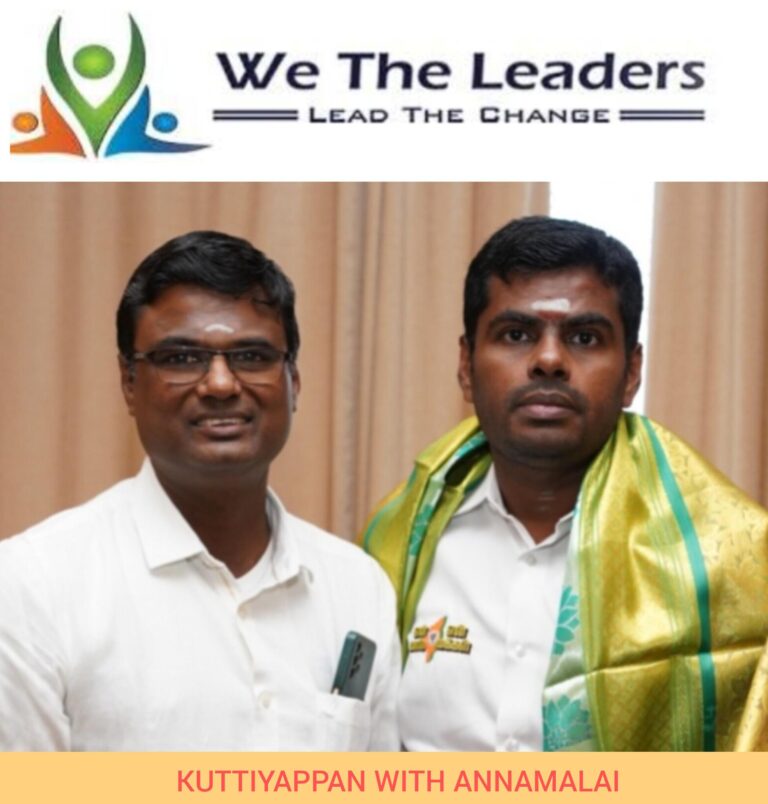
In a development that has sent shockwaves through the political corridors of Tamil Nadu, Kuttiyappan, a heavyweight of the state BJP’s OBC wing executive committee, has dramatically aligned himself with former BJP state chief K. Annamalai’s burgeoning civil society movement, ‘We the Leader’. Leading a substantial cohort of loyalists into the fold in Tiruppur, Kuttiyappan’s defection is less of a routine political migration and more of an ideological declaration of war against the status quo. In a blistering post-joining manifesto, the veteran organizer launched a scathing critique against the state’s deeply entrenched political culture, declaring that the era of cinematic charisma and theatrical platform oratory must come to an end. For decades, Tamil Nadu’s political narrative has been heavily scripted by silver-screen icons, a phenomenon Kuttiyappan claims ‘We the Leader’ is designed to smash with sledgehammer force. Asserting that the populace no longer requires cinematic illusions but grounded leadership capable of addressing grassroots grievances, he emphasized that this new platform rejects flashy showbiz public relations in favor of raw grit and meritocracy. Central to this political pivot is the rising appeal of data-driven, intellectual politics among an increasingly aware and tech-savvy youth demographic, a domain Annamalai has systematically cultivated with his analytical, data-heavy rhetoric. By bypassing the rigid, top-down hierarchies characteristic of traditional party structures, the movement promises absolute operational freedom to advocate for the educational, economic, and existential advancement of backward classes and marginalized communities. Ultimately, this high-profile integration underscores a significant paradigm shift, signaling that for a growing segment of the electorate, policy substance and institutional reform are beginning to eclipse traditional party loyalty and theatrical star power.

BJP Bigwig Jumps Ship to Annamalai’s ‘We the Leader’ Initiative, Sparking Political Tremors in Tamil Nadu

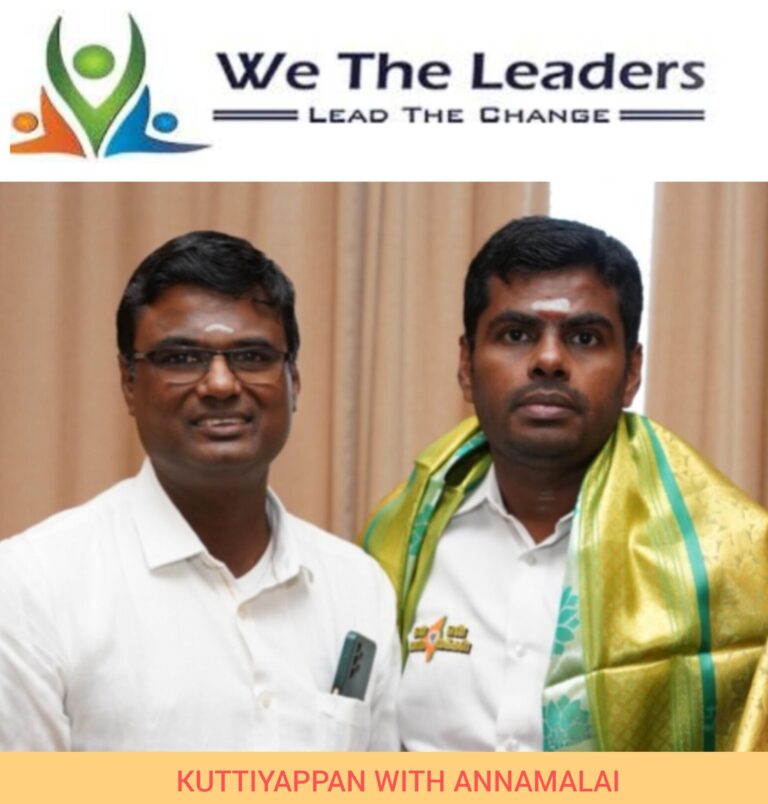
In a development that has sent shockwaves through the political corridors of Tamil Nadu, Kuttiyappan, a heavyweight of the state BJP’s OBC wing executive committee, has dramatically aligned himself with former BJP state chief K. Annamalai’s burgeoning civil society movement, ‘We the Leader’. Leading a substantial cohort of loyalists into the fold in Tiruppur, Kuttiyappan’s defection is less of a routine political migration and more of an ideological declaration of war against the status quo. In a blistering post-joining manifesto, the veteran organizer launched a scathing critique against the state’s deeply entrenched political culture, declaring that the era of cinematic charisma and theatrical platform oratory must come to an end. For decades, Tamil Nadu’s political narrative has been heavily scripted by silver-screen icons, a phenomenon Kuttiyappan claims ‘We the Leader’ is designed to smash with sledgehammer force. Asserting that the populace no longer requires cinematic illusions but grounded leadership capable of addressing grassroots grievances, he emphasized that this new platform rejects flashy showbiz public relations in favor of raw grit and meritocracy. Central to this political pivot is the rising appeal of data-driven, intellectual politics among an increasingly aware and tech-savvy youth demographic, a domain Annamalai has systematically cultivated with his analytical, data-heavy rhetoric. By bypassing the rigid, top-down hierarchies characteristic of traditional party structures, the movement promises absolute operational freedom to advocate for the educational, economic, and existential advancement of backward classes and marginalized communities. Ultimately, this high-profile integration underscores a significant paradigm shift, signaling that for a growing segment of the electorate, policy substance and institutional reform are beginning to eclipse traditional party loyalty and theatrical star power.