Sunday, July 12, 2026
Home Blog Page 82

Govt’s Reform Trajectory Will Continue With Even More Vigour In Coming Times: PM Modi

0

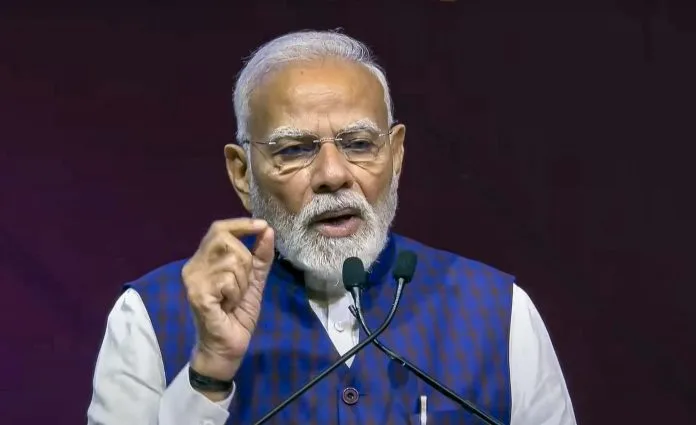
Prime Minister Narendra Modi on Friday said the government’s reform trajectory will continue with even more vigour in the coming times as it is committed to boosting ‘Ease of Living’.

The prime minister made this observation on a series of posts by the central government on its various reform initiatives.

“Ours is a Government committed to boosting ‘Ease of Living’ and this thread below gives examples of how we have worked in that direction. Our reform trajectory will continue with even more vigour in the coming times,” Modi said.

With the hashtags #ReformInAction & #GoodGovernance, the central government said in the posts that the real test of reform is whether it reduces stress for people and 2025 marked a clear shift in governance, with reforms focused on outcomes, not complexity.

Simpler tax laws, faster dispute resolution, modern labour codes, and decriminalised compliance reduced friction for citizens and businesses alike. The emphasis was on trust, predictability, and long-term growth, showing how well-designed policy can quietly improve everyday life, the posts by MyGovIndia said.

For millions of Indians, tax relief became real. Incomes up to Rs 12 lakh attract zero tax. Middle-class families now retain more of what they earn, giving them flexibility to spend, save and invest with greater confidence, it stated.

It said the Income Tax Act, 2025 streamlined compliance and brought clarity, transparency, and fairness to the direct tax system, making it more taxpayer friendly and aligned with today’s needs.

Small businesses can now grow without fear of losing benefits. Higher investment and turnover limits allow MSMEs to expand while retaining access to loans and tax incentives. This encourages scaling up, hiring more workers, and building stronger local enterprises Rural employment now creates assets, not just wages. With extended guaranteed employment and a focus on village infrastructure, rural labour is now building permanent assets that strengthen communities and livelihoods, it said.

It observed that workers no longer need to navigate dozens of laws as 29 labour laws were simplified into four clear codes covering wages, safety, social security, and relations.

Rights are clearer, compliance is easier, and women benefit from assured maternity and workplace protections, it stated.

The government also stated that GST has been made simpler for businesses and consumers alike.

With streamlined tax slabs, easier registration, automated processes, and faster refunds, the next generation of GST reforms is improving ease of doing business.The impact is clear in record Diwali sales of Rs 6.05 trillion and the strongest Navratri shopping in over a decade, it said.

It also said that businesses can now bring products to market faster.

With rationalised Quality Control Orders, Indian manufacturers face lower compliance costs, improved efficiency, and greater strength in global markets. More room to grow for Indian businesses, the government said in the posts.

The expanded definition of small companies reduced compliance burden and costs, allowing enterprises with turnovers up to Rs 100 crore to focus on innovation and expansion, it added. (PTI)
Battling ‘Vote Chori’ Allegations, EC Held Roll Revision In 14 States, UTs; Voters’ List Cleanup In Remaining 22 States In 2026

0

Battling “vote chori” allegations levelled by the opposition Congress, the Election Commission held special intensive revision of electoral rolls in 13 states and Union territories and a ‘special revision’ in Assam this year and is all set to hold a similar exercise in the remaining 22 states and Union territories in 2026.

While the exercise, which kept the EC in news, was completed in Bihar, it is ongoing in Assam and other 12 states and Union territories with nearly 60 crore electors.

The remaining 40 crore electors will be covered next year in phases, officials said.

They noted that the exercise has so far been successful and would continue in remaining states and Union territories.

With details shared by electors being digitised, EC officials said perhaps in the next years, the voters’ list cleanup exercise will become more automised and backend driven.

During the year, besides SIR, the poll authority also conducted assembly elections in Bihar. This was perhaps for the first time in decades that the polls went off without any major election day violence. Also, no repoll was recommended for any polling station across the 243 assembly seats.

Bihar became the first state where polling booth rationalisation was carried out, reducing the maximum number of voters per polling station from 1,500 to 1,200. This will reduce queues on voting day.

The poll authority took a number of steps to ease polling experience.

Now people can carry mobile phones till outside the polling station and deposit it at phone deposit boxes. So far, phones were not allowed in polling locations and there was no facility to deposit them.

The year also saw a bitter spat between Congress leader Rahul Gandhi and Chief Election Commissioner Gyanesh Kumar over vote theft allegations.

This was for the first time a CEC sought an apology from a senior political leader for making allegations which could not be proved.

Several INDIA bloc leaders had claimed that the voters’ list cleanup exercise will deprive crores of genuine, eligible voters of their right to cast ballot for want of documents.

Many political parties had even approached the Supreme Court, demanding a ban on special intensive revision (SIR). The top court asked the EC to add Aadhaar as the 13th document to be accepted from electors seeking to add their name to the voters’ list but refused to ban the exercise, saying it has powers to carry out SIR to clean up the electoral rolls.

As the final voters list of Bihar was published, the response of parties opposing SIR was muted.

The Opposition’s bid to link SIR with its vote theft claims seem to have failed to impress voters in the Bihar assembly elections.

As the EC was preparing for SIR in Bihar, its officials had claimed that several nationals from Bangladesh, Nepal and Myanmar were found by its grassroots level functionaries.

But eventually, the poll authority did not share any number or proof of such people who were not eligible to be on the voters’ list.

Opposition parties had dubbed the EC’s claims as a ploy to carry out SIR to target electors not aligned to BJP and its allies.

Drawing lessons from Bihar SIR, the EC tweaked rules for the 12 states and Union territories. Electors were asked to submit documents after handing over partially-filed enumeration forms provided the backroom personnel failed to map their names from the last SIR final electoral roll.

Most states had the last SIR of the voter list between 2002 and 2004.

Most have nearly completed the mapping of current electors with the voters according to the last SIR held in their respective states or Union territories.

The primary aim of the SIR is to weed out foreign illegal migrants by checking their place of birth.

The move assumes significance in the wake of a crackdown in various states on illegal migrants, including from Bangladesh and Myanmar.

The Election Commission had earlier this month extended the timeline for SIR of electoral rolls in six states and Union territories following requests from the respective chief electoral officers.

The EC issued the revised schedule for SIR in Tamil Nadu, Gujarat, Madhya Pradesh, Chhattisgarh, the Andaman and Nicobar Islands, and Uttar Pradesh.

The enumeration period for these six states and Union territories was to end on December 11 and the draft electoral rolls were to be published on December 16.

The enumeration period for Tamil Nadu and Gujarat has been extended till December 14 and the draft electoral rolls were published on December 19.

For Madhya Pradesh, Chhattisgarh, the Andaman and Nicobar Islands, the enumeration period was extended till December 18 and the draft electoral rolls published on December 23.

The enumeration period for Uttar Pradesh has been extended till December 26 and the draft electoral rolls will be published on December 31.

The enumeration period for Goa, Puducherry, Lakshadweep, Rajasthan and West Bengal will end on Thursday and the draft electoral rolls were published on December 16.

The schedule for Kerala was revised earlier. The enumeration period for the state ended on December 18 and the draft electoral roll will be published on December 23.

To ensure that no eligible elector is left behind, new electors are being encouraged to fill Form 6 and submit it to the block level officers (BLOs) or fill the form online using the ECINet app or website to get their names included in the final electoral rolls, which will be published in February next year. (Agencies)

Assault On Kashmiri Shawl Sellers Won’t Be Tolerated At Any Cost: MHA

0

The Ministry of Home Affairs (MHA) has taken a strong note of an assault on a Kashmiri seasonal Shawl Seller in Uttarakhand, making it unequivocally clear that such acts against Kashmiri shawl sellers will not be tolerated at any cost.

A top official from the Ministry of Home Affairs said that “MHA has taken strong note of the incident and has made it clear that such acts against Kashmiri shawl sellers will not be tolerated at any cost.” Kashmiri traders are equal Indian citizens, constitutionally entitled to work anywhere in India, he said.

According to officials, on the afternoon of Monday, December 22, 2025, Bilal Ahmad Ganie (28), a shawl seller from Kupwara, Kashmir, was intercepted in the Kashipur area of Udham Singh Nagar district while conducting door-to-door sales to support his family during the harsh winter months.

Bilal, a seasonal shawl seller in Uttarakhand for over eight years, has been working in the state for more than eight winters, carrying out business for over eight years, and was known locally as a peaceful and non-disruptive trading presence.

Police said the primary accused, Ankur Singh, a local Bajrang Dal leader, allegedly led a group of five men who hounded and assaulted Bilal, subjecting him to physical violence, verbal abuse, death threats, and intimidation. During the attack, the victim was forcibly coerced into chanting “Bharat Mata Ki Jai,” and was also pressured into raising “Bharat Mata Ki Jai” slogans while being assaulted, they said.

The case initially faced informal settlement pressure, with an attempted compromise through a “mafinama” (apology letter) at Goshala Police Chowki, causing a delay in formal registration. However, after a viral video of the assault sparked public outrage and condemnation, the matter escalated to New Delhi, following which the MHA issued a strong directive to the Uttarakhand administration to ensure strict rule of law enforcement, said an official.

The intervention acted as a decisive catalyst, prompting the Uttarakhand Director General of Police (DGP), Deepam Seth, and the Governor to place the case on top priority, triggering a full-scale crackdown on the accused and involved elements.

Following the MHA’s directive and public condemnation, law enforcement agencies launched a rapid, coordinated operation, resulting in the arrest of three accused persons so far, with further raids and detentions expected as the probe widens, the official said.

He said that an FIR No. 517/2025 has been registered under Sections 191(2), 115(2), 351(3), 352, 304, 62, 292, and 126(2) of the Bharatiya Nyaya Sanhita (BNS). The sections invoked include charges related to criminal intimidation, hurt, assault, threat to life, coercion, and abusive/objectionable acts, reflecting the seriousness of the offence.

Officials said that no pressure or settlement attempt will derail the prosecution, and that the investigation will proceed strictly on merit to determine the full sequence of events, additional accused, and liability under law.

A senior police official said the case will be investigated in a mission-mode, adding that all necessary steps are being taken to ensure that justice is delivered transparently and expeditiously. (KDC)

VHP, Bajrang Dal Protest Near Bangladesh High Commission Over Lynching of Hindu Man

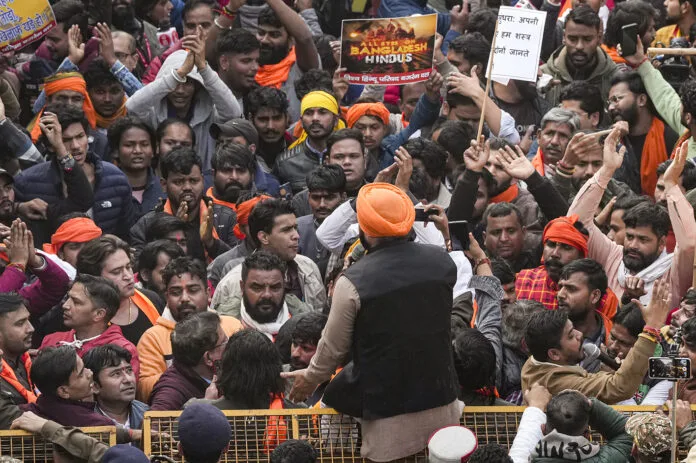
Hundreds of supporters of the Vishwa Hindu Parishad (VHP) and Bajrang Dal, holding saffron flags and raising slogans, staged a protest near the Bangladesh High Commission on Tuesday against the lynching of a Hindu man in Bangladesh. The demonstration led to clashes with police after protesters broke through multiple barricades in the high-security zone.

Despite heavy security arrangements, protesters forced several barricades down as police struggled to contain the advancing crowd. The area around the High Commission had been fortified with three layers of barricading and a reinforced deployment of police and paramilitary forces in anticipation of the protest.

A senior police officer said that around 15,000 police personnel were deployed ahead of the demonstration. Police managed to stop the protesters approximately 800 metres away from the Bangladesh High Commission. Delhi Transport Corporation (DTC) buses were also parked strategically to block further movement towards the mission.

The protest site witnessed a large display of banners and placards, many of which carried strong messages condemning the Bangladesh government. One placard read, “Hindu rakt ki ek ek boond ka hisaab chahiye” (Each drop of Hindu blood must be accounted for).

The protest followed the lynching of Dipu Chandra Das (25), a garment factory worker in Baluka area of Mymensingh district, Bangladesh, on December 18. According to police reports, Das was allegedly beaten by a mob outside the factory, hanged from a tree, and later his body was set on fire near the Dhaka–Mymensingh Highway, reportedly over allegations of blasphemy.

“We strongly condemn the brutal killing of a Hindu man. We urge the Indian government to take up the matter seriously and demand strict action against those responsible. The Bangladesh police must also act decisively,” said one of the protesters.

Another protester said, “India believes in treating all communities as brothers and sisters. Hindus in every country must be treated with dignity and equality.”

Countdown Begins for ISRO’s LVM3-M6 Launch Carrying US Communication Satellite

The 24-hour countdown for the launch of ISRO’s LVM3-M6 rocket, carrying a next-generation US communication satellite, commenced on Tuesday, the Indian Space Research Organisation (ISRO) said.

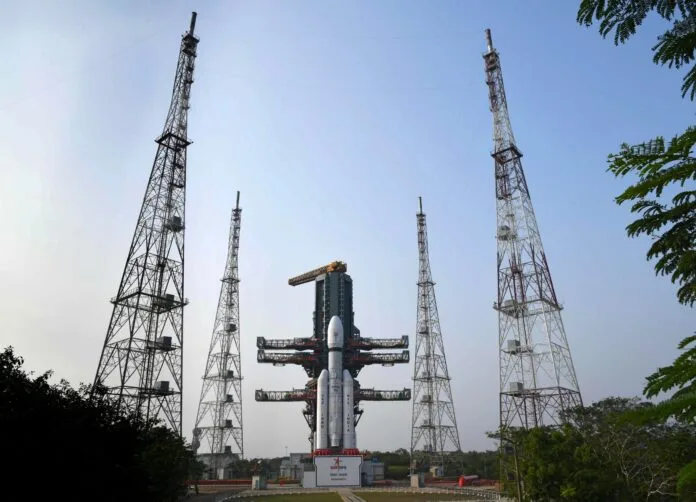
In a dedicated commercial mission, ISRO is scheduled to launch the BlueBird Block-2 spacecraft onboard its heavy-lift launch vehicle LVM3-M6 at 8:54 am on Wednesday from the second launch pad at the Satish Dhawan Space Centre, Sriharikota.

Weighing 6,100 kg, the communication satellite will be the heaviest payload ever placed into Low Earth Orbit (LEO) by an LVM3 vehicle, according to the Bengaluru-headquartered space agency. The previous heaviest payload was the LVM3-M5 Communication Satellite-03, weighing around 4,400 kg, which was successfully launched on November 2.

The mission is being undertaken under a commercial agreement between NewSpace India Limited (NSIL)—ISRO’s commercial arm—and US-based AST SpaceMobile (AST & Science, LLC).

The historic launch will deploy a next-generation communication satellite designed to provide high-speed cellular broadband directly to smartphones worldwide, without the need for specialised ground equipment.

AST SpaceMobile is building the world’s first space-based cellular broadband network, accessible directly by standard smartphones and intended for both commercial and government applications.

Ahead of the launch, ISRO Chairman V. Narayanan offered prayers at the Sri Venkateswara Swamy Temple in Tirumala on December 23.

According to ISRO, the 43.5-metre-tall LVM3, also known as GSLV Mk-III, is a three-stage launch vehicle powered by a cryogenic engine developed by ISRO’s Liquid Propulsion Systems Centre. The rocket uses two S200 solid strap-on boosters, developed by the Vikram Sarabhai Space Centre, to generate the massive thrust required for liftoff.

After a flight duration of approximately 15 minutes, the BlueBird Block-2 satellite is expected to separate from the launch vehicle and be placed into Low Earth Orbit at an altitude of around 600 km.

The BlueBird Block-2 mission is part of a global LEO constellation aimed at enabling direct-to-mobile connectivity, supporting 4G and 5G voice and video calls, messaging, streaming and data services worldwide. The satellite features a 223-square-metre phased array, making it the largest commercial communications satellite ever deployed in Low Earth Orbit.

AST SpaceMobile had earlier launched five satellites—BlueBird 1 to 5—in September 2024, providing continuous internet coverage across the United States and select other countries. The company plans to launch additional satellites to expand its network and has partnered with over 50 mobile operators globally.

Kishtwar Observes Bandh, Massive Protest Against Targeted Attacks on Hindus in Bangladesh

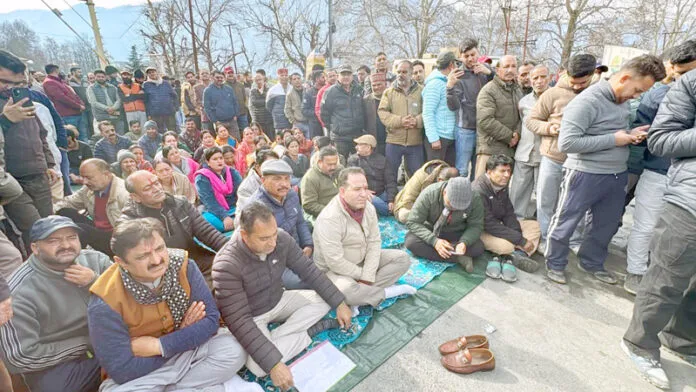
Kishtwar today observed a complete bandh and massive protest following a call given by the Sanatan Dharam Sabha (SDS), Kishtwar, against the alleged targeted killing of Hindus and selective attacks on their properties in Bangladesh.

The protest witnessed participation from leaders of various social, religious and political organisations, including Leader of Opposition and MLA Padder–Nagseni, Sunil Sharma.

Following the bandh call, most shops remained closed till around 1:00 PM, while vehicular movement was partially affected in several areas of the town.

Since early morning, protesters gathered at Kokila Chowk, raising anti-Bangladesh and anti-Yunus slogans. The demonstrators staged a dharna and also burnt tyres, leading to temporary disruption of traffic in the area.

Addressing the protesters, President Sanatan Dharam Sabha (SDS), Kishtwar, Mahant Ram Saran Dass, along with LoP Sunil Sharma and other leaders, expressed serious concern over the recent developments in Bangladesh. They alleged incidents of mob lynching and brutal killings of Hindus, terming them deeply disturbing.

The speakers particularly referred to the lynching of Hindu worker Dipu Chandra Das in Bangladesh, stating that the incident has sent shockwaves across the region.

“We want to convey that every Hindu and every Sanatani of this region stands firmly with our Hindu brothers in Bangladesh, who are facing attacks and violence,” Sunil Sharma told media persons during the protest.

The dharna concluded with the burning of an effigy of Bangladesh’s Chief Advisor, Muhammad Yunus. Later, a memorandum addressed to the Government of India was submitted to the District Administration, urging the Ministry of External Affairs to intervene immediately and take steps to ensure the safety and protection of minority Hindus in Bangladesh.

Cabinet Clears Flood Relief, Bank Revival and Pay Hike for Panchayat Secretaries in J&K

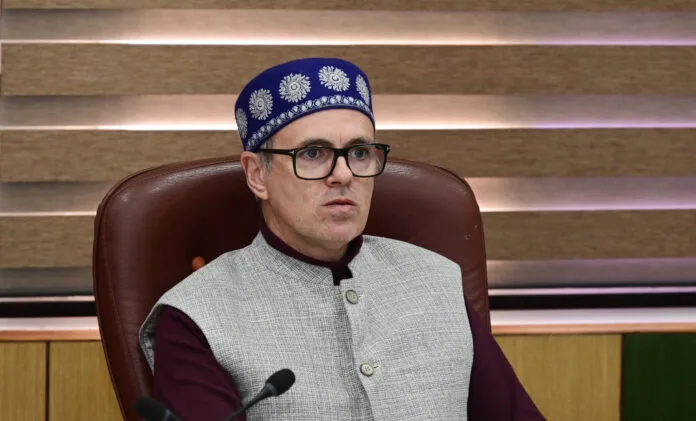
The Jammu and Kashmir Cabinet today cleared several key proposals, including allotment of 5 marlas of land to people affected by monsoon rains and floods, infusion of government funds into two cooperative banks, and an increase in pay scale of Village Level Workers (VLWs)—now designated as Panchayat Secretaries.

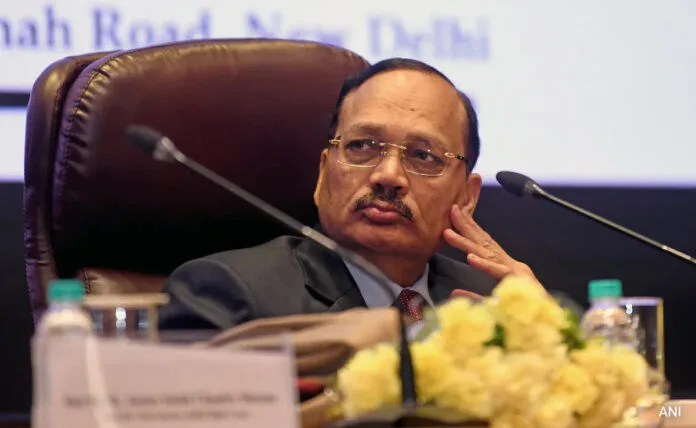
The Cabinet meeting was chaired by Chief Minister Omar Abdullah at the Civil Secretariat and was attended by all Ministers and Chief Secretary Atal Dulloo. The meeting lasted over an hour.

In a brief statement on X, the Chief Minister’s Office said the Cabinet considered important administrative and developmental matters. All decisions approved by the Cabinet will be forwarded to Lieutenant Governor Manoj Sinha for final approval.

Sources said the Cabinet approved the proposal to allot 5 marlas of land to families whose houses were extensively damaged due to flash floods and landslides triggered by cloudbursts and heavy monsoon rains in Jammu and Kashmir this year. The land will be provided at the nearest available government land, and the administration has already identified eligible beneficiaries following a detailed assessment.

Large-scale damage to civilian houses, agricultural land, crops and government infrastructure was reported, particularly during heavy rains on August 14 and August 26. Chief Minister Omar Abdullah had earlier announced the government’s decision to provide five marlas of land to severely affected families.

The Cabinet also approved the proposal to upgrade the pay level of VLWs/Panchayat Secretaries from Level-2 to Level-4, resulting in an increase of approximately ₹5,000 per month. This long-pending demand was examined and endorsed by the Rural Development Department, with concurrence from the Finance Department.

Additionally, the Cabinet cleared the proposal to infuse ₹118 crore into the Jammu Central Cooperative Bank and Anantnag Central Cooperative Bank to revive their financial health. Both banks have been facing serious financial challenges but play a crucial role in the cooperative sector of Jammu and Kashmir.

The Cabinet further approved the re-designation of about 20 posts of District Panchayat Officers as Block Development Officers in the Rural Development Department.

Issues related to finances, including central funding and daily wagers, were also discussed during the meeting.

The last Cabinet meeting was held on December 3, during which the government approved the much-awaited new Reservation Policy for Jammu and Kashmir based on the recommendations of the Cabinet Sub-Committee. The Chief Minister has stated that the policy is currently awaiting approval from the Lieutenant Governor.

As per procedure, all Cabinet decisions of the Union Territory are subject to approval by the Lieutenant Governor.

CJI Surya Kant Directs Lawyers to Approach Registry for Urgent Listings During Court Vacation

Chief Justice of India (CJI) Justice Surya Kant on Monday directed lawyers seeking urgent hearings to approach the Supreme Court Registry instead of mentioning matters directly before the Bench, stating that the Registry will scrutinise the reasons and list cases accordingly.

The Chief Justice made the observation while presiding over a special vacation Bench along with Justice Joymalya Bagchi to hear urgent matters requiring immediate judicial intervention during the court holidays.

As the Bench commenced proceedings, several lawyers began mentioning cases for urgent hearing. The CJI, however, advised a structured process.

“Instead of mentioning, furnish reasons to the Registry. The reasons will be scrutinised, and if found urgent, the matter shall be tentatively listed either on December 26 or December 29,” the Chief Justice said.

The Bench clarified that the special sitting had been arranged to ensure timely consideration of pressing cases during the vacation period, while maintaining an orderly and transparent listing mechanism.

It may be recalled that on Friday, CJI Surya Kant had stated that he was willing to sit on December 22, the first day of the Supreme Court’s Christmas and New Year holidays, to hear urgent matters, underlining the court’s commitment to ensuring access to justice even during recess.

UT Cabinet to Meet Today; Land Policy for Flood-Hit, Bank Revival, VLWs Pay Hike on Agenda

The Union Territory Cabinet will meet here on Thursday morning to consider several key policy decisions, including approval of a policy for allotment of five marlas of land to people affected by monsoon floods, and infusion of Rs 118 crore into two cooperative sector banks for their revival.

“The Cabinet meeting is scheduled to be held at the Civil Secretariat at 10.30 AM,” official sources told Excelsior.

The meeting will be chaired by Chief Minister Omar Abdullah and attended by five Cabinet Ministers along with senior officers.

Land for Flood-Hit Families

Sources said one of the major agenda items is approval of the policy for allotment of five marlas of land to families whose houses were damaged or destroyed due to flash floods and landslides triggered by cloudbursts and torrential rains during the monsoon this year.

“The policy has been finalised after an extensive exercise. Once approved by the Cabinet, it will be sent to Lieutenant Governor Manoj Sinha for final approval,” the sources said.

Large-scale damage was reported across Jammu and Kashmir during intense rainfall events, particularly on August 14 and 26, affecting residential houses, agricultural land, crops and public infrastructure. Chief Minister Omar Abdullah had earlier announced that the Government would provide five marlas of land to families whose houses were extensively damaged.

Rs 118 Cr Infusion in Cooperative Banks

Another important agenda item is the proposal to infuse Rs 118 crore into Jammu Central Cooperative Bank and Anantnag Central Cooperative Bank to revive their operations.

Both banks have been facing financial and operational difficulties, but are considered vital to the cooperative banking sector in Jammu and Kashmir. The proposed funding aims to stabilise and strengthen their functioning.

VLWs Salary Revision, Post Re-designation

The Cabinet will also consider revision of salary levels of Village Level Workers (VLWs) in the Rural Development Department, an issue that has been under discussion for some time.

Additionally, the Cabinet is expected to approve the re-designation of around 20 posts of District Panchayat Officers (DPOs) as Block Development Officers (BDOs).

Finance-Related Discussions

Sources said the Cabinet may also hold preliminary discussions on financial matters, including central funding and budget-related issues, though the 2026–27 budget, to be presented by Chief Minister Omar Abdullah in his capacity as Finance Minister, is still some months away.

The previous Cabinet meeting, held on December 3, approved the new Reservation Policy for Jammu and Kashmir based on recommendations of the Cabinet Sub-Committee. The Chief Minister has since stated that the policy is pending approval with the Lieutenant Governor.

It is pertinent to note that all UT Cabinet decisions require approval of the Lieutenant Governor before implementation.

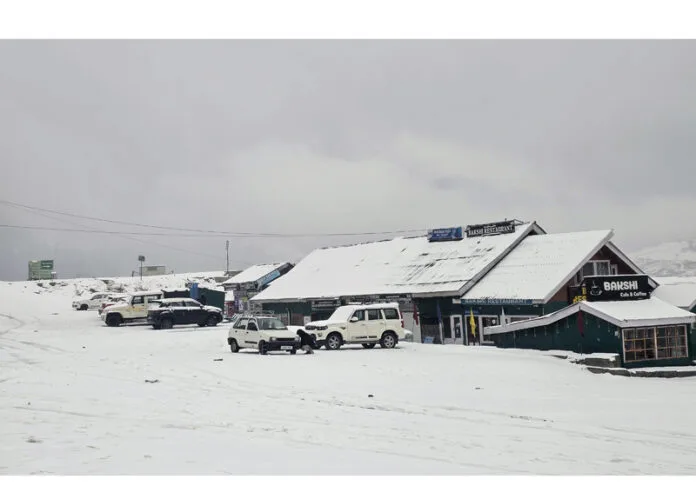
Chille-i-Kalan Begins with Rain and Snow, Flights Cancelled, Key Mountain Roads Closed

The 40-day harsh winter period of Kashmir, Chille-i-Kalan, began on a positive note on Sunday as widespread rain lashed the Valley and snowfall covered higher reaches, ending a prolonged dry spell. Mountainous areas of the Jammu region also received the season’s first snowfall and rain, leading to a slight rise in night temperatures.

However, adverse weather conditions severely disrupted air traffic, with 15 flights cancelled at Srinagar Airport and eight flights cancelled at Jammu Airport. Dense fog has continued to envelop the winter capital for the past four to five days, affecting both flight and train operations.

An official at Srinagar Airport said poor visibility and unfavourable weather conditions hampered flight movements until the afternoon, causing inconvenience to passengers, many of whom were stranded. Travellers were advised to stay in touch with airlines for real-time updates.

Director Airport Authority Jammu, S.K. Garg, said eight flights were cancelled and four delayed due to dense fog. These included three Srinagar-bound IndiGo flights, one Air India flight, and several Delhi- and Indore-bound services. Three IndiGo and one Air India flights were delayed.

Snowfall Disrupts Road Connectivity

Rain lashed Srinagar and other parts of the Valley, while higher reaches received several inches of snowfall, leading to the closure of key mountain roads, including:

  • Sinthan Road (Anantnag–Kishtwar)
  • Mughal Road (Rajouri–Poonch–Shopian)
  • Srinagar–Leh Highway
  • Srinagar–Gurez Road at Razdhan Top

The Jammu–Srinagar National Highway, however, remained operational despite light rain in Ramban and Banihal.

In Jammu region, higher reaches of Bhaderwah, Kishtwar, Doda, Ramban, Poonch and Rajouri received fresh snowfall. The Basohli–Bani–Bhaderwah Road was blocked at Chattergalla, while Guldanda and Paddri tourist spots witnessed moderate snowfall. Several springs and streams in Bhaderwah reached freezing point, forming icicles and attracting tourists.

Weather Forecast and Temperature

The Meteorological Department forecast more rain and snowfall over the next 48 hours, particularly over higher altitudes, with light rain expected in the Valley. Cold wave conditions are likely to persist.

Snowfall and rain led to a rise in minimum temperatures across Kashmir. Srinagar recorded its warmest night and coldest day of the season.

  • Srinagar: Min 4°C (6°C above normal), Max 6°C
  • Gulmarg: Min –1.5°C, Max 3.4°C
  • Pahalgam: Min 2.8°C, Max 5.6°C
  • Kupwara: Min 3.8°C, Max 5.2°C

Jammu recorded a minimum of 11.5°C and a maximum of 17°C.

Pilgrimage, Traffic Advisory and Rescue

Helicopter services to Mata Vaishno Devi Shrine were suspended due to bad weather, though battery cars and on-foot pilgrimage continued normally.

Authorities enforced strict traffic restrictions on the Tangmarg–Gulmarg Road, allowing only vehicles fitted with anti-skid chains. Heavy vehicles were barred completely. Snow clearance operations are ongoing.

Traffic on the Mughal Road was suspended after over three inches of snow accumulated at Peer Ki Gali. Three stranded tea vendors were rescued after the Border Roads Organisation cleared the snow.

Air Quality Improves

The onset of Chille-i-Kalan marked a significant weather shift after weeks of stagnant atmospheric conditions that had caused dense fog and smog. Meteorological officials said rainfall and snowfall helped disperse pollutants, leading to a noticeable improvement in air quality across urban areas.

Chille-i-Kalan, the coldest phase of the Kashmiri winter, lasts for 40 days and is followed by Chille-i-Khurd and Chille-i-Bacha, relatively milder phases.