Saturday, July 11, 2026
Home Blog Page 59

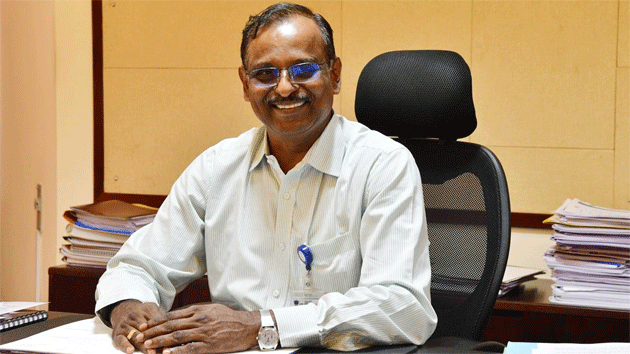
India’s Space Programme Built for People, Not Competition; Rooted in Global Cooperation: ISRO Chairman V Narayanan

ISRO Chairman and Secretary, Department of Space, V Narayanan on Tuesday said that India’s space programme was conceived as a people-centric and application-driven initiative, focused on international cooperation rather than competition.

Speaking at the inaugural ceremony of the US-India Space Business Forum, Narayanan highlighted the six-decade journey of India’s space sector, saying it has grown from modest beginnings into a globally respected ecosystem serving both national and international needs.

He acknowledged the early support of the United States in India’s space journey, noting that space-related activity in India began in 1962 and the first rocket launched by the country was made in the US and supplied by NASA. He recalled the launch of India’s first sounding rocket in 1963 and several early joint efforts in satellite applications, health observation studies, and lunar exploration.

“The Indian space programme was started not to compete with anybody but to bring advanced space technology for the benefit of the common man of India,” Narayanan said. He added that the programme has since expanded to serve the global community while remaining human-centric and application-oriented.

Welcoming US delegates and industry leaders, Narayanan said the US-India Space Business Forum reflects the growing convergence between the two countries in the space sector. He noted that the forum has brought together around 14 business partners from the United States and emphasized that space activities should be internationally collaborative.

Referring to recent milestones, he highlighted joint achievements such as the Chandrayaan missions, the NISAR satellite, and commercial launches, describing India-US cooperation as a mature and equal partnership marked by strong mutual trust.

Narayanan also pointed to the rapid expansion of India’s private space ecosystem following sectoral reforms in 2020. He said Indian industry now contributes a major share of mission hardware and software, enabling faster execution and cost efficiency. “Approximately 75 per cent of the funding and realisation comes through Indian industries,” he said.

Outlining future goals, the ISRO Chairman said India is working toward launching its first space station module by 2028 and establishing a fully operational multi-module Indian space station by 2035. He added that India is also targeting a crewed lunar mission by 2040.

He said upcoming plans include Chandrayaan-4 and Chandrayaan-5 missions, Mars and Venus exploration, expansion of Earth observation and navigation constellations, and progress under the Gaganyaan human spaceflight programme.

Narayanan noted that long-term human space exploration will require a new class of heavy-lift launch vehicles. While India’s first successful launch vehicle in 1980 could carry only 35 kg to Low Earth Orbit, future crewed lunar missions would need rockets capable of lifting 80–100 tonnes, requiring new architectures, propulsion systems, and manufacturing capabilities. He added that ISRO is already developing next-generation launch vehicles with a 30,000-kg LEO capacity as an intermediate step.
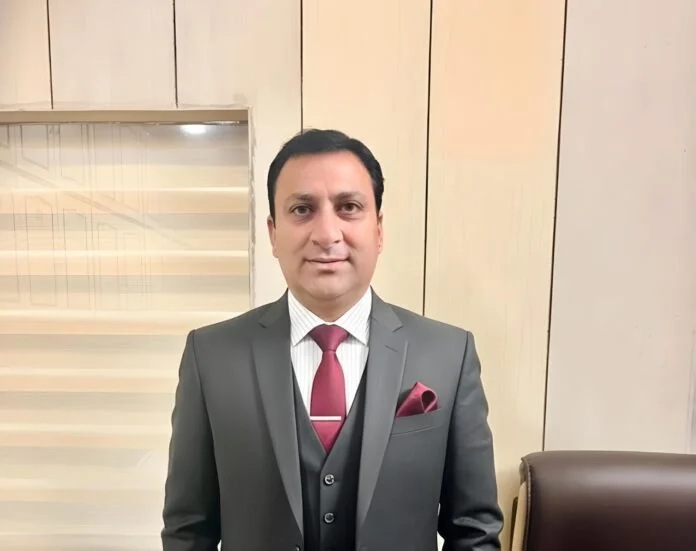

“Pakistani Agenda in the Coffin, Youth of J&K Stand Firmly With India”: Sanjay Manhas

Jammu: National Anti Terrorism and Peace Front (NATPF) National Chairman Sanjay Manhas today said that the Pakistani agenda in Jammu and Kashmir has been decisively rejected by the younger generation, asserting that the youth of J&K are firmly standing with India and its path of peace, progress, and development.

In a statement issued here, Manhas said, “The Pakistani agenda is now in the coffin, and the youth of Jammu and Kashmir are standing strongly with India.” He added that attempts to spread unrest and misinformation have largely failed as young people are choosing education, entrepreneurship, and nation-building over conflict-driven narratives.

He noted that growing participation of youth in development programs, startups, tourism, and public service reflects a clear shift toward stability and constructive engagement. According to him, this change shows that divisive external propaganda is losing ground on the soil of Jammu and Kashmir.

The NATPF chairman said the organization will continue its outreach campaigns to promote peace, counter radicalization, and strengthen national unity. He urged community leaders and families to keep encouraging youth toward positive and productive opportunities.

Manhas reaffirmed NATPF’s commitment to supporting all initiatives that strengthen harmony, defeat terrorism, and build a secure and prosperous future for Jammu and Kashmir within India.

India Ranks Second Globally in Enterprise AI Adoption, Ahead of India AI Impact Summit 2026: Zscaler Report

0

India has emerged as one of the world’s leading hubs for artificial intelligence adoption, ranking second only to the United States in enterprise AI and machine learning (AI/ML) transactions, according to the latest report by cloud security firm Zscaler.

The findings were released in the Zscaler ThreatLabz 2026 AI Security Report, highlighting India’s rapid acceleration in enterprise-level AI usage and digital transformation across sectors. The report points to a sharp rise in AI-driven workloads, platform integrations, and enterprise deployments, reflecting growing confidence in AI-powered solutions among Indian businesses.

The development comes just days ahead of the high-profile India AI Impact Summit 2026, scheduled to be held in New Delhi from February 16 to 20. The summit is expected to bring together top global technology leaders, policymakers, researchers, and innovators to discuss AI strategy, governance, security, and large-scale deployment.

Several global tech heavyweights are expected to participate, including NVIDIA CEO Jensen Huang, OpenAI CEO Sam Altman, Google CEO Sundar Pichai, Anthropic CEO Dario Amodei, and Qualcomm CEO Cristiano Amon. The event is likely to focus on responsible AI development, industry collaboration, and emerging security challenges linked to rapid AI adoption.

Experts say India’s strong developer base, expanding digital infrastructure, and growing startup ecosystem are key drivers behind its rise as a global AI powerhouse. The report also underscores the need for robust AI security frameworks as enterprise usage continues to expand at scale.

Sat Sharma Raises Housing Crisis and Income Tax Relief Issues for J&K in Rajya Sabha

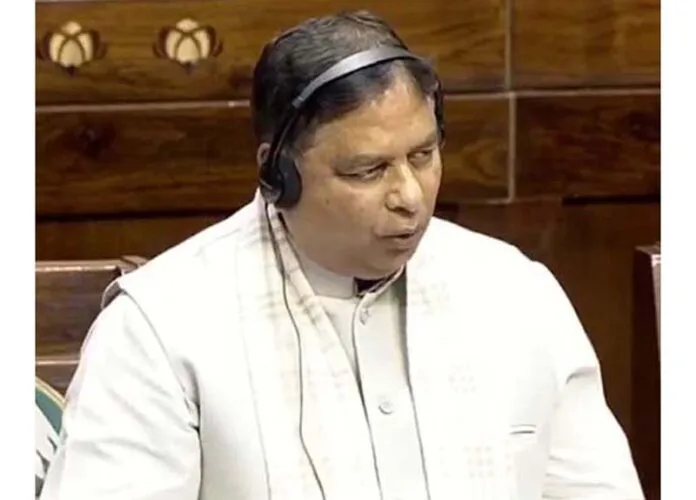
Jammu & Kashmir BJP president and Rajya Sabha Member Sat Sharma on Monday raised two key public-interest issues concerning the people of the Union Territory in the Upper House, seeking urgent action on urban housing for the poor and relief in genuine Income Tax hardship cases.

Raising the matter during the proceedings of the Rajya Sabha, Sharma highlighted the growing problem of homelessness and inadequate shelter infrastructure in Jammu and Kashmir, particularly in urban areas. He urged the government to prioritise the construction of safe and permanent houses for economically weaker and vulnerable families.

He informed the House that only two shelter homes are currently operational across Jammu and Kashmir, terming the number grossly insufficient for the scale of need. He called for a substantial increase in the number of shelters and a strengthening of housing support systems for the urban homeless.

Citing official data, Sharma said that 19,375 houses have been constructed in J&K over the past three years under various schemes. However, he stressed that the pace must be accelerated to ensure timely relief for poor, landless and homeless families. He also asked the concerned Union Minister to provide detailed information on housing schemes and expedite implementation so that no eligible family remains without housing security.

Apart from housing, Sharma also flagged difficulties arising from recent amendments in the Income-Tax Act affecting taxpayers and TDS stakeholders.

He referred to provisions introduced through the Finance (No. 2) Act, 2024, which set a six-year time limit for filing TDS correction statements, effective April 1, 2025. According to him, the restriction has created serious hardship for both deductors and deductees, especially for financial years prior to 2018–19, where the correction window has effectively closed.

He noted that genuine errors — including incorrect PAN entries and challan mismatches — can now no longer be corrected for those years, resulting in denial of TDS credit in Form 26AS, inflated tax demands, refund delays, penalties, interest burdens and avoidable litigation despite taxes having been properly deducted and deposited.

Sharma urged the Union Government to consider a one-time relief measure or a special condonation window and requested issuance of suitable guidelines under Section 119 of the Income-Tax Act to address genuine cases.

Aneesha Sharma Wins Team Gold and Individual Bronze at Asian Shooting Championship 2026, Creates J&K History

Aneesha Sharma has created history for Jammu and Kashmir by winning two medals — a Team Gold and an Individual Bronze — at the Asian Shooting Championship 2026, becoming the first shooter from the Jammu & Kashmir Rifle Association (JKRA) to secure two international podium finishes at the Asian level.

Her landmark achievement has brought pride to both the Union Territory and the country, marking a major milestone for shooting sports in J&K.

Aneesha trains at the Mission Olympics Shooting Academy Jammu (MOSAJ) under the guidance of coaches Vishal Mehra and Aman Singh. She currently holds India Junior Rank No. 2 and has earlier won multiple medals at National Championships, Khelo India Shooting Sports Championships, and All India Inter-University competitions.

Sports officials said her journey reflects discipline, dedication, and sustained hard work, aligning with the broader Mission Olympics vision to build international-level athletes from the region.

Senior office-bearers of JKRA congratulated Aneesha on her achievement. Chief Patron Dilbag Singh, former DGP of J&K, and JKRA President Surinder Singh Sodhi described the win as a proud moment for Jammu and Kashmir and praised her commitment to excellence.

JKRA Chairman Kuldeep Jamwal and General Secretary DySP Sharat Chander Singh also extended congratulations and reaffirmed continued support for emerging shooters in the Union Territory.

The association said Aneesha’s success will inspire a new generation of athletes and shooters across India. JKRA also expressed gratitude to Lieutenant Governor Manoj Sinha, former Chief Minister Omar Abdullah, the J&K Sports Council, and the Department of Youth Services and Sports for their continued support, and called for further strengthening of shooting infrastructure in the region.

LG Manoj Sinha Directs J&K Police to Strike Decisively Against Terror, Calls for Whole-of-Society Support

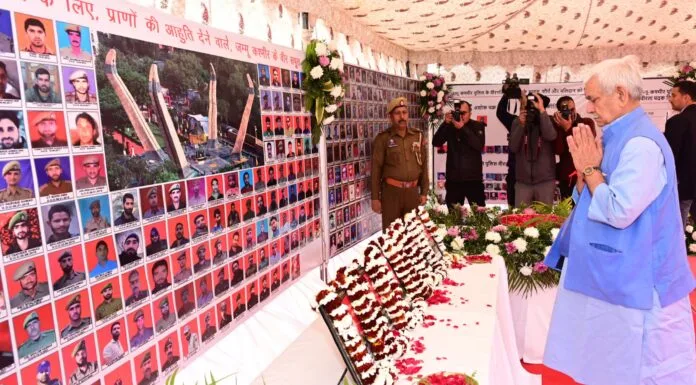
Lieutenant Governor Manoj Sinha on Monday directed the Jammu and Kashmir Police to strike decisively against terrorism and work in close collaboration with every section of society to dismantle terror networks completely.

He said the resolve of the J&K Police remains unbreakable and reflects a message of determination and courage in the face of adversity.

The Lieutenant Governor was addressing the inaugural ceremony of the J&K Police Martyrs Memorial Hockey Tournament at the KK Hakku Hockey Stadium in Jammu. The tournament has resumed after a gap of more than ten years and features 14 teams this year.

Paying tribute to fallen personnel, Sinha said the brave members of J&K Police who sacrificed their lives for the nation placed national honour above everything else and must continue to live in public memory. He noted that true tributes to martyrs endure through generations and inspire youth with values of duty and sacrifice.

He said the martyrs embodied dedication and selflessness, and stressed that society must carry forward these ideals to build strong character among young people.

The Lieutenant Governor also praised the J&K Police for empowering youth through its Civic Action Program, describing it as more than a government scheme and calling it a people-centric approach built on trust and community partnership. He said lasting peace is strengthened through social relationships and citizen participation.

Highlighting another major concern, Sinha called upon all sections of society to unite against drug abuse and reaffirmed the administration’s commitment to building a drug-free Jammu and Kashmir. He said the memorial hockey tournament also symbolizes that commitment toward healthy and constructive youth engagement.

Reiterating the UT administration’s youth-focused agenda, he said efforts are underway to create opportunities, provide direction to young energy, and ensure platforms and resources for talent to grow.

Senior police and civil officials attended the ceremony, including DGP J&K Nalin Prabhat, Special DG (Coordination) S.J.M. Gillani, Commandant General Home Guards, Civil Defence & SDRF Abdul Ghani Mir, ADGP Armed Police Anand Jain, along with sports personalities and representatives of hockey associations.

Amit Shah Says Maoism Brought Only Destruction, Vows to Eliminate Naxalism by March 31

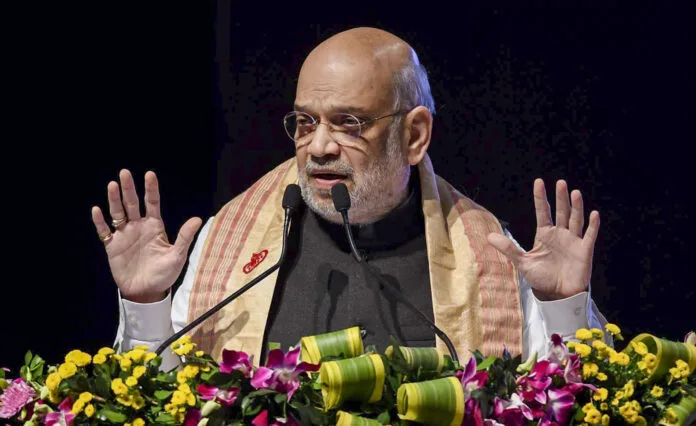
Union Home Minister Amit Shah on Monday asserted that Maoism has never benefited any society and has only spread destruction wherever it existed, as he reiterated the Centre’s resolve to eliminate Naxalism from the country by March 31.

Addressing the closing ceremony of the three-day division-level cultural festival “Bastar Pandum 2026” in Jagdalpur, Chhattisgarh, Shah appealed to Naxalites to surrender and join the mainstream, assuring them of dignified rehabilitation under government policy.

He described the Chhattisgarh government’s Maoist rehabilitation policy as highly attractive and expressed concern that many of the remaining cadres include young tribal girls whose futures must be protected through rehabilitation.

Shah warned that while those who surrender will be protected, armed cadres continuing violence, planting IEDs, and attacking public infrastructure such as schools and hospitals will face strong action. He said armed violence would be met with firm force and added that Maoist movements had caused devastation in several countries including Colombia, Peru and Cambodia.

Emphasising that the government’s fight is to protect tribal communities, Shah said explosive devices and violence endanger innocent villagers and children. He accused Maoists of having shut schools for decades, leading to widespread illiteracy in affected regions.

Highlighting development gains, he said Bastar is witnessing rapid transformation with reopening of schools, expansion of roads, installation of mobile towers, new post offices, and extension of electricity and drinking water to villages. He declared a target of making Bastar the country’s most developed tribal-majority division within five years.

Shah outlined a regional development roadmap covering seven districts, including electrification of all villages by December 2027, mobile connectivity in every village, and a post office or bank branch within every five kilometres.

He announced that paddy would be procured from tribal farmers at Rs 3,100 per quintal, cooking gas connections would be expanded, and tap water would be provided to every household. With declining Naxal violence, new tourism initiatives such as adventure tourism, homestays, canopy walks and glass bridges are also being promoted.

A new 118-acre industrial area is being set up in Bastar to create employment for tribal youth. Shah also announced upcoming irrigation projects on the Indravati river aimed at irrigating 2.75 lakh hectares in Dantewada, Bijapur and Sukma districts, along with generating 120 MW of electricity.

The Home Minister said Bastar’s identity should be defined by its culture and heritage, not guns and explosives. He thanked security forces including state police, CRPF, ITBP and BSF for their operations against Naxalism and paid tribute to personnel who lost their lives in the line of duty.

He praised the organisation of Bastar Pandum 2026, noting its expansion to 12 disciplines across seven districts with participation from 1,885 gram panchayats and 32 development blocks. He announced that the top three winners in each discipline will be invited to Rashtrapati Bhavan to showcase their art and share a meal.

Shah said the large public participation in the festival reflects Bastar’s cultural revival and affirmed the government’s commitment to preserving tribal traditions for future generations.

Rahul Gandhi Says PM Skipped Lok Sabha Reply Over Naravane Book Issue, Dares Govt to File FIR Over Threat Claims

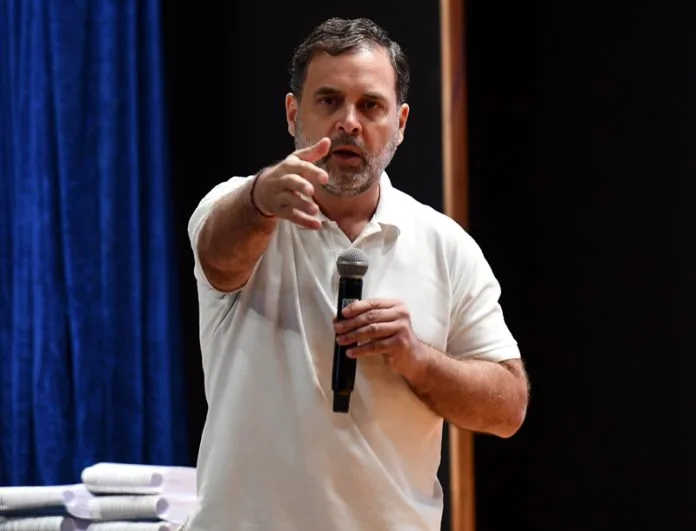
Leader of Opposition in the Lok Sabha Rahul Gandhi on Monday alleged that Prime Minister Narendra Modi did not attend the House to reply to the discussion on the Motion of Thanks to the President’s Address because he was “scared” of questions relating to former Army chief General M.M. Naravane’s book.

Addressing reporters, Gandhi rejected claims that there was any threat to the Prime Minister from opposition members during last week’s proceedings and challenged authorities to register an FIR if any such threat had been made.

He said there was “no question” of Congress members attempting to attack or threaten the Prime Minister and described such allegations as baseless. Gandhi asserted that if anyone had issued a threat, the government should identify and arrest that individual.

The Congress leader further claimed that the government was reluctant to allow a detailed debate on the Union Budget due to concerns over a US-related deal and its potential impact on farmers. He said the opposition wanted a structured discussion but alleged that the government was trying to avoid it.

Gandhi maintained that repeated disruptions occurred when he attempted to raise issues linked to General Naravane’s book. According to him, he was first told not to quote from a book, then from a magazine, and was ultimately prevented from speaking on the subject.

He also accused the Defence Minister of incorrectly stating that the book was unpublished, claiming that copies were already available.

Raising broader concerns about parliamentary functioning, Gandhi said the opposition was not being allowed to present its views during key debates, while ruling party members faced no such restrictions. He also referred to the suspension of Congress members as another matter requiring discussion in the House.

The government has not yet issued a detailed response to Gandhi’s remarks.

Centre Orders Work on Rs 5,129 Crore Sawalkote Hydropower Project on Chenab After IWT Suspension

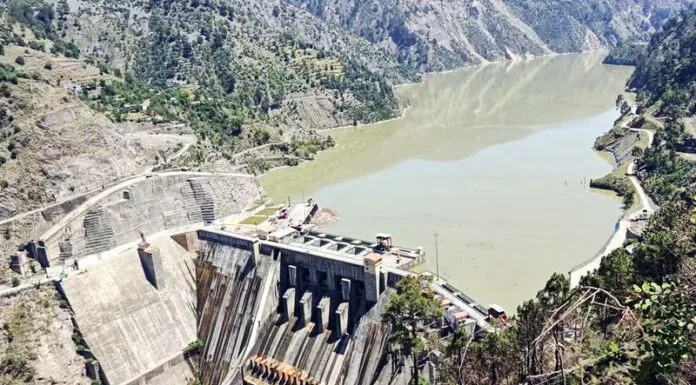
In a major policy move following the abeyance of the Indus Water Treaty (IWT), the Central Government has ordered the start of work on the long-pending Sawalkote Hydroelectric Project on the Chenab river in Jammu and Kashmir’s Udhampur and Ramban districts, with an estimated cost of Rs 5,129 crore.

The revival of the project was announced in October 2025, a few months after the IWT was put in abeyance in the aftermath of the April terror attack in Pahalgam that claimed 26 civilian lives. Environmental clearance for the project was recommended later the same month, clearing a major hurdle for its execution.

Stalled for nearly four decades, Sawalkote is among the largest hydropower projects planned in the Chenab basin and forms a key part of India’s strategy to maximise utilisation of its permitted share of western river waters through run-of-the-river power generation.

Under the 1960 treaty framework, Ravi, Beas and Sutlej were allocated for India’s exclusive use, while Indus, Jhelum and Chenab were designated as western rivers, with India allowed limited non-consumptive uses such as hydropower generation, navigation and fisheries.

The Sawalkote project, with a total planned capacity of 1,856 MW, will be developed in two stages — 1,406 MW in Stage-I and 450 MW in Stage-II. It is designed as a run-of-the-river scheme and will be located between the Baglihar project upstream and the Salal project downstream on the Chenab river.

NHPC Ltd has invited bids for construction works, marking the formal start of the project rollout. Authorities plan to execute the scheme on a fast-track basis, though full completion is expected to take around nine years.

The approval follows clearance by the Environment Ministry’s Expert Committee last year as part of a broader push to accelerate strategically important infrastructure projects after the IWT suspension.

The Centre has also fast-tracked multiple other hydropower projects in the Chenab basin. The 1,000 MW Pakal Dul and 624 MW Kiru projects are targeted for commissioning by December 2026. The Kwar project, featuring a 109-metre dam, is expected to be completed by March 2028, while the 850 MW Ratle project is also scheduled for completion by 2028.

Additionally, Dulhasti Stage-II has received environmental clearance and is moving ahead, further strengthening hydropower capacity in the region.

J&K Government Unveils Vision Document to Reform Labour Welfare, Plans to Link VDA with Minimum Wages

The Jammu and Kashmir Government has prepared a comprehensive Vision Document aimed at overhauling labour welfare and governance across the Union Territory, with a major proposal to make Variable Dearness Allowance (VDA) an integral component of minimum wages to protect workers from inflation.

The information was shared in the Legislative Assembly by the Labour and Employment Department in response to a query raised by legislator Mohammad Yousuf Tarigami.

According to the Government, the Vision Document is based on the recommendations of a committee constituted in April 2024 to examine key labour welfare issues. It lays out a strategic framework to strengthen labour administration and worker protection through multiple reforms.

Key proposals include stricter enforcement of labour laws, modernization of inspection systems through a Central Automated Inspection mechanism, and improvements in conciliation and quasi-judicial processes to ensure quicker resolution of labour disputes.

The document also stresses scientific and regular revision of minimum wages, enhanced awareness of labour rights through information and education campaigns, capacity building of departmental staff, elimination of child and bonded labour, and promotion of skill development aligned with emerging employment sectors.

A major highlight is the planned incorporation of VDA into minimum wages to offset inflation and safeguard the real income of workers. The Government said the document is currently under examination and will be aligned with the new Central Labour Codes. The inclusion of VDA will be implemented in a phased and time-bound manner.

Addressing concerns about delays in financial assistance to dependents of deceased registered labourers, the Government said it is sensitive to the hardships faced by such families and remains committed to timely and dignified support. It explained that delays are largely due to statutory requirements, including the mandatory 90 days of employment for registration and verification needed for renewal.

Authorities stated that strict verification is necessary to maintain beneficiary authenticity and protect public funds, even though the process is rigorous.

Following the enforcement of four new Central Labour Codes from November 21, 2025, replacing 29 earlier labour laws, new welfare boards are to be constituted, including National and State Social Security Boards and a Building and Other Construction Workers’ Welfare Board. Clarifications have been sought regarding continued disbursements during the transition period.

Despite the transition, the J&K Building and Other Construction Workers Welfare Board continues core functions such as worker registration, labour card issuance, and renewals. A board meeting chaired by the Chief Minister in July 2025 approved major welfare disbursements, with over Rs 6,764 lakh spent on education, health, and other assistance during the 2025–26 financial year up to December.

On wage compliance, the department said regular inspections and enforcement drives are conducted to ensure employers follow notified wage rates. Minimum wages revised in October 2022 remain in force, and revisions are undertaken periodically with intervals not exceeding five years to keep pace with inflation and living costs.