Monday, July 13, 2026
Home Blog Page 58

Budget Session’s First Leg Ends Amid Protests, Adjournments and Political Deadlock

0

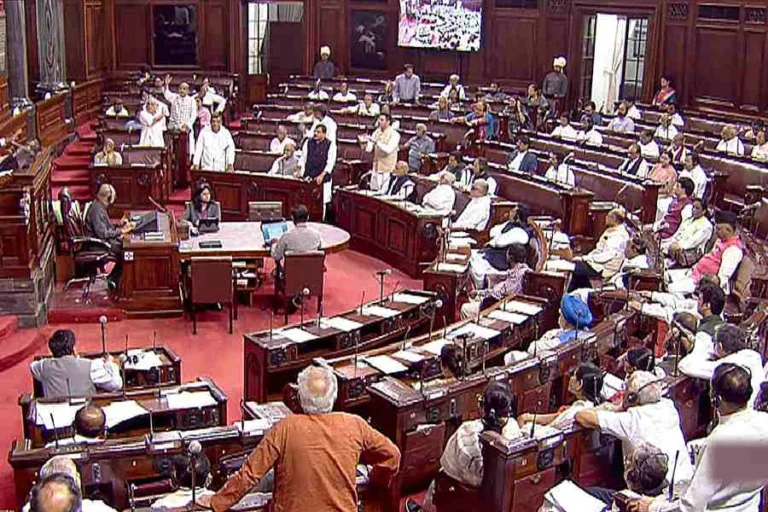
The first phase of the Budget Session of Parliament concluded on Friday after weeks of persistent disruptions, heated exchanges, and repeated adjournments, with proceedings overshadowed by political controversies surrounding the proposed India–US interim trade deal and the unpublished memoir of former Army Chief M. M. Naravane. The House will now reconvene on March 9 following a three-week recess during which parliamentary standing committees will review budgetary allocations for various central ministries under the Union Budget.

Earlier in the day, proceedings were briefly adjourned for an hour after Opposition members staged protests demanding the resignation of Union Minister Hardeep Singh Puri. The Opposition also voiced strong objections to the India–US interim trade agreement, alleging a lack of transparency and consultation.

The session had commenced on January 28 with President Droupadi Murmu addressing a joint sitting of both Houses of Parliament, setting the legislative agenda for the year. However, the proceedings soon turned contentious.

Tensions escalated in the Lok Sabha on February 2 when the Chair disallowed Leader of the Opposition Rahul Gandhi from quoting excerpts from Naravane’s memoir related to the 2020 India–China conflict. The decision triggered strong protests, leading to dramatic scenes inside the House.

Members of the Opposition resorted to sloganeering and demonstrations, resulting in multiple adjournments. The disorder culminated in disciplinary action, with seven Congress members and one CPI(M) member suspended for the remainder of the session for unruly conduct, including climbing onto officials’ tables and throwing torn papers towards the Chair.

Amid fears of further disruptions, Speaker Om Birla reportedly requested Prime Minister Narendra Modi not to attend the Lok Sabha during his scheduled reply to the Motion of Thanks on the President’s address, in an effort to maintain order.

With legislative business repeatedly stalled, much of the session’s focus shifted from policymaking to political confrontation. The upcoming recess will allow committees to scrutinize ministry-wise budget proposals, after which Parliament is expected to resume discussions with renewed focus on financial and legislative matters.
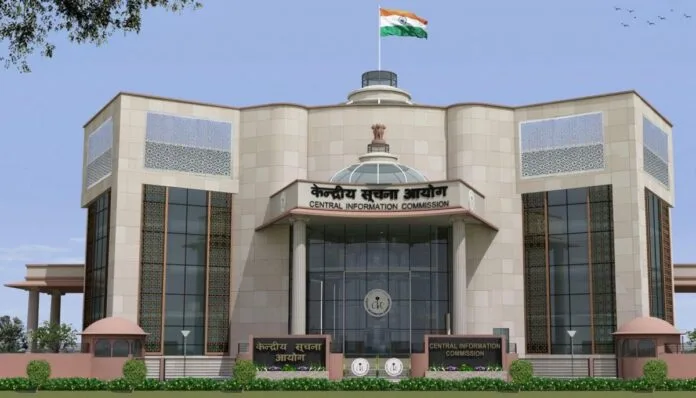
Delhi High Court, Supreme Court, MHA Among Top RTI Rejection Authorities in 2024–25: CIC Report

The Delhi High Court, the Supreme Court and the Ministry of Home Affairs (MHA) were among the public authorities that rejected the highest number of RTI applications in 2024–25, according to the latest annual report of the Central Information Commission (CIC). The Ministry of Finance also recorded a significant number of denials.

As per the report, Section 8(1) of the Right to Information (RTI) Act — which allows exemption from disclosure on grounds such as national security and other protected interests — was invoked 28,924 times, accounting for nearly half (49.88 per cent) of all rejection grounds cited.

The Delhi High Court recorded the highest rejection rate among the top 20 authorities, rejecting 22.88 per cent of the 2,089 RTI applications it received during the year. The Supreme Court followed with a rejection rate of 13.73 per cent, denying 689 out of 5,017 applications.

Among major ministries, the Ministry of Home Affairs rejected 7,750 out of 58,130 applications, a rejection rate of 13.33 per cent — the highest in this category. The Ministry of Finance, one of the largest recipients of RTI requests with 2,20,283 applications, rejected 18,734, translating to 8.50 per cent.

The Ministry of Law and Justice reported a rejection rate of 7.14 per cent (1,330 of 18,638 applications), while the Ministry of Electronics and Information Technology rejected 7.98 per cent of 10,134 applications.

In contrast, some departments with very high RTI volumes reported minimal rejection rates. The Ministry of Corporate Affairs received the highest number of applications at 2,54,657 but rejected only 351 (0.14 per cent). The Ministry of Education rejected 0.74 per cent of 1,34,025 applications, and the Ministry of Road Transport and Highways rejected 0.70 per cent of 35,481 applications.

Regarding legal grounds, Section 24 — which exempts certain intelligence and security organisations — was invoked 8,251 times (14.23 per cent). Section 11, related to third-party information, was cited 519 times (0.90 per cent), and Section 9, concerning copyright restrictions, was invoked 232 times (0.40 per cent). Other provisions together accounted for 34.59 per cent of rejection grounds. The CIC noted that multiple sections may be cited in a single rejection.

Appeal data showed continued challenges to denials. The Ministry of Finance recorded 26,219 first appeals and 3,966 second appeals or complaints. The MHA saw 9,389 first appeals and 960 second appeals, while the Ministry of Defence received 16,876 first appeals and 1,203 second appeals or complaints.

The report highlights wide variation in rejection patterns across authorities, even as lakhs of applications show continued public reliance on the RTI Act.

Daily Wagers, Contractual Employees Protest in J&K, Demand Regularisation of Services

0

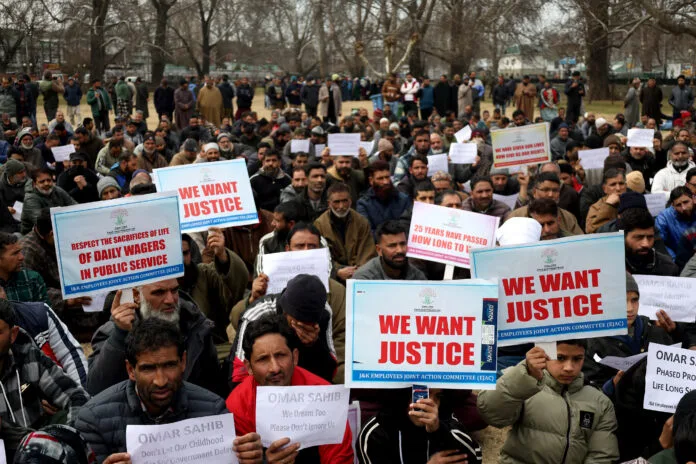
A large number of daily wagers and contractual employees, along with their children, staged a protest on Thursday demanding regularisation of their services in the Jammu and Kashmir government.

The protest was organised by the Employees Joint Action Committee (EJAC) at Sher-e-Kashmir Municipal Park, where demonstrators held a sit-in and raised slogans such as “We want justice” and “Sadda haq ithe rakh” (give us our rights).

Addressing the gathering, EJAC leaders said the Omar Abdullah government should not continue in office if it fails to fulfil the commitments made to employees regarding regularisation and job security.

They said daily wagers and casual labourers form the backbone of several government departments that deliver essential public services, including electricity and drinking water, and yet continue to work without permanent status or benefits.

According to the employee representatives, more than 60,000 workers in Jammu and Kashmir have been serving as daily wagers for many years and are seeking immediate regularisation of their services.

Centre Highlights Youth Employment Push for J&K as MP Flags Unemployment, Drug Menace in Parliament

0

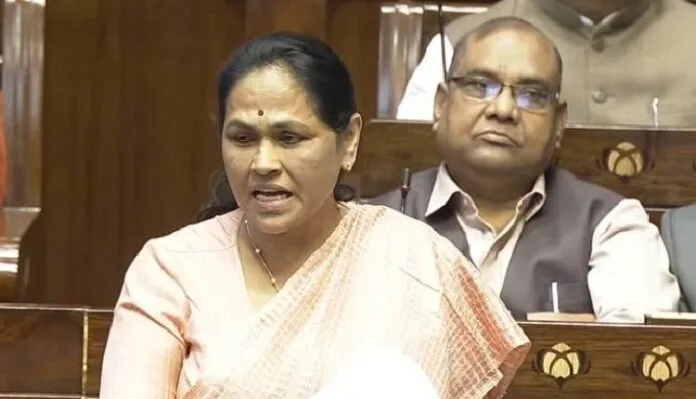
Responding to concerns raised by Jammu and Kashmir National Conference MP Chowdhary Muhammad Ramzan over rising unemployment in the Union Territory, Union Minister of State for Labour and Employment Shobha Karandlaje said the Centre has launched multiple initiatives aimed at bringing youth into the employment mainstream.

Speaking during a parliamentary discussion, Karandlaje defended the government’s approach, stating that creating opportunities for young people in Jammu and Kashmir remains a key priority. “To save Kashmir and bring the young people to the forefront is our aim,” she said.

Sharing an anecdote to underline what she described as changing perceptions, the minister said that during a recent flight, a young woman from the region told her that it was the first time a Prime Minister was thinking specifically about the children of Jammu and Kashmir. She cited this as a reflection of the Centre’s renewed focus on youth welfare and employment in the UT under Prime Minister Narendra Modi’s leadership.

Highlighting progress in formal sector inclusion, Karandlaje said around 1.60 lakh individuals from Jammu and Kashmir have enrolled with the Employees’ Provident Fund Organisation (EPFO) over the past two years, expanding social security coverage and indicating increased formal employment participation.

The exchange took place amid broader debates in Parliament on unemployment during discussions related to the Union Budget. Opposition members have repeatedly criticised the government over job creation and pointed to regional disparities in employment growth.

Raising the issue, MP Muhammad Ramzan described unemployment in Jammu and Kashmir as a “striking issue” and warned that large-scale joblessness among educated youth is contributing to serious social consequences, including drug addiction.

“Unemployment leads the youth of Jammu and Kashmir to social evils like drugs,” Ramzan said, stressing that the crisis is not only economic but also social in nature. He urged the Centre to spell out concrete, targeted measures to generate jobs and prevent further deterioration.

Experts and several public representatives have linked persistent unemployment in the region to rising substance abuse, saying the trend threatens long-term social stability if not addressed through sustained job creation and youth engagement policies.

While the government has highlighted EPFO enrolment and welfare-linked employment measures, critics argue that Jammu and Kashmir requires stronger region-specific industrial, skill development, and entrepreneurship incentives to tackle the root causes of unemployment.

J&K Assembly to Hold Special Discussion on Online Smear Campaigns, Speaker Assures House

0

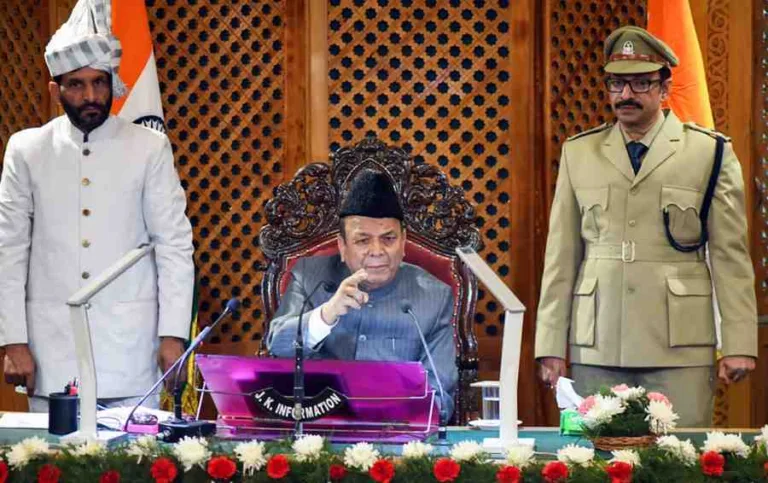
Taking cognisance of concerns raised by members across party lines over alleged online smear campaigns, Jammu and Kashmir Assembly Speaker Abdul Rahim Rather on Thursday assured that a separate half-an-hour discussion will be held on the issue during the ongoing budget session.

The matter was raised in the House amid allegations that fake social media accounts and politically motivated handles were circulating defamatory content and misleading videos against elected representatives, thereby harming their reputation and undermining the dignity of the Assembly.

Earlier, the government informed the House that a dedicated media monitoring cell has been set up in the Directorate of Information and Public Relations (DIPR) to track and counter fake and misleading information in real time. Replying to a starred question by MLA R.S. Pathania, Education Minister Sakeena Itoo said the DIPR issued 28 rebuttals related to fake news and misinformation between April 1, 2025 and January 31, 2026 — 20 through press releases and eight via official social media handles.

She said the monitoring cell continuously scans websites, news channels and social media platforms and issues rebuttals whenever misleading content is detected. However, she clarified that regulating or suspending websites, digital platforms, online news channels or private fact-checking units does not fall within the department’s jurisdiction. Similarly, imposing fines on individuals or organisations for spreading fake news is also outside its purview.

On cyber security preparedness, the minister said multiple layers of safeguards have been introduced to strengthen the digital infrastructure across government departments. She added that all departments have designated nodal officers to monitor fake news related to their respective sectors.

National Conference legislators as well as BJP leaders Sham Lal Sharma and Balwant Singh Mankotia supported the demand for a detailed discussion, calling it a serious issue and alleging sustained attempts by certain elements to tarnish the image of legislators and the House.

With several members demanding accountability against those operating fake accounts and spreading defamatory material, the Speaker directed that the issue be listed separately for detailed deliberation.

“The concern raised by the members, in my view, is the concern of the entire House… every day someone’s dignity is being tarnished,” Itoo said, urging action against offenders and calling for self-introspection among politicians.

Senior BJP MLA Sham Lal Sharma said all 90 members of the House have been subjected to abusive and unparliamentary language online and stressed that legislators should be allowed to focus on public issues.

BJP members also raised objections over the reported entry of a three-time former MLA into the Assembly complex despite not being a current member, and claimed multiple FIRs had been registered against him. Without naming anyone, they questioned how such access was being allowed. The Speaker said he had taken note of the matter and urged protesting members to return to their seats.

Earlier in the day, Food and Supplies Minister Satish Sharma apologised for his remarks against Leader of Opposition Sunil Sharma and BJP MLA Sham Lal Sharma made during a debate earlier this week.

Safety Is Top Priority at Kudankulam Nuclear Plant, No Scientific Basis to Fears: Jitendra Singh

0

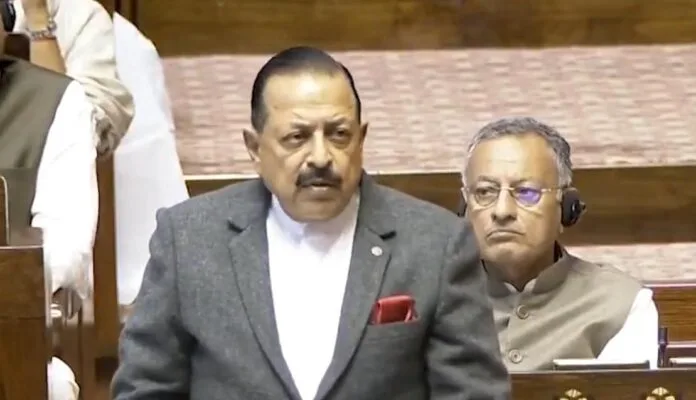
Union Minister of State in the Prime Minister’s Office Jitendra Singh on Thursday assured the Rajya Sabha that safety remains the foremost priority in India’s atomic energy programme, dismissing concerns surrounding the Kudankulam Nuclear Power Plant.

Replying to questions during Question Hour, Singh said the nuclear sector operates strictly on the principle of “Safety First, Production Next.” He was responding to AIADMK MP M. Thambidurai, who flagged delays in the Kudankulam project due to safety-related apprehensions and raised queries about the distribution of electricity generated from the plant.

The minister clarified that power sharing is governed by a fixed formula under which 50 percent of the electricity is allocated to the host state, 35 percent to neighbouring states, and 15 percent to the national grid.

Addressing safety concerns, Singh said several apprehensions stem from “extraneous and political reasons” rather than technical or scientific facts. He emphasized that no mishap has occurred at the Kudankulam facility so far.

He also rejected claims that spent nuclear fuel from other reactors would be stored at Kudankulam, stating that such assertions are not based on scientific rationale.

Delhi High Court Allows Arvind Kejriwal to Withdraw Plea Against ED Summons

0

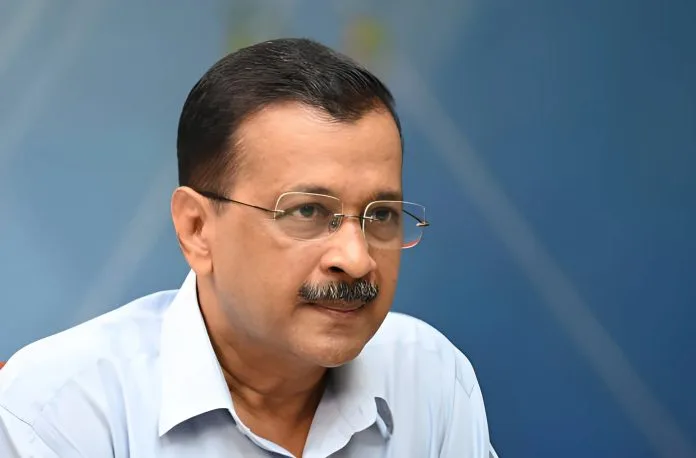
The Delhi High Court on Thursday permitted AAP leader and former Chief Minister Arvind Kejriwal to withdraw his petition challenging the Enforcement Directorate (ED) summons issued to him in connection with the excise policy-linked money laundering case. The court dismissed the plea as withdrawn while keeping all legal questions open.

Appearing for Kejriwal, senior counsel told the bench that the petition would not be pursued further since the trial court had already acquitted him in cases related to his non-appearance before the ED. He added that constitutional issues would be raised at an appropriate stage if required.

A bench led by Chief Justice D.K. Upadhyaya and Justice Tejas Karia recorded the submission and passed the order allowing withdrawal of the petition.

Additional Solicitor General S.V. Raju, representing the ED, informed the court that the agency would challenge the trial court’s acquittal order in appeal.

On January 22, the trial court had acquitted Kejriwal in two cases filed over his failure to comply with ED summons, holding that the legality of service of summons could be questioned and that intentional disobedience was not established.

Kejriwal had approached the High Court after receiving multiple summons from the ED in 2024. He was later arrested and is currently on interim bail in the money laundering case. The Supreme Court has referred broader questions regarding the “need and necessity of arrest” under the Prevention of Money Laundering Act (PMLA) to a larger bench.

The ED alleges that the now-scrapped excise policy was framed to benefit certain accused persons and generate kickbacks for the Aam Aadmi Party. Kejriwal has denied the allegations and has also challenged certain PMLA provisions, claiming misuse of the law for political purposes.

BJP MLAs Walk Out of J&K Assembly, Seek Apology from CM Omar Over ‘Unparliamentary’ Remarks

0

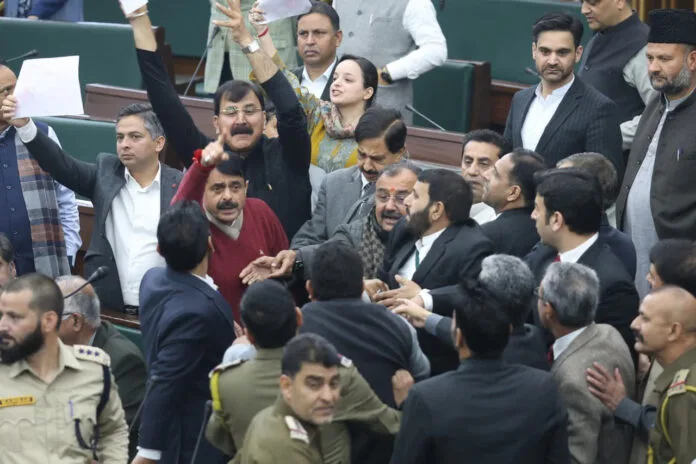
BJP legislators on Wednesday staged a walkout from the Jammu and Kashmir Assembly, protesting against what they termed as “unparliamentary and indecent language” allegedly used by Chief Minister Omar Abdullah during the House proceedings.

Leader of the Opposition Sunil Sharma alleged that certain remarks made by the Chief Minister — including the phrase “joote maaro” — violated legislative decorum and undermined democratic traditions.

BJP members raised slogans against the National Conference-led government inside the House and demanded an unconditional apology from the Chief Minister. Amid the uproar, party MLAs walked out in protest.

Speaking to reporters outside the Assembly, Sunil Sharma said the BJP would continue its protest until the Chief Minister withdraws his remarks and tenders an unconditional apology. He said such language insults the institution and lowers the dignity of the legislature.

Sharma described the comments as “shameful” and accused the ruling party of disregarding constitutional norms and the sanctity of the House. He further alleged that treasury bench members mocked Opposition legislators through gestures, which, he said, further deteriorated the quality of debate.

The controversy arose during a heated discussion in the Assembly that led to repeated disruptions. Following the walkout and continued sloganeering, the Speaker later adjourned the House for the day amid the tense situation.

The BJP maintained that it would not compromise on the dignity of the Assembly and warned that protests would continue if the Chief Minister does not apologise.

Over 12.36 Lakh Smart Electricity Meters Installed Across J&K: Govt Tells Assembly

0

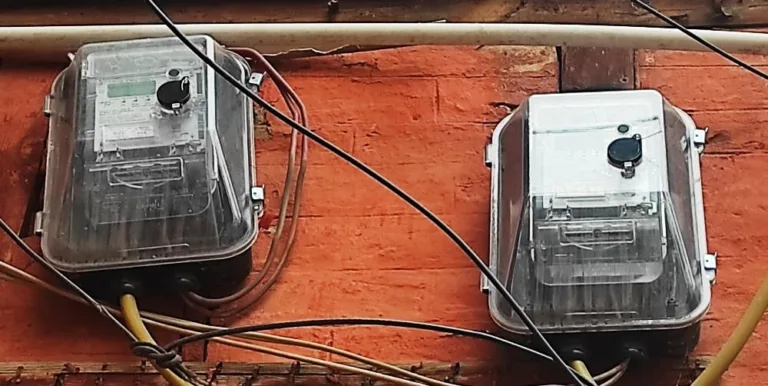
The Jammu and Kashmir administration has installed more than 12.36 lakh smart electricity meters across the Union Territory under centrally sponsored schemes, the Legislative Assembly was informed on Wednesday.

The information was shared by the Power Development Department (PDD) in a written reply to a question raised by legislator Waheed-ur-Rehman Para.

According to the department, the smart meters are being installed under the Prime Minister’s Development Package (PMDP) and the Revamped Distribution Sector Scheme (RDSS). REC Power Development and Consultancy Limited (RECPDCL) is the lead implementation agency for the project.

District-wise data shows that a total of 6,27,492 smart meters have been installed in the Jammu division. Jammu district accounts for the highest number at 3,04,468 meters, followed by Samba with 58,707 and Kathua with 57,320 installations.

In the Kashmir division, 6,09,015 smart meters have been installed so far. Srinagar tops the list with 2,39,147 meters, followed by Baramulla with 87,732 and Anantnag with 77,943.

The PDD further informed that 1,600 smart feeder meters have also been installed on 11kV feeders across ten districts of the Jammu division to strengthen monitoring and load management.

Responding to another query, the department clarified that all installed smart meters conform to national standards and specifications prescribed by the Bureau of Indian Standards (BIS) and the Central Electricity Authority (CEA).

Officials said the smart metering drive is part of a nationwide reform programme aimed at improving billing efficiency, ensuring transparency, and reducing Aggregate Technical and Commercial (AT&C) losses in the power distribution sector.

Macron to Visit India for AI Summit, Talks with PM Modi on Trade and Defence

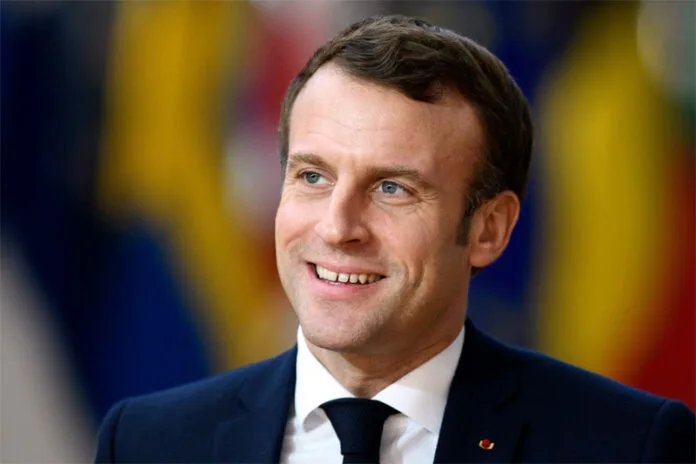
New Delhi: French President Emmanuel Macron will undertake a three-day visit to India next week to attend the AI Impact Summit and hold bilateral talks with Prime Minister Narendra Modi aimed at strengthening cooperation in key sectors including trade, defence and technology.

According to the Ministry of External Affairs (MEA), Macron will begin his visit from Mumbai on February 17, where he and Prime Minister Modi will jointly inaugurate the India–France Year of Innovation. The initiative will be celebrated throughout 2026 in both countries with collaborative programmes across innovation-driven sectors.

The two leaders are expected to hold bilateral discussions in Mumbai covering a wide range of areas under the India–France Horizon 2047 Roadmap. The roadmap was unveiled after Modi–Macron talks in Paris in July 2023 to expand long-term cooperation in trade, investment, technology and strategic sectors.

The MEA said the discussions will include ways to deepen bilateral cooperation across multiple domains and review progress in the strategic partnership. Regional and global issues of mutual interest — including Indo-Pacific cooperation — are also expected to figure prominently in the talks.

President Macron will travel to New Delhi to participate in the AI Impact Summit on February 19, where global collaboration on artificial intelligence and emerging technologies will be a central theme.

The MEA said the visit follows Prime Minister Modi’s trip to France in February 2025 and reflects the depth of the India–France strategic partnership and the shared commitment of both countries to further strengthen ties.

Officials said the India–France Year of Innovation will focus on joint initiatives and events in sectors such as technology, trade, research and culture, with the aim of boosting institutional and industry-level collaboration.