Monday, July 13, 2026
Home Blog Page 57

ACB Arrests ASI in Bemina for Allegedly Accepting Rs. 8,000 Bribe

0

The Jammu and Kashmir Anti-Corruption Bureau (ACB) has arrested an Assistant Sub-Inspector (ASI) of Police posted at Police Station Bemina for allegedly demanding and accepting a bribe of ₹8,000 from a complainant.

According to an official spokesperson, the ACB received a written complaint alleging that Mukhtar Ahmad Khan, a resident of Newa Pulwama and Investigating Officer of FIR No. 88/2025 registered at Police Station Bemina, had demanded illegal gratification despite the case already having been challaned before the competent court.

The complainant further alleged that the officer threatened to harass him if the bribe was not paid.

Upon receiving the complaint, the ACB conducted a discreet verification which prima facie established the allegations. Subsequently, FIR No. 04/2026 under Section 7 of the Prevention of Corruption Act, 1988 was registered at Police Station ACB Srinagar and investigation was initiated.

During the investigation, a trap team laid by the ACB arrested the accused officer red-handed while he was demanding and accepting ₹8,000 from the complainant. The accused was taken into custody and the bribe amount was recovered on the spot in the presence of independent witnesses.

Further investigation in the case is underway.

J&K and Ladakh High Court Upholds Consent-Based Remand in Land Partition Case, Vacates Interim Status Quo

0

The High Court of Jammu & Kashmir and Ladakh has upheld the order of the Revisional Authority directing continuation of land partition proceedings in accordance with applicable rules, while vacating an interim status quo that had stalled the process for several years.

The judgment was delivered by Justice Wasim Sadiq Nargal in a petition filed by Sikander Sharma challenging the January 6, 2021 order passed by the Additional Commissioner, Jammu, acting as Revisional Authority. The petitioner had questioned the legality of the remand order directing the subordinate authority to proceed afresh with the partition proceedings after granting due opportunity of hearing to all stakeholders.

The High Court observed that the Revisional Authority’s order had been passed with the consent of counsel representing all parties. It held that advocates act as authorised agents of their clients and once consent is recorded in judicial proceedings, parties are ordinarily estopped from challenging the order later unless there is clear evidence of fraud, coercion, or patent lack of jurisdiction.

Emphasising the binding nature of consent-based orders, the Court stated that such directions are intended to bring finality to disputes and prevent prolonged litigation. It ruled that the petitioner could not withdraw from a position earlier accepted through counsel merely because the outcome subsequently appeared unfavourable.

Rejecting the contention that the remand was contrary to law, the Court clarified that the impugned order did not conclusively determine rights but only required the competent authority to re-examine the matter under the relevant Partition Rules after hearing all concerned parties. It noted that such a procedural direction caused no prejudice and instead ensured fairness in adjudication.

The Court also vacated the interim status quo order dated February 1, 2021, observing that its continuation was not conducive to justice as it effectively prevented the revenue authorities from acting on the Revisional Authority’s directions.

Relying on Supreme Court precedents, the High Court reiterated that consent decrees and compromise-based decisions create an estoppel and are meant to prevent endless litigation cycles. Finding no illegality or jurisdictional error, the Court upheld the January 6, 2021 order and directed the competent authority to conclude partition proceedings strictly in accordance with law after granting opportunity of hearing to all interested parties and passing a reasoned order.

Advocate R.K.S. Thakur appeared for the petitioner, while Advocate Priyanka Bhat, vice Senior AAG Monika Kohli, and Advocate Ajay Abrol represented the respondents.

Over 8,600 Complaints Filed Against Sitting Judges Since 2016, Lok Sabha Informed

0

More than 8,600 complaints have been received against sitting judges of the higher judiciary since 2016, the Lok Sabha was informed on Friday.

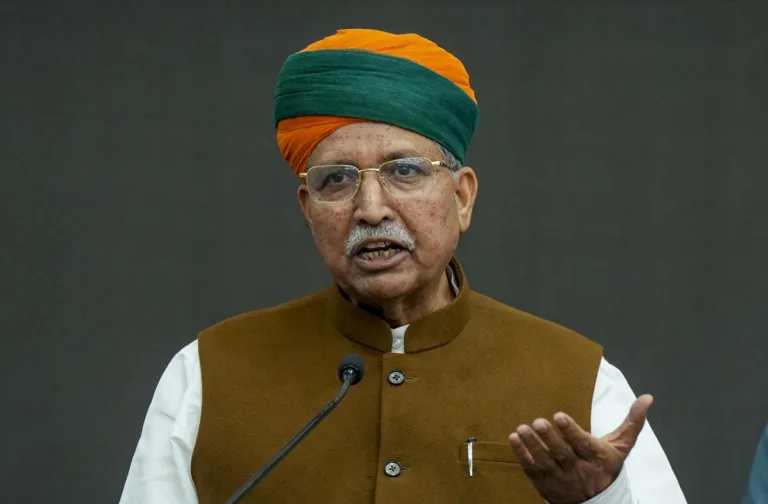
In a written reply to the House, Law Minister Arjun Ram Meghwal stated that a total of 8,639 complaints were filed against sitting judges between 2016 and 2025. The highest number of complaints — 1,170 — was recorded in 2024 by the office of the Chief Justice of India (CJI).

He explained that complaints against judges and chief justices of the high courts are addressed internally by the judiciary through an established “in-house mechanism,” designed to maintain judicial accountability and uphold ethical standards.

The minister recalled that in May 1997, the Supreme Court of India adopted two key resolutions — The Restatement of Values of Judicial Life, which outlines standards and principles to be followed by Supreme Court and High Court judges, and the In-house Procedure, which provides for corrective measures against judges who fail to adhere to these norms.

Under the existing procedure, the Chief Justice of India is empowered to receive complaints against Supreme Court judges and chief justices of high courts. Similarly, chief justices of high courts are authorized to examine complaints regarding the conduct of judges serving in their respective courts.

Meghwal further stated that complaints received through the Centralised Public Grievance Redress and Monitoring System (CPGRAMS) or through other channels are forwarded to the CJI or the concerned high court chief justices for appropriate action.

The government reiterated that the in-house system ensures due process while preserving the independence of the judiciary.

Speaker Abdul Rahim Rather Calls for Stronger Laws to Curb Food Adulteration in Jammu and Kashmir

0

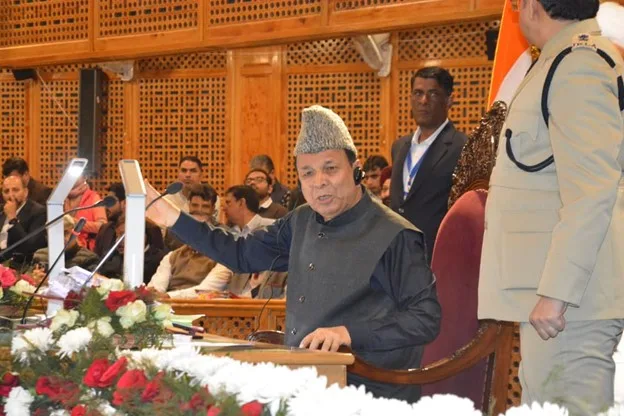
Abdul Rahim Rather, Speaker of the Jammu and Kashmir Legislative Assembly, on Friday urged the government to strengthen the legal framework to effectively tackle food adulteration, as members raised concerns over the large-scale seizure of rotten meat and sub-standard cheese across the Union Territory.

Responding to a clubbed question raised by legislators of the Jammu and Kashmir National Conference, Health Minister Sakeena Itoo informed the House that more than 12,183.5 kilograms of rotten meat, valued at over ₹29.19 lakh, had been destroyed during 1,676 inspections conducted across Jammu and Kashmir during the financial year 2025–26 up to December 2025.

She further stated that 7,665 kilograms of adulterated cheese worth over ₹16.32 lakh were seized in the Jammu region.

According to the minister, authorities collected 144 samples of meat and meat products and 173 samples of cheese for laboratory testing within and outside the Union Territory. Reports for all 144 meat samples have been received, with one declared sub-standard and 17 found unsafe. Of the 173 cheese samples, 157 reports have been received so far, of which 47 were declared sub-standard and one unsafe.

Itoo acknowledged a shortage of technical staff in both food-testing laboratories located in Srinagar and Jammu. She noted that against 19 sanctioned posts in each lab, 11 remain vacant. The 22 vacant posts will be referred to recruiting agencies once recruitment rules are finalized.

To curb food adulteration and safeguard public health, the Food Safety Department has intensified enforcement by conducting regular inspections, testing samples through notified laboratories, and initiating strict action against violators. These measures include suspension or cancellation of licences, penalties, and prosecution.

The minister added that action has already been initiated against 18 food business operators found selling unsafe meat and meat products in various districts, including Srinagar and Jammu, with most cases currently under process.

Security Forces Conduct Surprise Checks in Lal Chowk Ahead of Pulwama Attack Anniversary

0

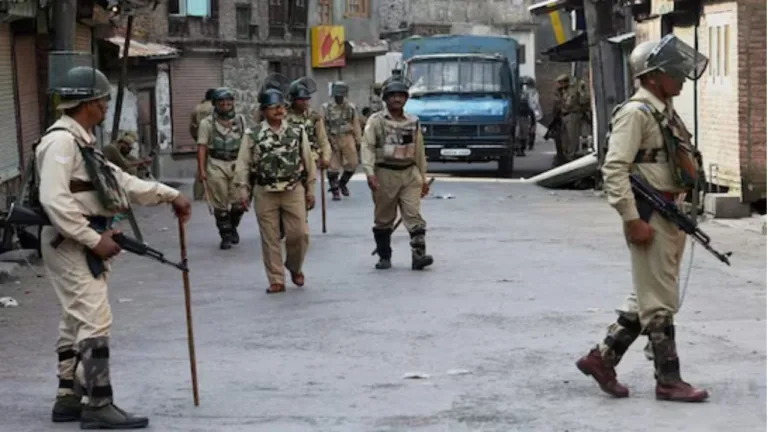
Security forces intensified vigil across the city as teams carried out surprise checking and search operations in the busy Lal Chowk area ahead of the seventh anniversary of the 2019 Pulwama suicide attack, officials said.

According to officials, personnel of the Jammu and Kashmir Police conducted inspections across the commercial hub, checking vehicles, pedestrians, and public spaces to ensure heightened security. The teams also carried out searches in several hotels, examining guest rooms and luggage as part of precautionary measures.

Police personnel verified identification documents of hotel guests and questioned individuals during the operation to prevent any potential security threats. Authorities stated that the move aims to maintain law and order and strengthen surveillance in sensitive areas of the city.

The checking forms part of broader security arrangements ahead of the anniversary of the Pulwama attack, which occurred on February 14, 2019, in Pulwama district. In the incident, an explosives-laden vehicle rammed into a convoy of the Central Reserve Police Force (CRPF) at Lethpora along the Srinagar–Jammu national highway.

The suicide attack claimed the lives of 40 CRPF personnel and remains one of the deadliest strikes on security forces in the region.

Officials said security will continue to remain tight in key locations across Srinagar and adjoining districts in the coming days to prevent any untoward incident.

Ali Mohammad Sagar Condoles Demise of Senior NC Leader Qamar Ali Akhoon, Calls It Irreparable Loss to Kargil–Ladakh

0

Ali Mohammad Sagar, General Secretary of the Jammu & Kashmir National Conference, today expressed profound grief over the demise of former Minister and senior party leader Qamar Ali Akhoon, describing his passing as a great loss to both the party and the people of Kargil–Ladakh.

In a condolence message, Sagar said Akhoon was a towering political figure who dedicated his entire life to public service, particularly for the welfare and development of people living in Kargil and other remote areas of Ladakh. He noted that Akhoon stood for integrity, simplicity, and unwavering commitment to justice and development.

Recalling his long association with the late leader, Sagar said he shared a close personal and political bond with Akhoon for more than three decades. He added that during his tenure in the Public Works Department, Akhoon served as Minister of State and demonstrated exceptional administrative capability, honesty, and a people-centric approach.

Sagar further stated that Akhoon consistently raised issues related to infrastructure, education, and public welfare. He played a crucial role in addressing the aspirations of marginalized communities in far-flung regions and earned respect across party lines for his principled and courageous leadership.

Describing his demise as an irreplaceable loss, Sagar said the void left behind would be difficult to fill, as the people of Kargil and Ladakh have lost a genuine representative who understood their concerns and worked tirelessly for their betterment.

On behalf of the entire party leadership and workers, Sagar extended heartfelt condolences to the bereaved family and prayed for eternal peace for the departed soul, along with strength for the family to bear the loss.

Mehbooba Mufti Seeks Government Clarification Over Alleged Demographic Change Plan in Kashmir

0

Mehbooba Mufti, president of the Peoples Democratic Party (PDP), on Friday urged the Jammu and Kashmir government to clarify claims regarding an alleged plan to alter the demographic composition of the Kashmir Valley.

Her remarks followed statements made by Ashwani Kumar Chrungoo, a leader associated with the Bharatiya Janata Party (BJP), who reportedly told a national daily that the Centre was working toward changing Kashmir’s demography by settling lakhs of Hindus from outside the region.

Reacting strongly to the statement, Mufti questioned the intent behind the proposal of establishing multiple townships in the Valley. In a post on X (formerly Twitter), she stated that while the creation of new townships may appear progressive on the surface, concerns arise when BJP leaders link the move to demographic adjustments.

“Forty townships in Kashmir to decongest cities? Sounds progressive until BJP voices call it a demography plan for Hindu settlement. Coincidence or deliberate state engineering? The Jammu and Kashmir government must clarify before it is too late,” Mufti wrote.

She emphasized that transparency from the government is essential to address public apprehensions and prevent unrest in the sensitive region.

The remarks have triggered political debate, with opposition leaders demanding an official explanation regarding the purpose and structure of the proposed townships. As of now, the government has not issued a formal response to the allegations.

PM Narendra Modi Shifts to New ‘Seva Teerth’ Office, Launches Major Welfare and Development Initiatives

0

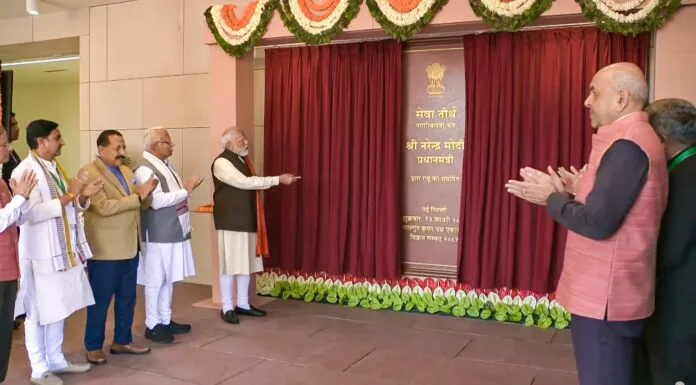
Prime Minister Narendra Modi on Friday shifted his office to the newly constructed Seva Teerth Complex, marking a significant transition from the colonial-era South Block building near Rashtrapati Bhavan on Raisina Hill. The move coincided with February 13, the day New Delhi marked 95 years since its formal inauguration as India’s modern capital in 1931.

The Prime Minister arrived at the new complex in a motorcade along with Union ministers Manohar Lal and Jitendra Singh and senior officials of the Prime Minister’s Office. He formally inaugurated the complex, which will now house the Prime Minister’s Office (PMO), the National Security Council Secretariat, and the Cabinet Secretariat, creating a centralized administrative hub.

After entering the office, Modi garlanded a statue of Lord Ganesha and immediately began official work by signing key files related to welfare and development measures aimed at women, farmers, youth, and vulnerable sections of society.

Among the major decisions was the approval of the PM RAHAT Scheme, which will provide accident victims with cashless medical treatment of up to ₹1.5 lakh, ensuring timely emergency care and reducing financial burdens on families.

The Prime Minister also set an ambitious target to double the number of ‘lakhpati didis’—women earning at least ₹1 lakh annually through self-help groups—from three crore to six crore by March 2029. Officials noted that the government had already achieved the earlier milestone of three crore beneficiaries ahead of schedule.

In a significant push for the agriculture sector, the Agriculture Infrastructure Fund was doubled to ₹2 lakh crore to strengthen storage, logistics, and the overall agricultural value chain.

To boost innovation and entrepreneurship, Modi approved the Startup India Fund of Funds 2.0 with a corpus of ₹10,000 crore. The fund aims to support deep-tech ventures, early-stage startups, advanced manufacturing, and breakthrough technologies.

Officials said the relocation to the new office and the immediate rollout of policy measures reflect the government’s focus on modern governance, efficiency, and inclusive growth.

Uproar in J&K Assembly Over BJP MLA’s Claim of Valley Residents Encroaching Land in Jammu

0

 The Jammu and Kashmir Legislative Assembly witnessed noisy scenes and sharp exchanges on Friday after BJP legislator Vikram Randhawa alleged that people from the Kashmir Valley had encroached upon government land in Jammu city.

The controversy erupted during the Question Hour when Randhawa raised the issue of illegal occupation of land belonging to the Jammu Development Authority (JDA).

Replying on behalf of the Chief Minister, Social Welfare Minister Sakeena Itoo informed the House that, as per official records, land measuring 688 kanals and 17 marlas in Tehsil Bahu and 579 kanals in Tehsil Jammu South is currently under illegal encroachment.

She clarified that these encroachments are not recent and that eviction proceedings are underway in accordance with the Public Premises (Eviction of Unauthorised Occupants) Act and other applicable laws.

The minister further stated that since January 2025, authorities have conducted 34 anti-encroachment drives in the two tehsils, resulting in the retrieval of 140 kanals and 11 marlas of JDA land.

Randhawa, however, alleged that many of the settlements on the encroached land belonged to people from the Kashmir Valley and claimed that nearly 90 percent of the habitations were set up by them. He urged the government to conduct a probe and take strict action to clear encroachments in his constituency.

“We have no issue if Kashmiris legally purchase land and build homes in Jammu, but construction on government land should not be allowed,” he said, adding that over 16,000 kanals of JDA land were allegedly under encroachment in Jammu.

His remarks triggered protests from members of the ruling Jammu and Kashmir National Conference, who objected to linking the issue with any particular region.

Rejecting the allegations, Itoo asserted that encroachment is an administrative issue and should not be viewed through a regional or communal lens. She emphasized that Jammu and Kashmir must not be divided on such grounds and that the government remains committed to addressing illegal occupations strictly as per the law.

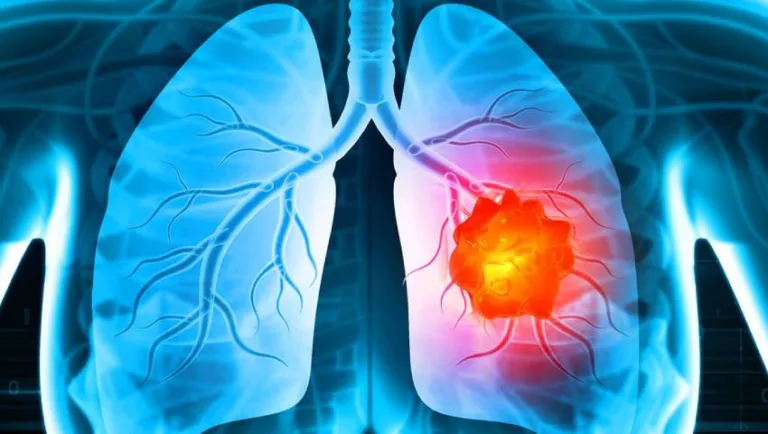
Over 32,000 Cancer Cases Reported in Jammu & Kashmir; 79% Burden Falls on Kashmir Valley, Says Health Minister

0

Srinagar: More than 32,000 cancer cases have been recorded across Jammu and Kashmir in recent years, with nearly 79 percent of the total cases reported from the Kashmir Valley alone, Health Minister Sakeena Itoo informed the Assembly on Friday.

Responding to an unstarred question raised by Peoples Democratic Party (PDP) legislator Waheed Ur Rehman Para, the minister said that 25,621 cases were registered in the Kashmir division between 2022 and 2024. In comparison, 6,804 cases were reported from the Jammu division between 2023 and 2025.

She stated that gastro-intestinal malignancies — including cancers of the esophagus, stomach, and colorectal region — remain among the most frequently diagnosed cancers in the region.

Rising Trend Across Both Divisions

Data compiled by the Health and Medical Education Department shows a steady year-on-year increase in cases.

In the Kashmir division, 8,021 cases were reported in 2022, 8,621 in 2023, and 8,979 in 2024. Meanwhile, the Jammu division recorded 2,036 cases in 2023, 2,187 in 2024, and 2,581 in 2025, reflecting a similar upward trend.

Strengthened Treatment Infrastructure

Highlighting government measures, the minister said advanced cancer care facilities are available at major institutions, including Sher-i-Kashmir Institute of Medical Sciences (SKIMS), Soura, and the State Cancer Institute at Government Medical College Jammu.

These centers provide comprehensive, multidisciplinary treatment covering medical oncology, surgical oncology, radiation oncology, and clinical hematology. They are equipped with modern diagnostic and therapeutic technologies such as PET-CT scans, CT scanners, dedicated CT simulators, and advanced radiotherapy systems.

The PET scan facility is currently operational at SKIMS, while another unit worth ₹16 crore is being procured for GMC Srinagar. Additionally, private hospitals such as Narayana Super Specialty Hospital Kakryal and American Oncology Institute ASCOM also provide PET scan services in the Jammu division.

Focus on Prevention and Awareness

The government has intensified awareness drives to promote early detection and prevention. Public health campaigns emphasize recognizing early warning signs and reducing risk factors through tobacco cessation, healthier diets, and lifestyle modifications.

Cancer patients are being treated at SKIMS, Government Medical Colleges and their associated hospitals, district hospitals, and Community Health Centres (CHCs). Severe cases are referred to tertiary care institutions for specialized treatment.

The minister reiterated that the administration remains committed to expanding healthcare infrastructure and strengthening early diagnosis systems to address the growing cancer burden in the Union Territory.