Friday, July 10, 2026
Home Blog Page 44

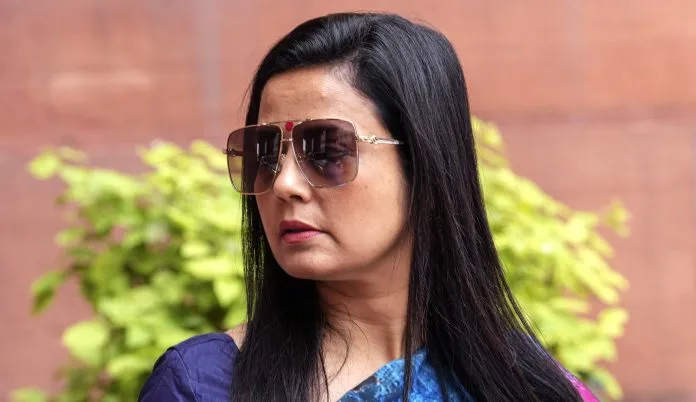
Supreme Court Stays Part of Delhi High Court Order in Mahua Moitra Cash-for-Query Case

The Supreme Court of India on Friday stayed a portion of a December 2025 order passed by the Delhi High Court, which had allowed the Lokpal of India to consider granting sanction to the Central Bureau of Investigation (CBI) to file a chargesheet against Mahua Moitra, a Member of Parliament from the All India Trinamool Congress, in the alleged cash-for-query scam.

A bench comprising Chief Justice of India Surya Kant and Justice Joymalya Bagchi issued notices to Moitra, the CBI, and Nishikant Dubey, BJP MP and complainant in the case, on a plea filed by the Lokpal challenging the high court’s order.

High Court Order Challenged

On December 19, 2025, the Delhi High Court had set aside an earlier order of the Lokpal that granted sanction to the CBI to file a chargesheet against Moitra in the alleged scam.

In its judgment, the high court had directed the Lokpal to reconsider the matter. In paragraph 89 of the ruling, it stated that the Lokpal should examine the issue of sanction under Lokpal and Lokayuktas Act, 2013, specifically under Section 20, within one month.

The Supreme Court bench has now stayed the implementation of this part of the high court’s order while issuing notices in a batch of petitions concerning the powers and procedures under Section 20 of the Act.

Background of the Case

The alleged cash-for-query case involves accusations that Mahua Moitra raised questions in the Lok Sabha in exchange for cash and gifts from a businessman.

The Delhi High Court verdict had come on a petition filed by Moitra challenging the Lokpal’s November 12, 2025 order granting sanction to the CBI to file a chargesheet against her.

Following the high court’s decision to set aside its order, the Lokpal approached the Supreme Court seeking relief.

Over 23,000 Grievances from J&K Received on CPGRAMS in Three Years

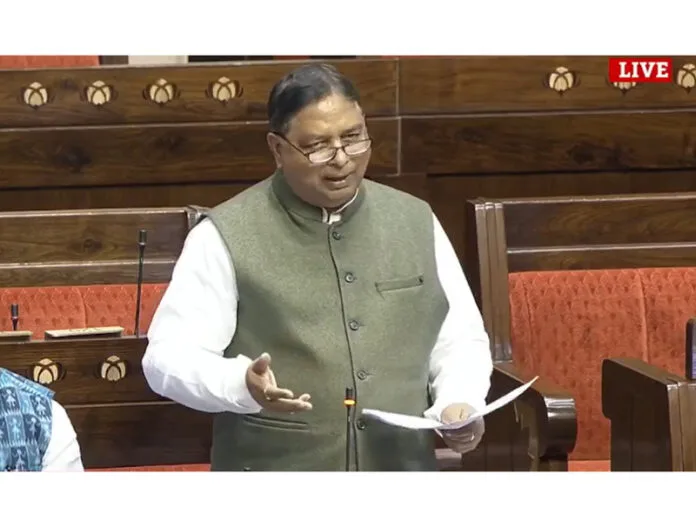
More than 23,000 grievances related to Jammu and Kashmir have been received through the Centralised Public Grievances Redressal and Monitoring System (CPGRAMS) over the past three years since 2023, the government informed the Rajya Sabha.

The information was provided by the Ministry of Personnel, Public Grievances and Pensions in response to an unstarred question raised by Sat Sharma, Member of Parliament in the Rajya Sabha and president of the Bharatiya Janata Party Jammu and Kashmir.

According to the ministry’s reply, 6,991 grievances were received in 2023, 8,459 in 2024, and 7,936 in 2025, with a significant number of cases being resolved through the digital grievance redressal system.

Query on Public Service Delivery

In his question, Sat Sharma sought details about measures taken by the government to improve the efficiency and effectiveness of public service delivery in Jammu and Kashmir. He also asked for information regarding the number of grievances received and resolved under various central government grievance redressal mechanisms during the last three years.

Sharma further requested details on steps taken to strengthen digital grievance systems, including online platforms and time-bound disposal mechanisms.

Reforms in Grievance Redressal System

The ministry stated that the Department of Administrative Reforms and Public Grievances conducts the National e‑Service Delivery Assessment (NeSDA) to evaluate public service portals of states and union territories, including Jammu and Kashmir.

The assessment reviews various parameters such as accessibility, ease of use, information security and integrated service delivery to improve governance efficiency.

To further strengthen grievance redressal, the government has implemented 10-step reforms in CPGRAMS and issued comprehensive guidelines in August 2024, reducing the grievance disposal timeline from 30 days to 21 days.

These measures also include integration of grievance platforms, establishment of dedicated grievance cells and the appointment of nodal and appellate officers for better monitoring and accountability.

Capacity Building and Digital Governance

The ministry also highlighted that the Administrative Training Institute Jammu and Kashmir has received grants under the Sevottam Scheme to conduct capacity-building programmes for government officials aimed at improving administrative efficiency and citizen-centric governance.

Additionally, several initiatives such as the implementation of E‑Office for digital file movement, monitoring dashboards, service analysis and citizen feedback systems have been introduced to enhance transparency, accountability and responsiveness in public administration.

Manoj Sinha, Omar Abdullah Extend Greetings on Jumat-ul-Vida

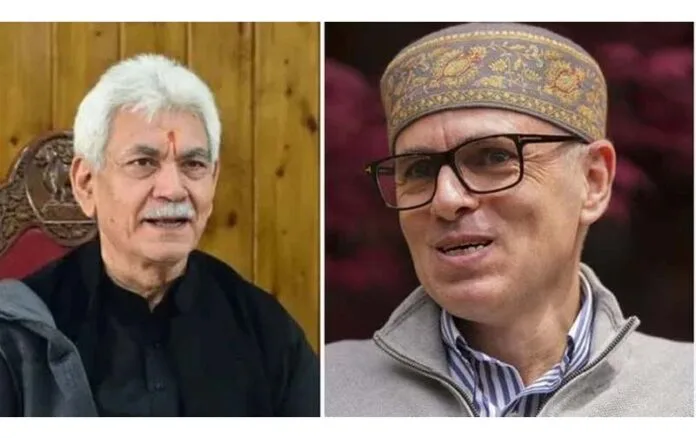
Manoj Sinha, Lieutenant Governor of Jammu and Kashmir, has extended his greetings to the people on the occasion of Jumat-ul-Vida, which will be observed on March 13.

In a message, the Lieutenant Governor conveyed his heartfelt wishes to the citizens and prayed for their well-being.

“On the auspicious occasion of Jumat-ul-Vida, I extend my hearty greetings and good wishes to all. I pray for the health, happiness, and prosperity of every citizen,” he said.

He further expressed hope that the final Friday of the holy month of Ramadan would bring greater compassion and unity among people.

“As we observe the final Friday of the holy month of Ramzan, may the Almighty graciously accept our prayers and devotions and continue to guide us toward a future founded on compassion, unity and enduring harmony,” Sinha added.

Chief Minister Extends Greetings

Meanwhile, Omar Abdullah, Chief Minister of Jammu and Kashmir, also extended warm greetings to the people on the occasion.

In his message, the Chief Minister highlighted the spiritual importance of Jumat-ul-Vida, which marks the last Friday of Ramadan and holds special significance for the Muslim community.

He urged people to use the sacred occasion for prayers, reflection and seeking divine blessings for peace and prosperity.

“May this blessed occasion bring peace, prosperity and well-being to the people of Jammu and Kashmir. Let us pray for unity, harmony and the continued progress of our society while strengthening the bonds of compassion and brotherhood,” Abdullah said.

Appeal to Support the Needy

The Chief Minister also appealed to people to remember the underprivileged and extend support to those in need, stressing the values of kindness, charity and generosity that define the spirit of Ramadan.

He expressed hope that prayers offered on the occasion would inspire collective efforts toward building a more just, inclusive and peaceful society.

Om Birla Reaffirms Commitment to Fairness After No-Confidence Motion Fails

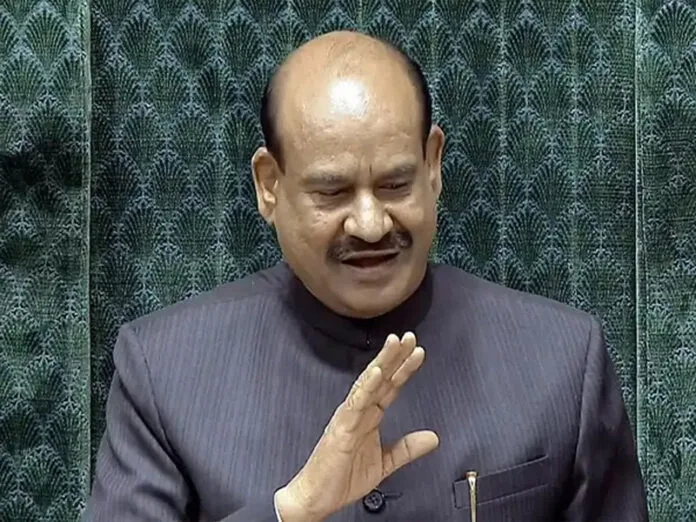
Om Birla, Speaker of the Lok Sabha, on Thursday reiterated his commitment to performing his duties in a fair and impartial manner, stating that every member of the Lower House—whether from the government or the opposition—has the right to speak in accordance with parliamentary rules.

Birla made the remarks while addressing the House for the first time after a motion seeking his removal, moved by more than 100 Opposition members, was rejected through a voice vote in the Lok Sabha.

“The members of the House have strengthened the traditions of Parliament and enhanced its prestige. I thank everyone for placing their trust in me. I assure you that I will always discharge my duties in an impartial and fair manner,” Birla said.

Right to Speak According to Rules

Responding to allegations that Opposition MPs were not being allowed to speak, Birla clarified that every member is entitled to speak as per the established rules of the House.

“Some members had said that Opposition MPs are not given a chance to speak. I want to make it clear that whether it is a minister or an Opposition MP, every member has the right to speak according to the rules,” he stated.

He further emphasised that parliamentary proceedings are conducted strictly according to rules that apply equally to all members.

“The House functions according to rules. These rules have not been made by the government or the opposition, and they are enforced equally on every member,” Birla said.

Notice Required for Speaking

The Speaker also explained that members must give prior notice before participating in debates or discussions.

“Whether the speaker is the Prime Minister, a minister or any other member, they must give notice to speak. Only after that can they be allowed to speak. No member has the right to speak out of turn in the House,” he added.

Protests in the House

Birla’s return to the chair was accompanied by protests and sloganeering from members of the INDIA bloc, which disrupted the proceedings.

As protests continued, Birla urged the members to allow the Question Hour to function, describing it as an important part of parliamentary proceedings where MPs can raise issues and hold the government accountable.

The House proceedings were eventually adjourned at around 11:04 am amid the disruptions. Birla appealed to the protesting members to let the Question Hour continue and said he would present his views on the discussions held over the previous two days later in the day.

Birla resumed his role as Speaker after the no-confidence motion against him was defeated by a voice vote in the Lok Sabha.

Navneet Kaur Hat-Trick Powers India to 4–1 Win Over Wales in Hockey World Cup Qualifiers

A brilliant hat-trick by Navneet Kaur guided the India women’s national field hockey team to a commanding 4–1 victory over Wales women’s national field hockey team in a Pool B match of the Women’s Hockey World Cup Qualifiers on Wednesday.

Navneet struck in the 29th, 34th and 55th minutes, while Sakshi Rana opened the scoring in the seventh minute at the GMC Balayogi Hockey Stadium.

Although India had already secured a semi-final berth before the match, the emphatic win ensured that the hosts finished top of the table in Pool B. India will now face Italy women’s national field hockey team on Friday for a place in the final.

Early Dominance by India

India began the match with great intensity, displaying speed and sharp attacking moves in the opening quarter. Despite Wales employing a high press, the hosts managed to create early chances.

The breakthrough came in the 7th minute when Salima Tete drove down the right flank and set up Sakshi Rana, who fired a powerful reverse hit from the edge of the circle to give India the lead.

India nearly doubled their advantage soon after when Udita struck from a penalty corner, but the effort was cleared off the goal line.

Navneet Takes Control

India maintained the momentum in the second quarter with a swift counterattack involving Navneet and Lalremsiami, but Welsh goalkeeper Ffion Horrell denied the chance.

India’s goalkeeper Bichu Devi also made an important save in the 25th minute, stopping Wales’ first penalty corner of the match.

The second goal arrived in the 29th minute when Navneet converted a penalty corner with a powerful low shot, doubling India’s lead. Five minutes later, after Sakshi earned another penalty corner with a fine run, Navneet struck again to make it 3–0.

Wales Pull One Back

Wales managed to reduce the deficit in the 39th minute when Betsan Thomas capitalised on a brief defensive lapse and scored from a tight angle to bring the score to 3–1.

In the final quarter, Wales had an opportunity to close the gap when they were awarded a penalty stroke in the 50th minute, but captain Elizabeth Bingham missed the chance.

Hat-Trick Seals Victory

Navneet completed her hat-trick in the 55th minute, calmly converting a penalty stroke to seal a convincing 4–1 win for India and underline the team’s dominance in the tournament.

Shubman Gill Set to Be Named BCCI Cricketer of the Year

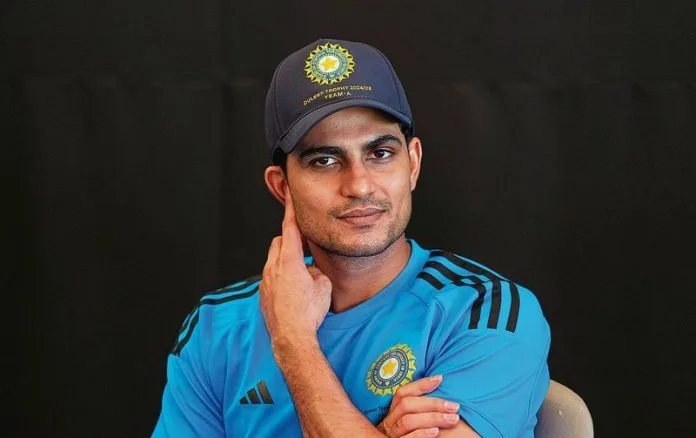
India’s Test and ODI captain Shubman Gill is set to be honoured as Cricketer of the Year at the annual awards ceremony of the Board of Control for Cricket in India (BCCI), scheduled to be held on March 15.

The 26-year-old batter enjoyed a remarkable run across formats over the past year, establishing himself as one of India’s most consistent performers in international cricket. Although he was not included in India’s T20 side that successfully defended its title at the ICC Men’s T20 World Cup last month, Gill delivered exceptional performances in Tests and One-Day Internationals.

Stellar Year Across Formats

Gill scored 983 runs in Test cricket, including a dominant 754 runs during India’s away series against England national cricket team in 2025. He maintained an impressive batting average of over 70 in the longest format during the period.

In One-Day Internationals, Gill amassed 490 runs, playing a key role in India’s triumphant campaign at the ICC Champions Trophy, where he contributed 188 runs.

Across formats, Gill accumulated 1,764 runs at an overall average of 49, including seven centuries and three half-centuries.

Despite modest performances in T20 Internationals, Gill was in excellent form in the Indian Premier League, scoring 650 runs for the Gujarat Titans at an average of 50.

Dravid to Receive Lifetime Achievement Award

Meanwhile, former India head coach Rahul Dravid will be honoured with the prestigious Col C. K. Nayudu Lifetime Achievement Award for his outstanding contribution to Indian cricket.

Dravid’s tenure as head coach included guiding India to victory in the ICC Men’s T20 World Cup in 2024, a milestone achievement that added to his illustrious career both as a player and mentor.

MCA to Be Honoured

The Mumbai Cricket Association (MCA) is also expected to be recognised as the Best Association in Domestic Cricket at the awards ceremony for its contributions to the development and management of the sport at the domestic level.

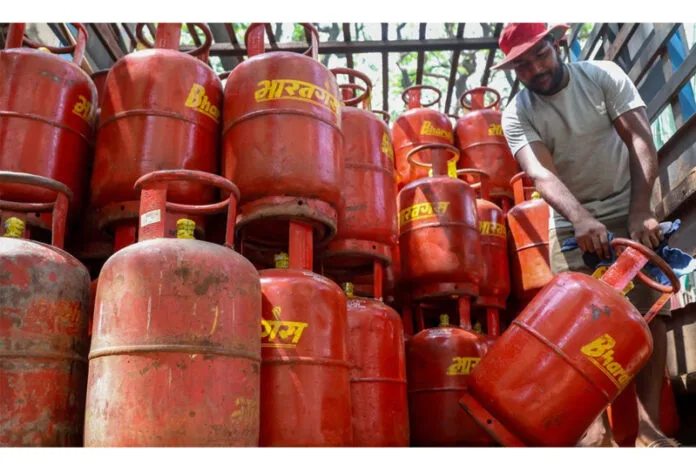
Government Assures Adequate LPG Supply Amid Panic Buying Concerns

Amid reports of panic buying in several parts of the country, the Government of India on Wednesday assured citizens that there are sufficient stocks of cooking gas to meet household demand, even as authorities move to secure alternative fuel supplies following disruptions caused by the ongoing West Asia conflict.

Officials said the government has intensified efforts to ensure uninterrupted supply of Liquefied Petroleum Gas (LPG) for domestic use, despite challenges arising from disruptions in shipments through the strategically important Strait of Hormuz, a key route for energy imports.

LPG Production Increased

Speaking at a media briefing, Sujata Sharma, Joint Secretary in the Ministry of Petroleum and Natural Gas, said refinery adjustments have increased domestic LPG output by around 25 percent to compensate for reduced imports.

She added that India has also secured two additional cargoes of Liquefied Natural Gas (LNG) from alternative sources to address supply disruptions.

“Feedback suggests that some panic booking and hoarding behaviour has been triggered by misinformation,” Sharma said. “We have enough stocks and there is no need for consumers to rush and book cylinders.”

Impact of Strait of Hormuz Disruption

The widening conflict in the Middle East has severely affected shipping through the Strait of Hormuz, which previously handled the majority of India’s oil, gas and LPG imports.

India imports about 60 percent of its LPG needs, and nearly 90 percent of those imports pass through the Strait of Hormuz. The disruption has therefore forced the country to adjust supply strategies and prioritise essential consumption.

Diversifying Crude Oil Supplies

Officials said India has managed to offset crude oil disruptions by sourcing supplies from alternative markets, including Russia.

According to the ministry, about 70 percent of India’s crude imports are now arriving through routes outside the Strait of Hormuz, compared with roughly 55 percent earlier.

India’s daily crude oil consumption stands at about 5.5 million barrels, with major supplies earlier coming from Middle Eastern countries such as Saudi Arabia, Iraq, and the United Arab Emirates.

All oil refineries across the country are currently operating at full capacity to ensure stable fuel production.

Natural Gas Supplies Partially Affected

India consumes about 189 million standard cubic metres of natural gas per day, of which 97.5 mmscmd is produced domestically and the remainder is imported.

Due to disruptions in shipping routes, approximately 47.4 mmscmd of gas imports have been affected. However, officials said efforts are underway to source gas through alternative routes and suppliers.

Priority for Household Consumers

To manage the supply gap, the government has prioritised household cooking gas needs. Industrial usage of LPG and LNG has been curtailed to ensure uninterrupted supply for over 33 crore households, which account for roughly 86 percent of LPG consumption.

Refineries have been directed to maximise LPG output by cutting petrochemical feedstock streams. Export-oriented plants, including those operated by Reliance Industries, have also been barred from using LPG as feedstock.

For non-domestic LPG supplies, priority is being given to essential sectors such as hospitals and educational institutions.

Measures to Prevent Hoarding

The government has also advised state authorities to take strict action against hoarding and black marketing of cooking gas.

The Union Home Secretary of India recently held a meeting with Chief Secretaries and Directors General of Police from all states and Union Territories to review the supply situation and ensure smooth distribution of essential commodities.

Officials reiterated that the government is closely monitoring developments in the Middle East and coordinating with various ministries and agencies to safeguard India’s energy security and maintain uninterrupted supply of essential fuels.

India, the world’s third-largest crude importer, meets about 88 percent of its oil requirement through imports, with a significant portion traditionally passing through the Strait of Hormuz, one of the world’s most critical energy shipping routes.

Airtel Extends Connectivity to Remote Marwah Region

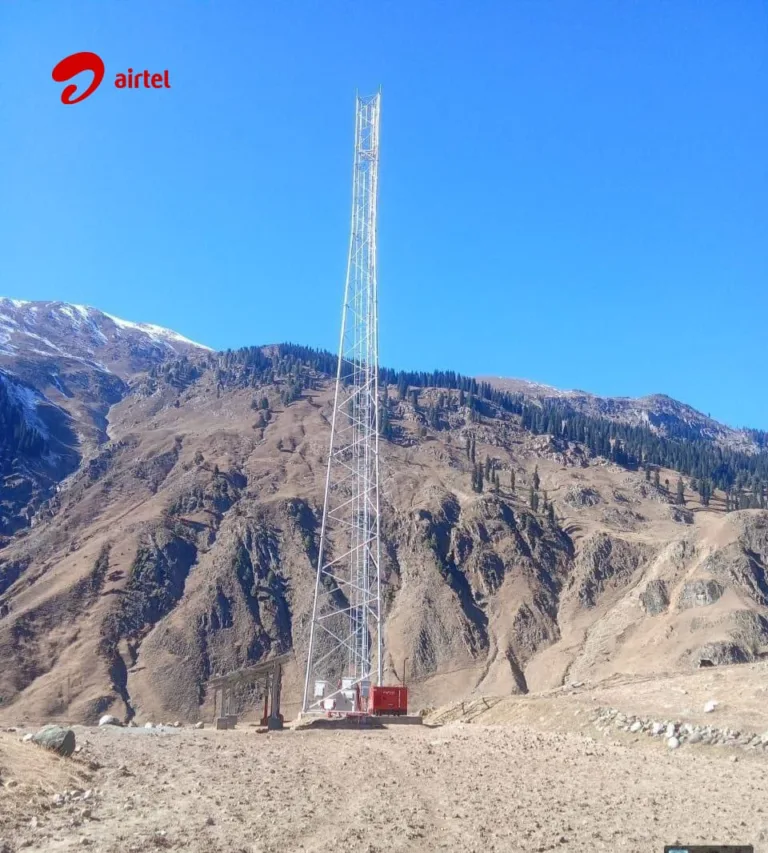
Jammu, March 10 2026: Bharti Airtel (“Airtel”), one of India’s leading telecommunications service providers, today announced the expansion of its network footprint to Marwah – a geographically remote area linking Kishtwar and Anantnag in Jammu & Kashmir. With this milestone deployment, Airtel has become the first and only service provider to deliver reliable mobile connectivity to this strategically significant and difficult-to-reach region.

Marwah, characterized by its rugged terrain and limited seasonal road access to Kishtwar and Anantnag, remains disconnected during winters due to heavy snow fall. This isolation forces residents to rely on mules or foot travel for essential supplies, work, or emergencies, while the absence of telecom coverage left approximately 150-km corridor disconnected. Airtel’s high-speed network rollout in this area marks a transformative step, empowering residents, security forces, and tourists with seamless connectivity in one of the India’s most challenging terrains. 

This deployment also unlocks immense tourism potential of this globally renowned destination. 

“We are proud to bridge the digital divide in Marwah, bringing high-speed mobile connectivity to a region long isolated by nature’s toughest barriers,” said Dibyendu Aich, COO – Jammu and Kashmir, Bharti Airtel.” Airtel’s relentless expansion into high-altitude and remote areas underscores our commitment to strengthening India’s digital backbone and ensuring every citizen, no matter how remote, stays connected”.  

Airtel’s ongoing expansion in such challenging environments reflects its dedication to bridging the connectivity gap and powering India’s digital transformation.

Crude Oil Prices Spike Above $115 A Barrel As Iran War Impedes Production, Shipping

Oil prices spiked near $120 per barrel before falling back slightly on Monday as the Iran war intensified, threatening production and shipping in the Middle East and pummelling financial markets.

The price for a barrel of Brent crude, the international standard, surged to $119.50 per barrel but later was trading at $112.98.

West Texas Intermediate, the light, sweet crude oil produced in the United States, spiked at $119.48 per barrel but fell back to $110.17.

The war’s toll on civilian targets grew as Bahrain accused Iran of striking a desalination plant vital to drinking water supplies, and oil depots in Tehran smoldered following overnight Israeli strikes.

Oil prices have surged as the war, now in its second week, ensnares countries and places that are critical to the production and movement of oil and gas from the Persian Gulf.

Roughly 15 million barrels of crude oil — about 20% of the world’s oil — typically are shipped every day through the Strait of Hormuz, according to independent research firm Rystad Energy.

The threat of Iranian missile and drone attacks has all but stopped tankers from travelling through the strait, which is bordered in the north by Iran, carry oil and gas from Saudi Arabia, Kuwait, Iraq, Qatar, Bahrain, the United Arab Emirates and Iran.

Iraq, Kuwait and the UAE have cut their oil production as storage tanks fill due to the reduced ability to export crude. Iran, Israel and the United States also have attacked oil and gas facilities since the war started, exacerbating supply concerns.

The surge in costs for oil and natural gas is pushing fuel prices higher, cascading through other industries and jolting Asian economies that are especially vulnerable due to the region’s heavy reliance on imports from the Middle East.

The last time Brent and US crude futures traded near the current level was in 2022, after Russia invaded Ukraine.

Higher energy costs push inflation higher, straining household budgets and denting the consumer spending that is a main driver of many big economies.

Tokyo’s benchmark Nikkei 225 index plunged more than 7% early Monday, while other markets also foundered.

In the US, a gallon of regular gasoline rose to $3.45 on Sunday, about 47 cents more than a week earlier, according to AAA motor club. Diesel was selling for about $4.60 a gallon, a weekly increase of about 83 cents.

India Backs Dialogue, Prioritises Safety Of Indians Amid West Asia Conflict: Jaishankar

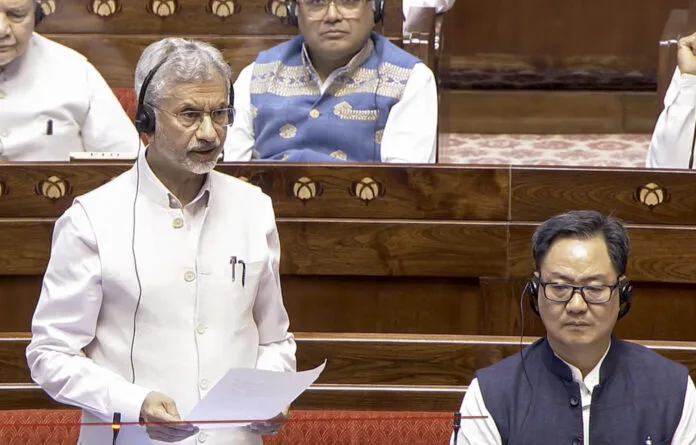
 India advocates de-escalation and return to dialogue and diplomacy, External Affairs Minister S Jaishankar said on Monday on the widening West Asia conflict, while stressing on respect for sovereignty and territorial integrity of all states in the region.

Making a suo moto statement on the crisis that broke out on February 28 when the US and Israel launched military strikes on Iran and Tehran retaliated with attacks of US positions in the region as well as Israel, Subrahmanyam Jaishankar said safety of Indian nationals as well as national interests such as energy security and trade remain top most priority for the government.

“India is in favour of peace and urges a return to dialogue and diplomacy. We advocate de-escalation, restraint, and ensuring the safety of civilians,” he said. “The wellbeing and security of the Indian community in the region is our priority. And our national interests, including energy security and trade, will always remain paramount.” India, Jaishankar said, expressed deep concern at the outset and urged all sides to exercise restraint, avoid escalation and prioritise civilian safety, stressing that dialogue and diplomacy remain the only viable path to resolve the crisis while respecting the sovereignty and territorial integrity of all states in the region.

Amid opposition MPs staging a walkout of the House after they vociferously put across their demand for a discussion on the issue, the minister said the government is closely monitoring the escalating conflict and has taken multiple steps to ensure the safety of Indian nationals in the region and safeguard the country’s strategic interests, he said.

The latest round of hostilities that began on February 28 has seen fighting between Israel and the United States on one side and Iran on the other, along with attacks on several Gulf countries and significant casualties, including among Iran’s leadership.

Jaishankar said the Cabinet Committee on Security met on March 1 under the chairmanship of Prime Minister Narendra Modi and reviewed the situation, including implications for regional security, economic activity and the safety of the large Indian community in the Gulf.

He noted that nearly one crore Indians live and work in Gulf countries, while few thousand are in Iran for study or employment, making regional stability critical for India. The Gulf is also central to India’s energy security and trade, accounting for nearly USD 200 billion in commerce, he said

The minister said attacks on merchant shipping have affected Indian seafarers, with casualties reported and one Indian mariner still missing.

Jaishankar said the government had issued a series of travel advisories since January, urging Indian nationals to avoid non-essential travel to Iran and advising those already there to remain in contact with the Indian embassy and follow safety precautions.

He said Indian diplomatic missions have assisted citizens with relocation and evacuation efforts, including helping some Indian nationals travel to neighbouring countries such as Armenia for onward return to India.

According to the minister, nearly 67,000 Indian nationals have returned from the region so far as the government facilitated additional commercial flights and other travel arrangements amid partial airspace openings.

The Ministry of External Affairs has also set up a dedicated control room to monitor the situation and respond to requests from Indian nationals, while the Directorate General of Shipping has created a quick response team to assist Indian seafarers.

Jaishankar said the Indian government has remained in close contact with regional leaders, with Prime Minister Modi speaking to the leaders of the UAE, Qatar, Saudi Arabia, Kuwait, Bahrain, Oman, Jordan, and Israel, all of whom assured the safety of the Indian community.

He added that India has also maintained diplomatic contact with the US and Iran, and he himself spoke with Iranian Foreign Minister Abbas Araghchi on February 28 and March 5.

“While attempts have been made, contacts with Iran at the leadership level are obviously difficult at this time. I have, however, spoken to (Iranian) Foreign Minister Araqi on 28th February and 5 March 2026. We will continue these high-level conversations in the coming days,” he said.

The minister also informed the House that an Iranian vessel, IRIS Lavan, was docked at Kochi on March 4 after India granted permission for humanitarian reasons.

Jaishankar said the government remains committed to protecting India’s energy security and economic interests amid the volatile situation. (Agencies)