Friday, July 24, 2026
Home Blog Page 281

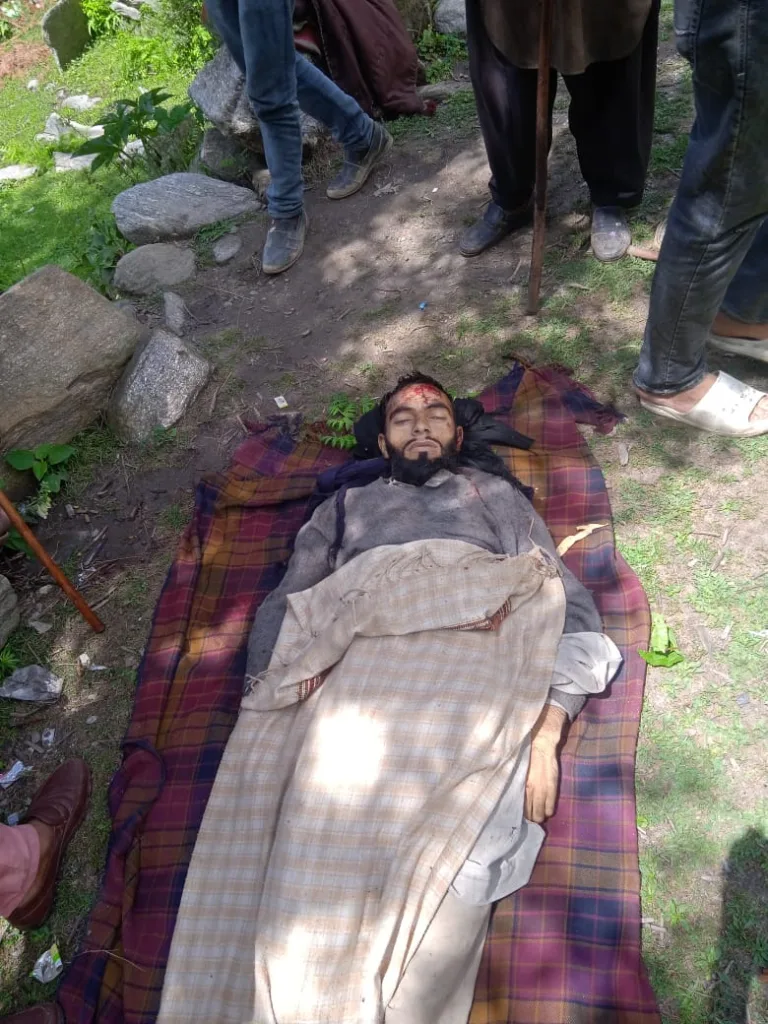
Tragic Bear Attack Claims Life in Halander

Halander, July 30: In a tragic incident early this morning, Cheriya, son of Qasim Din, from Loundri Saroor, was fatally injured in a bear attack at Halander. Despite prompt medical attention, Cheriya could not survive the injuries and passed away.

The attack occurred at dawn when Cheriya encountered the bear. Local authorities and wildlife officials are investigating the circumstances surrounding the attack to prevent future incidents and ensure public safety.

This incident has shocked the local community, and condolences have been pouring in for the bereaved family. The authorities are urging residents to remain vigilant and report any wildlife sightings to prevent such tragedies.

Congress Accuses BJP of Attempting to Exploit J&K Through Proxy Government

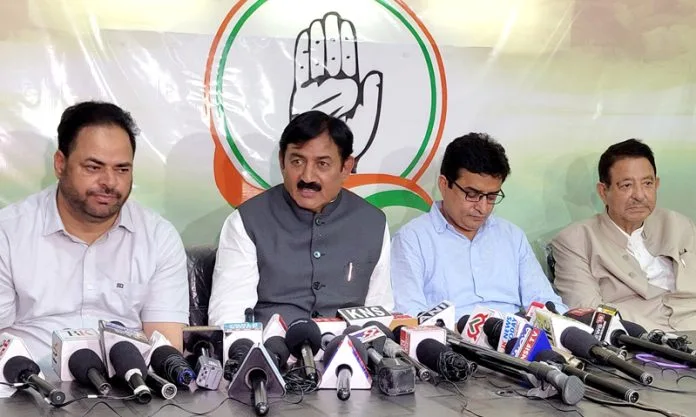
Bharatsinh Solanki, Congress’ in-charge for Jammu and Kashmir affairs, accused the BJP of trying to run a proxy government in the region through the Lieutenant Governor to exploit its resources. Speaking at a press conference at the Congress party headquarters, Solanki criticized the BJP’s efforts to delay elections and maintain control despite being in power at the center for the past decade.

Solanki likened the BJP’s strategy to the colonial exploitation of India, asserting that the party aims to exploit Jammu and Kashmir’s natural and human resources in a similar fashion. He argued that the BJP’s approach includes ensuring that any future elected government in Jammu and Kashmir would possess only limited powers, akin to those of a local municipality.

“The BJP claims to combat terrorism, but it has actually increased in both Jammu and Kashmir. They have also failed in key areas like health and employment,” Solanki said. He highlighted that the Supreme Court has mandated the holding of Assembly elections in Jammu and Kashmir. Despite this, Solanki alleged that the BJP is keen to continue governance through the Lieutenant Governor, thereby consolidating their control.

Solanki assured that the Congress party is prepared for elections, having conducted thorough discussions within their political affairs committee. He emphasized that the Congress is actively working on preparations, in contrast to the BJP’s apparent desire to retain power and maintain governance through the Lieutenant Governor.

The Congress leader criticized the BJP for removing statehood and granting full powers to the LG, thereby rendering Jammu and Kashmir less autonomous than even Puducherry. He pointed out that key areas such as finance, defense, and administrative transfers are controlled by the central government, weakening the region’s governance.

Solanki stressed the importance of having elected representatives through MLAs and criticized the BJP for failing to fulfill its promises since 2019. He noted that the Congress party is engaging with the public to address local issues, including those related to mining and electricity. Despite Jammu and Kashmir being a major producer of electricity, Solanki highlighted the irony of high electricity costs faced by its residents.

High Court Orders Refund of Salaries for Illegally Appointed Class-IV Health Department Employees

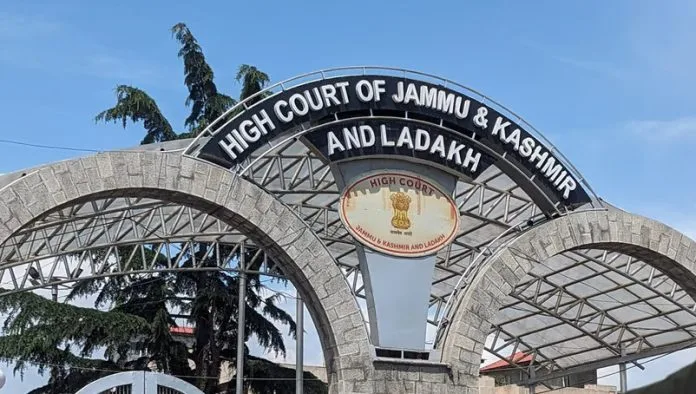
The High Court has ruled that if class-IV employees in the Health Department are found to have been appointed illegally, they will be required to refund their entire salary, along with interest, to the department.

The Division Bench, comprising Justice Sanjeev Kumar and Justice M.A. Chowdhary, addressed a series of petitions filed by the Health Department challenging a decision by the Central Administrative Tribunal (CAT) that directed the department to pay salaries to hundreds of employees for their periods of service.

The court stipulated that any salary payments made to these employees, as per the CAT’s orders, will be conditional on the employees providing an undertaking. This undertaking must state that if an inquiry conducted by the department determines their appointments to be illegal, they will refund the entire amount received, along with interest at 6% per annum.

The court noted that an inquiry into the legality of the employees’ appointments has yet to be conducted. Therefore, until it is conclusively established whether their appointments were forged, fraudulent, or illegal, the payment of their salaries for the time they have worked cannot be halted.

These employees were appointed to various class-IV positions before 2010. However, in 2012-13, a report by the Directorate of Audit and Inspection highlighted that many of these appointments were made without following proper selection procedures, rendering them illegal.

In response, the Health Department formed District and Divisional Level Committees to investigate these appointments. The Committees confirmed that many of the appointments were indeed illegal and outside the established procedure. Consequently, the Administrative Department of Health decided to terminate the services of these employees and sought approval to take legal action.

Despite this, the employees sought the court’s intervention to prevent any action against them. As a result, the department was restrained from proceeding with its planned actions. Subsequently, the department stopped the salaries of these employees and filed a batch of petitions with the CAT.

The report from the Directorate of Audit and Inspections, J&K, Srinagar, revealed that 2,274 employees were appointed illegally across various districts. The Health Services Director constituted District and Divisional Level Committees to examine the audit report and the appointments of these employees, leading to the current judicial proceedings.

Supreme Court Limits Enrollment Fees for Lawyers to Rs 650 and Rs 125

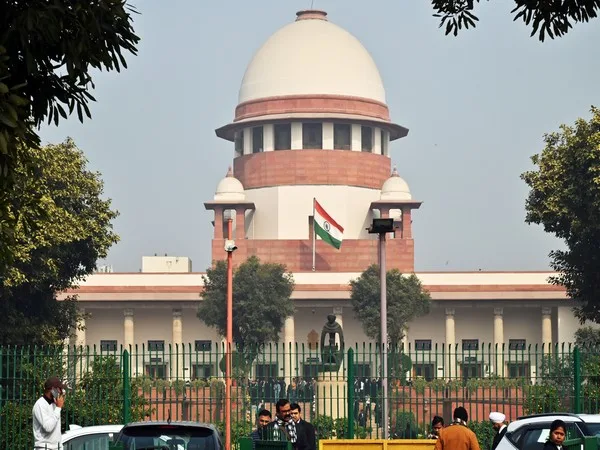
NEW DELHI, July 30: The Supreme Court of India has ruled that state bar councils cannot charge more than Rs 650 and Rs 125 for enrolling law graduates from general and SC-ST categories, respectively, as lawyers.

The Court’s decision came after a batch of pleas challenged the “exorbitant” fees being levied by state bar councils. The bench, which included Chief Justice of India (CJI) D.Y. Chandrachud and Justices J.B. Pardiwala and Manoj Misra, emphasized that both the Bar Council of India (BCI) and state bar councils are bound by the provisions of the Advocates Act, 1961, and cannot impose fees exceeding the amounts set by Parliament.

Referring to Section 24 of the Advocates Act, the bench clarified that the fee for enrolling a law graduate as a lawyer is set at Rs 650, and only Parliament has the authority to alter this amount through legislative amendments.

The Supreme Court had previously issued notices on April 10 to the Centre, the BCI, and other state bar bodies regarding the pleas, which highlighted significant discrepancies in enrollment fees. The pleas contended that the fees charged by some state bar councils were in violation of the statutory provisions and effectively barred young aspiring lawyers from enrolling due to financial constraints.

The Court noted that the enrollment fees reported were substantially higher in some states: Rs 42,100 in Odisha, Rs 25,000 in Gujarat, Rs 23,650 in Uttarakhand, Rs 21,460 in Jharkhand, and Rs 20,050 in Kerala. The high fees were seen as an impediment to aspiring lawyers who lack the financial means to afford them.

The Supreme Court’s ruling mandates that state bar councils adhere to the statutory fee structure, ensuring that the process of enrolling as a lawyer is accessible and equitable for all law graduates.


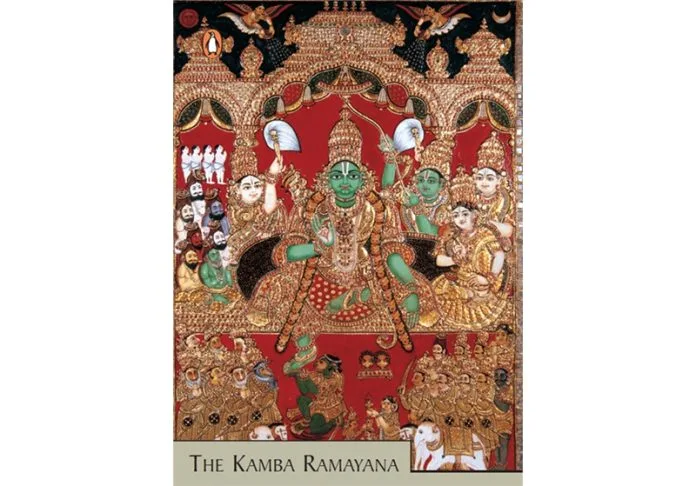
Penguin Random House India to Publish First Complete English Translation of “Kamba Ramayanam”

Penguin Random House India (PRHI) announced on Monday the forthcoming release of the first complete English translation of “Kamba Ramayanam,” the Tamil version of the Ramayana penned by 12th-century poet Kampan. This monumental project, which involves a team of six distinguished scholars and translators, is slated for publication between 2028 and 2030.

“Kamba Ramayanam” is renowned as the pinnacle of Tamil literary tradition, celebrated for its innovative language, the psychological depth of its characters, and its profound exploration of themes such as power, truth, and divinity. The epic poem, composed of 42,000 lines of verse, will be presented in seven volumes, with an introductory volume. The volumes are titled: “Volume 1: Bala,” “Volume 2: Ayodhya,” “Volume 3: Aranya,” “Volume 4: Kishkindha,” “Volume 5: Sundara,” and “Volumes 6 and 7: Yuddha Part 1 and 2.”

The translation project is being led by a team of esteemed scholars, including Shiv Subramaniam from Emory University, Professor David Shulman from Hebrew University, Professor Whitney Cox from the University of Chicago, independent scholar Jennifer Clare, Professor Archana Venkatesan from UC Davis, and Aniruddhan Vasudevan from Princeton University.

Professors Venkatesan and Shulman, who also serve as volume editors and authors of the introductory volume, expressed their excitement: “Kampan’s Tamil Ramayana, composed in 10,000 verses, is a remarkable achievement that captures the essence of an entire civilization—its landscapes, people, values, and profound emotions. We are thrilled that Penguin will be publishing the first complete, fully annotated English translation of this literary masterpiece.”

The influence of Kampan’s Ramayana extends well beyond Tamil Nadu, impacting literary traditions across Kerala, parts of the Indian peninsula, and even Southeast Asia. Despite its significant influence, a comprehensive English translation has been long-awaited due to the epic’s vast length.

Rea Mukherjee, Commissioning Editor at PRHI, highlighted the importance of the project: “This translation aims to convey the sensibility, spirit, and beauty of Kampan’s epic to both general and specialist readers. I am excited to work with this distinguished team of scholars and to see this remarkable work reach readers soon.”


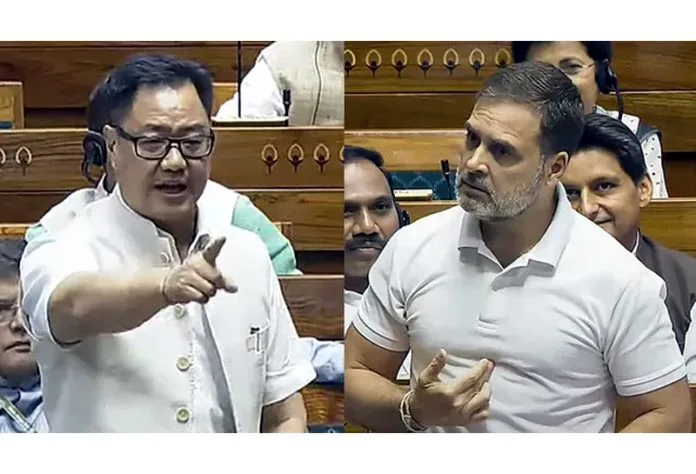
Union Ministers Criticize Rahul Gandhi’s Conduct in Lok Sabha

In a heated exchange in the Lok Sabha on Monday, Union ministers Ashwini Vaishnaw and Kiren Rijiju responded sharply to Leader of Opposition Rahul Gandhi’s criticisms of Lok Sabha Speaker Om Birla. Gandhi had questioned the Speaker’s authority during a debate on the Union Budget, prompting a strong rebuttal from the two ministers.

Parliamentary Affairs Minister Kiren Rijiju condemned Gandhi’s approach, stating, “I condemn the manner in which the Leader of Opposition attacked the Speaker and showed disregard for the rules and procedures of the House.”

Information and Broadcasting Minister Ashwini Vaishnaw criticized Gandhi’s adherence to constitutional norms. “Rahul Gandhi has a history of disregarding constitutional processes. He once tore up an ordinance from his own party’s government. It’s clear he has no intention of following constitutional norms,” Vaishnaw remarked.

Vaishnaw expressed concern over Gandhi’s behavior, suggesting that it undermines the integrity of democratic institutions. “It is unfortunate that despite holding a constitutional position, Gandhi’s conduct in the House undermines democracy,” he said.

Rijiju also emphasized the importance of adhering to parliamentary rules. “The position of Leader of Opposition carries significant responsibility. Gandhi’s remarks targeting the Speaker were out of line. The House functions according to rules, and the Speaker is the custodian of these rules,” Rijiju asserted.

Rijiju added that Gandhi’s failure to focus on the Union Budget during the debate was problematic. “Rahul Gandhi was repeatedly reminded by the Chair to adhere to the rules and concentrate on the Union Budget, but he strayed from the topic. As Leader of Opposition, he must respect the rules and the Constitution,” Rijiju concluded.

Supreme Court Dismisses Plea to Review VVPAT-EVM Verification Ruling

New Delhi : The Supreme Court has dismissed a petition seeking a review of its judgment rejecting the plea for 100 percent verification of Electronic Voting Machine (EVM) votes with Voter Verifiable Paper Audit Trail (VVPAT) slips. A bench of Justices Sanjiv Khanna and Dipankar Datta found no grounds for revisiting the April 26 verdict, stating, “We have carefully perused the review petition, as also the grounds in support thereof. In our opinion, no case for review of the judgment dated April 26, 2024, is made out. The review petition is, accordingly, dismissed,” the bench stated in its July 25 order. The review petition, filed by Arun Kumar Agarwal, argued that there were apparent mistakes and errors in the April 26 judgment. The petitioner contended, “It is not correct to state that the result will be unreasonably delayed (by tallying EVM votes with VVPAT slips) or the manpower required will be double of that already deployed… Existing CCTV surveillance of counting halls would ensure that manipulation and mischief do not occur in VVPAT slip counting.” Agarwal’s review petition highlighted concerns about the reliability and transparency of electronic voting machines. It stated, “Electronic voting machines do not allow voters to verify that their votes have been accurately recorded. Furthermore, given their very nature, electronic voting machines are especially vulnerable to malicious changes by insiders such as designers, programmers, manufacturers, maintenance technicians, etc.” The petition further argued that due to these vulnerabilities, the previous judgment had apparent errors and should be reconsidered. On April 26, the Supreme Court had also rejected a plea to revert to the paper ballot voting system. The judgment came in response to petitions from the Association for Democratic Reforms (ADR), Arun Kumar Aggarwal, and others, who sought more extensive verification of EVM data against VVPAT records to ensure the accuracy and integrity of the voting process. Despite these concerns, the court maintained its position that 100 percent verification of EVM votes with VVPAT slips was not necessary.

Two Dead, 20 Injured as Howrah-Mumbai Mail Derails in Jharkhand

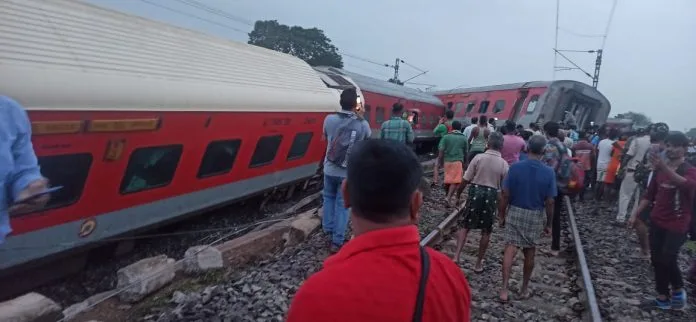
JAMSHEDPUR/RANCHI/KOLKATA, July 30: A major train accident occurred early Tuesday morning in Jharkhand’s Seraikela-Kharsawan district, resulting in the derailment of at least 18 coaches of the Howrah-Mumbai Mail. The incident, which took place at approximately 3:45 AM near Barabamboo—around 80 km from Jamshedpur—has led to the deaths of two individuals and injured at least 20 others.

According to officials, the Howrah-Mumbai Mail, which was en route to Mumbai from Howrah, collided with a stationary goods train. The South Eastern Railway (SER) has confirmed that 18 out of the 22 coaches of the train derailed. The affected coaches include 16 passenger coaches, one power car, and one pantry car.

Rescue operations are currently underway with the National Disaster Response Force (NDRF) dispatched to the scene. West Singhbhum Deputy Commissioner Kuldeep Chaudhary, who is at the accident site, reported that rescue teams are working diligently to provide aid and transport the injured to nearby facilities. A relief train has been arranged to evacuate passengers to Chakradharpur railway station, and additional buses are being organized for further transportation.

Jharkhand Chief Minister Hemant Soren has instructed officials to expedite relief efforts and ensure that those affected receive prompt medical attention. Injured passengers are being treated at Barabamboo before being transferred to Chakradharpur for more comprehensive care.

Due to the derailment, several trains on the route have been cancelled or diverted, including the 22861 Howrah-Titlagarh-Kantabanji Ispat Express and the 12021 Howrah-Barbil Janshatabdi Express. The South Eastern Railway has set up helplines to assist passengers and their families. The numbers are as follows:

Mumbai: 022-22694040
Bhusawal: 08799982712
Nagpur: 7757912790
Tata: 0657-2290324
Chakradharpur: 06587-238072
Rourkela: 0661-2501072, 0661-2500244
Jharsuguda: 06645-272530
Howrah: 9433357920, 033-26382217
Shalimar: 7595074427, 6295531471
Kharagpur: 03222-293764

DDC Poonch inaugurates District Level Inter-Zonal competition

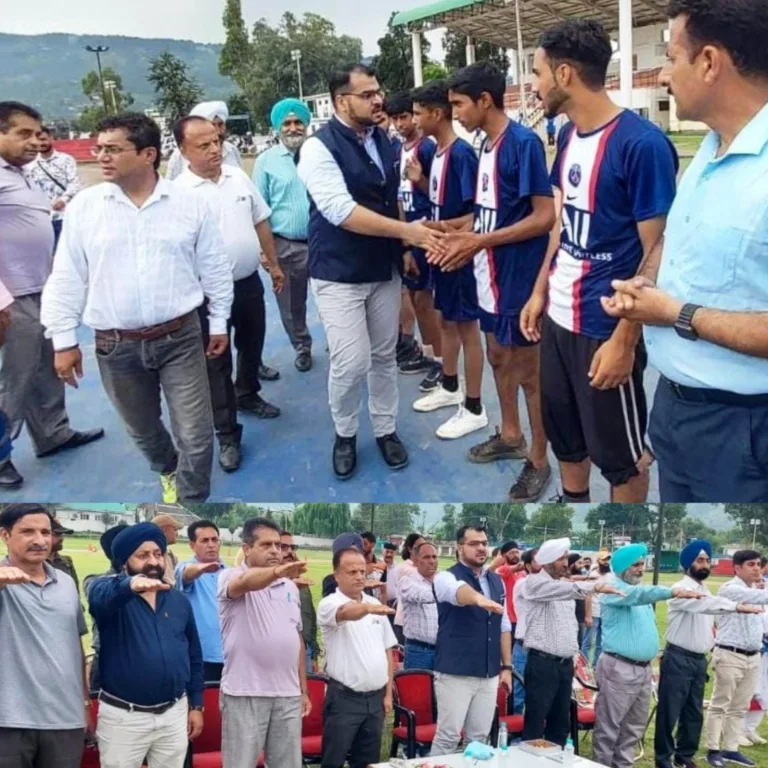
POONCH, JULY 29: The District Development Commissioner Poonch, Yasin M. Choudhary today inaugurated the highly anticipated 5-day inter-zonal district-level competitions at the Poonch Sports Stadium.
District Youth Services & Sports Officer, Mool Raj Uttam, welcomed the District Development Commissioner and provided a detailed briefing on the District Level Inter-Zonal Competitions. The proceedings of the event were conducted by PEM, Vijay Sharma.
The competitions include events in Volleyball, Kabaddi, Football and Handball for the under 14 and under 17 age categories,( both Boys & Girls) with approximately 200 students showcasing their skills and representing their respective zones.
The event features the participation of all eleven zones within the Poonch district.
Speaking on the occasion, the DDC said that these inter-zonal competitions are a testament to the vibrant sports culture in Poonch. We are thrilled to witness the enthusiasm and talent of our young athletes as they compete against each other in these exciting games, he added.
On the first day of the tournament, the Bufliaz zone emerged victorious in the volleyball match, defeating the Kanuyian zone by a score of 2-1 sets. In the kabaddi event, the Mendhar zone defeated the Nangali Zone by a margin of 10-point.
The competitions will continue for the next five days, with the closing ceremony scheduled to take place on August 3rd.

3-Day workshop on Rangeland Management for Sustainable Rural Development kicks off at SKICC

Suresh Gupta, Dr Shahid Iqbal address inaugural session; bats for developing roadmap for best practices based on discussions
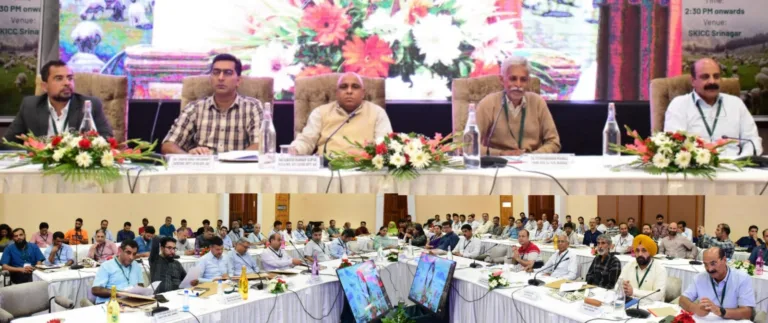
SRINAGAR, JULY 29: A three-day Workshop on ‘Rangeland Management for Sustainable Rural Development’ organised by the Rural Development Department and Panchayati Raj (RDD&PR), J&K, in collaboration with the IYRP Support Group of South Asia and NABARD started today at the Shere-i-Kashmir International Conference Center (SKICC) Srinagar.
This workshop aims to harness ongoing government programs and schemes from various states to promote sustainable management of rangelands.
The inaugural session was attended by Suresh Gupta, Principal Secretary Culture and Principal Chief Conservative Forests & HoFF, J&K, Secretary RDD&PR, Dr. Shahid Iqbal Choudhary, P. Vivekanandan, Chair, RISG-SA, Dr. Ravindra S. Gavali, Professor and Head, CNRM,CC & DM NIRDPR, Hyderabad, Ravinder Yadav, Director Rainfed Area Authority, GoI and HODs of the department.
The workshop has brought together a diverse group of participants, including experts, officers from Jammu & Kashmir and other states, researchers, scholars, and students.
The workshop includes an inaugural ceremony, technical sessions (including the participation of experts online), and field visits.
During the inaugural session, Principal Secretary Culture Suresh Gupta, who also serves as the Principal Chief Conservator of Forests & Head of Forest Force (HoFF), J&K, emphasized the need for a collaborative approach involving government agencies, scientific institutions, local communities, and NGOs. This collaboration is crucial for the effective implementation of rangeland management strategies, he said.
In his address, Suresh Gupta highlighted the rich biodiversity and extensive rangelands in Jammu & Kashmir, particularly in the alpine and subalpine zones. He noted that rangelands cover 4.32% of the total geographical area of Jammu & Kashmir, including 3.53% in Jammu and 13.22% in Kashmir. These areas, totaling 9,59,500 hectares, are essential for local livelihoods, supporting pastoralism, agriculture, medicinal plant harvesting, and tourism.
Secretary RDD, Dr. Shahid Iqbal Choudhary, underscored the historical significance of rangelands and their role in sustaining unique civilizations worldwide.
He expressed hope that the workshop would explore both the economic and cultural values of rangelands and develop a roadmap for best practices based on discussions from various states.
Dr. Smruti Smita Mohapatra, Member of RISG-SA, Jammu, presented the workshop’s agenda, objectives, priorities, and expected outcomes. P. Vivekanandan, Chair of RISG-SA, delivered a special address on the International Year of Rangelands and Pastoralists (IYRP) 2026, while Dr. Ravindra S. Gavali from NIRDPR, Hyderabad, provided insights into MGNREGA and Rangeland Development.
Dr. Pedro M. Herrera, a Spanish ecologist and consultant on Drylands and Pastoralism, also addressed the workshop virtually, sharing his expertise and insights on rangelands and pastoralism.
The workshop was also attended by Director General, Rural Sanitation, J&K, Director RDD Jammu, Director RDD Kashmir, Director Panchayati Raj J&K, CEO IWMP, COO Himayat, Joint Director RDD, Additional Secretary/MGNREGA and other officials.
Over the next three days, the workshop will focus on the United Nations General Assembly’s designation of 2026 as the International Year of Rangelands and Pastoralists (IYRP). India has supported and co-sponsored the UNGA Resolution on IYRP (2022), which aims to raise awareness about the importance of rangelands and pastoralists for food security, the economy, the environment, and cultural heritage.
The goal is to promote scientific conservation and management of rangelands and ensure sustainable livelihoods for pastoralists through community participation.
The workshop aligns with the United Nations Convention to Combat Desertification (UNCCD) and Sustainable Development Goals (SDGs), marking 2026 as a transformative year for rangelands, pastoralists, and global environmental health.