Wednesday, July 15, 2026
Home Blog Page 150

Chief Secretary Atal Dulloo Reviews Progress of Major Hydroelectric Projects in Kishtwar

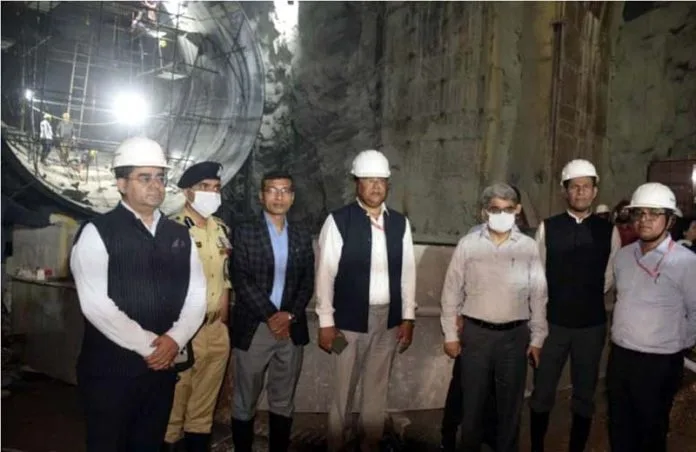
Kishtwar, J&K – In a significant push toward strengthening Jammu and Kashmir’s power infrastructure, Chief Secretary Atal Dulloo on Monday conducted a comprehensive inspection of the ongoing works and operational readiness of two key hydroelectric projects — the 850 MW Rattle Hydroelectric Power Project and the 390 MW Dul Hasti Hydroelectric Power Station in Kishtwar district.

Accompanied by H. Rajesh Prasad, Principal Secretary of the Power Development Department, Rahul Yadav, Managing Director of JKPDCL, Deputy Commissioner Kishtwar Rajesh Kumar Shavan, and senior civil and project officials, the Chief Secretary’s visit underlined the administration’s focus on energy development in the region.


Detailed Review at Rattle Project Site

At the Rattle Hydroelectric Power Project, located in the Drabshalla Block, the Chief Secretary was given a detailed PowerPoint presentation outlining the current progress and operational roadmap for the project. He undertook a physical inspection of several key construction zones, including the Power Intake Structure, Coffer Dam, Underground Powerhouse Complex, and the Tail Raised Tunnel.

Dulloo directed the project authorities to accelerate the pace of work to ensure timely completion, while also stressing the importance of maintaining high quality standards. He emphasized the need to proactively resolve operational hurdles and maintain seamless coordination among implementing agencies.


Operational Assessment of Dul Hasti Project

Following his visit to Rattle, the Chief Secretary inspected the Dul Hasti Hydroelectric Power Station, where he interacted with the project officials to assess its operational efficiency. He reviewed key performance metrics and issued directives for performance optimization, urging officials to address all pending technical and administrative issues without delay.


Strategic Meeting with Power Stakeholders

Later in the day, Dulloo chaired a strategic meeting involving senior officers of NHPC, Chenab Valley Power Projects Limited (CVPPL), and Heads of Projects (HOPs) from various hydroelectric plants across Kishtwar. The discussion focused on inter-agency coordination, resource planning, and resolving issues that have hindered smooth execution in the past.

“Hydropower development is not only crucial for meeting our energy demands but also for the economic upliftment of the region. Timely execution with quality and accountability is non-negotiable,” the Chief Secretary stated during the meeting.


A Vision for Energy Security

The Rattle and Dul Hasti projects are integral to Jammu and Kashmir’s long-term power strategy, envisioned to transform the Union Territory into a power-surplus region. With massive potential in hydroelectric energy, the Chenab Valley has been earmarked as a future energy hub by both the UT and Central governments.
Creating History: J&K Girls Fencing Team Wins Bronze at Khelo India Youth Games 2025

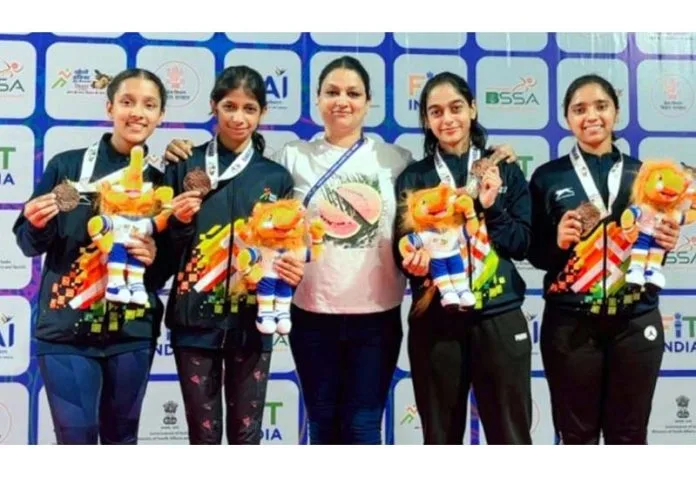
Creating history and bringing immense pride to the Union Territory, the Jammu & Kashmir Girls Fencing Team clinched the Bronze Medal in the Sabre Team Event at the 7th Khelo India Youth Games 2025, currently underway in Bihar.

The medal-winning team featured a stellar lineup of young talents — International Fencer Subhanaya Sharma, Bhavya Jamwal, Eknoor Kour, and Aahana Gupta — who demonstrated exemplary skill, coordination, and an indomitable spirit throughout the tournament. Their balanced approach, marked by strategic aggression and calm execution, earned them a well-deserved spot on the podium in what was one of the most fiercely contested categories.

The team’s success was made possible with the support of Surjeet Kour, who accompanied the fencers as team manager, providing vital guidance and motivation throughout the competition.

The achievement was met with enthusiastic appreciation from the sports community and beyond. Nuzhat Gul, Secretary of the J&K Sports Council, extended heartfelt congratulations to the athletes and their families, commending the girls for their dedication, discipline, and commitment to excellence. She called their victory an inspiring milestone for young athletes across the Union Territory.

Vijay Kumar, President, and Javed Choudhary, General Secretary of the J&K Fencing Association, expressed immense pride in the team’s performance. They emphasized that this victory marks a significant chapter in the growth of fencing in Jammu & Kashmir and highlighted the potential of the region’s youth to shine on national and international platforms.

International fencer Rashid Ahmed Choudhary, Adv. Supriya Chouhan, and sports mentor Maninder Pal Singh also applauded the young champions. They described the medal as a proud moment not only for the fencing community but for the entire Union Territory, reinforcing that with proper support and training, athletes from J&K can excel at the highest levels.

The remarkable feat of the J&K Girls Fencing Team at the Khelo India Youth Games stands as a testament to their perseverance, talent, and the rising trajectory of sports in Jammu and Kashmir.

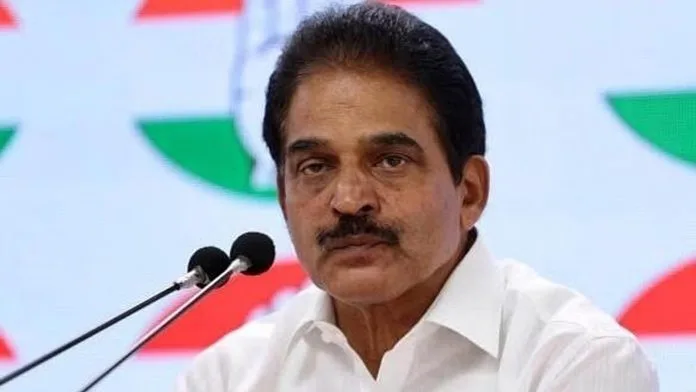
Congress to Launch ‘Jai Hind Sabhas’ Across 15 States, Questions Government’s Silence on US Role in Ceasefire

The Indian National Congress on Thursday announced a series of nationwide events titled ‘Jai Hind Sabhas’, to be held from May 20 to 30 in 15 key locations across India. These meetings aim to honour the valour of the Indian Armed Forces while also raising serious questions on national security lapses and the government’s silence over the reported involvement of the United States in halting hostilities between India and Pakistan.

The initiative was announced by Congress General Secretary (Organisation) K. C. Venugopal, who posted on social media platform X (formerly Twitter):

“Indian National Congress will hold ‘Jai Hind Sabhas’ across India to salute the supreme valour and success of our Armed Forces. We must also raise serious concerns about recent security lapses, the handling of national security, and the silence around the US involvement in our security matters.”

These public meetings will involve Army veterans, Congress leaders, and the general public, and will be held in Delhi, Barmer, Shimla, Haldwani, Patna, Jabalpur, Pune, Goa, Bengaluru, Kochi, Guwahati, Kolkata, Hyderabad, Bhubaneswar, and Pathankot.

‘Operation Sindoor’ and Government Accountability

The announcement follows closely after the Congress party accused the BJP of politicising the recent military action, Operation Sindoor, and attempting to turn it into a branding exercise for electoral gains. Congress leaders argue that while the bravery belongs to the armed forces, the government is using their sacrifice for political mileage.

At a joint press conference held on Wednesday, senior Congress leaders Jairam Ramesh and Pawan Khera criticised the “PR-centric” approach of the BJP, calling for professionalism and institutional accountability in matters of national security.

CWC Resolution Slams Pahalgam Intelligence Failure

A Congress Working Committee (CWC) resolution passed during the same meeting expressed deep concern over the attack in Pahalgam, terming it an apparent intelligence failure.

“Despite known threats and rising tensions in the region, terrorists succeeded in executing a major attack, claiming precious lives,” the resolution stated.
“No accountability has been fixed yet, which is deeply troubling. The government must clarify why adequate preventive measures weren’t in place.”

The CWC also demanded the immediate apprehension and prosecution of those responsible for the attack.

Questions Over Ceasefire and US Involvement

The Congress further raised eyebrows over the abrupt cessation of India’s retaliatory military action against Pakistan, noting that the lack of official explanation has led to speculation nationwide. The issue was compounded, according to the party, by former US President Donald Trump’s claims of having mediated the ceasefire by allegedly using trade threats to pressure India.

“This revelation, if true, raises serious questions about national sovereignty and strategic autonomy,” the CWC said.
“The government’s refusal to comment on or deny these claims is inexplicable and unacceptable.”

“Security Cannot Be Managed by Optics Alone”

In closing, the CWC warned that national security must not be reduced to TV-friendly optics and urged the government to act with professional rigour and responsibility.

“Security demands vigilance, not visuals. It requires institutional readiness and transparency, not grandstanding,” said Ramesh.

The upcoming ‘Jai Hind Sabhas’ are expected to amplify these concerns and mobilize public support for greater accountability in national security affairs.

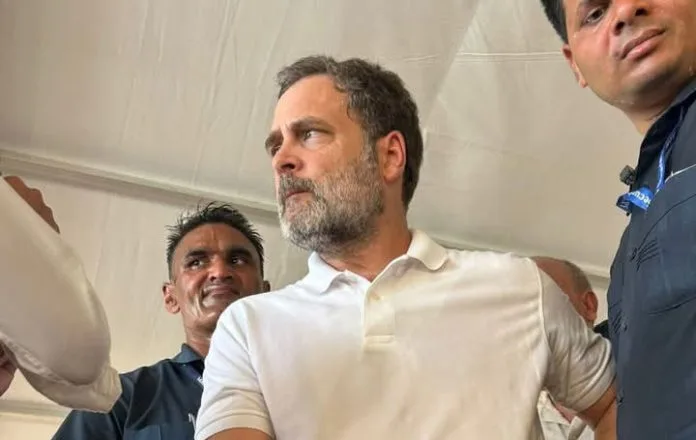
Rahul Gandhi Stopped by Police Outside Ambedkar Hostel in Darbhanga; Congress Alleges Political Vendetta

A political standoff unfolded on Thursday as Congress leader Rahul Gandhi was stopped by police outside the Ambedkar Hostel in Darbhanga, where he was scheduled to engage with students under the Congress party’s ‘Shiksha Nyay Samvad’ initiative — a statewide public outreach program focusing on education rights and equity.

As the Leader of the Opposition in Lok Sabha arrived at the gates of the hostel, his convoy was blocked from entering the premises by local authorities. The move sparked outrage among Congress supporters and leaders, who insisted that Gandhi’s interaction with students must proceed as planned.

Senior Bihar Congress leaders immediately confronted the security personnel at the venue, demanding access to the hostel and calling the action a deliberate attempt to stifle student voices and democratic engagement. The Ambedkar Hostel, known for housing students from marginalised communities, had been identified as a symbolic and significant location for Gandhi’s interaction.

The issue of venue permissions had already been a flashpoint in the lead-up to the event. On Wednesday night, the local administration denied permission for the interaction at Ambedkar Hostel but allowed an alternate venue — the Town Hall — only after the Congress strongly objected and alleged administrative bias.

However, Congress leaders remained firm in their stance. Earlier in the day, they declared that Rahul Gandhi’s meeting with students would happen at the original venue chosen by the party and not at the one imposed by the administration.

In a press conference held in Patna, senior Congress leader Abhay Dubey condemned the actions of the Darbhanga administration, alleging that it was acting under political pressure from the ruling JD(U)-BJP alliance. “The administration is trying to suppress the voice of deprived and marginalised students. Hundreds of students from nearby districts like Madhubani and Samastipur are being stopped from entering Darbhanga,” said Dubey. “But the government must realise that Rahul Gandhi represents the voice of India’s backward and oppressed sections.”

Dubey also mocked the administration’s justification that the Ambedkar Hostel was not mentioned in the original permission request, calling it a convenient excuse to disrupt the event.

The incident has drawn sharp criticism from across opposition parties and civil society, with many accusing the government of muzzling democratic expression and political outreach.

Despite the hurdles, Congress sources said Gandhi was determined to speak to the students, whether formally or informally, and reiterated that the party would not bow to pressure tactics aimed at silencing dissent or disrupting constitutional rights to public engagement.

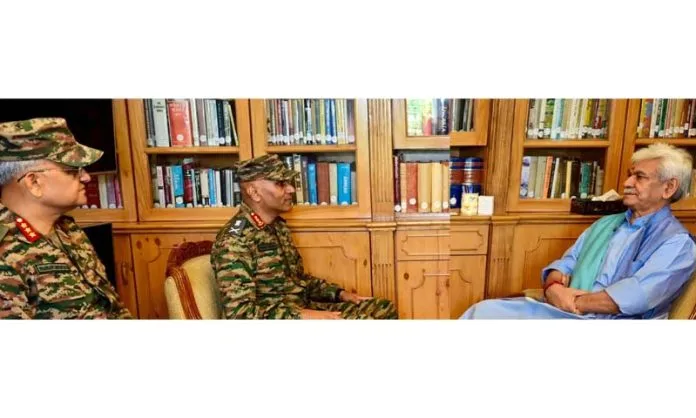
Northern Army Commander Lt Gen Pratik Sharma Briefs LG Manoj Sinha on Security Situation in Jammu and Kashmir

In a high-level security review meeting, Lieutenant General Pratik Sharma, General Officer Commanding-in-Chief (GOC-in-C) of the Northern Command, called on Lieutenant Governor Manoj Sinha at the Raj Bhawan today.

Lt Gen Sharma was accompanied by Lieutenant General Prashant Srivastava, GOC of the strategically significant 15 Corps, also known as the Chinar Corps.

During the meeting, the Army Commanders briefed the Lieutenant Governor on the latest security developments along the Line of Control (LoC) and in the hinterland, including counter-infiltration operations, preparedness in border sectors, and the overall internal security scenario in the Union Territory of Jammu and Kashmir.

The discussion also covered recent incidents of cross-border shelling, drone intrusions, and anti-terror operations, particularly in vulnerable districts like Poonch, Rajouri, and Kupwara. The LG was apprised of the coordinated efforts being taken by the Army, CAPFs, and J&K Police to maintain peace and stability in the region amid emerging threats.

Lt Gen Sharma highlighted the operational readiness of the Northern Command, which is responsible for the country’s most sensitive and volatile frontiers, including the LoC and the LAC. He reiterated the Army’s commitment to uphold national security and protect civilian life and infrastructure.

Lieutenant Governor Sinha appreciated the relentless efforts and professional commitment of the Indian Army in safeguarding the territorial integrity of the nation and ensuring the safety of citizens in Jammu and Kashmir, especially during recent escalations.

He also lauded the Army’s continued support to civil administration in terms of humanitarian relief, community engagement, and public outreach programs under Operation Sadbhavana.

The meeting comes in the backdrop of increased security concerns and military preparedness amid cross-border hostilities and internal threats. Both sides agreed on maintaining close civil-military coordination and enhancing synergy between security forces and administration to ensure a secure and peaceful environment for the people.

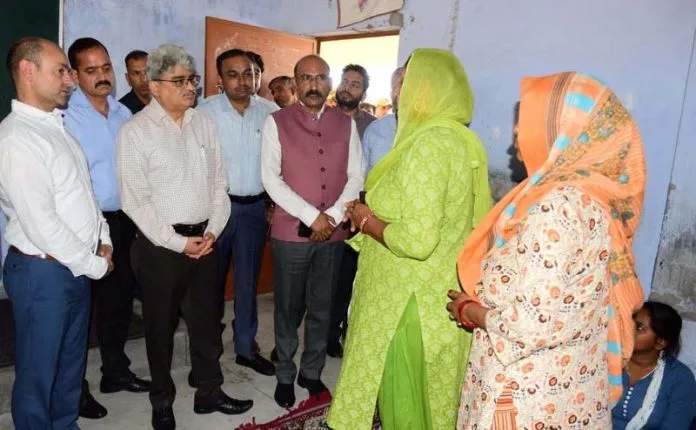
Chief Secretary Atal Dulloo Visits Akhnoor, Khour to Assess Impact of Cross-Border Shelling, Assure Relief

In a significant step towards gauging the ground reality and ensuring the welfare of affected civilians, Chief Secretary of Jammu and Kashmir, Atal Dulloo, today conducted an extensive visit to the border subdivisions of Akhnoor and Khour, areas that have borne the brunt of relentless cross-border shelling over the past few days.

The Chief Secretary was accompanied by Divisional Commissioner Jammu, Ramesh Kumar; Deputy Commissioner Jammu, Sachin Kumar Vaishya, and a team of senior officials from various departments, including disaster management, health, and public works.

During his visit, Dulloo inspected Government Higher Secondary Schools in Sohal and Bhalwal Brahamna, which have been converted into temporary relief shelters for families displaced due to the ongoing hostilities. At these shelters, he interacted with the affected residents, many of whom shared their harrowing experiences of evacuation and loss.

Dulloo closely reviewed the arrangements made for the displaced persons, including food distribution, drinking water, electricity, sanitation, and bedding facilities. He expressed satisfaction with the coordinated efforts by the district administration and directed the concerned departments to further streamline the supply of essentials and maintain hygienic conditions at all shelter sites.

Taking special note of the medical facilities, the Chief Secretary examined the availability of doctors, medicines, and emergency care provisions at the shelters. He instructed the Health Department to immediately scale up medical aid, deploy mobile medical units, and ensure round-the-clock availability of healthcare personnel to treat injuries and address mental health concerns arising from the traumatic circumstances.

In his direct interaction with the affected families, Dulloo listened empathetically to their concerns and assured them that the government stands firmly with them during this difficult time. He emphasised the importance of constant communication between local officials and the people, urging the administration to maintain an active presence in the field.

Later in the day, the Chief Secretary toured several villages near the Line of Control, where he conducted an on-ground inspection of the damage caused to residential homes, livestock shelters, roads, and public infrastructure. He directed the revenue authorities to immediately begin damage assessment and submit relief compensation proposals without delay.

In light of the repeated shelling incidents, Dulloo stressed on the urgency of long-term safety measures, instructing district officials to expedite the construction of community bunkers and strengthen the resilience of border hamlets through disaster-preparedness infrastructure.

Reaffirming the government’s commitment, Chief Secretary Dulloo said, “The administration is dedicated to providing all necessary assistance, ensuring the safety, rehabilitation, and dignified living of our border residents. No effort will be spared in restoring normalcy and mitigating their hardships.”

The visit highlighted the administration’s proactive approach to crisis management and its resolve to ensure that the affected citizens are not left alone in the face of adversity.

India Firmly Rejects China’s Renaming of Places in Arunachal Pradesh: “State Will Always Remain an Integral Part of India

India on Wednesday issued a strong rebuttal to China’s latest attempt to rename several locations in Arunachal Pradesh, calling the move “preposterous” and reaffirming that the northeastern state is an undeniable and inalienable part of India.

The Ministry of External Affairs (MEA) issued the statement in response to China’s release of a new list of Chinese names for places within Arunachal Pradesh — a region that Beijing refers to as part of “South Tibet”, a claim that India has repeatedly and unequivocally rejected.

“We have noticed that China has persisted with its vain and preposterous attempts to name places in the Indian state of Arunachal Pradesh,” said Randhir Jaiswal, spokesperson for the MEA, while addressing media queries.

Consistent with our principled position, we reject such attempts categorically. Creative naming will not alter the undeniable reality that Arunachal Pradesh was, is, and will always remain an integral and inalienable part of India,” Jaiswal asserted.

Background of the Dispute

This is not the first time China has attempted to rename geographical areas in Arunachal Pradesh. Beijing has previously published similar lists under the guise of standardizing place names, an act widely seen by India and the global community as politically motivated and historically baseless.

China’s move comes amid continuing tensions along the Line of Actual Control (LAC) and follows a series of infrastructural and strategic developments undertaken by both sides in the border areas. However, India maintains that its sovereignty over Arunachal Pradesh is absolute and not subject to external dispute.

Diplomatic Reactions

India’s firm response is in line with its consistent diplomatic messaging over the years. Senior government officials and political leaders across party lines have long affirmed that no external party has any locus standi to rename Indian territory, and that such tactics are an affront to India’s territorial integrity.

In recent months, India has also increased infrastructure development and civilian outreach in the border state, sending a clear message that Arunachal Pradesh is not only integral to the Indian Union geographically but also emotionally and politically.

Global Perspective

While China’s assertions are part of its broader regional strategy, they have gained no international recognition, with most nations and global bodies acknowledging India’s administrative control and sovereignty over Arunachal Pradesh.

As geopolitical tensions simmer in the region, experts suggest that India’s unwavering stance on Arunachal Pradesh is a signal of its strategic clarity and commitment to safeguarding national interests against expansionist narratives.

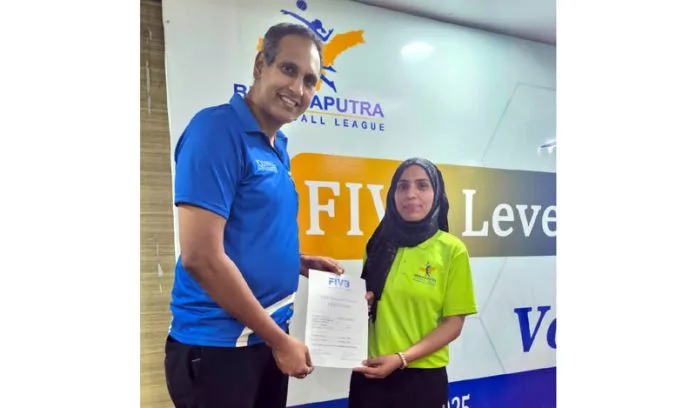
Shaheen Akhtar Becomes First Woman from J&K to Earn FIVB Level-1 Volleyball Coach Certification

In a groundbreaking achievement for the Union Territory, Shaheen Akhtar, a former national-level volleyball player from District Poonch, has become the first woman from Jammu and Kashmir to qualify as a Level-1 Volleyball Coach under the prestigious International Volleyball Federation (FIVB).

Shaheen successfully completed an intensive five-day coaching course conducted by the BVL Foundation of Assam in Guwahati, emerging as one of just 12 selected participants from across the country — and the only candidate from J&K.


A Career Rooted in Dedication and Excellence

With a rich background in volleyball, Shaheen has long represented Jammu and Kashmir at the national level, earning accolades for her skill and dedication. She further honed her coaching abilities by completing the NS NIS (National Institute of Sports) certification from Bangalore, widely regarded as one of the top coaching credentials in India.

Currently, she is actively coaching young athletes — especially girls — at the Shaheed DySP Manjit Singh Memorial Volleyball Club in Poonch. Her mentorship is playing a vital role in encouraging sports participation and building a sports culture in the region, often challenged by limited infrastructure and opportunities.

“Shaheen’s achievement is a proud moment for the entire region. She is breaking barriers and setting an example for many girls in Jammu and Kashmir who aspire to make a mark in sports,” said Mohd Tariq, Chairman of the Volleyball Club.


Inspiration Beyond the Court

Her success was lauded by the entire volleyball fraternity, with special appreciation extended to Abhijit Bhattacharya, course organizer, and G.E. Sridharan, former national coach of India, who shared invaluable insights and experiences during the training.

“Being trained under such experienced mentors during the course was a transformative experience. It has equipped me with modern techniques and coaching strategies that I can now pass on to the next generation of athletes in J&K,” Shaheen said, beaming with pride.


A New Chapter for Women in Sports Coaching

Shaheen’s milestone is being celebrated not just as a personal victory but as a symbol of progress for women in sports in Jammu and Kashmir. In a region where sports participation among women often faces social and logistical barriers, her success provides a beacon of hope.

“We hope her journey motivates more women to step into coaching and leadership roles in sports,” said a senior official from the Jammu & Kashmir Sports Council.

With her achievement, Shaheen Akhtar has not only carved out her own legacy but has also taken a monumental step toward redefining the landscape of women’s sports in the Union Territory.

Pakistan’s Asia Cup Hockey Participation in Doubt Amid Heightened Indo-Pak Tensions

Pakistan’s participation in the upcoming Hero Asia Cup Hockey Tournament, scheduled to be held in Rajgir, Bihar from August 27 to September 7, remains clouded in uncertainty following escalating tensions between India and Pakistan after the April 22 Pahalgam terror attack and India’s military response through Operation Sindoor.

The continental tournament, which serves as a qualifier for the 2026 Hockey World Cup in Netherlands and Belgium, is slated to feature top Asian teams including hosts India, Pakistan, Japan, Korea, China, Malaysia, Oman, and Chinese Taipei.

However, following a series of high-level retaliatory strikes by India and the current freeze in diplomatic ties, the possibility of Pakistan receiving clearance to compete appears slim, pending a government advisory.

“It is too early to say anything but we will follow the government’s directive on this issue, which has been the case in the past,” said Hockey India Secretary General Bholanath Singh in a statement to PTI.

“We can’t predict anything right now, especially after the recent barbaric Pahalgam attack and the military response that followed. There is still close to three months for the tournament, but we will abide by what our government suggests.”


Diplomatic Fallout Post Pahalgam Attack

The Pahalgam terror attack, which killed 26 civilians, triggered a decisive Indian military response under Operation Sindoor. The Indian Armed Forces carried out targeted missile strikes on terror camps in Pakistan and Pakistan-occupied Jammu & Kashmir, eliminating over 100 militants from outfits such as Jaish-e-Mohammed, Lashkar-e-Taiba, and Hizbul Mujahideen.

In retaliation, Pakistan launched drone and missile attacks across the Line of Control and border regions, which were effectively neutralized by India’s air defence systems. India responded with precision strikes on key military installations, including those in Lahore and Rawalpindi.

Eventually, both nations agreed to a ceasefire on May 10, following an outreach by Pakistan’s Director General of Military Operations to his Indian counterpart.

Despite the cessation of hostilities, India remains firm in its stance. Prime Minister Narendra Modi, in a recent national address, stated unequivocally that future engagement with Pakistan would depend on verifiable actions against terrorism by the neighboring nation.


Awaiting Government Green Signal

Sources within Hockey India confirmed that the decision on Pakistan’s participation hinges solely on a government advisory.

“If the government does not issue an all-clear, Pakistan will not be allowed to participate. The federation has no role beyond implementing what is advised,” said a source familiar with internal discussions, speaking on condition of anonymity.

Should Pakistan be barred, the Asian Hockey Federation (AHF) will have to decide whether to reduce the tournament to six teams or invite an alternate nation to fill the vacant spot.

“It’s very hard to predict right now whether a new team will be added in such a scenario or if it will become a six-team tournament. The AHF will take a call on this,” the official added.


Historical Precedents and Future Implications

The last notable instance of a Pakistani team being barred from a multi-nation tournament in India was the 2016 Junior World Cup, following the Pathankot terror attack. In that case, Malaysia replaced Pakistan in the competition.

A similar shadow now looms over Pakistan’s potential participation in the upcoming Junior World Cup, scheduled to be held in Chennai and Madurai from November 28 to December 10.

The stakes at this year’s Asia Cup are particularly high as the tournament winner will earn a direct entry into the 2026 Men’s Hockey World Cup, to be jointly hosted by Wavre (Belgium) and Amstelveen (Netherlands) from August 14 to 30.

South Korea, the five-time champions, are the defending titleholders, while both India and Pakistan are vying for their fourth Asia Cup crown.

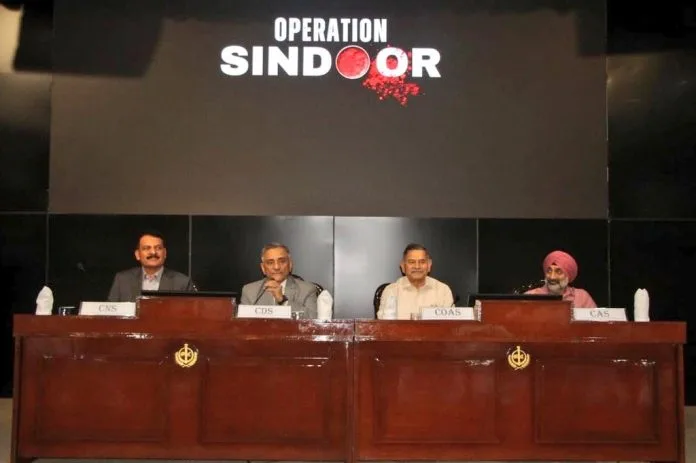
Tri-Service Chiefs Highlight Joint Precision in Operation Sindoor Success

New Delhi – In a rare and strategic briefing on Wednesday, the Apex Leadership of the Indian Armed Forces – Chief of Defence Staff General Anil Chauhan, Army Chief General Upendra Dwivedi, Navy Chief Admiral Dinesh K Tripathi, and Air Force Chief Air Chief Marshal AP Singh – offered a direct and comprehensive perspective on the successful execution of Operation Sindoor.

The high-level interaction, which included discussions with veterans and strategic think tanks, shed light on the Tri-Services synergy, cutting-edge coordination, and multi-domain warfare capabilities demonstrated during the mission.

“Insights on the Tri-Services synergy achieved through clearly stated strategic guidance and the successful execution of new-age multi-domain operations, with an exceptional degree of jointness and integration, were deliberated upon,” the Headquarters Integrated Defence Staff (HQ IDS) stated in a release.


Operation Sindoor: A Decisive Military Response

Launched on May 7, Operation Sindoor was India’s strong military retaliation to the April 22 Pahalgam terror attack, in which 26 civilians lost their lives. The Indian Armed Forces carried out coordinated strikes on terror infrastructure in Pakistan and Pakistan-occupied Jammu and Kashmir (PoJK), resulting in the elimination of over 100 terrorists affiliated with Jaish-e-Mohammed, Lashkar-e-Taiba, and Hizbul Mujahideen.

Following the strikes, Pakistan responded with cross-border shelling and drone incursions across the Line of Control (LoC) and border regions of Jammu and Kashmir. India swiftly responded with a second wave of precision strikes targeting radar installations, communication hubs, and airfields at 11 strategic Pakistani airbases.


Ceasefire Understanding Announced

After days of high-tension military escalation, a mutual understanding for cessation of hostilities between India and Pakistan was reached and announced on May 10, stabilizing the situation across the LoC and airspace corridors.

Despite Pakistan’s initial denials and provocation, India’s prompt and surgical response demonstrated a high degree of operational preparedness, joint force application, and technological dominance across land, sea, and air.

“The world has seen what India is capable of when provoked. Operation Sindoor stands as a testament to the resolve and strength of our forces under unified command,” said a senior military analyst.


India’s New Defence Doctrine in Action

Operation Sindoor is being widely seen as a model of India’s evolving defence doctrine, emphasizing pre-emptive capability, precision response, and integrated warfare strategy. The operation’s success also reflects India’s shift toward multi-theatre preparedness and real-time coordination across services.

Strategic experts note that this level of inter-service cooperation signals a transformative phase in Indian defence policy, directly influenced by the vision of Chief of Defence Staff General Anil Chauhan and empowered by government backing at the highest level.