Tuesday, July 14, 2026
Home Blog Page 118

NFJM Inaugurates Press and Media Centre in Jammu

0

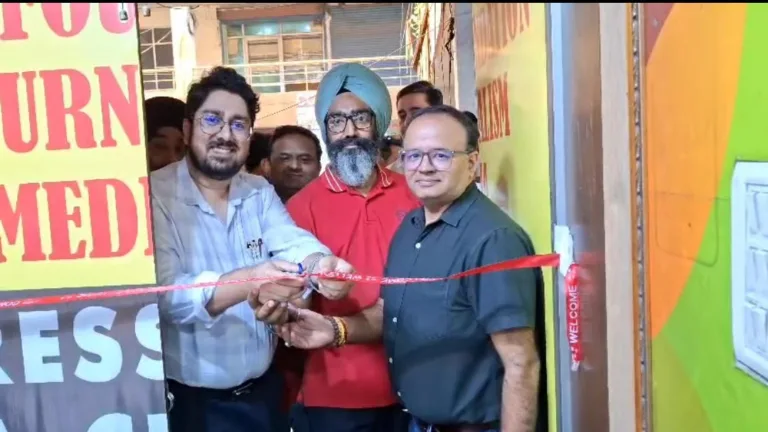
Jammu, September 24: The National Foundation for Journalism & Media (NFJM) has officially inaugurated its first Press & Media Centre at F-1/8C, Trikuta Shopping Complex, B.C. Road, Jammu.

This significant event took place in the presence of esteemed media professionals, journalists, and community members. Dr. Tahir Rufayee, Chairman of NFJM, performed the inaugural ceremony, emphasizing the Centre’s mission and vision.

Dr. Rufayee stated, “This Press & Media Centre will serve as a hub for fair reporting, informed public engagement, and responsible journalism.” He further affirmed NFJM’s commitment to strengthening democratic values through truthful and ethical media practices.

The Press & Media Centre will offer comprehensive facilities for news reporting and publications, press conferences, media briefings, research and analysis, and public engagements. This initiative aims to create a professional environment where journalists and media practitioners can collaborate effectively.

The establishment of this Centre marks a crucial step for NFJM in promoting transparent, accountable, and ethical journalism in Jammu and beyond. As S.Harjeet Singh, the lead behind this initiative, underscores, the Centre aspires to be a catalyst for change within the local media landscape.

With the emergence of digital media and increasing misinformation, the need for a dedicated space promoting ethical journalism has never been more pertinent. Journalists will benefit from a well-equipped location fostering community engagement and media accountability.

Dr. Rufayee highlighted, “We aim to empower journalists with the tools, training, and support they need to uphold the highest standards of integrity in reporting.” This commitment resonates with NFJM’s broader vision of enhancing journalistic standards across India.

The Centre will also offer workshops and seminars aimed at enriching the skills of budding journalists. By providing access to resources and expert guidance, NFJM hopes to inspire a new generation to pursue careers in responsible journalism.

As Jammu continues to grow as a hub for media activity, the opening of the Press & Media Centre signals a promising future for journalism in the region. This facility not only supports seasoned journalists but also welcomes aspiring media talent to engage in meaningful conversations about the future of news reporting.

The NFJM’s investment in this Press & Media Centre reflects its dedication to fostering a robust media ecosystem that adheres to journalistic excellence.

For further information on the activities and services offered at the Press & Media Centre, interested individuals can contact NFJM directly or visit the Centre’s official website.
Pipping Ceremony held at Zonal Police Headquarter Jammu

0

IGP Jammu Zone and DIG JKS Range Decorate Newly Promoted Officers/Officials

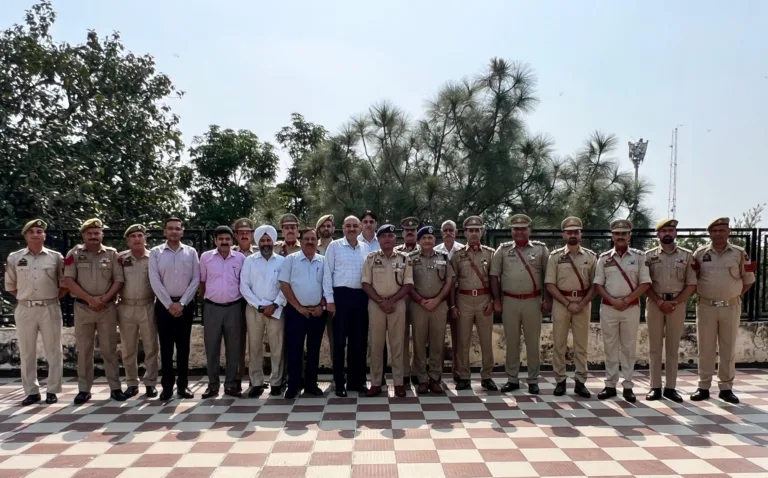
Jammu, September 24, 2025: A solemn Pipping Ceremony was organised today at the Zonal Police Headquarters (ZPHQ) Jammu, where Inspector General of Police, Jammu Zone, Shri Bhim Sen Tuti, IPS, along with Deputy Inspector General, JKS Range, Shri Shiv Kumar Sharma, IPS, decorated the newly promoted officers/officials with their ranks.

2. The occasion marked an important milestone in the professional careers of the promoted personnel, whose service, commitment, and professionalism have been duly acknowledged. Congratulating the officers/officials, the IGP lauded their dedication and underscored that with promotion comes greater responsibility, particularly the need to uphold the highest standards of integrity, discipline, and accountability.

3. The promoted officers/officials expressed gratitude for the recognition and reaffirmed their resolve to serve the department and community with sincerity, diligence, and renewed zeal. The IGP extended best wishes for their future endeavours, highlighting the importance of leadership, teamwork, and professionalism in their enhanced roles.

4. Those who were decorated on the occasion include: Subash Chander, SI (M); Neelam Singh, SI (M); Ajay Kumar, SI (M); Banty Kumar, SI (M); Dilbag Singh, SI (M); Krishan Lal, ASI (M); Davinder Pal, ASI (M); Surinder Kumar, (ASI); Kulbushan Khajuria, HC (M); Sachin Sumbaria, HC (M); Parvinder Lal, HC (M); Rajinder Kumar, HC (M); and Anil Sharma, HC (M).

5. The ceremony was also attended by senior officers including DIG JSK Range; SO to IGP Jammu; CPO ZPHQ Jammu; PS to IGP Jammu; ADO, ZPHQ Jammu; DSP Estates Jammu and Sr. PO, ZPHQ Jammu. The ceremony concluded with a message of inspiration, reminding the promoted personnel to continue upholding the values and traditions of the Police Department, and to discharge their duties with renewed dedication, professionalism, and commitment to public service.

Earthquake Resilience in J&K: Prof. Gupta Meets CM Abdullah

0

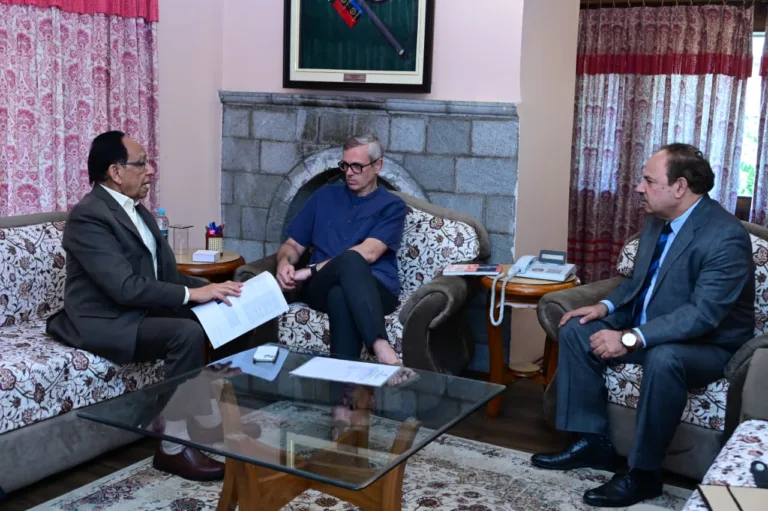
On September 24, renowned Earth Scientist Prof. Harsh K. Gupta met Jammu and Kashmir’s Chief Minister Omar Abdullah at the Public Outreach (Raabita) Office to discuss key measures for enhancing earthquake resilience and disaster preparedness in the region.

Accompanying the chief minister during this crucial meeting were Advisor to the Chief Minister Nasir Aslam Wani, and Prof. Shakil Ahmad Romshoo, Vice-Chancellor of the Islamic University of Science and Technology (IUST). The gathering emphasized the importance of coordinated efforts in mitigating the risks associated with seismic activities in Jammu and Kashmir.

Prof. Gupta, a former member of the National Disaster Management Authority (NDMA) and former Secretary in the Ministry of Earth Sciences, delivered an impactful presentation. He emphasized that developing earthquake-resilient infrastructure is imperative for Kashmir, a region located within the vulnerable Himalayan earthquake belt. His call for action follows a successful model implementing medium-term earthquake forecasting in the northeast Himalayan area.

In his presentation, Prof. Gupta outlined several proactive strategies. One of the key recommendations was the establishment of an “Earthquake Safety Day”. This initiative would serve as a platform to educate school students about earthquake safety and response measures. He emphasized creating simulations of past significant quakes, conducting mega-mock drills, and ensuring strict compliance with earthquake-safe construction practices.

The scientist also advocated for the deployment of Earthquake Early Warning Systems along the Himalayan belt to provide timely alerts and minimize the impact of potential disasters. Such systems reportedly have the potential to significantly enhance safety during seismic events.

Chief Minister Abdullah appreciated Prof. Gupta’s insights and recognized the pressing need for comprehensive disaster preparedness strategies. He assured the scientist that the government remains committed to enhancing earthquake resilience in Jammu and Kashmir. Abdullah confirmed that all suggestions would be integrated into the broader disaster management strategy for the region, prioritizing public safety and infrastructure development.

As Kashmir consistently faces seismic threats, the discussion stressed a unified approach to disaster resilience. Experts believe that immediate action is crucial to safeguard lives and properties as they await the implementation of sound disaster preparedness strategies.

Govt Transfers Two CEOs in Jammu and Kashmir Education Dept

0

The Jammu and Kashmir government announced the transfer and posting of two Chief Education Officers (CEOs) in the School Education Department on Wednesday. The decision aims to streamline operations and boost administrative efficiency in the education sector.

Mohammad Hafiz, who currently serves as the Chief Education Officer (CEO) Doda, will now take over as I/C CEO Rajouri. This change reflects the government’s intention to ensure effective management across the region’s educational institutions.

In a reciprocal move, Iqbal Hussain, the I/C CEO Rajouri, has been transferred to Doda. The reassignment of these officials underscores the government’s commitment to fostering an efficient educational environment for students.

The School Education Department plays a crucial role in shaping the academic landscape for youth in Jammu and Kashmir. Officials believe that fresh leadership can drive progressive changes and revitalize strategies aimed at improving student outcomes.

Both Hafiz and Hussain bring extensive experience to their new roles. Their appointments emphasize a focus on administrative efficiency and enhanced learning conditions amidst ongoing educational challenges.

By implementing these changes, the Jammu and Kashmir government aims not only to reinforce its commitment to quality education but also to address existing infrastructural and administrative hurdles faced by schools. Adjustments in leadership often bring new perspectives, helping adapt to the evolving demands of the educational framework.

As the region navigates various socio-political challenges, enhancing school management through effective leadership becomes critical. The government believes that strategic placements within the School Education Department can positively impact student performance and institutional growth.

The ongoing efforts to revitalize the educational landscape in Jammu and Kashmir demonstrate a proactive approach by the authorities. This aligns with broader goals of ensuring that quality education remains accessible and impactful for all students in the region.

Four Killed, 30 Injured in Leh Clashes Over Statehood

0

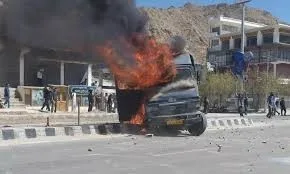
Four individuals died and 30 sustained injuries during violent protests in Leh, Ladakh, on Wednesday. Clashes erupted between security personnel and demonstrators advocating for statehood for Ladakh and the extension of the Sixth Schedule, generating significant unrest.

The protests, organized by the Leh Apex Body (LAB) youth wing, coincided with a shutdown in the town. Authorities confirmed that police fired shots to manage the escalating situation after the protesters began attacking local properties, including a BJP office and several vehicles.

The agitation intensified following a health crisis among hunger strikers advocating for statehood. Specifically, two individuals from a group of 15 on a prolonged hunger strike were hospitalized on Tuesday due to deteriorating health conditions, raising tensions further.

Witnesses and locals assert that the deaths resulted directly from police gunfire during the clashes. However, officials have yet to confirm these claims as investigations proceed.

The protests reflect a growing frustration among Ladakh’s residents over their political status since the region’s bifurcation from Jammu and Kashmir in 2019. Activists argue that the ‘Union Territory’ status has failed to ensure adequate representation, thus fueling demands for statehood and the protections afforded by the Sixth Schedule, aimed at safeguarding the rights and identities of indigenous communities.

The Leh Apex Body had called the protest to amplify these demands, especially after a notable hunger strike initiated on September 10 aimed at highlighting these issues. Community leaders assert that the government’s response to their demands has been insufficient, prompting widespread unrest.

Security experts emphasize the necessity for measured responses during civil unrest. Former police chief, Rajesh Verma, stated, “Police must prioritize de-escalation and community engagement to prevent further violence. Engaging with civil society and addressing grievances can significantly lessen hostility.”

The violence has intensified debates surrounding the governance structure of Ladakh, with the public demanding clarity on their political future. As the administration scrambles to restore order, officials reiterate their commitment to ensuring public safety. They urge community leaders to engage in dialogue for a peaceful resolution.

The situation remains tense as the government deploys additional forces to maintain order. Local leaders are calling for calm, advocating for peaceful negotiations to address the long-standing issues affecting Ladakh.

Labourers Rescued After Earth Cave-in at J&K Construction Site

0

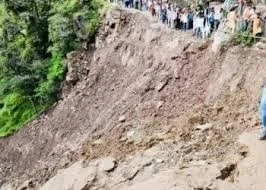
In a dramatic rescue operation, two labourers narrowly escaped death when a mound of earth caved in at a road construction site in the Beri-Pattan area near Sunderbani, Rajouri district, Jammu and Kashmir, on Tuesday evening. This incident underscores the ongoing safety risks that construction workers face on the job.

The trapped labourers, engaged in excavating a roadside drain, faced an immediate threat as the earth collapsed on them. While their plight could have ended in tragedy, quick thinking and prompt action from fellow workers proved pivotal.

According to officials, the fellow labourers who witnessed the incident swiftly mobilized to dig through the debris. Their coordinated efforts paid off when they successfully pulled the trapped labourers out from under the earth, saving them from what could have been a fatal situation.

This incident serves as a stark reminder of the safety hazards inherent in construction work. The labourers involved were reportedly working under strenuous conditions, which often expose them to significant risks. Construction sites are notoriously dangerous, and incidents of cave-ins illustrate the ongoing need for enhanced safety protocols and training.

Local authorities have taken notice of this incident and are urging employers to implement better safety measures. “It’s critical that construction companies prioritize the well-being of their workers by ensuring adequate safety practices are in place,” said a local government official.

The two rescued labourers suffered minor injuries and were later reported to be in stable condition. This fortunate outcome contrasts with many accidents in the construction sector, where the lack of safety equipment often leads to severe injuries or fatalities.

This news event highlights the vital ongoing discussions about worker safety in India, particularly in the construction industry. National campaigns aimed at improving safety regulations can benefit not only workers but also enhance the overall productivity and efficiency of the construction sector.

As authorities investigate the incident, many in the construction community remain hopeful that it will prompt necessary changes to safeguard labourers. In the words of a witness, “We are grateful for the quick actions of all involved; every worker deserves to return home safely after work.”

Jaishankar Advocates for Stronger Global South Solidarity

0

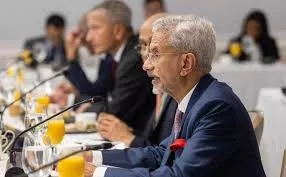
External Affairs Minister S. Jaishankar has urged nations of the Global South to foster stronger solidarity and to pursue a concerted push for United Nations reform. This call came during a High-Level Meeting of Like-Minded Global South countries held on the sidelines of the 80th session of the United Nations General Assembly in New York on Tuesday.

Jaishankar expressed that as global challenges multiply, it becomes increasingly vital for nations within the Global South to turn towards a multilateral approach for viable solutions. He articulated these sentiments in a detailed post on X following the meeting, stating, “It is natural that the Global South turns to multilateralism for solutions.”

In his address, the minister outlined a structured strategy for enhancing the Global South’s engagement in world affairs. He presented five pivotal proposals aimed at amplifying the collective voice and influence of developing nations on international platforms.

Jaishankar emphasised the necessity of leveraging existing forums to strengthen consultations among Global South nations. This approach, he noted, could significantly enhance solidarity and foster collaborative efforts.

One of the key proposals stressed by Jaishankar was the urgent need for a comprehensive reform of the United Nations and multilateralism as a whole. He articulated that the Global South must showcase its strengths, experiences, and achievements on the international stage. These include innovations in vaccines, advancements in digital technologies, education systems, agro-practices, and the capabilities of small and medium enterprises (SMEs).

Moreover, Jaishankar pointed out the criticality of pursuing an equitable response to global issues. He stated that in fields like climate action and climate justice, it is imperative for the Global South to develop initiatives that serve their own interests instead of merely conforming to the viewpoints of the Global North.

Highlighting the importance of emerging technologies, Jaishankar called for proactive discussions surrounding advancements in artificial intelligence. He underscored the necessity for developing countries to emerge as key players in the evolving technological landscape, ensuring they are not marginalised in global decision-making processes.

India has consistently taken the lead in championing the rights and voices of Global South nations in international dialogues. As part of this ongoing commitment, Jaishankar reiterated the need for developing countries to engage meaningfully with the global agenda, ensuring they are represented adequately in discussions that impact their futures. This engagement, he believes, is crucial for fostering a more just and equitable international order.

In a world marked by interconnected challenges, Jaishankar’s call for stronger Global South solidarity embodies a collective will to reshape global governance, advocating for a more inclusive approach that prioritises the needs and aspirations of developing nations.

Killing of Gujjar Youth: J&K Police Constable Arrested

0

A Jammu and Kashmir Police constable was arrested on Wednesday in connection with the killing of 21-year-old Gujjar youth Mohammad Parvez, which occurred during a police shootout on July 24 near Sure Chak village, Jammu. This event has drawn significant scrutiny and protests from the Gujjar community, who accused the police of fabricating evidence against Parvez.

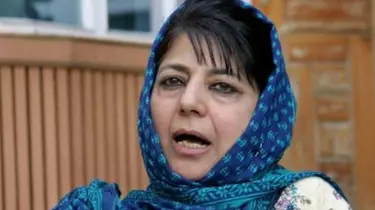
Mehbooba Mufti, president of the People’s Democratic Party (PDP) and former Chief Minister of Jammu and Kashmir, hailed this development as a crucial step towards justice. Mufti emphasized that no one, including law enforcement personnel, is above the law, advocating for accountability and transparency within the justice system.

The tragic incident ignited widespread outcry, with protesters rejecting the police narrative that labeled Parvez as a drug peddler. Instead, they alleged he fell victim to a ‘fake encounter’ by officers. The Gujjar community expressed their anger with demonstrations that demanded justice and a thorough investigation.

In response to the escalating tensions and serious public allegations, the J&K Police established a Special Investigation Team (SIT) to thoroughly investigate the events leading up to Parvez’s death. Additionally, a magisterial inquiry was also initiated, as political leaders including Omar Abdullah joined the call for a fair and prompt investigation.

Following these probes, Pawan Singh, a selection grade constable, faced formal arrest and was charged under section 105 of the Jammu and Kashmir Ranbir Penal Code for culpable homicide not amounting to murder. His colleague, head constable Baljinder Singh, also faced suspension immediately after the shooting incident pending investigation.

Mehbooba Mufti reiterated the significance of this arrest, underscoring that it serves as a timely reminder of the need for accountability within the police force. In a post on social media platform X, Mufti stated, “This sends a strong message that accountability within the police force is not optional.”

She expressed her condolences over the loss of Parvez, whom she described as an “innocent man” and acknowledged the enduring pain felt by his family. Although his loss is profoundly irrevocable, she asserted that this arrest symbolizes a glimmer of hope that justice may prevail.

Furthermore, Mufti commended Senior Superintendent of Police (SSP) Jammu, Joginder Singh, for his role in ensuring a fair and transparent investigation, which she believes is crucial for restoring public trust in the justice system. She urged for a swift judicial process, believing it to be essential for delivering justice to Parvez.

As authorities move forward with the investigation, many in the region watch closely, hopeful that accountability will lead to significant reforms within the police force and restore community faith.

Vande Bharat Sleeper Trains Launch Set for October: Vaishnaw

0

Railway Minister Ashwini Vaishnaw announced the launch of Vande Bharat sleeper trains will occur once a second unit is fully operational. The new service targets a launch date potentially by October 15, 2025.

Currently, one train stands ready at the Shakur Basti Coaching Depot in Delhi, having successfully completed trials. Officials confirm its operational status is imminent.

During a media briefing, Vaishnaw highlighted the importance of synchronizing both trains for uninterrupted service. He stated, “Once we receive the second rake, we will decide on routes and commence operations.”

Speculation suggests that the inaugural route might connect New Delhi to Patna, especially as Bihar prepares for elections by year-end.

Joined by Minister of State for Railways Ravneet Singh Bittu, Vaishnaw provided updates on existing and proposed railway projects in Punjab. Among them, the 18-kilometre Rajpura-Mohali link aims to connect the area directly to Chandigarh.

This new line, part of the Ambala-Amritsar main line, will not only shorten travel by approximately 66 kilometres but also alleviate congestion on current routes.

Discussing further enhancements, the Railway Minister proposed a Vande Bharat train connecting New Delhi to Firozpur Cantonment. This train would serve critical stations including Faridkot, Bhatinda, and Patiala, covering the 486-kilometre distance in around 6 hours and 40 minutes.

Vaishnaw expressed, “I will request the Prime Minister to approve the Firozpur-Delhi Vande Bharat train,” emphasizing the train’s potential to improve connectivity.

During the briefing, the ministers announced nine railway projects commissioned since 2014, totaling investments in key lines such as the Nangal Dam-Daulat Pur Chowk line and the Jalandhar-Jammu Tawi line.

In addition, seven new projects are underway, including major lines like Nangal Dam-Talwara and Bhanupalli-Bilaspur-Beri, with significant investments earmarked for their completion.

Vaishnaw detailed that 30 stations will undergo redevelopment under the Amrit Bharat initiative, contributing to enhanced passenger amenities and experiences.

In closing, he pointed to operational efficiencies, noting that 29 rail divisions—including Malda and Mysore—achieved a 90% punctuality rate, demonstrating significant improvements in Indian rail services.

Deputy CM Surinder Choudhary Vows to Fight for People’s Rights

0

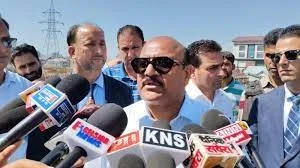
SRINAGAR, Sep 23 (PTI) – Jammu and Kashmir Deputy Chief Minister Surinder Kumar Choudhary, during a press briefing in Ganderbal district, reaffirmed the government’s commitment to its people, despite facing various challenges. Choudhary categorically stated, “There are some people who want us to resign. But we are not among those who run away. We are workers of Sher-e-Kashmir, we will struggle and fight for the rights of the people.”

Addressing a critical question concerning the performance of the elected government regarding its election promises, Choudhary explained the constraints the government operates under. He acknowledged the limitations of the Union Territory (UT) framework, saying, “You will have to understand that we do not have a state government. The special status and statehood we lost because of the PDP has resulted in a UT government with limited resources and powers.”

Choudhary emphasized the dual governance system currently in place, which consists of an elected government alongside an appointed administration. He articulated the challenges this structure presents in effectively addressing the needs of the people. Despite these hurdles, the deputy chief minister insisted that the National Conference government remains dedicated to fulfilling its commitments.

He stated, “We will fulfil all the promises made by NC president Farooq Abdullah and Chief Minister Omar Abdullah. We have been given a mandate for five years—our struggle is ongoing, and after this period, only then can questions arise about which promises we fulfilled and which we didn’t.” This commitment reflects a determination to work relentlessly for public welfare.

In response to inquiries regarding the contentious issues of statehood and the restoration of Article 35A of the Constitution, Choudhary assured that these topics were discussed extensively during a cabinet meeting held earlier in the day. He remarked, “We have reiterated our stand on statehood. While these are critical issues, we face obstacles that require our attention first. The LG (Lieutenant Governor) seems to have neglected the business rules, complicating our operations further.”

The deputy chief minister levelled accusations against opposition parties, specifically the BJP and PDP, for allegedly neglecting Jammu and Kashmir’s development during their coalition rule from 2015 to 2018. He mentioned, “The PDP and the BJP claim to have made significant strides in development. However, if they achieved so much, why are we still facing chronic traffic congestion? We will not sit idle while they claim progress without delivering results.”

Choudhary’s statements resonate strongly with the sentiments of the people who seek accountability from their leaders and clarity on developmental promises. His remarks reflect a broader narrative of hope amid skepticism regarding the functioning of the current government.

As Jammu and Kashmir enters a new phase of its political journey, Chief Minister Choudhary’s assertions may shape public perception of the government’s efficacy and resilience in tackling pressing issues. The ongoing situation demands scrutiny from the electorate, who are keenly observing the government’s actions in overcoming the multifaceted challenges it faces.