Category: Uncategorized

  • India Ranked 63rd on WEF Energy Transition Index; Sweden Leads

    India Ranked 63rd on WEF Energy Transition Index; Sweden Leads

    New Delhi, Jun 19 : India has been placed 63rd on the World Economic Forum’s Energy Transition Index, showing significant improvement in energy equity, security, and sustainability, according to a report released on Wednesday.

    The index, topped by Sweden, also features Denmark, Finland, Switzerland, and France in the top five spots, while China secured the 20th rank.

    The report highlighted that while 83 per cent of countries regressed in at least one dimension of energy system performance (security, equity, sustainability), India, China, and Brazil stood out for their progress.

    India’s efforts were recognized for leading initiatives that could serve as global models, including policies promoting energy-efficient infrastructure and incentives for retrofitting. The WEF emphasized the potential for developing nations to pioneer innovative energy solutions, showcasing examples of scalable, cost-effective technologies originating from developed countries.

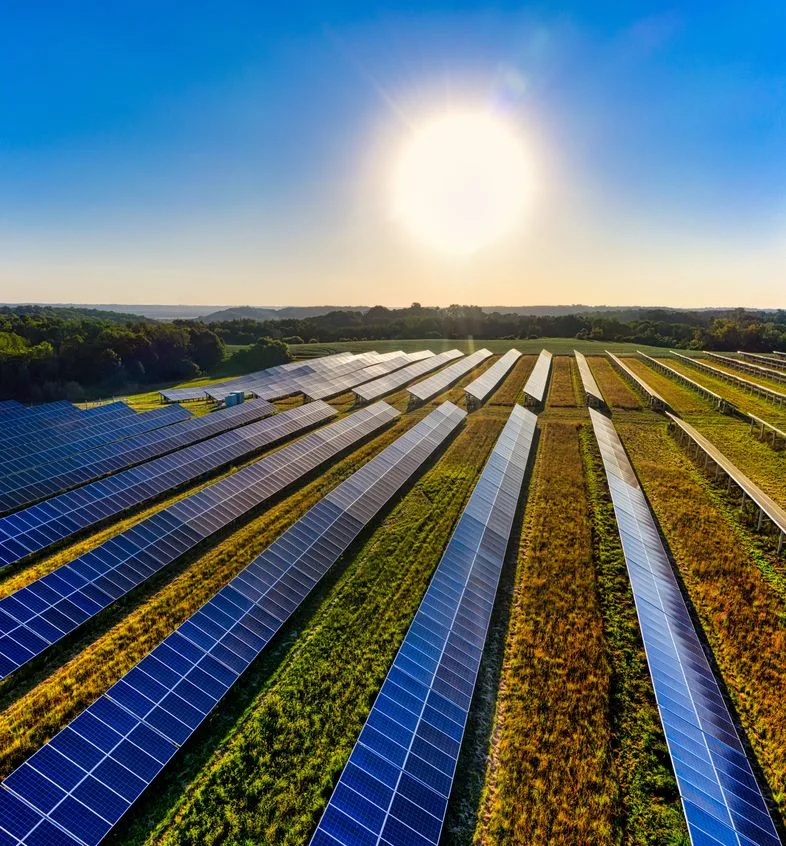
    Regarding India’s role, the WEF underscored the country’s advancements in renewable energy, noting that renewables and biomass account for 42 per cent of its power generation capacity, positioning it as a major player in global renewable markets. The report praised India’s investments in electric vehicles (EVs) and green hydrogen production, highlighting annual investments nearing USD 10 billion in these sectors.

    Despite these strides, India’s reliance on coal remains a challenge, contributing significantly to its emission intensity. However, India’s per capita emissions of 1.7 tonnes of CO2 are notably lower than the global average of 4.4 tonnes per capita.

    Looking ahead, the report emphasized the need for India to continue investing in energy efficiency to decouple economic growth from energy demand, particularly in infrastructure and manufacturing sectors.

    The WEF acknowledged India’s focus on integrating renewable energy to support income generation and microenterprises, highlighting the country’s commitment to sustainable energy practices that benefit local communities and foster economic growth.

    In conclusion, while global energy transition progress has slowed amidst increasing uncertainty, India’s strategic initiatives and evolving energy landscape underscore its potential to drive substantial changes in the global energy paradigm.

  • Rupee Gains 7 Paise, Reaches 83.48 Against US Dollar in Early Trade

    Rupee Gains 7 Paise, Reaches 83.48 Against US Dollar in Early Trade

    Mumbai, Jun 18 – The rupee appreciated by 7 paise to 83.48 against the US dollar in early trade on Tuesday, supported by fresh inflows of foreign capital and positive sentiment in the domestic equity markets. Forex traders noted that while the strengthening American currency exerted some pressure on the local unit, it was buoyed by a downward movement in crude oil prices overseas. The rupee opened at 83.52 at the interbank foreign exchange market and gained further to 83.48 against the greenback, marking a 7 paise increase from its previous close. On Friday, the rupee had settled 1 paisa lower at 83.55 against the US dollar. Forex markets were closed on Monday due to Bakri Id. Meanwhile, the dollar index, which measures the greenback’s strength against a basket of six currencies, was up 0.07 percent at 105.01. Brent crude futures, the global oil benchmark, declined by 0.13 percent to USD 84.14 per barrel. In the domestic equity market, the 30-share BSE Sensex rose by 175.72 points, or 0.23 percent, to 77,168.49 points. The broader NSE Nifty climbed 45.15 points, or 0.19 percent, to 23,510.75 points. According to exchange data, Foreign Institutional Investors (FIIs) were net buyers in the capital markets on Friday, purchasing shares worth Rs 2,175.86 crore. Positive investor sentiment was driven by strong domestic macroeconomic data, which showed India’s merchandise exports in May 2024 rose 9 percent to USD 38.13 billion. The trade deficit, or the gap between imports and exports, during the month stood at USD 23.78 billion. Additionally, wholesale inflation increased for the third consecutive month in May to 2.61 percent, due to rising prices of food articles, especially vegetables, and manufactured items.
  • Jagannath Temple in Puri Reopens All Four Gates for Devotees

    Jagannath Temple in Puri Reopens All Four Gates for Devotees

    BHUBANESWAR, June 13: In a significant development, all four gates of the revered Jagannath Temple in Puri were reopened for devotees on Thursday morning. The momentous occasion was marked by the presence of Odisha Chief Minister Mohan Charan Majhi and his council of ministers.

    After being closed due to the COVID-19 pandemic, the three gates of the 12th-century shrine were ceremoniously reopened following the ‘Mangal Alati’ ritual dedicated to Lord Jagannath. Chief Minister Majhi, accompanied by his deputies, ministers, as well as several BJP MPs and leaders, visited the temple to pay homage to the deity. They also performed a ‘parikrama’ around the temple complex, seeking divine blessings.

    Addressing reporters in Puri, Chief Minister Majhi highlighted the government’s decision to reopen all four gates of the temple, signaling a pivotal move in restoring normalcy. He reassured that the government would closely monitor the situation and implement necessary measures to ensure the smooth flow of devotees to the shrine.

    Moreover, Majhi announced the Odisha government’s commitment to allocating a corpus fund of Rs 500 crore for the temple’s management, maintenance, and development. This provision will be incorporated in the upcoming state budget, emphasizing the government’s dedication to preserving the sanctity of the sacred site.

    Cabinet Minister Suresh Pujari emphasized the significance of seeking Lord Jagannath’s blessings for the welfare of humankind and the state’s progress over the next five years. He also mentioned that a detailed report has been requested to understand the reasons behind the prolonged closure of three temple gates post-pandemic.

    The decision to reopen all temple gates fulfills a key promise outlined in the BJP’s election manifesto, addressing concerns raised by devotees regarding restricted access during the pandemic. Previously, only the Singhadwara (Lion Gate) was accessible to devotees, causing inconvenience.

    The reopening of all gates marks a significant step towards restoring the spiritual vibrancy of the Jagannath Temple and reaffirms the government’s commitment to facilitating religious practices while ensuring public safety.

    Stay tuned for further updates

  • Rahul Gandhi Holds Road Show in Wayanad, Kerala

    Rahul Gandhi Holds Road Show in Wayanad, Kerala

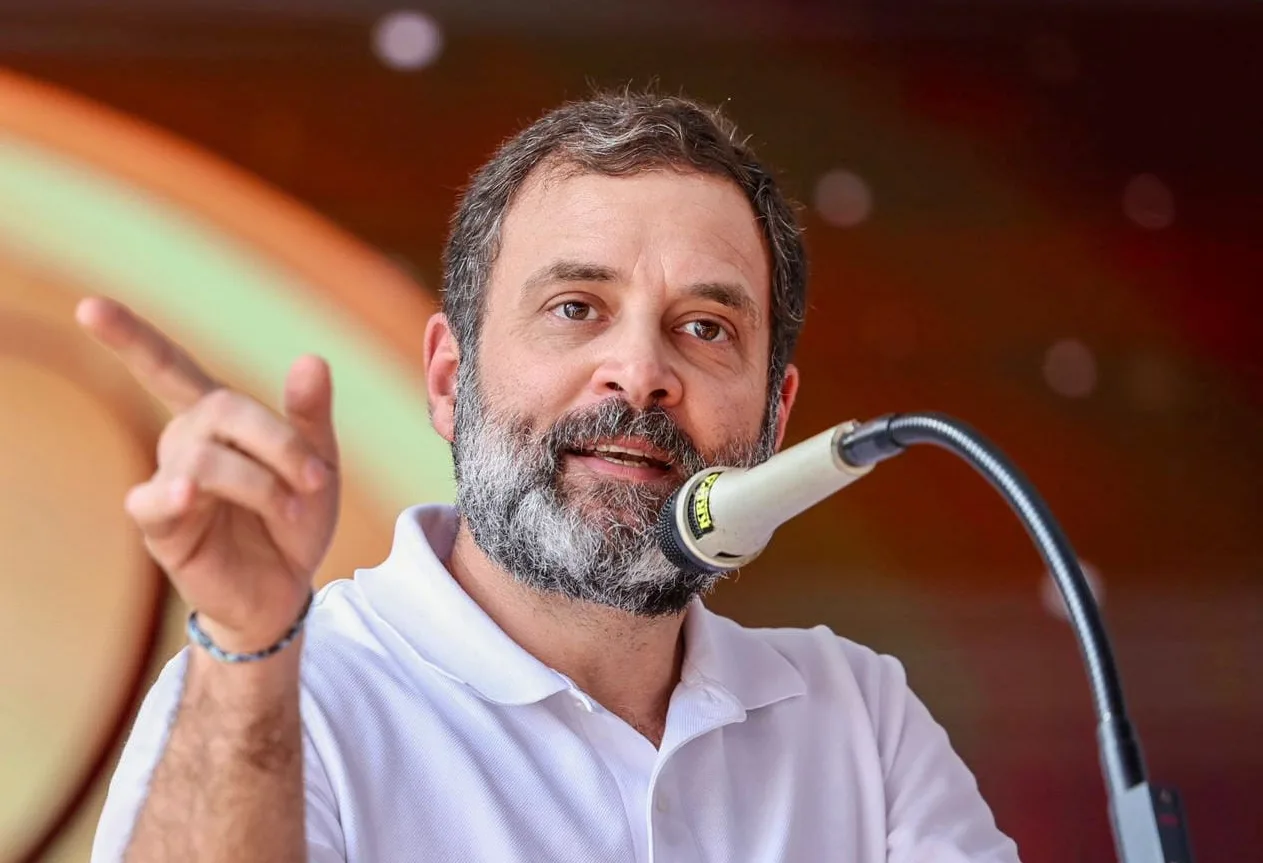
    Malappuram, June 12: Congress leader Rahul Gandhi, who secured victory in the Wayanad Lok Sabha seat with a significant margin for the second consecutive time, conducted a road show in this north Kerala district on Wednesday. This marks Gandhi’s first visit to the state following the Lok Sabha poll results.

    Thousands of United Democratic Front (UDF) workers and supporters gathered along the route of the road show at Edavanna, which falls within the Wayanad Lok Sabha constituency. Earlier, he received a warm welcome at Kozhikode airport by party leaders and workers.

    Rahul Gandhi’s visit and engagement with the public underscore the significance of the Wayanad constituency and his commitment to representing the interests of the people in the region.


  • Hero MotoCorp Sees 4% Sales Decline in May, Exports Increase

    Hero MotoCorp Sees 4% Sales Decline in May, Exports Increase

    Hero MotoCorp sold 498,123 motorcycles and scooters in May 2024, marking a 4.1% decrease from the 519,474 units sold in May the previous year.

    Despite this decline, the company saw a 12.6% growth in sales for the first two months (April-May 2024) of the fiscal year 2025 (FY25), selling 10.31 lakh units compared to 9.15 lakh units in the same period last year.

    “The company has sold 10,31,708 units in the first two months of the financial year FY25, registering a growth of 12.6% over the corresponding months (Apr-May’23) when the company sold 915,581 units,” Hero MotoCorp stated. In the motorcycle segment, Hero MotoCorp sold 4.71 lakh units in May 2024, a 3.7% decrease from the 4.89 lakh units sold in May 2023. The scooters segment saw a nearly 11% decline, with 26,937 units sold in May 2024 compared to 30,138 units the previous year.

    Domestic sales also dropped by nearly 5.7%, with 4.79 lakh units sold compared to 5.08 lakh units year-on-year. However, exports surged by 67%, with 18,673 units sold compared to 11,165 units in May last year.

    In a significant development, Hero MotoCorp has joined the government-run Open Network for Digital Commerce (ONDC) Network, becoming the first auto company in the country to join the network.

  • Rs 2000 Banknotes: 97.82% Returned, Rs 7,755 Crore Still in Circulation

    Rs 2000 Banknotes: 97.82% Returned, Rs 7,755 Crore Still in Circulation

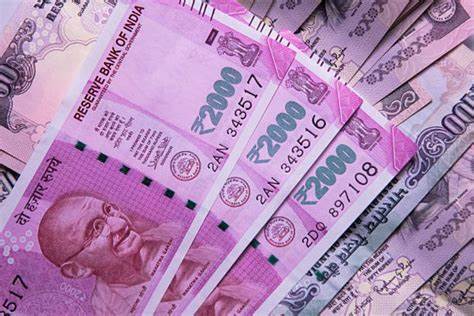
    MUMBAI, June 3: The Reserve Bank of India (RBI) announced on Monday that 97.82% of the Rs 2000 denomination banknotes have been returned to the banking system, with Rs 7,755 crore worth of these notes still in public hands. The RBI initially declared the withdrawal of Rs 2000 banknotes from circulation on May 19, 2023.

    As of May 19, 2023, the total value of Rs 2000 banknotes in circulation was Rs 3.56 lakh crore. By May 31, 2024, this amount had decreased to Rs 7,755 crore. “Thus, 97.82 per cent of the Rs 2000 banknotes in circulation as on May 19, 2023, have since been returned,” the central bank stated.

    Until October 7, 2023, individuals could deposit and/or exchange Rs 2000 banknotes at any bank branch in the country. Since May 19, 2023, this exchange facility has been available at the 19 issue offices of the Reserve Bank.

    Starting from October 9, 2023, RBI issue offices began accepting Rs 2000 banknotes from individuals and entities for deposit into their bank accounts. Additionally, the public can send Rs 2000 banknotes through India Post from any post office within the country to any RBI issue office for credit to their bank accounts.

    The 19 RBI offices accepting deposits and exchanges of the banknotes are located in Ahmedabad, Bengaluru, Belapur, Bhopal, Bhubaneswar, Chandigarh, Chennai, Guwahati, Hyderabad, Jaipur, Jammu, Kanpur, Kolkata, Lucknow, Mumbai, Nagpur, New Delhi, Patna, and Thiruvananthapuram.

    The Rs 2000 banknotes were initially introduced in November 2016, following the demonetisation of the then-prevailing Rs 1000 and Rs 500 banknotes.

  • State-owned companies and infrastructure firms shine as exit polls anticipate Modi 3.0

    State-owned companies and infrastructure firms shine as exit polls anticipate Modi 3.0

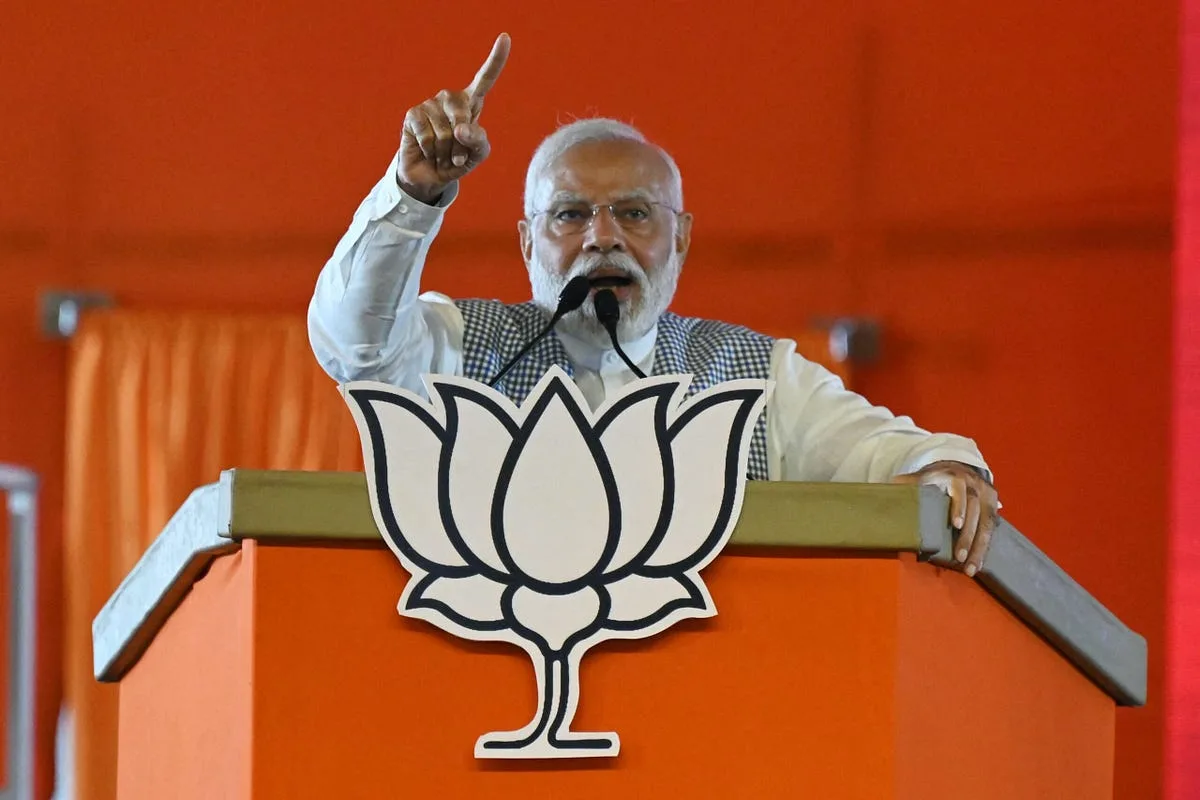
    Exit polls forecasting a decisive third-term victory for the Narendra Modi-led NDA government in the Lok Sabha elections have led to a significant uptick in the shares of Indian state-owned companies and infrastructure-related firms.

    Citigroup Inc. and Jefferies Financial Services Inc. identify manufacturing and electric vehicles among the key beneficiaries if the exit poll predictions materialize, favoring the Bharatiya Janata Party (BJP) in the final vote count on June 4.

    As the market commenced trading on Monday, the benchmark NSE Nifty 50 Index surged by up to 3.6%, establishing a new intraday record. Additionally, indices for infrastructure and state-owned firms on the NSE soared to their all-time highs during early trading.

    The Indian rupee strengthened notably against the US dollar, marking its most significant gain since March 2023, reaching 82.9725.

    By afternoon trade, both the Nifty 50 and Sensex experienced robust surges of nearly 3%, achieving record highs of 23,338.70 and 76,738.89, respectively.

    All 13 major sectoral indices showed gains, with Nifty Energy, Nifty PSU Bank, and Nifty Realty leading the charge with increases of 4-5%. On the other hand, Nifty Pharma and Nifty Healthcare recorded more modest gains, each rising by 1.2%.

    In the broader market, BSE Midcap witnessed an uptick of nearly 4%, while BSE Smallcap gained 2%.

  • Manufacturing Sector Surge Showcases Modi Government’s Achievements: FM Sitharaman

    Manufacturing Sector Surge Showcases Modi Government’s Achievements: FM Sitharaman

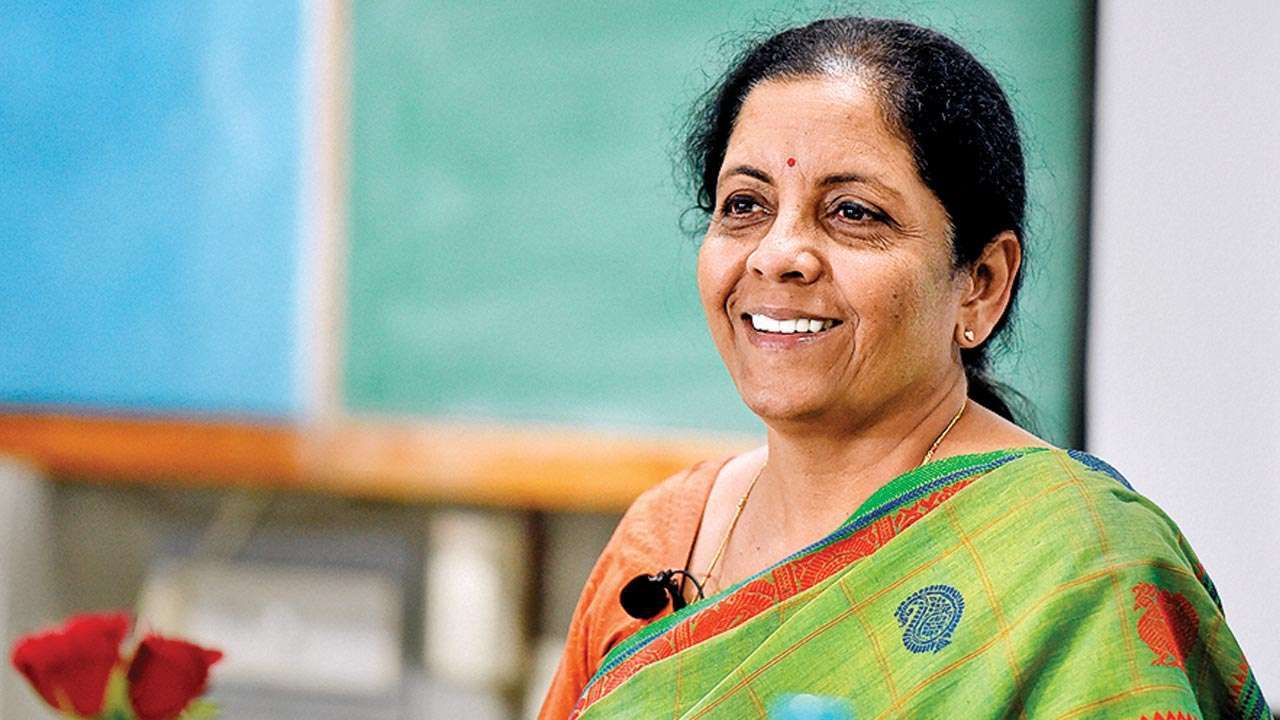
    Finance Minister Nirmala Sitharaman highlighted India’s robust economic growth on Friday, noting that it is the highest among major global economies. She described the 8.2% GDP growth for FY 2023-24 and the 7.8% growth for Q4 of FY 2023-24 as “remarkable.”

    Sitharaman emphasized the significant 9.9% growth in the manufacturing sector, attributing this success to the Modi government’s efforts. “This growth underscores the success of our government’s initiatives for the sector. Despite global challenges, many high-frequency indicators show that the Indian economy remains resilient and buoyant,” she said. “India’s growth momentum will continue into the third term of the PM Modi-led government,” she added.

    The RBI’s annual report also pointed out that emerging sectors like renewable energy and semiconductors are expected to advance rapidly due to recent government initiatives. The interim Union Budget 2024-25, which allocates Rs 6,903 crore for semiconductor and display fabs, is expected to make India a global hub for chip and electronics manufacturing.

    Investments under the production-linked incentive (PLI) scheme are anticipated to gain further momentum, creating new employment opportunities, improving labor incomes, and strengthening domestic demand, according to the report.

  • Global Investors Say PM Modi’s Re-Election Will Boost Market Confidence

    Global Investors Say PM Modi’s Re-Election Will Boost Market Confidence

    As the high-octane campaigning for the final and seventh phase of the Lok Sabha elections concluded on Thursday, global market investors have made their sentiments clear: Prime Minister Narendra Modi’s re-election would bolster the Indian stock market and drive economic growth to new heights.

    Ace investors like Mark Mobius and Jim Rogers have expressed confidence that a third term for PM Modi would ensure the continuation of the government’s robust economic policies. Mobius emphasized that if Modi secures over 400 seats, it would lead to significant advancements, particularly in infrastructure. “We will see another big push in India for substantial changes, especially in the infrastructure sector,” Mobius said, indicating his keen interest in infrastructure-related stocks.

    Rogers echoed similar sentiments, stating that PM Modi’s various initiatives have been beneficial to the economy. “If PM Modi wins, I expect the Indian stock market to remain strong,” Rogers said. He added that a significant dip in the Indian stock market would prompt him to start investing in India again.

    On Wednesday, top global brokerage S&P Global upgraded India’s outlook from stable to positive, which Finance Minister Nirmala Sitharaman hailed as a ‘good omen’ for the economy. She stated that the rating revision validates India’s robust growth and promising economic outlook.

    Despite some volatility since the start of the election’s first phase—a trend seen in previous elections—the Indian stock markets have remained relatively stable. The Sensex has largely stayed in the 73,000-75,000 range, while the Nifty has hovered between 22,000-23,000 levels since the polls began on April 19.

    Market experts noted on Thursday that, ahead of the general election results on June 4, foreign institutional investors (FIIs) and individual traders are net long on index futures. “It shows a high possibility that the NDA will succeed,” said Vaibhav Vidwani, Research Analyst at Bonanza Portfolio. Vidwani also observed that profit booking is evident as investors.

  • RBI Projects 7% Real GDP Growth for FY25

    RBI Projects 7% Real GDP Growth for FY25

    MUMBAI, May 30: The Reserve Bank of India (RBI) has projected a 7% growth rate for the Indian economy in the current fiscal year starting April, according to its annual report released on Thursday.

    The RBI noted that the Indian economy expanded robustly in the 2023-24 fiscal year, with real GDP growth accelerating to 7.6% from 7.0% in the previous year, marking the third consecutive year of 7% or higher growth.

    “For the 2024-25 fiscal year, real GDP growth is projected at 7.0%, with risks evenly balanced,” the report stated. Despite persistent headwinds, the economy demonstrated resilience in FY24, the RBI added.