Category: Uncategorized

  • Goyal to Review India-ASEAN Trade Pact Progress in Laos

    Goyal to Review India-ASEAN Trade Pact Progress in Laos

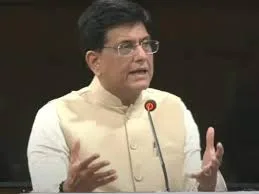
    New Delhi, Sept 20: Commerce and Industry Minister Piyush Goyal has embarked on a two-day visit to Vientiane, Laos, to participate in the 21st ASEAN-India Economic Ministers (AEM-India) meeting and the 12th East Asia Summit Economic Ministers Meeting (EAS EMM). A key focus of his visit will be reviewing the progress of talks regarding the India-ASEAN Free Trade Agreement (FTA) in goods.

    The ongoing review of the ASEAN-India Trade in Goods Agreement (AITIGA) is a high priority for India, with the aim to make the trade pact more business-friendly and reduce complexities for smoother transactions. Both sides aim to conclude the review by 2025. This agreement, originally signed in 2009, has been a cornerstone of India’s trade relationship with the ASEAN region, which comprises 10 Southeast Asian nations.

    During his visit, Goyal will hold bilateral meetings with his counterparts from countries like Korea, Malaysia, Switzerland, Myanmar, and Laos. These meetings are expected to strengthen India’s economic partnerships beyond ASEAN.

    ASEAN remains a vital trade partner for India, contributing around 11% to India’s global trade. In the last fiscal year (2023-24), India’s exports to ASEAN totaled USD 41.2 billion, while imports from the region stood at USD 80 billion.

    The upcoming fourth round of talks on the India-ASEAN trade pact review is scheduled for November, following the completion of the third round of negotiations in August in Jakarta, Indonesia.

    India’s collaboration with ASEAN, which started in 1992, has evolved into a Comprehensive Strategic Partnership as of 2022. For the past two years, ASEAN has been India’s second-largest trading partner. This review is crucial for addressing longstanding concerns of Indian businesses, particularly in tackling trade barriers and preventing the misuse of the agreement.

    The ASEAN member nations include Brunei, Cambodia, Indonesia, Laos, Malaysia, Myanmar, the Philippines, Singapore, Thailand, and Vietnam.

  • Kangana Ranaut Accuses CBFC of Delaying Release of “Emergency”

    Kangana Ranaut Accuses CBFC of Delaying Release of “Emergency”

    Just days before the highly anticipated premiere of her film “Emergency,” actor Kangana Ranaut has accused the Central Board of Film Certification (CBFC) of deliberately stalling its certification to delay the movie’s release. The film, in which Ranaut portrays former Prime Minister Indira Gandhi, was scheduled to hit theaters on September 6. However, the release is now in jeopardy due to certification issues.

    In a recent interview with Shubhankar Mishra on his podcast, Ranaut expressed frustration with the CBFC’s handling of her film. “An emergency has been imposed on my film too. It’s a very hopeless state. I’m quite disappointed in our country and whatever the circumstances are… How much will we keep getting scared?” Ranaut said. She vowed to take legal action if the CBFC does not provide clearance for the uncut version of the film. “I’ve made this film with a lot of self-respect which is why the CBFC can’t point out any contention. They’ve stalled my certificate, but I’m determined to release an uncut version of the film. I’ll fight in court and release an uncut version,” she added.

    Sources indicate that the film’s release has been postponed because the makers have yet to receive the official certification from the CBFC. Despite a U/A certificate being listed on the CBFC’s website, the filmmakers have not received the physical copy of the certificate. Reports suggest that the film is undergoing multiple cuts due to ongoing pressure, a situation Ranaut is fighting to address.

    On Monday, the Madhya Pradesh High Court is set to hear a petition from a Sikh organization seeking to halt the film’s release. Last week, Ranaut, who also serves as the film’s director, writer, and co-producer, claimed that contrary to rumors, her film has not been cleared by the CBFC. She alleged that there is pressure to remove depictions of the assassination of Indira Gandhi by her security guards.

    The Shiromani Akali Dal (SAD) has sent a legal notice to the CBFC, requesting a halt to the film’s release. The party alleges that the film could “incite communal tensions” and “spread misinformation.” They contend that the trailer of the film contains “erroneous historical facts” that misrepresent the Sikh community and promote social discord.

    As the legal and certification battles continue, the fate of “Emergency” remains uncertain, casting a shadow over the film’s premiere.

  • Budget: Small Gains Now, Long-Term Benefits Ahead

    Budget: Small Gains Now, Long-Term Benefits Ahead

    The past week was dramatic in more ways than one. Markets declined during the first four days of the week, extending losses for five consecutive days before a complete turnaround occurred on Friday, marking the start of the August futures series.

    The Union Budget was declared on Tuesday, and markets continued their losing streak both before and after the announcement. However, the losses from the first four days were more than compensated for by substantial gains on Friday. The BSE Sensex surged by 1,292 points, and the Nifty by 429 points. By the end of the week, the BSE Sensex had gained 728.07 points or 0.90%, closing at 24,834.35 points, while the Nifty gained 303.45 points or 1.24%.

    Broader markets also performed well, with the BSE 100, BSE 200, and BSE 500 gaining 1.65%, 1.83%, and 1.92%, respectively. The BSE Midcap rose by 3.13%, and the BSE Smallcap by 3.45%. The week ended with gains in one trading session and losses in four. Notably, FPIs bought on Monday and Friday but sold on the other three days.

    The Indian Rupee lost seven paise, closing at 83.73 to the US Dollar. The Dow gained in three out of five sessions, rising by 301.79 points or 0.75% to close at 40,589.34 points. There seems to be a correlation between the US and Indian markets, with both showing a sharp rally on Friday.

    Tuesday, July 23rd, saw the presentation of the Union Budget for the financial year 2024-2025. The budget included provisions for the stock markets, raising the long-term capital gains tax to 12.5% and the short-term capital gains tax to 20%. The Securities Transaction Tax (STT) on F&O was doubled. Additionally, the tax on buybacks was shifted from companies to individual taxpayers.

    The budget addressed various stakeholders, including farmers, employment, infrastructure, industry, and the salaried class. Relief was provided for the bottom-of-the-pyramid taxpayers, and customs duty on gold and silver was reduced to 6%, which could curb gold smuggling.

    One broad theme post-budget is the affordable housing sector, which could see significant activity. Companies involved in affordable housing, housing finance, and NBFCs and banks in this segment may benefit.

    Despite popular belief, this budget was not populist, which brought relief to the markets. Freebies were not announced in abundance.

    Thursday, July 25th, saw the July futures expire with gains of 361.70 points or 1.50%, ending at 24,406.10 points. The series saw new highs, culminating with the budget presentation.

    In primary market news, Sanstar Limited’s IPO listed on Friday, July 26th. It issued shares at Rs 95, reaching a high of Rs 127.68 and closing at Rs 115.09, a gain of 21.15%.

    Akums Drugs and Pharmaceuticals Limited’s IPO is opening on Tuesday, July 30th, and closing on Thursday, August 1st. The issue includes a fresh issue of Rs 680 crores and an offer for sale of 1,73,30,435 equity shares in a price band of Rs 646-679.

    Upcoming IPOs include Ceigall India Limited, opening on Thursday, August 1st, and closing on Monday, August 5th, and Ola Electric Mobility Limited, opening on Friday, August 2nd, and closing on Tuesday, August 6th.

    Looking ahead, markets are expected to consolidate after Friday’s gains. Valuations are high, and quarterly results have been mixed. The US FED meeting next week will be crucial, with no rate cut expected given the strong US economy.

    The strategy for the coming week is to book profits and remain cautious, as the risk-reward ratio currently favors caution. Look for investment opportunities selectively and avoid being fully invested at these elevated levels.

  • PM: Every Indian State Can Play an Active Role in Achieving the Viksit Bharat 2047 Ambition

    PM: Every Indian State Can Play an Active Role in Achieving the Viksit Bharat 2047 Ambition

    New Delhi, July 27 – Prime Minister Narendra Modi emphasized on Saturday that transforming India into a developed nation by 2047 is a shared ambition of all Indians, and states have a crucial role to play in achieving this goal due to their direct connection with the people.

    Speaking at the 9th Governing Council meeting of NITI Aayog, Modi highlighted that states can significantly contribute to the vision of “Viksit Bharat @ 2047” by leveraging their local engagement. He noted that this decade presents significant technological and geopolitical changes, along with numerous opportunities.

    Modi urged India to seize these opportunities and ensure that policies are favorable for international investments, which he sees as a critical step towards progress and development.

    The meeting aims to enhance participative governance and strengthen collaboration between the Centre and state governments, with a focus on improving the quality of life for both rural and urban populations through effective implementation of government initiatives.

    The NITI Aayog Governing Council, chaired by Modi and comprising all state chief ministers, lieutenant governors of Union Territories, and several Union ministers, will also address recommendations from the 3rd National Conference of Chief Secretaries held last December.

  • KVIC Achieves Record Sales of Rs 1.55 Lakh Crore in 2023-24

    KVIC Achieves Record Sales of Rs 1.55 Lakh Crore in 2023-24

    The Khadi and Village Industries Commission (KVIC) has achieved a remarkable 15.7 percent growth in sales, reaching a record Rs 1.55 lakh crore and generating an impressive 10.17 lakh new jobs in rural areas during the financial year 2023-24, according to official figures released on Tuesday.

    “In the last 10 financial years of the Modi government, sales of indigenous Khadi and village industry products made by artisans in rural areas have increased five-fold, from Rs 31,154.2 crore in the financial year 2013-14 to a record Rs 1,55,673.12 crore in the financial year 2023-24,” KVIC Chairman Manoj Kumar stated.

    Kumar highlighted that surpassing all previous records, there has been a 400 percent increase in sales, a 314.79 percent rise in production, and an 80.96 percent boost in new employment generation in 2023-24 compared to 2013-14. He attributed this outstanding performance to the inspiration of revered Bapu, the support of Prime Minister Narendra Modi, and the tireless efforts of millions of artisans working in remote villages across the country.

    He noted that PM Modi’s endorsement of Khadi has significantly increased public confidence in Khadi products, turning Khadi into a new fashion status symbol among the youth. The rising demand for Khadi and village industry products is evident in the production, sales, and employment statistics.

    Over the past decade, significant changes and decisions have been made to boost Khadi and village industry production, yielding positive results. These figures demonstrate the growing trust in ‘Make in India,’ ‘Vocal for Local,’ and ‘Swadeshi products.’

    There has been a notable increase in Khadi fabric production in the last ten years. Production rose from Rs 811.08 crores in 2013-14 to Rs 3,206 crores in 2023-24, marking a 295.28 percent jump, the best performance to date. Khadi fabric production in 2022-23 was Rs 2,915.83 crore.

    Demand for Khadi fabrics has also surged over the past decade. Sales grew from Rs 1,081.04 crores in 2013-14 to Rs 6,496 crores in 2023-24, an increase of 500.90 percent. Khadi fabrics worth Rs 5,942.93 crore were sold in 2022-23.

    PM Modi’s promotion of Khadi at high-profile events, such as the G-20 summit, has significantly boosted Khadi fabric sales, attracting global attention.

    KVIC, under the Ministry of Micro, Small, and Medium Enterprises, aims to maximize employment opportunities in rural areas.

    Kumar also reported unprecedented growth in the business of Khadi and Gramodyog Bhavan in New Delhi. Business volume increased by 87.23 percent, from Rs 51.13 crores in 2013-14 to Rs 95.74 crores in 2023-24.

  • Government Aims for 27% Increase in Onion Production, Ensures Stable Domestic Supply

    Government Aims for 27% Increase in Onion Production, Ensures Stable Domestic Supply

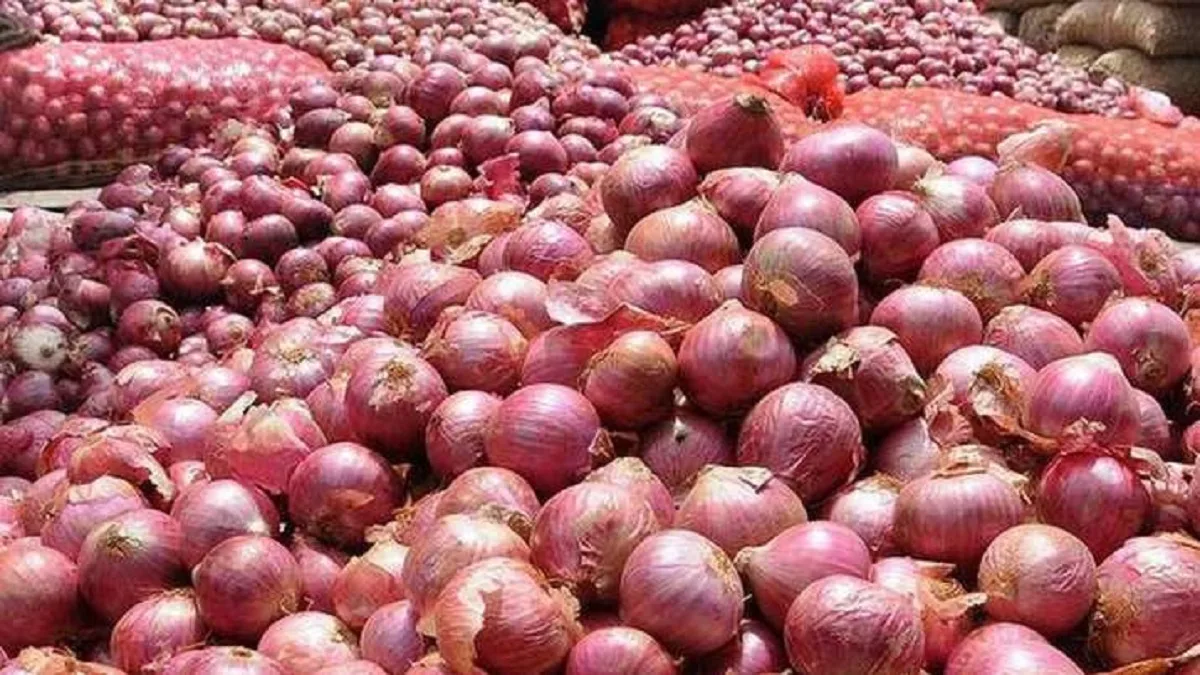
    The Ministry of Food announced on Friday that the target area for kharif onion cultivation this year is 3.61 lakh hectares, marking a 27% increase compared to last year.

    Despite a slightly lower production of onion during the rabi-2024 season, the Ministry of Food assured that the domestic market’s availability remains comfortable. In Karnataka, the leading kharif onion-producing state, sowing has been completed in 30% of the targeted 1.50 lakh hectares, with good progress noted in other major producing states. The Ministry highlighted that favorable and timely monsoon rains have significantly boosted kharif crops, including onions, tomatoes, and potatoes.

    According to the Ministry of Agriculture’s assessment with state governments, there has been a notable increase in the targeted area for kharif sowing of major vegetables such as onions, tomatoes, and potatoes compared to last year.

    Onion crops are harvested in three seasons: rabi in March-May, kharif in September-November, and late kharif in January-February. The rabi crop accounts for approximately 70% of the total onion production, while kharif and late kharif together constitute 30%. Kharif onions are crucial for maintaining price stability during the lean months between rabi and peak kharif arrivals.

    The Union government data indicates that the current market supply of onions is from the rabi-2024 crop, harvested in March-May 2024. The estimated rabi-2024 production of 191 lakh tonnes is sufficient to meet the domestic consumption of about 17 lakh tonnes per month, along with a continued export restraint of 1 lakh tonnes per month.

    Dry weather conditions during and after the rabi harvest this year have helped reduce storage losses of onions. Onion prices are stabilizing as farmers release more rabi onions into the market, aided by higher mandi prices and the onset of monsoon rains, which increase the risk of storage loss due to high atmospheric moisture.

    The target area for kharif potato cultivation has increased by 12% compared to last year. Himachal Pradesh and Uttarakhand have nearly completed their targeted sowing areas, while Karnataka and other states are progressing well. According to DAFW data, 273.2 lakh tonnes of rabi potatoes have been stored in cold storage this year, sufficient to meet consumption demand. Potato prices regulate the rate at which they are released from cold storage between March and December.

    The Ministry of Agriculture’s assessment with state governments indicates that the targeted kharif tomato area this year is 2.72 lakh hectares, up from 2.67 lakh hectares last year. Crop conditions are reported to be good in major producing areas such as Chittoor in Andhra Pradesh and Kolar in Karnataka, where tomato picking has started and will soon reach the market.

    District Horticultural officials in Chittoor and Kolar have reported that this year’s tomato crop is substantially better than last year’s. Kharif tomato areas are expected to increase significantly over last year in major producing states like Madhya Pradesh, Karnataka, Uttar Pradesh, Gujarat, Maharashtra, and Tamil Nadu.

  • People Voted for Performance, Rejecting Propaganda: PM Modi

    New Delhi, Jul 3 : Prime Minister Narendra Modi emphasized that the 2024 general election outcome reflects a rejection of propaganda and a mandate for performance. Addressing the Rajya Sabha during the debate on the motion thanking the President for her parliamentary address, Modi underscored the BJP’s commitment to the Constitution, highlighting its significance beyond its articles. He described the Constitution as a guiding beacon for governments and announced plans for a Constitution Day to promote its ethos nationwide. Modi also noted the historical significance of his government’s return to power after a decade and outlined ambitions for India’s economic rise, aiming to elevate it to the world’s third-largest economy from its current fifth position. He criticized the Congress, suggesting their governance operated on autopilot, contrasting sharply with his administration’s proactive approach.

  • Sensex Hits Record High of 80,000; Nifty Surges to 22,491.75 on Positive Global Cues

    Sensex Hits Record High of 80,000; Nifty Surges to 22,491.75 on Positive Global Cues

    Benchmark indices Nifty and Sensex hit record highs on Wednesday, with the Sensex crossing the 80,000 mark for the first time driven by strong performances in banking and FMCG stocks. Sensex reached 80,013.77, up by 572.32 points or 0.72 percent at the time of reporting. Nifty also surged to 24,291.75, marking an increase of 168 points or 0.70 percent.

    Bank Nifty started positively, rising by 704 points or 1.35 percent to 52,872.30, while Nifty Midcap saw a gain of 295.20 points, up by 0.53 percent to 56,149.90.

    Across the sectoral indices on the National Stock Exchange (NSE), Auto, Financial Services, FMCG, Media, Pharma, PSU Bank, Private Bank, Realty, Healthcare, Consumer Durables, Oil and Gas, and Nifty Midsmall Healthcare opened in the red, with only IT stocks trading lower in the initial hours.

    Top gainers on the NSE included HDFC Bank, Britannia, HDFC Life, Tata Consumer, and Kotak Bank, while losers in the initial market hours included TCS, Sun Pharma, Ultra Cement, and Tech Mahindra.

    Ajay Bagga, a Market and Banking expert, highlighted that higher global markets, boosted by Fed Chairperson Powell’s comments suggesting potential rate cuts in the US, influenced a positive opening for Indian markets. He noted a re-rating of IT stocks and a shift in leadership from NBFCs and PSU banks to private sector banks.

    Dr. V K Vijayakumar, Chief Investment Strategist at Geojit Financial Services, commented on the favorable impact of US inflation trends on global equity markets, anticipating a rate cut by the RBI following the Fed’s likely actions.

    The Nifty 50 index set a new high, indicating a sustained upward trend with potential upside momentum towards 24,400 following an intraday move above 24,300. The immediate support levels were seen at 24,000 and 23,500, affirming a positive bias unless breached.

    In contrast, Tuesday saw minor losses in domestic equity indices due to profit booking from record highs, with Sensex closing at 79,441.45, down by 34.74 points, and Nifty 50 settling at 24,123.85, down by 18.10 points. Despite these minor setbacks, the overall sentiment for Nifty remained positive, presenting consolidation phases as buying opportunities amid a bullish market pattern.

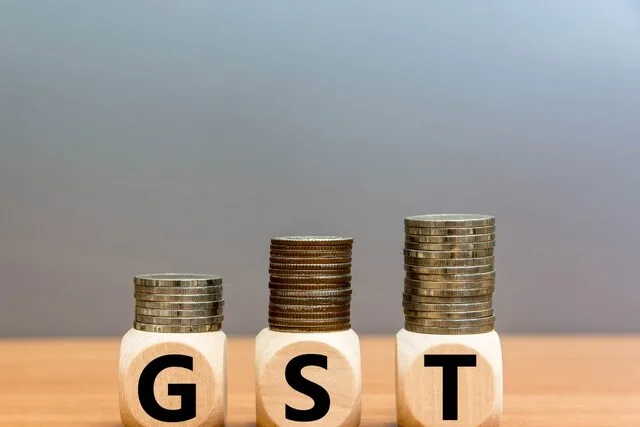
  • GST Collection Surges 7.7% in June to Reach Rs 1.74 Lakh Crore

    GST Collection Surges 7.7% in June to Reach Rs 1.74 Lakh Crore

    New Delhi : According to sources, India’s gross GST collection for June this year reached Rs 1.74 lakh crore, reflecting a notable 7.7% growth from the same month last year. This brings the total GST mop-up for the first three months of the current fiscal year to Rs 5.57 lakh crore. In April 2023, GST collection had peaked at a record high of Rs 1.87 lakh crore.

    The consistent rise in GST collections underscores India’s robust economic growth and strong tax compliance. Celebrating seven years of GST implementation on Monday, the finance ministry highlighted the positive impact of the GST regime, particularly through reduced taxes on household appliances and mobile phones.

    The theme for the 7th GST Day, “Sashakt Vyapar Samagra Vikas” (empowered trade overall growth), emphasizes the transformative role of GST in boosting trade and economic development.

    “With reduced tax rates on household goods after GST implementation, #7yearsofGST has brought happiness and relief to every home through lower GST on household appliances and mobile phones,” the ministry affirmed.

    Since April 2018, the GST taxpayer base has grown significantly, reaching 1.46 crore in April 2024. The GST Council’s initiatives include easing compliance for small taxpayers, including recommending the waiver of annual return filing requirements for those with turnover up to Rs 2 crore in fiscal 2023-24, further facilitating ease of doing business.