Author: Himalayan Express

  • Puppet Has To Go But Puppeteer Pair Must Be Held Accountable Too: Cong

    Puppet Has To Go But Puppeteer Pair Must Be Held Accountable Too: Cong

    The Congress on Tuesday alleged that the West Bengal assembly polls were a “text book case of mass manipulation and rigging” which was overseen by Chief Election Commissioner Gyanesh Kumar, and asserted that the “puppet” has to go but the “two puppeteers” too have to be held accountable.

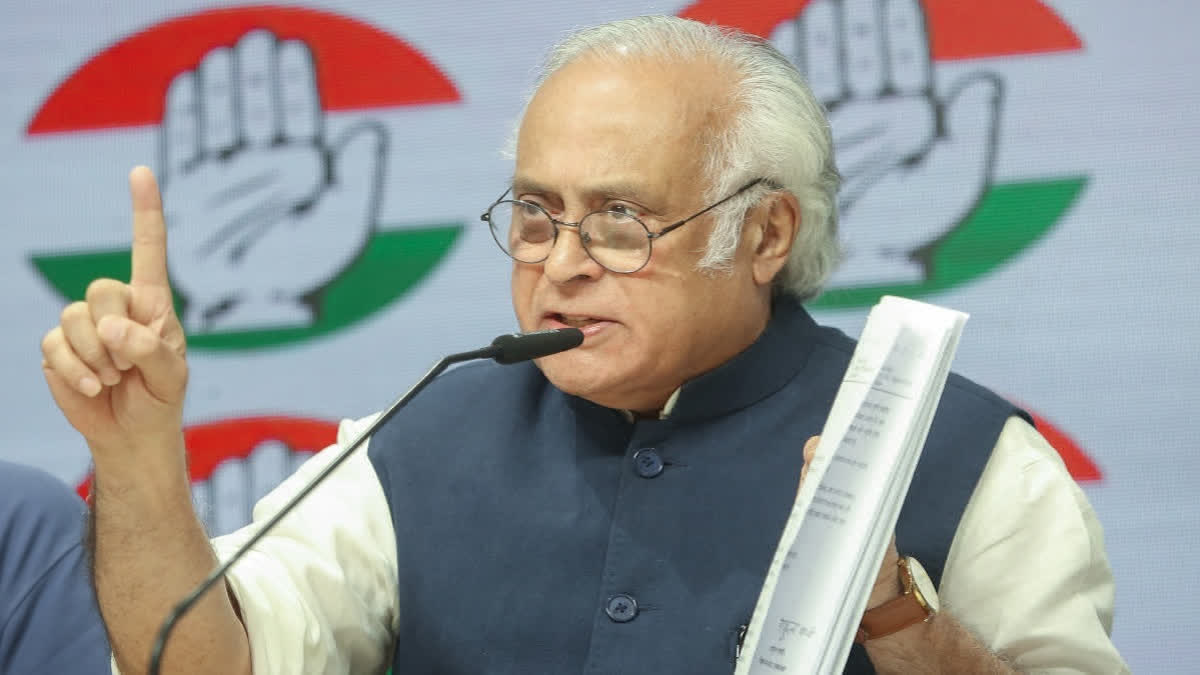
    Congress general secretary in-charge communications Jairam Ramesh shared the screenshot of a media report which claimed that judges of more than a dozen Tribunals appointed in West Bengal on the orders of the Supreme Court to process SIR appeals, including of 27 lakh deleted electors, have highlighted glaring gaps in a digital portal set up for them by the Election Commission of India’s IT division.

    In his post on X, Ramesh said, “More skeletons are tumbling out of the Election Omission of India’s closet.”

    “Clearly the PM-HM (Narendra Modi-Amit Shah) strategy was to somehow capture and win the West Bengal Assembly elections at any cost. It was a text book case of mass manipulation and rigging which was overseen by the CEC,” Ramesh alleged.

    The puppet has of course to go but the two puppeteers too have to be held accountable, he said in an apparent reference to Kumar, and Modi and Shah.

    “They stand brutally exposed and now it is only a matter of time for them to meet their reckoning,” Ramesh said.

  • IndiGo To Hike Fuel Surcharge For Domestic, International Flights From Oct 6

    IndiGo To Hike Fuel Surcharge For Domestic, International Flights From Oct 6

    The country’s largest airline IndiGo on Monday announced a hike in fuel surcharge for domestic and international flights in the wake of rising jet fuel prices.

    The revised charges will be effective from October 6, and the move will push airfares higher.

    The quantum of the hike ranges from Rs 100 to Rs 350 for domestic flights depending on distance. The hike in surcharge has also been effected for international flights. (Agencies)

  • Counter Intelligence Kashmir Carries Out Searches In J&K’s Anantnag

    Counter Intelligence Kashmir Carries Out Searches In J&K’s Anantnag

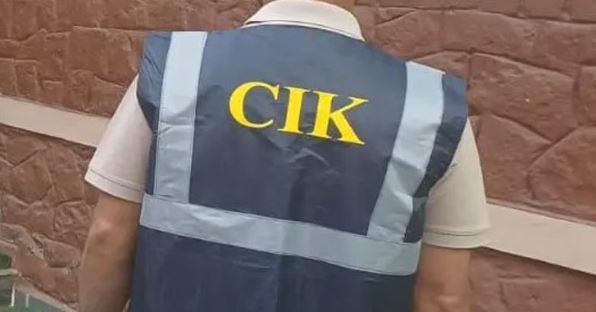
    The Counter Intelligence Kashmir (CIK) wing of Jammu and Kashmir police on Monday carried out searches at a house in Anantnag district and seized two mobile phones as part of a terror probe.

    Led by a Deputy Superintendent of police, the team conducted searches at the residence of a woman suspect at Janglat Mandi, officials said.

    They said the team recovered two mobile phones and associated SIM cards from the suspect and took these for analysis.

  • Legislative Privileges Issue: SC Says No Point In Engaging In Academic Exercise

    Legislative Privileges Issue: SC Says No Point In Engaging In Academic Exercise

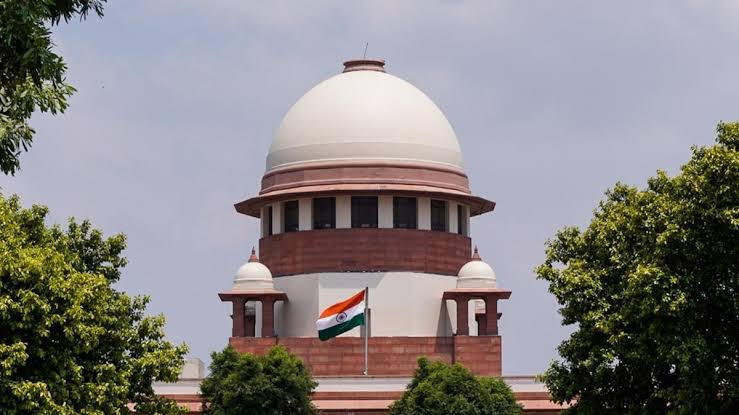
    The Supreme Court on Monday said it would not engage in an academic exercise while dealing with the interpretation of provisions related to the scope of legislative privileges of MLAs and its effect on the freedom of speech and expression after the Tamil Nadu Assembly said that the impugned resolution of 2003 was already withdrawn in 2004.

    A bench of Chief Justice Surya Kant and Justices Joymalya Bagchi and V Mohana was told by senior advocate Raju Ramachandran, appearing for the Tamil Nadu Assembly, that since the seven-judge constitution is scheduled to sit from Tuesday, it is their duty to bring to the notice of the court that the issue may not survive as the resolution in question was withdrawn.

    Ramachandran said he does not know how this fact of withdrawal of the resolution was not brought on record and may be a case of omission from lawyers of either side.

    CJI Kant said, “My suggestion will also be that don’t get engaged in academic exercise. If the issue survives, we should proceed and decide it, but if the issue does not survive, then we should leave the question open and wait for the right time.”

    Senior advocate Kapil Sibal, also appearing in the matter, supported the suggestion of the CJI and said that although the issue is important, it would be appropriate to adjudicate it when the issue arises.

    Solicitor General Tushar Mehta also agreed with the suggestion and said there is no point in getting into the academic exercise.

    The bench asked Ramachandran to place the resolution before the seven-judge bench, and the court will consider it on Tuesday and dispose of the issue.

    The issue concerning the interpretation of provisions related to the scope of legislative privileges of MLAs and its interplay with the fundamental right to freedom of speech and expression was referred to a five-judge bench in December 2003.

    “It is evident that substantial questions of law as to the interpretation of Articles 194(3), 19(1)(a), interplay between these two articles, Article 21 and also as to the interpretation of other provisions of the Constitution of India are involved,” the apex court had said in its December 8, 2003 order.

    In December 2004, when the matter came up before the five-judge bench, it was informed of the conflicting views on the issue by two separate benches.

    The five-judge bench then recommended that the issue be placed before a seven-judge bench for authoritative determination.

    One of the pleas — titled N Ravi and others versus Speaker, Legislative Assembly, Tamil Nadu — raises the question whether fundamental rights override legislative privileges.

    The case pertains to 2003, when journalist N Ravi and others approached the top court after the Tamil Nadu Assembly’s then speaker K Kalimuthu ordered their arrest for alleged breach of privilege and contempt.

    The top court had then stayed the arrest of six journalists and later referred the matter to a seven-judge bench in view of conflicting verdicts.

    One of the judgments had held that fundamental rights should prevail, while the 1965 verdict said fundamental rights were subservient to parliamentary privileges. (Agencies)

  • Demand For Restoration Of Buddhist Temple In Zanskar To Be Looked Into: Kundra

    Demand For Restoration Of Buddhist Temple In Zanskar To Be Looked Into: Kundra

    The government has assured the people of Zanskar district in Ladakh that their demand for restoration of a 1,000-year-old Buddhist temple and reconstruction of the link road and Zangla bridge would be looked into, officials said on Monday.

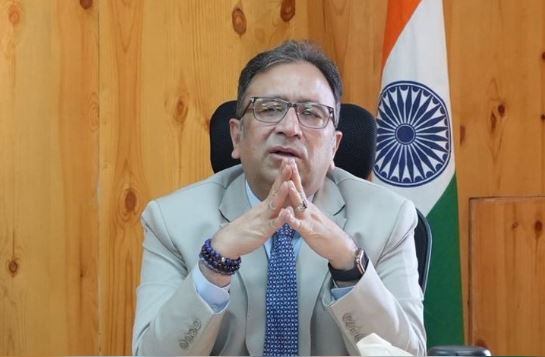
    The assurance was given by Chief Secretary Ashish Kundra during his two-day visit to Zanskar.

    Kundra reviewed various construction and developmental works in and around Padum and interacted with local residents and delegations, they said

    A delegation led by the local representative submitted a memorandum highlighting various developmental and infrastructure-related demands, including restoration of the temple, reconstruction of the link road and Zangla bridge, funds for parking facilities at Buddha Park, establishment of a library and improved telecommunications infrastructure, they said.

    Kundra assured them that the matters would be examined by the departments concerned.

    The chief secretary addressed a public gathering in Zangla village and interacted with residents. He inspected works being implemented under the special development package, including the new police station building, tourism department’s amphitheatre and munsif court building.

    At the munsif court construction site, he stressed the need for an integrated judicial complex accommodating both the revenue court and munsif court to ensure better coordination and efficient delivery of judicial services.

    He also visited Government Degree College, Padum, Community Health Centre and Handloom Weaving Centre, where he reviewed ongoing activities and assessed infrastructure requirements.

    Kundra directed the officers to ensure timely completion of ongoing works while maintaining quality standards and addressing the requirements of the local population.

  • Nearly A Dozen Rohingya Structures On Forest Land Demolished In Jammu

    Nearly A Dozen Rohingya Structures On Forest Land Demolished In Jammu

    The authorities on Saturday demolished nearly a dozen illegally constructed huts, mostly occupied by Rohingya immigrants, on forest land in Jammu, marking the second major eviction drive targeting the community in the winter capital of Jammu and Kashmir within a month.

    The anti-encroachment drive was carried out by the forest department in collaboration with the Forest Protection Force, revenue department and police at Rahim Nagar within the Raika Forest on the outskirts of Jammu, officials said.

    Among those whose structures were demolished was a native of Jammu, Stephen, who alleged that he was not served any prior notice before the eviction drive.

    He claimed the demolition team arrived early in the morning and gave little time to the occupants to remove their belongings.

    Expressing concern over the loss of his belongings, Stephen said he had been living in the area for the past 10-12 years and had nowhere to go with his children following the demolition drive.

    A forest official claimed the occupants had been warned twice within a fortnight before the demolition drive.

    “The residents were allowed to remove their belongings before the structures were demolished,” he said, adding that the belongings were taken out first while the children and women were moved outside with the assistance of women’s police personnel.

    There are video recordings of the operation during which only structures identified as illegal were razed, he said.

    The official said the area spans roughly five hectares and the department prepared detailed data about the encroachments.

    “The action was not directed against any particular community or group, but was solely aimed at removing encroachment from forest land. The forest rules are the same for everyone. There is no question of targeting any particular group. This action was solely against encroachments on forest land,” the official said.

    He also warned that action would be taken against the other identified encroachments, and suggested that those requiring accommodation should seek rented housing or acquire land through legal means.

    The Rohingya immigrants said they had been living in the area for nearly two decades after fleeing difficult circumstances in their home country, Myanmar, and the latest eviction drive had left several families without shelter.

    “We escaped oppression in our country and took shelter here out of compulsion. We are not here to stay permanently. We hold identity cards issued by the United Nations,” Abdul Khaliq said.

    “We have nowhere to go and are uncertain about the future of our children,” he said, appealing to the authorities to consider the plight of the affected families.

    Last month, a Rohingya settlement in the Karyani Talab area of Jammu was cleared after the authorities served eviction notices to owners of plots who rented out their land to immigrants.

    The action came nearly a month after a Central committee on demographic changes visited Jammu from August 10 to 12 to gather information on issues relating to demographic changes, including illegal immigration.

    The committee also visited the Rohingya settlement in the Karyani Talab area.

    The committee was constituted on May 26 under the chairmanship of Justice Prakash Prabhakar Navalkar (retired) to examine demographic changes and suggest administrative and legal measures.

    Government data presented to the committee in August showed that 7,656 Rohingyas had been identified across Jammu and Kashmir.

    Of these, 6,737 were identified across the 10 districts of the Jammu region, while 919 were identified across the 10 districts of the Kashmir Valley. (AGENCIES)

  • Even Under British Rule, Civil Services Exam Had A Sanskrit Paper: PM Modi

    Even Under British Rule, Civil Services Exam Had A Sanskrit Paper: PM Modi

    Highlighting a historical detail from India’s pre-Independence administrative setup, Prime Minister Narendra Modi has pointed out that even under British rule, the civil services examination included a paper in Sanskrit.

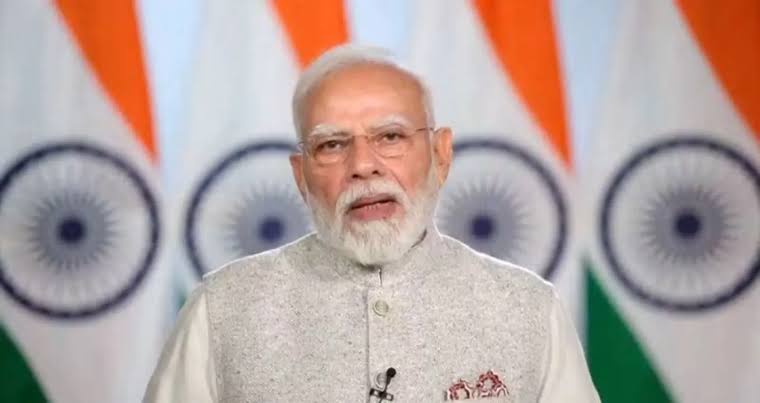
    Addressing the centenary celebrations of the Union Public Service Commission (UPSC) at the Bharat Mandapam on Thursday, the prime minister shared an observation from an archival exhibition set up at the venue, noting that legendary freedom fighter Netaji Subhas Chandra Bose had appeared in a Sanskrit paper during his examination in 1920.

    “While looking through the gallery, I noticed that it also contains information about how Subhas Chandra Bose went through this very process in 1920,” the prime minister said, adding, “What caught my attention was that although India was under British rule at the time, there used to be a Sanskrit paper in the examination, and Subhas Babu wrote this paper,” Modi said.

    The prime minister also praised Bose and other historical stalwarts for their contributions, noting that many people transformed the examination process into a “legacy of trust” over the past century and elevated the institution to new heights.

    Modi urged young aspirants and attendees to visit the gallery to appreciate the deep-rooted historical journey of India’s civil services structure.

    To mark the 100-year milestone of the UPSC, the prime minister also released a special commemorative coin, a postage stamp, and a book documenting the landmark decisions shaping public service commissions in India. (Agencies)

  • After Full Implementation Of BNS, Cases From FIR To Supreme Court Will Be Disposed Of In 3 Yrs: Shah

    After Full Implementation Of BNS, Cases From FIR To Supreme Court Will Be Disposed Of In 3 Yrs: Shah

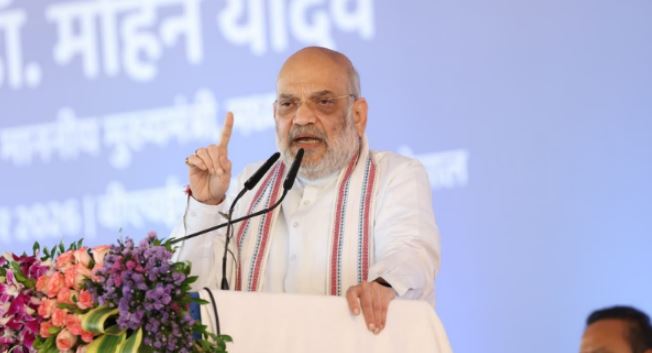
    Union Minister Amit Shah on Saturday said that after the full implementation of the Bharatiya Nyaya Sanhita (BNS), cases from the FIR stage to the Supreme Court will be disposed of within three years.

    He was addressing the state-level conference of cattle rearers here after inaugurating an exhibition on the new criminal law.

    “Today, two events have just taken place in Bhopal. First, an exhibition on the new nyaya sanhita (BNS) was inaugurated, and a conference of cattle rearers was held. Such a large number of cattle rearers have come here, which is a great omen for the milk revolution in Madhya Pradesh,” he said.

    Shah, who heads the Home and Cooperation ministries, said India’s criminal justice system was earlier known for delays, but the situation had improved.

    “I have come especially to tell (the people and) the youth that after about one and a half years, once the (new criminal law) is fully implemented, any case, from the filing of an FIR to the Supreme Court, will be disposed of within three years,” he said.

    The laws made by the British were brought in to protect their government and their rule, he said.

    “The new criminal law has been introduced to protect the dignity of the citizens of India. Its basic principle is justice, not punishment. Punishment is provided for only where necessary, to deter those who commit crimes,” he said.

    After the full implementation of the BNS, India’s criminal justice system will become the most modern in the world, Shah said.

    Hitting out at the opposition Congress, Shah said that ever since the country gained Independence, people associated with the agricultural system, rural development and cooperatives had been demanding an independent cooperative ministry.

    “However, these Congressmen did not allow it to be formed for 75 years,” he said.

    After Prime Minister Narendra Modi took charge, he established a separate cooperative ministry, said Shah.

    “If anyone is going to benefit the most from the formation of the cooperative ministry, then it will be the cattle rearers,” he said.

    Milk production has also accelerated under PM Modi, said the Union minister.

    “In 2014-15, India’s total milk production was 14.7 crore tonnes. In 75 years, it reached only 14.7 crore tonnes. But Modi ji worked hard to increase it to 25 crore tonnes in 10 years,” he said,

    Efforts are being made to improve cow breeds with modern technology and ensure that they don’t fall sick, he said.

    The Congress has only spread “negativity”, while PM Modi has lifted the country high in different sectors, he said.

    “Modi ji has taken a pledge and has also made crores of people in the country take a pledge that by August 15, 2047, India will be number one in the world in every field,” he added. (Agencies)

  • “Drones Are Evolutionary, Not Revolutionary”: IAF Chief AP Singh Rules Out Separate Drone Force, Stresses Integrated Operations

    “Drones Are Evolutionary, Not Revolutionary”: IAF Chief AP Singh Rules Out Separate Drone Force, Stresses Integrated Operations

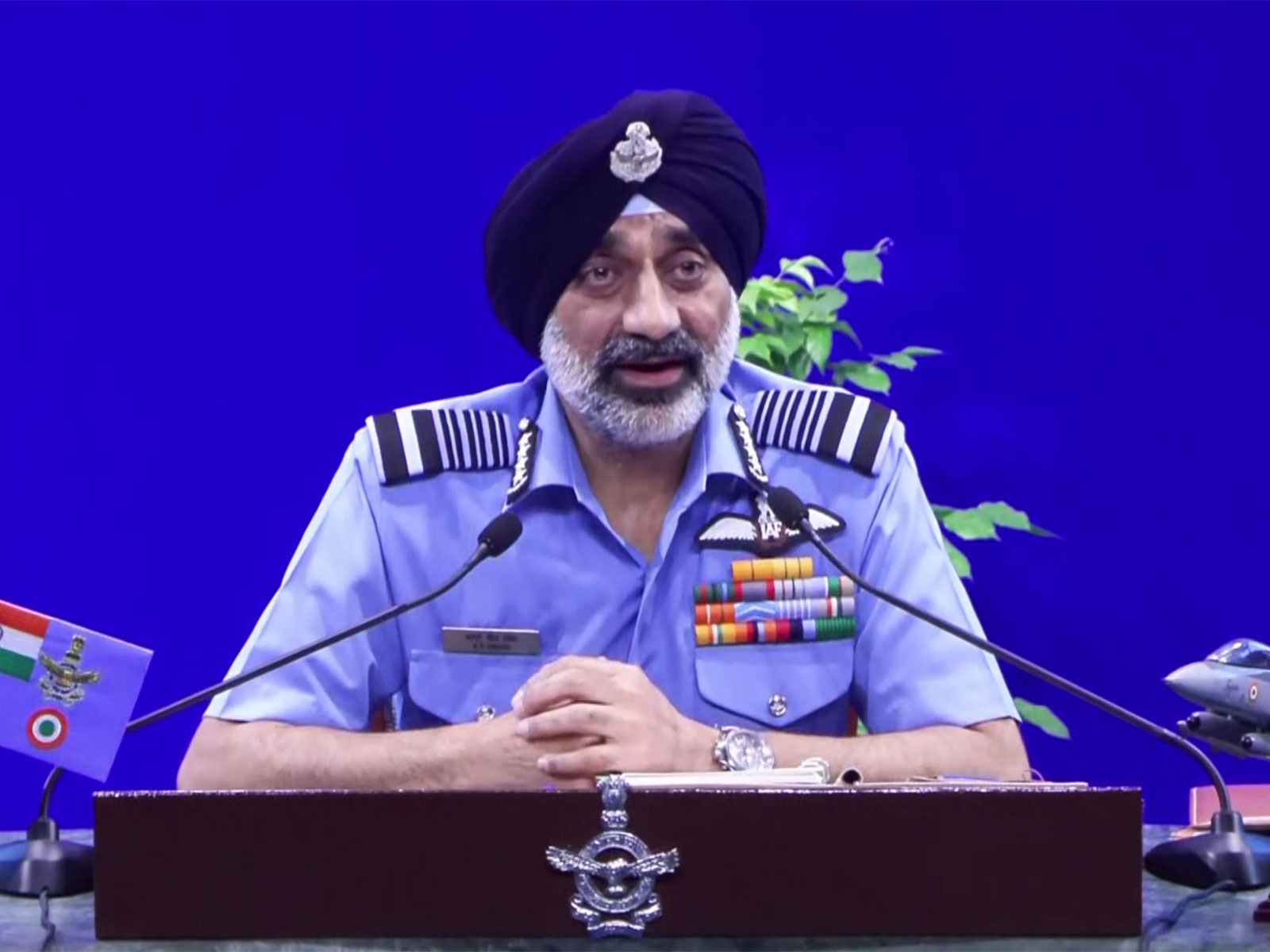
    Indian Air Force Chief Air Chief Marshal AP Singh on Saturday said drones were “evolutionary” rather than “revolutionary” for the force and ruled out the creation of a separate drone force, stressing that unmanned systems and loitering munitions would be more effective when integrated with other weapons and platforms.

    Addressing the IAF’s annual press conference in New Delhi, Singh said drone capabilities had existed within the Indian Air Force for decades and were now being expanded in terms of numbers, types and capabilities.

    “Drones are not revolutionary to the Indian Air Force, but evolutionary. We are growing the number of drones and loitering munitions. Whether we need a separate drone force, I don’t think so. They should be a part of the same setup, and we have to be operating together,” Singh said.

    He said different weapon systems should not operate in isolation and stressed the need for coordinated operations to achieve the desired battlefield effect.

    “These have to be together along with other weapons so that they bring in that effect. We cannot be operating one type of weapon separately somewhere and another type of weapon separately. So we have not thought of having a separate drone force,” he said.

    Singh noted that the IAF already has specialised units dealing with such capabilities and said their numbers could be increased if required.

    “Loiter ammunition did help us in creating chaos and also taking down some of the AD assets,” he said, while reiterating that drones and loitering munitions had been part of the IAF’s capabilities for decades.

    “So, if I can say drones are not revolutionary for the Indian Air Force; yes, they are evolutionary. So, we are growing in drones, number of drones, number of loiter ammunitions, and type of drones and type of loiter ammunition is increasing,” Singh said.

    The IAF chief’s comments come as unmanned aerial systems and loitering munitions are increasingly being incorporated into modern military operations. He said the force’s approach was to integrate these systems with other weapons rather than operate them as an independent arm.

    Singh also addressed the IAF’s fighter aircraft strength and ongoing acquisition programmes. He acknowledged that the force’s aircraft numbers were declining and said delays in planned inductions had affected the IAF.

    “Everybody understands this fact that our numbers are decreasing, the aircraft that were supposed to come, on which we were relying, they have also come slow,” he said.

    He said the IAF was looking towards platforms including Tejas Mark-1A, Multi-Role Fighter Aircraft (MRFA) and the future Mark-2 fighter to bridge existing and anticipated gaps.

    Singh also said that if there were further delays in the Advanced Medium Combat Aircraft (AMCA) programme, the IAF may have to examine other options, while noting that Russia had offered the Su-57.

    He clarified that no decision had been taken on the offer.

    The IAF chief said all major aircraft programmes needed to be pursued through a “whole-of-nation approach” to ensure timely delivery and operational capability. (Agencies)

  • Will Help People Where Truth Is Being Crushed: Rahul Gandhi After Launching ‘Satyagraha’ Platform

    Will Help People Where Truth Is Being Crushed: Rahul Gandhi After Launching ‘Satyagraha’ Platform

    Congress leader Rahul Gandhi on Saturday alleged that truth is being suppressed and that it was his responsibility to ensure this did not happen, as he launched the ‘Satyagraha’ digital platform to consolidate issue-based protests occurring across the country.

    He urged people to register their protests against the government on the ‘Satyagraha’ platform, which he launched a day after the 152nd birth anniversary of Mahatma Gandhi, to help ensure aid for people wherever “truth was being crushed”.

    “Across the country, people are fighting for their rights – and too often, fighting alone. Gen Z, students, farmers, Adivasis, Dalits, women — every struggle has its own story. But a lone voice is often easier to silence.

    “‘Satyagraha’ is an initiative to bring these voices together on one map,” he said in a post on X.

    Invoking Mahatma, the Congress MP said, “Bapu taught us that truth is our greatest weapon. But an even greater weapon is standing together with the truth. If you too are fighting against any injustice, share your story. It will take just two minutes.”

    Gandhi said their protest will find a place on the Satyagraha map, adding “you will see who else, like you, is fighting their own battle”.

    “And I will do whatever I can – in Parliament, on the streets, through letters, wherever I am needed – to stand with you. As the Leader of the Opposition, that is my responsibility. Tell me the story of your Satyagraha…,” he said.

    In a video posted along with it, the Raebareli MP said, “As you all know, truth is being suppressed all across the country, and there are multiple protests happening across the country.”

    Noting that protests on land, women’s rights, Dalit rights, OBC rights, education, and exams are taking place, he said, “And we want to help organise these protests, put them together on one map, and work together with you to see if we can help you resolve what you’re fighting for. Take a look at the Satyagraha website. Fill out the form. Enroll your movement on the website, and we will try to see how we can support you. We’ll be in touch.”

    “As the leader of the opposition, it’s important for me to help people resist where truth is being crushed. The truth is important. It’s important at the highest levels, but it’s important that we fight for it in every corner of the country,” Gandhi said in his video message. (Agencies)