Minister for Jal Shakti, Forest, Ecology & Environment and Tribal Affairs, Javed Ahmed Rana, today e-inaugurated and e-laid foundation stones for four projects under the Forest, Ecology & Environment Departments across Budhal, Thanamandi and Rajouri constituencies.
The projects, funded under UT Capex and having a combined cost of ₹131.71 lakh, are aimed at promoting eco-tourism, providing recreational spaces to local communities and strengthening forest and wildlife protection infrastructure.
The projects included two eco-parks in Nanga Thub (Bakori) and Nambal (Budhal), each being developed at an estimated cost of ₹40 lakh under the Rajouri Forest Division. The foundation stones for both projects were laid in presence of MLA Budhal, Javid Iqbal Choudhary.
The Minister also laid the foundation stone for a Forest Check Post at Darhal, to be constructed under the Rajouri Forest Division at an estimated cost of ₹11.71 lakh under UT Capex 2026-27, in presence of MLA Thanamandi, Muzaffer Iqbal Khan.
He also e-inaugurated the Range Office Building at Rajouri, constructed by the Department of Wildlife Protection at a cost of ₹40 lakh, in presence of MLA Rajouri, Iftkhar Ahmed.
Speaking on the occasion, the Minister said that the projects reflect the Government’s commitment to balance the environmental conservation with development while creating quality recreational and eco-tourism facilities for local communities.
Highlighting the importance of eco-parks in Jammu and Kashmir, Rana said that such initiatives promote harmony between nature, forests, wildlife and local communities while creating opportunities for eco-tourism and ecological restoration. He emphasised the need to develop eco-parks and undertake conservation measures in a manner that safeguards the natural environment while providing quality recreational spaces and sustainable livelihood opportunities for local communities.
“These eco-parks will provide quality public spaces for the people and promote eco-tourism while the forest check post and Range Office will further strengthen the protection, monitoring and management of our forests and wildlife,” he said.
Rana directed the officers concerned to ensure timely completion of the ongoing works and maintain the prescribed quality standards. He asked them to ensure proper upkeep of the facilities after their completion so that these serve the intended purpose and benefit the local population.
The Minister also reviewed the ongoing soil conservation and forest protection measures being undertaken across the concerned constituencies and called for a focused approach towards preventing soil erosion, protecting vulnerable slopes and strengthening measures for conservation of natural resources. He directed the officers to identify the vulnerable areas on priority and undertake appropriate soil conservation works in a timely manner, particularly in areas prone to erosion and degradation.
Rana stressed the need for effective coordination between the concerned departments and field functionaries to ensure that conservation measures yield sustainable results on the ground. He directed the officers to closely monitor the progress of works, ensure adherence to prescribed quality standards and complete all ongoing projects within the stipulated timelines. He further called for proper maintenance of the completed facilities and regular field-level monitoring to ensure their optimum utilisation for the benefit of local communities.
Chief wildlife warden, DFO Rajouri, Warden Poonch-Rajouri Range along with other officers were present on the occasion.
Author: Himalayan Express
-
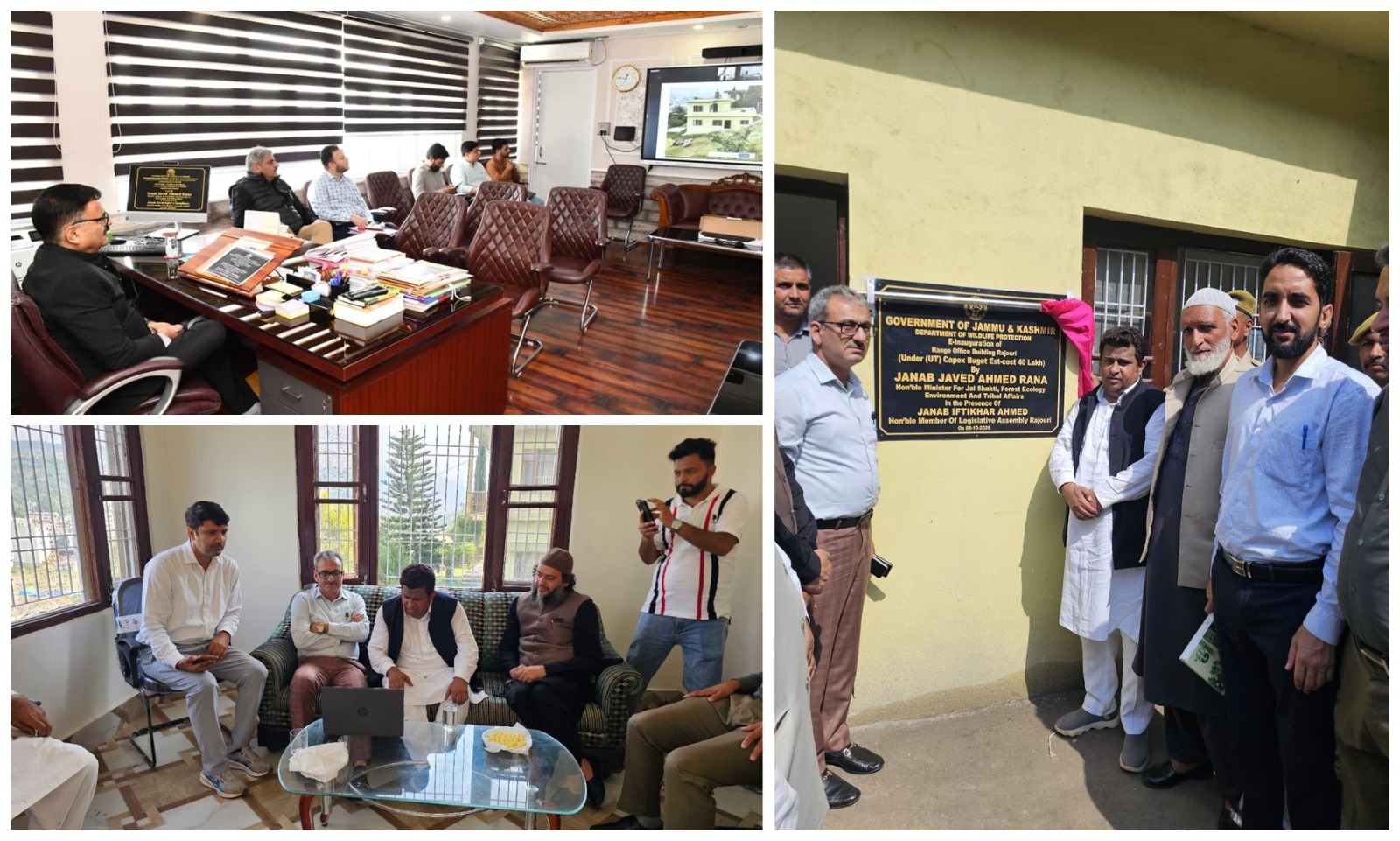
Rana e-inaugurates, lays foundation for forest, wildlife projects worth ₹1.31 cr in Rajouri
-
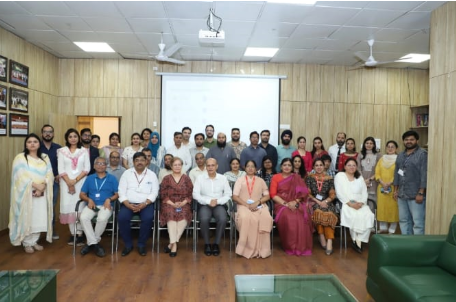
GMC Jammu and ICMR Collaborate to Tackle Cancer Challenges
Jammu, October 8, 2026:
In a crucial effort to combat rising cancer cases in the region, Government Medical College (GMC), Jammu, partnered with the Indian Council of Medical Research (ICMR) for a two-day workshop focused on cancer prevention and early screening. Held on October 7 and 8, 2026, the initiative gathered an array of stakeholders, including senior government officials, medical professionals, and researchers, to forge effective strategies against breast, oral, cervical, and gastric cancers in Jammu & Kashmir and Ladakh.
The workshop comes at a critical time as the demand for effective cancer management grows. Participants aimed to create practical, evidence-based plans to bolster cancer prevention, diagnosis, treatment, and follow-up care in these under-served regions. “The collaboration aims to lay a foundation for early detection and timely intervention, which are vital in improving survival rates, especially for breast cancer,” stated Dr. Ashutosh Gupta, Principal GMC Jammu.
Tailored Strategies for Local Needs
A focal point of the workshop was the challenge of implementing health interventions that meet local needs. Expert contributions came from key figures such as Dr. Jyotsna Suri, HOD Pathology, and several ICMR specialists including Dr. Nisha Jose, who emphasized designing responsive healthcare programs tailored to the unique socio-economic landscapes of Jammu and Kashmir.
A session led by Dr. Pulkit Verma focused on the importance of data management. With comprehensive data collection and monitoring systems, healthcare providers can generate reliable evidence for assessing intervention outcomes. The integration of digital platforms for data management will significantly enhance the observational capabilities of ongoing cancer initiatives.
Enhancing Breast Cancer Outcomes
One of the primary objectives was to develop proposals aimed at improving breast cancer survival rates. Participants identified critical segments within the breast cancer care spectrum such as awareness, early detection, screening processes, timely diagnosis, and access to necessary treatments. “It is imperative to address gaps within the breast cancer care pathway to improve patient outcomes effectively,” noted Dr. Bhawana Sirohi, Medical Director at BALCO Medical Centre.
Comprehensive Cancer Screening Approach
The workshop also introduced an integrated strategy for screening various cancers, focusing on developing targeted prevention measures. Discussions on identifying high-risk populations and enhancing referral pathways for advanced screenings marked significant steps towards a community-oriented health response.
Collaborative Efforts between GMC and ICMR
The collaboration between GMC Jammu and ICMR underscores the necessity of institutional synergy in confronting public health challenges. Engaging with leading experts from various healthcare backgrounds allowed local practitioners to realize the significance of integrating top-tier research with regional healthcare frameworks.
The workshop is anticipated to pave the way for crafting actionable proposals that will reinforce cancer prevention mechanisms and enhance care services across Jammu & Kashmir and Ladakh.
Looking Ahead
The outcomes from this workshop aim to:
- Strengthen awareness and prevention programs
- Enhance population-level cancer screenings
- Facilitate early detection and prompt diagnosis
- Improve treatment pathways and patient survival
- Foster adaptable interventions tailored to local conditions
- Implement robust data management systems for monitoring
- Generate evidence to influence future cancer control strategies
- Encourage collaboration among medical institutions and administrative bodies
A Landmark Initiative in Cancer Control
This workshop represents a pivotal advancement towards formulating a cohesive, evidence-driven cancer-control framework in Jammu & Kashmir and Ladakh. The concerted efforts of policymakers, medical practitioners, researchers, and program managers aim to dismantle barriers and ensure that health advancements translate into meaningful improvements in cancer care. Ultimately, the goal remains to enhance patient outcomes by ensuring early detection, timely treatment, and comprehensive support throughout the cancer care continuum.
-
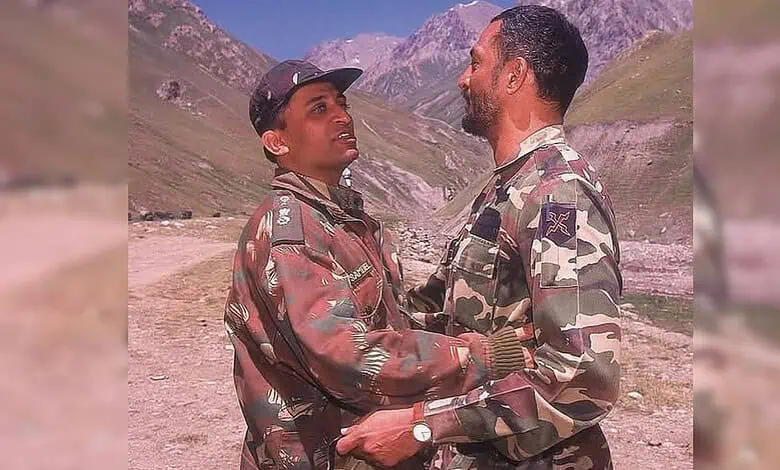
When Nana Patekar Put Acting Career On Hold, Joined Army During Kargil War
At the height of the Kargil War in 1999, Nana Patekar put his acting career on hold and sought permission to join the Indian Army at the war front, a chapter of his life that the veteran actor recalled years later during his appearance on “Kaun Banega Crorepati”.
Patekar, who died on Thursday at the age of 76 due to cardiac arrest in Goa, had rigourously trained with armed forces for his 1991 movie “Prahaar: The Final Attack”, in which he essayed the role of Major VS Chavan.
He trained with the Maratha Light Infantry for three years for the film, which he had also written and directed.
When the Kargil conflict broke out, Patekar approached senior army officers with a request to join the troops but was told that such permission could only be granted by the Defence Minister.
“I knew our Defence Minister George Fernandes ji, so I called him. Even he said it was impossible,” Patekar told megastar Amitabh Bachchan when he appeared on KBC in August 2024 when he was promoting the movie “Vanvaas”.
“I told him, ‘Commission toh six months mein hota hai, maine toh teen saal guzaare hain.’ He asked where, and I told him about my experience with the Maratha Light Infantry. Then he asked, ‘Kab jaana chahte ho?’ I told him, ‘Today.’”
The actor eventually received permission and travelled to the Kargil conflict zone in August 1999, where he spent time with Army personnel near the Line of Control.
Patekar said he spent around 60 days with the troops during the conflict, travelling to places including Dras, Leh, Kupwara, Baramulla and Sopore.
“I was 76 kg when I reached Srinagar. By the time I came back, I was 56 kg,” he recalled.
He said he was eventually a part of a Quick Reaction Team (QRT) and later helped at a military hospital in Srinagar.
“There, the bodies of martyred soldiers were brought in. It was deeply distressing, as many of the bodies were in a bad state. The mortal remains were carefully made presentable before being sent back to their hometowns. I worked there for six days.
“One day, I was roaming in the ward and one person shouted from behind, ‘Hey Nana.’ I knew that person and he was draped in a long sheet. I touched him and he was burning. He told me he had fever for past 4 days. He wanted go to back to battlefield but couldn’t. He then showed that his legs were cut off,” he recounted.
For Patekar, it as an act of heroism but service to country.
“I tell this to all actors. You have your own share of joys and sorrows in life. Keep performing from that space. Unless your definition of happiness and sorrow keeps changing, you won’t be able to sustain yourself for long.
“Go out and look around; there are all kinds of sorrows and joys. But your perception of happiness and sorrow should change,” he said. (PTI)
-

Air India To Offer Travel SIM Cards To Passengers For Overseas Trips
Air India will offer travel SIM cards to passengers for their overseas trips.
EasyRoam, an Air India-branded travel SIM card that offers international roaming services, has been developed in partnership with Tata Communications.
The ancillary product will be available for purchase as a physical SIM card as well as eSIM on a dedicated Air India-branded webpage, the airline said in a release on Thursday.
With the card, passengers will be able to access voice and data services during international travel.
Air India and Tata Communications are part of the Tata Group.
Initially, the SIM card will be provided free of cost while roaming pack charges will apply.
It will be available for 30 countries across North America, Europe (including the UK), Australia, Asia-Pacific and the Middle East, the release said. (Agencies)
-

Govt Slams Elon Musk’s Allegations; Says Fair, Non-Discriminatory Rules In Place For Satcom
The Government on Thursday slammed US business tycoon Elon Musk over his allegations that Starlink’s satcom services are being blocked, and made it clear that demonstrating compliance with security norms is an absolute must for every satcom licensee in the country.
The Government also emphasised that a fair and non-discriminatory framework is in place for all telecom offerings, including satellite services.
Any suggestion that the framework or its application is unfair or discriminatory is baseless and misconceived, the government said in a statement.
On Wednesday, Musk alleged that “certain oligarchs” have blocked his company’s satellite communication services in India to maintain their monopoly in the country.
“A post is being circulated in social media regarding the fairness of India’s regulatory framework for satellite communication services and suggesting that it is being applied in a discriminatory manner.
“The Government has put in place a fair and non-discriminatory authorisation framework for all telecommunication services, including satellite communication services,” the telecom ministry said on Thursday.
The Government has granted licenses to three satellite communications companies — Musk-led Starlink, Jio Satcom and Eutelsat OneWeb, for starting operations in India.
However, all the companies need spectrum and security clearance before starting the service.
The telecom ministry said that under the terms and conditions of license, every such licensee is required to demonstrate compliance with security conditions.
“This is aimed at ensuring that services provided meet various security requirements to ensure safety of all users and their data. Security assessment as part of this process is currently under way in respect of all three licensees,” the ministry said.
The Ministry said that as and when this process is completed for a licensed entity, it may proceed to the next step of seeking assignment of spectrum.
“At present, all three entities are broadly at the same regulatory stage. As such, the suggestion that the framework or its application is unfair or discriminatory is baseless and misconceived,” the statement said. (PTI)
-
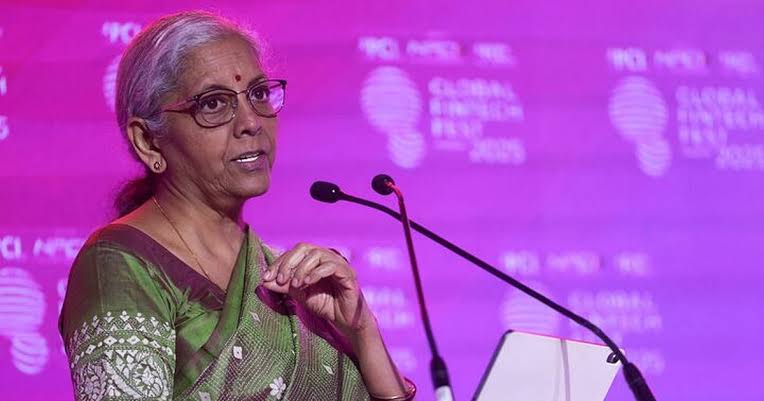
GST Council Meet: Scrapping Tax Officers’ Arrest Powers, Decriminalisation Among Reforms On Agenda
The GST Council, chaired by Finance Minister Nirmala Sitharaman and comprising state ministers, on Thursday started deliberations on sweeping policy reforms, like scrapping arrest powers of GST officers and easier registration, under GST 2.0, to ensure ease of doing business by following a trust-based taxation approach.
In a little over a year’s time since the Council approved a complete overhaul of the tax rates and slabs under Goods and Services Tax (GST), the GST Council in its 57th meeting will deliberate on decriminalising the law by removing criminal liability for nine offences and softening the provisions for 24, and raising the threshold for initiating criminal prosecution to Rs 5 crore.
It would also discuss a common standard to be followed by GST officers across states for raising demands with a mandatory intimation to be sent before a formal notice, thereby giving opportunity to the taxpayer to be heard.
Also, if approved, no GST notice would be issued wherein the tax demand is less than ₹10,000. Such cases currently account for about 20 per cent of all cases by number and involve a negligible amount of tax.
To deal with the fake input tax credit and notices on mismatch in credit availed, the Council will also discuss ‘invoice matching system’ in GST monthly returns wherein reconciliation of buyer and supplier invoices will happen and tax credit can be legitimately claimed.
To make compliance easier for small businesses selling on e-commerce platforms, the Council is likely to allow them to use the platform’s warehouse as a registered place of business in states where they have no premises of their own. The small supplier only needs a place of business in one state where he would be required to complete physical verification and Aadhaar authentication, and registration in other states will be as per platform’s consent with no involvement of tax officer.
This would enables around 9.5 lakh small sellers to access a national market without opening physical offices across states, establishing tax parity across competing platform business models.
The proposed changes to the GST law would be implemented in a staggered manner beginning early next year.
The GST Council is also likely to discuss a proposal of taking up tax rate changes only once a year and making them effective from the beginning of next fiscal year, a move which would give stability to businesses.
The major change that the GST Council will deliberate on Thursday is amending the GST law and scrapping of arrest powers of GST officers, besides raising the threshold to ₹5 crore for launching prosecution.
For offences like late filing of returns classification disputes and delay in tax payment due to cash position, a taxpayer will be able to skip arrest by paying tax, interest, and a proportionate penalty. GST officers will focus on recovering taxes, while law enforcement agencies will deal in cases of legal proceedings.
Currently, GST officers have the power to arrest, after prior authorisation from a Commissioner-level officer, in cases of major offences where tax evasion, fraudulent input tax credit (ITC), or wrongful refunds exceed Rs 1 crore.
The Council would also deliberate on intelligence-led logistics and transit checks, wherein vehicles in transit will only be stopped based on specific prior authorisation by a senior officer and solely by the state of origin (except when documents are missing or buyer-liable tax applies).
This will eliminate multi-state road stoppages, drastically reduce transit times and freight costs, and make cargo movement predictable for domestic and export goods.
To streamline the GST registration process, the Council will discuss redesigning the forms so it can be completed correctly, easily with guidance at each step and the list of documents to be uploaded. If a taxpayer is registered in another state, his details are carried over and he may need to fill up only one form for obtaining registration in multiple states.
To make it easier for exporters of goods and services to claim refund and credit, the Council will also consider a proposal to make the definition of exports aligned with commercial activities earning foreign exchange and also remove ambiguity over the export status of services supplied through an Indian company’s overseas branch, sources said.
Further, the Council will also consider withdrawing IGST exemption on import of gold, silver and platinum imports by specified banks and nominated agencies.
Currently, imports of gold, silver, and platinum are subject to a 3 per cent IGST. However, this tax is exempt when these precious metals are imported by banks and nominated agencies, which are periodically listed by the government.
A proposal allow employers to claim input tax credit (ITC) on premiums paid for insurance coverage provided to employees will be discussed by the Council.
Under the Goods and Services Tax law, GST is exempt on individuals buying life or health policies for themselves or their family. However, when a company buys life or health cover for its employees, an 18 per cent GST is levied on that cover, and until now the business could not claim ITC on it.
The GST Council is also likely to consider recasting its tax officers’ committees, making them leaner as the indirect tax regime completed nine years since its rollout on July 1, 2017.
The structure of the committee, which supports the Council in overall functioning, is proposed to be recast into three consolidated bodies — the Secretariat, the implementation committee, and a single standing committee of officers.
Currently, the GST tax officers’ committee consists of the Secretariat, an implementation committee, eight standing committees, including Fitment and Law committees, and 18 sectoral groups. (Agencies)
-
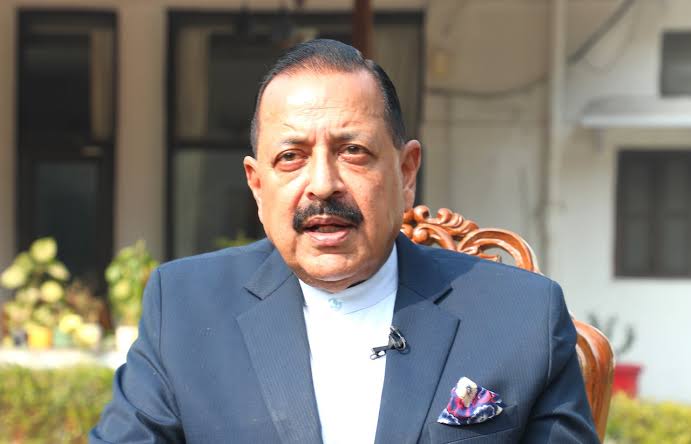
Modi’s 25-Year Journey Reflects Strong Democratic Mandate, Public Trust: Dr Jitendra Singh
Union Minister Jitendra Singh on Wednesday said Prime Minister Narendra Modi’s 25 years in public office is a reflection of the country’s strong democratic tradition.
Participating in the ‘Viksit Bharat Sankalp Sabha–Seva Jyoti Yatra’ in his home constituency Udhampur, the minister of state in the Prime Minister’s Office, said it was rare in a democracy for a leader to repeatedly win elections over such a long period and continue to receive the people’s mandate to govern.
“Prime Minister Modi has completed 25 years in public office – 12.5 years as Chief Minister of Gujarat and another 12.5 years as prime minister, without a break. I believe this is a remarkable record and a matter of pride and happiness for all of us. More importantly, it reflects the strength of our democratic tradition, where a leader has repeatedly won the people’s mandate and been entrusted with the responsibility of governing,” Singh told reporters at the event.
He said while such continuity may be seen in dominant political systems or monarchies, democracies are generally marked by changes, challenges and electoral ups and downs.
“When you look at all of this together, it reflects a deep sense of dedication and commitment,” he said.
The minister said Modi had earned the trust of the people through years of hard work, relentless effort and a spirit of service.
Referring to Modi’s description of himself as the “Pradhan Sevak”, he said the prime minister had built a relationship of trust with citizens across the country.
“We may not understand every decision that Modi ji takes today, but I believe that with time, we will certainly understand its significance,” Singh said, adding that earning such a level of public trust requires years of dedication and self-discipline.
He said Modi’s commitment to serving the nation was an inspiration for everyone and called upon people to imbibe those values in their own lives and contribute towards the goal of a ‘Viksit Bharat’
-

Char Dham Yatra Sets New Record With Over 56 Lakh Pilgrims
Strength of devotees coming for Char Dham pilgrimage in Uttarakhand has set a new benchmark as it recorded more than 56 lakh footfalls in the ongoing pilgrimage season so far.
A statement issued by the state government stated that number of devotees coming to Char Dham Yatra in 2026 has crossed 56.18 lakh. This is more than previous all-time high figure of around 52 lakh devotees recorded in 2023.
Statement read that record number of pilgrims came to the Himalayan state to pay their obescience at Kedarnath, Badrinath, Gangotri and Yamunotri shrines reflecting the growing religious tourism in Uttarakhand and the trust of devotees nationwide.
Reacting to the increasing number of devotees in Char Dham pilgrimage, Himachal Pradesh Chief minister Pushkar Singh Dhami said that it was possible by the extensive arrangements made by the state government for safe, easy and organised travel for the pilgrims.
Dhami added, “Every devotee coming to devbhoomi Uttarakhand is our guest. State government’s persistent effort is to ensure that pilgrim’s journey is safe, smooth and pleasant. Record rise in number of devotees in Char Dham Yatra is proof of state’s improved facilities for the devotees.”
CM claimed that efforts of the state administration, police, health department, SDRF, local bodies and shrine priests too contributed to the successful operation of the Char Dham Yatra.
“Facilities related to health services, traffic management, drinking water, sanitation, parking, accommodation, disaster management, and pilgrim convenience along Char Dham routes were continuously strengthened. Special emphasis is also laid on seamless coordination among relevant departments in the ongoing pilgrimage season” said Dhami. (Agencies)
-
INDIA Bloc Holds ‘Save Democracy March’ In Jammu, Seeks CEC’s Arrest
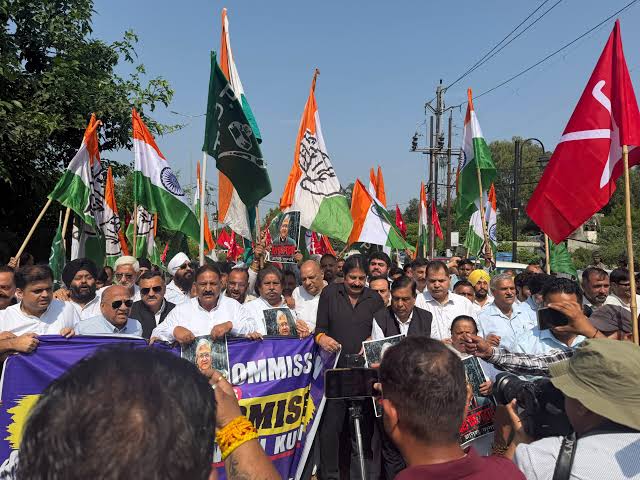
INDIA bloc leaders took out a joint ‘save democracy’ march in Jammu on Wednesday and demanded Chief Election Commissioner (CEC) Gyanesh Kumar’s removal and arrest, alleging large-scale deletion of names from electoral rolls.
Leaders of the Congress, National Conference (NC), Peoples Democratic Party (PDP), CPI(M) and other parties participated in the rally. They carried their respective party flags, raised slogans against the CEC, the BJP and Prime Minister Narendra Modi and burned Kumar’s effigy.
Congress working president Raman Bhalla, NC provincial president Jammu Rattan Lal Gupta, PDP youth vice-president Virender Singh Sonu and CPI(M) leaders led the march.
Bhalla alleged that Kumar had “stolen votes” at the behest of the Prime Minister and Union Home Minister Amit Shah and demanded his immediate arrest.
He sought dissolution of Parliament and the assemblies in states where, he alleged, governments were formed after “vote theft”, followed by fresh elections.
Gupta said the INDIA bloc was protesting against what he described as “vote theft” and “chanda theft”, alleging that democracy in the country was being undermined.
He demanded that electoral rolls from which “crores of voters” had been deleted be prepared afresh to protect the constitutional right to vote.
PDP leader Sonu alleged that 13.60 crore votes had been deleted from electoral rolls and demanded that those responsible be held accountable.
He said the issue had created confusion across the country and that the facts behind the alleged deletions should come out. Sonu said the PDP had also been participating in protests on the issue and asserted that justice should be ensured to voters.
A CPI(M) leader alleged that 13 crore votes had been “stolen”.
The INDIA bloc leaders said their agitation would continue until their demands were addressed.
-

Jammu Divisional Commissioner, Several Deputy Commissioners Among 49 Officers Transferred In J&K
Jammu and Kashmir Lt Governor Manoj Sinha on Wednesday ordered a major bureaucratic reshuffle, transferring and posting 49 officers, including 42 IAS officers, with the changes covering the post of Jammu divisional commissioner.
Among the notable transfers is the posting of Vikas Kundal as Jammu divisional commissioner in place of Ramesh Kumar.
Deputy commissioners of eight districts have also been transferred in one of the biggest administrative reshuffle of this year.
Kundal, a 2013 batch AGMUT officer, has been transferred from his post as Chairman, J-K Services Selection Board and posted as Jammu divisional commissioner. He is also assigned the additional charge of additional CEO, Jammu Metropolitan Regional Development Authority, an order issued by General Administration Department said.
Kundal replaces Kumar, who has been transferred and posted as secretary to the government, Department of Rural Development and Panchayati Raj after serving as divisional commissioner, Jammu since May 2022.
Kumar, however, will also hold additional charge of Administrative Secretary, Culture Department, while continuing as Resident Commissioner, J-K Government, New Delhi.
The order also brings significant changes at the district level, with nine deputy commissioner-level postings affected.
Rakesh Minhas has been moved out as deputy commissioner, Jammu, and was replaced by Minga Sherpa, who was deputy commissioner, Udhampur, while JMC commissioner Devansh Yadav has been posted as deputy commissioner, Rajouri, replacing Abhishek Sharma, who has been shifted as deputy commissioner, Kupwara.
Shrikant Balasaheb Suse has been transferred from Kupwara and posted as chairman, J-K Services Selection Board.
In other changes, Jatin Kishore has been moved from Ganderbal to become deputy commissioner, Budgam, while Athar Aamir Ul Shafi Khan has been shifted from Budgam as Managing Director, National Health Mission, J-K.
Rupesh Kumar has been posted as deputy commissioner, Samba, replacing Ayushi Sudan who has been transferred as Commissioner, Jammu Municipal Corporation (JMC). Ananth Dwivedi has been posted as deputy commissioner, Udhampur.
At Ganderbal, Shreya Singhal has been posted as deputy commissioner, replacing Jatin Kishore. Kuldeep Krishan Sidha has been posted as deputy commissioner, Pulwama, replacing Basharat Qayoom who has been transferred as Commissioner, Srinagar Municipal Corporation.
Charandeep Singh has been posted as deputy commissioner, Shopian.
At the senior administrative level, Shaleen Kabra, Financial Commissioner (Additional Chief Secretary), Jal Shakti Department has been assigned the additional charge of Administrative Secretary, Revenue Department, relieving Kumar Rajeev Ranjan of the charge.
Ashish Chandra Verma, Financial Commissioner (Additional Chief Secretary), Tourism Department, has been transferred as Financial Commissioner (Additional Chief Secretary), Agriculture Production Department.
M Raju, Commissioner Secretary to the government, General Administration Department, has been divested of the additional charge of the Health and Medical Education Department. He will now hold additional charge of Hospitality and Protocol as well as Disaster Management, Relief, Rehabilitation and Reconstruction.
Saugat Biswas has been posted as Commissioner Secretary, Health and Medical Education Department.
In another key change, R Alice Vaz, has been transferred as Commissioner Secretary, Transport Department. She will also hold additional charge of Civil Aviation Department and Commissioner, Civil Aviation, while continuing to oversee the Information Department.
Sarmad Hafeez has been shifted from Social Welfare to Youth Services and Sports Department.
The reshuffle also sees Avny Lavasa moving from the Transport Department to Tourism Department, while continuing to hold charge of Tribal Affairs. Anjali Sehrawat, has been posted as Secretary, Public Grievances Department, after being transferred from the Jal Jeevan Mission.
Among other significant postings, Rahul Yadav has been appointed administrative secretary, Information Technology Department, while continuing as Managing Director, J-K Power Development Corporation Limited. Owais Ahmed has been posted as administrative secretary, Planning, Development and Monitoring Department, while retaining additional charge as director, Skill Development, J-K.
At the field-administration level, Faz Lul Haseeb has been shifted from Commissioner, Srinagar Municipal Corporation, and posted as additional secretary, Agriculture Production Department, with additional charge of Mission Director, HADP and JKCIP.
Mamta Yadav, awaiting orders of posting in GAD, was posted as director information department.