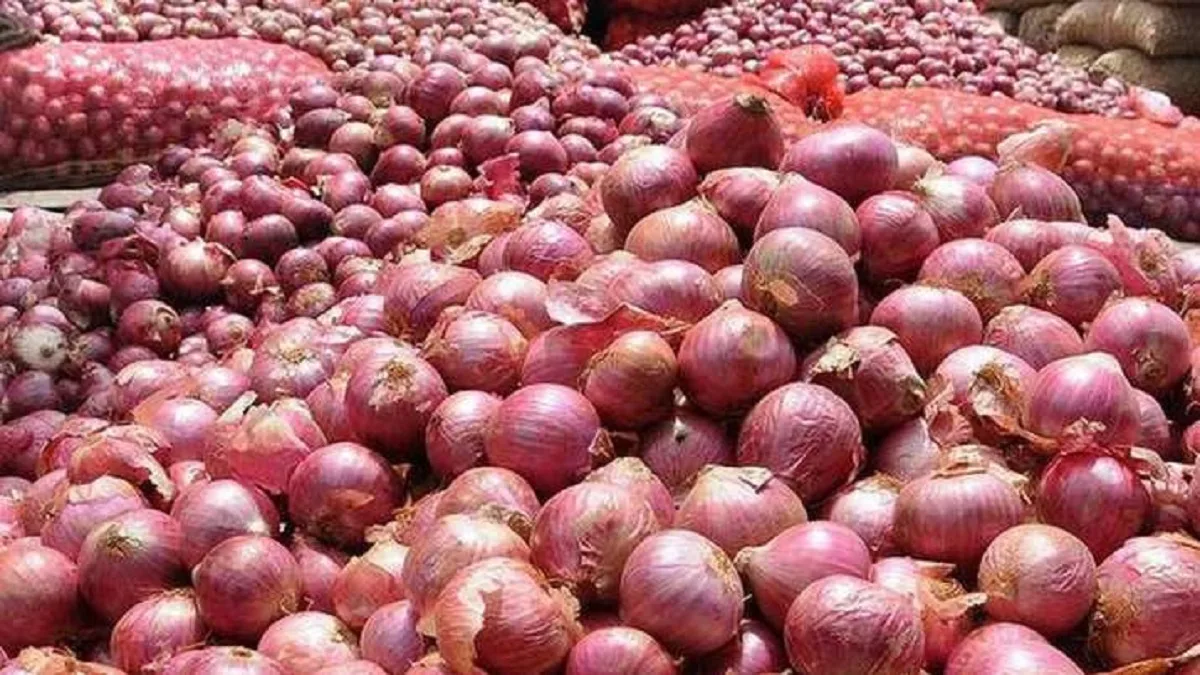
The Ministry of Food announced on Friday that the target area for kharif onion cultivation this year is 3.61 lakh hectares, marking a 27% increase compared to last year.
Despite a slightly lower production of onion during the rabi-2024 season, the Ministry of Food assured that the domestic market’s availability remains comfortable. In Karnataka, the leading kharif onion-producing state, sowing has been completed in 30% of the targeted 1.50 lakh hectares, with good progress noted in other major producing states. The Ministry highlighted that favorable and timely monsoon rains have significantly boosted kharif crops, including onions, tomatoes, and potatoes.
According to the Ministry of Agriculture’s assessment with state governments, there has been a notable increase in the targeted area for kharif sowing of major vegetables such as onions, tomatoes, and potatoes compared to last year.
Onion crops are harvested in three seasons: rabi in March-May, kharif in September-November, and late kharif in January-February. The rabi crop accounts for approximately 70% of the total onion production, while kharif and late kharif together constitute 30%. Kharif onions are crucial for maintaining price stability during the lean months between rabi and peak kharif arrivals.
The Union government data indicates that the current market supply of onions is from the rabi-2024 crop, harvested in March-May 2024. The estimated rabi-2024 production of 191 lakh tonnes is sufficient to meet the domestic consumption of about 17 lakh tonnes per month, along with a continued export restraint of 1 lakh tonnes per month.
Dry weather conditions during and after the rabi harvest this year have helped reduce storage losses of onions. Onion prices are stabilizing as farmers release more rabi onions into the market, aided by higher mandi prices and the onset of monsoon rains, which increase the risk of storage loss due to high atmospheric moisture.
The target area for kharif potato cultivation has increased by 12% compared to last year. Himachal Pradesh and Uttarakhand have nearly completed their targeted sowing areas, while Karnataka and other states are progressing well. According to DAFW data, 273.2 lakh tonnes of rabi potatoes have been stored in cold storage this year, sufficient to meet consumption demand. Potato prices regulate the rate at which they are released from cold storage between March and December.
The Ministry of Agriculture’s assessment with state governments indicates that the targeted kharif tomato area this year is 2.72 lakh hectares, up from 2.67 lakh hectares last year. Crop conditions are reported to be good in major producing areas such as Chittoor in Andhra Pradesh and Kolar in Karnataka, where tomato picking has started and will soon reach the market.
District Horticultural officials in Chittoor and Kolar have reported that this year’s tomato crop is substantially better than last year’s. Kharif tomato areas are expected to increase significantly over last year in major producing states like Madhya Pradesh, Karnataka, Uttar Pradesh, Gujarat, Maharashtra, and Tamil Nadu.
Leave a Reply