

By Raja Rehber Jamal
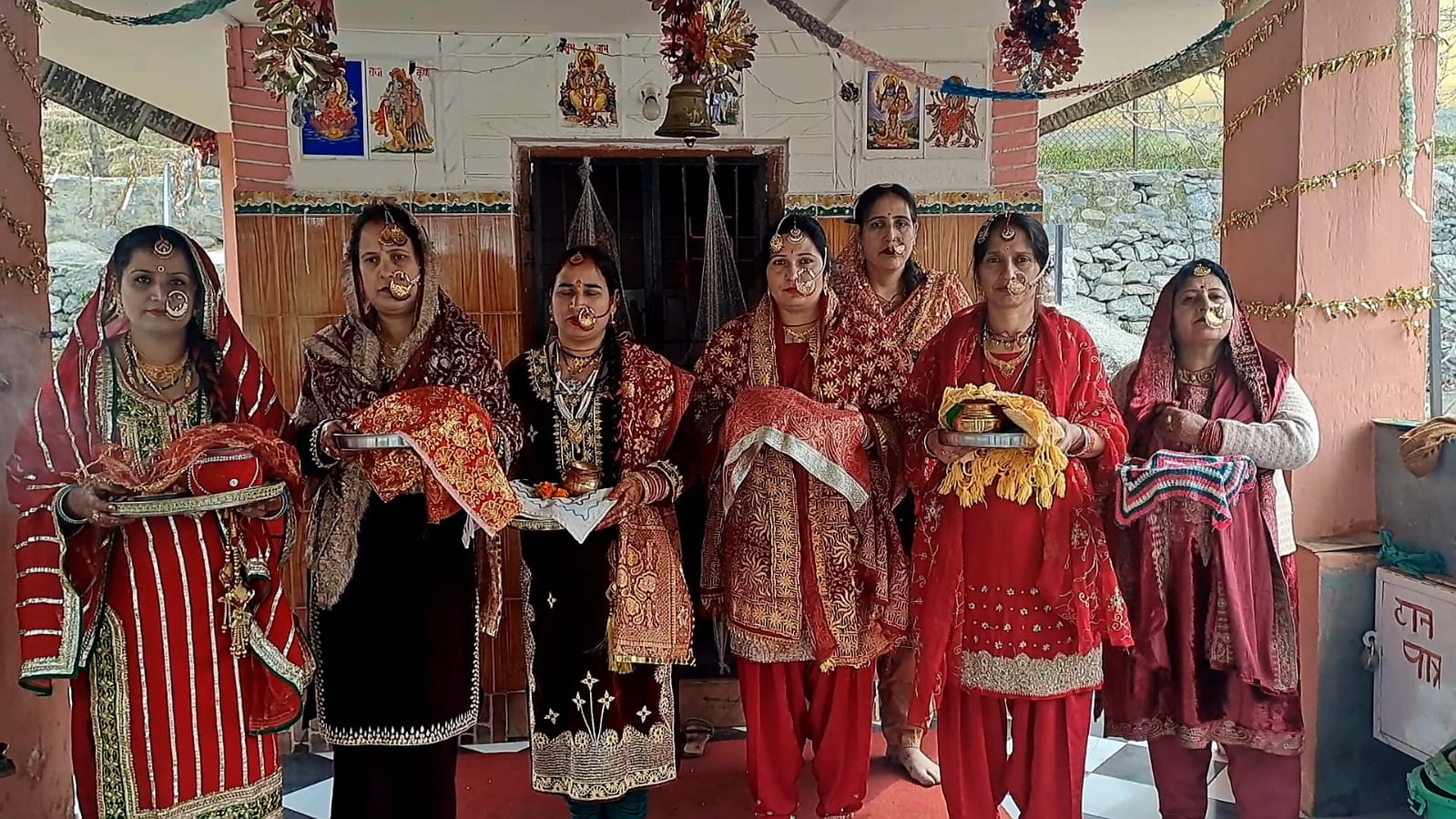
Bhaderwah: Celebrated to commemorate the marriage of Lord Shiva with goddess Parvati, ancient Kanchouth festival was observed across the hills and valleys of Chenab region. The festival is revered as one of the most religious and colorful events for the followers of Nag Culture.
The age-old festival is celebrated across the hilly Chenab valley as locals, mainly Nag followers believe that on this day of Gouri tritiya, Lord Shiva and goddess Parvati got married and the latter insisted on a throne made of snow as her wedding gift.
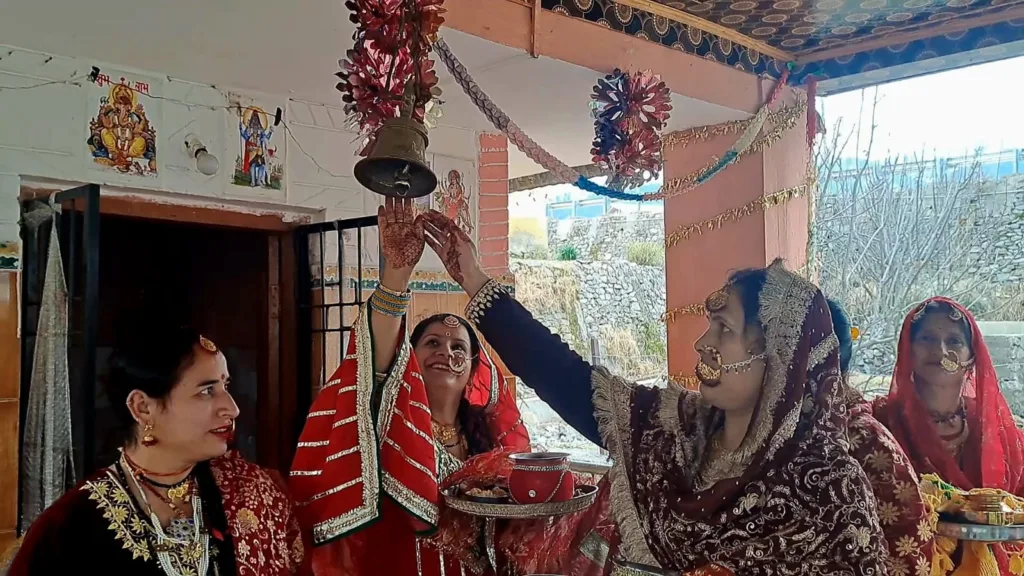
To observe age-old tradition and to take Blessings of Lord Shiva and Parvati while celebrating ‘Kanchouth’ festival, early morning women folk of Bhaderwah and it’s adjoining areas were seen marching towards their respective Temples and water bodies to offer prayers and rituals.
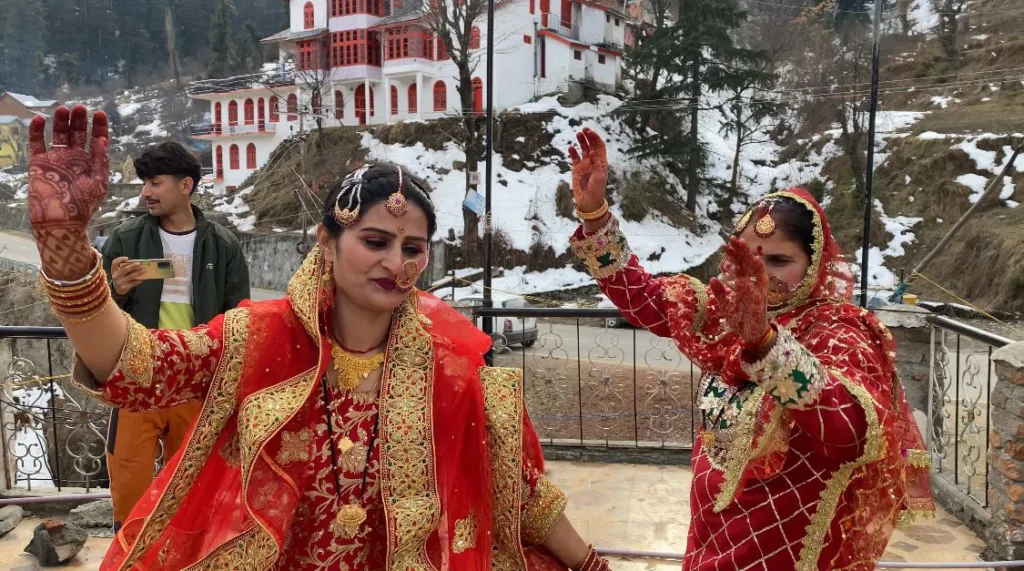
The main programmes were reported from Kotli, Ghatha, Khakhal, Gupt Ganga, Chinote, Sartingal, Nalthi, Dhara, Chinchora, Hanga and other Temples of the area. Like Karwa Chouth that is celebrated in plains, Kanchouth is celebrated in this hilly Bhadarwah area. Both festivals are celebrated by women to pray for long-life of their husbands and in both, style is almost same. According to a woman Dimple Devi of Kotli Bhadarwah, on Karwa Chouth women break their fast when the moon appears, while as in case of Kanchouth the fast is broken after Gouri Pooja during the day. On the occasion, the ladies are supposed to take food in every house they visit. In some cases it so happens that they have to take their meals in scores of houses each day. In the night ladies gather, sing Ghurai (Bhajan) and dance at their tune. During these three days the kitchen is managed by husbands.
Like Karva chouth in other parts of the country, Kanchouth or Gauri–Tritya a local festival of Women is celebrated with enthusiasm and religious fervour in erstwhile hilly Chenab Valley every year during the Shukla Paksha of Magh month in January and Febuary .
Karwa Chouth is celebrated mostly in wider geographical area in plains, Kanchouth and Gauri –Tritya is celebrated in hilly districts of Bhaderwah, Kishtwar, Ramban and Doda of Jammu Province.
Both the festival are celebrated by women to pray for long life of their husbands. Style is almost same. The only difference is the timing. Where as Kanchouth falls in winters while Karwa Chouth is celebrated during summer season.
On the festival day women clad in crisp new elegant bridal suit, donning matching jewellery, with henna painted hands pray for the long lives of their spouses. The occasion has great significance in the life of every married woman. The day is considered pious for women when they can pray to Goddess Gauri for the long and healthy lives of their husbands.
The Kanchouth festival though is of one day yet the festivity remains for three days. During these three days, ladies go in the neighborhood to offer respect (Known as Thel) to one and all irrespective of religion, creed and caste; age and sex and get in return their blessing ‘Suhagan Bho’(Live long your husband).
“Kanchouth gives us a different kind of high as on this day, our mother-in-law seeks blessings from us by touching our feet and we get the liberty to enjoy as following the tradition husbands manage the kitchen for three days. Another beauty of this festival is that we touch everyone’s feet to seek blessing irrespective of their religion, caste or creed,” said Reva Devi Devi of Kotli village.
“This is my 47th ‘Kanchouth’ and I still feel excited and have goosebumps waiting for this beautiful festival. I hope coming generations will not forget their rich tradition and preserve the beauty of this ancient Nag festival,” said Seva Devi of Bhadarwah.

