Monday, July 13, 2026
Home Blog Page 99

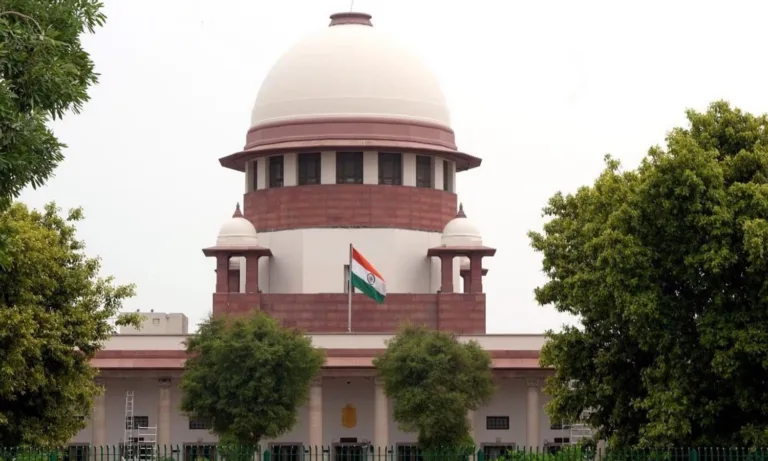
Supreme Court Refers Direct Anticipatory Bail Pleas to Three-Judge Bench

0

The Supreme Court of India on Wednesday referred the vital question of whether litigants can directly approach high courts for anticipatory bail to a three-judge bench. The court’s decision came amidst concerns over legal procedural norms, particularly in cases involving anticipatory bail applications.

A bench consisting of Justices Vikram Nath and Sandeep Mehta stated, “This matter requires to be heard by a three-judge bench.” They directed the case to be listed before a larger bench once it is constituted, signifying the importance of this issue.

This deliberation follows an earlier appointment of senior advocate Siddharth Luthra as amicus curiae to provide assistance on the matter, underscoring the complexity and significance of the legal questions involved.

Kerala High Court’s Practice Under Scrutiny

The Supreme Court expressed particular concern regarding the “regular practice” observed in the Kerala High Court, where litigants repeatedly file anticipatory bail applications directly without first approaching the sessions court. “One issue that is bothering us is that in the Kerala High Court, anticipatory bail applications are regularly entertained directly. Why is that so?” the bench inquired during the proceedings.

In reviewing the relevant legal framework, including provisions from the old Code of Criminal Procedure and the newly enacted Bharatiya Nagarik Suraksha Sanhita (BNSS), 2023, justices noted that a structured hierarchy exists for managing bail applications, raising questions about the legality of bypassing the sessions court.

“It doesn’t happen in any other state. Only in the Kerala High Court… applications for anticipatory bail are regularly entertained directly,” the bench pointed out, raising eyebrows regarding the procedural consistency followed across the country.

Background of the Triggering Case

The Supreme Court’s observations emerged while considering a plea filed by two individuals challenging a decision from the Kerala High Court that denied them anticipatory bail. The petitioners, having approached the High Court directly, skipped the essential step of seeking relief from the sessions court, prompting the Supreme Court to critically examine this trend.

The justices emphasized that such a practice could deprive courts of comprehensive factual records that typical sessions court proceedings would usually compile. They suggested the need for a clear and uniform approach to anticipate bail pleas, which might aid in preserving the integrity of the judicial process.

“We are inclined to consider whether the option to approach the high court is a matter of choice for the accused or whether it should be mandatory to first go to the sessions court,” remarked the bench, shedding light on the critical balance between legal rights and procedural adherence. The Supreme Court has also issued a notice to the Kerala High Court, through its Registrar General, seeking their official response on the matter.

This case reflects growing concerns regarding legal practices within the judicial framework of India. With increasing discussions about judicial reforms, the outcome of this referral could significantly impact the future of anticipatory bail proceedings across high courts in India.

As the legal community awaits further developments, the Supreme Court’s proactive stance emphasizes the judiciary’s commitment to uphold legal norms and procedural clarity, ensuring that justice remains accessible and fair.
Budgam Voters Turn Out With a Mix of Hope and Disillusionment in Crucial Bypoll

0

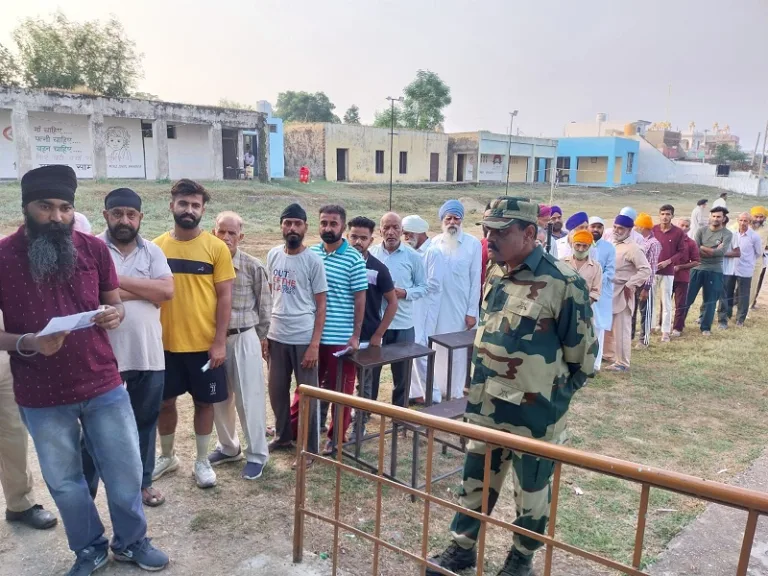
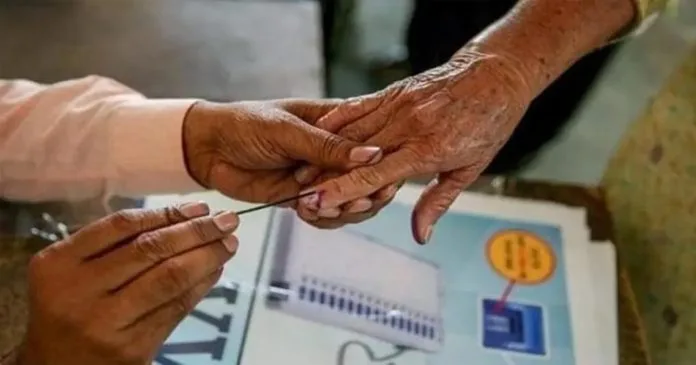
As voters in central Kashmir’s Budgam stepped out to cast their ballots in the high-stakes bypoll that will determine the fate of 17 candidates, the mood across polling stations reflected a striking blend of hope, frustration, and cautious optimism.

For many, the bypoll became an outlet to vent anger over unemployment, poor infrastructure, and unfulfilled promises that have spanned successive Governments. From inadequate drinking water and broken roads to erratic electricity and dysfunctional healthcare, voters said their daily hardships remain unchanged.

“We have no drinking water or playgrounds,” said Mohammad Yousuf from Ompora, proudly showing his inked finger. “We voted today hoping the promises of a university and a stadium will finally be fulfilled.”

In Bemina, dissatisfaction ran deeper. Abdul Rahman, waiting outside a booth, said, “We voted for the NC last time, and they never returned. No one visited our neighbourhood. We are tired of being ignored.”

Despite the disillusionment, several voters still placed their trust in the ruling National Conference (NC).

Ghulam Hassan, also from Bemina, said, “Our candidate has done good work before. With NC in power for the next four years, maybe this time development will reach us.”

Not everyone, however, was willing to give the ruling party another chance.

In Wahabpora, a middle-aged woman said she was shifting her support: “We have voted for the NC for years, but nothing improved. Now we will vote for PDP, hoping for better roads and healthcare.”

At another booth, 60-year-old Mohammad Isaq recalled past disappointments. “We voted for Omar Abdullah last time, and he left for Ganderbal. No development happened here. Still, I vote—it is my right. Maybe things will change.”

Eighty-year-old Ghulam Mohammad Hajam, leaning on a stick and supported by his son, offered a poignant reflection: “I have voted all my life. We still eat under candlelight, and we borrow water from neighbours’ bore wells. I still hope… maybe before I die, I will see real change.”

As polling concluded, voters across Budgam carried with them a mix of resentment and renewed hope—hoping their vote this time will finally bring the long-awaited transformation.

Nagrota By-Poll Records 75.08% Turnout Amid Peaceful Voting

0

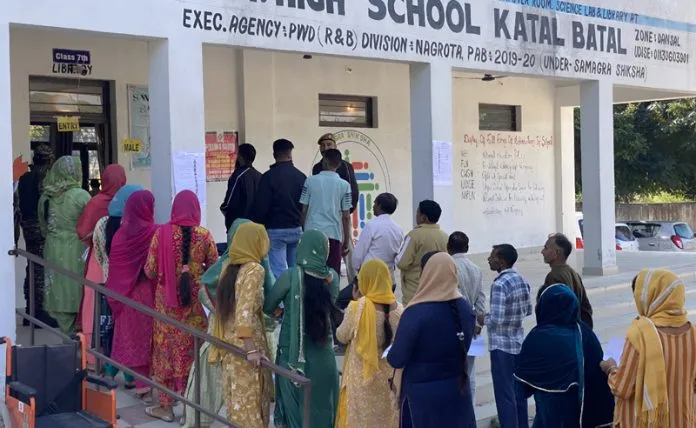
The Nagrota Assembly constituency recorded an impressive 75.08 percent voter turnout in today’s by-election, with polling passing off peacefully across all 150 polling stations, according to the Election Commission.

The fate of 10 candidates, including BJP’s Devyani Rana, NC’s Shamim Begum, JKNPP-I’s Harshdev Singh, and Independent Anil Sharma, now lies sealed in the Electronic Voting Machines (EVMs). Counting of votes is set for November 14.

Chief Electoral Officer (CEO) Sanjeev Verma told Daily Excelsior that the by-poll witnessed fully peaceful and smooth polling. Verma, who visited several polling stations during the day, noted that voters expressed satisfaction with facilities, including wheelchairs, drinking water, and effective queue management.

Officials confirmed that one or two EVMs were replaced due to technical issues, but polling resumed immediately without disruption.

Comparative turnout data shows that during the 2024 Assembly election, Nagrota had registered a slightly higher turnout of 77.66%, making today’s by-election figure notably substantial.

In 2024, BJP’s Devender Singh Rana won with 48,113 votes, while NC’s Joginder Singh secured 17,641 votes. This year, officials expect similar numbers, with around 98,000 eligible voters in the constituency.

Adequate security arrangements were firmly in place, featuring a heavy deployment of paramilitary and police personnel at sensitive locations. Election Commission Observers, including General, Police, and Expenditure observers, monitored multiple booths. Senior officials were also assigned to special polling stations.

After polling closed at 6 pm, officials securely shifted the EVMs to strong rooms, where they will remain under continuous surveillance until the counting day.

This by-election is only the second time that presiding officers used the ‘Presiding Officer App’ under the ECI’s Integrated ECTNet platform to upload booth-wise turnout data, significantly reducing delays and minimizing human error in reporting.

The by-election arose from the sudden death of BJP stalwart Devender Singh Rana, who passed away just days after winning the Assembly seat in 2024. The BJP nominated his daughter, Devyani Rana, an Economics graduate from the University of California, who campaigned focusing on ‘professional and inclusive development’.

NC’s Shamim Begum, a sitting member of the District Development Council (DDC), emphasized her grassroots connections and party organization strength during her campaign. Former minister Harshdev Singh projected himself as an “alternative voice” while Independent candidate Anil Sharma relied on local support and welfare assurances.

Long queues formed at several booths post-9 am, as sunny weather encouraged large voter turnout. Electors at the Kol Kandoli polling station expressed that they cast their ballots “to continue the pace of development in the Nagrota area.”

This by-election occurs in a political landscape where Nagrota has swung between the BJP and NC over the last five elections since 1996. The BJP claimed victories in 2002, 2008, and 2024, while the NC secured wins in 1996 and 2014. Uniquely, the Congress did not field a candidate this time and opted out of NC’s campaign, despite being alliance partners at the Union Territory level.

The Nagrota and Budgam by-polls aim to fill two vacancies in the 90-member J&K Assembly, which currently operates with 88 sitting legislators. These vacancies emerged following the death of Devender Singh Rana and the resignation of former Chief Minister Omar Abdullah, who vacated Budgam after retaining Ganderbal.

Delhi Blast: Pulwama Doctor Was Driving Car, Amit Shah Holds Review Meet; FIR Lodged Under UAPA

0

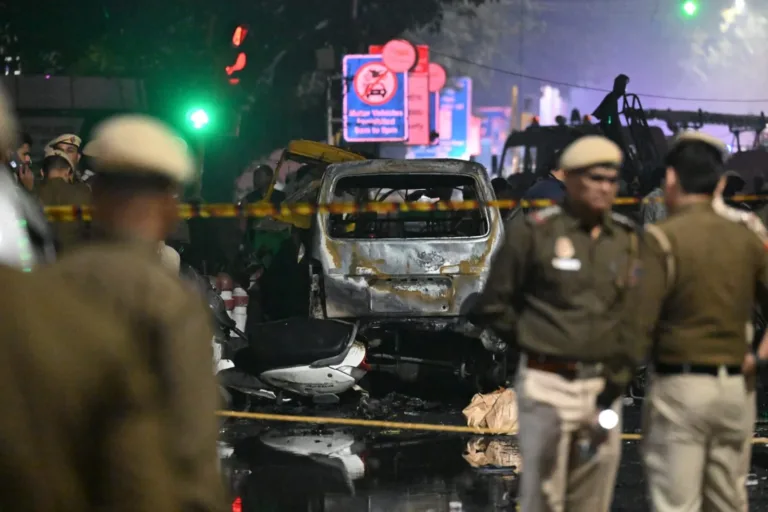
Delhi Police registered an FIR on Tuesday into the blast near the Red Fort under the UAPA and conducted raids at multiple locations in the national capital as preliminary findings suggested a link to the terror module uncovered in Faridabad.

Union Home Minister Amit Shah held a high-level security review meeting in the wake of the blast on Monday evening that left 12 people dead and many injured, sources said.

The meeting was attended by Union Home Secretary Govind Mohan, Director, Intelligence Bureau, Tapan Deka, Delhi Police Commissioner Satish Golcha and DG, NIA, Sadanand Vasant Date.

DGP of Jammu and Kashmir Nalin Prabhat also attended the meeting virtually.

Police registered an FIR under the Unlawful Activities (Prevention) Act and the Explosives Act under sections which deal with punishment and conspiracy of a terror attack.

Raids are being conducted at multiple locations by Delhi Police and the national capital has been placed on high alert with strict vigil being maintained at the airport, railway stations and bus terminals.

According to sources, Umar Mohammad, a Pulwama resident and a doctor, was allegedly driving the Hyundai i20 car that was used in the explosion near the parking area of the Red Fort Metro Station.

Police sources said the first picture of the man driving the car that exploded near the Red Fort emerged in CCTV footage of the area. He allegedly had links to the terror module in Faridabad, where a huge cache of explosive material was seized, they said.

Preliminary findings by police suggest ammonium nitrate, fuel oil and detonators may have been used in the blast near the Red Fort, police sources said.

A police source said initial findings suggest a possible link between the Delhi blast to the Faridabad terror module where 360 kg of ammonium nitrate was seized. “Final reports are awaited,” the source added.

Police said CCTV footage of the car that exploded shows a “masked man” driving the car. Multiple teams have been deployed to scan CCTV from the vicinity of the Red Fort and adjoining routes, they added.

Shah, who will hold a review meet on Tuesday morning, had said after the blast that he will hold a detailed analysis on the blast with top security officers.

“Tomorrow morning, we will have a detailed analysis of the blast at the home ministry with senior officers,” Shah told reporters after meeting those injured at the LNJP Hospital here.

The home minister had said that top investigating agencies were probing the blast with full intensity, and will go in-depth into the explosion which took place in a Hyundai i20 car.

Delhi Police remains on high alert after a powerful blast ripped through a slow-moving car at a traffic signal near the Red Fort metro station on Monday evening, leaving several vehicles gutted.

Hours before the blast in Delhi, eight people, including three doctors, were arrested and 2,900 kg of explosives were seized with the uncovering of a “white collar” terror module on Monday.

The 2,900 kg of explosive material recovered in Faridabad includes ammonium nitrate, potassium nitrate and sulphur. Of this, 360 kg of inflammable material, suspected to be ammonium nitrate and some arms and ammunition were recovered, according to police.

Police sources alleged Umar Mohammad was another doctor in the Faridabad module who have already been arrested.

Umar Mohammad, who is a doctor by profession, was allegedly associated with the Jaish-e-Mohammad terror module, they said.

According to sources, a man named Tariq from Pulwama, Jammu and Kashmir, who has been arrested, is said to have given the Hyundai i20 car to Umar Mohammad.

After his fellow doctors who were allegedly part of the terror module were arrested, Umar Mohammad allegedly carried out this terror attack fearing that he too might be caught, sources added.

Following the blast, security across the national capital has been intensified, and vehicle checking at all border points has been intensified as well.

All vehicles entering Delhi, whether private or commercial, are being thoroughly checked and verified as part of heightened security measures, officials said.

“Multiple teams have been deployed to scan CCTV footage from the vicinity of the Red Fort and adjoining routes to know more about the masked man driving the Hyundai i20 car in which the explosion occurred,” a police source said.

“We also got to know that the vehicle was parked in a nearby parking lot for three hours, before the blast. Footage of different parking lots are also being monitored,” the source added.

He added that an overnight search operation was conducted at hotels and guest houses in Daryaganj and Paharganj areas to trace possible suspects.

Police checked hotel registers, verified entries, and questioned several staff members to identify anyone matching the suspect’s description.

All police stations in the national capital have been asked to stay alert and maintain strict vigil at local markets, metro stations, bus stands, and railway stations.

“Teams have been asked to stay alert, attend all emergency-related calls, intensify checking in their area, and report any suspicious activity immediately,” said a police officer.

Police are also probing whether it could be a case of a “suicide bombing” or a larger terror plot, said a source.

Delhi Police Commissioner Satish Golcha on Monday told reporters that the explosion took place around 6.52 pm in a slow-moving Hyundai i20 car at a traffic signal near the Red Fort Metro Station.

The Red Fort Metro Station has been closed for commuters, while traffic restrictions have also been imposed in the area.

In a post on X, the Delhi Metro Rail Corporation said, “Service Update. Lal Qila Metro Station is closed due to security reasons. All other stations are functional as normal.” The Delhi Traffic Police issued an advisory regarding restrictions and diversions have been put in place and advised commuters to avoid these routes from 6 am till further order and use alternative roads for a hassle-free journey.

“No vehicles shall be allowed on Netaji Subhash Marg from Chatta Rail Cut to Subhash Marg Cut and vice versa,” read the advisory. (Agencies)

Team Red NGO Organises “Fit November” Sports Event in Collaboration with the J&K Sports Council

0

Srinagar, November 2025:

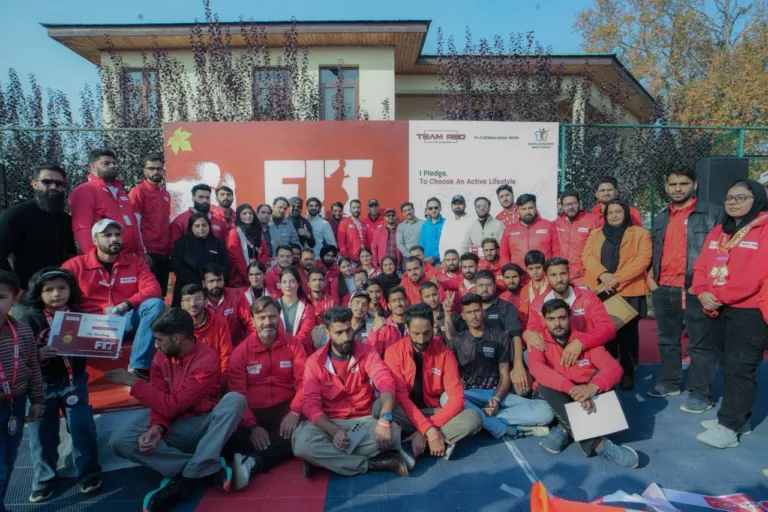
Team Red, in collaboration with the J&K Sports Council, successfully organised the high-energy sports event “Fit November” — a strong push for health, fitness and community unity under the theme “Fit November”

The event was led by our Chairman, Saadat Nasir Wani Sogami, who emphasised the importance of adopting an active lifestyle, and how sports and fitness are instrumental in warding-off drug-abuse from our society. Saadat thanked the Team members and participants for their spirited involvement.

The occasion was graced by the presence of distinguished dignitaries: Satish Sharma, Cabinet Minister – J&K (Youth Services & Sports) , Nasir Aslam Wani, Advisor to the Chief Minister, J&K , Salman Ali Sagar, MLA (Hazratbal), Ahsan Pardesi, MLA (Lal Chowk), Nuzhat Jehangir, Secretary, J&K Sports Council , Irfan Qazi, Regional Transport Officer (RTO), Kashmir , Mir Sarwar, Bollywood Actor. International football stars Mehraj‑ud‑Din Wadoo & Ishfaq Ahmad, Imran Nabi Dar and Olympian Gul Mustafa Dev.

In addition, a broad array of government officials, sports personalities and members of the public from all walks of life attended, turning the day into a true movement for fitness and healthy living.

Chairman Saadat Nasir Wani Sogami expressed his heartfelt gratitude to everyone who made the event a success and reaffirmed Team Red’s commitment to continue encouraging youth participation, promoting wellness and using sports as a vehicle for social engagement

Nagrota Records 34.47% & Budgam 21.74% Turnout By 11 AM In J&K Bypolls

0

Voting continued steadily across Jammu & Kashmir’s Nagrota and Budgam constituencies on Tuesday morning, with both seats registering significant turnout figures by 11 a.m., according to official data.

As per official data, Nagrota Assembly Constituency (AC-77) registered an approximate voter turnout of 34.47% by 11 a.m., reflecting an active response from the electorate in the early hours of polling.

In Budgam Assembly Constituency (AC-27), the turnout stood at 21.74% around the same time, with officials expecting the numbers to rise as the day progresses.

Polling officials said that despite cold conditions in several areas, voters continued to arrive at booths in steady numbers, with security forces ensuring smooth and peaceful voting across both constituencies.

A total of 17 candidates are testing their fate here, including National Conference’s Aga Syed Mehmood, Peoples Democratic Party’s candidate Aga Syed Muntazir, BJP’s Aga Syed Mohsin and others. (KNC)

J&K Beats Delhi In Ranji Trophy For The First Time In 65 Years

0

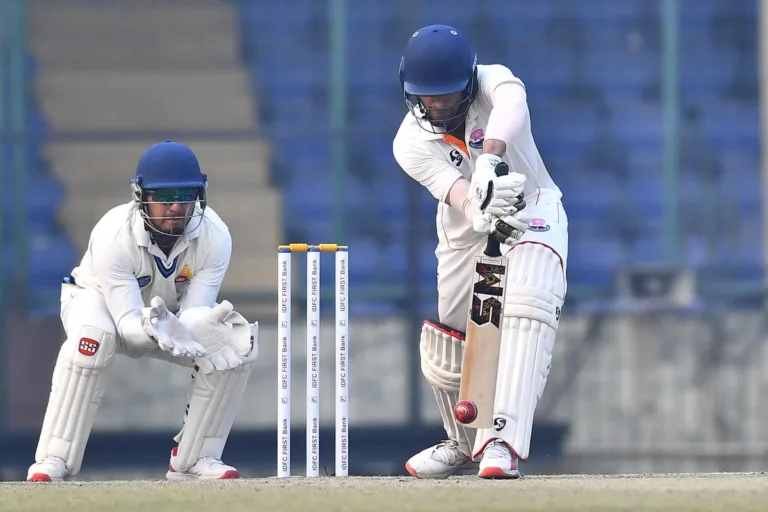
 Jammu and Kashmir’s steady rise in Indian domestic cricket continues to gather pace. On Tuesday in Delhi, the side achieved a landmark victory, defeating the host by seven wickets — its first-ever win against Delhi in Ranji Trophy history.

Chasing 179, J&K was powered by an unbeaten 133 from opener Qamran Iqbal, his career-best knock, which anchored a composed chase.

The foundation of the win was laid by a familiar cast of heroes. Auqib Nabi ripped through Delhi’s first innings with a fiery 5 for 35. Captain Paras Dogra led by example with a composed 106. Abdul Samad added a brisk 86 to keep the momentum alive. And when Delhi tried to claw back, young Vanshaj Sharma delivered a telling spell of 6 for 68, sealing the visitor’s grip on the match.

This was J&K’s second outright win of the season. In recent years, the team has stunned several heavyweight sides, including Mumbai, Baroda, Rajasthan, and Vidarbha.

This win also pushes Jammu and Kashmir to second in the Elite Group D points table, just behind leader Mumbai.

Brief scores

Jammu and Kashmir 310 (Dogra 106, Samad 85, Simarjeet 6-52) and 179 for 3 (Iqbal 133*, Shokeen 2-52) beat Delhi 211 (Doseja 65, Badoni 64, Auqib 5-35) and 277 (Badoni 72, Vanshaj 6-68, Lotra 3-73) by seven wickets.

SC Mulls Appointing Retired HC Judges To Oversee State Bar Council Elections

0

The Supreme Court on Monday indicated that all state bar council elections will be held under the supervision of retired high court judges to ensure a free and fair poll process.

A bench of Justices Surya Kant and Joymalya Bagchi said there is a trust deficit with the Bar Council of India (BCI), as well as state bar councils, and therefore an independent election panel headed by retired high court judges in each state will be appointed to oversee the process.

Senior advocate Manan Kumar Mishra, who is also the Bar Council of India chairman, said that the body does not have any objections if retired judges are appointed for conducting the elections to the bar bodies.

“State Bar council or Bar association elections are the most difficult elections on earth,” Justice Kant said, and asked Mishra to notify the elections for different states as early as possible.

Mishra said the Punjab and Haryana bar councils’ elections will be notified on Monday and the dates for seven states will be notified this week.

Senior advocate Madhavi Divan, appearing for the intervenor, submitted that court orders are being flouted, and pointed out that on October 9, the Delhi Bar Council notified dates for the election but on October 10, a notice was issued by the Bar Council of India dissolving the body.

Mishra said that they want the Bar Council of India (BCI) to be ousted from the poll process and want the elections to be held according to their wishes.

The bench told Divan that the BCI cannot be ousted from the election process and to ensure fairness, it will appoint local retired high court judges for all bar council elections.

On October 31, the top court directed the BCI to notify elections for the Punjab and Haryana bar councils in 10 days and hold the polls by December 31.

It also directed the apex bar body to hold elections for the Uttar Pradesh Bar Council by January 31, 2026, and address the genuine and bonafide grievances of electors.

The top court passed the directions after it was pointed out that elections for Punjab and Haryana bar councils have not been notified and in Uttar Pradesh, the voter list is not being uploaded on the website.

On September 24, the top court said elections in state bar councils have to be held by January 31, 2026, keeping in mind the long pendency.

It had said drives for verification of lawyers’ LLB certificates cannot be a ground for postponing the elections.

The top court was hearing a batch of pleas seeking to quash Rule 32 of the Bar Council of India Certificate and Place of Practice (Verification) Rules, 2015, which empowers the BCI to extend the term of state Bar council members beyond the statutory limits prescribed under the Advocates Act 1961. (Agencies)

NIA Urges Delhi HC To Hold In-Camera Hearing In Plea Seeking Death Penalty For Yasin Malik

0

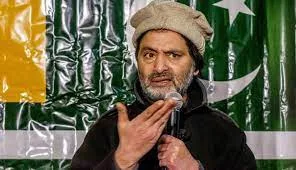
The National Investigation Agency (NIA) on Monday urged the Delhi High Court to hold in-camera proceedings in its plea seeking the death penalty for Yasin Malik, the Kashmiri separatist leader and chief of the banned JKLF, who is currently serving a life sentence in a terror-funding case.

Appearing via video conference from Tihar Jail, Malik submitted before a Bench of Justices Vivek Chaudhary and Manoj Jain that he had been living under “mental agony for the last three years” over the possibility of being awarded capital punishment.

The anti-terror agency, citing the sensitivity of the case and security concerns, requested the Justice Chaudhary-led Bench to restrict public access and provide a private virtual link.

Observing that it will consider the NIA’s plea for in-camera proceedings, the Delhi High Court posted the matter for further hearing on January 28 next year.

The NIA has challenged the trial court’s 2022 judgment that sentenced Malik to life imprisonment after he pleaded guilty to charges under the Unlawful Activities (Prevention) Act and IPC.

Appealing against the sentence, the Central agency emphasised that a terrorist cannot be sentenced to a life term only because he has pleaded guilty and chosen not to go through trial.

While seeking enhancement of the sentence to the death penalty, the NIA said if such dreaded terrorists are not given capital punishment on account of pleading guilty, there would be complete erosion of the sentencing policy, and terrorists would have a way out to avoid capital punishment.

The trial court, which rejected the NIA’s plea for the death penalty, had said the crimes committed by Malik struck at the “heart of the idea of India” and were intended to forcefully secede Jammu and Kashmir from the Union of India.

Malik, who declined to appoint a lawyer and chose to argue the case himself, has been appearing virtually following an August 2024 court order that barred his physical presence due to security threats.

The now-banned JKLF chief is also facing trial in the 1990 killing of four IAF personnel in Srinagar, where a key eyewitness — a retired IAF officer — has identified him as the main shooter. (Agencies)

India Built Dynamic Tech Ecosystem Despite Global Challenges: LG Manoj Sinha

0

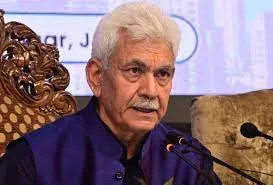
India has succeeded in creating a dynamic technology ecosystem and continues to strengthen its position as the world’s fastest-growing economy despite challenges like trade tariffs and skill gaps, Jammu and Kashmir Lt Governor Manoj Sinha said on Monday.

India has now become the world’s fourth-largest economy and is on course to become a USD 5 trillion economy by 2027, he said, addressing the 5th convocation of the Indian Institute of Technology (IIT) Bhilai in Chhattisgarh’s Durg district as the chief guest.

 “You (graduating students) are entering the professional world at a time when India is one of the fastest-growing economies in the world. Today, India is the world’s fourth-largest economy. By 2027, with a 5 trillion dollar economy, we are going to become the world’s third largest economy,” Sinha said.

 “While many countries are facing a slowdown in manufacturing, India’s manufacturing sector is growing. Industrial production increased by 5.4 per cent till July this year. The technology sector now contributes around 8 per cent to the GDP, generating over USD 280 billion in revenue in the financial year 2024-25,” he noted.

 Sinha said India’s diverse talent pool is among its biggest strengths, with a hiring diversity rate of 67 per cent, higher than the global average of 47 per cent.

 “In non-metro cities, hiring has increased by nearly 50 per cent this year. Despite challenges such as trade tariffs and skill gaps in many sectors, India has succeeded in creating a dynamic technology ecosystem,” he added.

 Sinha said the AI India Mission has infused new energy into the country’s innovation ecosystem and aims to add USD 1.7 trillion to the Indian economy by 2035.

 “Of the total global capacity centres operating in India, 500 are working on AI and machine learning. Through its seven pillars, the AI Mission will revolutionise agriculture, healthcare, climate change, and governance sectors,” he said.

 All these statistics prove that this is a golden era for graduating students, he added.

 Highlighting the changing pace of innovation, Sinha said as many as 16,000 innovations are being recorded globally every day, while research and development are growing at a rate of 5 to 7 per cent annually.

“Artificial Intelligence, renewable energy, biotechnology, medical technology, space technology, and manufacturing are creating limitless opportunities for young engineering professionals,” he said.

AI has become one of the fastest-growing sectors, with patent filings increasing by 12 per cent annually and demand for professionals growing by 20 per cent each year, Sinha pointed out.

 “Due to the integration of AI with traditional engineering, future demand for generative design and productive maintenance professionals will rise significantly,” the J&K Lieutenant Governor said.

 “Green and renewable technology sectors are also bringing new opportunities amid the challenges of climate change and global warming. The International Labour Organisation estimates that by 2030, 12.5 million energy system engineers will be required globally,” he added.

 Sinha called upon students to aim high and not fear failure.

“Ordinary goals are for ordinary people. You are extraordinary, take risks, innovate, and make your life an adventurous journey. When you take new paths, you will create innovation and drive positive change in society.”

Adani Cement Chief Executive Officer Vinod Bahety was present as a special guest.

 During the convocation, 269 students who graduated in 2025 were awarded degrees, the institute said. (Agencies)