
New Delhi, Nov 9: Union Home Minister Amit Shah will soon chair a day-long high-level meeting of Intelligence Bureau (IB) officers across the country here in the national capital later in the day to assess the internal security situation in the country, threats of terrorism and the need for coordination among central and state agencies.
The meeting is scheduled to be held between 11 am to 5 pm at a secret and highly secured location in the city.
A senior official in the Ministry of Home Affairs, requesting anonymity, said, “The Home Minister will take stock of the overall internal security scenario, intelligence gathering network and other aspects needed to be addressed so that robust internal security is ensured in the country.”
Issues like continued threats of terrorism and global terror groups, terror financing, narco-terrorism, organised crime-terror nexus, illicit use of cyberspace and movement of foreign terrorist fighters are expected to be discussed in the meeting.
Focus on better coordination and synergy among the central and state security agencies in countering the ever-changing security challenges, would be among the major issues that will be discussed, said the source.
The meeting is expected to be attended by other senior officers across the country concerned with intelligence-related issues. Union Home Secretary Ajay Kumar Bhalla and IB chief Tapan Deka will be among the topmost officers who will attend the meeting. (AGENCIES)
Amit Shah to chair high-level IB meet today to review internal security situation among other issues
J&K | Scuffle between two student groups in NIT Srinagar, five injured
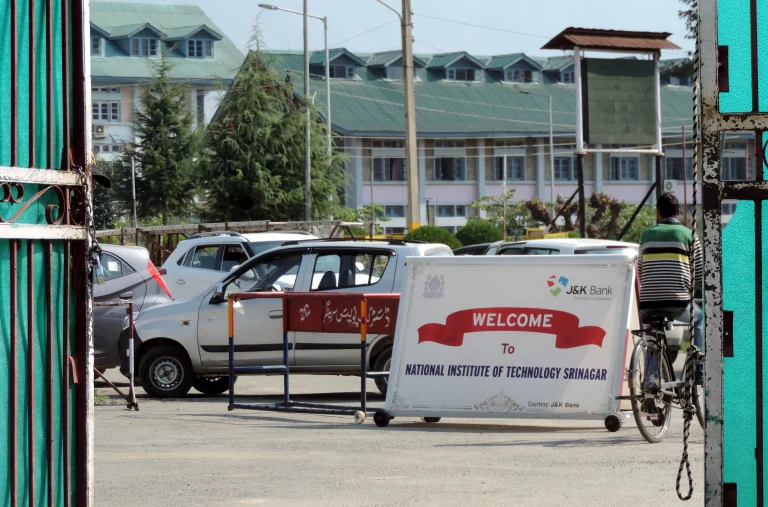
SRINAGAR, Nov 9: A late-night scuffle broke out between two groups of students in the National Institute of Technology (NIT) in Jammu and Kashmir’s Srinagar in which five persons from both sides sustained injuries, according to the police on early hours of Wednesday. According to the Srinagar Police, the clash broke out after the end of a volleyball match, following which the police entered the campus upon the request of the NIT authorities.
The police informed that the situation at the campus is normal now. “A late-night scuffle happened in NIT Srinagar wherein 2 groups of students belonging to different batches clashed after the end of a volleyball match. 5 students from both sides sustained minor injuries. Police on request of NIT authorities entered campus and situation is normal now,” Srinagar Police tweeted. (Agencies)
India’s vision to bring whole world together for better future: Modi
Unveiling the logo, theme, and website of India’s G-20 Presidency via video conferencing, Prime Minister Narendra Modi said here on Tuesday that it was India’s endeavour to see that there was no first world or third world in the world, but only one world.
India’s vision was to bring the whole world together for a better future, he said while addressing a gathering on the occasion and gave the example of ”One Sun, One World, One Grid” which has been New Delhi’s clarion call for a revolution in the world of renewable energy, and the global health campaign of ”One Earth, One Health”.
Speaking about the G-20 ‘mantra’ of ”One Earth, One Family, One Future”, the PM said: “It is these thoughts and values of India that pave the way for the welfare of the world.”
Noting that from 1 December, India would preside over the G-20, he said the grouping’s Presidency was a historic opportunity for the country. G-20, he noted, was the premier forum for international economic cooperation representing around 85 per cent of the global GDP, over 75 per cent of the worldwide trade, and about two-thirds of the world population.
Modi, however, noted that India’s G-20 Presidency of the grouping was coming at a time of crisis and chaos. The world was dealing with the aftereffects of a disruptive once-in-a-century global pandemic, conflicts, and economic uncertainty. “The lotus in the logo of G-20 is a symbol of hope in such tough times,” he said.
The PM remarked that even if the world was in a deep crisis, It could still be made a better place. The lotus in the logo of G-20 was a symbol of hope in such tough times,” he said, adding that the grouping aimed to bring the world together in harmony while respecting diversity.
Remarking that the G-20 logo was not just any logo, the PM said it was a message, a feeling that ran in India’s veins.“It is a resolve that has been omnipresent in our thoughts through ‘Vasudhaiva Kutumbakam’,” he added.
Modi observed that there was an unprecedented curiosity in the world today to know and understand India. ”Today India is being studied in a new light. Our current successes are being assessed and unprecedented hopes are being expressed about our future”, he added.
In such an atmosphere, it was the responsibility of the citizens to go beyond these expectations and acquaint the world with India’s capabilities, philosophy, and social and intellectual strength, he said. “We have to unite everyone and energise them for their responsibility towards the world,” he added.
Noting that it has taken India thousands of years to reach where it was, Modi said; ”We have seen highs of prosperity and also the darkest phase in global history. India has reached here along with the history of many invaders and their tyranny. Those experiences are the biggest strength in India’s development journey today.”
The PM said that after independence, India started a big journey starting from zero, aiming for the top. This included the efforts of all the governments in the last 75 years. All the governments and citizens together in their own way tried to take India forward. ”We have to move forward with this spirit today with a new energy taking the whole world along,” he said.
The PM underlined a key lesson of India’s culture. “When we strive for our progress, we also envision global progress,” he said. He also dwelled on the democratic heritage of Indian civilisation. He pointed out “India is such a rich and living democracy of the world. We have the values and a proud tradition in the form of the mother of democracy. India has as much uniqueness as it has diversity. “Democracy, diversity, indigenous approach, inclusive thinking, local lifestyle and global thoughts, today the world is seeing solutions to all its challenges in these ideas”, he said. The PM said that many of India’s achievements could be used by other countries of the world.
At least 6 killed after 6.3 magnitude earthquake hits west Nepal; tremors felt across north India
NEPAL, Nov 9: At least six people were killed and five others injured when a powerful 6.6-magnitude earthquake struck west Nepal early on November 9, authorities said.
According to the National Seismological Centre, the earthquake occurred at 2.12 a.m. with its epicentre at Khaptad National Park in Doti district.
Deputy Superintendent of Police Bhola Bhatta, the acting chief at the District Police Office in Doti, said that all the victims were killed by the debris of the houses damaged during the earthquake.
The National Centre for Seismology (NCS) said the epicentre of the 6.3 magnitude earthquake, which struck at 1.57 a.m., was in Nepal, about 90 km east-southeast of Pithoragarh in Uttarakhand. The region has been experiencing lower magnitude quakes for the last few days.
The epicenter was in Nepal, according to the National Center for Seismology. ”Earthquake of Magnitude:6.3, Occurred on 09-11-2022, 01:57:24 IST, Lat: 29.24 & Long: 81.06, Depth: 10 Km, Location: Nepal,” the NCS tweeted.
In April 2015, a devastating earthquake of 7.8-magnitude rocked Nepal, killing nearly 9,000 people and wounding nearly 22,000 others. It also damaged over 800,000 houses and school buildings.
Narayan Silwal, spokesman for the Nepali army, said a ground rescue team has been rushed to the site and two helicopters were on stand by in nearby Surkhet and Nepalgunj towns.
Second earthquake in 24 hours
Two moderate earthquakes preceded the stronger tremor that jolted western Nepal, a 5.7 magnitude tremor at 9.07 p.m. on November 8 and a 4.1 magnitude one shortly after at 9.56 p.m. The epicentre was the same, it said.
The tremors were felt across north India, including in Uttarakhand, Uttar Pradesh as well as in Delhi and its suburbs of Gurugram and Ghaziabad.
Many people shared their experiences on Twitter, posting videos of people rushing out of their homes and neighbours gathering in groups, huddled over their phones as they tried to find out what had happened and where the epicentre was. One video showed a chandelier shaking.
“I’m just 80 km away from the centre of this earthquake… I tell you guys … I was in deep sleep. My table started hitting the wall…Almirah made sound…and my bed shook… It was for at least 50 to 70 seconds,” posted one user Dinesh Sharma, who said he is based in Pilibhit near the border.
Neha Yadav, another Twitter user said, she had been in Delhi for four years and had never felt such tremors.
A 4.5 magnitude earthquake had struck Uttarakhand on November 6 with the epicenter 17 km east-southeast of Uttarkashi. (Agencies)
Active Covid cases in country dip to 13,559
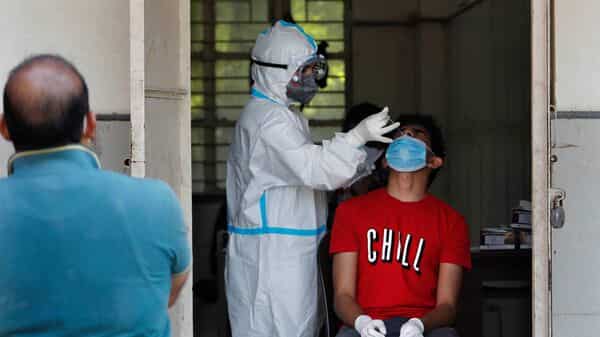
New Delhi, Nov 9: India logged 811 new coronavirus infections taking the total tally of COVID-19 cases to 4,46,62,952, while the active cases declined to 13,559, according to the Union Health Ministry data updated on Wednesday.
The death toll climbed to 5,30,511 with two fatalities being reported from Maharashtra, the data updated at 8 am stated. The active cases comprise 0.03 per cent of the total infections, while the national COVID-19 recovery rate increased to 98.78 per cent, according to the ministry website.
A decrease of 462 cases has been recorded in the active COVID-19 caseload in a span of 24 hours.
The number of people who have recuperated from the disease surged to 4,41,18,882 while the case fatality rate was recorded at 1.19 per cent. According to the ministry’s website, 219.75 crore doses of Covid vaccine have been administered in the country so far under the nationwide COVID-19 vaccination drive. India’s COVID-19 tally had crossed the 20-lakh mark on August 7, 2020, 30 lakh on August 23, 40 lakh on September 5 and 50 lakh on September 16. It went past 60 lakh on September 28, 70 lakh on October 11, crossed 80 lakh on October 29, 90 lakh on November 20 and surpassed the one-crore mark on December 19. The country crossed the grim milestone of two crore on May 4 and three crore on June 23 last year. It crossed the four-crore mark on January 25 this year. (Agencies)
Justice DY Chandrachud formally takes oath as the new Chief Justice of India
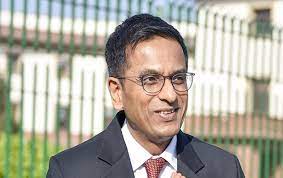
Justice DY Chandrachud formally takes oath as the new Chief Justice of India
J&K Sports Council directs 14 bodies to hold elections
J&K Sports Council directs 14 bodies to hold elections
Jammu, Nov 8: In order to bring transparency in the working and smooth sailing, the Jammu and Kashmir Sports Council has directed as many as 14 bodies to submit fresh voters list and timely hold ‘already due’ elections.
“Nearly 14 sports associations have been “illegally” operating in Jammu and Kashmir,” official sources said.
They said, “despite the fact that their term has come to an end, these sports bodies are holding activities under the banner of J&K Sports Council, which is not valid.”
“Unless elections are conducted and affiliation vis-a-vis recognition is not revised, these bodies are to be treated as invalid,” they said, adding that the grants have also been freezed for the time elections are not conducted.
The sports bodies directed to hold elections are Archery Association of J&K, J&K Body Building Association, All J&K Chess Association, J&K Cycling Association, J&K Rifle Association, J&K Ball Badminton Association, J&K Squash Racket Association, J&K Table Tennis Association, J&K Wrestling Association, J&K TenniKoit Association, J&K Amateur Kabaddi Association, J&K Kho Kho Association, J&K Rugby Association, J&K Pencak Silat Association.
Notbaly, the Jammu and Kashmir Sports Council has also tightened noose over non-functional associations in the Union Territory and the role of such defunct associations shall be performed by the Sports Council by conducting, organizing and monitoring the activities besides scouting for the sports talent. (AGENCIES)
Unscheduled power cuts unacceptable: Mehta tells Power DisComs as Winter sets in
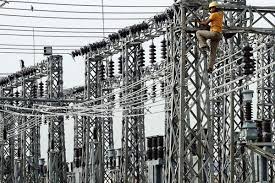
JAMMU: Chief Secretary Dr Arun Kumar Mehta chaired a winter preparedness review of Power Distribution Companies (DisComs) here at the Civil Secretariat today.
The Chief Secretary instructed the officers to ensure that government workshops are replenished with spare parts, inspections of transformers should be undertaken and sufficient stock of transformers is maintained to meet demand during peak consumption season. He stated that the flat rate system of billing will be dispensed with soon.
The Chief Secretary observed that demand side management to reduce losses and to ensure regular supply of power to the customers is of paramount importance. For this purpose, effective enforcement has to be undertaken against power theft. The Chief Secretary directed the Department to ensure that the schedule of power cuts, wherever required, is publicized in advance so that the consumers can plan their activities accordingly.
He called for expediting the process of power lines installation between Ramban-Kishtwar and for Sonamarg and Gurez.
Reviewing the overall power scenario, Dr. Mehta called for hiring professional consultants for efficient and cost effective power procurement by the UT. He called for formulating definite procedures for such purchases, either through Power Purchase Agreement (PPA) or from power exchanges.
The officers were directed to set definite targets of revenue collection from regular customers and amnesty payers and asked for ensuring efficiency of the process. The Chief Secretary reiterated directions for installation of at least 1.5 lakh smart meters each in Srinagar and Jammu cities by March 2023.
The Chief Secretary directed for concluding disciplinary action against officers/officials in charge of feeders with losses greater than 90 percent immediately. He stressed that Aggregated Technical and Commercial (AT&C) Losses should be maintained below 15 percent.
The meeting was attended by Principal Secretary Power Development Department (PDD), H. Rajesh Prasad; Managing Director JPDCL, Shiv Anant Tayal and Managing Director KPDCL, Yasin M Choudhary among other senior officers of the discoms.
Tragedy stares at Government buildings in J&K’s biggest warehouse market
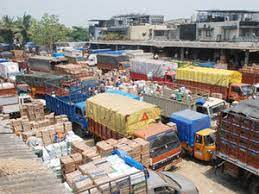
JAMMU, Nov 8: Hundreds of people here in Nehru market of Jammu risk their lives every day living in ramshackle government flats which outlived their utility years back with little to no hope of a safe rehabilitation from the authorities.
The buildings were declared “unsafe for habitation” by the Jammu Development Authority (JDA) in 2012, yet they house several families and businesses.
Nehru Market happens to be Jammu and Kashmir’s biggest warehouse belt having firms serving the region since the 1950s, when the buildings were first erected.
The three buildings located in the market have 72 quarters and over 50 shops which were constructed in the early 1950s in the heart of the city famed for its temples.
But over the decades, they have been reduced to being rundown structures with their residents eking out with a precarious existence with a very literal danger hanging above their heads.
Besides their old age, these buildings are also alleged by the residents to be the victims of neglect and poor maintenance by the estates department and JDA.
Their occupants have been demanding that they be shifted to a safer place, and worry it will take nothing less than a catastrophe before the authorities wake up.
“I feel the government is waiting for a tragedy to happen before they wake up. For 32 years, no repair and renovation was carried out by the JDA and estates department,” Bharat Bushan, a migrant, who lives in quarter number 7, with his three-member family on a relief amount of Rs 13,000, told PTI.
“Government should immediately wake up to save the people here,” he said.
Meenakshi, his wife, says that they moved to the flat 32 years ago, when her father-in-law, who worked as a government employee with the civil secretariat, and was a Kashmiri migrant, got it in allotment.
“There is no care of us. Despite repeated requests, neither they renovated the buildings, nor provided us alternative accommodation,” said Meenakshi, adding that how will the family afford rent elsewhere, when it survives on a pittance.
Even as the administration put up boards warning the residents of danger, migrants living in these blocks and shopkeepers running trade there refuse to leave the place due to, among other things, fear of loss of business.
“They have left us to die here. We raised issues with all but nobody is listening to us or coming forward to help us. We urge Lieutenant Governor to help us by relocating us to a safer place,” said 70-year-old Kishni Wantoo, wife of former civil secretariat officer Late T N Wantoo. J
DA declared the buildings unsafe for living and for carrying out trading activity in 2012-13 after considering the assessment of the Public Works department (PWD) which had notified JDA that the buildings had outlived their utility and structural stability.
Though some occupants left the buildings after JDA put up warning boards, still about 50 families live in them and scores of other people run businesses there.
Traders Association Warehouse president Deepak Gupta called for immediate shifting of families and asked the authorities to ensure some mechanism so that livelihood of traders do not suffer during the rehabilitation.
“It is the biggest warehouse of Jammu and Kashmir which has been supplying essential commodities to the twin provinces since 1962,” he said.
“Government cannot escape from its responsibilities by putting up warning sign boards. They have ensured security of life of flat dwellers and ensure that there is loss to livelihood of the traders and shopkeepers,” he added.
Gupta urged the government to relocate residents to safe accommodations and build temporary shops for the traders to carry out their regular work.
JDA which oversees the buildings in the area is working on setting up an India Habitat Centre type hub here.
After it found the buildings unsafe for habitation, JDA put up warning boards for the residents suggesting to them that they should find a new place.
“It is brought in the notice occupants residing in Government quarters at Nehru market, warehouse in block A, B (old and new) and D need to vacate the quarters keeping in view the deplorable and dilapidated conditions of the buildings to avoid any untoward mishap to their life and properties.
“Despite this notice, if somebody still chooses to reside in these quarters, he or she will be doing it at his or her own risk and cost,” the board reads.
Magotra too has appealed to the residents to vacate the premises, but with no alternative arrangement on offer.
“It is my submission to people that it is highly unsafe to live there. It is time you shift from that place. It is urged to both shopkeepers as well as families — don’t put your lives at risk. It is more important than the economic aspect,” Magotra told PTI.
He added that the rehabilitation issue is very important and will be raised with the government as it involves the livelihood of the people.
Magotra said that the process of declaring these buildings “unsafe” was started in 2012.
“State PWD conducted a survey of buildings, which are 70 years old now. They found that these buildings had outlived their utility and structural stability. They notified to us that they have turned unsafe. You (JDA) rebuild it,” he said.
He said the authority accordingly began a process for setting up an IHC-type hub here and began work in this direction from 2018-19.
“But it requires that people vacate these buildings,” Magotra added. (Agencies)
PM Modi grants 265 DNB Post-Graduate medical seats across 20 district Govt hospitals in J&K: Mansukh Mandaviya
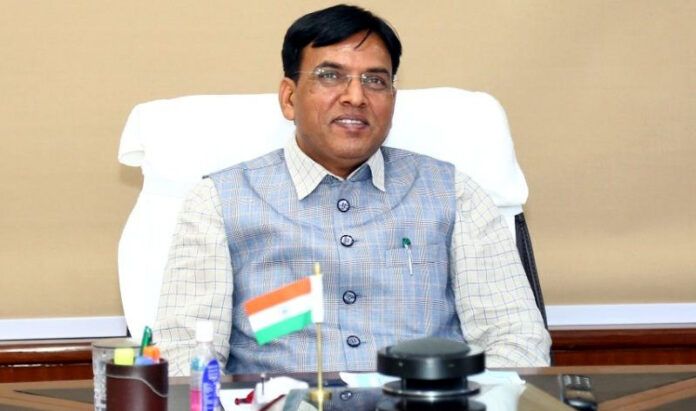
NEW DELHI, Nov 8: In sync with Prime Minister’s vision of “Health for All,” the government has granted 265 Diplomate of National Board (DNB) postgraduate medical seats to several government hospitals in Jammu and Kashmir across 20 districts. The step will not only benefit people of Jammu and Kashmir, but the doctors there there will also get an opportunity of being trained in their own region, a health ministry statement said. Tapping into this homegrown medical workforce would lead to an effective healthcare delivery system in the Union Territory, it said. ”With the vision of providing trained specialists in almost every district of Jammu and Kashmir, the Government of India took this as a challenge in a mission mode,” read the statement.
”The Ministry of Health along with National Board of Examinations in Medical Sciences (NBEMS) took a lead role and ensured that several postgraduate seats of NBEMS are granted to various government hospitals of Jammu and Kashmir,” it said.
As a consequence, at present there exist more than 250 PG seats across 20 districts in phase 1 of the expansion plan. Two more PG seats will be granted in the second phase.
Fifty per cent of the PG seats are reserved for local in-service doctors to provide them with the opportunity for postgraduate training.
The people of Jammu and Kashmir will be benefited as modern quality healthcare will become more affordable and accessible in almost all the districts. This in turn, would further enhance the quality of primary, secondary, and tertiary healthcare, the statement said. The Indian government has also increased the number of examination centres in the UT to ensure that the candidates do not have to travel to other states to appear in the entrance examinations, the statement said. (Agencies)