
JAMMU, Nov 9: Responding to a Jammu-based lawyer’s request seeking defreezing of eight seats out of 24 earmarked for the Pakistan occupied Jammu and Kashmir refugees as per the Jammu and Kashmir Constitution in 1956, the Election Commission has said that the issue is under the Union Government’s jurisdiction.
Advocate Aditya Sharma of Jammu and Kashmir High Court at Jammu wing, in a letter dated September 21, to the Chief Election Commissioner, had stated that Jammu and Kashmir had witnessed a historic moment when the Article 370 was abrogated by the Union of India on August 5, 2019, whereby the doors of various opportunities have been opened for the people of Jammu and Kashmir and ended decades long the discrimination.
Prior to the abrogation of Article 370 no voting right was there for refugees from West Pakistan i.e. PoJK refugees of West Pakistan, people of Valmiki community and many and the State Constitution enacted in 1956 had also reserved 24 seats in Assembly for PoJK and left the same vacant, he said in a letter.
Sharma further stated that after the abrogation, a ray of hope had arisen for West Pakistan Refugees and other migrants from Pakistan to have right to vote and for the same purpose, if the eight seats out of 24 reserved seats, which belongs to west PoJK can be defreezed — it will give long pending justice to the migrants.
Further more, a Parliamentary Committee report on PoJK refugees was submitted in the Lok Sabha and the Rajya Sabha that recognized that PoJK refugees were not given relief and compensation due to their non-registered status, he stated.
“The committee also recommended to defreeze 8 seats out of 24 vacant seats,” Sharma added, saying further that in the 2022 Delimitation Commission Report, it was recommended that at least two members from the community of Kashmiri migrants be in the Legislative Assembly.
The Commission said that the Central Government may consider of giving representations to refugees in assembly as well and it is therefore submitted that kindly consider the committee report of 2014 and delimitation commission recommendation of 2022 for defreezing of eight seats out of 24 seats for Kashmiri migrants, refugees from PoJK which were left vacant in the year 1956 and for giving representation to them respectively, Sharma said in the plea.
However, the Election Commission in its reply stated, In reference to your letter, the Delimitation Commission constituted for the purpose of constituencies delimitation in UT of Jammu and Kashmir is already ceased to exist from May 5, 2022 after publication of its final Delimitation order in respect of UT of Jammu and Kashmir.”
The Delimitation Commission in this regard had also prepared a report titled as Delimited Landscape of Union Territory of Jammu and Kashmir, which is available on Commission’s website, the EC said. It also said that the Delimitation Commission had recommended to the Union Government to consider the issue of representation by way of nomination of representatives to the Displaced Persons from PoJK in Jammu and Kashmir Legislative Assembly.
Therefore, the issue is now under the jurisdiction of the Union Government, the EC said in the reply. So as of now, the EC has sent these recommendations to the GoI as it is and at present the recommendations are under consideration of the GoI and we hope that the Government will give its decision on these recommendations very soon, Sharma told UNI. Aditya believes that in the upcoming Assembly elections in Jammu and Kashmir, not only the refugees, who have been deprived of voting till now, will vote, but if the Central Government conducts elections on these eight seats or nominate their representatives, justice will be delivered and they have a voice in the Assembly.
Rashtriya Swayamsevak Sangh leader Indresh Kumar, during his recent Jammu visit had referred to his meeting with Lt Governor Manoj Sinha stating that they held a brief interaction over the situation in Jammu and Kashmir and also on Pakistan-occupied Jammu and Kashmir (PoJK).
PoJK is part of Jammu and Kashmir which is an integral part of the country. We request the countrymen to pray, every morning, for the return of Kailash Mansarovar and PoJK and they again become part of India, he had said. (AGENCIES)
Defreezing PoJK seats in assembly polls Centre’s jurisdiction: EC to Jammu lawyer
Woman who kidnapped infant in Kishtwar booked under PSA: Police
KISHTWAR: A lady involved in the kidnapping of an infant in Kishtwar has been booked under Public Safety Act (PSA), police said.
In a statement, the police said that recently Kishtwar Police solved the mystery of a kidnapping case at District Hospital Kishtwar where one burqa Clad woman kidnapped the infant male baby age about 06 months by arresting the accused lady namely Shabnum Begum wife of Killed Militants Zahoor Din resident of Kripak Mohallah Kishtwar and booked in case FIR No. 232/2022 under relevant sections of law registered at police station Kishtwar.
The statement further stated that bail petitions were rejected by the CJM Court Kishtwar. The bail plea of the accused lady was argued by a battery of lawyers, wherein Police and prosecution officers contested logically for rejection of the Bail application as the case is of public interest.
Latter on Hon’ble Session Court granted bail in favour of the said lady. The normal law against her will not have the desired result of stopping her from indulging in further such illegal acts. Therefore normal law which has been invoked against the subject is not sufficient to deter the subject from indulging further in such type of crimes, they said.
Keeping in view all the circumstances, said lady has been detained under PSA after obtaining a PSA warrant from the concerned authorities for her involvement in the kidnapping case of an Infant male baby namely Afnan Ahmed son of Afreen Ahmed resident of Chirala At present Link Road Kishtwar. They said Lady Shabnam has been lodged in District Jail Kutha, they said.
Meanwhile, SSP Kishtwar Shafqat Hussain Bath-JKPS time and again requested the general public to be aware not to fall prey to such type of crime and report any such suspicious or fraudulent activity in your neighbourhood immediately to the concerned Police station, reads the statement.
PM Modi has strengthened health infrastructure in J&K: Tarun Chugh
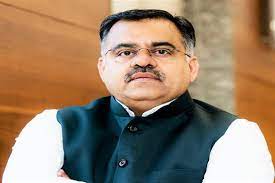
Jammu, Nov 9: BJP national general secretary Tarun Chugh has hailed the decision of Prime Minister Narendra Modi to allow 265 DNB-PG seats in government hospitals in J&K.
Chugh also welcomed the Prime Minister’s decision to reserve seats in the medical colleges for children from the militancy affected families. He said this would go a long way in providing relief to wards of the unfortunate families.
He said unlike the past governments of Abdullahs and Muftis the Modi government had been persistently looking after the health concerns of the people of J&K.
Ever since the Modi government has taken over the administration of the Union territory two AIIMS have been earmarked for Jammu and Kashmir regions while two cancer institutes have been set up in the two regions as well.
While the Jammu region has got four new medical colleges, two have been opened in the Kashmir region which would be a big leap forward in providing medical education to the children of J&K.
The Prime Minister’s various health schemes have been also providing service to the people in the far-flung pockets in J&K which is proving to be a boon for the people.
Four feared drowned in Chenab river yet to be traced
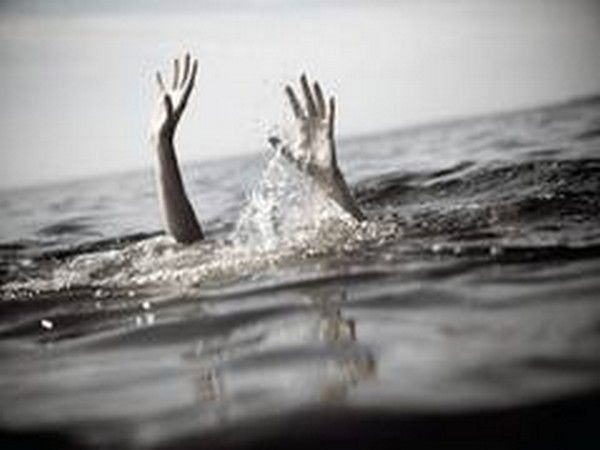
JAMMU, Nov 9: Search operations were underway on Wednesday to trace four people feared drowned in Chenab after their car plunged into the river in Doda district of Jammu and Kashmir, a senior police official said.
The operation was launched at Shibnote-Karara along Batote-Kishtwar national highway following the accident around 7.30 pm Tuesday but so far neither the vehicle nor its occupants have been found, Senior Superintendent of Police, Doda, Abdul Qayoom said.
Qayoom and Deputy Commissioner, Doda, Vishesh Paul Mahajan are supervising the operation which is being jointly carried out by police, army and State Disaster Response Force (SDRF).
River rafting experts from JK Adventures and specially trained local volunteers are also part of the rescue-cum-search operation, police officials said, adding after a night halt, the rescue operation resumed with the first light of the day.
They said the district administration has also requested the National Hydroelectric Power Corporation (NHPC) to close down the dams so that the water flow in the river is lowered to speed up the operation.
“We responded immediately after the vehicle plunged into the river but the strong current at the scene of the accident proved an obstacle in carrying out the rescue operation,” founder and chief executive officer of JK Adventures Sachin Singh Samyal said.
NEET-PG next year could be the last, to be replaced with National Exit Test for MBBS students

NEW DELHI, Nov 9: The National Eligibility cum Entrance Test-Postgraduate (NEET-PG) scheduled for April-May next year could be the last such examination as the admission to PG medical courses thereafter will be based on the results of the National Exit Test to be taken by final-year MBBS students, officials have said.
At a high-level held on Monday, the National Medical Commission (NMC) is learnt to have conveyed to the Union Health Ministry that it intends to conduct the National Exit Test (NExT) in December 2023, official sources said on Wednesday.
If held in December 2023, MBBS students of the 2019-2020 batch will have to appear for the exam. The results of the exam will also be used for admission to postgraduate medical courses from the 2024-2025 batch, they said.
According to the NMC Act, NExT will serve as a common qualifying final-year MBBS exam, a licentiate exam to practise modern medicine and for merit-based admission to postgraduate courses and a screening exam for foreign medical graduates who want to practice in India.
The government had invoked in September the relevant provisions of the NMC Act to extend the time limit for conducting NExT till September 2024.
According to the law, the commission had to conduct a common final-year undergraduate medical examination, NExT, as specified by regulations within three years of it coming into force.
The Act came into force in September 2020.
The sources said the All India Institute of Medical Sciences, New Delhi may conduct the test instead of the National Board of Examinations in Medical Sciences, but a decision on the matter is yet to be taken.
Conducting NExT requires preparations such as working out modalities, syllabus, type and pattern of the exam, officials said, adding students will have to given adequate time to prepare for it.
Mock tests would need to be carried out before the main test.
The importance of NExT lies in the fact that it will be the same for everyone, whether trained in India or any part of the world, and hence it will solve the problem of foreign medical graduates and mutual recognition, officials said. (Agencies)
Hotel owner from Pahalgam travels 70 km to return tourist’s money
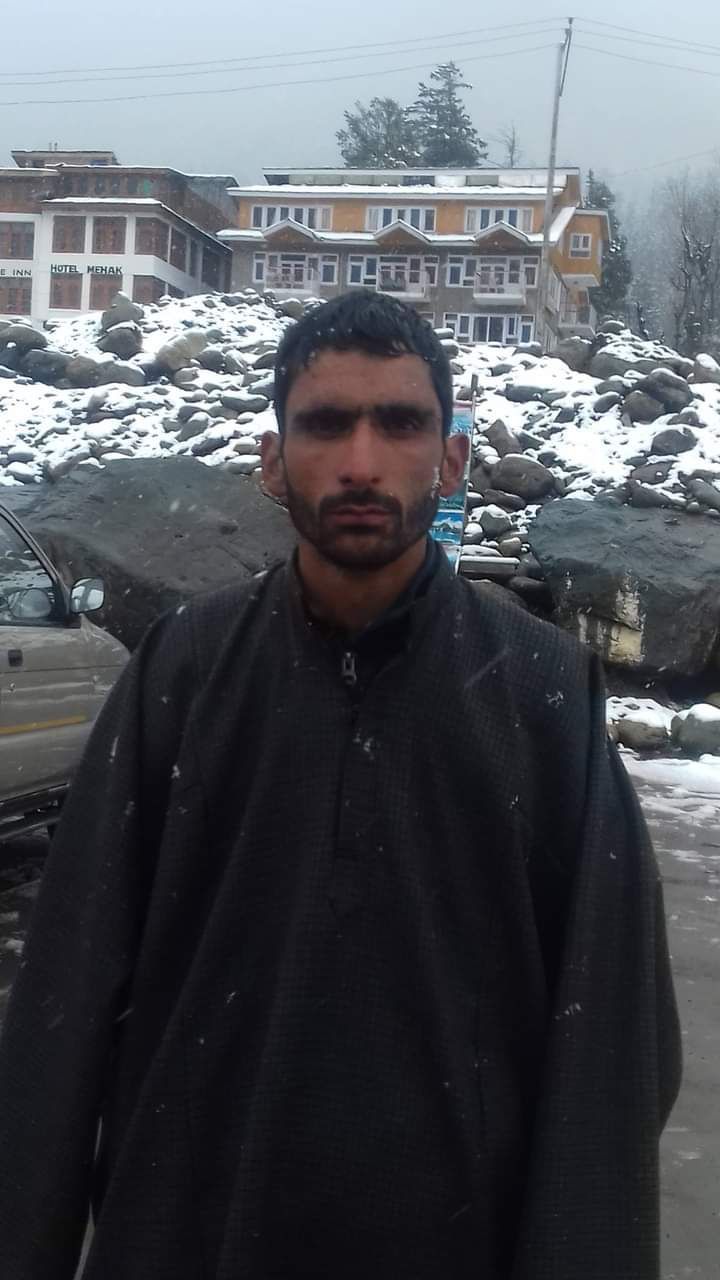
SRINAGAR: A hotel owner from the Pahalgam area of South Kashmir’s Anantnag district travelled nearly 70 kilometres to return money to a tourist that he had forgotten in the hotel room in Pahalgam.
Abdul Wahid Wani, owner of Best view resort at Ladroo, Pahalgam returned over 19 thousand to the tourist that he had forgotten while leaving the hotel. Wahid said a tourist namely Ramesh Choudhary had stayed in his hotel and the next day his daughter came to clean the room and found Rs 19,700 there.
Transparency, citizen-participation hallmark of Modi Governance model: Dr Jitendra
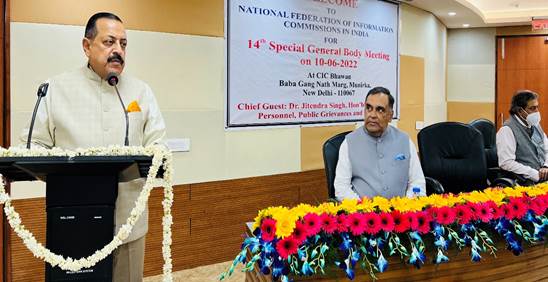
NEW DELHI, November 9 : Union Minister of State for Personnel, Public Grievances and Pensions, Dr Jitendra Singh today said, transparency and Citizen-centricity are the hallmark of the Modi governance model.
Addressing the 15th Annual Convention of Central Information Commission titled, “Azadi Ka Amrit Mahotsav: Citizen – centric Governance through RTI” at Vigyan Bhawan, Dr Jitendra Singh said, ever since Prime Minister Narendra Modi took over in 2014, transparency, accountability and citizen-centricity became the hallmark of the Governance Model. He said that in the last over eight years, every conscious decision was taken to strengthen the independence and resources of the Information Commission.
The Minister noted that empowered citizens are an important pillar of democracy and the Central Information Commission will continue to work for empowering the people through information.
Dr Jitendra Singh said, RTI Act is not a standalone law, but it is part of the larger narrative of strengthening Indian democracy, ensuring transparency in governance and building capacities of the common citizen to enable him to take informed decisions and choices. Above all, it is about nurturing the trust between citizen and the state – where both must have faith in each other, the Minister added.
Dr Jitendra Singh noted that it was during the Modi government that a 24 hour portal service was introduced for e-filing of the RTI applications during any part of the day or night and from any part of the country or abroad. He added that technology has been harnessed for developing mobile based applications, e-filing, e-hearing, e-notification etc., facilitating the task of information seekers in availing remedies under the law. The mobile app developed by CIC enabled citizens to file appeals with ease, besides using technology for audio video hearing of cases. The Minister said, as a result, the Central Information Commission has succeeded in reducing the pendency from 38116 cases in the year 2020-21 to 23405 cases in the year 2021-22.
Referring to indiscriminate filing of RTI applications in an era of Information Explosion, Dr Jitendra Singh humbly appealed to check before filing the application, whether the desired information is already existing in the public domain or not. He elaborated that today all major decisions and information are in the public domain and we have achieved transparency with credibility.
Dr Jitendra Singh said, despite the challenges posed by the unprecedented pandemic, earnest efforts were made by CIC and SICs to dispose of RTI second appeals and complaints and some Commissions even exceeded pre-Pandemic figures of disposal during certain periods. He also mentioned that June 2020 saw higher disposal of cases in CIC in comparison to pre-pandemic year of 2019. The Minister said, this became possible due to the innovative approach of shifting into virtual mode (audio-video) for hearing and disposal of cases.
Dr Jitendra Singh also pointed out that it was during the challenging times of pandemic in May, 2020, the Central Information Commission started entertaining, hearing and disposing of RTIs from the newly created Union Territory of Jammu & Kashmir, through virtual means, after the passing of J&K Reorganisation Act 2019. He said, applicants from J&K and Ladakh were allowed to file RTI applications from home and even for appeals to the CIC. He added that the significant change now is that the non-domiciles and non-State subjects of Jammu & Kashmir will also now be entitled to file RTI related to Union Territory issues or agencies.
Dr Jitendra Singh lauded Central Information Commission for achieving consistent decline in pendency with corresponding rise in disposal of the Right to Information (RTI) appeals.
India has 2.49 lakh voters aged above 100: CEC Rajiv Kumar
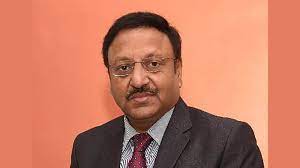
Pune, Nov 9: There are 2.49 lakh voters aged above 100 in India, Chief Election Commissioner Rajiv Kumar said on Wednesday.
Besides, 1.80 crore voters are over 80 years of age, Kumar said after flagging off a bicycle rally in Maharashtra’s Pune city on Wednesday to create an awareness about voter registration as part of the national level launch of a special summary revision of the voters’ list.
The Election Commission of India’s initiative is aimed at increasing the electoral rolls in urban areas.
Explaining the robustness and beauty of the Indian electoral rolls, Kumar said the country has voters from the highest peaks of Himalayas, from the 6,000-km coastline in south, deserts in the west and regions from the east.
“You will be happy to know we have close to 2.49 lakh voters in our rolls who are (aged) 100 plus and what a relief and ecstasy it gives when you interact with them and find that they have been voting all through their lives,” he said.
Besides, there are 1.80 crore voters who are above 80 years of age, he told reporters after the rally.
The CEC said India’s first voter Shyam Saran Negi, who recently died, was 106 years old and voted through postal ballot just three days before his death. “That is the spirit,” he added.
Kumar said the summary revision takes place every year, but this year they are doing a very focused activity and starting it all over the country from Pune with a specific purpose to increase the participation of citizens from urban areas.
“What does it mean? Everywhere in the country and the farthest possible states, be it hills, coastal lines, everywhere, inaccessible terrains, deserts, everywhere every single citizen gets enlisted as a voter and strengthens the democracy by not only getting registered but also casting his/her vote,” the CEC said.
Kumar said they want to request all voters in the urban areas, all the youth to come participate, get registered and vote.
“It is only through your voting that the democratic traditions become absolutely robust and strong,” the CEC said.
“Some of the cities, I am not naming them, do not really do that kind of voting and there is a whole lot of ground which we have to cover in urban areas, that is why this rally was organised to create awareness,” he said.
Kumar flagged off the bicycle rally at the Shiv Chhatrapati Sports Complex in Pune’s Balewadi area.
He later told reporters that there are some advanced, big metro cities where apathy is seen among the urban voters, but it is expected that these cities should also participate in voting whole-heartedly and help strengthen the democracy.
“The same applies to the youth also. If they can put forth their views on WhatsApp, they can very well put forth their opinion on casting votes,” he said.
Kumar said Pune has been chosen for the national launch of the special summary revision of the voters’ list as it is the “city of knowledge” and the message gets spread faster from here.
When pointed out that Pune had recorded a low voting percentage, the CEC said, “Yes, there is little apathy.” Notably, in the 2019 general elections, the overall voting percentage for the Pune Lok Sabha constituency was 49.84 per cent.
Kumar said on the day of voting, a holiday is declared as per the Negotiable Instruments Act and some people think “let’s enjoy the holiday instead of going and casting vote”, but they should go and vote as holidays are always there.
Kumar said the importance of special summary revision is that if anyone is left and not included as a voter, he or she will be included through this initiative.
“Also, young voters who are turning 18 on qualifying dates have a chance to get enrolled,” he added. (Agencies)
Army jawan dies of bullet injury as service weapon goes off accidentally in J&K’s Poonch

JAMMU, Nov 9: An Army jawan died of a bullet injury as his service weapon went off accidentally in Jammu and Kashmir’s Poonch district on Wednesday, officials said.
The service rifle of the soldier belonging to the Army’s Rashtriya Rifles unit went off accidentally, resulting in a bullet injury to him, in the border belt of Mankote, the officials said.
The injured jawan was rushed to a hospital, where he was declared ”brought dead”, they said. The inquest proceedings have been launched. (Agencies)
DMs of 31 districts of 9 states can give citizenship to non-Muslims from Pak, B’desh, Afghanistan
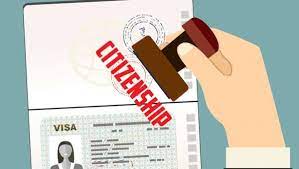
New Delhi, Nov 9: The district magistrates of 31 districts and the home secretaries of nine states have been given powers to grant Indian citizenship to the Hindus, Sikhs, Buddhists, Jains, Parsis and Christians coming to the country from Afghanistan, Bangladesh and Pakistan under the Citizenship Act, 1955.
According to the annual report of the Ministry of Home Affairs (MHA) for 2021-22, from April 1 to December 31, 2021, a total of 1,414 foreigners belonging to these minority communities of Pakistan, Bangladesh and Afghanistan were given Indian citizenship by registration or naturalisation under the Citizenship Act, 1955.
The move to grant Indian citizenship to the Hindus, Sikhs, Buddhists, Jains, Parsis and Christians coming to the country from Afghanistan, Bangladesh and Pakistan under the Citizenship Act, 1955 and not under the controversial Citizenship (Amendment) Act, 2019 (CAA) bears significance.
The CAA also provides for granting Indian citizenship to these non-Muslims coming from Afghanistan, Bangladesh and Pakistan.
However, the rules under the CAA have not been framed by the government yet and hence, no one so far has been granted Indian citizenship under it.
The annual report of the MHA said the Centre delegated its powers to grant Indian citizenship by registration or naturalisation in respect of foreigners belonging to the Hindu, Sikh, Jain, Buddhist, Christian or Parsi communities from Pakistan, Bangladesh and Afghanistan to the collectors of 13 more districts and the home secretaries of two more states in 2021-22.
“With this, collectors of 29 districts and home secretaries of nine states have been authorised to grant citizenship in respect of the aforesaid category of migrants,” the report said.
The district magistrates of Gujarat’s Anand and Mehsana were also given similar powers last month.
The nine states where Indian citizenship by registration or naturalisation is given under the Citizenship Act, 1955 to non-Muslim minorities from Pakistan, Bangladesh and Afghanistan are Gujarat, Rajasthan, Chhattisgarh, Haryana, Punjab, Madhya Pradesh, Uttar Pradesh, Delhi and Maharashtra.
Interestingly, the authorities of none of the districts of Assam and West Bengal, where the issue is politically sensitive, has been given the powers so far.
The delegation of powers, the report said, will speed up the process of granting Indian citizenship to the aforesaid category of migrants as the decision would be taken at the local level.
“From April 1, 2021 to December 31, 2021, a total of 1,414 citizenship certificates have been granted by all authorities including this ministry. Out of this, 1,120 were granted by registration under section 5 and 294 were granted by naturalisation under section 6 of the Citizenship Act, 1955,” the report said.
Under the CAA, the Narendra Modi government wants to grant Indian nationality to persecuted non-Muslim migrants from Bangladesh, Pakistan and Afghanistan — Hindus, Sikhs, Jains, Buddhists, Parsis and Christians — who came to India till December 31, 2014.
There were massive protests in some parts of the country after the CAA was passed by Parliament in December 2019 and the subsequent presidential nod.
More than a hundred people lost their lives during the protests or in police action.
However, the law is yet to be implemented as rules under the CAA are yet to be framed. Rules under a law have to be framed for its implementation.
According to the Manual on Parliamentary Work, the rules for any legislation should be framed within six months of the presidential assent or an extension has to be sought from the committees on subordinate legislation in the Lok Sabha and the Rajya Sabha.
In January 2020, the home ministry notified that the Act would come into force from January 10, 2020, but it later requested the parliamentary committees in the Rajya Sabha and the Lok Sabha to give it some more time to frame the rules as the country was going through its worst ever health crisis due to the COVID-19 pandemic.
The MHA was granted yet another extension last month by the parliamentary committees on subordinate legislation in the Rajya Sabha and the Lok Sabha to frame the rules under the CAA.
While the permission was granted by the Rajya Sabha till December 31, 2022, the Lok Sabha granted time till January 9, 2023.
This was the seventh extension given to the MHA to frame the rules under the CAA. (Agencies)