Tuesday, July 14, 2026
Home Blog Page 92

Gold, Silver Futures Gain On Firm Global Cues As Fed Rate Cut Hope Strengthens

0

Gold and silver prices gained in the futures trade on Friday driven by firm global trends and growing expectations among investors that the US Federal Reserve will deliver a rate cut next month.

On the Multi Commodity Exchange (MCX), gold futures for December delivery increased by Rs 596, or 0.47 per cent, to Rs 1,26,100 per 10 grams in a business turnover of 4,496 lots.

The February contract appreciated by Rs 669, or 0.52 per cent, to Rs 1,28,336 per 10 grams in 10,370 lots.

Silver prices also gained ground, with the December contract surging by Rs 1,183, or 0.73 per cent, to Rs 1,63,650 per kilogram in 5,799 lots.

The March 2026 contract also moved higher by Rs 1,373, or 0.83 per cent, to Rs 1,67,360 per kg in a business turnover of 15,578 lots.

“In the domestic market, both metals traded steady and ended Thursday on a mixed note due to the US Thanksgiving holiday keeping global cues limited,” Rahul Kalantri, Vice-President, Commodities, Mehta Equities Ltd, said.

In the international market, Comex gold futures for December delivery went up by USD 22.2, or 0.53 per cent, to USD 4,187.4 per ounce, while silver was trading 1.71 per cent higher at USD 53.82 an ounce.

In the intraday session, the white metal futures rose to hit a high of USD 54.23 per ounce.

“Gold in the Asian session inched toward USD 4,190 per ounce, while silver continued its upward march above USD 54, approaching fresh lifetime highs in the international market,” Kalantri added.

Jigar Trivedi, Senior Research Analyst at Reliance Securities, said gold’s upward movement has been approaching a five-week high, as investors grew more confident of a December Federal Reserve (Fed) rate cut.

He noted that a series of remarks from Fed officials supported further monetary policy easing, along with delayed economic data showing weakness, has reinforced expectations of a rate cut.

Meanwhile, Kevin Hassett, seen as a frontrunner to replace Fed Chair Jerome Powell, has echoed President Donald Trump’s support for a rate reduction.

Trivedi said that market participants now price in more than an 80 per cent probability of a 25 basis points cut next month, up sharply from 30 per cent a week ago.

“Investors are also pricing in three additional cuts by the end of 2026. The metal is poised for its strongest annual performance since 1979, supported by heavy central-bank buying and strong non-sovereign inflows into exchange traded funds (ETFs),” he added. (Agencies)
Srinagar Police, CRPF Carry Out CASO In Lal Chowk; Hotels Checked

0

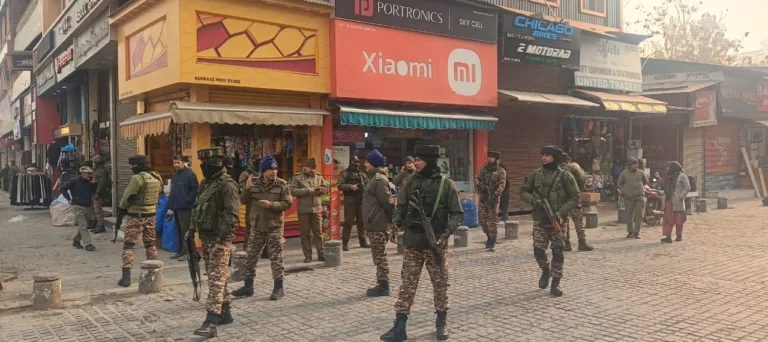
Srinagar Police, assisted by personnel of the Central Reserve Police Force (CRPF), on Friday morning launched a cordon-and-search operation (CASO) in the Lal Chowk area of the summer capital, officials said.

They said that the search operation was carried out as part of heightened security measures in the busy commercial hub. Multiple teams conducted surprise inspections in several hotels and guest houses to verify records of visitors and ensure overall security compliance.

The operation continued for several hours; however, no suspicious activity was reported till the last reports came in.

They said such checks are routinely conducted to maintain vigilance and ensure a secure environment in the city. (KNC)

India and Germany Enhance Traditional Medicine Ties in Berlin

0

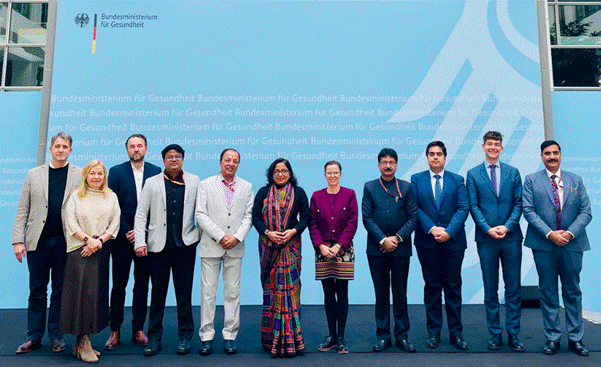
The 3rd Joint Working Group (JWG) Meeting on Alternative Medicine took place from November 18 to 20, 2025, in Berlin, involving the Ministry of Ayush, Government of India, and the Federal Ministry of Health, Germany. The meeting represented a crucial advancement in Indo-German collaboration in the realm of traditional and integrative healthcare.

The Indian delegation, led by Ms. Monalisha Dash, Joint Secretary of the Ministry of Ayush, included several prominent figures such as Prof. (Dr.) Rabinarayan Acharya, Director General of CCRAS, and Dr. Subhash Kaushik, Director General of CCRH. These officials engaged with their counterparts from the German side, including Paul Zubeil, Head of Division for European and International Health Policy, and Prof. Dr. med. Georg Seifert, the Head of the Competence Center for Traditional and Integrative Medicine at Charité Berlin.

The discussions during the meeting focused on three critical areas. First, integrating traditional medicine into the public health systems of both countries stood out as a priority. Second, establishing reimbursement pathways for patients to access alternative therapies was crucial to enhancing the viability of traditional medicine. Finally, the meeting addressed regulatory approval mechanisms, reflecting a strong mutual commitment to supporting evidence-based traditional medicine practices.

The Indian delegation also explored key partnerships with organizations such as BKK mkk and Dr. Jaqueline Wiesner, Head of the Department for Vitamins, Minerals, and Special Therapeutic Approaches at the Federal Institute for Drugs and Medical Devices (BfArM). Potential collaborations in research and public health were a significant focus of these engagements.

Collaborative initiatives with the Competence Center for Traditional and Integrative Medicine at Charité University aim to advance research opportunities and fortify the proposed Memorandum of Understanding (MoU) with the Ministry of Ayush.

Moreover, discussions at the Community Hospital Havelhöhe revolved around integrative care, underscoring complementary approaches to healthcare. The Federal Joint Committee (G-BA) provided a platform for discussions regarding insurance and reimbursement mechanisms relevant to traditional medicine, which could significantly impact patient access and affordability.

This mission reflects the strategic goals of the Ministry of Ayush to globalize Indian traditional medicine systems. By establishing robust frameworks for evidence-based integration into public health, India seeks to enhance its international partnerships and strengthen its global presence in traditional medicine.

The collaboration between India and Germany will facilitate research acceleration, regulatory harmonization, and improved patient access to integrative healthcare solutions. The Ministry of Ayush emphasizes the importance of safety, quality, and scientific validation in expanding these healthcare practices.

As both governments continue to work towards sustainable healthcare solutions, initiatives such as this JWG Meeting play a vital role in ensuring the global prominence of traditional Indian medicine.

In summary, the successful discussions and implications of the 3rd JWG Meeting signify a progressive step towards a stronger framework of cooperation between India and Germany in traditional medicine, setting a foundation for innovative healthcare approaches that prioritize integrative practices.

ITBP Marks 64th Raising Day In Udhampur; MoS Home, LG Attend

0

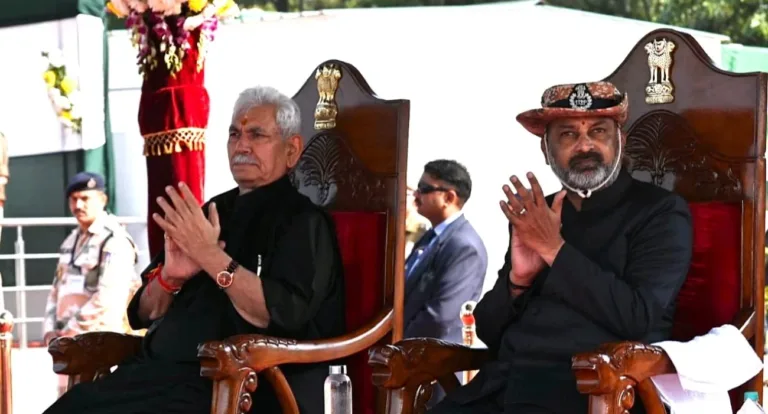
The Indo-Tibetan Border Police (ITBP) on Saturday celebrated its 64th Raising Day in Jammu and Kashmir’s Udhampur with Minister of State for Home Bandi Sanjay Kumar and Lt Governor Manoj Sinha joining the event.

Army’s northern commander Lieutenant General Pratik Sharma, Director General of J-K Police Nalin Prabhat, Director General ITBP Praveen Kumar, Additional Director General, ITBP Mukesh Singh and other senior officials also attended the Raising Day celebrations at the headquarters of 15th Battalion in Udhampur.

The MOS Home paid solemn tribute to ITBP martyrs, took the ceremonial salute, and witnessed the grand Raising Day Parade.

In his address, the minister extended greetings to all ITBP personnel and commended their exemplary service under extreme Himalayan conditions, highlighting their devotion, dedication, and professionalism in safeguarding the nation.

The DG ITBP highlighted the force’s significant achievements and emphasised the ITBP’s contribution in high-altitude border security, humanitarian assistance and disaster relief, internal security, Naxal operations and mountaineering excellence and rescue operations. The parade featured participation from all major contingents of the force, including women’s contingent, Ski team, mounted column, commandos, paratroopers, dog squad and brass band.

Thrilling demonstrations added to the spectacle, including C-SAC drills by women Himveers, an integrated drone display, and a martial arts performance.

A total of five personnel received the President’s Police Medal for distinguished service, while 24 officers and personnel were awarded the Police Medal for meritorious service this year, an ITBP official said.

He added that the best unit awards for the year were presented to 43 Battalion (Best Border Battalion), 52 Battalion (Best Non-Border Battalion), 27 Battalion (Best Anti-Naxal Operation Unit), 18 Battalion (Best Clean Battalion), 25 Battalion (Best Green Battalion), and 13 Battalion (Winner, Rajbhasha Chalshield Trophy-2024). (Agencies)

J&K Police Attaches Property Of Terror Handler Operating From PoJK

0

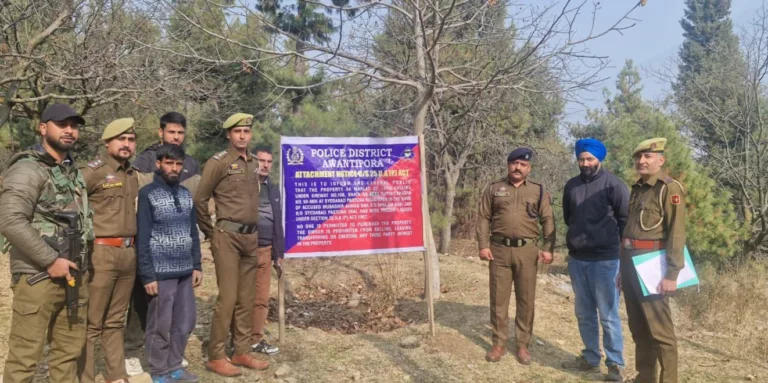
Police in Jammu and Kashmir’s Pulwama district on Saturday attached the property of a terror handler operating from Pakistan-occupied Kashmir, officials said.

Police attached the immovable property at Syedabad Pastoona in the Tral area of the south Kashmir district, a police spokesperson said.

He said the property belongs to Jammu and Kashmir National Operating from Pakistan and Pakistan-Occupied Jammu and Kashmir (JKNOP) identified as Mubashir Ahmad, a resident of Syedabad Pastoona in Tral.

The property was identified during the course of investigation and inquiries conducted by the police, the spokesperson said.

He said Ahmad has been actively involved in promoting and reviving terrorist activities by pushing arms and ammunition into the region and activating local terror networks.

Bill On Civil Nuclear Sector Among 10 Proposed Legislations Planned For Parliament Winter Session

0

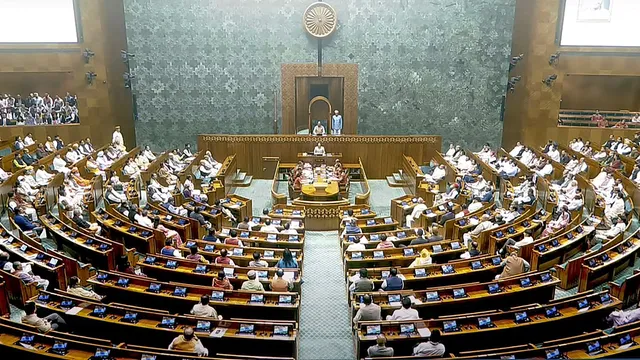
A bill seeking to open up the civil nuclear sector for private players is among the 10 new proposed legislations listed by the government for introduction in the winter session of Parliament, beginning December 1.

Besides the crucial ‘The Atomic Energy Bill, 2025’, which seeks to govern the use and regulation of atomic energy in India, the Higher Education Commission of India Bill is also on the agenda.

According to a Lok Sabha bulletin, the proposed law seeks to set up a Higher Education Commission of India to facilitate universities and other higher educational institutes to become independent and self-governing institutions and to promote excellence through a robust and transparent system of accreditation and autonomy.

It has long been on the government’s agenda.

The National Highways (Amendment) Bill, also listed for introduction, seeks to ensure faster and transparent land acquisition for national highways. Another proposed legislation is the Corporate Laws (Amendment) Bill, 2025, which aims at tweaking the Companies Act, 2013 and LLP Act, 2008, to facilitate ease of doing business.

Also on the government’s agenda is the Securities Markets Code Bill (SMC), 2025, which proposes to consolidate provisions of the Securities and Exchange Board of India Act, 1992, Depositories Act, 1996, and Securities Contracts (Regulation) Act, 1956, into a rationalised single Securities Markets Code.

The government also plans changes to the Arbitration and Conciliation Act. Law Ministry officials said a proposed amendment to section 34 of the law and a Supreme Court observation on company directors have made the government refer the issue to a committee. The proposed amendment stems from that.

Two bills from the previous session are also listed for consideration and passing. The first supplementary Budget for the year is also on the agenda, according to the bulletin.

The session, with 15 sittings, will conclude on December 19. (Agencies)

Delhi Suffers Under Very Poor Air Quality With AQI at 360

0

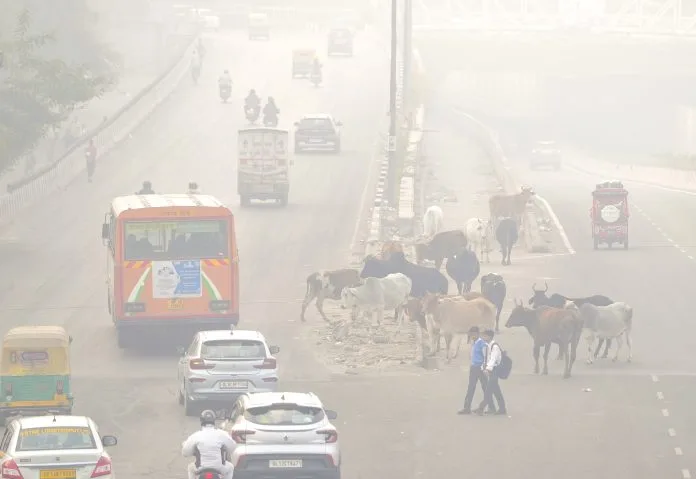
New Delhi faces severe air pollution as the Air Quality Index (AQI) deteriorates to an alarming 360 on Saturday morning, according to the Central Pollution Control Board (CPCB). With this reading, the national capital remains enveloped in a haze of toxic air, categorizing its air quality as ‘very poor.’

The CPCB classifies the AQI on a scale where 0–50 is good, 51–100 is satisfactory, and values over 300 indicate increasingly hazardous conditions for health. An AQI of 301 to 400 explicitly qualifies as ‘very poor,’ exposing the city’s residents to health risks, particularly vulnerable groups such as children and the elderly.

In addition to the alarming air quality, the India Meteorological Department (IMD) recorded a minimum temperature of 11.8°C in the city. The IMD anticipates persistent fog throughout the day, which hinders visibility and contributes to the accumulation of pollutants. Residents should remain vigilant and limit outdoor activities to mitigate health risks.

The high level of humidity, measured at 100 percent at 8:30 a.m., soars alongside the temperature, creating dense moisture-laden air. This combination aggravates pollution and can lead to visibility issues, especially in morning hours when fog is prominent.

Health experts recommend that citizens wear masks outdoors and prefer indoor activities. The current poor air quality can trigger respiratory problems and other health conditions. The government should implement immediate measures to address air quality standards and undertake long-term strategies to combat pollution.

As Delhi battles this trifecta of pollution, fog, and humidity, the focus remains on public health and awareness. Authorities and citizens alike must engage in efforts to bring down pollution levels and protect the health of the population.

BSF Steps Up Vigil as Foggy Season Approaches; Fencing Rebuilt After August Floods

0

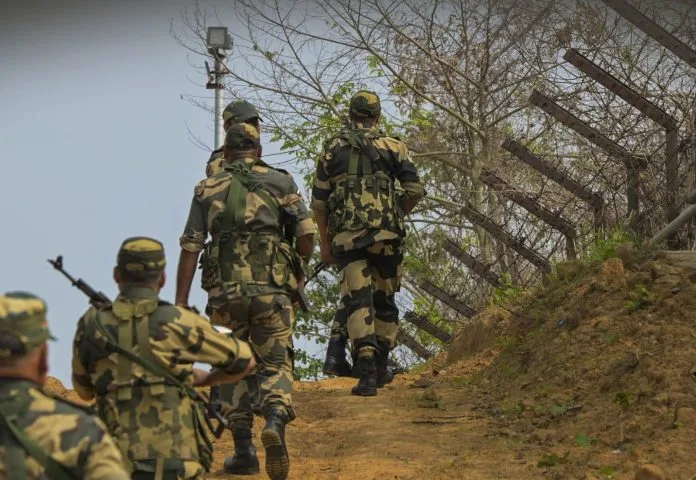
With the border fencing and damaged pickets almost fully reconstructed after the devastating August flash floods, the Border Security Force (BSF) has shifted its focus to preventing terrorist infiltration attempts that typically intensify during the winter fog along the International Border (IB) in the Jammu region.

As reported earlier by the Daily Excelsior, the BSF has largely completed the restoration of fencing and posts that were washed away by torrential monsoon rains in August across Jammu, Samba, and Kathua districts.

Sources said the force is now fully prepared to counter possible infiltration bids by Pakistan-based terrorists who often try to exploit low visibility conditions. The entire IB in Jammu falls in plain terrain and experiences dense fog during December and January, causing visibility to drop drastically.

To counter this, the BSF has deployed advanced surveillance systems capable of detecting movement over long distances, even in thick fog. The BSF is backed by border police pickets positioned behind the IB, as well as Village Defence Guards (VDGs) and local police units tasked with monitoring any unusual activity.

Police have been strengthening border pickets and VDGs, while also advising civilians living in frontier villages to stay alert, particularly during night hours, and report any suspicious movement immediately.

Although the Jammu stretch of the International Border has remained largely peaceful in recent months, the neighbouring Punjab sector has seen increased activity. Intelligence inputs, however, indicate that terror groups such as Lashkar-e-Toiba (LeT) and Jaish-e-Mohammed (JeM) are making attempts to push trained cadres into Jammu and Kashmir through border routes.

LG Saxena Issues Stringent Directions to Delhi Police After Red Fort Blast; Digital Tracking of Ammonium Nitrate, Security Audits Ordered

0

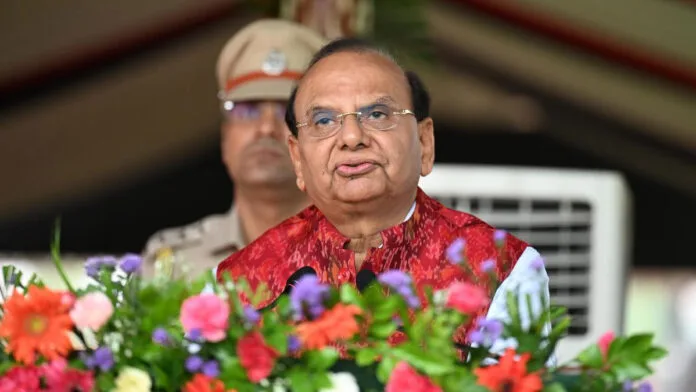
In the aftermath of the November 10 blast near the Red Fort that claimed 15 lives, Delhi Lt Governor V. K. Saxena has issued a series of sweeping directions to strengthen policing, regulate explosive materials, and curb radicalisation across the capital.

The orders, issued in written communications to Police Commissioner Satish Golcha and Chief Secretary Rajeev Verma on November 19, follow revelations that ammonium nitrate was among the explosives used by a “suicide bomber.” The blast came days after an interstate “white-collar” terror module was uncovered, involving the seizure of 3,000 kg of explosives, largely from Faridabad in Haryana.

Digital Record of Ammonium Nitrate Purchases

Saxena has asked Delhi Police to maintain a digital database of all entities purchasing or selling ammonium nitrate beyond a prescribed limit.

He also directed police to revisit the Standing Order of 2022 on licensing, storage and movement of ammonium nitrate under the Delhi Police Act, Explosives Act and Ammonium Nitrate Rules.

The LG has emphasised that digital records must include:

  • Photographs of buyers and sellers
  • Identity details
  • Quantities purchased/sold
  • Other relevant information

Tracking Radicalised Content

The police have been instructed to hold consultations with social media companies, including Meta and X, to scientifically track radicalised online content aimed at brainwashing citizens.

The communication adds that:

  • Human and technical intelligence must be strengthened
  • Vulnerable areas prone to radicalisation must be closely monitored
  • Community outreach should be increased to improve preventive policing

Security Audit of Markets, Transport Hubs

All DCPs have been directed to conduct a rigorous security audit of:

  • Busy markets
  • ISBTs
  • Railway stations
  • Cinema halls
  • Parks
  • Metro stations
  • Other high-footfall public places

The audit will evaluate CCTV coverage, beat deployment, and security personnel arrangements.

In areas where dark spots are identified, police must compile and forward a report for additional CCTV installations.

Central Data Repository for Medical Staff

The LG has instructed the administration to create a central database of doctors and para-medical staff, especially those working in private hospitals, along with details of their qualifications.

Degrees obtained from foreign institutions must be cross-verified with police for secondary background checks.

Stricter Rules for Vehicle Ownership & Sales

A consultation with digital platforms and financiers involved in vehicle trading—particularly in the second-hand vehicle market—has also been ordered.

The LG has directed that:

“Under no circumstances will vehicles be allowed to ply where the actual owner is different from the registered owner.”

Officials highlighted that this issue is most acute in the autorickshaw sector, where the permit holder often differs from the actual owner.

Indoor Stadium to Come Up in Uri; Minister Satish Sharma Lays Foundation Stone

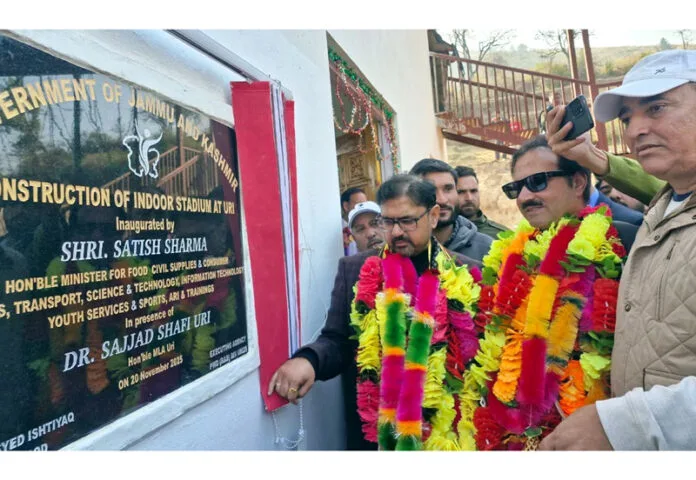
In a significant boost to sports and infrastructure development in the border town of Uri, Minister for Youth Services & Sports and ARI & Trainings, Satish Sharma, today laid the foundation stone for a new Indoor Stadium in the area.

The ceremony was attended by MLA Uri Dr Sajad Shafi, senior district officers, officials from PWD (R&B) Division Uri, representatives of local bodies and residents.

Modern Indoor Sports Facility Planned

Highlighting the government’s commitment to strengthening sports infrastructure in far-flung and border regions, the Minister said the upcoming stadium will feature:

  • Multi-purpose indoor courts
  • Seating galleries
  • Changing rooms
  • Rest areas
  • Facilities for indoor coaching and training

He said the project is a major milestone for the youth of Uri, who have consistently shown talent and enthusiasm across various sports. The government, he noted, is committed to ensuring that sports infrastructure in remote areas matches that of urban centres.

“Our youth deserve the best opportunities”

“Our youth deserve the best opportunities, irrespective of geography. This Indoor Stadium will not only boost sports activities but also nurture discipline, teamwork and fitness among young people,” Sharma said.

Focus on Border Regions

Interacting with locals, the Minister reiterated that border areas like Uri are receiving focused attention from the government in both infrastructure development and social empowerment.

Given Uri’s climatic advantages, he stressed the need to explore the possibility of developing the town as an all-weather sports destination.

He assured the public that the project would be executed within the stipulated time frame.