Sunday, July 12, 2026
Home Blog Page 90

J&K’s Anekha Devi Receives Grand Welcome for World Cup Triumph

0

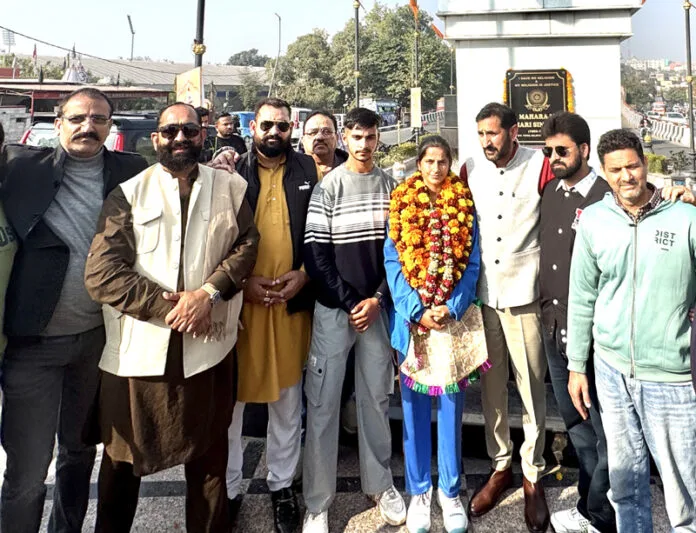
Jammu and Kashmir’s pride, Anekha Devi of Bani, Kathua, was given a grand reception by the Yuva Rajput Sabha (YRS) and the Amar Singh Sports and Youth Initiative J&K for her outstanding performance in the Women’s T20 Blind World Cup, where Team India clinched the title.

A special felicitation ceremony was held at the Maharaja Hari Singh Statue, Tawi Bridge, where YRS members, supporters, and local residents gathered to honour Anekha Devi for bringing global recognition to the region.

Prominent YRS leaders present included Mandeep Singh Rimpy, Vikram Singh Vicky, Rajesh Singh, Pushvinder Singh, Mohan Singh Bittu, Babir Singh Kaku, Vishav Singh, Raghav Singh, Bhanu Pratap Singh, Sanju Singh, Daljit Singh, Vishal Singh, Ritik Singh, and Avtar Singh Kullu.

MLA Bani Rameshwar Singh and Ajay Thakur, Secretary of the Blind Cricket Association and Anekha’s uncle, also attended the event.

Anekha was felicitated with a memento and garlands as YRS leaders and MLA Rameshwar Singh applauded her determination and called for greater support for young athletes from remote and rural areas.

The emotional ceremony concluded with enthusiastic applause and slogans celebrating Anekha Devi’s historic achievement, which has inspired thousands of young girls across Jammu & Kashmir to pursue their sporting dreams.

Later, at another ceremony held at Amar Mahal (Jammu), Martand Singh, Director of the Amar Singh Sports and Youth Initiative J&K, honoured Anekha, who was accompanied by her family members and MLA Dr Rameshwar.

Martand Singh announced that the Initiative would support Anekha by providing cricket gear and equipment for her future training and competitions.

Sanchar Saathi App Cannot Enable Snooping, Says Scindia in Lok Sabha

Communications Minister Jyotiraditya Scindia on Wednesday firmly rejected concerns over surveillance linked to the Sanchar Saathi safety app, stating that snooping is “neither possible nor will it happen”. The remarks come amid a row over the Ministry of Communications’ recent directive requiring smartphone manufacturers to preload the government-run cybersecurity app on all new devices.

Responding during Question Hour in the Lok Sabha, Scindia said the app is designed solely for citizens’ protection. “Sanchar Saathi app se na snooping sambhav hai, na snooping hoga,” he emphasised.

The minister said the government’s intention is to empower users with tools to safeguard themselves against misuse of mobile connections, fraud, and cyber threats.

A ministry order issued on November 28 mandates that all mobile manufacturers must pre-install the Sanchar Saathi app on every handset sold in India. It also requires that the app be pushed to existing devices through a software update.

According to the order, the app must be easily visible and accessible to users at the time of first device setup, and its functions must not be disabled or restricted.

On Tuesday, Scindia clarified that users who do not wish to use the app are free to delete it after purchase.

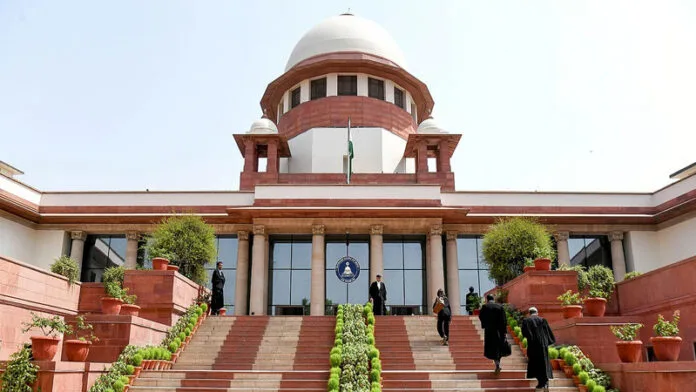
SC Questions Legal Status of Rohingyas, Adjourns Hearing to December 16

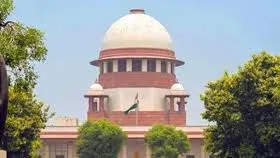
The Supreme Court on Tuesday sharply questioned the legal status of Rohingyas living in India, asking whether “intruders” who enter the country illegally should be given a “red carpet welcome” while Indian citizens continue to struggle with poverty.

A bench comprising Chief Justice Surya Kant and Justice Joymalya Bagchi made strong observations while hearing a habeas corpus petition filed by rights activist Rita Manchanda, alleging that several Rohingyas detained by authorities in Delhi had gone missing.

The court adjourned the hearing to December 16.

The petitioner claimed that some Rohingyas were picked up by Delhi Police in May and their whereabouts remain unknown. Responding sharply, the CJI asked, “If they do not have legal status to stay in India and they are intruders, what is the problem in sending them back?” He added that India has a large population of poor citizens who must be prioritised in allocation of resources.

“First you cross the border illegally, then you say you are entitled to food, shelter, and education. Do we want to stretch the law like this?” the CJI observed.

The petitioner cited a 2020 Supreme Court order which stated that Rohingyas could be deported only through due procedure. The bench replied that even as illegal entrants must not be subjected to harsh treatment, the rights of Indian citizens could not be ignored.

Solicitor General Tushar Mehta, appearing for the Centre, argued that the plea lacked locus standi as it was not filed by any affected person.

Earlier, on July 31, the top court had noted that the primary question in all Rohingya-related matters was whether they should be considered refugees or illegal entrants. The bench reiterated that once this classification is settled, other issues would follow.

Among the questions framed by the court were:

  • Whether Rohingyas are entitled to refugee status and associated protections.
  • If they are illegal entrants, whether deportation by the Centre and states is justified.
  • Whether illegal entrants can be detained indefinitely or must be released on bail.
  • Whether Rohingyas living in camps are receiving basic amenities such as water, sanitation and education.
  • Whether the government is obligated to deport illegal entrants strictly according to law.

The court segregated all related petitions into three categories and said they would be heard on consecutive Wednesdays.

In earlier hearings this year, the apex court had declined to stay the deportation of Rohingyas and criticised petitioners for presenting unverified claims, including allegations that refugees were abandoned in the Andaman Sea.

CM Omar-led cabinet clears promotions in R&B, asks for daily wagers report

0

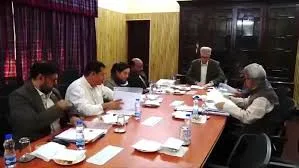
The Jammu and Kashmir Cabinet chaired by Chief Minister Omar Abdullah met here this morning and cleared a series of departmental proposals, including promotions in the Roads and Buildings (R&B) Department and the establishment of the Animal Protection Board, officials said.

The meeting, held at the Chief Minister’s Jammu residence at 9 am, discussed multiple administrative matters linked to governance and development,

Issues concerning electricity, reservation and winter preparedness also came up during the deliberations, they added.

A proposal regarding the promotion and service-related matters of officer cadres in the R&B Department received approval after detailed discussion, while financial allocations were sanctioned to strengthen cooperative societies operating in the livestock and fisheries sectors.

Cabinet Minister Javed Rana told reporters after the meeting that several agenda items were cleared, with the focus on timely redressal of pending administrative matters.

“There were some minor issues that were discussed. But I would say the main agenda involved the promotion and proposal of officers of the R&B Department. Their seniority confirmation has now been agreed,” Rana said.

“Similarly, our pawns and anglers community — I made a recommendation for them. Cooperative societies play an important role in supporting them and funds have been allocated to strengthen these societies,” he added.

He said the Cabinet also approved the establishment of the Animal Protection Board to streamline livestock-related regulations and welfare mechanisms.

Rana noted that the issue of daily wagers across departments was also discussed.

“The Chief Secretary has been directed to submit a report as soon as possible because there is a major issue concerning daily wagers of various categories. The government has a responsibility toward them and we want justice to be done,” he said.

The meeting concluded with instructions to expedite the submission of pending departmental reports and to ensure all decisions adopted today are implemented without delay, sources said.

Modi govt has ‘nearly signed death warrant’ for Aravalli hills: Sonia Gandhi

0

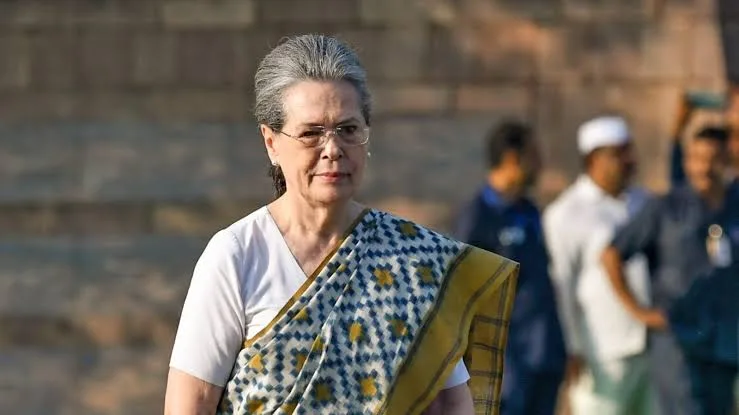
Congress parliamentary party chairperson Sonia Gandhi on Wednesday claimed that since coming to power, the Modi government has displayed a particularly “venal streak of cynicism” in relation to environmental protection, while alleging that it has now “nearly signed a death warrant” for Aravalli hills.

She demanded that the government must withdraw the amendments it “bulldozed” through Parliament in the Forest (Conservation) Act, 1980 as well as the Forest Conservation Rules (2022).

Gandhi said the government’s declaration that any hills in the Aravalli range with an elevation of less than 100 metres are not subject to the strictures against mining is an open invitation for illegal miners and mafias to finish off 90% of the range which falls below the height limit set.

Two Killed, Three Injured In Road Accident On Chingus Stretch Of Rajouri Highway

0

Two persons were killed and three others sustained injuries in a road accident on the Chingus stretch of the Rajouri highway on Wednesday morning, officials said.

Officials said that the accident occurred early in the day when a vehicle skidded off the road, resulting in the fatalities. Two individuals died on the spot, while three others were injured.

The injured were immediately shifted to a nearby hospital for treatment, they added.

Further investigation into the incident is underway.—(KNC)

SC questions legal status of Rohingyas, asks can intruders be given red carpet welcome

0

The Supreme Court on Tuesday sharply questioned the legal status of Rohingyas living in India and asked whether “intruders” should be given a “red carpet welcome” while the country’s own citizens grapple with poverty.

A bench comprising Chief Justice Surya Kant and Justice Joymalya Bagchi made sharp observations while hearing a habeas corpus (bring the person) petition filed by rights activist Rita Manchanda alleging disappearance of few Rohingyas from the custody of authorities here.

Now, the hearing in the case has been adjourned to December 16.

The counsel alleged certain Rohingyas were picked up by Delhi Police in May and there was no information about their whereabouts.

“If they do not have legal status to stay in India, and you are an intruder, we have a very sensitive border in the north India side. If an intruder comes, do we give them a red carpet welcome saying we would like to give you all facilities” the CJI asked, adding, “What is the problem in sending them back.”

He said India is a country with a lot of poor people, and we should rather focus on them.

“First you enter, you cross the border illegally. You dug a tunnel or crossed the fence and entered India illegally. Then you say, now that I have entered, your laws must apply to me and say, I am entitled to food, I am entitled to shelter, my children are entitled to education. Do we want to stretch the law like this,” the CJI asked.

The petitioner referred to an apex court order of 2020 in which it was said that Rohingyas must be deported only according to procedure.

“We also have poor people in the country. They are citizens. Are they not entitled to certain benefits and amenities? Why not concentrate on them? It is true, even if somebody has entered illegally, we should not subject them to third-degree methods…You are asking writ of habeas to bring them back,” CJI Kant asked.

The bench said if repatriation is sought then it may give rise to “logistical issues”.

Solicitor General Tushar Mehta, appearing for the Centre, said the plea has not been filed by an affected person and the petitioner has no locus to file such a plea.

On July 31, the top court, while hearing a batch of pleas concerning Rohingyas in the country, had said the first major issue to be dealt with in cases concerning Rohingyas is whether they are refugees or illegal entrants.

It said once that is decided, the other issues might be consequential.

“The first major issue is simple, are they refugees or illegal entrants,” Justice Kant observed.

The bench took note of the broad issues that arose for its consideration in the pleas relating to Rohingyas.

“Whether the Rohingyas are entitled to be declared as refugees? If so, what protections, privileges or rights are they entitled to,” the bench asked.

It said the second issue is if the Rohingyas are not refugees and are illegal entrants, whether the action of the Centre and states in deporting them was justified.

“Even if the Rohingyas have been held to be illegal entrants, can they be detained indefinitely or they are entitled to be released on bail, subject to such conditions as the court may deem fit to be imposed,” it asked.

The court said the other issue raised in the petitions is whether the Rohingyas, who have not been detained and are living in refugee camps, have been provided basic amenities like drinking water, sanitation and education.

“If the Rohingyas are illegal entrants, whether the government of India and the states are obligated to deport them in accordance with law,” it noted.

The bench segregated the pleas in three groups — one relating to Rohingyas, another not pertaining to the issue of Rohingyas and one plea that it said pertains to a different matter altogether.

It said the three groups of matters would be determined separately and it would fix those for hearing on consecutive Wednesdays.

The bench indicated that on the point of those who were found to be illegal entrants and on the question of the State’s responsibility to deport them, it could only lay down the principles.

On May 16, the apex court had rapped some petitioners who had claimed that 43 Rohingya refugees, including women and children, were dropped in the Andaman sea for deportation to Myanmar and said “when the country is passing through a difficult time, you come out with fanciful ideas”.

It had questioned the authenticity of the material placed before it by petitioner Mohammad Ismail and others and refused to stay any further deportation of Rohingyas, saying a similar relief was denied by the court earlier.

On May 8, the top court had said if the Rohingya refugees in the country were found to be foreigners under Indian laws, they would have to be deported.

The court had then referred to its earlier order and remarked that the identity cards issued by the United Nations High Commissioner for Refugees (UNHCR) may not be of any help to them under the laws. (PTI)

Operation Sindoor remains in progress: Navy chief

0

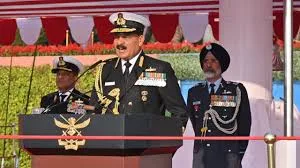
Navy chief Admiral Dinesh K Tripathi on Tuesday said his force’s aggressive posturing during Operation Sindoor in May forced Pakistan Navy to remain close to their ports.

In his annual press conference, Admiral Tripathi also said that the Indian Navy maintained a high operational readiness, including in the Western Arabian sea, in the last seven-eight months following the hostilities with Pakistan.

The Navy chief, without elaborating, said Operation Sindoor “remains in progress”.    “The aggressive posturing and immediate action during Operation Sindoor, including deployment of the carrier battle group forced Pakistan Navy to remain close to their ports or near the Makran coast,” he said.

The Navy chief said Operation Sindoor has put financial strain on Pakistan as significant number of merchant ships avoided travelling to that country following the hostilities.

The cost of insurance for the vessels to travel to Pakistan had also gone up, he said. (PTI)

1989 Rubaiyya Sayeed kidnapping case: CBI seeks custody of suspect

0

The CBI on Tuesday sought the custody of Shafat Ahmed Shangloo, arrested in the 35-year-old case relating to the kidnapping of Rubaiyya Sayeed, in the TADA court in Jammu.

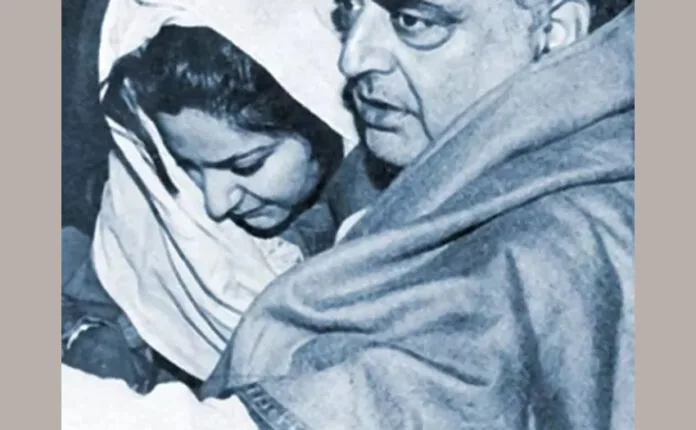
Shangloo was arrested on Monday. He carried a reward of Rs 10 lakh, in connection with the sensational 1989 kidnapping of Sayeed, daughter of the then Union Home Minister Mufti Mohammad Sayeed, for allegedly being part of a conspiracy hatched by members of the banned Jammu and Kashmir Liberation Front (JKLF). Shangloo is alleged to be a close confidant of JKLF chief Yasin Malik.

“He was produced before the special TADA court. We have sought custody of the accused,” CBI lawyer S K Bhat said.

He said the order of the court is awaited.

In a statement, the CBI said Shangloo conspired with Malik and others in committing offences under various sections of the Ranbir Penal Code and the TADA Act in 1989.

“The absconder was carrying a reward of Rs 10 lakh on his head and was produced before the TADA Court in Jammu within the stipulated time as per law,” CBI’s spokesperson said.

According to officials, Shangloo was allegedly an office-bearer of JKLF and handled its finances.

The CBI, along with Jammu and Kashmir Police, arrested Shangloo from his residence in the Nishat area of Srinagar.

Malik, who is serving a jail term in Delhi’s Tihar Jail in a terror funding case, is not being produced physically in court due to a Ministry of Home Affairs order restricting his movement.

During the court hearings, Sayeed had identified four other accused, besides Malik, as being involved in the crime.

She was abducted from near Lal Ded Hospital in Srinagar on December 8, 1989, and was freed five days later after the then V P Singh government, which was supported by the BJP at the Centre, released five terrorists in exchange.

Now living in Tamil Nadu, Sayeed is listed as a prosecution witness by the CBI, which took over the investigation in 1990.

In order to expedite the trial, the CBI had appointed its senior counsel Monika Kohli as the chief prosecutor after framing charges against Malik in the much-publicised cases related to the Sayeed’s abduction and killing of four IAF personnel in Srinagar more than three decades ago.

Malik, 56, was sentenced by a special NIA court in May last year. He was arrested in early 2019 in connection with the 2017 terror-funding case registered by the NIA.

A special TADA court has already framed charges against Malik and nine others in the kidnapping case. (PTI)

Tourism in Ladakh will expand significantly in days to come: LG Kavinder Gupta

0

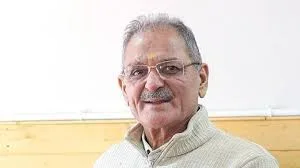
Lieutenant Governor Kavinder Gupta on Tuesday paid obeisance at the holy cave shrine of Mata Vaishno Devi and expressed optimism about the future, saying that tourism in Ladakh will expand significantly in the coming days.

Talking to reporters after offering prayers at the cave shrine on his birthday, Gupta said tourism in Ladakh will expand significantly. “In the coming time, Ladakh will become a year-round tourist destination, benefiting all sections of society. It is steadily progressing towards becoming an international tourism hub.”

On a question on the promotion of tourism in Ladakh, Gupta said that efforts are underway to develop the region as a year-round tourist destination, with special focus on winter tourism.

“Ladakh’s working season spans about half of the year. We are focusing on promoting winter games and winter tourism. From this year, All-India-level winter games will be organised in Ladakh,” he said.

Drawing parallels with Kashmir’s prime tourism destination of Gulmarg, he added, “Just as winter games and tourist arrivals take place in Gulmarg, similar facilities are being developed in Ladakh. Two gondola projects have been proposed, and steps are being taken in that direction.”

The LG also provided updates on infrastructure projects, stating that work on the Zojila tunnel is progressing. “We are hopeful that both ends of the tunnel will meet by April next year, and it will be fully completed within a year. Once opened for traffic, it will provide an additional route for the Amarnath Yatra,” he said.

On employment, Gupta said that Ladakh has nearly 18,000 government employees catering to a population of around three lakh. “About 3,000 new posts have been created, and examinations have already been conducted,” he said.

He further highlighted employment generation through economic activities. “Around 13,000 MSME groups involving nearly 50,000 people are operating in Ladakh. We are also strengthening the homestay sector so that tourists, especially bikers from outside, can stay in local homes,” he said. (PTI)