Monday, July 13, 2026
Home Blog Page 86

LG Manoj Sinha Chairs 84th University Council Meeting of Kashmir University, Pushes NEP-Aligned Reforms

0

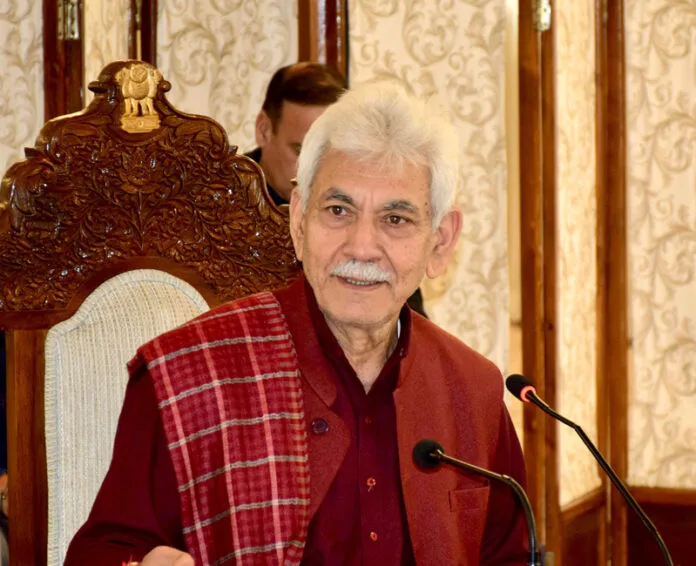
Lieutenant Governor Manoj Sinha on Saturday chaired the 84th meeting of the University Council of the University of Kashmir (KU) at Lok Bhavan here, emphasizing the need for contemporary, interdisciplinary and skill-oriented academic programmes in line with the National Education Policy (NEP) 2020.

The Lieutenant Governor, who is also the Chancellor of the University of Kashmir, underlined that higher education institutions must focus on innovation, employability and entrepreneurship, while ensuring that academic initiatives are aligned with local and regional developmental requirements. He advised the University to strengthen integrated and professional programmes to meet emerging academic and industry demands.

Key Academic Approvals

The University Council accorded in-principle approval to several significant academic and administrative proposals. These included adoption of a revised policy mechanism for admission of foreign (international) students, change of nomenclature of the Department of Earth Sciences to the Department of Geology, and introduction of Five-Year Integrated Master’s Programmes (FYIMP) in Applied Geology, Tourism and Travel Management, Data Science and Artificial Intelligence, and Home Science.

The Council also approved the Programme Project Report (PPR) for M.A. History to be offered through the Centre for Distance and Online Education (CDOE). Approval was further granted for extension of Merit and Merit-cum-Means Scholarship schemes to students enrolled in Five-Year Integrated Programmes.

Regulations governing five-year integrated programmes, including FYIMP in Data Science and Artificial Intelligence, were approved, while recommendations of the Deans’ Committee on adoption of statutes governing the Ph.D. programme were discussed.

New Diplomas, Institutes and Language Programmes

The Council approved modifications in statutes governing Undergraduate Programmes (UGP-2022) in accordance with NEP-2020, including changes in degree nomenclature and adoption of standardized formats for certificates, diplomas and degrees.

Approval was also accorded for the introduction of a two-year Diploma in Calligraphy as a joint academic programme between the Institute of Music and Fine Arts, KU and the Jammu and Kashmir Academy of Art, Culture and Languages, Srinagar.

In-principle approval was granted for the establishment of an Institute of Nursing and Paramedical Sciences at the University’s Kupwara Campus, introduction of a Diploma Programme in Criminal Justice through CDOE, and a Five-Year Integrated Master’s Programme at the Media Education Research Centre (MERC).

Additionally, FYIMP programmes in Hindi, Linguistics and English Language Teaching, Persian, Sanskrit and Kashmiri were approved, aimed at promoting multilingual education, cultural preservation and advanced studies in classical and regional languages.

MoU for Academic Collaboration

On the occasion, the University of Kashmir signed a Memorandum of Understanding (MoU) with Siddharth University, Uttar Pradesh, to promote academic collaboration in research and education.

VC Presents Achievements

Earlier, Vice-Chancellor of the University of Kashmir, Prof. Nilofer Khan, presented the agenda items before the Council and briefed members on the academic, research and institutional achievements of the University.

Dignitaries Present

The meeting was attended by Chief Minister Omar Abdullah; Vice-Chancellor, University of Jammu, Prof. Umesh Rai; Vice-Chancellor, Cluster University Srinagar, Prof. Mohammad Mobin; Vice-Chancellor, Cluster University of Jammu, Prof. K.S. Chandrasekar; Additional Chief Secretary, Higher Education Department, Shantmanu; Principal Secretary, Finance Department, Santosh D. Vaidya; Principal Secretary to the Lieutenant Governor, Dr. Mandeep K. Bhandari; Administrative Secretary, Planning Development & Monitoring Department, Dr. Ashish Chander; Vice-Chancellor, Siddharth University, Prof. Kavita Shah; Prof. A.S.K. Sinha; Registrar KU Prof. Naseer Iqbal; Dean School of Business Studies Prof. Mushtaq Ahmad Darzi, besides other Council members and senior officials, both in person and virtually.
Teen from Reasi Allegedly Radicalised for Suicide Attack; Major Terror Plot Foiled in Jammu

0

A 19-year-old youth from Reasi district, recently arrested from the Bathindi area of Jammu for suspected links with terrorists, was allegedly being radicalised by Pakistan-based handlers to carry out a suicide attack in the Jammu region, official sources have revealed.

The accused has been identified as Mohammad Sajid, a resident of Reasi who was currently living in Bathindi and preparing for the NEET examination. According to sources, Sajid was in regular contact with several youths based in Kashmir, Kishtwar, Nepal and other parts of the Union Territory. These individuals were reportedly part of a wider terror network operating under instructions from handlers across the border in Pakistan.

Sources said Sajid was directed through this network to collect explosive material from Kashmir with the intention of executing a suicide bombing in Jammu. However, before the plan could advance further, a joint team of the Jammu and Kashmir Police and Police Component Jammu arrested him on the evening of November 26, thereby foiling what is being described as a major terror plot.

Case Taken Over by SOG, UAPA Invoked

The investigation in FIR No. 331/2025, initially registered at Police Station Bahu Fort under Section 113(3) of the Bharatiya Nyaya Sanhita (BNS), has now been taken over by a Deputy Superintendent of Police (DySP)-led panel of the Special Operation Group (SOG) of the Jammu and Kashmir Police.

To facilitate a deeper and wider probe, provisions of the Unlawful Activities (Prevention) Act (UAPA) have also been invoked, sources confirmed.

Encrypted Communication with Handlers

Investigators have learnt that Sajid had been in frequent contact with his handlers for nearly three months through encrypted platforms such as the Session app, besides WhatsApp and Instagram. Though no specific target had reportedly been assigned to him initially, he was allegedly asked to conduct surveillance of certain locations and was gradually indoctrinated to carry out the attack.

During interrogation, the accused reportedly confessed that he was unaware of the grave legal and personal consequences of his actions.

Probe to Uncover Wider Network

The DySP-led SOG panel is currently probing multiple dimensions of the case, including identifying other individuals involved, tracing financial and logistical links, and uncovering the larger objectives and operational structure of the terror network behind the conspiracy.

Security agencies said further arrests and disclosures are expected as the investigation progresses.

Sanjay Raut Critiques Ruling Parties Over Lack of LoP

Shiv Sena (UBT) leader and Rajya Sabha MP Sanjay Raut on Saturday attacked the ruling parties in Maharashtra, claiming their failure to appoint Leaders of the Opposition (LoP) highlights a fear of democratic scrutiny that undermines constitutional processes. Raut stated that it is shameful for Maharashtra to lack a Leader of the Opposition in either House of the state legislature.

Raut expressed concern, emphasizing that having a Leader of the Opposition in municipal corporations, state assemblies, and Parliament is a democratic necessity and a constitutional requirement. He highlighted the need for this position to promote transparency and accountability within the democratic framework.

Over the past decade, Raut alleged, systematic efforts have aimed to obstruct the appointment of Leaders of Opposition through electoral manipulation and political pressure. According to Raut, “The BJP has consistently tried to weaken and insult the institution of the Leader of Opposition. Legislative business is conducted without an LoP, indicating that ruling parties are afraid of the post.”

He reminded journalists that Maharashtra has a rich democratic tradition of appointing Leaders of the Opposition, even when opposition parties held fewer seats. Raut pointed out, “Even when the BJP lacked numerical strength in Parliament, it was granted LoP status. This vital tradition is now being intentionally dismantled.”

The call for appointing Leaders of Opposition in both Houses gained traction as Shiv Sena (UBT) nominated Bhaskar Jadhav for the Legislative Assembly and Congress suggested Satej Patil for the Legislative Council.

Opposition to Division of Maharashtra

In addition, Raut condemned Revenue Minister Chandrashekhar Bawankule for his recent comments regarding the potential creation of a separate Vidarbha state. Raut suggested that this proposal enjoys the backing of Chief Minister Devendra Fadnavis.

“Shiv Sena (UBT) will strongly oppose any attempt to divide Maharashtra. The state’s unity is non-negotiable,” Raut stated firmly, reiterating the party’s commitment to maintaining the state’s integrity.

Parliament Debate Reinforces Democratic Spirit

Raut also referenced the recent Vande Mataram debate in Parliament, asserting that the ruling BJP appeared anxious regarding the presence and performance of Lok Sabha Leader of Opposition Rahul Gandhi and Congress leader Priyanka Gandhi Vadra. He highlighted that their participation injected enthusiasm into the debate, suggesting it reinforced the vitality of democracy.

“The debate revealed the strengths of our opposition, showing that democracy is alive and well. It also exposed the BJP and its affiliated groups in a way that no one can ignore,” Raut commented.

Furthermore, Raut urged a discussion on the Maharashtra Geet in the state legislature. He believes that doing so would ignite important conversations about the contributions of various leaders and movements in shaping Maharashtra and Mumbai.

Veteran Congress Leader Shivraj Patil Laid to Rest in Latur

0

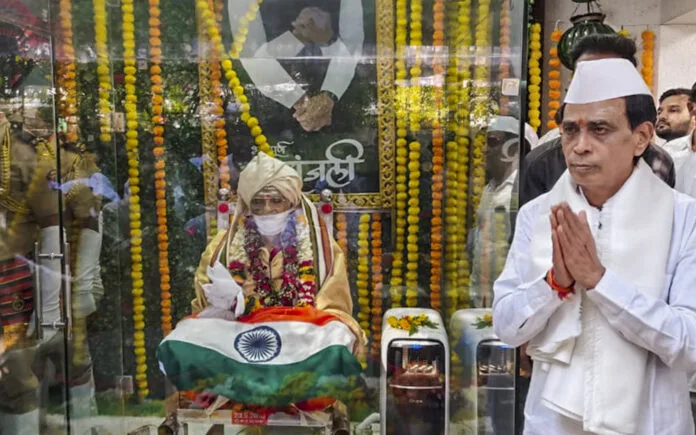
The last rites of veteran Congress leader Shivraj Patil were performed with full state honours on Saturday in his home district Latur, as the nation bid farewell to one of its most experienced parliamentarians and statesmen. Patil, who passed away on Friday at the age of 90, left behind a significant legacy in Indian politics.

Several senior leaders across party lines attended the funeral, including Lok Sabha Speaker Om Birla, Congress President Mallikarjun Kharge, Union Minister of State for Defence Sanjay Seth, former Maharashtra Chief Minister Ashok Chavan, and Karnataka Minister Eshwar Khandre. Their presence underscored Patil’s impact on political discourse in India.

A prominent leader of the Lingayat community, Patil was buried at his farm in Varvanti village, approximately six kilometres from Latur, following traditional Lingayat rites. He was laid to rest in a seated, meditative posture, a reflection of the community’s belief that the soul merges directly with Lord Shiva after death, eliminating the need for cremation.

Before his burial, a ceremonial gun salute honoured Patil’s contributions to Indian democracy. Lok Sabha Speaker Om Birla laid a wreath, while Maharashtra Congress President Harshwardhan Sapkal and Latur Lok Sabha MP Shivaji Kolge were also present at the ceremony, paying their respects to a man whose political journey left a mark on many.

A Political Journey Spanning Five Decades

Shivraj Patil’s political career spanned over five decades, during which he held several key positions in the Union government, including Speaker of the Lok Sabha and Union Home Minister. He began his public life as a member of the Latur Municipal Corporation in 1967 and later served two terms as a member of the Maharashtra Legislative Assembly between 1972 and 1980.

From 1980 onwards, he represented the Latur Lok Sabha constituency for seven consecutive terms, winning elections in 1980, 1984, 1989, 1991, 1996, 1998, and 1999. Patil’s enduring electoral success highlighted his connection with the electorate in Latur.

He first joined the Indira Gandhi-led government as Minister of State for Defence (1980–82) before taking charge of various ministries, including Commerce, Science and Technology, Atomic Energy, Electronics, and Space. During the Rajiv Gandhi government, he also served as Minister for Personnel, Defence Production, Civil Aviation, and Tourism. His tenure culminated in 2004 when he took charge as the Union Home Minister, a role he held until resigning in moral accountability for security lapses during the 26/11 Mumbai terror attacks.

In recognition of his administrative acumen, Patil served as Governor of Punjab and Administrator of Chandigarh from 2010 to 2015, further solidifying his legacy in public service.

A Speaker Known for Integrity

Patil was widely respected for his commitment to parliamentary ethics. A notable incident from March 1979 is often referenced; he demonstrated his integrity when unverified reports circulated regarding the death of Gandhian leader Jayaprakash Narayan. While many leaders, including Prime Minister Morarji Desai, offered condolences in Parliament, Patil insisted on official confirmation. He promptly contacted the doctors treating Narayan, confirming he was alive. The Assembly later passed a resolution wishing Narayan continued health, showcasing Patil’s deep commitment to factual integrity.

Shivraj Patil’s death marks the end of an era defined by parliamentary decorum, administrative experience, and political integrity. His contributions will be remembered by many in the political arena, making his legacy enduring in the hearts of those he served.

AJK Transporters Call Off ‘Chakka-Jam’ After Talks with Minister Satish Sharma

0

The All Jammu & Kashmir Transport Welfare Association (AJKTWA) on Friday suspended its proposed ‘Chakka-Jam’ strike scheduled for December 15, following a high-level meeting with Transport Minister Satish Sharma at the Civil Secretariat.

The decision came after the Transport Minister intervened and convened an urgent meeting to address the long-pending issues faced by the transport community. The meeting, which lasted for over two hours, was attended by senior administrative and police officials, along with office-bearers of the Association.

Chairman of the J&K Transporters Association, Karan Singh Wazir, said the strike had been announced to draw attention to unresolved concerns of transporters, but the Minister’s assurance of time-bound solutions prompted the Association to defer the agitation.

Key Assurances Given

During the meeting, the Transport Minister gave a patient hearing to the transporters and assured resolution of several key issues:

  • E-Bus Routes & Scheduling: The Minister assured that issues related to e-bus routes and schedules would be resolved within two weeks.
  • Fare Revision: The department was directed to expedite the fare revision process, noting that the proposal has already been forwarded to the Finance Department for approval.
  • E-Challans: The IGP Traffic informed that nearly 27,000 challans are under scrutiny and clarified that casual challans will not result in blacklisting; only serious violations will be considered. E-challaning will be strictly enforced through authorized devices only.
  • Fitness Fee Hike: The Association was assured that the fitness fee hike would be reviewed and rationalised as per policy provisions.
  • Automated Testing Stations (ATS): On the request for additional time to comply with ATS norms, the Minister assured that an extension of up to four months would be taken up with the Ministry of Road Transport and Highways (MoRTH), considering the genuine difficulties faced by transporters.
  • Pending Payments: On long-pending dues related to PM rallies, Operation Sindoor, Khelo India events and the Shri Amarnath Ji Yatra, the Government assured that payments would be released in a time-bound manner.

Strike Deferred, Review After Two Weeks

Following these assurances, AJKTWA decided to suspend the December 15 strike. The Association will wait for two weeks, as assured by the Minister, and will then convene a General Body Meeting to assess progress and decide the future course of action.

Officials & Representatives Present

The meeting was attended by Transport Secretary Avny Lavasa, Additional Secretary Transport, Divisional Commissioner Kashmir, IGP Traffic J&K, Managing Director JKSRTC, Joint Transport Commissioner, two Regional Transport Officers (RTOs) and several senior officers.

Association representatives present included Vijay Singh Chib, Mohd Shabir, Parvinder Singh, Bharat Bhushan, Anan Sharma, Ranjit Singh, Mohd Yousuf, Abdul Majid, Showkat Ali, Sanjeev Choudhary, Vijay Dogra, Gurdeep Singh, Irshad, Mudasir and others.

LG Manoj Sinha Meets Families of Nowgam Blast Martyrs, Hands Over Compassionate Appointment Letters

0

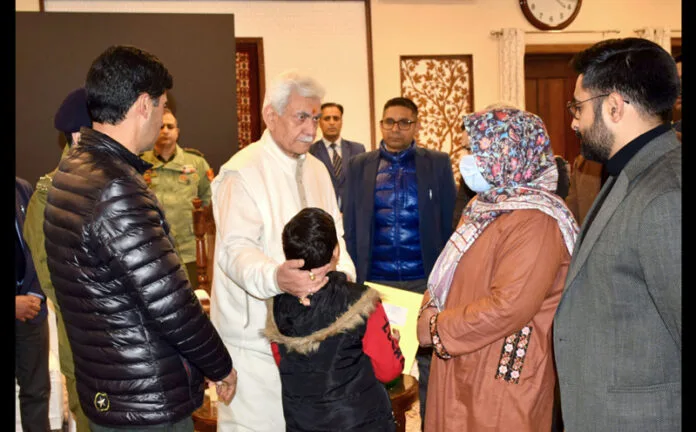
Lieutenant Governor Manoj Sinha on Friday met the families of the martyrs who lost their lives in the accidental blast incident at Nowgam and handed over appointment letters on compassionate grounds, reaffirming the government’s commitment to their welfare and dignity.

Paying rich tributes to the martyrs, the Lieutenant Governor expressed deep gratitude to their families and said that the entire nation stands shoulder to shoulder with them in this hour of grief. He assured that the government will ensure the families lead a life of comfort, security and dignity.

Nation Proud of J&K Police: LG

Commending the Jammu and Kashmir Police, the Lieutenant Governor said the whole country is proud of the force for stopping terror in its tracks by successfully unearthing and dismantling a major terror network last month. He lauded the police for their meticulous investigation and multi-faceted operations aimed at detecting, disrupting and preventing terrorist activities.

Focus on Terror Funding, Radicalisation

The Lieutenant Governor directed senior officers to intensify efforts to choke terrorist financing pipelines and effectively counter radicalisation attempts by certain separatist elements. He stressed the need for sustained vigilance and coordinated action to maintain peace and security in the region.

Senior Officials Present

Those present on the occasion included Special Director General (Coordination) PHQ S.J.M. Gillani; Principal Secretary Home Chandraker Bharti; ADGP CID Nitish Kumar; Principal Secretary to the Lieutenant Governor Dr Mandeep K. Bhandari; Divisional Commissioner Kashmir Anshul Garg; IGP Kashmir V.K. Birdi; DIG CKR Rajiv Pandey; SSP Srinagar Dr G.V. Sundeep Chakravarthy; Deputy Commissioner Srinagar Akshay Labroo, along with other senior officers of the police and civil administration.

Congress Calls Amit Shah’s “Vote Chori” Remark a Blatant Lie; Cites Rajmohan Gandhi’s Clarification on 1946 Congress Presidential Election

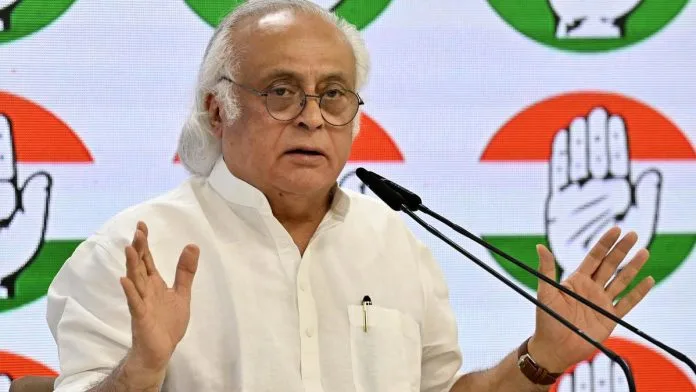
The Congress on Friday dismissed Union Home Minister Amit Shah’s allegation of “vote chori” by Jawaharlal Nehru as a “blatant lie”, citing historian-author Rajmohan Gandhi’s detailed clarification on the events surrounding the 1946 Congress presidential election.

Congress communications in-charge Jairam Ramesh shared on X a video clip of Rajmohan Gandhi — grandson of Mahatma Gandhi and C. Rajagopalachari — in which he explained that the Pradesh Congress Committees (PCCs) had recommended Sardar Vallabhbhai Patel for the post of Congress president in 1946, but the question of prime ministership did not arise at that time.

According to Rajmohan Gandhi, Maulana Abul Kalam Azad had remained Congress president since 1940 because the party had been banned and many leaders jailed during the Quit India Movement. In 1946, when the time came to elect a new president, several PCCs proposed the name of Sardar Patel and a few suggested Acharya Kriplani, but none recommended Nehru.

He emphasised that the PCC recommendations were strictly for the Congress presidency and not for determining the future prime minister. “There was no agreement with the British yet, and the question of who would be PM did not come up,” he said.

He explained the tradition under which Gandhi would examine the suggested names and ask candidates to withdraw where necessary. Accordingly, both Patel and Kriplani withdrew their names at Gandhi’s request, and the Working Committee subsequently proposed Nehru as Congress president.

Rajmohan Gandhi asserted that when the interim government was formed, Nehru — as Congress president — was naturally invited to become prime minister. He further said that historical records show no dissatisfaction among leaders or the public regarding Nehru’s appointment. “People were very happy with Nehru becoming PM and Sardar Patel himself was in favour of it,” he noted.

He cited a speech delivered by Patel in Indore in October 1950 in which Patel endorsed Nehru’s leadership, calling Gandhi’s decision to select him “the right one.”

The Congress had strongly rebutted Shah’s claim on Thursday, calling it a “lie” and a “figment of imagination,” after Shah told the Lok Sabha that 28 PCC votes had gone to Patel and only two to Nehru, yet Nehru became prime minister

Delhi Engulfed in Dense Smog; AQI Dips to 332 in ‘Very Poor’ Category

0

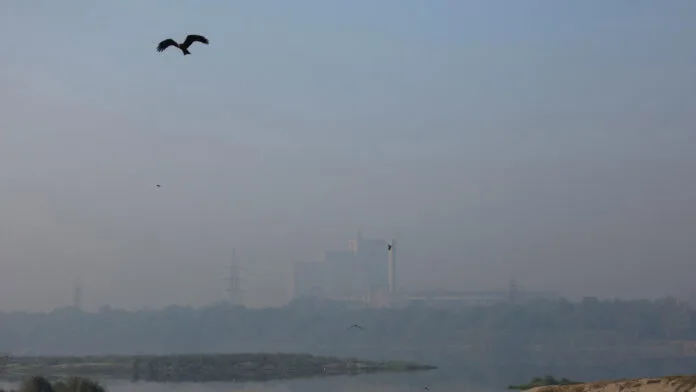
Delhi woke up to a thick layer of smog on Friday, with the city’s Air Quality Index (AQI) plunging to 332, placing it firmly in the ‘very poor’ category.

Air quality monitors showed 30 stations reporting ‘very poor’ air, while Jahangirpuri recorded an AQI of 405, entering the ‘severe’ band.

According to the Central Pollution Control Board (CPCB):

  • 0–50: Good
  • 51–100: Satisfactory
  • 101–200: Moderate
  • 201–300: Poor
  • 301–400: Very Poor
  • 401–500: Severe

Air to Remain ‘Very Poor’ for a Week

The Air Quality Early Warning System (AQEWS) forecast indicates that Delhi’s air quality is expected to remain ‘very poor’ through Saturday, with no major improvement predicted over the next six days.

Cold Conditions Add to the Discomfort

The India Meteorological Department (IMD) reported a minimum temperature of 8°C, which is 0.6°C below normal.

Relative humidity touched 100%, intensifying the smog formation.

The day’s maximum temperature is expected to reach 25°C, the IMD said.

Jhelum River Drops to Record Low as Prolonged Dry Spell Deepens Water Concerns in Kashmir

0

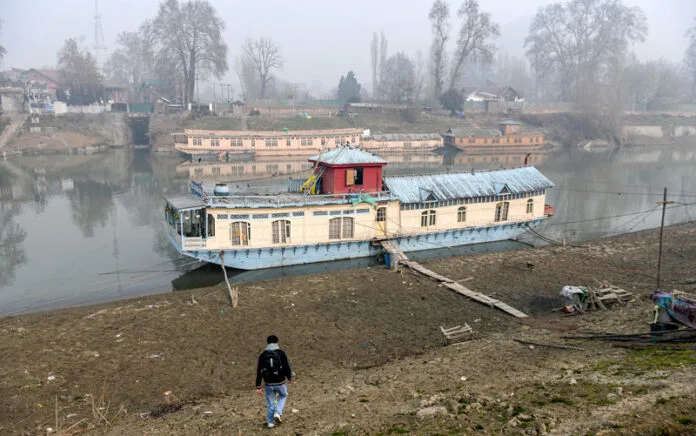
Kashmir’s prolonged dry spell has reduced the water level of the Jhelum River to its lowest point in recent years, triggering concerns among residents over potential shortages in irrigation and drinking water supply.

At Sangam, the key gauging station in South Kashmir, the river level has plunged to 0.56 feet, exposing wide stretches of the dry riverbed. At Munshi Bagh, the level stood at 3.59 feet, officials said.

Dry Spell Since October, 85.8% Rainfall Deficit

Chief Engineer, Irrigation & Flood Control, Showkat Hussain, told Excelsior that the continuous dry conditions since October have severely impacted water flow.

“The river’s level at Sangam is 0.56 feet, while Munshi Bagh is at 3.59 feet. The reduced intake of water is exerting pressure on irrigation and drinking water supply schemes dependent on the Jhelum,” he said.

Jammu and Kashmir is currently witnessing a massive 85.8% rainfall deficit, with almost no precipitation recorded since November 5, despite the region’s normal requirement of 43.1 mm during this period.

No Immediate Drinking Water Crisis, Say Officials

Authorities clarified that despite falling river levels, drinking water supply remains stable in major areas.

“Regions like Sopore and Baramulla that receive water from Wular Lake have not reported disruptions,” an official said.

Wular acts as a natural reservoir, releasing water gradually to meet downstream needs.

No Major Weather Activity Expected Till Dec 19

Director of the Meteorological Department, Dr. Mukhtar Ahmad, said no significant weather system is likely to affect the region until December 19.

“Unless a new western disturbance arrives, the current dry conditions are expected to continue,” he added.

The persistent dry spell has raised concerns about long-term impacts on agriculture, horticulture, and the region’s overall water security.

CM Omar Abdullah Inaugurates New Residential Blocks for Darbar Move Employees in Jammu

0

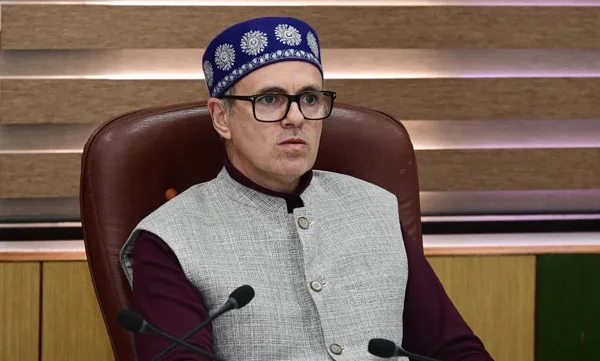
Chief Minister Omar Abdullah on Thursday inaugurated newly constructed residential blocks at Ahata Amar Singh and Sarwal, marking a major step toward strengthening housing infrastructure for Government employees associated with the Darbar Move.

The Chief Minister formally opened the facilities by cutting the ceremonial ribbon, accompanied by Advisor Nasir Aslam Wani, Additional Chief Secretary (Estates) Shaleen Kabra, Director Estates Ashwani Khajuria, Deputy Director Estates Jammu Dr. Vikas Sharma, and other senior officials.

56 New Flats Built as G+6 Structures

The two newly inaugurated blocks comprise 56 compact two-room residential flats, built as Ground + 6-storey structures.

Each flat includes:

  • 2 bedrooms
  • a lobby/living room
  • kitchen
  • 2 washrooms
  • balcony

The design focuses on cost-effectiveness, optimal space utilisation, and improved living facilities for Government employees.

CM Reviews Facilities, Praises Design and Quality

Omar Abdullah inspected the units, expressing satisfaction with the aesthetic appeal, functional layout, and quality of construction.

He said the project would significantly reduce accommodation shortages and offer employees modern, comfortable living spaces.

Modernisation Plan Underway

Director Estates Ashwani Khajuria informed the Chief Minister that the project prioritised structural safety, functionality, and affordability.

He added that the Estates Department is preparing a phased modernisation plan for old Government residential colonies.

Deputy Director Estates Dr. Vikas Sharma briefed the CM on quality-control mechanisms and the progress of ongoing housing projects.

Government Exploring High-Rise Housing Solutions

Addressing the gathering, Omar Abdullah reaffirmed the Government’s commitment to creating safe, planned and modern residential infrastructure.

He recalled his earlier inspection in November after the Darbar Move was restored following a four-year gap and reiterated directives to:

  • optimise land use,
  • replace unsafe structures with modern units,
  • adopt vertical and high-rise designs, and
  • ensure fair allocation of quarters across employee categories.

He stressed that vertical housing solutions would help bridge the accommodation gap and enable efficient utilisation of limited land resources.

The Chief Minister appreciated the Estates Department’s efforts in accelerating construction and urged continued upgrades for the welfare of Government employees.