Monday, July 13, 2026
Home Blog Page 85

MLFF Toll System and AI Highway Management Set for 2026 Rollout

0

Union Minister for Road Transport and Highways Nitin Gadkari announced plans to implement the Multi-Lane Free Flow (MLFF) toll system and AI-driven highway management technology across India by the end of 2026. This innovative system aims to eliminate waiting time at toll plazas, enhancing the travel experience for millions.

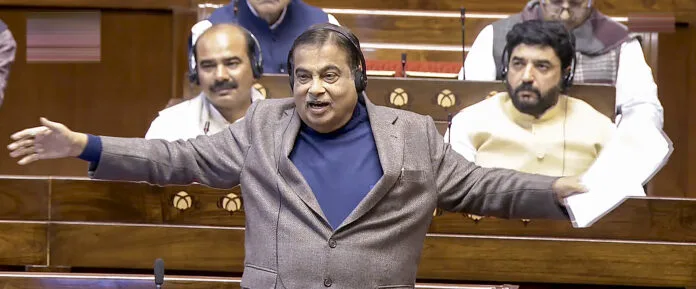
During a session in Rajya Sabha, Gadkari detailed how the new tolling mechanism will leverage artificial intelligence, satellite technology, and number plate recognition. This initiative promises seamless movement for vehicles without the need to halt at toll booths. “With MLFF, commuters will not have to stop at toll plazas, allowing vehicles to pass toll points at speeds of up to 80 km per hour,” he said.

The MLFF system will replace the current FASTag mechanism. The Minister highlighted that previous toll payments could take anywhere from three to ten minutes. Now, with the existing FASTag system, those times have significantly dropped to less than a minute. “The introduction of FASTag increased our revenue by at least ₹5,000 crore,” he stated.

Gadkari emphasized the potential benefits of the MLFF system, aiming to reduce toll wait times to zero minutes. He projected substantial savings of ₹1,500 crore in fuel and an additional ₹6,000 crore in government revenue, while also completely eradicating toll leakage and theft.

“By 2026, we aim for 100% completion of this project,” Gadkari stated confidently. He reassured members of Parliament that the new system would eliminate toll theft and enhance transparency, indicating that commuters would no longer experience any delays at toll plazas.

The Minister also addressed the importance of AI-enabled technology, explaining how it would streamline travel times and improve overall efficiency on national highways. He defined the scope of the initiative, noting that the central government is responsible specifically for national highways and does not oversee state highways or city roads. “Problems related to state and urban roads often circulate on social media, leading to misinformation about national highways,” he clarified.

“We are committed to establishing a transparent, efficient, and corruption-free system for our nation’s highways,” Gadkari concluded, reinforcing the government’s dedication to modernizing India’s highway infrastructure.

This announcement serves as a major step toward enhancing the travel experience for millions of road users across India, paving the way for a future where lengthy toll waits become a thing of the past.

Jammu’s Inclusive Development Progresses Under Omar Abdullah

0

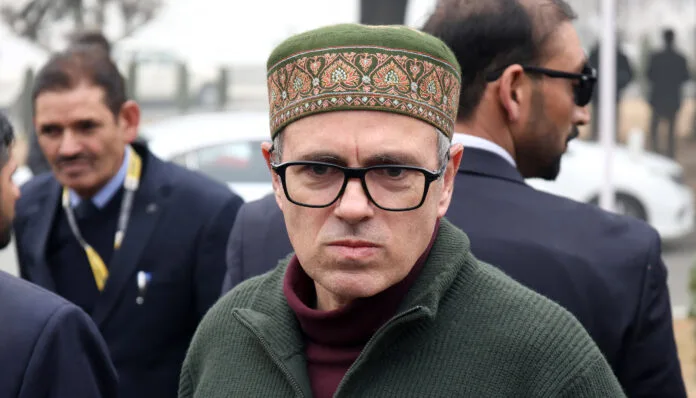
Former Chief Minister and National Conference president Dr. Farooq Abdullah stated that Jammu is now poised for inclusive development under the leadership of Chief Minister Omar Abdullah. This shift comes as the region experiences renewed efforts towards sustainable progress, moving away from a history of unmet promises.

Dr. Abdullah made these remarks while interacting with a delegation from the National Conference, emphasizing that the current government has renewed public confidence in democratic processes. The administration has made significant strides in making the corridors of power accessible to the common citizen, fostering a sense of ownership and participation.

During this meeting, the delegation raised various long-standing public issues that have persisted over the past decade, attributing these challenges to the misrule of the previous BJP administration. The delegation commended the remedial and developmental actions initiated by the Omar Abdullah-led government to counteract the setbacks faced by Jammu over recent years.

In discussing party structure and other organizational matters, Dr. Abdullah acknowledged the challenges that citizens endured during what many describe as years of undemocratic governance. He assured the gathering that the National Conference remains committed to addressing the public’s hardships.

“The Omar Abdullah-led government is making rapid strides to restore people’s faith in democratic institutions,” he asserted, reflecting a renewed sense of optimism among party members.

Dr. Abdullah further remarked on the widely discussed Smart City project, indicating that recent rains and subsequent waterlogging had cast doubt on its feasibility. This observation highlights ongoing concerns regarding infrastructure challenges despite official claims of progress.

He also pointed to initiatives undertaken by the present government aimed at preserving and revitalizing the historic Mubarak Mandi heritage complex, which has suffered from neglect for too long. The government has introduced free transport services for women, easing mobility challenges, along with additional ration quotas aiming to alleviate the financial burden on economically disadvantaged families. Moreover, the revival of the Darbar Move has stimulated economic activities, providing much-needed relief to traders in Jammu.

Dr. Abdullah outlined ongoing projects, including the construction of ropeways and the development of riversides and urban lakes. These efforts are set to position Jammu prominently on the national tourism map, highlighting the region’s potential.

As the upcoming Urban Local Body (ULB) and Panchayat elections approach, Dr. Abdullah urged party workers to strengthen outreach efforts. He stressed the importance of ensuring representation for youth and women in governance processes, aligning decision-making with the aspirations of these significant demographics.

Meanwhile, Chief Minister Omar Abdullah, during a recent address at the Gurjar Desh Charitable Trust in Jammu, underscored the need for scientific research on climate change impacts affecting the Gujjar-Bakerwal community. He stated that such studies would be instrumental in shaping effective future policies that directly address community challenges.

Addressing the gathering on the third death anniversary of the esteemed Dr. Masud Ahmed Choudhary, a former Vice-Chancellor at Baba Ghulam Shah Badshah University, Omar Abdullah acknowledged the immense talent present in Gujjar institutions. He highlighted the significance of directing this talent toward researching climate change, particularly due to the nomadic lifestyle of the Gujjar-Bakerwal community, which renders them highly vulnerable to environmental changes.

Omar Abdullah emphasized the importance of bolstering educational initiatives such as Gujjar hostels, schools, and mobile educational units while calling for a careful assessment of the current reservation policies.

“We have discussed reservation for years, but serious studies on its actual benefits remain absent,” he remarked.

Dr. Farooq Abdullah also encouraged the Gujjar community to prioritize unity and education, showcasing them as pivotal tools for securing a prosperous future for the upcoming generations.

The event saw active participation from several ministers, MLAs, former ministers, senior advocates, civil society members, and representatives of the Gujjar community, reflecting a broader interest in the political discourse surrounding Jammu’s development.

LG Manoj Sinha Unveils 108-Foot National Flag at Akhnoor on Vijay Diwas

0

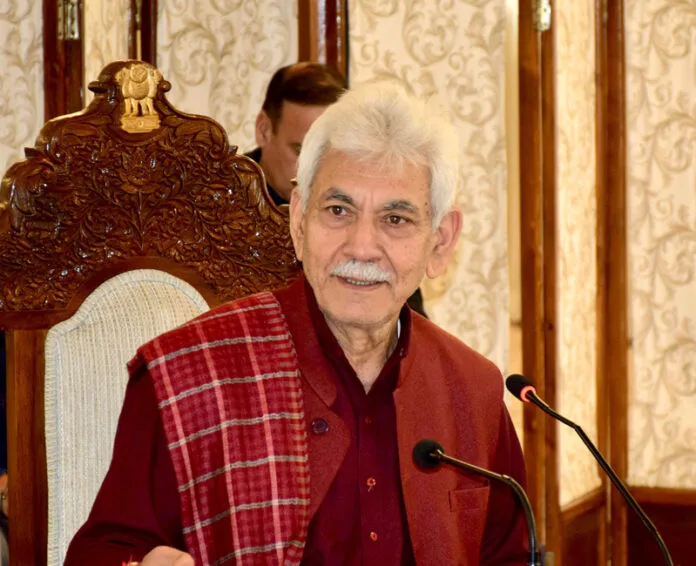
On the occasion of Vijay Diwas, Lieutenant Governor Manoj Sinha today unveiled a 108-feet high mast national flag at Kachrial in the Akhnoor sector, paying tribute to the indomitable spirit and supreme sacrifice of India’s armed forces.

The Lieutenant Governor paid homage to the martyrs, soldiers and officers who brought glory to the nation through their valour and sacrifice during the 1971 war. He also felicitated war veterans and veer naris, saluting their courage, resilience and unwavering contribution to the nation.

Addressing the gathering, Sinha said that the land of Kachrial holds immense historical and emotional significance for the country. “Every inch of this sacred land remembers with gratitude the brave soldiers who laid down their lives while safeguarding the sovereignty and integrity of the nation during the 1965 and 1971 wars,” he said.

The Lieutenant Governor congratulated Lieutenant General P.K. Mishra, General Officer Commanding, White Knight Corps (16 Corps), for the thoughtful initiative of installing the 108-feet high mast national flag. He also lauded the Flag Foundation of India for its commendable contribution to the historic initiative.

“May our beloved and victorious Tricolour always fly high across the world. Our national flag symbolises our freedom, self-respect, and the sacrifices and martyrdom of countless heroes. Together, we must move forward to realise the vision of a developed India,” Sinha said.

The event was attended by Satish Sharma, Minister for Youth Services & Sports, Food, Civil Supplies & Consumer Affairs, Transport, Science & Technology, Information Technology, ARI & Trainings; Lieutenant General Pratik Sharma, General Officer Commanding-in-Chief, Northern Command; Lieutenant General P.K. Mishra, GOC White Knight Corps (16 Corps); Major General H.S. Brar, GOC 10 RAPID; Brigadier Dayanand Sharma, Commander Pallanwala Brigade; Major General Ashim Kohli (Retd), Chief Executive Officer, Flag Foundation of India; senior civil and military officials, war veterans, veer naris, and students.

The ceremony reaffirmed the nation’s deep respect for its armed forces and highlighted the enduring legacy of courage and sacrifice associated with Vijay Diwas.

Nearly 500 Cases of Crimes Against Women, Children Pending in J&K Fast Track Courts

0

Jammu and Kashmir continues to witness a high pendency of cases related to crimes against women and children, with nearly 500 cases pending in Fast Track Special Courts (FTSCs), according to data released by the Union Ministry of Law and Justice.

While the disposal of cases has shown some improvement, official figures indicate that the backlog in the Union Territory’s special courts has remained persistently high over the past three years, largely due to limited judicial capacity and other systemic constraints.

The data shows that J&K had 453 pending cases at the end of 2023, which increased to 509 cases by December 2024. As of September 2025, the pendency stood at 494 cases, reflecting only a marginal reduction despite ongoing disposals.

Limited Number of FTSCs in J&K

At present, Jammu and Kashmir operates four Fast Track Special Courts, including two exclusive POCSO courts, which deal with cases of rape and child sexual abuse. This number is significantly lower compared to larger States such as Uttar Pradesh, which has 218 FTSCs, and Madhya Pradesh, which operates 67 such courts.

Nationwide, a total of 773 FTSCs, including 400 exclusive POCSO courts, are functional across 29 States and Union Territories, the data revealed.

Rising Case Registrations

The figures also indicate a steady rise in new case registrations in J&K. The Union Territory recorded 76 new cases in 2023, followed by a sharp increase to 164 cases in 2024. In the first nine months of 2025, another 60 fresh cases were registered.

On the disposal front, J&K’s FTSCs disposed of 41 cases in 2023, 112 cases in 2024, and 75 cases between January and September 2025. However, these disposal rates have not been sufficient to significantly reduce the overall backlog.

About the FTSC Scheme

The Centrally Sponsored Scheme for the establishment of Fast Track Special Courts, including exclusive POCSO (ePOCSO) courts, was launched in October 2019 following the Criminal Law (Amendment) Act, 2018 and a suo motu direction of the Supreme Court.

The scheme aims to ensure time-bound trials and speedy disposal of pending cases related to rape and offences under the Protection of Children from Sexual Offences (POCSO) Act, 2012. It envisaged the setting up of 790 FTSCs across the country and has been extended twice, with the current phase valid until March 31, 2026.

The total financial outlay under the scheme is Rs 1,952.23 crore, including a Central share of Rs 1,207.24 crore from the Nirbhaya Fund.

States Responsible for Implementation

The Ministry of Law and Justice clarified that while funding is provided under the Centrally Sponsored Scheme, the responsibility for operationalising and expanding FTSCs lies with States and Union Territories in consultation with their respective High Courts. Recruitment of judges, prosecutors and supporting staff, including women officers, is also a State-level responsibility under the constitutional framework.

Experts noted that although FTSCs across the country have disposed of over 3.5 lakh cases since their inception, smaller States and Union Territories like J&K require urgent expansion of judicial infrastructure.

“Enhanced judicial capacity is essential to reduce pendency and ensure timely justice in sensitive cases involving women and children,” experts said.

Jammu Faces Daily Gridlock Due to Non-Functional Traffic Signals

0

Jammu city is grappling with severe traffic congestion due to non-functional traffic signals, leading to daily gridlock for commuters. This predicament raises serious concerns about urban traffic management.

Traffic signals, part of the Intelligent Traffic Management System (ITMS), remain non-functional for extended periods, creating choke points at major intersections. Key locations such as the Civil Secretariat, Women College Parade, and Kachi Chawni Chowk exemplify this issue, with officials acknowledging inadequate functionality since their installation.

The ongoing construction works at Satwari Chowk, Kunjwani Chowk, and along Narwal Road have further exacerbated the situation, reducing road capacity and contributing to the chaos. A surge of vehicles due to the Darbar Move, winter migration from Kashmir and Ladakh, alongside the wedding season, has compounded the already strained traffic conditions.

Without operational traffic signals, intersections often descend into disorder, compelling traffic police personnel to manually manage movement. Daily delays affect office-goers, students, and patients, while pedestrians navigate crowded carriageways due to encroached footpaths.

Officials confirmed that encroachments by street vendors and illegal constructions have narrowed road access, intensifying the congestion. Additionally, unregulated reharis create critical bottlenecks throughout markets and residential areas, aggravating the issue.

Commuters express growing frustration over increased fuel consumption and rising pollution, as vehicles sit idle in lengthy traffic jams. Motorsits feel further aggravated as operational challan cameras continue to issue fines despite these challenging circumstances.

Officials from the traffic department indicated that they are assessing the situation and preparing to deploy additional personnel at busy intersections. However, no definitive timeline has been provided for restoring the traffic signal system.

In light of these escalating concerns, residents are calling on the district administration, Jammu Municipal Corporation, Jammu Smart City Limited, and the Traffic Police for swift action. They urge restoration of traffic signals, removal of encroachments, and effective measures to streamline traffic flow across the city.

Satish Sharma Inaugurates Indoor Sports Hall in Khour

0

Minister for Youth Services and Sports, Satish Sharma, inaugurated a state-of-the-art multipurpose indoor sports hall in the Khour area on Monday, marking a significant milestone in enhancing sports infrastructure in Jammu and Kashmir’s border regions.

This initiative aims to empower local youth by providing them with modern, accessible, and inclusive sports facilities. Sharma emphasized the government’s commitment to develop sports infrastructure with a particular focus on rural and border areas, which often lack necessary resources.

“Quality sports infrastructure at the grassroots level plays a crucial role in identifying, nurturing, and grooming sporting talent,” Sharma stated during the inauguration. He highlighted the government’s goal of ensuring that no talented youth is deprived of opportunity due to lack of facilities.

The newly inaugurated sports hall features three badminton courts, six table tennis courts, a volleyball court, as well as two judo courts and two wrestling and kabaddi courts. This comprehensive setup is designed to accommodate multiple sports disciplines, creating a conducive environment for athletes to train.

Sharma also engaged with local youth and sportspersons, urging them to maximize their use of the new facility. He reassured the community that the government will prioritize further development of sports infrastructure and talent promotion in Jammu and Kashmir.

The inauguration of this indoor sports hall is set to significantly enhance sporting activities in the Khour area and neighboring regions, allowing young athletes to access modern, world-class facilities within reach of their homes. This development not only provides a platform for nurturing talent but also promotes a healthy lifestyle and sports culture among the youth.

Supreme Court Declines to Entertain PIL on IndiGo Flight Cancellations, Asks Petitioner to Approach Delhi HC

0

The Supreme Court on Monday declined to entertain a Public Interest Litigation (PIL) seeking judicial intervention into the cancellation of hundreds of flights by IndiGo and asked the petitioner to approach the Delhi High Court, which is already hearing a similar matter.

A Bench comprising Chief Justice Surya Kant and Justices Joymalya Bagchi and Vipul M. Pamcholi observed that the Delhi High Court was seized of a PIL concerning the crisis triggered by mass flight cancellations and related passenger grievances.

The Bench was hearing a plea filed by Narendra Mishra, who urged the apex court to take up the matter, citing widespread hardship caused to passengers. However, the court noted that judicial propriety required the issue to be addressed first by the High Court.

High Court Already Examining the Issue

Referring to proceedings before the Delhi High Court, the Bench noted that on December 10, the High Court had questioned the Centre for not taking timely steps to prevent the crisis and asked why the situation was allowed to escalate, leaving lakhs of passengers stranded while other airlines charged exorbitant fares.

The High Court is hearing a PIL seeking directions to the Union government to ensure refunds and provide support to passengers affected by IndiGo’s large-scale flight cancellations.

Liberty Granted to Re-Approach Supreme Court

The Supreme Court permitted Mishra to join the proceedings before the Delhi High Court and raise all his concerns there.

“If all grievances are not redressed, then nothing stops him or any other public-spirited individual from approaching this Court,” the Bench observed.

Senior advocate Mukul Rohatgi, appearing for IndiGo, informed the court that the Directorate General of Civil Aviation (DGCA) had constituted an expert committee on December 5 to examine the flight cancellations and the difficulties faced by passengers.

Taking note of this submission, the Bench observed that all issues raised in the PIL were already under consideration before the Delhi High Court.

Passengers Facing Severe Hardship

During the hearing, Mishra highlighted the severe distress faced by passengers due to repeated cancellations. Responding to this, the Chief Justice remarked that the concern was genuine but reiterated that the High Court, being a constitutional court, was already addressing the issue.

Earlier, the Supreme Court had refused to grant urgent hearing to the plea, noting that the Centre had taken cognisance of the matter and initiated steps to resolve it.

IndiGo has been facing criticism from both the government and passengers after cancelling hundreds of flights, citing regulatory changes in pilots’ flight duty time limitations and safety norms. The disruptions have left lakhs of travellers stranded at airports across the country.

Dense Fog Disrupts Air Traffic at Delhi Airport; Over 60 Flights Cancelled, 250 Delayed

0

Air traffic operations at the Indira Gandhi International Airport were severely disrupted on Monday due to dense fog and poor visibility, leading to the cancellation of over 60 flights and diversion of at least five others, officials said.

According to airport authorities, as many as 61 flights were cancelled and five diverted, while more than 250 flights faced delays owing to low visibility conditions that dipped below operational minima.

In a post on X shortly after 10 am, Delhi International Airport Limited (DIAL) said flight operations continued to be impacted by dense fog.

“Our on-ground officials are working closely with all stakeholders to assist passengers and provide necessary support across terminals,” DIAL said.

Airlines Adjust Operations

India’s largest carrier IndiGo said that dense fog had severely affected flight operations not only at Delhi airport but also at several other airports across northern India.

“Low visibility (below minima), due to dense fog, has severely impacted operations at Delhi and other airports across northern India, which is unfortunately beyond our control,” the airline said in a statement.

IndiGo added that as operations are adjusted to prevailing weather conditions, some flights may experience delays while a few may be proactively cancelled to ensure passenger safety and minimise prolonged waiting at airports. However, the airline did not specify the number of its cancelled or delayed flights.

The airline said its teams were closely monitoring the situation in coordination with airport authorities and that advisories were being issued to passengers to minimise inconvenience.

Busiest Airport Hit

Delhi airport, the country’s busiest aviation hub, handles around 1,300 flight movements daily. Fog-related disruptions are common during winter months, often impacting schedules across north India.

Passengers have been advised to check flight status with their respective airlines before heading to the airport.

Kashmir Issue Turned Controversial Due to Nehru’s Decisions: UP CM Yogi Adityanath

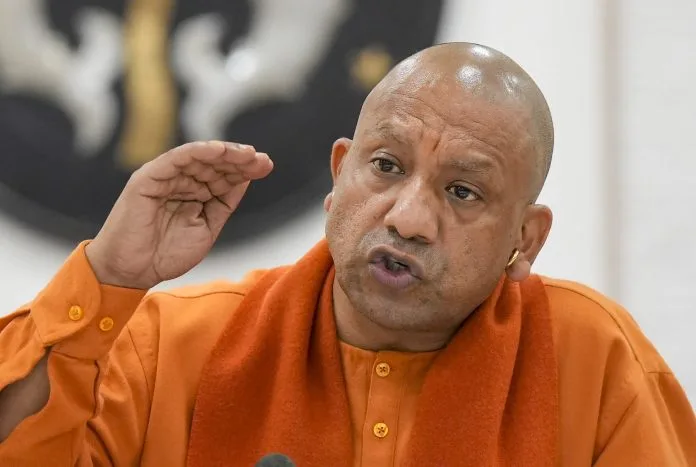
Uttar Pradesh Chief Minister Yogi Adityanath on Monday blamed India’s first Prime Minister Jawaharlal Nehru for the extremism and separatism “emanating from Kashmir”, alleging that decisions taken during the early years of Independence made the issue so controversial that it continues to trouble the nation even today.

Addressing a programme held on the 75th death anniversary of India’s first Home Minister, Sardar Vallabhbhai Patel, Adityanath highlighted Patel’s role in integrating more than 560 princely states into the Indian Union and contrasted it with the handling of the Jammu and Kashmir issue.

Referring to the integration of Junagadh and Hyderabad, Adityanath said both princely states had initially refused to accede to India. “All Hindu princely states agreed to become part of the Republic of India, but the Nawab of Junagadh and the Nizam of Hyderabad refused. These states were integrated through a bloodless revolution, solely due to the wisdom and leadership of Sardar Patel,” he said.

The Chief Minister claimed that uncertainty surrounded the fate of Jammu and Kashmir after Independence. “Pandit Jawaharlal Nehru took the matter into his own hands and made Jammu and Kashmir so controversial that it continues to sting India even today. The country inherited extremism and separatism from Kashmir because of Pandit Nehru,” he alleged.

Praising Prime Minister Narendra Modi, Adityanath said the abrogation of Article 370 fulfilled the vision of Sardar Patel and Bharatiya Jana Sangh founder Syama Prasad Mookerjee. “By abolishing Article 370, Kashmir has been fully integrated with India, advancing the resolve of one nation, one constitution and one flag,” he said.

Tribute to Sardar Patel

Born in Nadiad, Gujarat, in 1875, Sardar Vallabhbhai Patel was a central figure in India’s freedom struggle. As independent India’s first Home Minister, he played a decisive role in integrating over 560 princely states into the Indian Union. Patel passed away in 1950, leaving behind a legacy of national unity and administrative firmness.

LG Manoj Sinha Chairs 84th University Council Meeting of Kashmir University, Pushes NEP-Aligned Reforms

0

Lieutenant Governor Manoj Sinha on Saturday chaired the 84th meeting of the University Council of the University of Kashmir (KU) at Lok Bhavan here, emphasizing the need for contemporary, interdisciplinary and skill-oriented academic programmes in line with the National Education Policy (NEP) 2020.

The Lieutenant Governor, who is also the Chancellor of the University of Kashmir, underlined that higher education institutions must focus on innovation, employability and entrepreneurship, while ensuring that academic initiatives are aligned with local and regional developmental requirements. He advised the University to strengthen integrated and professional programmes to meet emerging academic and industry demands.

Key Academic Approvals

The University Council accorded in-principle approval to several significant academic and administrative proposals. These included adoption of a revised policy mechanism for admission of foreign (international) students, change of nomenclature of the Department of Earth Sciences to the Department of Geology, and introduction of Five-Year Integrated Master’s Programmes (FYIMP) in Applied Geology, Tourism and Travel Management, Data Science and Artificial Intelligence, and Home Science.

The Council also approved the Programme Project Report (PPR) for M.A. History to be offered through the Centre for Distance and Online Education (CDOE). Approval was further granted for extension of Merit and Merit-cum-Means Scholarship schemes to students enrolled in Five-Year Integrated Programmes.

Regulations governing five-year integrated programmes, including FYIMP in Data Science and Artificial Intelligence, were approved, while recommendations of the Deans’ Committee on adoption of statutes governing the Ph.D. programme were discussed.

New Diplomas, Institutes and Language Programmes

The Council approved modifications in statutes governing Undergraduate Programmes (UGP-2022) in accordance with NEP-2020, including changes in degree nomenclature and adoption of standardized formats for certificates, diplomas and degrees.

Approval was also accorded for the introduction of a two-year Diploma in Calligraphy as a joint academic programme between the Institute of Music and Fine Arts, KU and the Jammu and Kashmir Academy of Art, Culture and Languages, Srinagar.

In-principle approval was granted for the establishment of an Institute of Nursing and Paramedical Sciences at the University’s Kupwara Campus, introduction of a Diploma Programme in Criminal Justice through CDOE, and a Five-Year Integrated Master’s Programme at the Media Education Research Centre (MERC).

Additionally, FYIMP programmes in Hindi, Linguistics and English Language Teaching, Persian, Sanskrit and Kashmiri were approved, aimed at promoting multilingual education, cultural preservation and advanced studies in classical and regional languages.

MoU for Academic Collaboration

On the occasion, the University of Kashmir signed a Memorandum of Understanding (MoU) with Siddharth University, Uttar Pradesh, to promote academic collaboration in research and education.

VC Presents Achievements

Earlier, Vice-Chancellor of the University of Kashmir, Prof. Nilofer Khan, presented the agenda items before the Council and briefed members on the academic, research and institutional achievements of the University.

Dignitaries Present

The meeting was attended by Chief Minister Omar Abdullah; Vice-Chancellor, University of Jammu, Prof. Umesh Rai; Vice-Chancellor, Cluster University Srinagar, Prof. Mohammad Mobin; Vice-Chancellor, Cluster University of Jammu, Prof. K.S. Chandrasekar; Additional Chief Secretary, Higher Education Department, Shantmanu; Principal Secretary, Finance Department, Santosh D. Vaidya; Principal Secretary to the Lieutenant Governor, Dr. Mandeep K. Bhandari; Administrative Secretary, Planning Development & Monitoring Department, Dr. Ashish Chander; Vice-Chancellor, Siddharth University, Prof. Kavita Shah; Prof. A.S.K. Sinha; Registrar KU Prof. Naseer Iqbal; Dean School of Business Studies Prof. Mushtaq Ahmad Darzi, besides other Council members and senior officials, both in person and virtually.