Monday, July 13, 2026
Home Blog Page 81

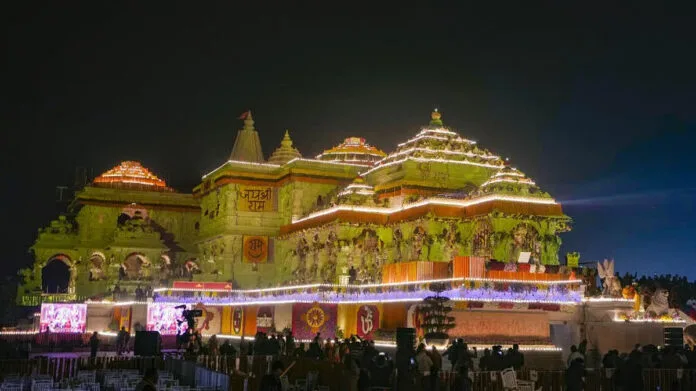
Rajnath Hoists Flag In Ram Temple Complex To Mark Second Year Of Idol Consecration

0

Defence Minister Rajnath Singh on Wednesday hoisted a flag at the Annapurna Temple in the Ram Temple complex and joined prayers on the occasion of the second anniversary of Pran Pratishtha.

The veteran BJP leader was accompanied by Uttar Pradesh Chief Minister Yogi Adityanath.

The Wednesday event followed a programme on November 25, when Prime Minister Narendra Modi hoisted a saffron flag atop the Ram Temple, marking the formal completion of its construction.

Before reaching the Ram Temple complex, Singh and Adityanath prayed at the Hanumangarhi Temple here.

Singh also prayed before the idol of Ram Lalla and participated as the chief yajman at the Pran Pratishtha Dwadashi programme, officials said.

The Pran Pratishtha Dwadashi rituals are scheduled to continue till Friday.

Religious rituals at the temple began on Saturday.

An idol of Ram Lalla was consecrated at the temple on January 22, 2024, during a ceremony led by Prime Minister Narendra Modi.

A Shri Ram Janmabhoomi Teertha Kshetra Trust office-bearer said an estimated five to six lakh devotees are expected to come to Ayodhya for Ram Lalla’s darshan for the second anniversary. (PTI)

Security Forces Step Up Vigil To Counter Terror Threat In J&K’s Chenab Valley

0

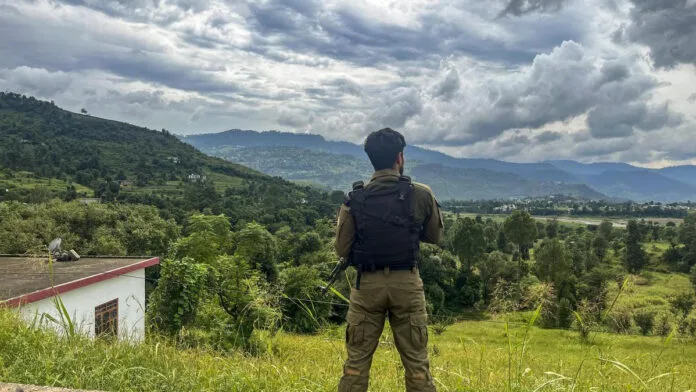
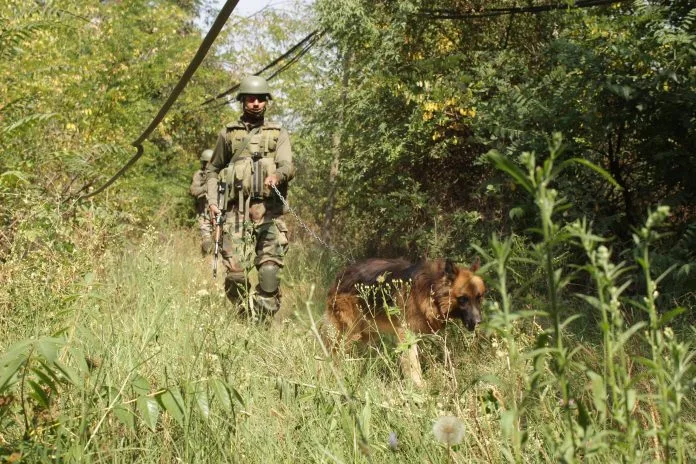
Dec 31: Braving sub-zero temperatures, the Army and the Special Operations Group (SOG) of Jammu and Kashmir Police have intensified their vigil in the high altitude areas of Chenab valley district to counter any attempt by terrorists to disrupt New Year celebrations, officials said on Wednesday.

A massive counter-terrorist operation has been underway since last week in the upper reaches of Doda, Kishtwar and Ramban districts of Chenab valley, including the snow-bound areas and adjoining Udhampur, Reasi and Kathua districts, besides Rajouri and Poonch districts.

According to intelligence assessments, around 30 to 35 Pakistani terrorists are currently active in the forests of the Jammu region, and the operation to flush them out intensified after the recent snowfall in the higher reaches. The security forces are expecting the terrorists to shift to lower areas close to human habitat before the complete closure of the mountain passes.

“Intelligence inputs suggested terrorist groups active in Doda, Kishtwar and parts of Udhampur district bordering Bhaderwah since the last two years could attempt to disrupt New Year celebrations by exploiting dense fog, extreme cold and difficult terrain,” a police officer said.

He said the anti-terrorist operations are focused on the higher, middle and upper mountainous areas where the terrorists are believed to be hiding away from the populated areas.

The intensified operations by troops of the Rashtriya Rifles and the SOG have also extended to Bhalessa bordering the Chamba district of neighbouring Himachal Pradesh, officials said.

BJP leader and Bhaderwah MLA Daleep Singh Parihar lauded the forces for the ongoing operations and said this is a testament to the continuous sacrifices made by the armed forces to safeguard the nation and the people of the country.

“We salute the security personnel who spend holidays away from their families to protect not only the national borders but also the scattered population residing in the vast mountains vulnerable to terrorist attacks,” he said.

Hailing from Bhalessa, Parihar said the Army is present everywhere in the hills to counter the terror threats.

“If we are living in a peaceful atmosphere here and celebrating New Year like elsewhere in the world, it is only because we have faith that the Army is here to protect us,” Parihar said.

Commending the personnel of the Rashtriya Rifles and the SOG for maintaining tight vigil despite testing circumstances like harsh winters and treacherous hilly terrain, the local residents of Bhallesa said they have complete faith in the Army.

“When the entire world is preparing to welcome 2026, our brave Indian Army and J&K Police in Doda and Kishtwar districts are spending these harsh winter days in relentless anti-terror operations in the dense forests and tough mountainous terrain,” Firdous Khanday, a local from Gandoh Bhalessa, said.

Despite sub-zero temperatures and severe weather challenges, and difficult terrain, he said the forces remain fully committed to neutralising the threats posed by terrorists and maintaining peace in the region.

“Their resolve to counter terrorists stands as a symbol of courage. We live in safety only because of the unmatched dedication and bravery of our forces,” Khanday said. (Agencies)

88 Injured In Loco Train Collision In Hydropower Project Tunnel In Chamoli

0

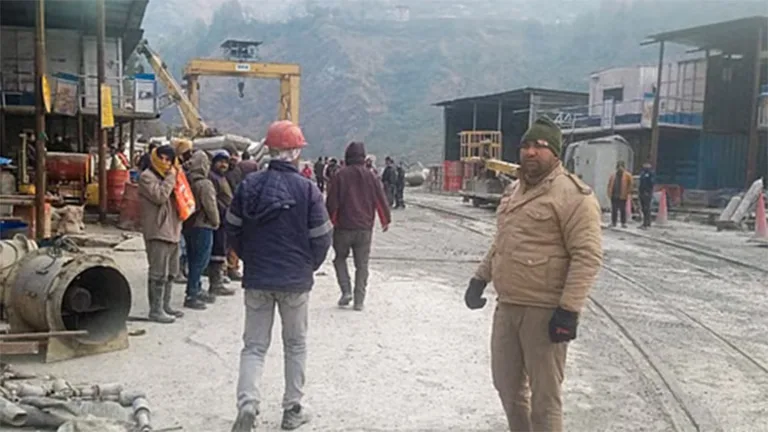
Eighty-eight people were injured in a loco train collision inside the Pipalkoti tunnel of the under-construction Vishnugad-Pipalkoti hydropower project in Chamoli district, an official said.

One of the trains had workers and officials on board, while the other carried material.

Uttarakhand Chief Minister Pushkar Singh Dhami ordered proper treatment for the injured.

Chamoli District Magistrate Gaurav Kumar said that the accident occurred around 8.30 pm on Tuesday at the TBM (Tunnel Boring Machine) site inside the tunnel being built by THDC (India).

A loco train carrying workers for tunnel excavation during the night shift was about two kilometres inside the tunnel when another loco train coming from the opposite direction lost control and collided with it.

DM Gaurav Kumar and Superintendent of Police Surjit Singh Panwar met the injured at the Gopeshwar District Hospital.

Kumar said 109 people were on board the loco train at the time of the accident, most of them labourers. None of the injured was serious, he said.

He said 70 labourers were brought to the district hospital in Gopeshwar, of whom 66 were given discharge after first aid, while four are still under treatment.

Eighteen labourers were given first aid at the Vivekananda Hospital in Pipalkoti and were sent home.

Meanwhile, the Railways said the trains involved in the collision had no connection with it.

“It is clarified that this unfortunate incident occurred in Uttarakhand’s Chamoli district, involving a trolley used in the local transportation system during the construction of a hydroelectric project tunnel. The train referred to in the news reports is not an Indian Railways train, but a transportation system being used locally by the project team,” the government entity said in a statement.

According to officials, rail-like vehicles are used to transport workers, employees, and materials for construction work inside the tunnel.

The project, being built between Helang and Pipalkoti on the Alaknanda River, will generate 444 megawatts of electricity through four turbines. The project is targeted for completion by next year. (PTI)

Fresh Snowfall Blankets Kashmir’s Higher Reaches Amid Unusually Warm Winter

0

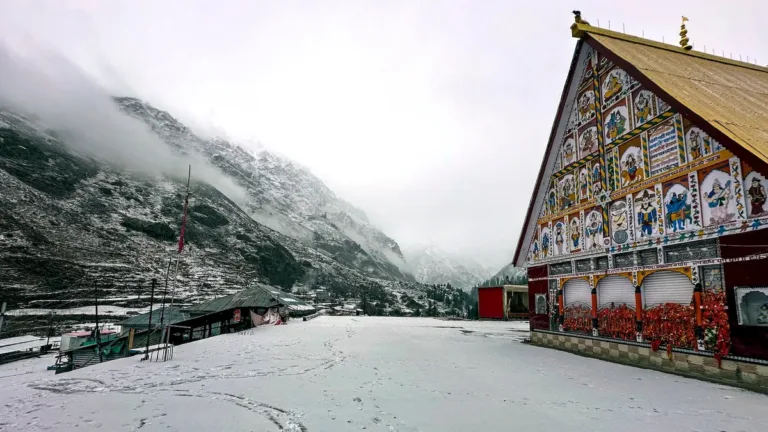
Fresh snowfall blanketed several areas in the higher reaches of Kashmir with the Meteorological department forecasting light to moderate precipitation at most places over the next 24 hours, officials said on Wednesday.

Owing to a cloud cover, the night temperatures remained higher than the seasonal average and settled above the freezing point at most places, the officials said.

Despite the fresh snow, the valley continues to experience an unusually warm winter, with temperatures remaining three to seven degrees above the seasonal average, the MeT officials said.

They said parts of North Kashmir, including Gurez in Bandipora, Gulmarg in Baramulla and Macchil in Kupwara, experienced fresh snowfall, with reports of light to moderate snowfall in higher reaches as well.

The MeT office has said there is a possibility of light to moderate rain/snow at most places during Wednesday night to Thursday forenoon.

A few higher reaches/extreme higher reaches of north and central Kashmir may receive moderate to heavy snowfall, it added.

There is a possibility of a brief spell of light rain/snow over isolated places on Friday as well, it said.

On Tuesday night, Srinagar recorded a minimum temperature of 2.3 degrees Celsius, which is 4.9 degrees Celsius above the normal for this time of year, they said.

Gulmarg remained the coldest location in the region with the mercury settling at minus 3.0 degrees Celsius, officials said.

The night temperature remained almost three degrees above the usual temperature.

In south Kashmir, Pahalgam recorded a low of minus 1.8 degrees Celsius — seven degrees above the normal temperature, and Qazigund, the gateway town of the valley, saw the mercury settle at 1.4 degrees Celsius.

The region is currently going through ‘Chilla-e-Kalan’, a 40-day period of extreme cold. During this phase, night temperatures typically drop between three and eight degrees below the freezing point. However, current readings show a departure from normal patterns. (Agencies)

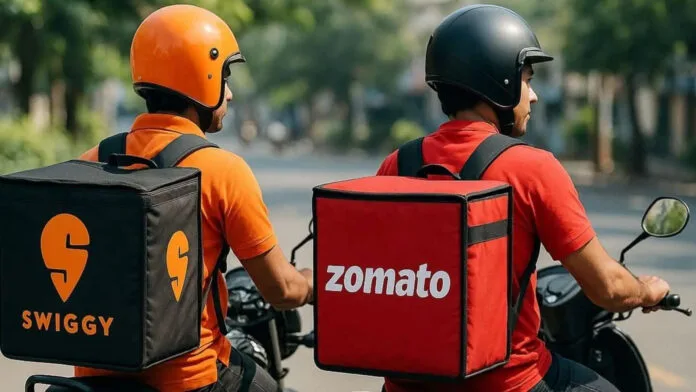
Zomato, Swiggy Offer Increased Payout To Gig Workers Amid Strike Call By Unions On New Year’s Eve

0

Food delivery platforms Zomato and Swiggy are offering more incentives to their delivery partners, a standard practice they follow on festive periods, to ensure minimal disruptions in services on New Year’s Eve amid strike call by gig workers’ unions.

Telangana Gig and Platform Workers’ Union (TGPWU) and Indian Federation of App-Based Transport Workers (IFAT) have claimed that lakhs of workers are set to join the nationwide strike to demand better payouts and improved working conditions.

The strike may affect the operations of food delivery and quick commerce firms like Zomato, Swiggy, Blinkit, Instamart and Zepto on New Year’s Eve, when demand is at an all-time high, according to industry sources.

Zomato has offered delivery partners payouts of ₹120 to ₹150 per order during peak hours between 6 p.m. and 12 a.m. on New Year’s Eve. The platform has also promised earnings of up to ₹3,000 over the course of the day, subject to order volumes and worker availability, people in the know of the development said.

In addition, Zomato has temporarily waived penalties on order denials and cancellations, they said, however, stressing that it was a standard operating protocol followed during high-demand festive and year-end periods.

“This is part of our standard annual operating protocol during festive periods, which typically see higher earning opportunities due to increased demand,” an Eternal spokesperson said.

Eternal owns Zomato and Blinkit brands.

Similarly, Swiggy has also increased incentives around the year-end period, offering delivery workers earnings of up to ₹10,000 across December 31 and January 1, according to people aware of the development.

On New Year’s Eve, the platform is advertising peak-hour earnings of up to ₹2,000 for the six-hour period between 6 p.m. and 12 a.m., in a bid to ensure adequate rider availability during one of the busiest ordering windows of the year, they said, maintaining that increased payouts were a standard practice during such periods.

In a joint statement, TGPWU and IFAT said, “As of last night, over 1.7 lakh delivery and app-based workers across India have confirmed participation, with numbers expected to rise further by evening”.

On the other hand, people in the know said that following the massive December 25 strike, which saw thousands of delivery workers log off platforms across Telangana and other regions, gig workers have announced an escalated nationwide strike on December 31, 2025, said the joint statement of TGPWU and IFAT.

“The December 25 action sent a clear warning to platform companies about falling earnings, unsafe delivery pressure, and loss of dignity at work.

However, companies responded with silence — no rollback of reduced payouts, no dialogue with workers, and no concrete assurances on safety or working hours. This continued indifference has made today’s strike unavoidable,” it added.

The Gig and Platform Service Workers Union also announced a nationwide strike on 31 December 2025 to collectively raise demands concerning the rights, welfare and dignity of gig and platform workers across India.

Giving a call to action, it said, “All gig workers, platform workers, digital platform workers, app-based workers, and online freelancers are earnestly requested to participate in the national strike by shutting down all work-related applications and abstaining from providing services on December 31, 2025, thereby making the strike united and effective”. (Agencies)

Security Forces Launch Search Ops In J&K’s Kishtwar, Poonch Over Reports Of Possible Terrorist Movement

0

Security forces on Tuesday launched cordon and search operations along border areas and the mountainous hinterland of Poonch and Kishtwar districts of Jammu and Kashmir as part of heightened anti-terror measures, officials said.

Acting on inputs about the presence of two terrorist groups operating in the Doda-Kishtwar forest areas, security forces launched a cordon and search operation in the Keshwan-Chatroo valley after apprehending terrorist movement, they said.

Troops used drones and other aerial surveillance equipment to monitor the area in a bid to track down the terrorists, they added.

According to reports, two groups of Jaish-e-Mohammad terrorists, with two to three operatives each, are believed to be present in the area, which has witnessed encounters in the past.

The Romeo Force of the Army also conducted search operations at Khanetar Top along the Indo-Pak border in Poonch and adjoining areas following suspected terrorist movement, officials said, adding that the troops were equipped with aerial surveillance support and sniffer dogs.

Additionally, security forces have intensified vehicle checking along the Pathankot-Jammu-Srinagar national highway in Kathua, Samba, Jammu and Udhampur districts as part of heightened alert ahead of the New Year.

The border security grid too has been further strengthened. The police have activated Village Defence Guards and border police along the Indo-Pak border in view of possible infiltration from across the border, officials said. (Agencies)

Indian Oil Completes Highest-Ever Winter Stocking In Ladakh

0

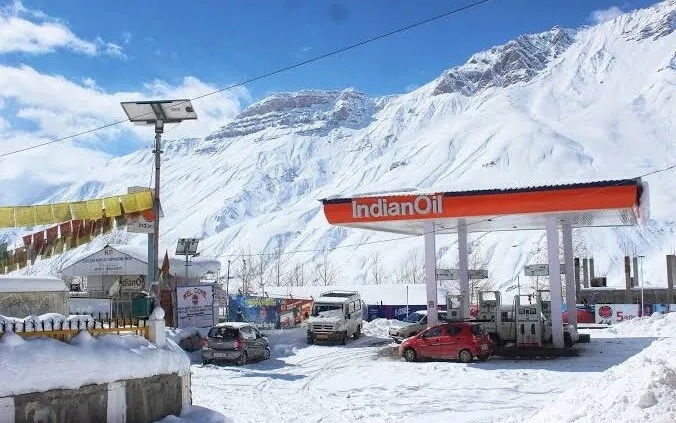
 Indian Oil Corporation Limited on Tuesday said it has completed highest-ever advance winter stocking operation, supplying over one lakh kilolitres of petroleum products to Ladakh ahead of the annual winter shutdown.

Every year, access to Ladakh through roads remains closed from December to April due to heavy snowfall at high mountain passes such as Zojila and Rohtang.

To ensure uninterrupted fuel availability during this period, Indian Oil undertakes advance stocking before winter sets in, the company said.

These supplies are crucial for civilians as well as for the strategic requirements of the Indian Army in the region.

Indian Oil’s tanker drivers and field teams operate on one of the toughest fuel supply routes in the world, covering 1,600-2,000 km per trip over 7-8 days, the company said.

They work in extreme conditions, with temperatures dropping to minus 20 degrees Celsius, facing heavy snowfall, low oxygen levels and narrow mountain roads.

Logistics are further affected by frequent disruptions on National Highway-44 due to weather conditions, seasonal congestion during the Amarnath Yatra and peak apple transportation, the company said.

The operation faced additional challenges this year following a cloudburst in Ramban district on April 20, which caused flash floods and landslides, temporarily trapping Indian Oil tankers and disrupting traffic on NH-44.

Supplies were also maintained during security-related restrictions after the Pahalgam incident on April 22 and during blackout conditions, the company said.

Indian Oil Chairman Arvinder Singh Sahney interacted with tanker drivers to boost morale and acknowledge their efforts.

He said the company’s motto, “Pehle Indian, Phir Oil,” reflects its commitment to serving the nation first.

With this record winter stocking operation, Indian Oil has reaffirmed its role in ensuring fuel security in some of the country’s most challenging and remote regions, the company said. (Agenciese)

Pahalgam Carnage, Pak Shelling, Floods Make Year Bleak For Kashmir

0

Jammu and Kashmir’s quest for restoration of statehood suffered twin blows during the year in the form of the Pahalgam terror attack and the Delhi car blast.

The elected government led by Chief Minister Omar Abdullah made all the right noises in the first six months in office for the restoration of statehood, but the deadly strike by terrorists on tourists on Baisaran meadows of Pahalgam on April 22 put a halt to any immediate talk of Jammu and Kashmir’s returning as a state.

Survivors alleged that the assailants chose their targets after confirming that they were not Muslims – a revelation that sent communal shockwaves to the rest of the country.

The attack was denounced widely across the valley.

For the first time in 35 years, spontaneous protests were held across the length and breadth of the valley in condemnation.

The protestors unequivocally declared: “Not in my name.” On May 7, the Indian forces launched cross-border strikes to avenge the massacre on the meadow. Its fallout was seen in the subsequent days, when border residents of the Union Territory were hit by shelling from Pakistan.

Poonch, Rajouri, Kupwara and Baramulla, all on the border, bore the most of the brunt of the enemy fire, which took 20 lives, destroyed over 2,000 structures, including three dozen schools.

On July 28, the government said, the perpetrators of the April 22 carnage were eliminated in Operation Mahadev in the Dachigam forest area in Harwan.

While it was still finding its bearings from the carnage, the backlash, and the bombing, Jammu and Kashmir was hit by a natural calamity.

On August 14, a cloudburst in Kishtwar of Jammu killed over 50 people.

Flash floods caused heavy damage to standing crops in many areas of Jammu as well as the Kashmir valley.

Jammu suffered the most as the Tawi River came into spate for the first time in more than a decade.

The flash floods also washed away a significant stretch of the Jammu-Srinagar National Highway, snapping road connectivity between Kashmir and the rest of the country for weeks.

The unearthing of the white collar terror module — highly educated men radicalising youths to join the terrorist ranks — came as a shocker with several doctors arrested in the first week of November during sweeping raids conducted by J-K Police with its counterparts in Haryana and Uttar Pradesh.

Massive quantities of explosives were seized from a Kashmiri doctor’s rented room in Faridabad in the National Capital Region, while weapons and other incriminating material were recovered from a medical college hostel in Anantnag district.

As the noose tightened around the culprits, one of the suspects — Dr Umar Nabi — was killed in a car blast near Red Fort Metro Station in Delhi on November 10.

According to investigators, the blast occurred while Nabi was trying to relocate the explosives in his possession. Ten people were killed, and scores were injured in the blast.

The 2,900 kilograms of explosive material seized from Faridabad was transported to Nowgam here as case property to be examined.

However, on November 14, the explosive was set off and ripped through the police station where it was kept, killing nine people.

Struck by violence and nature’s wrath, the Union Territory found itself grappling with a fund crunch. Tourism was the worst-hit.

The valley teemed with visitors for a good part of the first four months of the year, but the party came to an end with the April 22 attack. The Indo-Pakistan tension after Operation Sindoor also kept the tourists away from the valley.

The closure of nearly 50 popular tourist spots on security grounds after the Pahalgam attack, ordered by the lieutenant governor, ended all hopes of tourism revival this year.

While most of the tourist spots have since been reopened, the tourism sector has at best been limping back to its normal with sparse footfall.

The other mainstay of the Kashmir economy, horticulture, was dealt a blow due to the closure of the flood-hit Jammu-Srinagar National Highway at the peak of apple harvesting season. However, timely intervention by the Union Ministry of Railways ensured that the losses were kept to a minimum and the Kashmiri apples reached the terminal markets by train till the highway was restored.

The introduction of Vande Bharat — the direct rail link between Kashmir and the rest of the country — salvaged somewhat an otherwise bleak year for the Union Territory.

The train reduced the travel time and cost for people travelling to Kashmir.

The train has already been used to bring in food grain for the civilians and heavy-duty equipment for the armed forces. (Agencies)

Travel Guides & Travelogues

Chief Secretary Designate Ashish Kundra Calls On LG Kavinder Gupta

0

Leh, Dec 30: Ashish Kundra, IAS, Chief Secretary designate, today paid a courtesy call on the Hon’ble Lieutenant Governor of Ladakh, Kavinder Gupta, at the LG Secretariat, Leh.

During the meeting, the Lt Governor and the Chief Secretary exchanged views on key administrative priorities and discussed matters related to governance and development in the Union Territory.

The Lt Governor extended his best wishes to Shri Ashish Kundra on his new responsibility and expressed confidence in his role in further strengthening efficient administration in Ladakh.

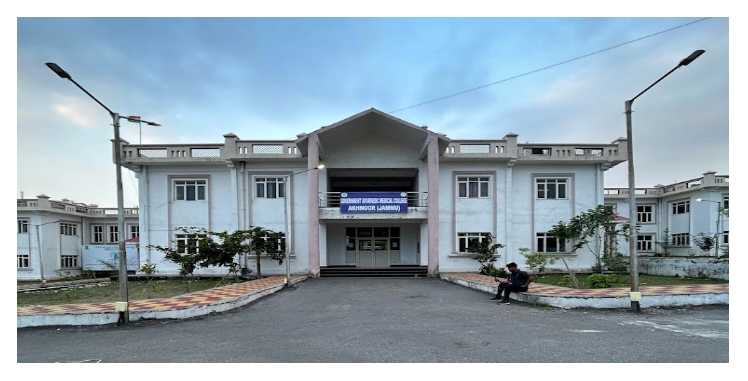
Questions Raised Over PG Approvals at GAMC Akhnoor as Files Indicate Alleged Misrepresentation and Rule Bypassing

Despite Courses Commencing, PG Programme at GAMC Akhnoor Faces Scrutiny Over Faculty Eligibility and Process Lapses

The introduction of postgraduate (PG) courses at Government Ayurvedic Medical College, Akhnoor has come under intense scrutiny following the surfacing of official records that point to serious procedural irregularities, questionable faculty deployments, and alleged misrepresentation before statutory and administrative authorities. Notably, the PG courses have already commenced.
According to documents accessed by this newspaper, a medical officer appointed during 2016–17 as Nodal Officer for the limited purpose of coordinating the commissioning of the college continued to exercise wide-ranging administrative and academic control well beyond the original mandate. While the position was intended to be temporary and strictly administrative, records indicate that it gradually evolved into a centre of authority influencing faculty postings and academic proposals.
GAMC Jammu was established in 2017 with medical officers deputed from various dispensaries on academic arrangement. These arrangements were discontinued when the college shifted to Akhnoor in 2021, and the officers were repatriated to their parent postings. However, official correspondence suggests that the Nodal Officer continued at the institution despite the absence of a clear sanction for any permanent academic role.
The controversy deepened with the submission of proposals to start PG courses in seven Ayurveda subjects. Departmental communications and replies obtained under the RTI Act clearly state that PG Medical Officers are not eligible for postgraduate teaching under the norms prescribed by the National Commission for Indian System of Medicine. Despite this position, documents show that PG Medical Officers were projected as having teaching and research experience and were shown as eligible higher faculty, including Professors and Heads of Departments, in submissions made to regulatory bodies.
Government orders issued in March 2025 directed the deployment of medical officers from dispensaries to GAMC Akhnoor for the proposed PG courses. Records further reveal that on the very next working day, deployment orders were issued placing these officers—including the Nodal Officer himself—as Professors and Heads of Departments. These orders reportedly bore the initials of the same officer, raising serious questions about conflict of interest and the alleged misuse of administrative authority.
Additional concern has been expressed over the delay in creating sanctioned professor posts, which are considered essential for any PG programme. Instead of forwarding a separate proposal exclusively for professor positions, the administration allegedly submitted a consolidated proposal for 97 posts. Insiders describe this move as procedurally flawed and a key factor in delaying lawful recruitment.
Files also indicate that references to a “one-time relaxation” were cited in official correspondence to justify PG approvals. Subsequent clarifications from statutory authorities, however, reportedly deny granting any such relaxation for deputing PG Medical Officers as higher faculty.
Medical education experts caution that such deviations, if established, could have serious implications for the quality of postgraduate education, patient care, and institutional credibility. There is also growing concern that prolonged ad hoc arrangements have blocked fair opportunities for duly qualified postgraduate Ayurveda professionals.
With multiple government orders, RTI replies, and regulatory communications now on record—and with the PG courses already underway—the matter has triggered calls for an independent, time-bound inquiry to determine whether statutory norms were bypassed and whether authorities were misled during the approval process.