Monday, July 13, 2026
Home Blog Page 71

Congress Accuses Modi Government of ‘Communalising Education’, Demands Reopening of SMVD Medical College

The Congress on Saturday accused the Modi government of indulging in the “communalisation of education” following the withdrawal of permission for the MBBS course at the Shri Mata Vaishno Devi Institute of Medical Excellence (SMVDIME) and demanded that the medical college be reopened after corrective measures.

Earlier this month, the National Medical Commission (NMC) revoked the Letter of Permission to the Katra-based medical college in Jammu and Kashmir, citing non-compliance with minimum standards and serious deficiencies in faculty strength, clinical material and infrastructure.

The decision followed an agitation by the Sangharsh Samiti, a recently formed conglomerate of right-wing outfits backed by the BJP, which demanded the cancellation of admissions to the college and sought reservation of seats exclusively for students professing faith in Mata Vaishno Devi.

Addressing a press conference, Congress general secretary in-charge Jammu and Kashmir, Syed Naseer Hussain, accused the Centre of targeting the institution on communal lines. He was accompanied by J&K AICC Secretary Divvya Madernna.

“Admissions at Vaishno Devi Medical College were done strictly on the basis of NEET. In the final list, 42 out of 50 students were Muslims because the Muslim population is higher in that region. During counselling, most students chose colleges close to their homes. This is a natural process,” Hussain said.

He said the NMC had now cancelled the permission for the college altogether, raising serious questions over the regulatory process.

“In such a situation, the question arises — was no proper inspection conducted before granting the licence? Were all the rules not followed at that time? There are many examples across the country where students from different communities study in Muslim or Christian institutions as well,” he said.

Hussain also questioned the timing and intent behind the sudden inspection of the college. “Who complained? Was the action taken due to pressure created in the public domain? Were the circumstances so serious that the entire medical college had to be shut down?” he asked.

He pointed out that permission for the MBBS course was granted in September 2025 and asked whether no inspection related to infrastructure had been conducted before that.

The Congress leader further alleged that just like the ED, CBI, IT and the Election Commission, the National Medical Commission was also being misused for political purposes.

Raising the party’s demands, Hussain said the medical college should be reopened after taking corrective measures, instead of being shut down entirely.

The Congress leaders also raised the issue of the demolition of a school in Betul district of Madhya Pradesh.

They said a person named Abdul Naeem had invested Rs 20–22 lakh of his personal savings, purchased land, obtained the required NOCs and licences and established a school to educate children from nearby villages and tribal communities.

“Despite this, rumours were spread branding the school a ‘madrasa’, even though only three Muslim families live in the village. Subsequently, the district administration demolished the structure allegedly without prior notice or a transparent investigation,” they alleged.

They demanded that the school in Betul be rebuilt and allowed to reopen, and called for a high-level inquiry into both the SMVD medical college case and the demolition in Madhya Pradesh, with punishment for those found guilty.

They also accused the BJP of promoting “bulldozer culture” and toxic politics.

However, the Betul district administration said it had demolished only an illegal portion of a building for not completing formalities, rejecting reports that the action was taken due to rumours of a madrasa or school being run from the structure.

According to officials, a team led by Sub-Divisional Magistrate Ajit Maravi demolished a shed constructed with iron sheets in Dhaba village under Bhainsdehi tehsil last Tuesday.

In her remarks, Divvya Madernna said, “Sonia Gandhi brought the Right to Education Act during the UPA government, but the BJP is now bringing the Right to Demolish Education System. For the BJP, education has become nothing more than an election slogan.”

She alleged that the BJP wants to systematically weaken rational and critical thinking among youth so that it can run what she described as a “WhatsApp University”.
Education Can Transform the World, Semiconductor Technology is the Future: Sakeena Itoo

0

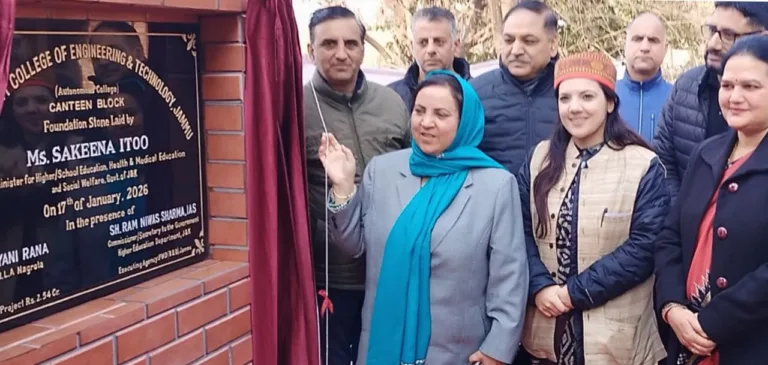
Minister for Education, Social Welfare, Health and Medical Education, Sakeena Itoo, on Friday said that education is a powerful weapon capable of transforming the world and asserted that semiconductor technology represents the future, playing a crucial role in shaping modern life and economies.

The Minister was addressing the National Technical Conclave on the India Semiconductor Mission (ISM) at the Government College of Engineering and Technology (GCET), Jammu. The conclave is being organised by GCET Jammu in technical collaboration with IIT Kharagpur and in close association with the Union Ministry of Electronics and Information Technology and the Department of Industries and Commerce, J&K Government.

Among those present on the occasion were MLA Nagrota Devyani Rana, Commissioner Secretary Higher Education Ram Niwas Sharma, Director School Education Jammu Naseem Javaid Choudhary, Director Technology at ISM Dr Manish Kumar Hooda, Director and Principal GCET Jammu Dr Sameeru Sharma, experts from IIT Jammu, Keynes Technologies, senior faculty members and a large number of students.

Addressing the gathering, Sakeena Itoo said that education has the power to change the course of the world and added that semiconductor technologies now surround every aspect of human life. She highlighted their importance in shaping Jammu and Kashmir’s economic growth, technological self-reliance and future-ready workforce.

The Minister emphasised that institutions of higher technical education have a pivotal role in nurturing skilled talent, promoting research and developing industry-aligned curricula to meet the evolving demands of the semiconductor ecosystem.

She called upon academia, industry and research institutions to work in close collaboration to create a strong pipeline of engineers and technologists equipped with cutting-edge skills, and stressed the need to encourage start-ups within engineering institutions to translate research into scalable solutions.

Commending GCET Jammu for hosting the conclave, the Minister said such platforms facilitate knowledge exchange, policy dialogue and exposure of students and faculty to advanced technologies and national priorities.

On the occasion, Sakeena Itoo also announced that the auditorium of GCET Jammu will be upgraded on modern lines, adding that the institute has a rich legacy in the education sector of Jammu and Kashmir.

Speaking at the event, MLA Nagrota Devyani Rana said that the youth of J&K are highly talented and have proved their capabilities in every field. She urged students to actively participate in the conclave, stating that chip design and semiconductor technologies will be key drivers of future employment and innovation. She also stressed the importance of internships in emerging technologies to remain competitive in today’s job market.

Commissioner Secretary Higher Education Ram Niwas Sharma highlighted the importance of GCET Jammu and called upon students to become job creators rather than job seekers in the coming years. He also underlined the need for capacity building of faculty in line with emerging technologies.

Director, India Semiconductor Mission, Dr Manish Kumar Hooda, spoke in detail about the objectives and vision of the ISM, while Dr Sameeru Sharma, Director and Principal, GCET Jammu, in her welcome address outlined the broad contours of the national conclave.

The conclave will feature technical sessions, expert talks and interactive discussions with academicians, industry experts and policymakers, focusing on opportunities and challenges under the India Semiconductor Mission.

On the occasion, the Minister also inaugurated the PRISM portal of GCET Jammu, an integrated academic and examination management system for students and faculty.

Earlier, Sakeena Itoo also laid the foundation stone of the college canteen block, to be constructed by the R&B Department at an estimated cost of Rs 2.54 crore.

Mata Vaishno Devi College

0

Ruling National Conference (NC) MLA Tanvir Sadiq has submitted a resolution in the Jammu and Kashmir Assembly urging the Centre to review the decision to revoke permission for the MBBS course at the Shri Mata Vaishno Devi Institute of Medical Excellence (SMVDIME).

The National Medical Commission (NMC) had withdrawn the Letter of Permission (LoP) to the medical college, citing non-compliance with minimum standards and serious deficiencies in faculty strength, clinical material and infrastructure.

According to sources, Sadiq’s Private Member’s resolution calls upon the Union government and the NMC to immediately review and reconsider the decision to withdraw the Letter of Permission.

The NMC’s move came amid protests by some right-wing outfits over a large number of non-Hindu candidates being admitted to the MBBS course. The issue is now expected to dominate the initial proceedings of the Budget session of the Jammu and Kashmir Assembly, which is scheduled to convene next month.

The resolution seeks a fair and transparent reassessment by the regulatory authorities and urges all necessary steps to restore the MBBS course at SMVDIME in the larger public interest.

It points out that the institute was established to cater to the healthcare and medical education needs of the people of Jammu and Kashmir and was developed with substantial public funding and infrastructure support.

The resolution further underlines that any regulatory shortcomings should have been addressed through corrective measures and by providing a reasonable opportunity for compliance, rather than resorting to the withdrawal of permission.

The development is likely to trigger a major political and policy debate in the upcoming Assembly session over medical education and healthcare infrastructure in the Union Territory.

Police Seize 4 Kg Charas, Three Drug Peddlers Arrested in Budgam

0

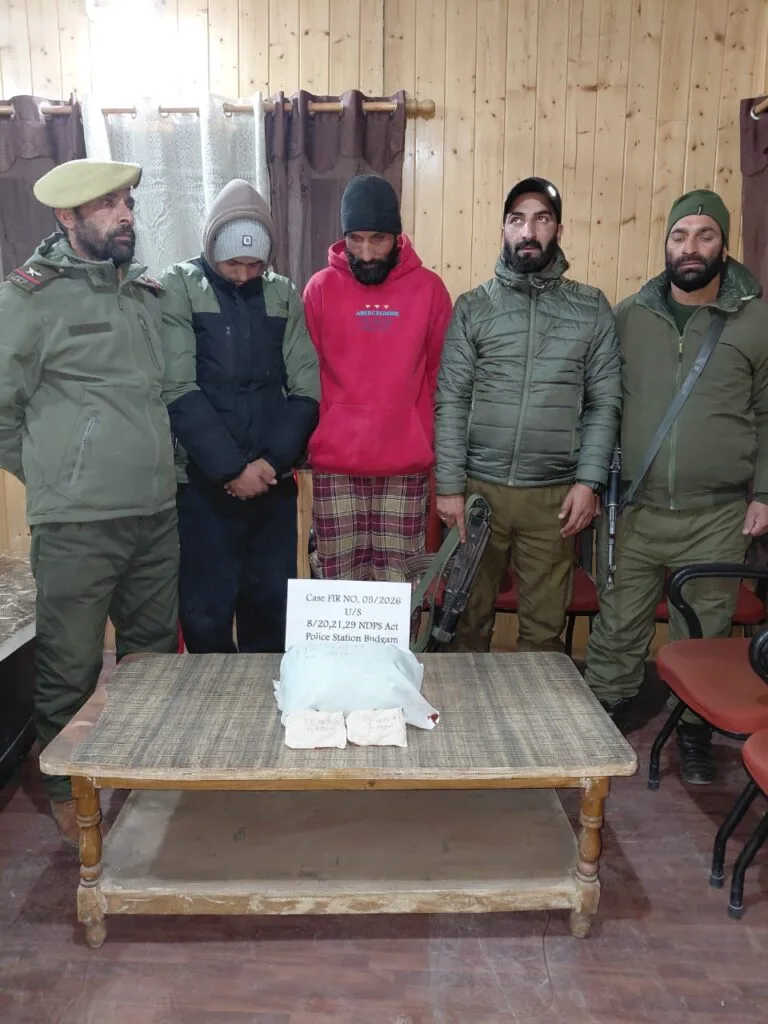
 Police in Jammu and Kashmir’s Budgam district on Saturday recovered around four kilograms of charas in two separate operations and arrested three drug peddlers, officials said.

In a statement, Budgam Police said the arrests were made during operations conducted in the Magam and Hardpanzoo areas of the district, leading to the recovery of a substantial quantity of contraband substances.

“In the first operation, a police team from Police Station Magam apprehended a suspect during routine patrolling at Batpora Crossing. The individual was moving under suspicious circumstances, carrying a nylon bag, and attempted to flee after noticing the police party. He was tactfully apprehended, and during the search, around 2 kg and 100 grams of charas-like substance were recovered from his possession,” the statement said.

The accused has been identified as Rouf Ahmed Hajam, son of Mohammad Ramzan Hajam, a resident of Batpora, Kanihama.

Accordingly, FIR No. 05 of 2026 under relevant sections of the NDPS Act has been registered at Police Station Magam, and further investigation is underway.

In a separate operation, a police team from Police Post Hardpanzoo established a checkpoint at Bonizanigam village. During checking, two individuals carrying a nylon bag were noticed behaving suspiciously and attempted to flee. Both were apprehended on the spot.

They were identified as Irfan Ahmad Mir, son of Mohammad Yousuf Mir, and Owais Ahmad Bhat, son of Ghulam Mohammad Bhat, both residents of Hardulatina village.

Upon searching them, police recovered around 2 kg and 185 grams of charas-like substance from their possession.

Consequently, a case under relevant sections of the NDPS Act has been registered at Police Station Beerwah, and further investigation has been initiated, the statement said.

Police said efforts are continuing to curb drug trafficking and dismantle the narcotics network in the district.

Technology Should Serve Society, Not Control It: RSS Chief Mohan Bhagwat

0

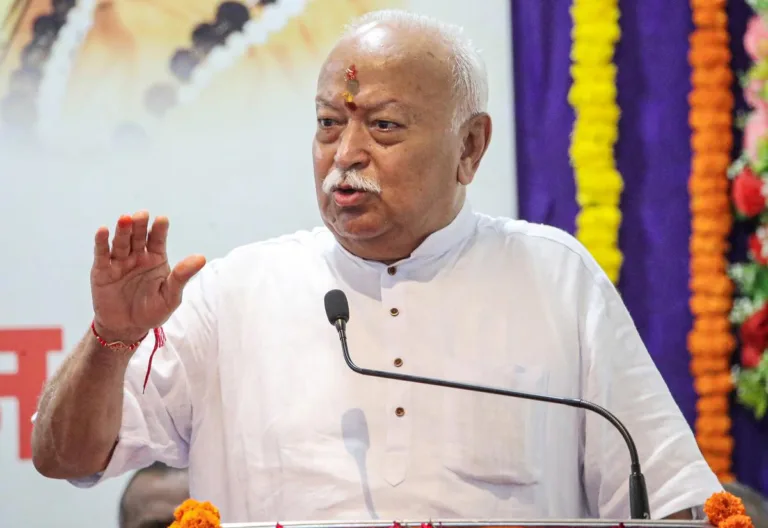
Rashtriya Swayamsevak Sangh (RSS) chief Mohan Bhagwat on Saturday said that while technology is unavoidable and essential in modern times, it must be used for the welfare of society and not in a manner that turns people into its slaves.

Interacting with young entrepreneurs at an event organised as part of the RSS centenary year celebrations, Bhagwat stressed that adopting swadeshi does not mean rejecting technology.

“Technology is unavoidable and it is not bad in itself, but we must ensure that we do not become so dependent on it that it starts controlling us,” he said.

The RSS chief also said that business and industry should not be driven solely by profit motives and must carry a strong sense of social responsibility.

“We work not just for our own benefit but for the good of society. Earning a livelihood should go hand in hand with social responsibility,” he said.

Citing the example of agriculture, Bhagwat said Indian farmers often view farming as a duty rather than merely an occupation.

“This noble thought is rarely seen elsewhere. It reminds us that our work should always be society-centric,” he said.

He further said that modern technology should be adapted to India’s social and economic conditions and there is a need to ensure that technological advancement does not harm society or reduce employment opportunities.

Bhagwat’s remarks come at a time when India is witnessing rapid technological transformation across sectors, highlighting the need to balance innovation with inclusive and ethical growth.

Tourism in J&K Showing Signs of Recovery After Pahalgam Attack, Says Chief Secretary Atal Dulloo

0

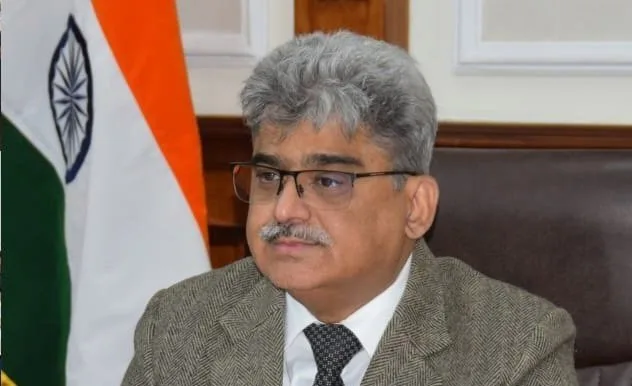
 Chief Secretary Atal Dulloo on Friday said that the tourism sector in Jammu and Kashmir, which suffered a major setback following the Pahalgam terror attack and subsequent adverse weather conditions, is gradually showing signs of recovery, with tourist arrivals beginning to pick up as conditions improve.

“In 2025, tourism suffered significant losses after the Pahalgam attack and the subsequent spell of heavy rains and floods. However, we are now seeing a gradual recovery. As the weather improves, tourist arrivals have started increasing again,” Dulloo said in a video interview here.

He said that while the revival process is underway, the government is reassessing its tourism strategy to prepare for rising visitor numbers and ensure sustainable growth.

“As tourism grows, we must also focus on how prepared we are to manage the increasing footfall. This calls for a reassessment of our tourism strategy and capacity,” he added.

The Chief Secretary stressed the need to develop new tourist destinations to reduce pressure on traditional hotspots, which often exceed their carrying capacity during peak seasons.

“By developing new destinations, tourist footfall will be distributed more evenly. This will generate employment for local communities, lead to infrastructure development, attract investment and help mitigate seasonal tourism peaks,” he said.

The tourism sector in Kashmir was severely hit after the April 22 Pahalgam terror attack last year, in which 26 civilians, including 25 tourists, were killed. Following the attack, around 50 tourist spots and resorts were closed for security reasons. Several destinations have since been reopened, while more will be thrown open to tourists after the completion of security audits.

Dulloo said a major project has been conceptualised to promote sustainable tourism in emerging destinations, and its implementation is being carefully planned, including transportation and other infrastructure arrangements.

“Our focus will remain on developing new tourist destinations to ensure sustainable growth of the tourism sector,” he said.

Referring to the SPREAD initiative, the Chief Secretary said it aims to decongest overburdened tourist spots by developing eco-sensitive, year-round alternatives while maintaining a balance between economy, ecology and equity.

He said that with support from the Department of Economic Affairs and implementation through the Economic Reconstruction Agency, the SPREAD project will focus on infrastructure development, waste management, ecological conservation and livelihood generation.

“Community engagement and private sector participation are central to this initiative, which envisions holistic development across both Jammu and Kashmir regions in line with global best practices,” he added.

Dulloo also underlined the need for a targeted strategy to convert the rising pilgrim footfall in Jammu into longer tourist stays.

“A focused approach is required to promote the region’s wider leisure, heritage, adventure and spiritual attractions beyond the main pilgrimage routes,” he said.

He stressed the proactive use of digital platforms and social media, including collaboration with influencers, to expand outreach and attract national and international tourists.

“We need a comprehensive strategy to convert the massive influx of pilgrims into multi-day tourists by encouraging them to explore experiences beyond traditional pilgrimage circuits,” he said.

Highlighting Jammu and Kashmir’s potential as a year-round tourism destination, Dulloo said the introduction of adventure activities such as rafting, paragliding, bungee jumping and water sports would transform the region into a major tourism hub while creating significant employment opportunities for local youth.

PM Modi Urges Startups to Lead in Manufacturing and Deep Tech as Startup India Marks 10 Years

0

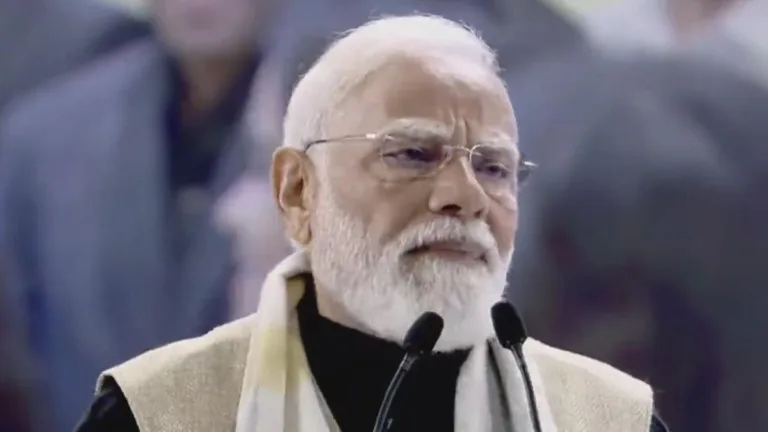
Prime Minister Narendra Modi on Friday called upon Indian startups to focus on manufacturing, deep technology and global leadership, asserting that the next decade of Startup India must place the country at the forefront of innovation and technological advancement.

Speaking at a programme at Bharat Mandapam to mark the 10th anniversary of Startup India, the Prime Minister said startups will play a decisive role in shaping India’s economic and technological future.

Hailing Startup India as a “revolution”, Modi said the initiative has transformed India into the world’s third-largest startup ecosystem, growing from fewer than 500 startups in 2014 to over 2 lakh today, including nearly 125 unicorns.

He said risk-taking has now become mainstream in India and that startups are increasingly driving employment, innovation and global competitiveness.

“The Government is with you in all your efforts. I have faith in your capabilities. Your courage, confidence and innovation are shaping India’s future,” the Prime Minister said.

Stating that the past decade has demonstrated India’s entrepreneurial strength, Modi added, “Our goal should be to lead the world in the next 10 years in India’s new startup trends and technologies.”

Launched on January 16, 2016, the Startup India initiative aims to nurture innovation, promote entrepreneurship and create a generation of job creators. Over the past decade, it has helped build a robust ecosystem of more than 2 lakh startups across sectors and regions.

PM Modi Flags Off India’s First Vande Bharat Sleeper Train Between Howrah and Guwahati

0

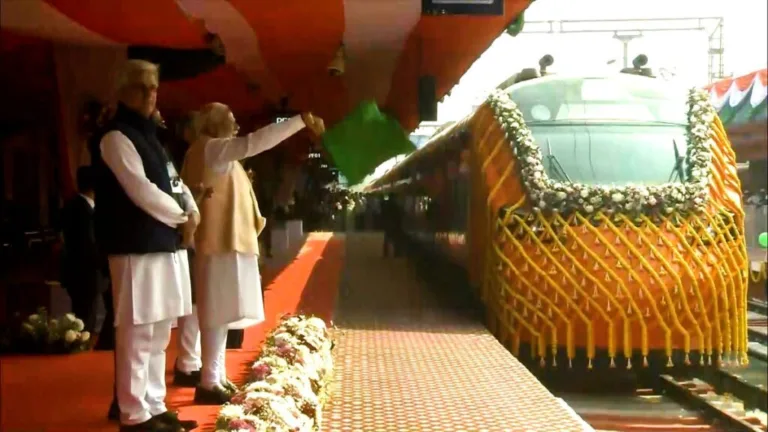
Prime Minister Narendra Modi on Saturday flagged off the country’s first Vande Bharat sleeper train connecting Howrah and Guwahati (Kamakhya) from Malda Town station in north Bengal. He also virtually flagged off the return Guwahati–Howrah Vande Bharat sleeper service.

During the event, the Prime Minister interacted with children and school students inside the train, exchanging greetings and discussing their travel experience.

According to an official statement issued by the Prime Minister’s Office (PMO), the fully air-conditioned Vande Bharat sleeper train has been developed to meet the growing transportation needs of modern India and will offer passengers an “airline-like travel experience at economical fares.”

The statement said the new service will make long-distance journeys faster, safer and more convenient. By reducing travel time on the Howrah–Guwahati route by around 2.5 hours, the train is expected to significantly boost religious tourism and general travel between eastern and northeastern India.

Later in the day, at a public programme in Malda, the Prime Minister is scheduled to dedicate to the nation and lay the foundation stone of multiple rail and road infrastructure projects worth about Rs 3,250 crore, aimed at strengthening connectivity and accelerating development in West Bengal and the North East.

Modi is on a two-day visit to eastern India, during which he will criss-cross poll-bound West Bengal and Assam. The visit combines major infrastructure launches with strong political messaging as preparations intensify for the 2026 Assembly elections.

Air Pollution Emerging as Major Threat to Eye Health, Doctors Warn

0

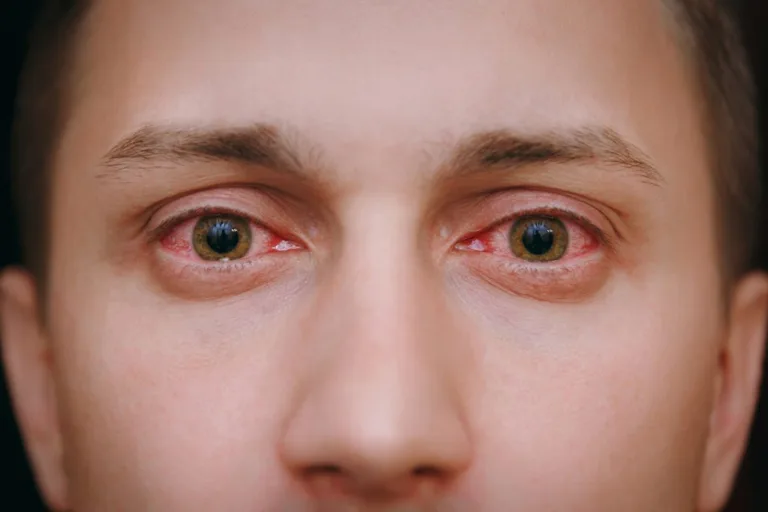
Air pollution, long known for causing respiratory and cardiac diseases, is now being flagged by medical experts as a serious risk to eye health, with hospitals reporting a sharp rise in cases of eye infections, allergies, dryness and vision-related problems, particularly during winter months.

Doctors say fine particulate matter, especially PM2.5, is the main cause behind problems such as allergic conjunctivitis, scratches on the eye surface, irritation, blurred vision and increased sensitivity to light.

“Every winter, we see a significant rise in patients complaining of red, itchy, watery and burning eyes. The main reason is high air pollution, especially fine particles known as PM2.5,” said Dr Ajay Sharma, Co-founder of Eye Q Eye Hospital.

He explained that PM2.5 consists of tiny particles released from vehicle emissions, dust, burning waste and firecrackers. Due to their extremely small size, these particles easily enter the eyes and settle on the cornea — the transparent front layer of the eye.

“Solid particles irritate and scratch the surface of the eye, while liquid pollutants carry chemicals that mix with tears and weaken the eye’s natural protective layer. This leads to dryness, irritation, blurred vision and increased sensitivity to light,” Dr Sharma said.

He added that children, elderly people, office-goers and patients who have recently undergone eye surgery are particularly vulnerable during the winter smog season.

Dr Taru Dewan, Head of the Department of Ophthalmology at RML Hospital, said winter pollution is especially harmful because smog lingers in the atmosphere for long periods.

“As smog engulfs the city, the eyes bear the brunt along with respiratory illnesses. We are seeing many patients with allergic conjunctivitis of varying severity. Cases of eye dryness also worsen due to constant exposure to smoke,” she said.

She also warned that the risk of eye infection increases when people rub their eyes with unclean hands. “I advise my patients to avoid polluted environments as far as possible and maintain proper hygiene. While individuals cannot control pollution alone, reducing pollution at one’s own level can collectively make a difference,” she added.

Dr Umesh Bareja, Senior Consultant (Ophthalmology) at Sitaram Bhartia Hospital, said eyes, being constantly exposed organs, are directly affected by pollution.

“The most common condition is allergic conjunctivitis, which causes redness, irritation and watering. Pollution also aggravates dry eye disease, especially in people who stare at screens for long hours or use contact lenses,” he said.

Dr Bareja also flagged smoking as a major risk factor. “Even passive smoking damages eye health. Smoking increases the risk of cataract, glaucoma, uveitis and macular degeneration,” he warned.

He stressed that public awareness and strong policy measures are needed to curb vehicular and industrial pollution, burning of waste and coal, deforestation and unregulated construction activity, adding that tobacco consumption should be avoided at all costs.

Dr JS Bhalla, North India Representative in the Scientific Committee of the All India Ophthalmological Society (AIOS), said both indoor and outdoor air pollution contribute to serious eye diseases.

“High levels of PM2.5, while linked to neurological and heart diseases, can also contribute to adult and childhood glaucoma. We are witnessing nearly a 30 per cent increase in dry eye patients in outpatient departments,” said Dr Bhalla, who is also a senior consultant at Perfect Eye Centre, Delhi.

Offering practical advice, Dr Anshika Luthra Sharma, Ophthalmologist and Cornea, Cataract and Refractive Surgeon at Eye Q Eye Hospital, said simple precautions can significantly reduce the impact.

“People should wear wrap-around glasses when stepping outdoors, wash their face and eyes with clean water after returning home, avoid rubbing their eyes, stay well-hydrated and limit outdoor exposure on high-pollution days. If symptoms persist, they should consult an eye specialist instead of self-medicating,” she said.

30 Tableaux to Highlight India’s Heritage, Progress at Republic Day Parade

0

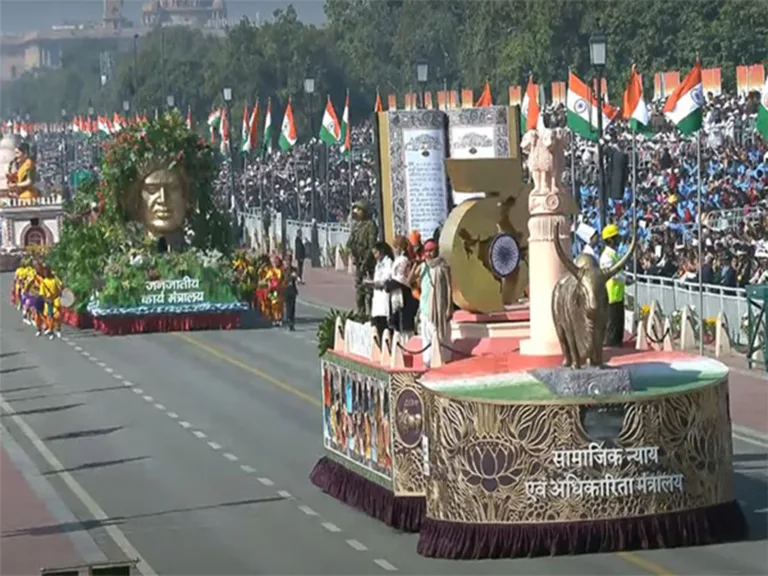
As many as 30 tableaux will roll down Kartavya Path during the Republic Day Parade on January 26, presenting a grand visual spectacle of India’s cultural richness and developmental achievements.

The tableaux will be showcased under the themes ‘Svatantrata Ka Mantr – Vande Mataram’ and ‘Samrddhi Ka Mantr – Aatmanirbhar Bharat’, coinciding with the 150th anniversary of the national song Vande Mataram.

Of the total, 17 tableaux will be presented by States and Union Territories, while 13 will be from various Ministries, Departments and Services. Several states will project their cultural identity and development journey. Assam will highlight the Ashirakandi craft village, Gujarat and Chhattisgarh will interpret the Vande Mataram theme, Maharashtra will showcase Ganeshotsav as a symbol of self-reliance, while West Bengal will depict its role in India’s freedom movement.

A strong blend of tradition and innovation will mark many displays. Odisha’s “Soil to Silicon” tableau will reflect growth rooted in heritage, Tamil Nadu will showcase India’s emergence as an electric vehicle manufacturing hub, and Kerala will highlight its Water Metro project and 100 per cent digital governance initiative. Nagaland will present the Hornbill Festival as a symbol of culture, tourism and self-reliance.

Among the central ministries, the Ministry of Culture’s tableau titled “Vande Mataram: The Soul-Cry of a Nation” will anchor the central theme. The Department of Military Affairs will present a Tri-Services tableau on Operation Sindoor, symbolising jointness, while the Ministry of Housing and Urban Affairs will roll out a floral tableau to mark 150 years of Vande Mataram.

The parade will also feature cultural performances by around 2,500 artists, making the Republic Day celebrations a vibrant showcase of India’s unity, heritage and progress.

This year, the President of the European Council, Antonio Costa, and the President of the European Commission, Ursula von der Leyen, will be the Chief Guests at the Republic Day Parade.