Saturday, July 11, 2026
Home Blog Page 71

Tourism in J&K Showing Signs of Recovery After Pahalgam Attack, Says Chief Secretary Atal Dulloo

0

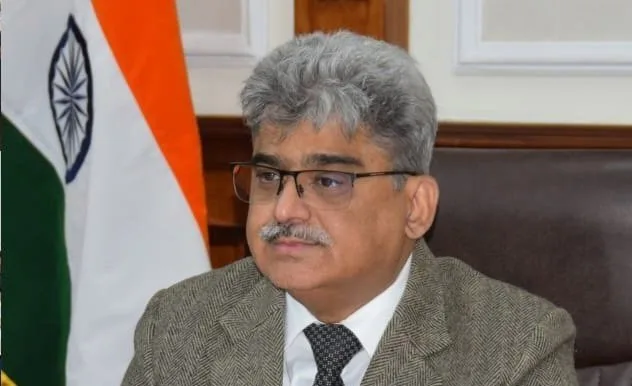
 Chief Secretary Atal Dulloo on Friday said that the tourism sector in Jammu and Kashmir, which suffered a major setback following the Pahalgam terror attack and subsequent adverse weather conditions, is gradually showing signs of recovery, with tourist arrivals beginning to pick up as conditions improve.

“In 2025, tourism suffered significant losses after the Pahalgam attack and the subsequent spell of heavy rains and floods. However, we are now seeing a gradual recovery. As the weather improves, tourist arrivals have started increasing again,” Dulloo said in a video interview here.

He said that while the revival process is underway, the government is reassessing its tourism strategy to prepare for rising visitor numbers and ensure sustainable growth.

“As tourism grows, we must also focus on how prepared we are to manage the increasing footfall. This calls for a reassessment of our tourism strategy and capacity,” he added.

The Chief Secretary stressed the need to develop new tourist destinations to reduce pressure on traditional hotspots, which often exceed their carrying capacity during peak seasons.

“By developing new destinations, tourist footfall will be distributed more evenly. This will generate employment for local communities, lead to infrastructure development, attract investment and help mitigate seasonal tourism peaks,” he said.

The tourism sector in Kashmir was severely hit after the April 22 Pahalgam terror attack last year, in which 26 civilians, including 25 tourists, were killed. Following the attack, around 50 tourist spots and resorts were closed for security reasons. Several destinations have since been reopened, while more will be thrown open to tourists after the completion of security audits.

Dulloo said a major project has been conceptualised to promote sustainable tourism in emerging destinations, and its implementation is being carefully planned, including transportation and other infrastructure arrangements.

“Our focus will remain on developing new tourist destinations to ensure sustainable growth of the tourism sector,” he said.

Referring to the SPREAD initiative, the Chief Secretary said it aims to decongest overburdened tourist spots by developing eco-sensitive, year-round alternatives while maintaining a balance between economy, ecology and equity.

He said that with support from the Department of Economic Affairs and implementation through the Economic Reconstruction Agency, the SPREAD project will focus on infrastructure development, waste management, ecological conservation and livelihood generation.

“Community engagement and private sector participation are central to this initiative, which envisions holistic development across both Jammu and Kashmir regions in line with global best practices,” he added.

Dulloo also underlined the need for a targeted strategy to convert the rising pilgrim footfall in Jammu into longer tourist stays.

“A focused approach is required to promote the region’s wider leisure, heritage, adventure and spiritual attractions beyond the main pilgrimage routes,” he said.

He stressed the proactive use of digital platforms and social media, including collaboration with influencers, to expand outreach and attract national and international tourists.

“We need a comprehensive strategy to convert the massive influx of pilgrims into multi-day tourists by encouraging them to explore experiences beyond traditional pilgrimage circuits,” he said.

Highlighting Jammu and Kashmir’s potential as a year-round tourism destination, Dulloo said the introduction of adventure activities such as rafting, paragliding, bungee jumping and water sports would transform the region into a major tourism hub while creating significant employment opportunities for local youth.
PM Modi Urges Startups to Lead in Manufacturing and Deep Tech as Startup India Marks 10 Years

0

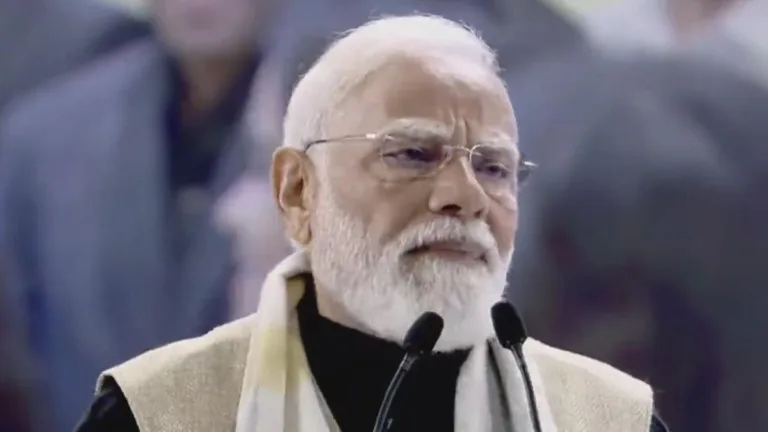
Prime Minister Narendra Modi on Friday called upon Indian startups to focus on manufacturing, deep technology and global leadership, asserting that the next decade of Startup India must place the country at the forefront of innovation and technological advancement.

Speaking at a programme at Bharat Mandapam to mark the 10th anniversary of Startup India, the Prime Minister said startups will play a decisive role in shaping India’s economic and technological future.

Hailing Startup India as a “revolution”, Modi said the initiative has transformed India into the world’s third-largest startup ecosystem, growing from fewer than 500 startups in 2014 to over 2 lakh today, including nearly 125 unicorns.

He said risk-taking has now become mainstream in India and that startups are increasingly driving employment, innovation and global competitiveness.

“The Government is with you in all your efforts. I have faith in your capabilities. Your courage, confidence and innovation are shaping India’s future,” the Prime Minister said.

Stating that the past decade has demonstrated India’s entrepreneurial strength, Modi added, “Our goal should be to lead the world in the next 10 years in India’s new startup trends and technologies.”

Launched on January 16, 2016, the Startup India initiative aims to nurture innovation, promote entrepreneurship and create a generation of job creators. Over the past decade, it has helped build a robust ecosystem of more than 2 lakh startups across sectors and regions.

PM Modi Flags Off India’s First Vande Bharat Sleeper Train Between Howrah and Guwahati

0

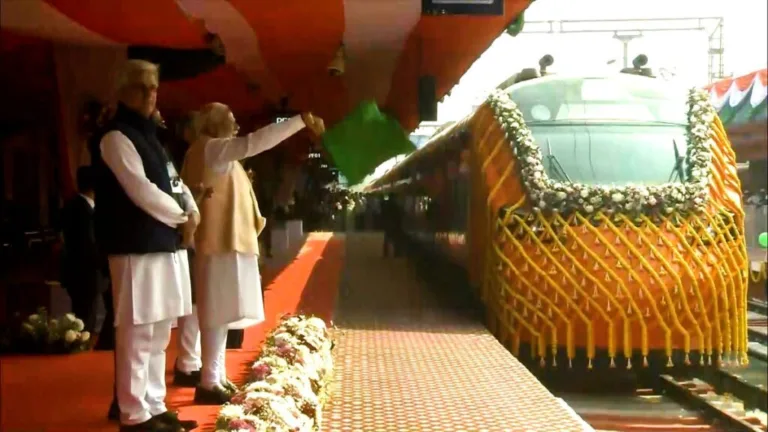
Prime Minister Narendra Modi on Saturday flagged off the country’s first Vande Bharat sleeper train connecting Howrah and Guwahati (Kamakhya) from Malda Town station in north Bengal. He also virtually flagged off the return Guwahati–Howrah Vande Bharat sleeper service.

During the event, the Prime Minister interacted with children and school students inside the train, exchanging greetings and discussing their travel experience.

According to an official statement issued by the Prime Minister’s Office (PMO), the fully air-conditioned Vande Bharat sleeper train has been developed to meet the growing transportation needs of modern India and will offer passengers an “airline-like travel experience at economical fares.”

The statement said the new service will make long-distance journeys faster, safer and more convenient. By reducing travel time on the Howrah–Guwahati route by around 2.5 hours, the train is expected to significantly boost religious tourism and general travel between eastern and northeastern India.

Later in the day, at a public programme in Malda, the Prime Minister is scheduled to dedicate to the nation and lay the foundation stone of multiple rail and road infrastructure projects worth about Rs 3,250 crore, aimed at strengthening connectivity and accelerating development in West Bengal and the North East.

Modi is on a two-day visit to eastern India, during which he will criss-cross poll-bound West Bengal and Assam. The visit combines major infrastructure launches with strong political messaging as preparations intensify for the 2026 Assembly elections.

Air Pollution Emerging as Major Threat to Eye Health, Doctors Warn

0

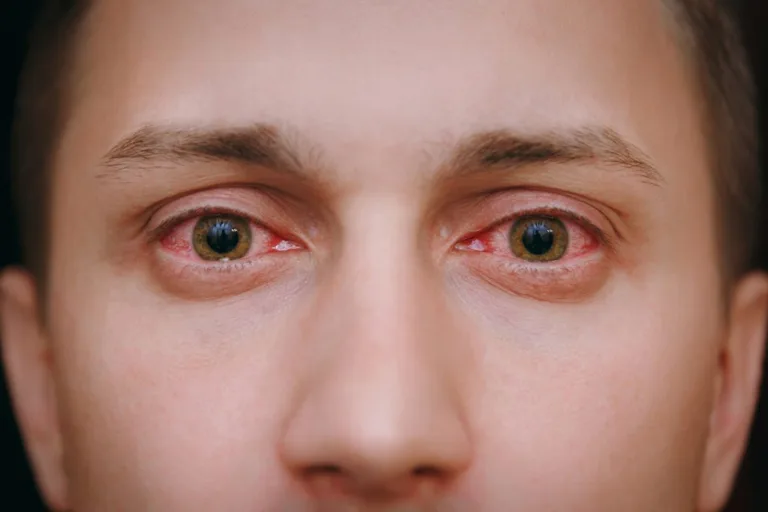
Air pollution, long known for causing respiratory and cardiac diseases, is now being flagged by medical experts as a serious risk to eye health, with hospitals reporting a sharp rise in cases of eye infections, allergies, dryness and vision-related problems, particularly during winter months.

Doctors say fine particulate matter, especially PM2.5, is the main cause behind problems such as allergic conjunctivitis, scratches on the eye surface, irritation, blurred vision and increased sensitivity to light.

“Every winter, we see a significant rise in patients complaining of red, itchy, watery and burning eyes. The main reason is high air pollution, especially fine particles known as PM2.5,” said Dr Ajay Sharma, Co-founder of Eye Q Eye Hospital.

He explained that PM2.5 consists of tiny particles released from vehicle emissions, dust, burning waste and firecrackers. Due to their extremely small size, these particles easily enter the eyes and settle on the cornea — the transparent front layer of the eye.

“Solid particles irritate and scratch the surface of the eye, while liquid pollutants carry chemicals that mix with tears and weaken the eye’s natural protective layer. This leads to dryness, irritation, blurred vision and increased sensitivity to light,” Dr Sharma said.

He added that children, elderly people, office-goers and patients who have recently undergone eye surgery are particularly vulnerable during the winter smog season.

Dr Taru Dewan, Head of the Department of Ophthalmology at RML Hospital, said winter pollution is especially harmful because smog lingers in the atmosphere for long periods.

“As smog engulfs the city, the eyes bear the brunt along with respiratory illnesses. We are seeing many patients with allergic conjunctivitis of varying severity. Cases of eye dryness also worsen due to constant exposure to smoke,” she said.

She also warned that the risk of eye infection increases when people rub their eyes with unclean hands. “I advise my patients to avoid polluted environments as far as possible and maintain proper hygiene. While individuals cannot control pollution alone, reducing pollution at one’s own level can collectively make a difference,” she added.

Dr Umesh Bareja, Senior Consultant (Ophthalmology) at Sitaram Bhartia Hospital, said eyes, being constantly exposed organs, are directly affected by pollution.

“The most common condition is allergic conjunctivitis, which causes redness, irritation and watering. Pollution also aggravates dry eye disease, especially in people who stare at screens for long hours or use contact lenses,” he said.

Dr Bareja also flagged smoking as a major risk factor. “Even passive smoking damages eye health. Smoking increases the risk of cataract, glaucoma, uveitis and macular degeneration,” he warned.

He stressed that public awareness and strong policy measures are needed to curb vehicular and industrial pollution, burning of waste and coal, deforestation and unregulated construction activity, adding that tobacco consumption should be avoided at all costs.

Dr JS Bhalla, North India Representative in the Scientific Committee of the All India Ophthalmological Society (AIOS), said both indoor and outdoor air pollution contribute to serious eye diseases.

“High levels of PM2.5, while linked to neurological and heart diseases, can also contribute to adult and childhood glaucoma. We are witnessing nearly a 30 per cent increase in dry eye patients in outpatient departments,” said Dr Bhalla, who is also a senior consultant at Perfect Eye Centre, Delhi.

Offering practical advice, Dr Anshika Luthra Sharma, Ophthalmologist and Cornea, Cataract and Refractive Surgeon at Eye Q Eye Hospital, said simple precautions can significantly reduce the impact.

“People should wear wrap-around glasses when stepping outdoors, wash their face and eyes with clean water after returning home, avoid rubbing their eyes, stay well-hydrated and limit outdoor exposure on high-pollution days. If symptoms persist, they should consult an eye specialist instead of self-medicating,” she said.

30 Tableaux to Highlight India’s Heritage, Progress at Republic Day Parade

0

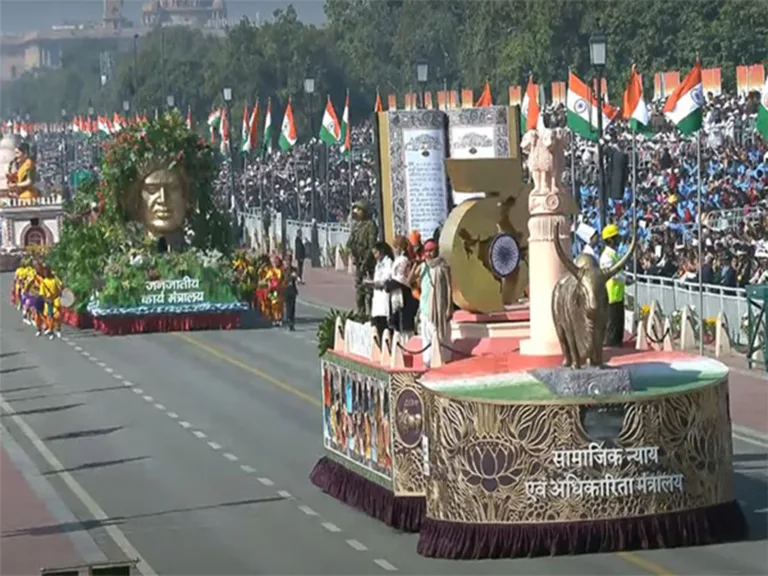
As many as 30 tableaux will roll down Kartavya Path during the Republic Day Parade on January 26, presenting a grand visual spectacle of India’s cultural richness and developmental achievements.

The tableaux will be showcased under the themes ‘Svatantrata Ka Mantr – Vande Mataram’ and ‘Samrddhi Ka Mantr – Aatmanirbhar Bharat’, coinciding with the 150th anniversary of the national song Vande Mataram.

Of the total, 17 tableaux will be presented by States and Union Territories, while 13 will be from various Ministries, Departments and Services. Several states will project their cultural identity and development journey. Assam will highlight the Ashirakandi craft village, Gujarat and Chhattisgarh will interpret the Vande Mataram theme, Maharashtra will showcase Ganeshotsav as a symbol of self-reliance, while West Bengal will depict its role in India’s freedom movement.

A strong blend of tradition and innovation will mark many displays. Odisha’s “Soil to Silicon” tableau will reflect growth rooted in heritage, Tamil Nadu will showcase India’s emergence as an electric vehicle manufacturing hub, and Kerala will highlight its Water Metro project and 100 per cent digital governance initiative. Nagaland will present the Hornbill Festival as a symbol of culture, tourism and self-reliance.

Among the central ministries, the Ministry of Culture’s tableau titled “Vande Mataram: The Soul-Cry of a Nation” will anchor the central theme. The Department of Military Affairs will present a Tri-Services tableau on Operation Sindoor, symbolising jointness, while the Ministry of Housing and Urban Affairs will roll out a floral tableau to mark 150 years of Vande Mataram.

The parade will also feature cultural performances by around 2,500 artists, making the Republic Day celebrations a vibrant showcase of India’s unity, heritage and progress.

This year, the President of the European Council, Antonio Costa, and the President of the European Commission, Ursula von der Leyen, will be the Chief Guests at the Republic Day Parade.

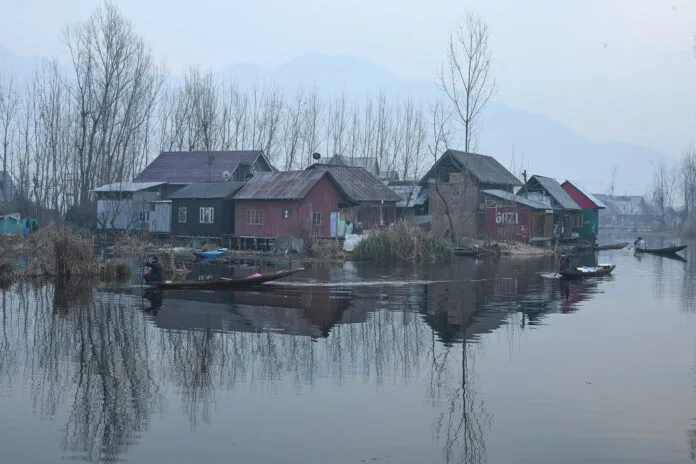
Cold Tightens Grip on Kashmir, Wet Spell Ahead

Cold conditions intensified across Kashmir with a further drop in night temperatures, while the Meteorological Department forecast a series of wet spells over the next few days, especially in the higher reaches.

Srinagar recorded a minimum of minus 3.2°C, while Shopian was the coldest at minus 5.6°C. Gulmarg and Sonamarg also saw sub-zero temperatures at minus 4.2°C and minus 2.9°C respectively.

The Valley is currently under ‘Chilla-i-Kalan’, the harshest winter period. The MeT department said back-to-back western disturbances will bring light snow to higher reaches over the weekend, followed by light to moderate rain or snow from January 19 to 25, with the possibility of heavier snowfall in parts of the Chenab Valley, Pir Panjal range and south Kashmir around January 23–24.

J&K PG Ayurvedic Doctors Seek Fair Recruitment, Demand Withdrawal of ‘Illegal’ HoD/Professor Designations Unemployed PG Ayurvedic Doctors Submit Appeal to Govt Over Faculty Posts in GAMC Jammu

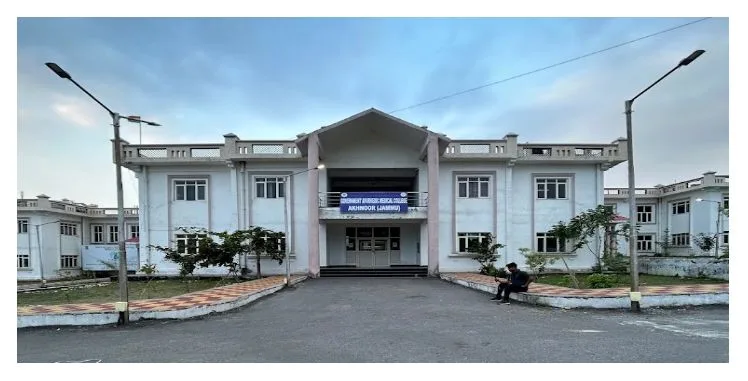
Jammu, January 14: Qualified postgraduate (PG) Ayurvedic doctors of Jammu & Kashmir have submitted a formal appeal to the Administrative Secretary, Health & Medical Education Department, seeking fair recruitment in government Ayurvedic medical colleges, creation of sanctioned faculty posts, and immediate withdrawal of what they termed as “illegal orders” designating medical officers as Professors and Heads of Departments (HoDs) in Government Ayurvedic Medical College (GAMC), Jammu.

In the representation, the doctors claimed that there are presently over 200–250 postgraduate Ayurvedic doctors in the Union Territory, many trained from reputed institutions including BHU, ITRA Jamnagar, NIA Jaipur, Patanjali Ayurvedic College Haridwar, AIIA New Delhi, and others. They stated that several among them possess PhD degrees and have teaching experience recognized by the National Commission for Indian System of Medicine (NCISM).

However, the doctors alleged that despite their qualifications, they remain excluded from contributing to Ayurvedic education in J&K due to non-creation of faculty posts and issuance of deputation/designation orders that allow medical officers posted in dispensaries to occupy higher teaching positions.

Highlighting the case, the doctors referred to orders passed in GAMC Jammu whereby medical officers, allegedly without mandated teaching qualifications, were designated as Professors and HoDs in six departments, and later one more department, through deputation-based arrangements. They alleged this was done without following due process and in violation of NCISM PG regulations which define eligibility and teaching experience requirements for such posts.

The doctors further expressed concern that despite the fact that PG courses have already started in the institution, the administration has failed to create even basic sanctioned faculty posts required as per the regulatory norms. They termed it contradictory and against merit-based opportunities.

The appeal lists key demands including:

• Immediate withdrawal of deputation/designation orders assigning medical officers as Professors/HoDs.

• Urgent creation of sanctioned faculty posts as per NCISM regulations and start of a transparent merit-based recruitment process for PG teaching.

• Strict action against those responsible for alleged irregular designations and bypassing established recruitment norms.

The doctors stated that denying qualified postgraduates the opportunity to teach in their home institutions defeats the purpose of higher education and adds to unemployment burden among youth. They expressed hope that the government would take appropriate steps to ensure justice, fairness and academic integrity in Ayurvedic education in Jammu & Kashmir.

Three Terrorist Hideouts Busted in Kathua’s Billawar, Search Operation Continues

 Security forces on Friday busted three terrorist hideouts in the Billawar area of Kathua district during a joint operation, police said.

A senior police officer said the operation was launched following specific intelligence inputs about the movement of terrorists in the forest area of Kamaad Nallah in Billawar. Joint teams of Kathua Police and other security forces cordoned off the area and began a search operation.

During the operation, terrorists opened fire on the security forces, triggering an exchange of fire that continued through the night. However, the terrorists managed to escape under the cover of darkness, the officer said.

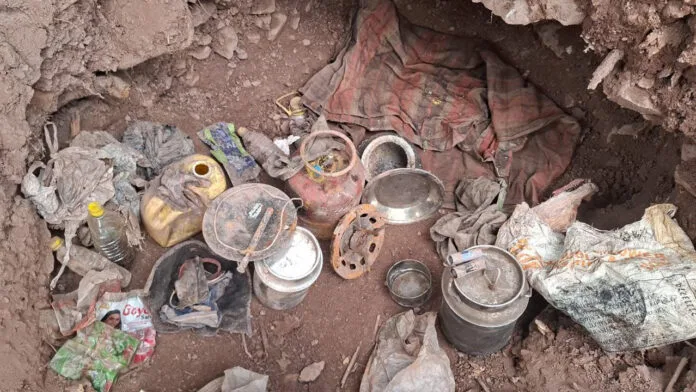
During the search, one terrorist hideout was detected, from where the security forces recovered two empty M4 cartridges, a plastic box containing desi ghee, a polythene packet of almonds, hand gloves, a cap, a blanket, a tarpaulin sheet, a small pouch and a polythene bag.

The officer said that in continuation of the operation, two more terrorist hideouts were busted on January 16, 2026, in the Kalikhad and Kalaban areas of Billawar. Items recovered from these hideouts included a cooking gas cylinder, cooking oil, charger wire, hand gloves, cooking and eating utensils, an empty oil gallon, large plastic bags, a torch, blankets, containers and wrappers of eatables, along with other miscellaneous items.

Senior Superintendent of Police, Kathua, Mohita Sharma said the search operation is still underway and security forces remain on high alert in the area.

“The police and other security forces are committed to maintaining peace and security in the district. The operation will continue until the area is fully sanitised,” she said.

BJP Breaks Shiv Sena’s Three-Decade Hold on BMC, Emerges Largest Party in Mumbai; Sweeps Pune, Leads in Key Civic Bodies

0

Breaking the nearly three-decade-old dominance of the undivided Shiv Sena, the Bharatiya Janata Party (BJP) on Friday emerged as the single largest party in the Brihanmumbai Municipal Corporation (BMC) elections and also registered a sweeping victory in Pune, dealing a severe blow to the alliance of rival Nationalist Congress Party (NCP) factions.

According to trends and early results, the BJP-led alliance is set to bag around 125 of the 227 seats in the BMC, India’s richest civic body, which has a massive budget of Rs 74,427 crore for 2025–26. The counting of votes for elections to Mumbai and 28 other municipal corporations was held on Friday, a day after polling recorded a turnout of 54.77 per cent.

With a strong performance by Deputy Chief Minister Eknath Shinde’s Shiv Sena as well, the BJP is now firmly in the driver’s seat to form the next dispensation in the cash-rich Mumbai civic body.

The high-stakes BMC battle saw Uddhav Thackeray and Raj Thackeray reunite after nearly two decades in a bid to reclaim Mumbai’s civic fortress, but the results so far have dashed their hopes.

In Pune and neighbouring Pimpri-Chinchwad municipal corporation elections, the BJP is heading towards a massive victory, far ahead of the NCP and NCP (SP) alliance.

Chief Minister Devendra Fadnavis has emerged as the central figure of the BJP’s sweeping success, with the party under his leadership surpassing its previous best performance of 82 seats in the 2017 BMC elections. The success of the BJP’s ‘Mission Mumbai’ has now firmly established the party as the dominant political force in the country’s financial capital.

The results mark a major shift in Mumbai’s political landscape. For decades, the BMC was considered the invincible stronghold of the Thackeray-led Shiv Sena. With the BJP’s breakthrough, the political narrative in Mumbai appears to have moved from identity-based ‘Marathi asmita’ to a mandate centred on ‘vikas’ (development) and urban infrastructure.

Maharashtra minister and BJP leader Nitesh Rane said the BJP-Shiv Sena alliance’s performance reflected a clear endorsement of its campaign plank. “Jo Hindu ki baat karega, woh Maharashtra pe raj karega (Those who speak for Hindu interests will rule Maharashtra),” Rane posted on X.

In Nagpur, the home turf of Chief Minister Fadnavis and Union Minister Nitin Gadkari, trends indicated a near-repeat of the 2017 results, with the BJP on course to surpass its earlier tally of 108 seats in the 151-member Nagpur Municipal Corporation, while the Congress struggled to make major inroads despite an aggressive campaign.

However, the Congress scored a notable victory in Latur, winning a clear majority with over 40 seats in the 70-member municipal corporation and pushing the BJP to a distant second place.

In Jalna, Shrikant Pangarkar, an accused in the 2017 murder of journalist Gauri Lankesh, was elected as a corporator after winning as an independent candidate.

The civic elections were held on January 15 after a gap of several years, as the terms of most municipal corporations had ended between 2020 and 2023. Of the 29 municipal corporations that went to polls, nine are in the Mumbai Metropolitan Region (MMR), India’s most urbanised belt.

Voting took place in Mumbai, Chhatrapati Sambhajinagar, Navi Mumbai, Vasai-Virar, Kalyan-Dombivli, Kolhapur, Nagpur, Solapur, Amravati, Akola, Nashik, Pimpri-Chinchwad, Pune, Ulhasnagar, Thane, Chandrapur, Parbhani, Mira-Bhayandar, Nanded-Waghala, Panvel, Bhiwandi-Nizampur, Latur, Malegaon, Sangli-Miraj-Kupwad, Jalgaon, Ahilyanagar, Dhule, Jalna and Ichalkaranji.

Mehbooba Mufti Urges Iranians to Stay United, Warns Against US, Israel ‘Ploys’

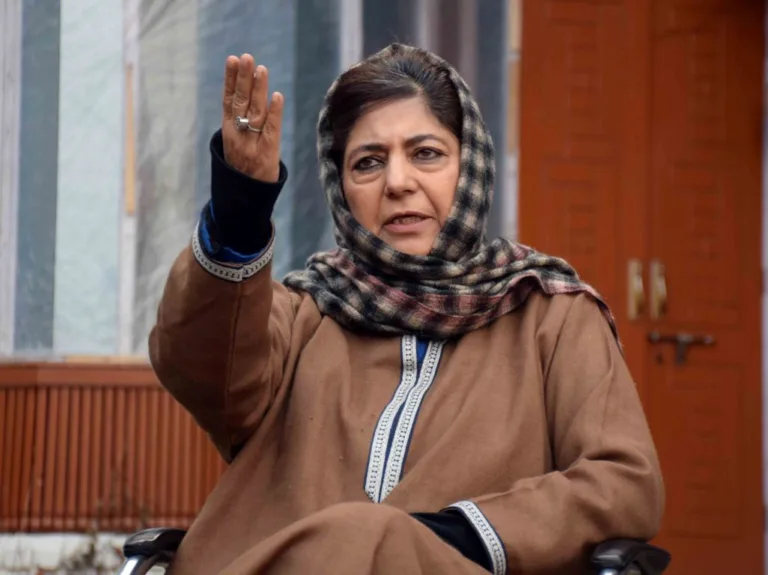
Peoples Democratic Party (PDP) chief Mehbooba Mufti on Friday called upon the people of Iran to remain united to defeat what she described as the “ploys” of the United States and Israel, while also appealing to the leadership of the Islamic Republic to address the grievances of protesters in the country.

Speaking to reporters, the former chief minister of the erstwhile state of Jammu and Kashmir said the US has a history of intervening in other countries with an eye on their natural resources.

“The US has a habit of saying that it wants to establish democracy in other countries by removing their leadership, which is totally wrong. Basically, the US always wants to intervene because it eyes their resources like fuel,” Mufti said.

She alleged that several Muslim countries have been “destroyed” in a similar manner under the pretext of human rights violations. “The biggest atrocities are being committed against the people in Gaza, but the US does not intervene there,” she said, adding that she was glad people in Jammu and Kashmir, especially in Kashmir, came out on the roads in support of Iran after Friday prayers.

Mufti urged the people of Iran to understand what she called the designs of the US and Israel. “The US and Israel are friends of no one. They are the biggest enemies of Muslims and only eye petrol and other resources in these countries,” she said, warning that if Iran falls into their “ploys”, its condition could become worse than that of Syria.

She said while people everywhere have grievances against their governments and those grievances should be addressed, the people of Iran must remain united. “They should stand together to defeat the US and Israel’s designs,” she added.

Referring to Iran’s relations with India, the PDP chief said demonstrations in support of the Islamic Republic should have taken place across the country as in earlier times. “Kashmir also has close relations with Iran, but since the BJP government came to power, the whole system in the country has changed and people are now afraid to protest,” she claimed.

On the plight of students from Jammu and Kashmir studying in Iran amid the prevailing situation, Mufti said she has requested External Affairs Minister S. Jaishankar to arrange special flights to bring them back.