Saturday, July 11, 2026
Home Blog Page 69

Army protecting borders from terrorism, internal threats need collective response: Chairman NATPF Sanjay Manhas

Sanjay Manhas, Chairman of the National Anti Terrorism and Peace Front, on Monday said that while the Indian Army is playing a vital role in protecting the country from terrorist activities along the borders, safeguarding the nation from internal threats requires collective responsibility and strong institutions.

In a press statement, Manhas said the armed forces have made immense sacrifices to ensure national security and have successfully countered cross-border terrorism, allowing citizens to live in peace.

However, he expressed concern over challenges emerging from within the country and questioned how the nation could protect itself from individuals and forces operating internally to weaken national unity and social harmony.

“External threats are being effectively handled by our army, but internal dangers such as extremism, divisive forces and anti-national activities cannot be addressed by the armed forces alone,” Manhas said.

He stressed that combating internal threats requires active participation from citizens, civil society, law enforcement agencies and democratic institutions. He added that unity, vigilance and adherence to constitutional values are essential to maintaining peace and stability within the country.

Manhas said national security is a shared responsibility and called upon citizens to support efforts aimed at strengthening harmony, peace and the rule of law.

RDI funding for industry-backed projects to begin by end of January: Govt

0

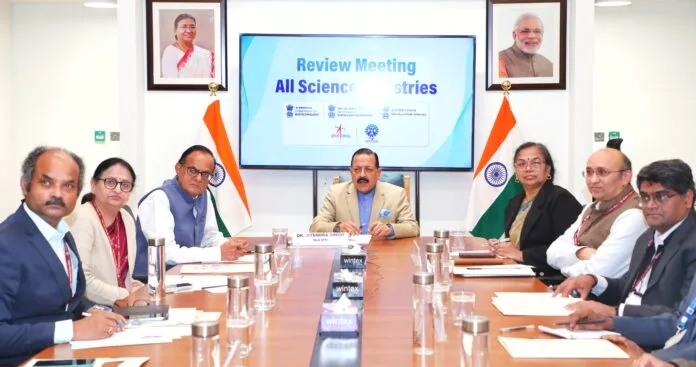
The government will begin disbursing Research, Development and Innovation (RDI) funding for industry-backed projects by the end of this month, with the scheme having entered the execution phase, officials said on Monday.

The update was shared during a review meeting of the RDI Fund scheme chaired by Union Minister of State (Independent Charge) for Science and Technology and Earth Sciences, Dr. Jitendra Singh.

The RDI scheme, approved by the Union Cabinet on July 1 last year, was formally rolled out on November 3, 2025, when Prime Minister Narendra Modi launched its implementation guidelines, issued the notice inviting applications, and unveiled a dedicated digital portal. The scheme aims to support high-risk, high-impact research while strengthening linkages between research laboratories, startups and industry.

The Department of Science and Technology (DST) has approved the Technology Development Board (TDB) and the Biotechnology Industry Research Assistance Council (BIRAC) as the first Second-Level Fund Managers (SLFMs) under the ₹1 lakh crore RDI Fund, a flagship initiative designed to catalyse private sector-led research and innovation.

Under the approved framework, TDB will manage projects across all sunrise and strategic sectors, while BIRAC will oversee funding for biotechnology and allied areas. Both organisations are expected to issue their first calls for project proposals by the end of January 2026, enabling early deployment of RDI funds to innovation-driven ventures that have crossed Technology Readiness Level (TRL)-4.

Officials informed the Minister that the Empowered Group of Secretaries, in its meeting held on January 12, approved BIRAC and TDB as SLFMs in line with the decision of the Executive Council of the Anusandhan National Research Foundation (ANRF). Each organisation will receive an initial allocation of ₹2,000 crore in the first quarter, taking the total initial disbursement under the scheme to ₹4,000 crore.

The government has also invited applications from other potential Second-Level Fund Managers, including Alternate Investment Funds (AIFs), Development Finance Institutions (DFIs), Non-Banking Financial Companies (NBFCs) and Focused Research Organisations (FROs). The last date for receiving applications is January 31, 2026.

During the review, Dr. Jitendra Singh stressed the importance of timely execution and close coordination among science departments, underlining that public investment in research must result in measurable outcomes for industry and society. He also reviewed steps taken to streamline procedures, including revisions to implementation guidelines based on stakeholder feedback, to ensure transparency and ease of participation.

The Minister reiterated that strengthening private sector participation in research and development remains a core objective of the RDI framework. He said the scheme is focused on translational research, enabling scientific outputs from public research institutions to move more effectively towards commercial and societal applications.

The meeting was attended by Secretaries and senior officials from various science ministries and departments. Proceedings began with welcome remarks by Principal Scientific Adviser to the Government of India, Prof. Ajay K. Sood, followed by opening remarks from the Minister.

Three alleged drug peddlers arrested in south Kashmir; heroin recovered

Police on Monday arrested three alleged drug peddlers in two separate operations in Jammu and Kashmir and recovered a quantity of contraband, officials said.

In the first operation, two men were arrested in Shopian district from the Naghard Wachi area, and 58 grams of heroin was recovered from their possession, a police spokesperson said.

A case has been registered against the duo under relevant provisions of law, and further investigation is underway, the spokesperson added.

In a separate incident, police arrested another alleged drug peddler in Pulwama district and recovered a large quantity of contraband from him.

The accused was apprehended from the Nikloora area during routine checking by a police patrol team, the spokesperson said, adding that legal proceedings have been initiated in the case.

PM Modi receives UAE President Sheikh Mohamed bin Zayed at Delhi airport

0

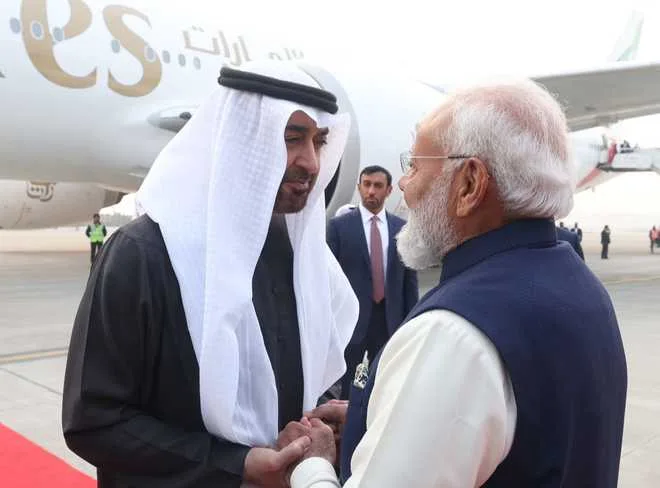
Prime Minister Narendra Modi on Monday received United Arab Emirates President Sheikh Mohamed bin Zayed Al Nahyan at the Delhi airport, underlining the importance India attaches to the high-level visit.

According to the schedule released by the Ministry of External Affairs (MEA), the UAE President will be in the national capital for less than two hours.

The visit comes against the backdrop of a volatile situation in the Middle East, marked by a sharp downturn in Iran–US relations, continuing tensions between Saudi Arabia and the UAE over Yemen, and the unsettled political situation in Gaza.

Sheikh Mohamed bin Zayed and Prime Minister Modi are expected to hold wide-ranging talks during the brief visit. Officials familiar with the discussions said key issues on the agenda include trade and investment, defence industry cooperation, and energy initiatives.

The evolving situation in the Middle East is also likely to feature prominently in the talks, they added.

This is the UAE leader’s third official visit to India since assuming office and his fifth visit to the country in the last decade.

India and the UAE have witnessed a significant expansion in bilateral trade and people-to-people ties following the signing of the Comprehensive Economic Partnership Agreement (CEPA) in 2022, which has given fresh momentum to the strategic partnership between the two countries.

Two J&K athletes selected for Indian Wushu team’s training programme in China

0

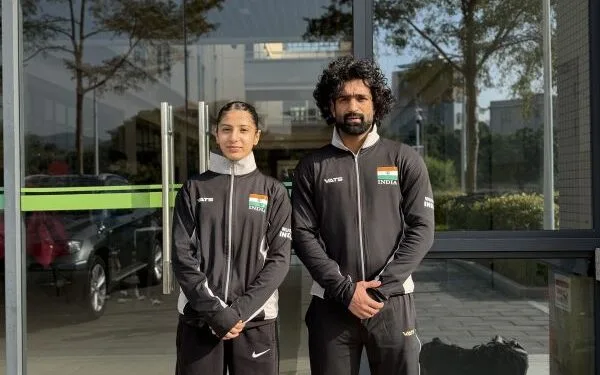
Two athletes from Jammu and Kashmir have been selected for the Indian Wushu Team’s foreign exposure training programme in China, as part of preparations for the 2026 Asian Games.

Bhanu Partap Singh, a bronze medallist at the 18th Asian Games, and Ansa Christi, an international player and the current No. 1 ranked athlete in the women’s 52 kg category, will undergo a one-month specialised training programme in China from January 14 to February 12, 2026.

The selection was made by the Wushu Association of India (WAI) following a national ranking tournament held in Jammu, where the top eight athletes across 13 events — seven Sanda and six Taolu — were shortlisted. Notably, 12 athletes from Jammu and Kashmir featured among the top eight, underlining the region’s strong presence in the sport at the national level.

The next national ranking event is scheduled to be held from February 15 to 17, 2026, after which four athletes in each event will be selected for the National Wushu Coaching Camp.

In March 2026, the selection process will be further narrowed down, with two athletes from each event chosen for an intensive 60-day foreign training programme in China as part of India’s final preparations for the 20th Asian Games in Japan.

The Wushu Association of Jammu and Kashmir, including its President Vijay Saraf, Vice President Ranjeet Kalra, General Secretary Bhavneet, and Treasurer Sohit Sharma, congratulated the selected athletes on their achievement.

Dronacharya Awardee Kuldeep Handoo also extended his congratulations and urged authorities to establish a dedicated Wushu academy in Jammu and Kashmir to further nurture talent from the region.

Kashmiri Pandits welcome to return, but permanent resettlement uncertain: Farooq Abdullah

0

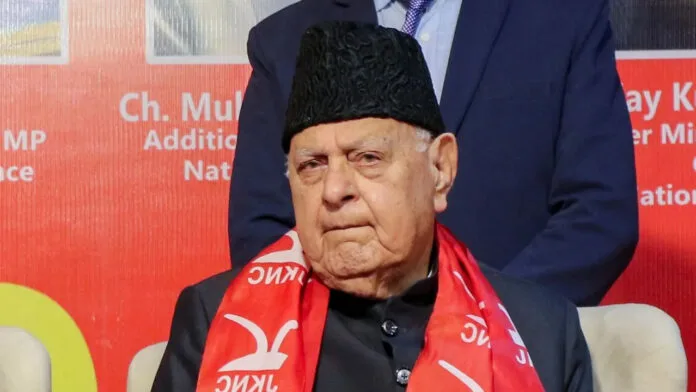
National Conference president Farooq Abdullah on Monday said that Kashmiri Pandits are always welcome to return to their homes in the Valley, even as he expressed doubts over whether the displaced community would opt for a permanent return after having rebuilt their lives elsewhere.

His remarks came as Kashmiri Pandits observed the 36th anniversary of their exodus from Kashmir in Jammu, reiterating demands for a comprehensive policy for their return and rehabilitation. January 19 is marked by the community as ‘holocaust day’, commemorating their forced migration from the Valley in 1990 following threats and killings by Pakistan-sponsored terrorists.

Speaking to reporters on the sidelines of a two-day party programme, Abdullah said many Kashmiri Pandit families never left the Valley and continue to live peacefully in their villages.

“When will they return? Who is stopping them? No one is preventing them. They should come back, as it is their home,” he said, responding to questions about protests by displaced Pandits.

However, the former Jammu and Kashmir chief minister noted that a permanent return may be difficult as many members of the community are now settled across the country, with their children pursuing education and employment.

“They have grown older, many need medical care, and their children are studying in schools, colleges and universities. They may visit, but I don’t think they will return to live there permanently,” Abdullah said.

In a related development, Deputy Chief Minister Surinder Choudhary said the National Conference leadership has consistently supported the return and rehabilitation of Kashmiri Pandits, asserting that “Kashmir is incomplete without them.”

Meanwhile, members of the community staged protests at several locations in Jammu, pressing for their long-pending demands, including a separate homeland within the Valley. Hundreds of protesters under the banner of ‘Youth 4 Panun Kashmir’ blocked the Jammu–Srinagar national highway near the Jagti camp on Sunday evening, also demanding a parliamentary bill to formally recognise the genocide of Kashmiri Pandits.

Responding to these demands, Abdullah said he had earlier assured the community that houses would be constructed for them and necessary support provided. However, he added that after the fall of his government, the implementation of such proposals rests with the Central government.

Reiterating his stand, Abdullah said the return of Kashmiri Pandits would help restore the Valley’s traditional brotherhood and hospitality, expressing hope that the Centre would take an early decision on their rehabilitation.

General Secretary of the All State Kashmiri Pandit Conference (ASKPC), P K Raina, said the community has been waiting for justice for the past 36 years.

“We have gathered to reiterate our demand for a policy that ensures our dignified return and rehabilitation in our homeland. We also paid tributes to those who lost their lives in terrorist attacks,” he said.

BJP begins process to elect new national president; Nitin Nabin files nomination, likely unopposed

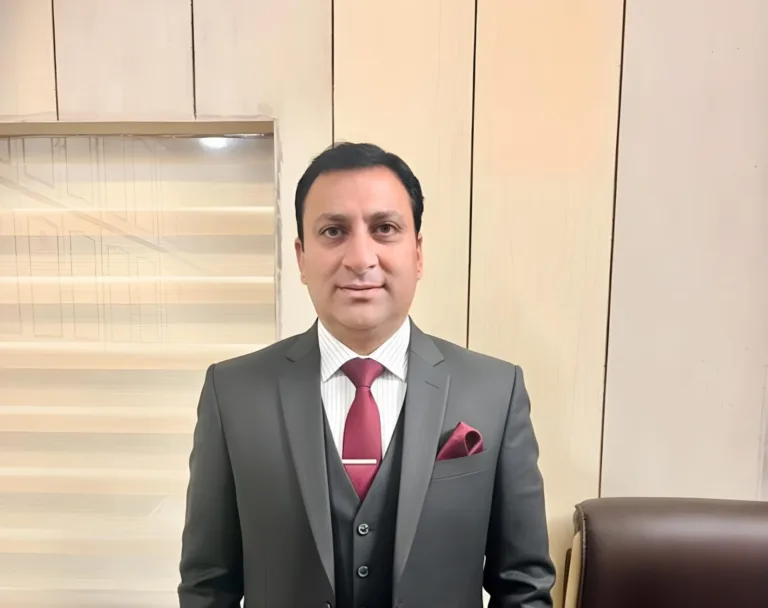
The Bharatiya Janata Party (BJP) on Monday formally initiated the process for the election of its new national president, with senior leaders filing nomination papers in support of the party’s working president, Nitin Nabin.

BJP President J P Nadda and Defence Minister Rajnath Singh submitted one set of Nabin’s nomination papers to the party’s Returning Officer K Laxman, in the presence of Home Minister Amit Shah, Road Transport Minister Nitin Gadkari, and senior leaders Dharmendra Pradhan, Bhupendra Yadav, and Kiren Rijiju.

Later in the day, Arunachal Pradesh Chief Minister Pema Khandu, along with other state leaders, filed another set of nomination papers backing Nabin, who was appointed working president last month.

Chief Ministers Yogi Adityanath (Uttar Pradesh), Pushkar Singh Dhami (Uttarakhand), Nayab Singh Saini (Haryana), and Pramod Sawant (Goa) were also present during the filing. Leaders from Bihar, Andhra Pradesh, Maharashtra, Assam, Jharkhand, and several other states extended their support by submitting nomination papers.

The 45-year-old Nitin Nabin is widely expected to be elected unopposed as the BJP’s 12th national president, with top leadership, including Prime Minister Narendra Modi and Amit Shah, backing his candidature.

The BJP national president is elected by an electoral college comprising members of the party’s national council and state councils, with the process overseen by the national returning officer.

As per the BJP constitution, a candidate must be proposed jointly by at least 20 members of a state’s electoral college, and such proposals must come from a minimum of five states where elections to the national council have been completed. The candidate must also have completed four terms as an active member and possess at least 15 years of party membership.

Eight Soldiers Injured in Gunfight with JeM Terrorists in Kishtwar’s Chatroo Area

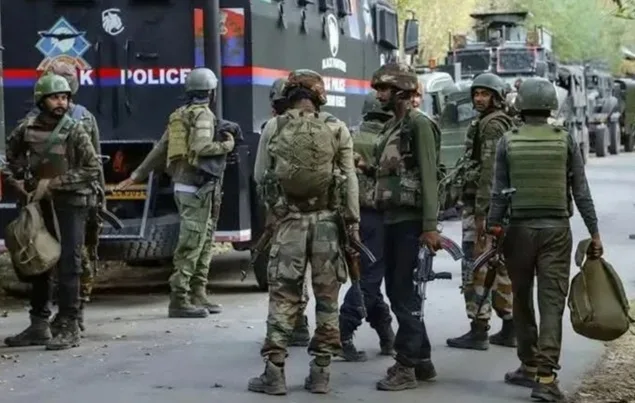
Another fierce encounter broke out between security forces and terrorists in the Sonnar village of the Chatroo area in Kishtwar district on Thursday afternoon, leaving eight Army soldiers injured. The operation was launched following specific intelligence inputs about the presence of terrorists in the upper reaches of the area.

According to reports, an Army team had moved to the Sonnar area to conduct a search operation when terrorists, positioned on higher ground, lobbed two grenades at the troops and opened fire. The soldiers immediately retaliated, triggering a gun battle that continued for some time.

Reinforcements from the Army, paramilitary forces, Jammu and Kashmir Police, and the Special Operations Group (SOG) were rushed to the spot to strengthen the cordon and intensify search operations. The operation continued till late night and was temporarily halted, with plans to resume early Friday morning.

Of the eight injured soldiers, three were airlifted to the Military Hospital in Udhampur for specialized treatment. Their condition is stated to be stable.

Sources said the Army had inputs about the presence of three foreign terrorists belonging to the Pakistan-based Jaish-e-Mohammed (JeM) outfit in the area. The ongoing operation has been named ‘Operation Trashi-I’ by the Army’s Nagrota-based White Knight Corps.

In a post on X, the White Knight Corps stated that contact was established with terrorists in the general area of Sonnar, northeast of Chatroo, during a deliberate joint search operation with Jammu and Kashmir Police. Additional forces have been inducted to reinforce the cordon, supported by close coordination with civil administration and security agencies.

Advanced surveillance equipment, including drones and sniffer dogs, has been deployed to track down the terrorists and prevent their escape through the dense forests and hilly terrain.

This is the third encounter in the Jammu region this year. Earlier encounters were reported in the Kahog and Najote forests of Kathua district on January 7 and 13, respectively. Security operations have been further intensified ahead of Republic Day celebrations to ensure peace and thwart any terror attempts.

Farooq Abdullah: Kashmiri Pandits Welcome to Return, Doubts Permanent Resettlement

National Conference president Farooq Abdullah on Monday said that displaced Kashmiri Pandits are always welcome to return to their homeland, asserting that the Valley is as much their home as anyone else’s. However, he expressed doubts about the practicality of their permanent return, considering that many have established new lives across different parts of the country.

His remarks came on January 19, observed by the displaced community as ‘Holocaust Day’, marking their exodus from the Valley in 1990 following threats and killings by Pakistan-sponsored terrorists. Speaking to reporters on the sidelines of a two-day party programme, Abdullah pointed out that several Kashmiri Pandit families never left Kashmir and continue to live peacefully in their villages and localities.

“When will they return? Who is stopping them? No one is preventing them. They should come back because it is their home,” he said, adding that many members of the community are already living in the Valley without any obstruction.

Commenting on the protests by Kashmiri Pandits under the banner of ‘Youth 4 Panun Kashmir’, who blocked the Jammu-Srinagar national highway near the Jagti camp demanding a separate homeland and parliamentary recognition of their genocide, Abdullah said he had earlier assured them of housing and necessary support.

He stated that after the fall of his government, the responsibility to implement such proposals rested with the Central government. Abdullah also observed that the displaced community would have to assess the present situation realistically, as many Pandits are now settled in other states.

“They have grown older, many require medical treatment, and their children are studying or working outside. They may visit Kashmir, but I do not think many will return to live there permanently,” he added.

Moderate 5.7 Earthquake Strikes Leh District, Situation Normal

An earthquake measuring 5.7 on the Richter scale struck Leh district of Ladakh on Monday, causing brief panic among residents in the region.

According to the National Center for Seismology (NCS), the tremor occurred at 11:51 am (IST). The epicentre was located in the Leh region, and the earthquake originated at a depth of 171 kilometres beneath the earth’s surface.

Due to the considerable depth of the quake, the impact on the surface remained limited. There were no immediate reports of loss of life or damage to property from any part of the district.

Officials said the situation is being closely monitored, and disaster management teams remain on alert as a precautionary measure. Residents were advised to remain calm and follow standard safety protocols in case of aftershocks.

Ladakh falls in a seismically active zone and frequently experiences mild to moderate tremors. Authorities have reiterated the importance of earthquake preparedness and awareness in the region.