Monday, July 13, 2026
Home Blog Page 67

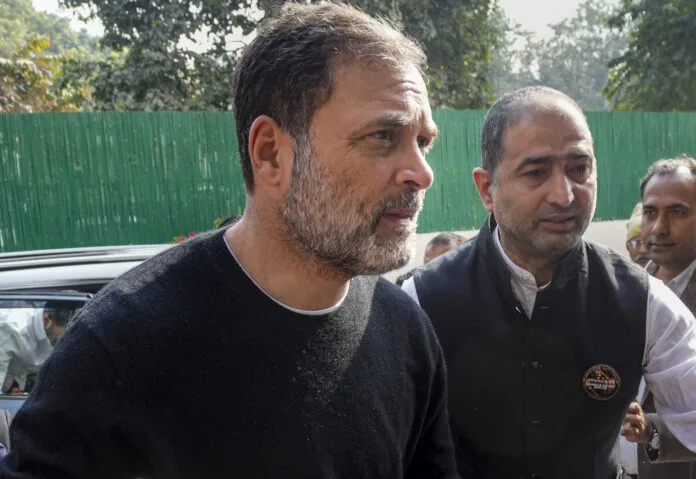
Rahul Gandhi alleges Centre wants to weaken MGNREGA, urges poor to unite against VB-G RAM G Act

0

Congress leader and Leader of Opposition in the Lok Sabha, Rahul Gandhi, on Thursday alleged that the Modi government is trying to dilute and eventually repeal the Mahatma Gandhi National Rural Employment Guarantee Act (MGNREGA), and said its approach is similar to the way the Centre had introduced the “three farm laws”.

Addressing the National MGNREGA Workers’ Convention, organised by the party’s frontal organisation Rachnatmak Congress, Gandhi said MGNREGA was introduced to ensure the right to work for the rural poor.

“MGNREGA was built on the idea of rights — that anyone who needs work must get work. It was designed to function through the third tier of governance, the Panchayati Raj system,” he said.

‘Like farm laws, poor must unite’

Gandhi claimed the government had earlier introduced the three farm laws, which were later repealed after farmers united and pressed for withdrawal.

“They are doing the same thing with workers now as they did with farmers,” he said, urging poor people across the country to unite against the proposed changes.

Concerns over fund allocation

The Congress leader alleged that under the proposed Viksit Bharat – Guarantee for Rozgar Ajeevika Mission (Gramin) (VB-G RAM G) Act, the Centre would gain greater control over work selection and fund allocation.

He claimed that BJP-ruled states would get preference, while contractors and bureaucracy would benefit more than workers.

‘Assets in few hands’

Gandhi further alleged that the model being promoted would concentrate assets in the hands of a few, making the poor dependent on big corporate houses.

Symbolic gesture by workers

Workers from different parts of the country participated in the convention and brought a fistful of soil from their work sites. The soil was later used to plant saplings in a symbolic gesture in the presence of Gandhi and Congress president Mallikarjun Kharge.

Congress launches campaign

The Congress has launched a 45-day nationwide campaign titled ‘MGNREGA Bachao Sangram’ from January 10, demanding the withdrawal of the VB-G RAM G Act and restoration of MGNREGA in its original rights-based form, including the authority of panchayats and the right to work.
Chief Secretary Stresses GIS-Based Mapping to Curb Road Accidents in J&K

0

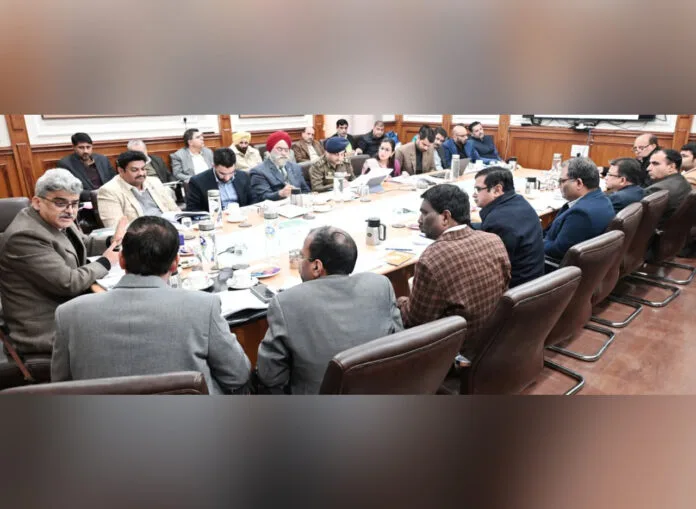
Chief Secretary Atal Dulloo on Wednesday reviewed the implementation of road safety measures in Jammu and Kashmir, as mandated by the Supreme Court, and underscored the need for extensive use of GIS-based data to identify vulnerable and accident-prone road stretches across districts.

Chairing a high-level meeting, the Chief Secretary said that data-driven identification of black spots would enable focused technological, engineering and enforcement interventions, significantly reducing road accidents in the Union Territory. He directed the concerned departments to prepare a clear, time-bound roadmap for the implementation of each Supreme Court directive on road safety.

The meeting was attended by administrative secretaries of concerned departments, senior Traffic Police officers and heads of departments, while Deputy Commissioners participated through video conferencing from their respective districts.

Dulloo emphasised leveraging transport and traffic data to guide targeted safety measures, strategic deployment of traffic police and engineering corrections on stretches prone to frequent accidents. Stressing deterrence as a critical component of road safety, he directed strict punitive action against habitual and serious traffic violators, including cancellation of driving licences, registration certificates and other statutory measures.

The Chief Secretary also reviewed the road accident scenario in J&K using data from the i-RAD portal, analysing trends based on time of day, monthly patterns, district-wise distribution, road classification and nature of violations leading to accidents.

Road construction agencies, including PWD, NHAI, NHIDCL, BRO and SAMPARK, briefed the meeting on steps taken to remove identified black spots in line with the Black Spot Protocol. Measures related to traffic calming, installation of safety signage and fitting of speed-limiting devices in school buses were also reviewed to enhance student safety.

Secretary, Transport Department, Avny Lavasa, presented details on the functioning of the i-RAD and e-DAR portals, informing that since June 2022, a total of 20,135 road accidents involving 32,819 persons have been reported in J&K, resulting in 3,688 fatalities and 29,131 injuries. She said most accidents occurred on major highways, particularly in Jammu, Kathua, Udhampur and Rajouri districts, with peak timings between 3 pm and 9 pm. Rash driving and over-speeding accounted for nearly 50 per cent of accidents reported in 2025.

The Transport Department also shared enforcement data, stating that over 92,000 challans were issued in 2024 and 2025, with fines amounting to more than Rs 26 crore. Major violations included non-wearing of helmets and seat belts, mobile phone use while driving, over-speeding and jumping red lights.

IGP Traffic M. Suleman briefed the meeting on surveillance systems under the Integrated Traffic Management System (ITMS) and Intelligent Light Traffic System (ILTS) in Jammu and Srinagar. He said the Traffic Police enforced nearly 45 lakh e-challans between 2023 and 2025, imposing fines exceeding Rs 350 crore, while seizing thousands of vehicles for violations of the Motor Vehicles Act.

The meeting also reviewed the implementation of the Road Accident Victim Fund, establishment of trauma care facilities along highways, and the functioning of the Institute of Driving Training and Research (IDTR) at Kot Bhalwal and the Inspection and Certification Centre (ICC) at Samba. The performance of the District Infrastructure Quality Control mechanism in conducting road safety audits was also assessed.

Reiterating the government’s commitment to road safety, the Chief Secretary said coordinated enforcement, engineering solutions, public awareness and strict adherence to judicial and statutory norms are essential to save precious lives in Jammu and Kashmir.

Omar Abdullah Chairs Cabinet Meet Ahead of J&K Budget Session Beginning February 2

0

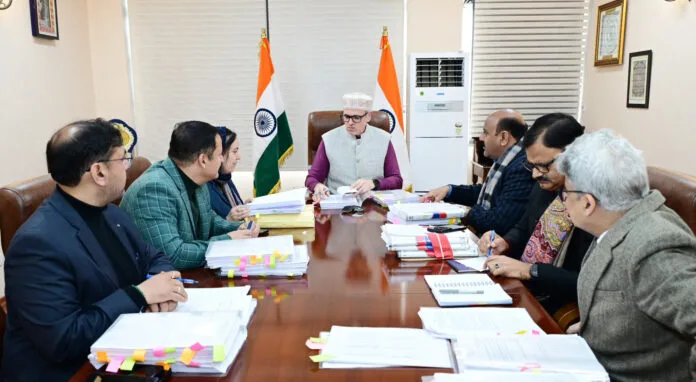
 Chief Minister Omar Abdullah on Thursday chaired a meeting of the Council of Ministers here in the run-up to the upcoming budget session of the Jammu and Kashmir Legislative Assembly, scheduled to begin on February 2 with the address of Lieutenant Governor Manoj Sinha.

According to a post by the Chief Minister’s Office on X, the cabinet meeting was held at the Civil Secretariat in Jammu to deliberate on key matters of public and administrative importance. As per procedure, all decisions taken during the meeting will come into effect after receiving the approval of the Lieutenant Governor.

The meeting was attended by Deputy Chief Minister Surinder Kumar Choudhary and cabinet ministers, including Sakina Itoo, Javed Ahmed Rana, Javid Ahmed Dar and Satish Sharma. Chief Secretary Atal Dulloo was also present, officials said.

Although no detailed official statement was issued following the meeting, officials indicated that discussions included the Lieutenant Governor’s address to the Legislative Assembly at the commencement of the budget session, as well as proposed welfare measures to be incorporated in the annual budget.

Chief Minister Abdullah, who also holds the finance portfolio, is set to present the second budget of his government during the forthcoming session of the Assembly.

Rahul Gandhi Compares Repeal of MGNREGA to Farm Laws, Urges Poor to Unite Against New Act

0

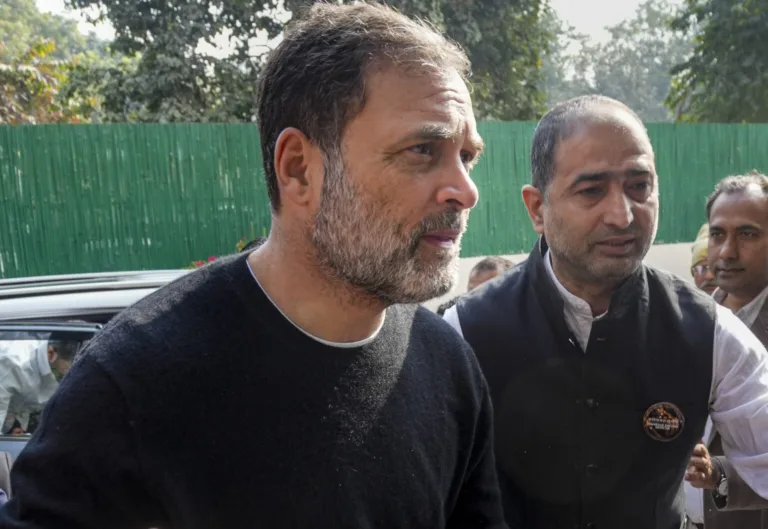
Congress leader and Leader of Opposition in the Lok Sabha Rahul Gandhi on Thursday accused the Modi government of pursuing the same objectives in repealing the Mahatma Gandhi National Rural Employment Guarantee Act (MGNREGA) as it did while introducing the now-repealed farm laws, and called upon poor people across the country to unite against the new Viksit Bharat–Guarantee for Rozgar Ajeevika Mission (Gramin) (VB-G RAM G) Act.

Addressing the National MGNREGA Workers’ Convention organised by the Rachnatmak Congress, Gandhi said MGNREGA was conceived as a rights-based programme to empower the poor by guaranteeing employment through the Panchayati Raj system.

“The core idea of MGNREGA was rights — the right to work for the poor. The scheme ensured that anyone in need of work could demand it, and it was implemented through the third tier of democracy. The Modi government wants to destroy this concept of rights,” Gandhi said.

Drawing parallels with the farm laws, the former Congress president said farmers were able to force the repeal of the legislation only after sustained and united pressure on the government. “They brought three black farm laws, but farmers fought unitedly and forced their withdrawal. Today, the same is being done to workers through this new law,” he said.

Gandhi alleged that under the VB-G RAM G Act, decision-making powers over work allocation and funding would be centralised, with BJP-ruled states receiving preferential treatment. He further claimed that benefits that earlier reached workers directly would now flow to contractors and the bureaucracy.

“They want assets concentrated in a few hands so that poor people remain dependent on Adani and Ambani. This is their model of India — an India where one king decides everything,” Gandhi charged.

At one point during his address, Gandhi said he could not recall the name of the new law and asked the gathering to remind him, drawing a response from the audience.

Workers from across the country attended the convention and participated in a symbolic act by bringing soil from their work sites, which was placed in saplings in the presence of Gandhi and Congress president Mallikarjun Kharge.

The Congress launched its ‘MGNREGA Bachao Sangram’, a 45-day nationwide campaign, on January 10 to oppose the repeal of the UPA-era employment guarantee scheme. The party is demanding the withdrawal of the VB-G RAM G Act and the restoration of MGNREGA in its original form as a rights-based law, with guaranteed employment and strengthened authority of panchayats.

‘Do You Know Who I Am?’: Corporation Reclaims Encroached OSR Land Worth ₹3.5 Crore in Coimbatore

0

Coimbatore:

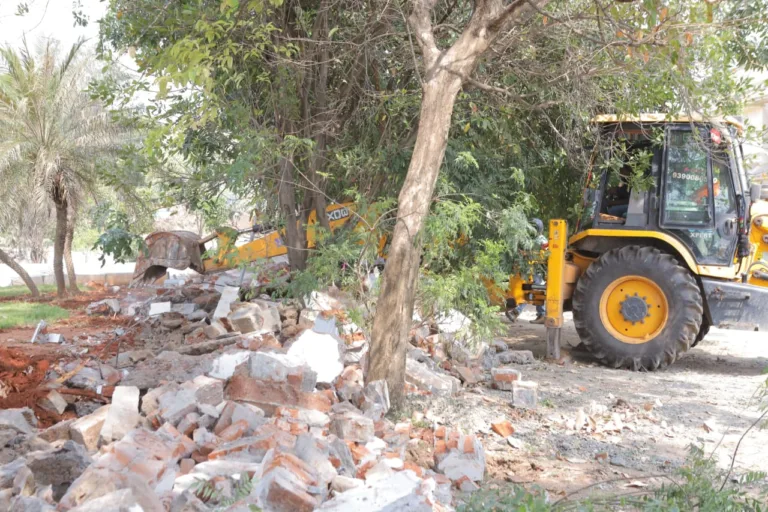
A long-standing encroachment on a public Open Space Reserve (OSR) site in Saravanampatti came to an end on Tuesday after the Coimbatore City Municipal Corporation reclaimed the land and demolished illegal structures, marking what officials described as a strong message against the misuse of public assets.

The action was carried out in Meenakshi Nagar, Saravanampatti, where OSR land earmarked for public use had allegedly been encroached upon for years. According to civic records, the residential layout was formed in 1993, when 50 cents was reserved as a park site and later handed over through a deed of gift to the local body.

However, corporation officials said 13 cents of the land had allegedly been occupied by a resident, identified as Sivagnanam, who reportedly built a compound wall and merged the portion with private property.

Influence claims surfaced

While the encroachment issue moved slowly for years, sources in the civic administration and local residents alleged that the accused had repeatedly attempted to discourage inspections and enforcement by projecting influence.

“People were hesitant to confront him. He behaved as if nobody could touch him,” a local resident said. Civic sources alleged that the encroacher would often resort to intimidation and adopt a posture of power — described by some residents as a typical “Do you know who I am?” attitude — whenever officials raised objections.

Officials, however, clarified that the operation was carried out strictly as per legal procedure.

High Court dismissal cleared action

Corporation sources said a notice was issued in 2021, following which the encroacher challenged the proceedings before the Madras High Court. The High Court reportedly dismissed the petition on December 19, clearing the way for the corporation to act and retrieve the encroached OSR site.

On Tuesday, civic officials arrived with police protection and used a backhoe loader to demolish the compound wall and structures on the encroached portion. The land was subsequently secured with fencing to prevent further encroachment.

Public land to be protected

Officials stated that OSR sites are reserved for community welfare and public infrastructure, and the reclaimed land will be protected for its intended purpose.

The action has been widely seen as a message that public land cannot be converted into private property—regardless of claimed influence or pressure tactics.

(Inputs: Times of India / TNN)

CM Omar Abdullah Stresses Fiscal Discipline, Seeks Need-Based Proposals Ahead of J&K Budget

0

Jammu and Kashmir Chief Minister Omar Abdullah on Wednesday emphasised fiscal discipline and directed all departments to submit well-structured, need-based proposals aligned with the government’s development roadmap ahead of the upcoming budget session of the J&K Legislative Assembly.

For the second consecutive day, the chief minister held pre-budget consultations with several key departments to review priorities, sectoral requirements and development imperatives. The budget session of the Assembly is scheduled to begin on February 2.

Abdullah, who also holds the finance portfolio, chaired detailed meetings with the departments of Social Welfare, Health and Medical Education, School Education, Higher Education, Public Works (Roads and Buildings), Mining, Industries and Commerce, and Labour.

Addressing the meetings, the chief minister underscored the importance of realistic and outcome-oriented budgeting. He stressed that proposals must be grounded in actual needs, ensure optimal use of public funds and adhere to fiscal prudence.

“The budget should reflect the aspirations of the people of Jammu and Kashmir and focus on inclusive growth, balanced regional development and sustainable economic progress,” Abdullah said, while also calling for transparency, timely project completion and efficient service delivery.

During the deliberations, the chief minister reviewed the progress of ongoing projects, budget utilisation patterns and future financial requirements across sectors. He directed departments to adopt a people-centric and performance-driven approach, with particular emphasis on strengthening healthcare and education infrastructure, expanding social security coverage, improving road connectivity, promoting industrial growth and generating employment opportunities for youth.

The pre-budget consultation process began on Tuesday with nine departments and is scheduled to conclude on Thursday with meetings involving the remaining departments. An official spokesperson said the exercise is aimed at finalising a comprehensive, growth-oriented and people-friendly budget for the Union Territory.

Srinagar on High Alert Ahead of Republic Day, Security Arrangements Intensified

0

Security has been tightened across Srinagar ahead of Republic Day celebrations, with police stepping up surveillance and deployment to ensure smooth and incident-free observances, officials said on Wednesday.

In view of the national event, Srinagar Police have intensified security and inspection measures across the city. Additional police personnel have been deployed at key locations, while special checkpoints and mobile patrols have been put in place to conduct thorough verification of vehicles and individuals.

Officials said night patrolling and surprise inspections are being carried out to maintain heightened vigilance and prevent any attempt to disturb public order. Sensitive areas have been placed under enhanced watch, with a focus on tracking suspicious movements.

Senior police officers are closely monitoring the security arrangements on the ground to ensure effective coordination and seamless implementation of the plan, officials added.

The police have appealed to the public to cooperate during checking and verification drives and urged citizens to immediately report any suspicious activity to the nearest police station or the Police Control Room.

Additional Trial Courts Will Make Justice System More Robust: Supreme Court

The Supreme Court on Wednesday said the setting up of additional trial courts would make the judicial system more robust, reducing the need for accused persons to approach the apex court for reliefs such as bail or expeditious hearing in criminal cases.

A bench comprising Chief Justice of India Surya Kant and Justices Joymalya Bagchi and Vipul M Pancholi made the observation while hearing a bail plea in a 2021 ISIS-linked case being probed by the National Investigation Agency (NIA).

“The idea is how do you make a robust mechanism that none of them are required to come to the courts? And that will happen when additional courts are set up,” the CJI said.

The bench sought an update from Additional Solicitor General Aishwarya Bhati, appearing for the Centre, on the progress in setting up a special trial court in Delhi, as earlier suggested by the court. It directed the law officer to apprise it of the developments by February 10, when the matter will be taken up next.

On January 6, the top court had asked the Centre and the Delhi government to consider establishing a special court to conduct a day-to-day trial in the case, which involves the examination of 125 witnesses.

The court was hearing the bail plea of Md Heydaitullah, accused of using Telegram groups to propagate the ideology of the ISIS terror outfit and recruit persons in India.

The CJI reiterated that inordinate delay in trial lends legitimacy to arguments that an accused cannot be kept in custody for prolonged periods without commencement or completion of trial.

Earlier, the Delhi High Court had rejected Heydaitullah’s bail plea, holding that he was not a “passive” supporter of ISIS. The high court observed that the accused, an MBA graduate working at an IT firm in Gurugram, had actively advocated violent jihad to establish a Khilafat and had taken an oath of allegiance to ISIS leaders, including Abu Bakr al-Baghdadi.

The high court ruled that the bar on bail under the Unlawful Activities (Prevention) Act (UAPA) was clearly applicable in the case.

The NIA alleged that the accused disseminated ISIS ideology through cyberspace, promoted enmity against Hindus on social media, transferred funds for the terror outfit, and possessed materials related to explosive preparation and oath of allegiance.

Following an FIR registered in 2021, Heydaitullah was arrested by the NIA on October 22, 2022.

Rahul Gandhi Arrives to Address Congress Training Camp for District Unit Chiefs

 Congress leader and Leader of the Opposition in the Lok Sabha Rahul Gandhi arrived here on Wednesday to address a training camp for district unit presidents from Haryana and Uttarakhand.

The training camp for the District Congress Committee (DCC) chiefs, being held from January 13 to 22, is aimed at strengthening the party’s organisational structure in the two states.

After landing at Ambala airport, Gandhi proceeded to Kurukshetra by road. He was received at the airport by senior party leaders, including former Haryana chief minister Bhupinder Singh Hooda, Kumari Selja, Randeep Singh Surjewala, Haryana Congress chief Rao Narender Singh, and Congress general secretary in charge of Haryana affairs B K Hariprasad.

Last year, the Congress appointed 32 district unit presidents in Haryana after a gap of more than a decade as part of its ‘Sangathan Srijan Abhiyan’, with the appointments announced in August. In Uttarakhand, 27 new DCC presidents were appointed in November.

The party said the training programme is designed to reinforce grassroots leadership and organisational preparedness ahead of future political challenges.

Senior leaders Hooda, Selja and Surjewala have already addressed the district presidents during the ongoing camp.

Congress MLA Ashok Arora said the training modules cover a broad range of subjects, including the party’s history, ideology, policies, organisational functioning, and its future political roadmap.

Amrit Udyan at Rashtrapati Bhavan to Open for Public from February 3

0

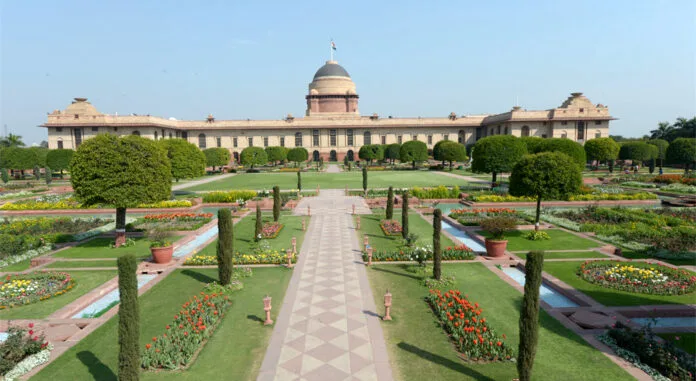
The Amrit Udyan at Rashtrapati Bhavan will be open for public viewing from February 3 to March 31, 2026, the President’s Secretariat announced on Wednesday.

Visitors will be allowed entry six days a week, from 10 am to 6 pm, with the last entry at 5.15 pm. The garden will remain closed on Mondays for maintenance and on March 4 on account of Holi.

“The Amrit Udyan of Rashtrapati Bhavan will open for public viewing from February 3 to March 31, 2026,” the President’s Office said in a statement.

Entry and booking are free of cost, and visitors can make advance reservations through the official website: https://visit.rashtrapatibhavan.gov.in/

. Walk-in visitors can also register at self-service visitor kiosks near the entry point.

For all visitors, entry and exit will be through Gate No. 35 of the President’s Estate, located near the intersection of North Avenue and Rashtrapati Bhavan.

To facilitate easy access, a shuttle bus service will operate every 30 minutes between Central Secretariat Metro Station and Gate No. 35, from 9.30 am to 6 pm. The buses will carry banners reading ‘Shuttle Service for Amrit Udyan’ for easy identification.