Wednesday, July 15, 2026
Home Blog Page 65

J&K Chief Minister Pays Tribute to Martyrs on Martyrs’ Day, Observes Two-Minute Silence at Civil Secretariat

0

Jammu and Kashmir Chief Minister on Friday paid rich tributes to the martyrs on the occasion of Martyrs’ Day, remembering their supreme sacrifices for the nation and the enduring ideals of freedom, justice and democracy.

According to a post shared by the Office of the Chief Minister on X, the Chief Minister said that the sacrifices made by the martyrs will continue to inspire generations to come and strengthen the collective resolve to uphold democratic values.

As part of the observance, a two-minute silence was held at the Civil Secretariat to honour the martyrs and pay respect to their invaluable contributions to the nation.

Officials and staff present joined in the tribute, reaffirming their commitment to the principles for which the martyrs laid down their lives.

NCP Faction Merger Talks at Advanced Stage; Sharad Pawar Set for Central Role After Ajit Pawar’s Death

0

Talks on the proposed merger of the two Nationalist Congress Party (NCP) factions — one led by the late Ajit Pawar and the other by Sharad Pawar — are at an advanced stage and were already progressing well before the Maharashtra deputy chief minister’s death in a plane crash earlier this week, sources said.

According to party insiders, multiple rounds of discussions had taken place between senior leaders of both camps, with a tentative merger announcement earlier being considered after the conclusion of the upcoming local body polls. The sudden demise of Ajit Pawar has accelerated internal consultations while also reshaping the leadership and power dynamics within the party.

Sources in the Sharad Pawar-led NCP (SP) faction believe the veteran leader is now likely to resume a central guiding role in steering a unified party structure. At the same time, leaders in the Ajit Pawar camp are reportedly considering the name of Sunetra Pawar, Rajya Sabha MP and wife of the late leader, for the post of deputy chief minister in order to maintain political continuity and family legacy.

The reunification process had begun months ago, with both factions even contesting the Pune and Pimpri-Chinchwad civic polls together under the NCP’s clock symbol — seen as a test of cadre coordination and voter response ahead of a full merger.

The NCP, founded by Sharad Pawar in 1999, split vertically in July 2023 when Ajit Pawar joined the Eknath Shinde-led Mahayuti government and became deputy chief minister. His tenure continued under Chief Minister Devendra Fadnavis after the 2024 assembly elections. Following the split, Ajit Pawar’s faction retained the original NCP name and the clock election symbol after a legal and organisational battle.

Currently, Ajit Pawar’s NCP faction is part of the ruling Mahayuti alliance, while the Sharad Pawar-led NCP (SP) is aligned with the Opposition Maha Vikas Aghadi (MVA).

Party sources said merger discussions involved top leaders including Sharad Pawar, Supriya Sule, Ajit Pawar and Jayant Patil, focusing on leadership structure, electoral strategy and organisational unity. Secondary-level talks on logistics and coordination were handled by other senior leaders.

Political observers believe a reunited NCP could significantly alter Maharashtra’s political balance, especially in Western Maharashtra — the traditional “sugar belt” — where recent civic polls showed shifting voter trends. A combined NCP strength of Lok Sabha MPs and MLAs could influence both ruling and opposition alliance equations.

For now, leaders from both sides say their immediate priority remains the upcoming local body elections, which they plan to contest in coordination, describing it as a tribute to Ajit Pawar’s last political initiative.

Virat Kohli’s Instagram Account Restored After Brief Disappearance, Fans Relieved

0

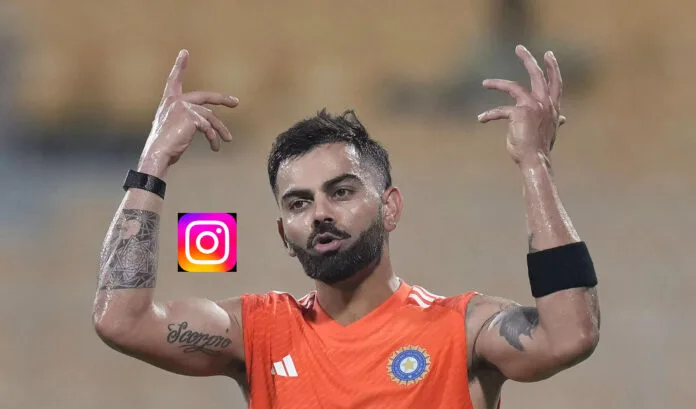
India’s star cricketer Virat Kohli’s Instagram account was restored on Friday morning after mysteriously disappearing overnight, triggering confusion and speculation among his 274 million followers.

The sudden disappearance of Kohli’s profile sparked widespread discussion across social media, with fans posting worried messages and memes while debating possible reasons behind the blackout. However, neither Kohli nor his management team has issued an official clarification on whether the deactivation was intentional or the result of a technical glitch.

Interestingly, the Instagram account of Kohli’s brother, Vikas Kohli, was also found to be deactivated around the same time. While Virat Kohli’s account was back online by morning, his brother’s profile remained inactive at the time of writing.

Kohli, who is currently active only in One Day Internationals (ODIs), remains one of the most prolific batters in international cricket. He has scored 28,215 international runs at an impressive average of 52.73 across formats, including 85 centuries.

He recently surpassed Sri Lanka’s Kumar Sangakkara to become the second-highest run-scorer in international cricket and continues to chase several all-time records held by Sachin Tendulkar, who leads the charts with 34,357 runs and 100 international centuries.

Night Temperatures Rise in Kashmir as Chillai Kalan Ends

0

As the 40-day period of intense winter, Chillai Kalan, ends on Friday, night temperatures across Kashmir have increased, offering partial relief from severe cold conditions. The Meteorological Department officials reported a noticeable rise in minimum temperatures in several regions.

In the city of Srinagar, the night temperature settled at 1.3 degrees Celsius, marking a significant increase from the previous night’s minus 0.6 degrees. This temperature also stands at 2.2 degrees above the seasonal average, indicating a marked improvement for residents.

Other areas within the Valley similarly recorded above-freezing night temperatures. Konibal registered a low of 1.0 degrees Celsius, Pulwama recorded 0.1 degrees, and Kulgam noted a minimum of 1.1 degrees. Most weather stations across the region reported temperatures above normal for this time of year.

Despite the rise in temperatures in many low-lying areas, severe cold conditions persisted in higher altitude regions. Sonamarg in Ganderbal district remained the coldest, recording minus 10.6 degrees Celsius, although this was slightly better than the previous night’s minus 11.2 degrees. In Gulmarg, a popular ski resort, temperatures dipped to minus 9 degrees while Pahalgam in southern Kashmir saw minus 5.3 degrees.

Other noteworthy stations included Qazigund, which recorded minus 0.3 degrees Celsius; Kokernag at minus 0.6 degrees; and Kupwara with minus 3.1 degrees Celsius.

Chillai Kalan is traditionally regarded as the coldest period in Kashmir’s winter, marked by frequent snowfall in the higher elevations. Its conclusion indicates a shift to the next stage, the 20-day Chillai Khurd (small cold), which is then succeeded by the 10-day Chillai Bachha (baby cold), involving milder weather patterns.

As the winter season transitions, the Meteorological Department forecasts a fresh western disturbance expected to affect the region beginning Sunday. This disturbance may bring another spell of wet weather.

State-Level Professional Development Management Programme Held at GMC Doda

0

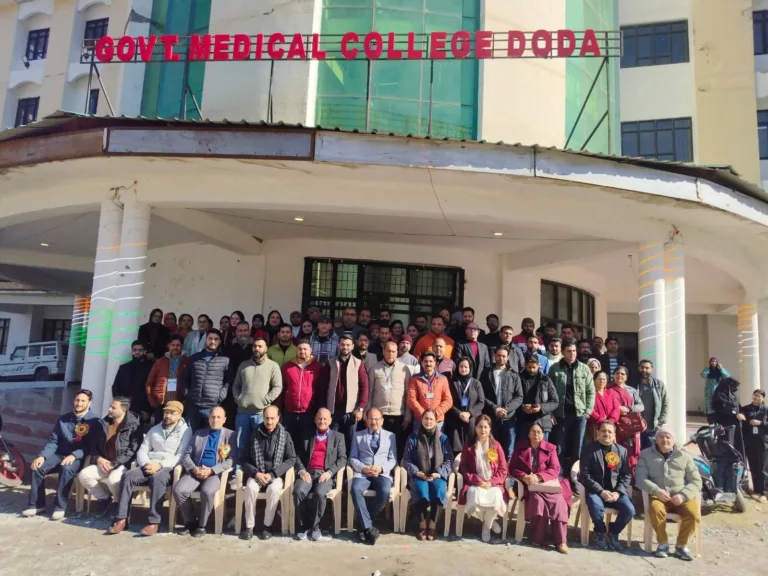
A One-Day State-Level Professional Development Management Programme (PDMP) for doctors, nursing staff, and allied healthcare professionals commenced today, January 29, 2026, at Government Medical College (GMC), Doda.

The training programme was inaugurated by Prof. (Dr.) Kuldeep Singh, Dean Academics, SMVDIME, Kakrayal, Katra (J&K), who attended the event as the Chief Guest. The inaugural session was graced by Prof. (Dr.) Rakesh Bahl, Principal, GMC Doda, as the Guest of Honour.

The session was also attended by Dr. Suresh Kotwal, Head of the Department of Community Medicine, GMC Doda; Dr. Garima Charak, Head of the Department of Physiology, GMC Doda; Dr. Beena Jad, Assistant Professor, SMVDIME; and Mr. Anil Sharma, Yoga Expert. Faculty members of GMC Doda, along with delegates from Doda, Kishtwar, Ramban, and the Associated Hospital of GMC Doda, participated in the programme.

This was the 3rd State-Level Professional Development Management Programme, organized by the Academy of Hospital Administration (AHA), Jammu Chapter, in association with Government Medical College, Doda. The programme aimed to enhance professional skills, managerial competencies, and overall efficiency among healthcare professionals, thereby strengthening healthcare delivery in the region.

J&K Govt Directs Employees to Complete AI, Cybersecurity Courses on iGOT Karmayogi by Jan 31, 2026

0

The Jammu and Kashmir Government has directed all departments, public sector undertakings (PSUs) and government-owned corporations to ensure that their employees enroll in and complete prescribed courses on Artificial Intelligence (AI) and Cybersecurity on the iGOT Karmayogi platform by January 31, 2026.

According to a circular issued by the General Administration Department (GAD), the courses have been identified under Mission Karmayogi by the Department of Personnel and Training (DoPT) with the objective of strengthening digital capabilities and cybersecurity awareness among government officials.

The training modules have been curated to match different roles and experience levels within the government workforce, enabling officials to build relevant competencies in emerging technologies and digital security.

The GAD has instructed all Administrative Secretaries and Heads of Departments to ensure strict and timely compliance with the directive. The initiative aims to enhance core professional skills, promote technology-driven governance, and improve the quality and efficiency of public service delivery across the Union Territory.

Kashmir Shivers as Sub-Zero Night Temperatures Persist; Chilla-i-Kalan Nears End

0

Kashmir continued to reel under intense cold conditions as night temperatures plunged several degrees below the freezing point across most parts of the Valley, officials said on Thursday. However, a few places, including Srinagar, recorded night temperatures slightly warmer than the seasonal average.

In Srinagar, the minimum temperature settled at minus 0.6 degrees Celsius, compared to 0.1 degrees Celsius the previous night. Despite the drop, the temperature remained 0.3 degrees above the seasonal norm, officials said.

Sonamarg in central Kashmir’s Ganderbal district emerged as the coldest place in Jammu and Kashmir, recording a minimum of minus 11.2 degrees Celsius, down from minus 9.8 degrees Celsius the previous night. The ski resort of Gulmarg in north Kashmir’s Baramulla district registered a low of minus 9 degrees Celsius.

In south Kashmir, Pahalgam — a key tourist destination and one of the base camps for the annual Amarnath Yatra — recorded a minimum temperature of minus 4.5 degrees Celsius. Qazigund, the gateway town to the Valley, saw the mercury settle at zero degrees Celsius, while Kokernag recorded minus 0.6 degrees and Kupwara minus 3.5 degrees Celsius.

The Valley is nearing the end of ‘Chilla-i-Kalan’, the harshest 40-day winter period marked by extreme cold and the highest probability of snowfall. Chilla-i-Kalan, which began on December 21, is set to conclude on January 30. However, cold conditions are expected to persist even after its end.

The severe phase is followed by a 20-day ‘Chillai-Khurd’ (small cold) and a 10-day ‘Chillai-Bachha’ (baby cold), during which cold weather continues, though with reduced intensity.

The Meteorological Department said the weather is likely to remain cloudy but dry till January 31. It also forecast that a fresh western disturbance may affect the region on February 1, potentially bringing another spell of wet weather.

Economic Survey Projects 6.8–7.2% GDP Growth in FY27, Flags Rupee Undervaluation and Global Uncertainty

0

The Economic Survey 2025–26, tabled in Parliament on Thursday, projected India’s GDP growth in the range of 6.8 to 7.2 per cent in the next financial year, slightly lower than the estimated 7.4 per cent growth in the current fiscal, while asserting that the economy remains on a stable footing amid global uncertainty.

Prepared by a team of economists led by Chief Economic Advisor V Anantha Nageswaran, the pre-Budget document said the cumulative impact of policy reforms undertaken in recent years is lifting India’s medium-term growth potential to nearly 7 per cent. It underlined the need for deeper institutional capacity that factors in the geopolitical implications of India’s rising global stature.

Commenting on the sharp depreciation of the rupee in recent months, the Survey said the currency’s valuation does not reflect India’s strong economic fundamentals and described it as “punching below its weight.” It noted that while an undervalued rupee offers some cushion against higher US tariffs on Indian goods and poses no immediate inflationary risk from crude oil imports, it can dampen investor sentiment. The rupee’s weakness, it added, is largely a result of foreign capital flows drying up.

The Survey stressed that a strong and stable currency is a natural corollary of India’s aspiration to become a developed nation under the ‘Viksit Bharat’ vision and to enhance its global influence.

On inflation, the document pointed to a subdued core inflation trajectory, indicating strengthening supply-side conditions across the economy. It also said the central government remains on track to meet its fiscal consolidation roadmap, targeting a fiscal deficit of 4.4 per cent of GDP in 2025–26. As of November 2025, the fiscal deficit stood at 62.3 per cent of the Budget Estimates.

“Markets have acknowledged and rewarded the government’s commitment to fiscal discipline through lower sovereign bond yields, with the spread over US bonds declining by more than half,” the Survey noted.

Despite higher tariffs imposed by the United States, India’s merchandise exports grew by 2.4 per cent during April–December 2025, while services exports rose by 6.5 per cent. Merchandise imports increased by 5.9 per cent during the same period. The current account deficit remained moderate at 0.8 per cent of GDP in the first half of FY26, aided by strong remittance inflows, which in most years have exceeded gross FDI inflows.

The Survey said global uncertainty has been reshaped by geopolitical realignments affecting investment flows, supply chains and growth prospects, and called for prioritising domestic growth while building adequate buffers and liquidity. It maintained that there is “no space for pessimism,” though caution is warranted given the possibility of multiple global crises.

On trade, the document said India must enhance its competitiveness to fully realise the benefits of free trade agreements. It noted that the proposed FTA with Europe would strengthen manufacturing competitiveness, export resilience and strategic capacity.

The Survey also included a dedicated chapter on artificial intelligence, warning that overly optimistic asset valuations could correct sharply if the AI boom fails to deliver expected productivity gains.

Highlighting sectoral trends, it said India’s civil aviation sector is on a sustained growth path supported by rising demand, infrastructure expansion and a conducive policy environment. While India has become the world’s third-largest domestic aviation market, passenger volumes still represent only a fraction of the sector’s potential.

The document also pitched for policy interventions to reshape the terms of work for gig and platform workers, recognising their growing role in the economy.

J&K Govt Announces 15% Syllabus Concession for Summer Zone Board Students in Jammu Division

0

The Jammu and Kashmir Government on Thursday announced a 15 per cent syllabus concession for students of Classes 10, 11 and 12 belonging to the Summer Zone of the Jammu Division who are appearing in the upcoming annual regular board examinations.

Government officials said the decision was taken in view of significant academic disruptions during the previous academic session due to prolonged spells of inclement weather, flood-like conditions and war-like situations, which adversely affected the timely completion of the prescribed syllabus.

“It has been decided to grant a 15 per cent syllabus relaxation to Class 10th, 11th and 12th students of the Summer Zone in the annual regular examinations of the Jammu Division, keeping in mind the extraordinary circumstances faced last year,” an official confirmed.

The move aims to ensure academic parity and prevent students from being placed at a disadvantage owing to factors beyond their control. The concession is expected to provide relief to thousands of students who struggled to keep pace with studies amid repeated disruptions.

According to the schedule, the annual board examinations will begin on February 17 for Class 10, February 23 for Class 12, and February 28 for Class 11.

Education authorities said detailed guidelines regarding the syllabus concession would be issued separately to ensure smooth implementation during the examinations.

Supreme Court Stays UGC Equity Regulations, Seeks Centre’s Response

0

The Supreme Court on Thursday stayed the implementation of a recently notified University Grants Commission (UGC) regulation after multiple petitions challenged it for adopting a non-inclusive definition of caste-based discrimination and excluding certain categories from institutional protection.

A bench comprising Chief Justice of India Surya Kant and Justice Joymalya Bagchi issued notices to the Centre and the UGC while hearing pleas against the University Grants Commission (Promotion of Equity in Higher Education Institutions) Regulations, 2026, which were notified on January 13.

The new regulations mandate all higher education institutions to constitute “equity committees” to address complaints of discrimination and promote equity on campuses. As per the norms, these committees are required to include representatives from Other Backward Classes (OBCs), Scheduled Castes (SCs), Scheduled Tribes (STs), persons with disabilities, and women.

The 2026 regulations replaced the earlier UGC (Promotion of Equity in Higher Educational Institutions) Regulations, 2012, which were largely advisory in nature.

The petitioners have assailed the new framework on the ground that it defines caste-based discrimination strictly as discrimination against members of SC, ST and OBC communities. They argued that by limiting the scope in this manner, the UGC has effectively denied institutional protection and grievance redressal mechanisms to individuals belonging to the general or non-reserved categories who may also face harassment or bias based on their caste identity.

The matter has also triggered protests in several parts of the country, with student groups and organisations demanding the immediate rollback of the regulations, alleging that they undermine the principle of equal protection and comprehensive equity in higher education.

The Supreme Court’s interim stay will remain in force until further orders, with the Centre and the UGC expected to place their responses before the court in the coming hearings.