Monday, July 13, 2026
Home Blog Page 64

J&K Govt Directs Employees to Complete AI, Cybersecurity Courses on iGOT Karmayogi by Jan 31, 2026

0

The Jammu and Kashmir Government has directed all departments, public sector undertakings (PSUs) and government-owned corporations to ensure that their employees enroll in and complete prescribed courses on Artificial Intelligence (AI) and Cybersecurity on the iGOT Karmayogi platform by January 31, 2026.

According to a circular issued by the General Administration Department (GAD), the courses have been identified under Mission Karmayogi by the Department of Personnel and Training (DoPT) with the objective of strengthening digital capabilities and cybersecurity awareness among government officials.

The training modules have been curated to match different roles and experience levels within the government workforce, enabling officials to build relevant competencies in emerging technologies and digital security.

The GAD has instructed all Administrative Secretaries and Heads of Departments to ensure strict and timely compliance with the directive. The initiative aims to enhance core professional skills, promote technology-driven governance, and improve the quality and efficiency of public service delivery across the Union Territory.

Kashmir Shivers as Sub-Zero Night Temperatures Persist; Chilla-i-Kalan Nears End

0

Kashmir continued to reel under intense cold conditions as night temperatures plunged several degrees below the freezing point across most parts of the Valley, officials said on Thursday. However, a few places, including Srinagar, recorded night temperatures slightly warmer than the seasonal average.

In Srinagar, the minimum temperature settled at minus 0.6 degrees Celsius, compared to 0.1 degrees Celsius the previous night. Despite the drop, the temperature remained 0.3 degrees above the seasonal norm, officials said.

Sonamarg in central Kashmir’s Ganderbal district emerged as the coldest place in Jammu and Kashmir, recording a minimum of minus 11.2 degrees Celsius, down from minus 9.8 degrees Celsius the previous night. The ski resort of Gulmarg in north Kashmir’s Baramulla district registered a low of minus 9 degrees Celsius.

In south Kashmir, Pahalgam — a key tourist destination and one of the base camps for the annual Amarnath Yatra — recorded a minimum temperature of minus 4.5 degrees Celsius. Qazigund, the gateway town to the Valley, saw the mercury settle at zero degrees Celsius, while Kokernag recorded minus 0.6 degrees and Kupwara minus 3.5 degrees Celsius.

The Valley is nearing the end of ‘Chilla-i-Kalan’, the harshest 40-day winter period marked by extreme cold and the highest probability of snowfall. Chilla-i-Kalan, which began on December 21, is set to conclude on January 30. However, cold conditions are expected to persist even after its end.

The severe phase is followed by a 20-day ‘Chillai-Khurd’ (small cold) and a 10-day ‘Chillai-Bachha’ (baby cold), during which cold weather continues, though with reduced intensity.

The Meteorological Department said the weather is likely to remain cloudy but dry till January 31. It also forecast that a fresh western disturbance may affect the region on February 1, potentially bringing another spell of wet weather.

Economic Survey Projects 6.8–7.2% GDP Growth in FY27, Flags Rupee Undervaluation and Global Uncertainty

0

The Economic Survey 2025–26, tabled in Parliament on Thursday, projected India’s GDP growth in the range of 6.8 to 7.2 per cent in the next financial year, slightly lower than the estimated 7.4 per cent growth in the current fiscal, while asserting that the economy remains on a stable footing amid global uncertainty.

Prepared by a team of economists led by Chief Economic Advisor V Anantha Nageswaran, the pre-Budget document said the cumulative impact of policy reforms undertaken in recent years is lifting India’s medium-term growth potential to nearly 7 per cent. It underlined the need for deeper institutional capacity that factors in the geopolitical implications of India’s rising global stature.

Commenting on the sharp depreciation of the rupee in recent months, the Survey said the currency’s valuation does not reflect India’s strong economic fundamentals and described it as “punching below its weight.” It noted that while an undervalued rupee offers some cushion against higher US tariffs on Indian goods and poses no immediate inflationary risk from crude oil imports, it can dampen investor sentiment. The rupee’s weakness, it added, is largely a result of foreign capital flows drying up.

The Survey stressed that a strong and stable currency is a natural corollary of India’s aspiration to become a developed nation under the ‘Viksit Bharat’ vision and to enhance its global influence.

On inflation, the document pointed to a subdued core inflation trajectory, indicating strengthening supply-side conditions across the economy. It also said the central government remains on track to meet its fiscal consolidation roadmap, targeting a fiscal deficit of 4.4 per cent of GDP in 2025–26. As of November 2025, the fiscal deficit stood at 62.3 per cent of the Budget Estimates.

“Markets have acknowledged and rewarded the government’s commitment to fiscal discipline through lower sovereign bond yields, with the spread over US bonds declining by more than half,” the Survey noted.

Despite higher tariffs imposed by the United States, India’s merchandise exports grew by 2.4 per cent during April–December 2025, while services exports rose by 6.5 per cent. Merchandise imports increased by 5.9 per cent during the same period. The current account deficit remained moderate at 0.8 per cent of GDP in the first half of FY26, aided by strong remittance inflows, which in most years have exceeded gross FDI inflows.

The Survey said global uncertainty has been reshaped by geopolitical realignments affecting investment flows, supply chains and growth prospects, and called for prioritising domestic growth while building adequate buffers and liquidity. It maintained that there is “no space for pessimism,” though caution is warranted given the possibility of multiple global crises.

On trade, the document said India must enhance its competitiveness to fully realise the benefits of free trade agreements. It noted that the proposed FTA with Europe would strengthen manufacturing competitiveness, export resilience and strategic capacity.

The Survey also included a dedicated chapter on artificial intelligence, warning that overly optimistic asset valuations could correct sharply if the AI boom fails to deliver expected productivity gains.

Highlighting sectoral trends, it said India’s civil aviation sector is on a sustained growth path supported by rising demand, infrastructure expansion and a conducive policy environment. While India has become the world’s third-largest domestic aviation market, passenger volumes still represent only a fraction of the sector’s potential.

The document also pitched for policy interventions to reshape the terms of work for gig and platform workers, recognising their growing role in the economy.

J&K Govt Announces 15% Syllabus Concession for Summer Zone Board Students in Jammu Division

0

The Jammu and Kashmir Government on Thursday announced a 15 per cent syllabus concession for students of Classes 10, 11 and 12 belonging to the Summer Zone of the Jammu Division who are appearing in the upcoming annual regular board examinations.

Government officials said the decision was taken in view of significant academic disruptions during the previous academic session due to prolonged spells of inclement weather, flood-like conditions and war-like situations, which adversely affected the timely completion of the prescribed syllabus.

“It has been decided to grant a 15 per cent syllabus relaxation to Class 10th, 11th and 12th students of the Summer Zone in the annual regular examinations of the Jammu Division, keeping in mind the extraordinary circumstances faced last year,” an official confirmed.

The move aims to ensure academic parity and prevent students from being placed at a disadvantage owing to factors beyond their control. The concession is expected to provide relief to thousands of students who struggled to keep pace with studies amid repeated disruptions.

According to the schedule, the annual board examinations will begin on February 17 for Class 10, February 23 for Class 12, and February 28 for Class 11.

Education authorities said detailed guidelines regarding the syllabus concession would be issued separately to ensure smooth implementation during the examinations.

Supreme Court Stays UGC Equity Regulations, Seeks Centre’s Response

0

The Supreme Court on Thursday stayed the implementation of a recently notified University Grants Commission (UGC) regulation after multiple petitions challenged it for adopting a non-inclusive definition of caste-based discrimination and excluding certain categories from institutional protection.

A bench comprising Chief Justice of India Surya Kant and Justice Joymalya Bagchi issued notices to the Centre and the UGC while hearing pleas against the University Grants Commission (Promotion of Equity in Higher Education Institutions) Regulations, 2026, which were notified on January 13.

The new regulations mandate all higher education institutions to constitute “equity committees” to address complaints of discrimination and promote equity on campuses. As per the norms, these committees are required to include representatives from Other Backward Classes (OBCs), Scheduled Castes (SCs), Scheduled Tribes (STs), persons with disabilities, and women.

The 2026 regulations replaced the earlier UGC (Promotion of Equity in Higher Educational Institutions) Regulations, 2012, which were largely advisory in nature.

The petitioners have assailed the new framework on the ground that it defines caste-based discrimination strictly as discrimination against members of SC, ST and OBC communities. They argued that by limiting the scope in this manner, the UGC has effectively denied institutional protection and grievance redressal mechanisms to individuals belonging to the general or non-reserved categories who may also face harassment or bias based on their caste identity.

The matter has also triggered protests in several parts of the country, with student groups and organisations demanding the immediate rollback of the regulations, alleging that they undermine the principle of equal protection and comprehensive equity in higher education.

The Supreme Court’s interim stay will remain in force until further orders, with the Centre and the UGC expected to place their responses before the court in the coming hearings.

Jammu & Kashmir Young Entrepreneur Develops SolarHelpdesk: A Digital Revolution in Solar Project Monitoring

In a remarkable example of innovation emerging from Jammu & Kashmir, a young entrepreneur has introduced a pioneering digital platform that is set to transform the way solar projects are monitored, controlled, and maintained across India. SolarHelpdesk, (https://Solarhelpdesk.in) a web-based monitoring and service management platform developed by Ecoepicsolar Private Limited under the leadership of Er. Sarabjeet Singh, Chief Executive Officer, is being hailed as a breakthrough solution for one of the solar industry’s biggest challenges — efficient after-sales service and real-time project performance tracking.

India is witnessing an unprecedented expansion in renewable energy, with the Government of India investing thousands of crores every year in solar street lighting, rooftop solar plants, solar water pumping systems, and large-scale solar installations. While the installation numbers continue to rise, a critical gap has remained unaddressed for years: there has been no unified digital platform to monitor solar assets after commissioning, manage complaints, track warranties and AMC contracts, and ensure timely service delivery. As a result, many solar projects across rural and urban India become non-functional within a short period due to lack of monitoring and poor after-sales coordination.

Recognizing this gap from years of field experience, Er. Sarabjeet Singh and his dedicated team at Ecoepicsolar conceptualized and developed SolarHelpdesk — a comprehensive web portal and digital service ecosystem designed specifically for solar project stakeholders. The platform enables real-time monitoring, complaint management, and complete after-sales service tracking for all types of solar projects, including solar street lights, Solar High mast Lighting System, Solar Rooftop systems, mini grids, and smart solar infrastructure.

What makes SolarHelpdesk truly unique is its end-to-end lifecycle approach. From the moment a solar project is installed, every asset can be digitally registered on the platform. Performance data, Date of Installation, Warranty Period, Installer Data, Manufacturer data, fault alerts, can be monitored remotely through a centralized dashboard. In case of any fault, the system automatically generates service tickets, assigns them to vendors or technicians, and records the complete service history. This ensures transparency, accountability, and faster resolution — something the solar sector has long been missing.

One of the strongest features of the platform is its focus on bridging the gap between buyers and sellers. Until now, government departments, municipalities, EPC contractors, and private buyers had no standard system to track warranty obligations, AMC schedules, or vendor performance. SolarHelpdesk provides a common digital workspace where all stakeholders can collaborate, monitor project health, and maintain long-term service records. This not only protects public investments but also enhances the credibility and efficiency of solar vendors.

In a visionary move that reflects social responsibility, Ecoepicsolar has ensured that SolarHelpdesk is available free of cost for users. At a time when digital platforms often come with heavy subscription fees, making such an advanced monitoring and service management system freely accessible demonstrates a strong commitment to strengthening India’s renewable energy ecosystem. The objective is clear: to maximize uptime of solar assets, reduce wastage of public funds, and ensure that clean energy systems continue to deliver reliable performance for years.

Equally important is the platform’s compliance and regulatory readiness. SolarHelpdesk is built as a TRAI-approved compliant system, ensuring secure data handling, reliable communication protocols, and adherence to national telecom and digital governance standards. This compliance makes the platform suitable for deployment in large government projects, smart city initiatives, and sensitive infrastructure applications.

The development of SolarHelpdesk is also a proud moment for Jammu & Kashmir’s growing startup and technology ecosystem. Er. Sarabjeet Singh, hailing from the region, represents a new generation of engineers and entrepreneurs who are not only building businesses but also creating nationally relevant digital infrastructure from within the Union Territory. His leadership and team effort reflect how innovation from smaller regions can create solutions of national importance.

Industry experts believe that platforms like SolarHelpdesk will play a crucial role in the next phase of India’s renewable energy journey. As the country moves toward ambitious targets of solar capacity and smart infrastructure, digital monitoring, predictive maintenance, and transparent service systems will become indispensable. By preventing project failures, reducing downtime, and improving accountability, SolarHelpdesk can significantly enhance the long-term sustainability of solar investments.

With SolarHelpdesk, Ecoepicsolar has not just launched a web portal — it has introduced a digital backbone for India’s solar after-sales ecosystem. The initiative stands as a powerful example of how technology, vision, and social commitment can come together to solve real-world problems and strengthen the nation’s clean energy future.

As India accelerates toward a greener tomorrow, innovations like SolarHelpdesk remind us that the true success of renewable energy lies not only in installations, but in intelligent monitoring, responsible maintenance, and continuous performance — all made possible by the vision of young entrepreneurs from Jammu & Kashmir.

Jammu & Kashmir Young Entrepreneur Develops SolarHelpdesk: A Digital Revolution in Solar Project Monitoring

0

In a remarkable example of innovation emerging from Jammu & Kashmir, a young entrepreneur has introduced a pioneering digital platform that is set to transform the way solar projects are monitored, controlled, and maintained across India. SolarHelpdesk, (https://Solarhelpdesk.in) a web-based monitoring and service management platform developed by Ecoepicsolar Private Limited under the leadership of Er. Sarabjeet Singh, Chief Executive Officer, is being hailed as a breakthrough solution for one of the solar industry’s biggest challenges — efficient after-sales service and real-time project performance tracking.

India is witnessing an unprecedented expansion in renewable energy, with the Government of India investing thousands of crores every year in solar street lighting, rooftop solar plants, solar water pumping systems, and large-scale solar installations. While the installation numbers continue to rise, a critical gap has remained unaddressed for years: there has been no unified digital platform to monitor solar assets after commissioning, manage complaints, track warranties and AMC contracts, and ensure timely service delivery. As a result, many solar projects across rural and urban India become non-functional within a short period due to lack of monitoring and poor after-sales coordination.

Recognizing this gap from years of field experience, Er. Sarabjeet Singh and his dedicated team at Ecoepicsolar conceptualized and developed SolarHelpdesk — a comprehensive web portal and digital service ecosystem designed specifically for solar project stakeholders. The platform enables real-time monitoring, complaint management, and complete after-sales service tracking for all types of solar projects, including solar street lights, Solar High mast Lighting System, Solar Rooftop systems, mini grids, and smart solar infrastructure.

What makes SolarHelpdesk truly unique is its end-to-end lifecycle approach. From the moment a solar project is installed, every asset can be digitally registered on the platform. Performance data, Date of Installation, Warranty Period, Installer Data, Manufacturer data, fault alerts, can be monitored remotely through a centralized dashboard. In case of any fault, the system automatically generates service tickets, assigns them to vendors or technicians, and records the complete service history. This ensures transparency, accountability, and faster resolution — something the solar sector has long been missing.

One of the strongest features of the platform is its focus on bridging the gap between buyers and sellers. Until now, government departments, municipalities, EPC contractors, and private buyers had no standard system to track warranty obligations, AMC schedules, or vendor performance. SolarHelpdesk provides a common digital workspace where all stakeholders can collaborate, monitor project health, and maintain long-term service records. This not only protects public investments but also enhances the credibility and efficiency of solar vendors.

In a visionary move that reflects social responsibility, Ecoepicsolar has ensured that SolarHelpdesk is available free of cost for users. At a time when digital platforms often come with heavy subscription fees, making such an advanced monitoring and service management system freely accessible demonstrates a strong commitment to strengthening India’s renewable energy ecosystem. The objective is clear: to maximize uptime of solar assets, reduce wastage of public funds, and ensure that clean energy systems continue to deliver reliable performance for years.

Equally important is the platform’s compliance and regulatory readiness. SolarHelpdesk is built as a TRAI-approved compliant system, ensuring secure data handling, reliable communication protocols, and adherence to national telecom and digital governance standards. This compliance makes the platform suitable for deployment in large government projects, smart city initiatives, and sensitive infrastructure applications.

The development of SolarHelpdesk is also a proud moment for Jammu & Kashmir’s growing startup and technology ecosystem. Er. Sarabjeet Singh, hailing from the region, represents a new generation of engineers and entrepreneurs who are not only building businesses but also creating nationally relevant digital infrastructure from within the Union Territory. His leadership and team effort reflect how innovation from smaller regions can create solutions of national importance.

Industry experts believe that platforms like SolarHelpdesk will play a crucial role in the next phase of India’s renewable energy journey. As the country moves toward ambitious targets of solar capacity and smart infrastructure, digital monitoring, predictive maintenance, and transparent service systems will become indispensable. By preventing project failures, reducing downtime, and improving accountability, SolarHelpdesk can significantly enhance the long-term sustainability of solar investments.

With SolarHelpdesk, Ecoepicsolar has not just launched a web portal — it has introduced a digital backbone for India’s solar after-sales ecosystem. The initiative stands as a powerful example of how technology, vision, and social commitment can come together to solve real-world problems and strengthen the nation’s clean energy future.

As India accelerates toward a greener tomorrow, innovations like SolarHelpdesk remind us that the true success of renewable energy lies not only in installations, but in intelligent monitoring, responsible maintenance, and continuous performance — all made possible by the vision of young entrepreneurs from Jammu & Kashmir.

Landslide in Kishtwar Kills Dozens of Livestock; Shepherds Escape Unhurt

0

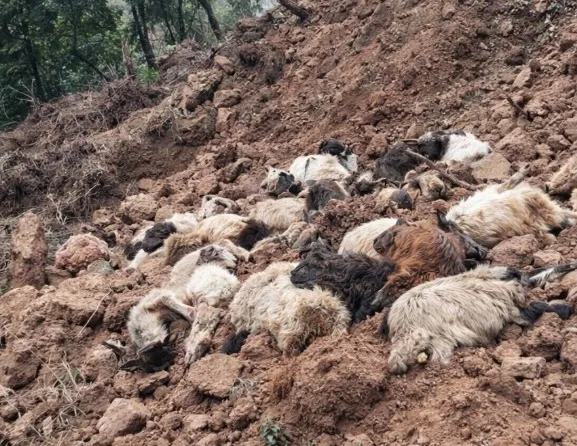
Dozens of livestock, including sheep and goats, were killed after a landslide struck near the Hasti bridge area of Jammu and Kashmir’s Kishtwar district on Wednesday, officials said.

The incident occurred when a group of shepherds was crossing the area along with their livestock. Sudden movement of debris triggered a landslide, burying several animals under mud and rocks. The shepherds accompanying the herd narrowly escaped and were reported to be safe.

Officials said rescue and clearance operations were underway to retrieve the buried animals, adding that the exact number of livestock lost would be known only after the operation is completed.

The incident comes amid adverse weather conditions in the Union Territory. Most parts of Jammu and Kashmir have witnessed fresh snowfall in higher reaches and rainfall in the plains over the past two days, increasing the risk of landslides in vulnerable areas.

Authorities have advised people, particularly nomadic shepherds and travellers, to remain cautious and avoid landslide-prone routes during the ongoing spell of inclement weather.

Opposition Protests in Parliament Over VB-G RAM G Act During President’s Address

0

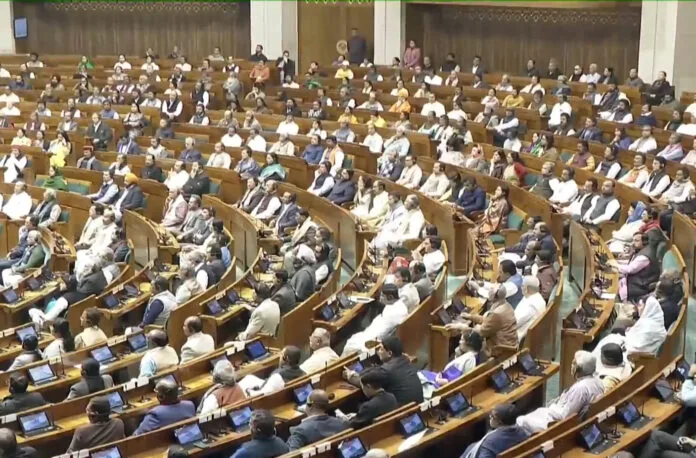
President Droupadi Murmu’s reference to the Viksit Bharat – Guarantee for Rozgar and Ajeevika Mission (Gramin) (VB-G RAM G) Act in her address to the joint sitting of Parliament on Wednesday triggered protests from Opposition parties, which raised slogans demanding rollback of the law.

While addressing members of both Houses at the start of the Budget Session, the President said the VB-G RAM G Act would provide a guarantee of 125 days of employment, curb corruption and leakages, and give fresh momentum to rural development. Her remarks were welcomed by members of the treasury benches, who thumped their desks in approval.

However, Opposition MPs strongly objected to the reference, raising slogans such as “vapas lo” (roll back the Act), forcing President Murmu to briefly pause her address.

The VB-G RAM G Act is set to replace the Mahatma Gandhi National Rural Employment Guarantee Act (MGNREGA). Opposition parties have demanded withdrawal of the new law and restoration of MGNREGA in its original, rights-based form, including the guaranteed right to work and the authority of panchayats.

The government, meanwhile, has maintained that the VB-G RAM G Act will further strengthen the rural employment guarantee system and improve transparency and efficiency in implementation.

Operation Sindoor Showcased India’s Strength, Any Terror Act Will Get Decisive Reply: President Murmu

0

President Droupadi Murmu on Wednesday asserted that India has sent a clear message to the world that any act of terrorism will be met with resolute and decisive action, saying the valour of the Indian armed forces was evident during Operation Sindoor, when terror camps were destroyed using indigenous capabilities.

Addressing a joint sitting of Parliament to mark the beginning of the Budget Session, the President said India had demonstrated that power can be exercised with responsibility and wisdom. “The world has seen the valour and courage of Indian armed forces through Operation Sindoor. Our nation, on the strength of our own resources, destroyed terror camps,” she said, amid loud desk-thumping by Prime Minister Narendra Modi and members of the treasury benches.

Murmu said the suspension of the Indus Water Treaty was also part of India’s broader fight against terrorism. She added that the government is working on Mission Sudarshan Chakra to further strengthen national security, while security forces have also taken firm action against Maoist violence. Following Operation Sindoor, she said, trust in Indian defence platforms has increased globally.

Highlighting the government’s social agenda, the President said her government remained committed to “true social justice” and empowering the poor. She said nearly 95 crore citizens are now covered under social security schemes, and around 25 crore people have moved out of poverty over the past decade.

Murmu also said the government has succeeded in tackling corruption and scams, ensuring better utilisation of public funds. “In the last 10–11 years, India has strengthened its foundation in every sector,” she said, describing the period as one marked by major achievements and transformative experiences.

Referring to national commemorations, the President said celebrations marking the 350th martyrdom anniversary of Guru Tegh Bahadur and the 150th birth anniversary of tribal leader Birsa Munda inspired the younger generation and strengthened the journey towards Viksit Bharat (Developed India). She also mentioned events linked to Sardar Vallabhbhai Patel and Bhupen Hazarika, saying they reinforced the spirit of unity and Ek Bharat, Shresht Bharat.

However, her reference to the Viksit Bharat–Guarantee for Rozgar and Ajeevika Mission (Gramin) (VB-G RAM G) scheme triggered sharp protests from Opposition benches. Murmu said the scheme would guarantee 125 days of work, curb corruption and leakages, and provide a boost to rural development.

Opposition members raised slogans demanding rollback of the Act, forcing the President to briefly pause her address. The Opposition has sought restoration of MGNREGA in its original, rights-based form, while the government maintains that the new legislation strengthens the rural employment guarantee framework.