Monday, July 13, 2026
Home Blog Page 60

LG Manoj Sinha Directs J&K Police to Strike Decisively Against Terror, Calls for Whole-of-Society Support

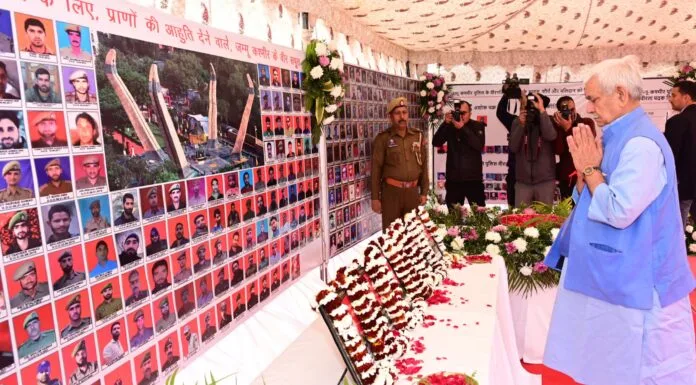
Lieutenant Governor Manoj Sinha on Monday directed the Jammu and Kashmir Police to strike decisively against terrorism and work in close collaboration with every section of society to dismantle terror networks completely.

He said the resolve of the J&K Police remains unbreakable and reflects a message of determination and courage in the face of adversity.

The Lieutenant Governor was addressing the inaugural ceremony of the J&K Police Martyrs Memorial Hockey Tournament at the KK Hakku Hockey Stadium in Jammu. The tournament has resumed after a gap of more than ten years and features 14 teams this year.

Paying tribute to fallen personnel, Sinha said the brave members of J&K Police who sacrificed their lives for the nation placed national honour above everything else and must continue to live in public memory. He noted that true tributes to martyrs endure through generations and inspire youth with values of duty and sacrifice.

He said the martyrs embodied dedication and selflessness, and stressed that society must carry forward these ideals to build strong character among young people.

The Lieutenant Governor also praised the J&K Police for empowering youth through its Civic Action Program, describing it as more than a government scheme and calling it a people-centric approach built on trust and community partnership. He said lasting peace is strengthened through social relationships and citizen participation.

Highlighting another major concern, Sinha called upon all sections of society to unite against drug abuse and reaffirmed the administration’s commitment to building a drug-free Jammu and Kashmir. He said the memorial hockey tournament also symbolizes that commitment toward healthy and constructive youth engagement.

Reiterating the UT administration’s youth-focused agenda, he said efforts are underway to create opportunities, provide direction to young energy, and ensure platforms and resources for talent to grow.

Senior police and civil officials attended the ceremony, including DGP J&K Nalin Prabhat, Special DG (Coordination) S.J.M. Gillani, Commandant General Home Guards, Civil Defence & SDRF Abdul Ghani Mir, ADGP Armed Police Anand Jain, along with sports personalities and representatives of hockey associations.
Amit Shah Says Maoism Brought Only Destruction, Vows to Eliminate Naxalism by March 31

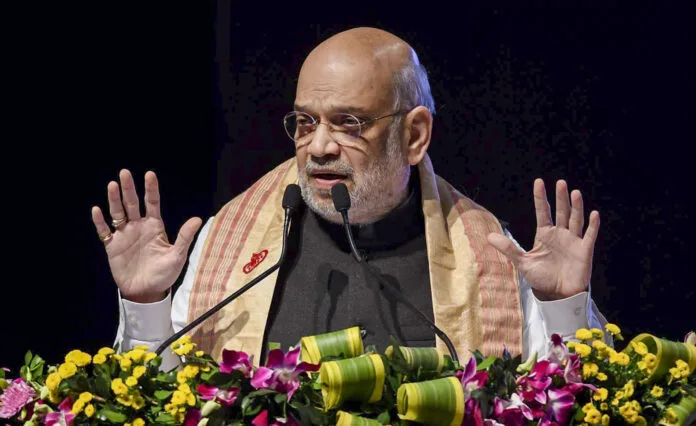
Union Home Minister Amit Shah on Monday asserted that Maoism has never benefited any society and has only spread destruction wherever it existed, as he reiterated the Centre’s resolve to eliminate Naxalism from the country by March 31.

Addressing the closing ceremony of the three-day division-level cultural festival “Bastar Pandum 2026” in Jagdalpur, Chhattisgarh, Shah appealed to Naxalites to surrender and join the mainstream, assuring them of dignified rehabilitation under government policy.

He described the Chhattisgarh government’s Maoist rehabilitation policy as highly attractive and expressed concern that many of the remaining cadres include young tribal girls whose futures must be protected through rehabilitation.

Shah warned that while those who surrender will be protected, armed cadres continuing violence, planting IEDs, and attacking public infrastructure such as schools and hospitals will face strong action. He said armed violence would be met with firm force and added that Maoist movements had caused devastation in several countries including Colombia, Peru and Cambodia.

Emphasising that the government’s fight is to protect tribal communities, Shah said explosive devices and violence endanger innocent villagers and children. He accused Maoists of having shut schools for decades, leading to widespread illiteracy in affected regions.

Highlighting development gains, he said Bastar is witnessing rapid transformation with reopening of schools, expansion of roads, installation of mobile towers, new post offices, and extension of electricity and drinking water to villages. He declared a target of making Bastar the country’s most developed tribal-majority division within five years.

Shah outlined a regional development roadmap covering seven districts, including electrification of all villages by December 2027, mobile connectivity in every village, and a post office or bank branch within every five kilometres.

He announced that paddy would be procured from tribal farmers at Rs 3,100 per quintal, cooking gas connections would be expanded, and tap water would be provided to every household. With declining Naxal violence, new tourism initiatives such as adventure tourism, homestays, canopy walks and glass bridges are also being promoted.

A new 118-acre industrial area is being set up in Bastar to create employment for tribal youth. Shah also announced upcoming irrigation projects on the Indravati river aimed at irrigating 2.75 lakh hectares in Dantewada, Bijapur and Sukma districts, along with generating 120 MW of electricity.

The Home Minister said Bastar’s identity should be defined by its culture and heritage, not guns and explosives. He thanked security forces including state police, CRPF, ITBP and BSF for their operations against Naxalism and paid tribute to personnel who lost their lives in the line of duty.

He praised the organisation of Bastar Pandum 2026, noting its expansion to 12 disciplines across seven districts with participation from 1,885 gram panchayats and 32 development blocks. He announced that the top three winners in each discipline will be invited to Rashtrapati Bhavan to showcase their art and share a meal.

Shah said the large public participation in the festival reflects Bastar’s cultural revival and affirmed the government’s commitment to preserving tribal traditions for future generations.

Rahul Gandhi Says PM Skipped Lok Sabha Reply Over Naravane Book Issue, Dares Govt to File FIR Over Threat Claims

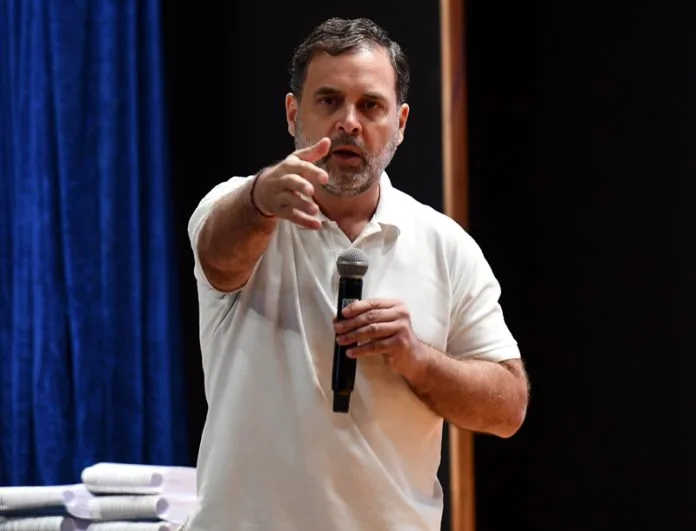
Leader of Opposition in the Lok Sabha Rahul Gandhi on Monday alleged that Prime Minister Narendra Modi did not attend the House to reply to the discussion on the Motion of Thanks to the President’s Address because he was “scared” of questions relating to former Army chief General M.M. Naravane’s book.

Addressing reporters, Gandhi rejected claims that there was any threat to the Prime Minister from opposition members during last week’s proceedings and challenged authorities to register an FIR if any such threat had been made.

He said there was “no question” of Congress members attempting to attack or threaten the Prime Minister and described such allegations as baseless. Gandhi asserted that if anyone had issued a threat, the government should identify and arrest that individual.

The Congress leader further claimed that the government was reluctant to allow a detailed debate on the Union Budget due to concerns over a US-related deal and its potential impact on farmers. He said the opposition wanted a structured discussion but alleged that the government was trying to avoid it.

Gandhi maintained that repeated disruptions occurred when he attempted to raise issues linked to General Naravane’s book. According to him, he was first told not to quote from a book, then from a magazine, and was ultimately prevented from speaking on the subject.

He also accused the Defence Minister of incorrectly stating that the book was unpublished, claiming that copies were already available.

Raising broader concerns about parliamentary functioning, Gandhi said the opposition was not being allowed to present its views during key debates, while ruling party members faced no such restrictions. He also referred to the suspension of Congress members as another matter requiring discussion in the House.

The government has not yet issued a detailed response to Gandhi’s remarks.

Centre Orders Work on Rs 5,129 Crore Sawalkote Hydropower Project on Chenab After IWT Suspension

0

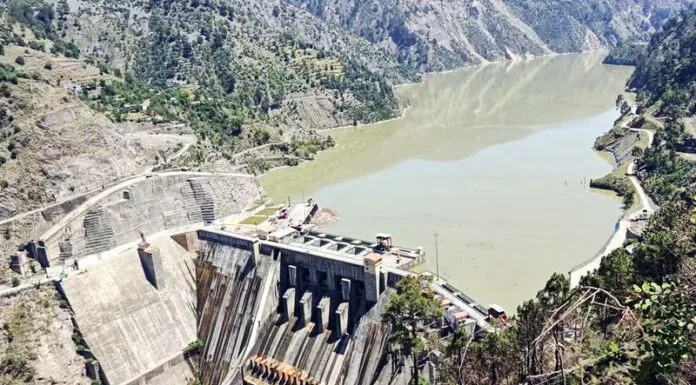
In a major policy move following the abeyance of the Indus Water Treaty (IWT), the Central Government has ordered the start of work on the long-pending Sawalkote Hydroelectric Project on the Chenab river in Jammu and Kashmir’s Udhampur and Ramban districts, with an estimated cost of Rs 5,129 crore.

The revival of the project was announced in October 2025, a few months after the IWT was put in abeyance in the aftermath of the April terror attack in Pahalgam that claimed 26 civilian lives. Environmental clearance for the project was recommended later the same month, clearing a major hurdle for its execution.

Stalled for nearly four decades, Sawalkote is among the largest hydropower projects planned in the Chenab basin and forms a key part of India’s strategy to maximise utilisation of its permitted share of western river waters through run-of-the-river power generation.

Under the 1960 treaty framework, Ravi, Beas and Sutlej were allocated for India’s exclusive use, while Indus, Jhelum and Chenab were designated as western rivers, with India allowed limited non-consumptive uses such as hydropower generation, navigation and fisheries.

The Sawalkote project, with a total planned capacity of 1,856 MW, will be developed in two stages — 1,406 MW in Stage-I and 450 MW in Stage-II. It is designed as a run-of-the-river scheme and will be located between the Baglihar project upstream and the Salal project downstream on the Chenab river.

NHPC Ltd has invited bids for construction works, marking the formal start of the project rollout. Authorities plan to execute the scheme on a fast-track basis, though full completion is expected to take around nine years.

The approval follows clearance by the Environment Ministry’s Expert Committee last year as part of a broader push to accelerate strategically important infrastructure projects after the IWT suspension.

The Centre has also fast-tracked multiple other hydropower projects in the Chenab basin. The 1,000 MW Pakal Dul and 624 MW Kiru projects are targeted for commissioning by December 2026. The Kwar project, featuring a 109-metre dam, is expected to be completed by March 2028, while the 850 MW Ratle project is also scheduled for completion by 2028.

Additionally, Dulhasti Stage-II has received environmental clearance and is moving ahead, further strengthening hydropower capacity in the region.

J&K Government Unveils Vision Document to Reform Labour Welfare, Plans to Link VDA with Minimum Wages

0

The Jammu and Kashmir Government has prepared a comprehensive Vision Document aimed at overhauling labour welfare and governance across the Union Territory, with a major proposal to make Variable Dearness Allowance (VDA) an integral component of minimum wages to protect workers from inflation.

The information was shared in the Legislative Assembly by the Labour and Employment Department in response to a query raised by legislator Mohammad Yousuf Tarigami.

According to the Government, the Vision Document is based on the recommendations of a committee constituted in April 2024 to examine key labour welfare issues. It lays out a strategic framework to strengthen labour administration and worker protection through multiple reforms.

Key proposals include stricter enforcement of labour laws, modernization of inspection systems through a Central Automated Inspection mechanism, and improvements in conciliation and quasi-judicial processes to ensure quicker resolution of labour disputes.

The document also stresses scientific and regular revision of minimum wages, enhanced awareness of labour rights through information and education campaigns, capacity building of departmental staff, elimination of child and bonded labour, and promotion of skill development aligned with emerging employment sectors.

A major highlight is the planned incorporation of VDA into minimum wages to offset inflation and safeguard the real income of workers. The Government said the document is currently under examination and will be aligned with the new Central Labour Codes. The inclusion of VDA will be implemented in a phased and time-bound manner.

Addressing concerns about delays in financial assistance to dependents of deceased registered labourers, the Government said it is sensitive to the hardships faced by such families and remains committed to timely and dignified support. It explained that delays are largely due to statutory requirements, including the mandatory 90 days of employment for registration and verification needed for renewal.

Authorities stated that strict verification is necessary to maintain beneficiary authenticity and protect public funds, even though the process is rigorous.

Following the enforcement of four new Central Labour Codes from November 21, 2025, replacing 29 earlier labour laws, new welfare boards are to be constituted, including National and State Social Security Boards and a Building and Other Construction Workers’ Welfare Board. Clarifications have been sought regarding continued disbursements during the transition period.

Despite the transition, the J&K Building and Other Construction Workers Welfare Board continues core functions such as worker registration, labour card issuance, and renewals. A board meeting chaired by the Chief Minister in July 2025 approved major welfare disbursements, with over Rs 6,764 lakh spent on education, health, and other assistance during the 2025–26 financial year up to December.

On wage compliance, the department said regular inspections and enforcement drives are conducted to ensure employers follow notified wage rates. Minimum wages revised in October 2022 remain in force, and revisions are undertaken periodically with intervals not exceeding five years to keep pace with inflation and living costs.

सोपोर–कुपवाड़ा नई रेल लाइन परियोजना अव्यवहारिक बताकर रद्द, अन्य कश्मीर रेल परियोजनाओं के DPR तैयार: रेल मंत्री

0

केंद्र सरकार ने सोपोर–कुपवाड़ा नई रेल लाइन परियोजना को अव्यवहारिक पाए जाने के बाद रद्द कर दिया है। यह जानकारी रेल, सूचना एवं प्रसारण तथा इलेक्ट्रॉनिक्स एवं आईटी मंत्री अश्विनी वैष्णव ने शुक्रवार को राज्यसभा में एक प्रश्न के लिखित उत्तर में दी।

मंत्री ने बताया कि श्रीनगर–बारामूला रेल खंड की कनेक्टिविटी को आगे बढ़ाने के लिए 34 किलोमीटर लंबी सोपोर–कुपवाड़ा नई लाइन का सर्वे और विस्तृत परियोजना रिपोर्ट (DPR) तैयार की गई थी, लेकिन व्यवहार्यता के आधार पर इसे आगे नहीं बढ़ाया गया।

उन्होंने कहा कि सीमावर्ती क्षेत्रों में रेल संपर्क मजबूत करने के उद्देश्य से दो अन्य परियोजनाओं की DPR तैयार की गई है। इनमें काजीगुंड–श्रीनगर–बडगाम रेल खंड का दोहरीकरण (118 किमी) और बारामूला–उरी नई रेल लाइन (40 किमी) शामिल हैं।

वैष्णव ने स्पष्ट किया कि DPR तैयार होने के बाद किसी भी रेल परियोजना को मंजूरी देने के लिए राज्य सरकारों सहित विभिन्न हितधारकों से परामर्श और नीति आयोग व वित्त मंत्रालय जैसी संस्थाओं से स्वीकृति आवश्यक होती है। चूंकि परियोजनाओं की स्वीकृति एक सतत और गतिशील प्रक्रिया है, इसलिए निश्चित समयसीमा बताना संभव नहीं है।

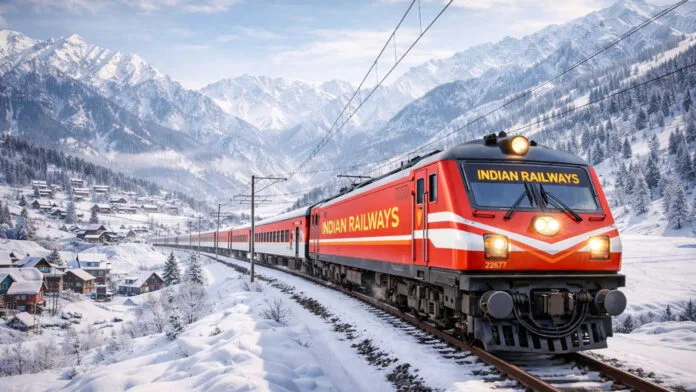
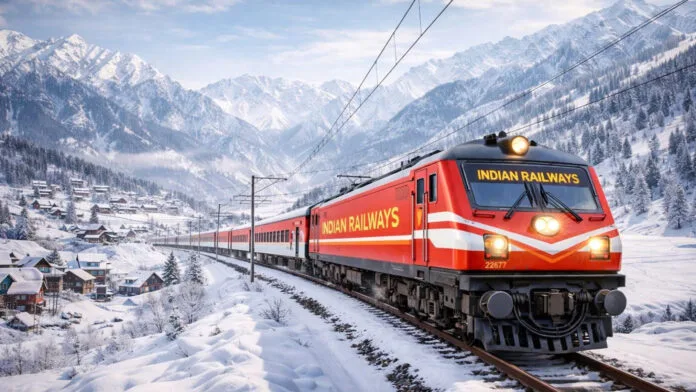
मंत्री ने हाल ही में शुरू हुई 272 किलोमीटर लंबी उधमपुर–श्रीनगर–बारामूला रेल लिंक (USBRL) परियोजना का भी उल्लेख किया। उन्होंने कहा कि इस परियोजना से उधमपुर, रियासी, रामबन, श्रीनगर, अनंतनाग, पुलवामा, बडगाम और बारामूला जिलों को सीधा रेल संपर्क मिला है।

उन्होंने बताया कि USBRL परियोजना का क्षेत्र के सामाजिक और आर्थिक विकास पर बड़ा प्रभाव पड़ा है और इससे पांच करोड़ से अधिक मानव-दिवस का रोजगार सृजित हुआ है। परियोजना के तहत 215 किलोमीटर से अधिक पहुंच मार्ग, एक सुरंग और लगभग 320 छोटे पुल भी बनाए गए हैं, जिससे स्थानीय आबादी की कनेक्टिविटी और जीवन स्तर में सुधार हुआ है।

मंत्री ने कहा कि घाटी को देश के बाकी रेल नेटवर्क से हर मौसम में विश्वसनीय और आरामदायक रेल संपर्क मिलने से पर्यटन क्षेत्र को भी बड़ा बढ़ावा मिलेगा।

Sopore–Kupwara Rail Project Dropped as Infeasible; DPRs Prepared for Other Kashmir Rail Links: Railways Minister

0

The proposed Sopore–Kupwara new railway line project in north Kashmir has been dropped after being found infeasible, even though a survey was conducted and a Detailed Project Report (DPR) had been prepared, the government informed the Rajya Sabha on Friday.

In a written reply to a question, Union Minister for Railways, Information & Broadcasting and Electronics & Information Technology Ashwini Vaishnaw said the 34-km Sopore–Kupwara new line was initially sanctioned to extend rail connectivity of the existing Srinagar–Baramulla section, but was later abandoned due to feasibility issues.

The minister said that to further enhance rail connectivity, particularly in border regions, DPRs have been prepared for two other projects — doubling of the Qazigund–Srinagar–Budgam section (118 km) and a new rail line from Baramulla to Uri (40 km).

He clarified that after preparation of DPRs, sanctioning of railway projects requires consultations with multiple stakeholders, including state governments, and statutory approvals such as appraisal by NITI Aayog and the Ministry of Finance. Since project approvals are part of a continuous and dynamic process, fixed timelines cannot be specified, he added.

Highlighting the recently commissioned Udhampur–Srinagar–Baramulla Rail Link (USBRL), Vaishnaw said the 272-km-long project now connects districts including Udhampur, Reasi, Ramban, Srinagar, Anantnag, Pulwama, Budgam and Baramulla.

The minister noted that the USBRL project has made significant socio-economic contributions to Jammu and Kashmir, generating over five crore man-days of employment. He added that more than 215 km of approach roads have been constructed under the project, including tunnels and around 320 small bridges, greatly improving connectivity for local populations.

“With the all-weather, reliable and comfortable rail connectivity of the Kashmir valley with the rest of the Indian Railways network, tourism will receive a major boost,” the minister said.

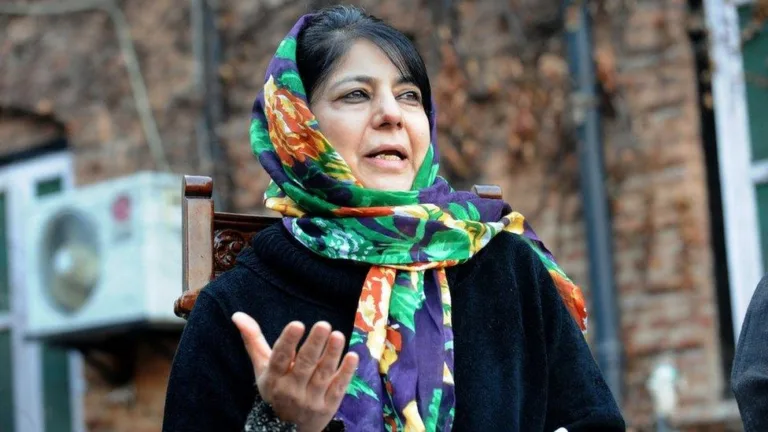
Mehbooba Mufti Seeks Dedicated Rail Fruit Corridor for Kashmir, Urges Realignment of Projects to Protect Orchards

0

PDP president Mehbooba Mufti on Friday urged the Centre to establish a dedicated fruit corridor through a railway link for the smooth transportation of horticulture produce from Kashmir to the rest of the country, while calling for railway projects to be aligned away from fertile orchard land.

In a letter to Union Railway Minister Ashwini Vaishnaw, Mufti requested a specialised rail network focused on fruit transport, citing frequent disruptions and unpredictability of the national highway that hamper timely movement of produce.

Sharing the letter on her X handle, the former Jammu and Kashmir chief minister thanked the Railway Ministry for keeping certain rail projects passing through orchards in abeyance, saying the decision has brought relief to lakhs of farming families.

“Farmers are not opposed to railway connectivity. On the contrary, a dedicated fruit corridor through a reliable rail network is urgently needed, particularly given the unpredictability and frequent disruptions of the national highway,” she wrote.

Mufti stressed that infrastructure development must be balanced with sustainability and should prioritise barren and uncultivable land instead of productive farmland. She called for a fresh assessment and realignment of proposed railway projects along unproductive land to safeguard livelihoods.

She also demanded rail connectivity for the Chenab Valley and Pir Panjal regions from Jammu, describing these areas as resource-rich and strategically important but economically constrained due to weak surface connectivity.

“Like the rest of India, Kashmir lives in its villages where most farmers are marginal landholders with no alternative income source. Rising unemployment among educated youth has further increased dependence on agriculture,” she said.

Mufti noted that many farmers have recently shifted to high-density and capital-intensive horticulture, and uncertainty over rail project alignments has created fear about the safety of their investments. She urged authorities to scrap current alignments affecting orchards and redesign them to protect fertile land.

She said such a move would reduce anxiety among growers and help safeguard the livelihoods of nearly 1.5 million families dependent on agriculture and horticulture in the Valley.

Exams Are Like Festivals, Don’t Let Marks Become a Burden: PM Modi Tells Students at Pariksha Pe Charcha 2026

0

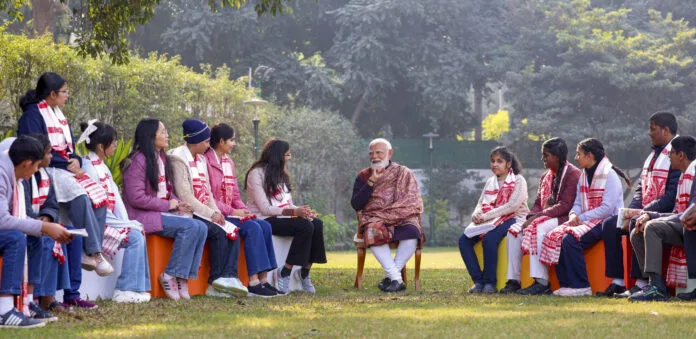
Prime Minister Narendra Modi on Friday advised students to treat examinations like festivals and not let marks become a burden, as he shared stress-management mantras during the ninth edition of Pariksha Pe Charcha 2026 ahead of the board exams.

Interacting with students from across the country, the Prime Minister emphasised that education should be meaningful and engaging rather than stressful. He said students should focus on improving their lives and skills instead of obsessing over scores.

“Education should not feel like a burden. It needs total involvement. Instead of focusing only on marks, everyone should focus on where they have reached in life,” Modi said, adding that comfort zones do not shape life — one’s lifestyle and discipline do.

He encouraged students to develop their own study patterns while remaining open to suggestions from parents and teachers. Responding to a student’s question about conflicting advice from parents and teachers, Modi said such differences continue throughout life and each individual must ultimately discover what works best for them.

“Everyone has their own rhythm. Some study better at night, some early in the morning. Listen to everyone’s advice, but adopt changes only when they suit you and your experience,” he said.

Cautioning against overemphasis on marks, the Prime Minister asked students whether they remembered last year’s board toppers, underscoring that such achievements are quickly forgotten and do not alone define success. He stressed that life is bigger than examinations and education is a tool for overall development.

On gaming as a career option, Modi described gaming as a skill that requires speed and alertness and can contribute to development if pursued constructively. However, he warned students against gambling-based gaming practices and urged them to focus on quality and skill-building.

He also highlighted the importance of balancing studies with rest, hobbies and skill development, saying both life skills and professional skills are equally important.

The Prime Minister welcomed the students at his residence with traditional Assamese gamosas. The programme was also screened at the Bal Yogi Auditorium in the Parliament complex.

Launched in 2018, Pariksha Pe Charcha has grown into one of the country’s largest student engagement initiatives. Registrations for the ninth edition crossed 4.5 crore, surpassing previous records and expanding the programme’s national reach.

Railway Minister Addresses Jammu Metro Proposal, Stalled Projects and Premium Train Demands in Rajya Sabha

0

Railway Minister Ashwini Vaishnaw on Friday addressed a range of infrastructure and connectivity issues in the Rajya Sabha during a lively Question Hour and Zero Hour session, including the possibility of Metro services in Jammu, delays in rail projects due to land and environmental hurdles, and demands for premium train connectivity.

During Question Hour, BJP-nominated MP Gulam Ali raised a query regarding plans for a Metro system in Jammu. Responding to the question, Vaishnaw said the matter would be referred to Urban Affairs Minister Manohar Lal Khattar, who handles Metro projects, but noted the technical challenges of operating rail systems in high-altitude regions such as Jammu and Kashmir.

“The operation of rail in high-altitude areas is complicated. We should have a special design for trains in Jammu and Kashmir. The design is ready, and we are about to take a decision on it,” the minister said, indicating progress toward customised rail solutions for the region.

He also stated that the Railways would not lay spurs from the main railway line where they could adversely affect apple orchards, noting that farmers have raised concerns over such alignments.

During Zero Hour, Vaishnaw highlighted obstacles affecting railway expansion projects, particularly those linked to land acquisition and environmental clearances. Referring to Kerala’s proposed Silver Line semi-high-speed rail project, he said it carries significant environmental implications and stressed that land acquisition remains a major bottleneck for several pending railway works across states.

He called for greater cooperation from state governments to help expedite nationally important infrastructure projects.

Raising a separate demand, BJP MP from Maharashtra Dr Medha Vishram Kulkarni urged the introduction of a Vande Bharat Sleeper train on the Delhi–Pune route, citing high passenger demand and workforce mobility between the two cities.

Commenting on the long-pending Angamaly–Sabarimala rail project in Kerala, which has been stalled due to land disputes, Vaishnaw said land acquisition would move forward when there is supportive governance in the state, drawing attention amid ongoing political debate over infrastructure push in opposition-ruled states.