Wednesday, July 8, 2026
Home Blog Page 6

Union Home Secretary Reviews Security Preparedness for Shri Amarnath Yatra in Srinagar

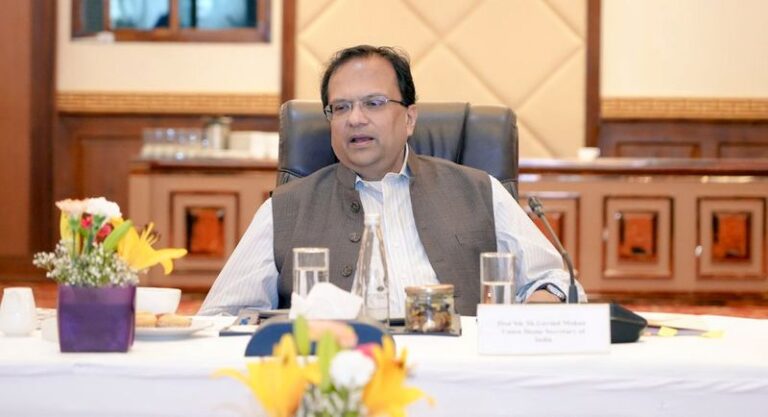
Union Home Secretary Govind Mohan arrived in Srinagar on Saturday to undertake a comprehensive review of security and logistical arrangements for the forthcoming Shri Amarnath Yatra, scheduled to commence on July 3 amid heightened preparedness by security and civil administration agencies.

Official sources said the Home Secretary is set to chair a high-level meeting involving senior officials from the Jammu and Kashmir administration, Police, Army, Central Armed Police Forces (CAPFs), intelligence agencies, and other stakeholders to assess the overall preparedness for the annual pilgrimage.

The review will focus on strengthening the security grid along both the traditional Pahalgam route in Anantnag district and the shorter Baltal route in Ganderbal district, from where the pilgrimage will begin simultaneously on July 3.

The visit comes at a crucial time as security forces have intensified area domination exercises, route sanitisation operations, anti-terror surveillance measures, and security audits across the Kashmir Valley, particularly in districts connected with the Yatra route.

Sources indicated that discussions are expected to cover deployment strategies, convoy protection, intelligence coordination, emergency response systems, disaster management preparedness, communication networks, and pilgrim safety arrangements at various transit and base camps.

Special emphasis is likely to be laid on inter-agency coordination to ensure swift response to any contingency during the pilgrimage period.

In recent weeks, multiple mock drills and joint exercises involving the Jammu and Kashmir Police, CRPF, SDRF, health services, fire and emergency departments, and other agencies have been conducted to test preparedness and strengthen coordination mechanisms.

Officials said the Home Secretary is also expected to review infrastructure and facilitation measures put in place for pilgrims, including healthcare facilities, transportation services, accommodation arrangements, communication support, rescue operations, and emergency evacuation plans.

The annual Shri Amarnath Yatra is one of the country’s most significant religious pilgrimages, attracting thousands of devotees from across India every year. Authorities have intensified preparations to ensure a safe, secure and hassle-free pilgrimage experience for all devotees.

The high-level review underscores the Centre’s focus on maintaining robust security arrangements and seamless logistical support ahead of the commencement of the Yatra next month.
Article 370 Abrogation Sparked Aspirational Surge in J&K Youth: Jitendra Singh

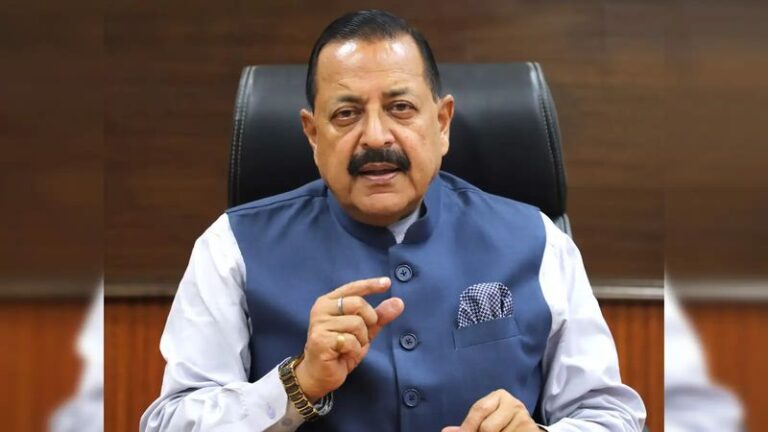
 Union Minister of State for Science and Technology Dr. Jitendra Singh has said that the abrogation of Article 370 has brought about a significant transformation in the mindset of people in Jammu and Kashmir, particularly among the youth, leading to an unprecedented rise in aspirations and achievements.

In an interaction, Dr. Singh said that young people from even the smallest towns and remote areas of Jammu and Kashmir are now excelling in academics and competitive examinations, reflecting a new sense of confidence and opportunity.

“One of the most significant changes is in the mindset of the people. Today, children from small towns are topping examinations and performing exceptionally well in competitive tests. An aspirational surge has taken place among the youth,” he said.

The Minister observed that the removal of Article 370 strengthened the feeling of belongingness among the people of Jammu and Kashmir by integrating them fully with the rest of the country.

“Earlier, many people felt isolated and different. Today, they see themselves as equal citizens with equal opportunities and equal rights. This psychological transformation has played a crucial role in shaping the aspirations of the younger generation,” he remarked.

Highlighting social reforms that followed the constitutional changes of August 2019, Dr. Singh noted that several categories of citizens who were previously deprived of certain rights have now been brought into the mainstream.

The Union Minister said the changes have created an environment where talent and hard work are emerging as the key drivers of success, encouraging young people to pursue higher education, professional careers, entrepreneurship and public service.

PM Modi Capable of Resolving PoJK Issue: Jitendra Singh

Speaking on the issue of Pakistan-occupied Jammu and Kashmir (PoJK), Dr. Singh reiterated the Government of India’s long-standing position that the region is an integral part of the country.

He referred to the unanimous Parliamentary Resolution adopted in 1994, which declared the entire territories of Jammu, Kashmir and Ladakh as integral parts of India. He noted that the Bharatiya Janata Party had strongly supported the resolution.

“There is no issue between India and Pakistan except the issue of PoJK and its eventual reintegration with the Indian Republic,” he said.

Dr. Singh further asserted that Prime Minister Narendra Modi possesses the leadership, conviction and determination required to address the outstanding issue of PoJK.

“If anyone has the courage, capacity and commitment to resolve the issue of PoJK, it is Prime Minister Narendra Modi,” he stated.

The Minister also alleged that the people living in Pakistan-occupied Jammu and Kashmir have long faced discrimination and have been treated as second-class citizens by the Pakistani establishment.

A New Era of Confidence

Dr. Singh emphasized that the developments witnessed in Jammu and Kashmir over the past few years reflect a broader transformation in governance, opportunities and public participation. He said the emergence of young achievers from remote areas, coupled with growing educational and professional aspirations, demonstrates the positive impact of greater integration and expanded opportunities in the Union Territory.

According to the Minister, Jammu and Kashmir is witnessing a new era marked by confidence, ambition and increasing participation of its youth in nation-building and competitive fields across the country.

GMC Jammu Achieves Milestone with First Stem Cell Therapy for Knee Osteoarthritis

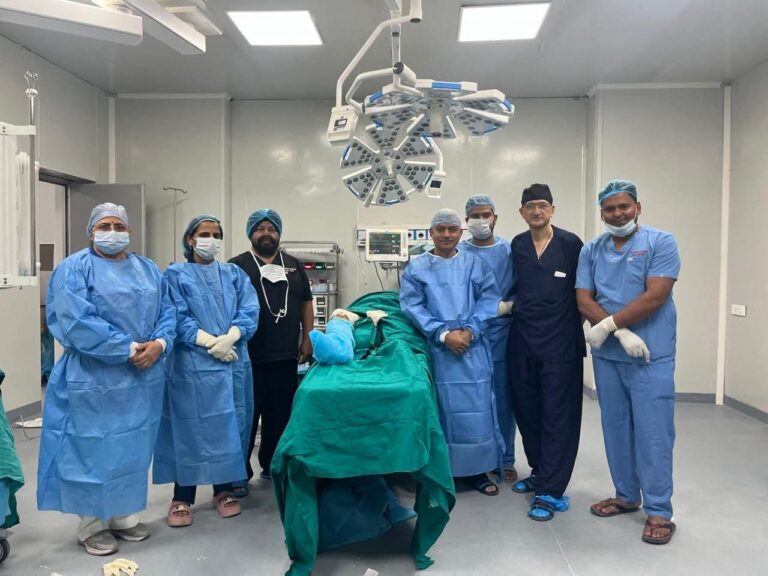
Jammu, June 19: In a significant medical breakthrough, the Department of Orthopaedics at Government Medical College (GMC) Jammu has successfully introduced Stem Cell Therapy for the treatment of knee osteoarthritis, becoming one of the select medical centres in India to offer this advanced regenerative treatment.

The pioneering procedure was performed on a 65-year-old patient, Bishno Devi, a resident of Bainglar, Samba, who had been suffering from chronic knee pain due to osteoarthritis and was considering Total Knee Replacement (TKR) surgery to alleviate her symptoms.

Stem Cell Therapy is an emerging treatment modality aimed at preventing or slowing the progression of osteoarthritis in patients with mild to moderate disease. The therapy has shown promising results in delaying, and in some cases preventing, the need for knee replacement surgery. It is a minimally invasive day-care procedure, allowing patients to be discharged on the same day.

The procedure was successfully carried out at Bone and Joint Hospital, Jammu, by Dr. Bias Dev, Associate Professor, Department of Orthopaedics, with assistance from Dr. Tahir Afzal and Dr. Tadeel Rashid.

One of the major challenges associated with stem cell therapy is maintaining an uninterrupted cold chain during transportation, as stem cells are preserved in liquid nitrogen chambers at temperatures below minus 90 degrees Celsius to ensure their viability.

The necessary consumables and materials required for the treatment were arranged under the Ayushman Bharat Scheme, enabling the patient to undergo the advanced procedure completely free of cost.

Expressing their gratitude, the patient and her family thanked the treating doctors and the administration of GMC Jammu for making the cutting-edge treatment accessible. They particularly appreciated the efforts of Principal GMC Jammu, Dr. Ashutosh Gupta, for facilitating the availability of this advanced medical facility for patients in the region.

The introduction of Stem Cell Therapy marks another milestone in the advancement of healthcare services at GMC Jammu and is expected to benefit numerous patients suffering from osteoarthritis across Jammu and Kashmir.

Home Ministry Working with Supreme Court to Reduce Case Pendency, Ensure Timely Justice: Amit Shah

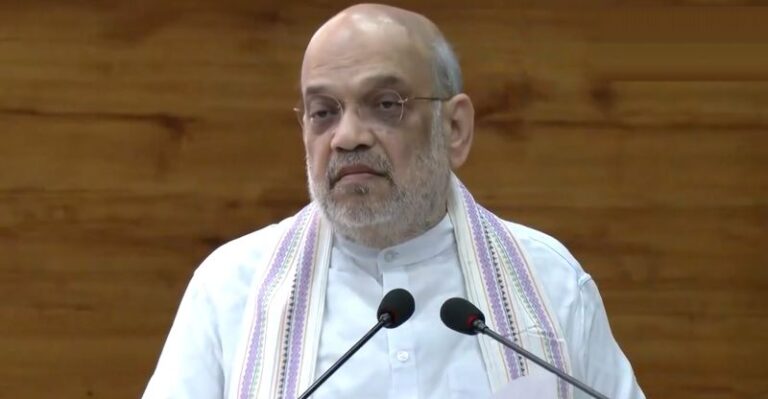
 Union Home Minister Amit Shah on Friday said the Ministry of Home Affairs is actively working with the Supreme Court of India to develop a new system aimed at reducing the pendency of cases in the Supreme Court and various high courts, ensuring timely justice for citizens.

Addressing the inaugural session of the All India Fingerprint Conference-2026 organised by the National Crime Records Bureau in New Delhi, Shah stressed the importance of scientific investigation, accurate evidence collection, and the effective use of technology in strengthening the criminal justice system.

The Home Minister said that significant reforms have been undertaken through the three new criminal laws introduced by the government. He noted that nearly 90 per cent of the legal loopholes identified in the previous criminal laws have been addressed.

“The Union Home Ministry is actively engaged with the Supreme Court to create a new system that can effectively deal with volume-based delays in the High Courts and the Supreme Court,” Shah said, adding that the government is determined to eliminate unnecessary delays in the delivery of justice.

He urged police officers and forensic experts to ensure proper collection and preservation of evidence from crime scenes, emphasizing that contaminated evidence often weakens prosecution and delays convictions.

Shah called upon investigating officers to file timely charge sheets, maintain regular coordination with prosecutors, and pursue cases diligently to facilitate speedy judicial decisions.

Highlighting the growing role of technology in policing, the Home Minister said that crime-related data should be analysed using Artificial Intelligence (AI) and Machine Learning tools to identify crime patterns, predict criminal activities, and expedite investigations.

Referring to the proposed Modus Operandi Bureau within the NCRB, Shah said the unit should now begin functioning to study criminal methodologies, repeat offenders, and interstate as well as international criminal networks.

The minister also emphasized the wider use of the National Automated Fingerprint Identification System (NAFIS), stating that while the system has helped solve several complex cases, its potential remains underutilised.

“NAFIS is currently being used only about 10 per cent of the time. It should not be limited to identifying criminals alone. The database must be continuously enriched with fingerprints collected from every crime scene,” he said.

Shah observed that India’s criminal justice system is undergoing a major transformation and must evolve into an effective mechanism for ensuring citizens receive the rights guaranteed under the Constitution.

He also highlighted the need for specialised training of police personnel and prosecutors under the new criminal laws so that only relevant and scientifically verified evidence is presented before courts.

Stressing the need for efficiency, Shah said technological tools such as fingerprint matching, DNA analysis, facial recognition, and digital evidence should be effectively integrated into investigations, prosecution, and conviction processes.

“We need to ensure the active use of technology across the entire chain of investigation, prosecution, and conviction,” the Home Minister said.

The conference brought together police officers, forensic experts, and criminal justice professionals from across the country to discuss advancements in forensic science, fingerprint analysis, and technology-driven policing.

Conventional Warfare Still Relevant, Strong Defence Manufacturing Essential: Rajnath Singh

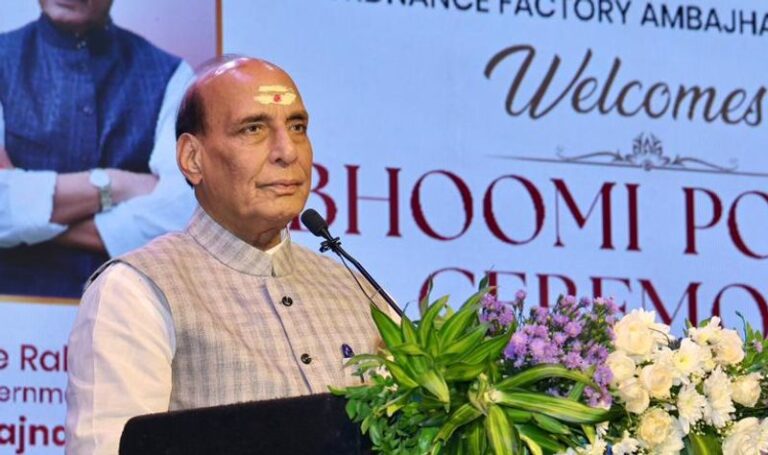
Defence Minister Rajnath Singh on Friday asserted that conventional warfare and military capabilities remain as relevant today as they were in 1947 and will continue to play a vital role in safeguarding national interests in the future.

Speaking at the ground-breaking ceremony for a 10,000-tonne aluminium extrusion press at Yantra India Limited (YIL) in Ambajhari, Nagpur, Singh emphasized the importance of self-reliance in defence manufacturing and the need to strengthen India’s military-industrial base.

The new facility is expected to significantly reduce India’s dependence on imports of critical aluminium components required for defence production.

Highlighting the lessons from global conflicts, Singh said that supply chains often face severe disruptions during wars and geopolitical crises.

“In such a scenario, every nation wants essential items to be manufactured domestically,” he said, stressing that a country capable of fulfilling its own requirements can move forward with greater confidence and resilience.

The Defence Minister noted that despite rapid technological advancements, conventional warfare and traditional military capabilities continue to hold strategic importance.

“Conventional warfare and means are still relevant today, just as they were in 1947. They will remain equally important even in 2047,” Singh said.

He added that a strong military-industrial base would remain indispensable for national security and defence preparedness in the coming decades.

Highlighting India’s growing defence capabilities, Singh said the country’s defence production has witnessed a remarkable rise, increasing from approximately Rs 46,000 crore in 2014 to over Rs 1,78,000 crore in 2025-26.

He further noted that India’s defence exports have also recorded significant growth, rising from around Rs 1,000 crore in 2014 to nearly Rs 40,000 crore at present.

Singh said the government’s focus on indigenous manufacturing, technological innovation, and self-reliance under the ‘Aatmanirbhar Bharat’ initiative has played a key role in strengthening India’s defence sector and enhancing its global standing in defence production and exports.

India can eradicate sickle cell disease before 2047 through collective efforts: President Murmu

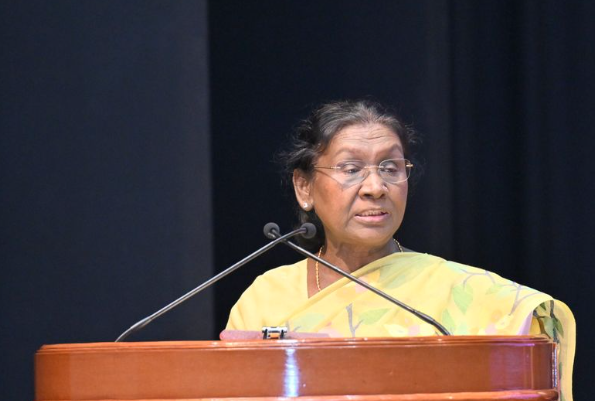
President Droupadi Murmu on Friday expressed confidence that India would eradicate sickle cell disease well before its national target year of 2047, underscoring the need for concerted efforts to raise awareness about the genetic blood disorder, particularly among tribal communities.
She was addressing a state-level programme in Omkareshwar on the occasion of World Sickle Cell Day. Madhya Pradesh Governor Mangubhai Patel and Chief Minister Mohan Yadav were also present on the occasion.
“I am confident that with the collective strength and active participation of all states, we will certainly achieve our national goal of eliminating sickle cell disease from the country much before 2047,” the President said.
Sickle cell disease is an inherited blood disorder in which red blood cells become sickle-shaped instead of their normal round form. The condition affects the flow of oxygen in the body and can cause pain, anaemia, infections and other health complications.
Murmu said studies have shown that the prevalence of sickle cell disease among tribal communities in India is several times higher than that in the general population.
“I would like to appeal from this platform to all state governments and officials that this disease should not be taken lightly because it is passed on from one generation to another. Efforts should be made to eradicate it completely because treatment is possible. This disease can be eliminated. Such a claim has come to light,” she said.
Madhya Pradesh and Odisha are among the states with the highest prevalence of sickle cell disease among tribal populations in the country.
Observed annually on June 19, World Sickle Cell Day aims to raise awareness about the disease, promote timely screening and treatment, and improve the quality of life of those affected by the condition. (Agencies)

Delhi HC Rejects Telegram’s Challenge Against Temporary Ban Ahead Of NEET-UG Retest

The Delhi High Court on Friday upheld the Centre’s move to temporarily restrict access to the Telegram messaging app ahead of the June 21 NEET-UG re-exam, holding the order was “not disproportionate”.
While pronouncing the judgement, a vacation bench of Justice Tejas Karia said the Centre’s order was “least restrictive” and the government was empowered to direct blocking of access to Telegram.
A detailed order is awaited.
Telegram’s counsel had questioned the legality of the government order blocking the platform. He had said that over 150 million users had been affected by the Centre’s action.
The National Testing Agency (NTA) had on May 12 cancelled the National Eligibility-cum-Entrance Test (Undergraduate), or NEET-UG, held on May 3 for medical admissions amid allegations of paper leak.
The CBI is investigating the matter and a re-test is scheduled on June 21.
The Ministry of Electronics and Information Technology (MeitY), acting on recommendations of the NTA, had issued a direction on June 16 under Section 69A of the Information Technology Act, 2000, restricting access to the Telegram platform in India till June 22, covering the day of the NEET (UG) 2026 re-exam and its immediate aftermath.
A separate direction had also asked Telegram to disable in India the message-editing feature for already-posted messages till June 30, 2026, addressing the specific structural feature through which the platform has been used to fabricate after-the-event “paper leak” evidence in respect of national examinations. (Agencies)

Odisha: IPS Officer Suspended Following Harassment Allegations By Lynched Constable’s Family

Senior IPS officer Dayal Gangwar was suspended over allegations of harassment levelled by the family of GRP constable Soumya Ranjan Swain, who was lynched on the outskirts of Bhubaneswar last month.

Chief Minister Mohan Charan Majhi has ordered the suspension of Gangwar, who was serving as Officer on Special Duty (OSD) in the Home Department, said a statement issued on Thursday.

Gangwar’s name had surfaced during the investigation into the lynching of Swain, who was allegedly tied to a pole and beaten to death in Bhingarpur-Kaja in the Balianta Police Station area on May 7.

The mob attack took place after a woman accused the constable of attempting to rape her following a collision between his motorcycle and her two-wheeler, according to police.

As the incident triggered a furore in the state, Swain’s family had alleged that he was subjected to both physical and mental harassment by Gangwar, who was then ADG (Communication), and demanded that he be brought within the ambit of the investigation.

The 1998-batch IPS officer was subsequently transferred and posted as OSD in the Home Department by the state government.

Following this, ADG (Railways) Arun Bothra was directed to conduct an inquiry into allegations that Gangwar had subjected Swain to mental harassment by allegedly compelling him to perform personal and domestic chores unrelated to official duties.

Bothra was also tasked with examining whether the stress described in Swain’s personal diary had any bearing on the circumstances leading to his death. The inquiry report was submitted to the DGP last month.

The opposition BJD had also raised questions over the alleged connection between the deceased constable and the senior IPS officer, who was ADG (Railways) two years back and supposedly knew Swain since then.

The party claimed that Swain had been engaged in work at Gangwar’s residence and gymnasium instead of performing official police duties.

As part of the probe into the mob-lynching case, the state government had earlier suspended four police personnel, disengaged two home guards and transferred the inspector-in-charge of Balianta police station over their alleged roles and conduct in the incident.

Police have so far arrested 18 persons, including the prime accused, in connection with the lynching. (Agenciese)

Assets Worth Rs 2.08 Crore of Alleged Drug Peddler Attached in Samba

Police on Friday attached assets worth over Rs 2.08 crore belonging to an alleged drug peddler in Jammu and Kashmir’s Samba district as part of the ongoing campaign against narcotics trafficking.

The accused has been identified as Narayan Sharma alias Shunna, a resident of Vijaypur in Samba district.

According to officials, the action was carried out under Section 68-F of the Narcotic Drugs and Psychotropic Substances (NDPS) Act after investigations established that the assets were allegedly acquired through proceeds generated from illicit drug trafficking.

The attached properties include a residential house valued at approximately Rs 48.50 lakh, a car worth around Rs 10 lakh, and land valued at nearly Rs 1.50 crore. The total value of the attached assets has been estimated at about Rs 2.08 crore.

Police said a detailed investigation and inquiry revealed prima facie evidence indicating that the properties were acquired through proceeds of illegal narcotics trade. Consequently, the assets were seized and attached under the relevant provisions of the NDPS Act.

Officials stated that further legal proceedings are being initiated in accordance with the law.

Narayan Sharma is currently lodged in Central Jail Kot Bhalwal, Jammu, under the provisions of the Prevention of Illicit Traffic in Narcotic Drugs and Psychotropic Substances (PITNDPS) Act.

Police reiterated their commitment to intensifying efforts against drug trafficking and dismantling the financial networks of individuals involved in the illegal narcotics trade.

PM Modi Meets Top French CEOs, Highlights India as a Trusted Global Partner

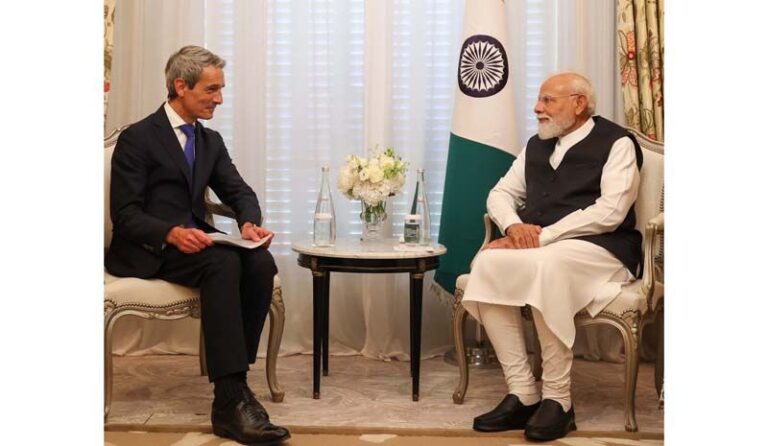
Prime Minister Narendra Modi held a series of high-level meetings with leading French business executives in Paris on Thursday, discussing investment opportunities, expansion plans, and strengthening economic cooperation between India and France.

The discussions covered key sectors including shipping and logistics, railways, construction, sustainability, and artificial intelligence. The meetings took place during Modi’s visit to France following his participation in the G7 Summit.

Among the prominent business leaders who met the Prime Minister was Rodolphe Saade, Chairman and CEO of CMA CGM. Their discussions focused on maritime shipping, logistics, global supply chains, shipbuilding, ship recycling, deep-sea ports, and container manufacturing.

Saade expressed confidence in India’s growing role in global supply chains and highlighted opportunities for deeper cooperation between French and Indian companies in the shipping and logistics sectors.

Modi also met Benoit Bazin, Chairman and CEO of Saint-Gobain, to discuss sustainable construction and advanced materials. The Prime Minister appreciated the company’s strong investments in India and its contribution to employment generation and industrial growth.

In a separate meeting with Martin Sion, CEO of Alstom, discussions centered on railway modernization and mobility solutions. Modi acknowledged Alstom’s significant manufacturing presence in India and its role in strengthening the country’s rail infrastructure.

The Prime Minister also interacted with Arthur Mensch, Co-founder and CEO of Mistral AI. The discussions focused on India’s rapidly growing artificial intelligence ecosystem and potential collaborations with Indian companies to drive innovation and technological advancement.

Addressing the Indian diaspora in Paris, Modi described India as a “trusted partner” in an increasingly uncertain global environment. He emphasized that trust has become as important as trade in international relations and noted that countries around the world are seeking reliable long-term partners.

Highlighting India’s progress over the last 12 years, Modi said the country has witnessed remarkable economic and social transformation, lifting millions out of poverty while investing in sectors that will define the future, including technology, innovation, infrastructure, and sustainable development.

The Prime Minister also underscored the strength of the India-France relationship, describing it as a pillar of trust, stability, and cooperation. He announced that India and France are set to launch the TRISHNA satellite next year, which will contribute to global water and food security efforts.

Modi is also scheduled to participate in VivaTech 2026, Europe’s leading technology and innovation event, alongside French President Emmanuel Macron.