Monday, July 13, 2026
Home Blog Page 52

SC Hearing on Sonam Wangchuk’s Detention: Wife Alleges Key Videos Not Shared

0

 Climate activist Sonam Wangchuk’s wife, Gitanjali J Angmo, on Thursday told the Supreme Court that four videos forming the basis of her husband’s detention were not shown to him, and only thumbnails on a pen drive were displayed.

Senior advocate Kapil Sibal, representing Angmo, argued before a bench of Justices Aravind Kumar and Prasanna B Varale that not providing the videos violated Wangchuk’s right to effective representation before the advisory board and the government.

“It is now alleged by the State that the DIG came with a laptop and showed four videos. The laptop was provided to the detenue on October 5, 2025, but those four videos were not there,” Sibal said. He added that the law requires the government to supply documents to the detainee, not merely display them.

Another lawyer assisting Sibal noted that when the pen drive was inserted into the laptop, Wangchuk only saw the thumbnails, and the videos themselves were never played.

Additional Solicitor General KM Nataraj submitted that a video exists showing the conversation between Wangchuk and the DIG. The bench said it would review all relevant video recordings, including a 40-minute interaction between the police and Wangchuk. The matter is now scheduled for hearing on February 23.

Earlier, the apex court had questioned the Centre about the transcripts of the videos, emphasizing that translations must be precise, especially in the age of artificial intelligence. Sibal had contended that some words attributed to Wangchuk were never spoken by him, prompting the court to request actual transcripts of his statements.

The case arises from a habeas corpus petition filed by Angmo, seeking a declaration that Wangchuk’s detention under the National Security Act (NSA), 1980 is illegal. The NSA allows detention of individuals for up to 12 months to prevent actions “prejudicial to the defence of India.” Angmo said that the violence in Leh on September 24 last year cannot be linked to Wangchuk, who condemned the incident on social media, calling it “the saddest day of his life” and a setback to Ladakh’s peaceful pursuit of development.
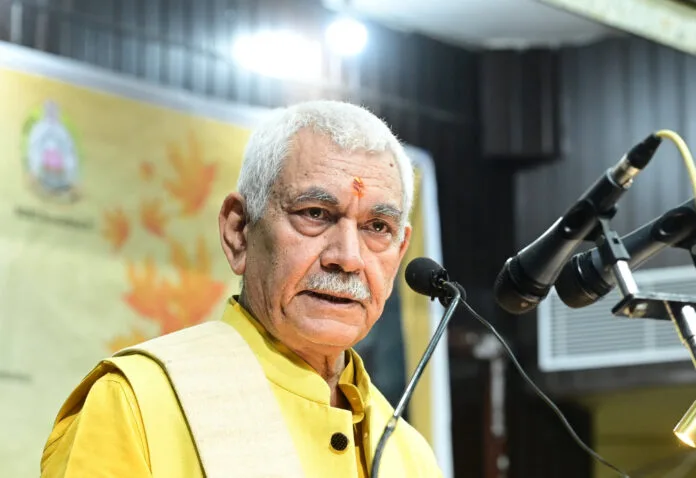
LG Manoj Sinha Vows Strict Action Against Terrorists, Pledges Restoration of Peace in J&K

0

Jammu: Jammu and Kashmir Lieutenant Governor Manoj Sinha on Thursday warned that those attempting to destroy the dreams and aspirations of the people of the Union Territory would be “reduced to dust.” Addressing the public, he asserted that security forces are committed to dismantling the terror ecosystem, but society must also stand against terror sympathisers.

“Attempts are being made to eliminate those involved in terrorism. They will be given such punishment that their seven generations will remember it,” Sinha said. He added, “The punishment should be such that those involved in terrorism are forced to beg for pardon.”

Highlighting the sacrifices of security forces, the Lieutenant Governor said, “To ensure the end of terrorism in J-K, the police and security forces have made a long chain of sacrifices.” He emphasised that sustained efforts are being made to promote peace, prosperity, and development in the Union Territory, despite opposition from anti-peace elements.

Referring to the exodus of Kashmiri Pandits as “one of the world’s biggest tragedies,” Sinha said the pain and suffering endured by the community must never be forgotten. Earlier in the day, he released the book “Kashmir–Nativity Regained”, authored by Prof Ashok Kaul at the University of Jammu. The book documents the terror faced by Kashmiri Pandits and the devastation of being uprooted from ancestral homes.

Sinha reiterated that the return of Kashmiri Pandits with full dignity and security remains a firm commitment of Prime Minister Narendra Modi. He added, “Jammu and Kashmir has been undergoing a profound transformation since 2019. The sinister designs of adversaries to destroy the dreams and destiny of the people of the Union Territory have been decisively dismantled. Through tireless efforts, this land’s ancient glory is being restored and development has gained momentum. Very soon, this soil will be completely freed from the scourge of terrorism.”

J&K Government to Begin Regularisation of Over One Lakh Temporary Workers in 2026

0

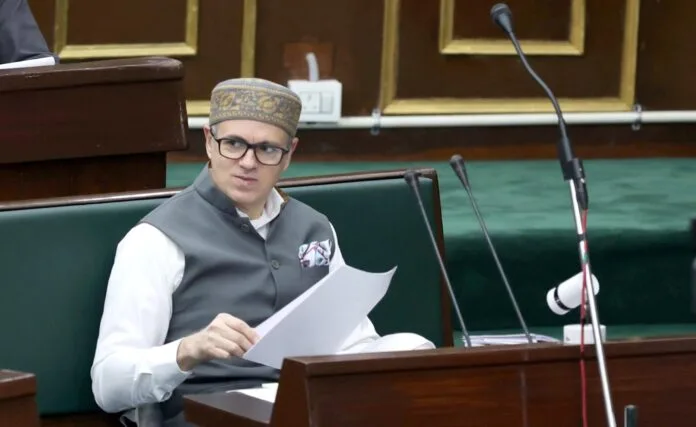
Srinagar: Jammu and Kashmir Chief Minister Omar Abdullah on Thursday announced that the government will initiate the process of regularising daily-rated, ad hoc, and other temporary employees in a legally and financially sustainable manner in 2026. The move comes alongside efforts to fill nearly 30,000 vacant posts across government departments this year.

Addressing the Assembly during the discussion on departmental grants and cut motions, Abdullah acknowledged that the issue of temporary workers has persisted for decades. “These employees have been struggling for 20, 30, and even 40 years. No government has been able to fully resolve the issue,” he said.

He added that a committee under the Chief Secretary has been constituted to examine the matter and ensure that any policy framed avoids legal or financial roadblocks. “Once the committee submits its report and the groundwork is completed in a transparent manner, we will place everything before the people,” Abdullah said.

The Chief Minister emphasized that regularisation cannot be achieved overnight. “I am not willing to mislead these employees by merely signing a paper without proper preparation,” he noted, adding that the total number of workers to be regularised — whether 70,000, 80,000, or one lakh — will be determined according to a proper timetable.

Currently, over one lakh daily wagers and casual labourers are engaged across various departments in Jammu and Kashmir. The registered workforce includes:

  • 69,696 casual labourers
  • 8,836 daily-rated workers
  • 8,534 seasonal labourers
  • 5,757 food and civil supplies helpers
  • 2,153 part-time sweepers
  • 1,929 hospital development fund employees

On employment generation, Abdullah clarified the distinction between the creation of posts and actual appointments. While the government has created posts, it has already filled around 6,000–6,500 positions and aims to fill nearly 30,000 vacant posts this year without creating additional positions.

He assured the Assembly that all recruitments will be conducted in a transparent and time-bound manner, coordinated with the Selection Board and Public Service Commission, to avoid legal challenges that have derailed past recruitment drives.

PM Modi Unveils ‘MANAV’ Vision, Advocates Human-Centric and Democratic AI

0

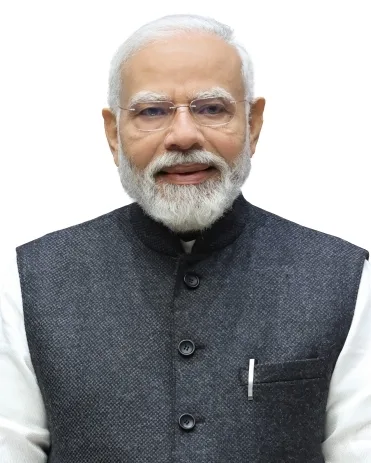
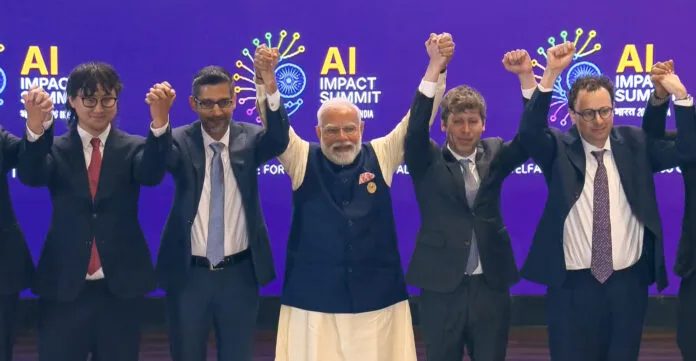
New Delhi: Prime Minister Narendra Modi on Thursday launched the ‘MANAV’ vision for artificial intelligence, emphasizing a human-centric, ethical, and inclusive approach. Speaking at the AI Impact Summit, he highlighted the need for AI to serve humanity, ensure welfare and happiness, and remain under human control.

Under the MANAV framework, M stands for moral and ethical systems, A for accountable governance, N for national sovereignty, A for accessible and inclusive, and V for valid and legitimate. Modi stressed that India sees AI as a fortune and future, not a threat, advocating open-source and shared AI codes that allow young innovators to contribute globally.

The summit drew global participation, including UN Secretary-General Antonio Guterres, French President Emmanuel Macron, Brazilian President Luiz Inacio Lula da Silva, and CEOs from leading technology companies. Modi said India’s approach to AI prioritizes child safety, ethical use, and empowerment of the Global South, while enabling the technology to enhance human capabilities and open new opportunities in innovation, entrepreneurship, and creative roles.

Highlighting India’s potential, he noted that the country, home to one-sixth of humanity and the largest youth population, has already seen three Indian companies launch AI models and apps at the summit, reflecting the nation’s depth of talent and innovation.

“AI must have an open sky, but the reins must remain in human hands,” Modi said, citing GPS as an example where AI offers guidance but humans make the final decisions. He stressed that India is not just participating in the AI revolution but leading and shaping it, balancing rapid technology adoption with ethical governance and long-term responsibility for future generations.

J&K Assembly Admits PDP MLA’s Resolution Condemning Hate Crimes Against Minorities

0

Srinagar: The Jammu and Kashmir Legislative Assembly Speaker has admitted a private member’s resolution moved by Waheed-Ur-Rehman Parra, a PDP legislator from Pulwama, strongly condemning hate crimes against minorities and urging strict enforcement of the law.

The resolution comes amid rising incidents of targeted attacks and harassment of Kashmiri students and traders in different parts of the country.

According to an official communication from the Assembly Secretariat, the resolution has been admitted under Rule 179 of the Rules of Procedure and Conduct of Business in the J-K Legislative Assembly.

The resolution “strongly condemns all forms of hate crimes against minorities and calls upon the Government of India and state governments to take immediate and effective measures to prevent, investigate, and prosecute such offences with strict enforcement of the law.”

In recent weeks, several incidents involving alleged attacks and intimidation of Kashmiri students and traders in various states have drawn political attention, prompting calls from multiple quarters for stronger safeguards and accountability mechanisms.

Northern Railway Conducts Final Surveys for Four New Lines in Kashmir Valley, Govt Assures Compensation

0

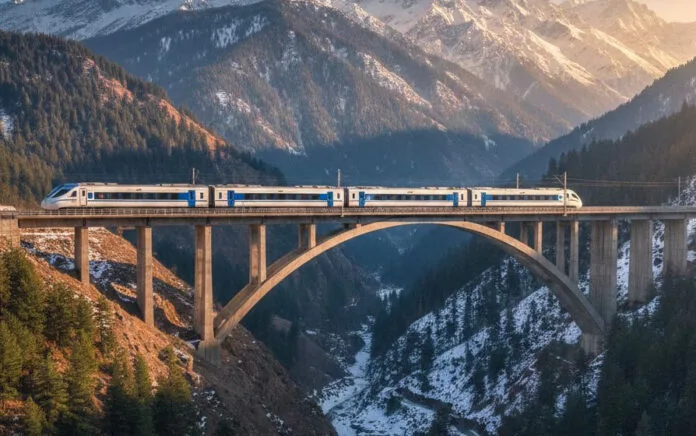
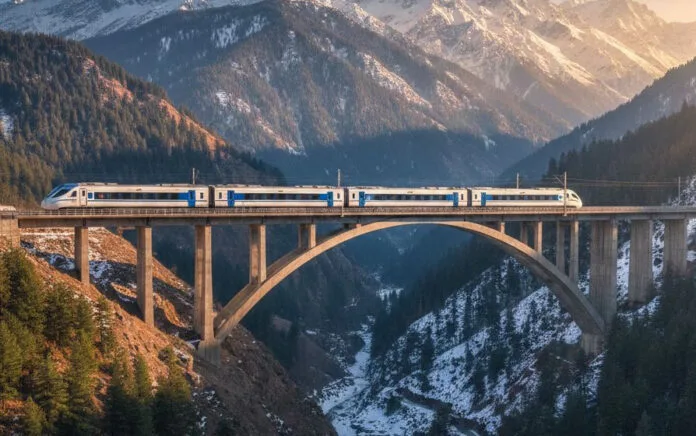
Srinagar: The Government on Thursday informed the Jammu and Kashmir Legislative Assembly that the Northern Railway is undertaking final location surveys for four new railway lines in the Kashmir Valley, assuring that landowners will be compensated according to law once the projects are sanctioned.

Replying to a question by MLA Javid Hassan Baig regarding railway expansion, the Transport Department said the proposed new lines include:

  • Baramulla–Uri
  • Sopore–Kupwara
  • Anantnag–Bijbehara–Pahalgam
  • Kakapora–Shopian

The government said the alignment of these lines has been finalised in consultation with the concerned district administrations. “The land requirement for these projects has been assessed and, if sanctioned, compensation will be provided to landowners as per applicable laws for acquisition of land, trees, and structures,” the reply stated.

On concerns regarding diversion of fertile agricultural land and rehabilitation of affected farmers, the government reiterated that compensation will be provided in accordance with legal provisions during the project execution stage.

Regarding environmental safeguards, the reply added that once the projects are sanctioned by the Government of India, all mitigation measures will be implemented as per environmental policy and latest guidelines to address deforestation, soil erosion, water resource disruption, and ecological imbalance.

The government further said coordination with the Government of India and Indian Railways will continue during project execution to ensure necessary mitigation measures minimize social and environmental impacts. District administrations will remain involved to address local concerns and ensure compliance with prescribed norms for environmental and social safeguards.

Ashwani Kumar Backs Pension Demand for Retired Journalists in J&K

0

Jammu: Ashwani Kumar, President of the Jammu and Kashmir Accredited Journalists Association, has welcomed the demand for a pension scheme for retired journalists raised by Tanvir Sadiq, MLA from Zadibal Assembly Constituency and Chief Spokesman of the Jammu and Kashmir National Conference, in the Jammu and Kashmir Assembly on Wednesday.

In a statement, Ashwani Kumar said Tanvir Sadiq has rightly highlighted the plight of retired journalists who have devoted their careers to strengthening democracy through their work. He emphasized that senior journalists dedicate decades to upholding democratic values, often under challenging and risky conditions, and deserve social security after retirement.

Kumar pointed out that most states and Union Territories in India already provide monthly pensions to senior journalists who have completed 20 years of service and reached the age of 58, following corporate sector norms. States like Haryana, Rajasthan, Punjab, Karnataka, Maharashtra, Bihar, Chhattisgarh, Goa, Kerala, and Madhya Pradesh provide pensions ranging from ₹15,000 to ₹20,000 per month to eligible journalists.

Similarly, smaller states and Union Territories such as Manipur, Meghalaya, Mizoram, Nagaland, Puducherry, Tripura, and Uttarakhand offer monthly pensions between ₹8,000 and ₹15,000 to retired journalists.

Ashwani Kumar stressed that the number of retired senior journalists in Jammu and Kashmir is small, so the financial burden on the Union Territory’s exchequer would not be significant. He urged all political parties, including the BJP, Congress, People’s Conference, and independent legislators, to rise above party lines and collectively press for the implementation of a pension scheme for retired journalists in Jammu and Kashmir.

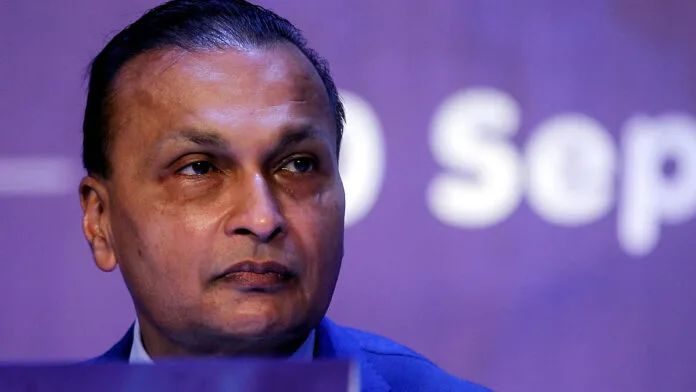
Anil Ambani Tells Supreme Court He Won’t Leave India Without Permission, Assures Full Cooperation in ₹40,000 Crore Probe

0

Reliance Group Chairman Anil Ambani has filed an undertaking before the Supreme Court of India, stating that he will not leave the country without prior permission of the court and will fully cooperate with investigating agencies in connection with the alleged ₹40,000 crore banking and corporate fraud involving the Anil Dhirubhai Ambani Group (ADAG).

In an affidavit submitted to the apex court, Ambani said he is not a flight risk and has no intention of evading the legal process. He stated on oath that he has not travelled outside India since July 2025, when the present investigations began, and currently has no plans to travel abroad. He further undertook that if any need for foreign travel arises, he would seek prior permission from the court.

Ambani also affirmed that he has been cooperating fully and in good faith with the investigating agencies and would continue to do so.

The submissions were made in response to a public interest litigation filed by former bureaucrat E. A. S. Sarma, seeking a fair, prompt and impartial probe into the alleged large-scale banking and corporate fraud involving ADAG and its group companies.

The affidavit stated that Ambani has been summoned by the Directorate of Enforcement to appear on February 26, 2026, and he has undertaken to join the investigation on the scheduled date. He said he would cooperate fully while ensuring procedural clarity and preventing any suggestion of evasion.

Earlier, on February 4, the top court had expressed displeasure over the “unexplained delay” in the investigation and directed the Central Bureau of Investigation and the Enforcement Directorate to conduct a fair, prompt and dispassionate probe into the alleged fraud.

During the hearing, when Sarma raised apprehensions that Ambani might flee the country, senior advocate Mukul Rohatgi, appearing for Ambani, assured the court that his client would not leave India without prior approval.

The PIL alleged systematic diversion of public funds, fabrication of financial statements and institutional complicity across multiple entities of the Anil Dhirubhai Ambani Group.

No Final Decision Yet on OBC Reservation in Panchayats, ULBs: J&K Government

0

The Jammu and Kashmir Government on Thursday informed the House that no final decision has been taken regarding reservation for Other Backward Classes (OBCs) in Panchayats and Urban Local Bodies (ULBs), despite provisions made under the Jammu and Kashmir Local Bodies Laws (Amendment) Act, 2024, recently enacted by Parliament.

Responding to a question by MLA Sunil Kumar Sharma, the government stated that the amendments introduced in the 2024 Act provide for OBC reservation in both rural and urban local bodies.

The government further informed the House that a three-member commission, headed by Justice (Retd.) Janak Raj Kotwal, has been constituted to determine the quota for OBC reservation.

“The recommendations of the Commission are currently under government consideration and no final decision has been taken yet,” the government said.

PM Narendra Modi Calls for Democratised AI to Empower Global South at India AI Impact Summit

0

Prime Minister Narendra Modi on Thursday asserted that artificial intelligence (AI) must be democratised and harnessed as a tool for inclusion and empowerment, especially for countries of the Global South.

Addressing the India AI Impact Summit at Bharat Mandapam, Modi described artificial intelligence as a transformative milestone in human history, comparable to pivotal turning points that have shaped entire centuries.

“Artificial intelligence marks a transformative chapter in human history. India is not just a part of the AI revolution, but is leading and shaping it,” the Prime Minister said in the presence of world leaders and top CEOs from leading global companies.

Highlighting India’s strengths, Modi said the summit was being hosted in a nation that represents one-sixth of humanity, has the world’s largest young population, and serves as a hub of one of the largest technology talent pools globally. He emphasized that India not only builds cutting-edge technology but also adopts it at an unprecedented pace.

Addressing concerns surrounding emerging technologies, the Prime Minister noted the enthusiasm of India’s youth in embracing AI. “Some people have doubts about new technology. But the way the younger generation is embracing AI is unprecedented,” he said, adding that there was tremendous interest in the summit’s AI exhibition.

Several global leaders attended the summit, including French President Emmanuel Macron, Brazilian President Luiz Inácio Lula da Silva, Sri Lankan President Anura Kumara Dissanayake, Bhutanese Prime Minister Tshering Tobgay, Mauritian Prime Minister Navinchandra Ramgoolam, Croatian Prime Minister Andrej Plenković, Serbian President Aleksandar Vučić, Seychelles Vice President Sébastien Pillay, Estonian President Alar Karis, and Finnish Prime Minister Petteri Orpo.

Modi concluded by underlining that AI represents one of the defining transformations of the modern era, with the potential to set the course of global development for decades to come.