Friday, July 10, 2026
Home Blog Page 51

PM Narendra Modi Holds Roundtable with AI, Deeptech Startup Leaders at India AI Impact Summit 2026

0

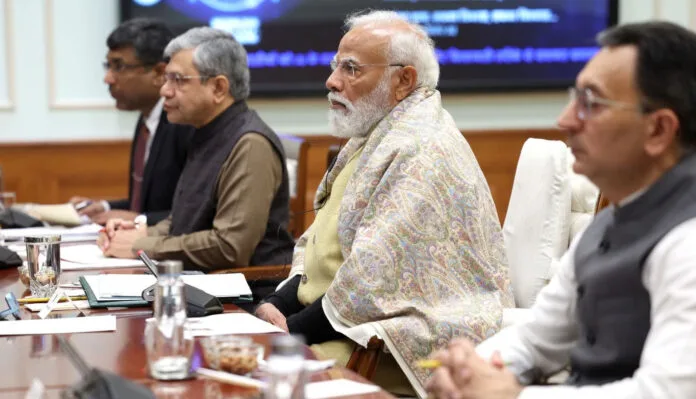
 Prime Minister Narendra Modi on Friday convened a high‑level roundtable meeting with chief executives and founders of 16 artificial intelligence (AI) and deeptech startups, highlighting the growing role of India’s tech innovators in addressing national challenges and shaping the global AI landscape.

The session, held at Seva Teerth on the sidelines of the India AI Impact Summit 2026, brought together leaders from startups such as Abridge, Adalat AI, BrainSightAI, Credo AI, Eka Care, Glean, Innogle, Invideo, Miko, Origin, Prophaze, Rasen, Rubrik, SatSure, Supernova and Sypha AI to present their work across sectors including healthcare, agriculture, cybersecurity, space technology and social empowerment.

Modi underscored the importance of strong data governance, cautioning against misinformation and urging innovators to build solutions tailored to India’s unique needs. Referring to the Unified Payments Interface (UPI) as an example of scalable digital innovation, he expressed confidence in Indian companies and encouraged trust in domestic technology products.

The Prime Minister highlighted the potential of AI to transform key sectors — from advanced diagnostics, gene therapy and patient record management in healthcare to geospatial and underwater intelligence for boosting agricultural productivity and managing climate risks. He also spoke about expanding private participation in the space sector and the strong interest shown by investors in Indian startups.

Emphasising inclusive development, Modi called for the expansion of AI tools for higher education in Indian languages, reinforcing the role of technology in preserving culture and broadening access to opportunities. He also congratulated the startup founders for “taking bold risks and building impactful solutions,” according to an official release.

The participating startups lauded India’s sustained push to strengthen its AI ecosystem, pointing to its rapid expansion and “immense untapped potential,” and described the India AI Impact Summit as a reflection of the country’s growing stature in global AI conversations.

Senior officials including Principal Secretary P K Mishra, Principal Secretary‑2 Shaktikanta Das, and Minister of State Jitin Prasada were also present at the roundtable.

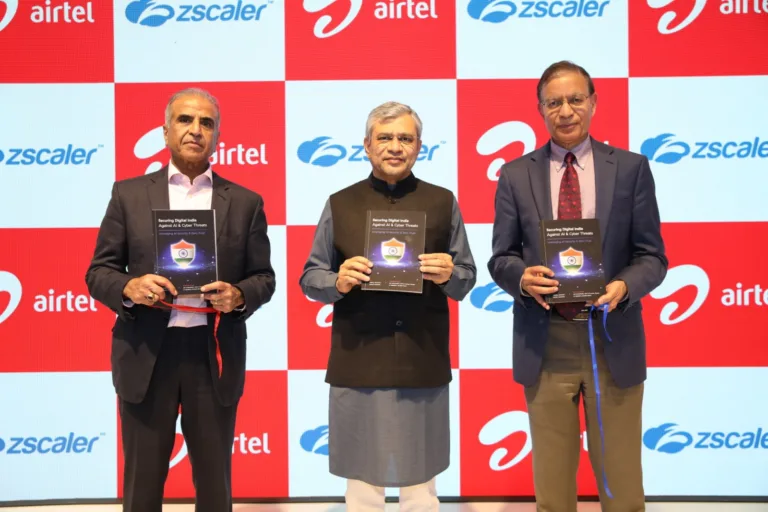
Zscaler, Together With Bharti Airtel, Announce Launch of AI & Cyber Threat Research Center to Advance Cyber Resilience and Trusted AI Adoption

Jammu, February 20, 2026 – Zscaler, Inc., the leader in cloud security, in partnership with Bharti Airtel (“Airtel”), one of India’s largest telecommunication service providers, today announced the launch of the AI & Cyber Threat Research Center – India. This multi-stakeholder digital initiative is dedicated to advancing national cyber resilience, protecting sectors, industries and assets that are essential to India’s economic and national security, such as telecommunications, banking, and energy, as well as digital users, and accelerating trusted AI adoption across India’s rapidly expanding digital ecosystem. 

India has long been a key hub for Zscaler’s technology innovation and cyber research, with a significant share of Zscaler’s research talent based in the country. The research center will serve as an expansion of Zscaler’s operations into a national platform for collaboration between the private sector, public sector, academia and the government. The center is designed “In India, For India,” with the goal of strengthening the nation’s cyber defenses and building a future-ready talent pipeline to support India’s progress toward Viksit Bharat and a peaceful, secure, and digitally self-reliant future.

India is in the midst of a generational digital transformation, building systems not at enterprise scale, but at population scale across critical sectors – dramatically expanding the national attack surface. At the same time, the threat landscape is evolving at machine speed, with nation state and financially-motivated attackers increasingly leveraging AI to probe, target, and weaponize vulnerabilities in minutes. Zscaler’s research arm, ThreatLabz India, has observed millions of infiltration attempts each month, including notable campaigns such as:

● Nation-state cyber espionage activity using the theme of regional geopolitical tensions, which attempted to target multiple Indian entities;

● A surge in attempts to infiltrate India’s private and public sectors, with 1.2 million intrusion attempts originating from 20,000 sources targeting 58 Indian digital entities; and 

● An increase in zero-day exploit attempts aimed at multiple industries in India. 

As threats grow in sophistication, traditional perimeter-based security models are no longer adequate, and disruptions to essential services can threaten national economic stability – making secure-by-design foundations and a modern architectural shift imperative to protect national digital systems in an increasingly borderless, AI-enabled environment.

The objectives of the AI & Cyber Threat Research Center – India are anchored in four strategic pillars: 

1. Protect: Deliver real-time, actionable intelligence to strengthen India’s national cyber resilience and digital-first businesses.

2. Remediate: Partner directly with government agencies to neutralize and prevent cyber-attacks.

3. Facilitate: Drive the adoption of modern security frameworks, specifically focusing on AI-driven defenses and Zero Trust architecture.

4. Build: Strengthen the cybersecurity talent pipeline through specialized AI and Zero Trust certifications to bridge the national skills gap. 

As founding members, Zscaler and Airtel will combine the former’s global intelligence with the latter’s local operational reach to create a stronger, faster research-to-response loop for India. Zscaler will deploy a specialized threat research team focused on India. This team will leverage the Zscaler Zero Trust Exchange™ platform, which processes over 500 billion daily transactions, to extract threat intelligence to secure India’s public and private sectors. Airtel will contribute deep visibility into IoT and mobile traffic, collaborating with Zscaler to monitor networks and develop new solutions, enabling faster identification of suspicious activity and more effective coordination with ecosystem stakeholders. Looking ahead, additional members from India’s critical public and private sectors will be invited to join the center to expand collaboration and strengthen cyber resilience across India.

“At Airtel, our commitment has been to safeguard our customers and the nation’s digital fabric. This partnership with Zscaler marks a significant extension of this commitment that will combine the power of our AI capabilities and deep scale for cybersecurity research to protect the country’s expanding digital ecosystem,” said Gopal Vittal, Executive Vice-Chairman, Bharti Airtel. “We will focus on addressing challenges unique to our market to build a safer, more resilient digital India where every citizen and enterprise can connect and thrive with confidence. Our research-backed preventive mechanism will also encourage peaceful and secure engagements on digital platforms.”

“India is building digital systems at an unmatched population scale. You cannot secure this level of ambition with legacy firewalls and VPNs that were never designed for a hyper-connected world. It demands a modern Zero Trust architecture that is secure-by-design,” said Jay Chaudhry, CEO, Chairman, and Founder, Zscaler. “With the AI & Cyber Threat Research Center – India, we will bring the full power of the world’s largest security cloud to protect the nation’s public and private sectors. By combining actionable intelligence from over 500 billion daily transactions with local expertise, we aren’t just building readiness; we are empowering a new generation of defenders to stay ahead of the adversary.”

Shantmanu Sworn In as J&K State Election Commissioner, Paving Way for Local Body Polls

0

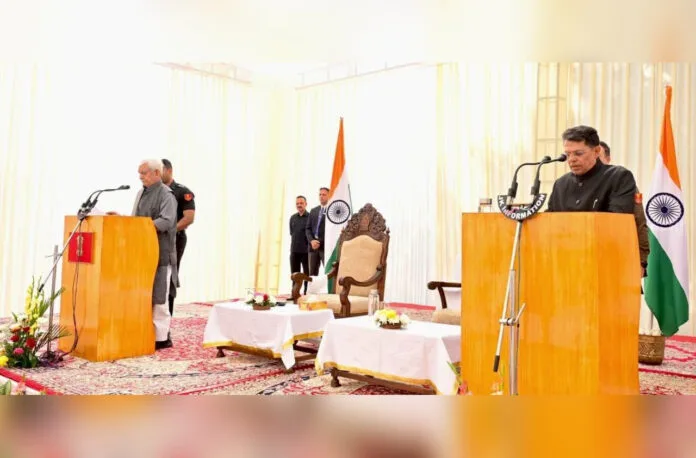
Former bureaucrat Shantmanu was sworn in as the State Election Commissioner of Jammu and Kashmir on Saturday, marking a significant step toward the conduct of long-pending local body elections in the Union Territory.

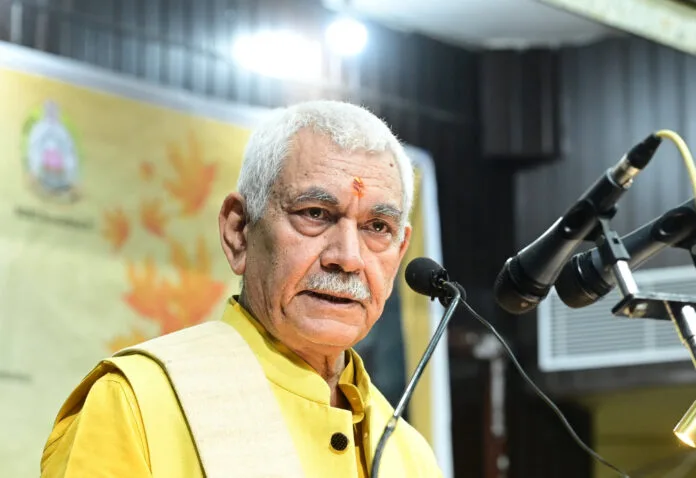
The oath of office was administered by Lieutenant Governor Manoj Sinha at a ceremony held at Lok Bhavan. The event was attended by Chief Minister Omar Abdullah, along with members of his cabinet, including Deputy Chief Minister Surinder Choudhary and Speaker Abdul Rahim Rather. Senior officials present included Chief Secretary Atal Dulloo and Director General of Police Nalin Prabhat.

Shantmanu, a 1991-batch Indian Administrative Service (IAS) officer of the AGMUT cadre, was appointed to the post on February 17 for a term of five years or until he attains the age of 70 years, whichever is earlier. He recently retired as Additional Chief Secretary and Financial Commissioner in Jammu and Kashmir. He succeeds B R Sharma, whose tenure concluded in April 2024.

His appointment is expected to clear the way for the conduct of panchayat and other local body elections in the Union Territory. The terms of municipalities ended in October–November 2023, while panchayats and block development councils completed their five-year tenure on January 9, 2024. The district development councils are set to complete their term on February 24, after which no elected local bodies will remain functional in Jammu and Kashmir.

Officials said elections could not be conducted on schedule due to multiple factors, including the delimitation exercise and the reservation of wards for Other Backward Classes (OBCs). The vacancy in the office of the State Election Commissioner had also been cited as a key hurdle.

Recently, the Chief Minister stated that the government was making necessary arrangements to hold the elections at the earliest. Under the Jammu and Kashmir Panchayati Raj Act and relevant Municipal Acts, the State Election Commission is vested with the authority to prepare electoral rolls and conduct elections to local bodies.

High Alert in Delhi After Terror Threat Inputs; Lashkar-e-Taiba Under Scanner

0

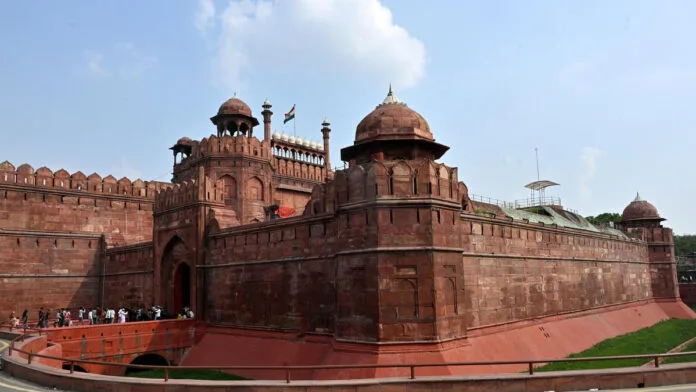
 Security has been tightened across key religious and heritage sites in the national capital following intelligence inputs indicating a possible terror threat, officials said on Saturday. Enhanced vigilance has been put in place around the Red Fort and parts of Chandni Chowk, both considered sensitive and high-footfall areas.

Security agencies issued an alert regarding a possible explosion threat near the Red Fort after central intelligence inputs suggested that Pakistan-based terror outfit Lashkar-e-Taiba (LeT) has allegedly included prominent religious places in India on its target list.

Sources said specific intelligence inputs indicated that a temple in the Chandni Chowk area could be among the potential targets. While the information is still being verified and assessed, security has been stepped up in and around sensitive religious sites and crowded public areas as a precautionary measure.

Intelligence agencies have indicated that LeT could attempt an Improvised Explosive Device (IED)-based attack. According to sources, the alleged plan may be linked to attempts by the group to avenge the February 6 blast at a mosque in Islamabad, Pakistan.

Central agencies and Delhi Police units are maintaining close coordination. Surveillance has been intensified through CCTV monitoring, vehicle checks, and the deployment of additional personnel at vulnerable points. Bomb disposal squads, dog squads, and quick reaction teams have been placed on standby at strategic locations.

The alert comes against the backdrop of the deadly car explosion near the Red Fort on November 10, 2025, which left at least 13 people dead and more than 20 injured. The blast occurred when a car loaded with explosives detonated near Gate No. 1 of the Red Fort metro station, setting multiple vehicles ablaze and triggering panic in the densely populated area.

Security agencies have urged citizens to remain vigilant and report any suspicious objects or activities to the police or emergency services immediately. However, officials stressed that there is no cause for panic and that the measures are purely precautionary.

Further intelligence gathering and verification of the inputs are currently underway, an official added.

Sharma Challenges NC Over ‘Special Status’ Claim, Says Article 370 Is History

0

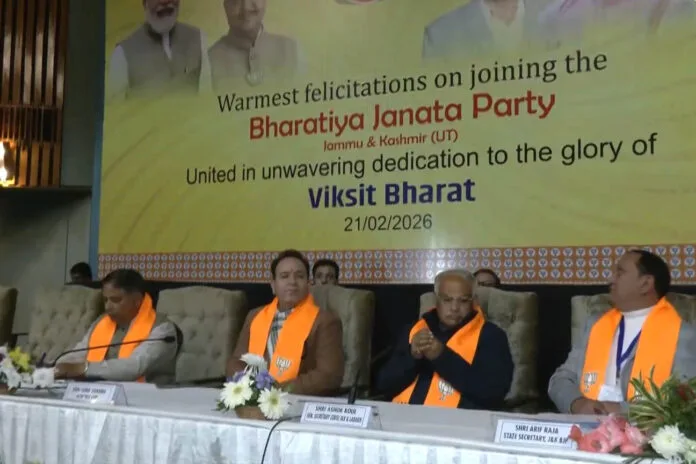
Srinagar, Feb 21: Leader of Opposition and senior Bharatiya Janata Party (BJP) leader Sunil Sharma on Saturday accused the ruling Jammu and Kashmir National Conference (NC) of misleading people through what he termed “confusing constitutional terminology,” and challenged the government to substantiate its claims regarding “special status” for Jammu and Kashmir.

Addressing the BJP’s Mega Joining Programme at SKICC in Srinagar, Sharma said he had openly challenged the government in the Assembly to point out where the term “special status” is mentioned in the Constitution in the manner it is being projected.

He reiterated that Article 370 “is history” and asserted that there is no possibility of its restoration. “Constitutional provisions cannot be interpreted through political slogans. If there is any claim about special status, it must be backed by constitutional text,” he said.

Referring to the 2024 Assembly elections, Sharma alleged that the NC had sought votes in the name of restoring Article 370 but later maintained that it could not expect support from the BJP-led Centre. “The people must ask what exactly is being promised under the term ‘special status’,” he added.

The Leader of Opposition also accused the NC leadership of adopting contradictory political positions over the years. He alleged that while the party publicly criticises the BJP, it has previously aligned with it for political purposes.

Sharma further stated that legislative proceedings are now under greater public scrutiny, noting that increased digital access to Assembly debates has enhanced transparency and accountability.

During his address, he criticised the government over employment and electricity-related commitments, alleging that several promises lacked clarity and required greater accountability.

He urged party workers to take constitutional and governance-related issues to the grassroots level and said the BJP would continue to raise such matters both inside and outside the Assembly.

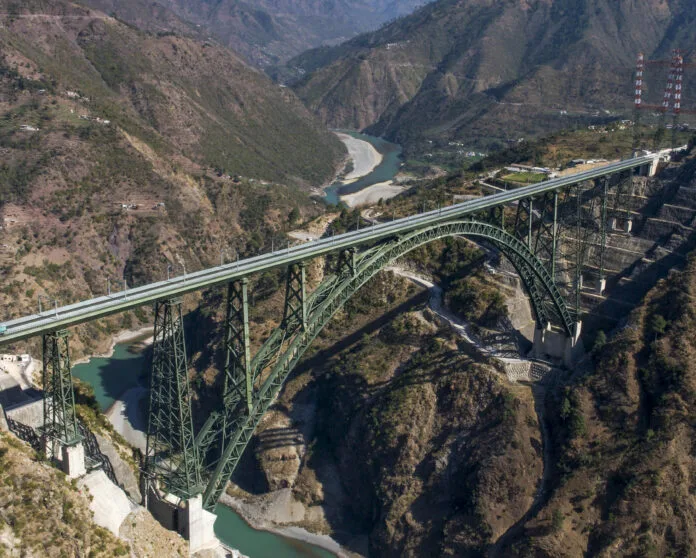
Chenab Rail Bridge: From Uncertainty to Engineering Triumph, 20-Year Journey Culminates with Vande Bharat Flag-Off

Jammu & Kashmir: Once facing the possibility of abandonment amid legal and environmental hurdles, the world’s highest railway bridge over the Chenab river has emerged as one of India’s most iconic engineering achievements. The historic Chenab Rail Bridge was formally inaugurated as part of the Katra–Srinagar railway section when Prime Minister Narendra Modi flagged off the Vande Bharat Express between Katra and Srinagar on June 6, 2025.

Towering 359 metres above the riverbed — 35 metres higher than the Eiffel Tower — the 1,315-metre-long steel arch bridge is a central component of the 272-km Udhampur-Srinagar-Baramulla Rail Link (USBRL), aimed at integrating the Kashmir Valley with India’s broader railway network.

A Project Once on the Brink

The bridge’s journey was far from smooth. Around 2008, amid legal challenges and environmental concerns that escalated to the Supreme Court of India, the project was suspended for over 90 days. The Railway Board reportedly explored alternatives, including replacing the arch bridge with a tunnel.

At that critical juncture, the Board informed Afcons Infrastructure Limited that it could exit the contract if it chose to do so. The company, however, decided to stay despite mounting financial risks.

Executive Chairman Krishnamurthy Subramanian recalled deliberations with then chairman Cyrus Mistry, who later died in a road accident in 2022. “If we walked away, there would be difficulties in completing it. We took the risk to stay put and finish the job,” Subramanian said, describing the project as one of international significance.

Engineering Against the Odds

The original plan always envisaged an arch bridge, but environmental litigation temporarily halted progress before the Supreme Court restored the original alignment. Over time, additional technical requirements — including blast load considerations — were introduced, requiring design adjustments as construction advanced.

Subramanian noted that no bridge of this magnitude had previously been built in India. “Where everybody thought it was not doable, if we could show that it can be done, the company could establish itself as a pioneer in engineering,” he said.

Completed after more than two decades from contract signing in 2004 to inauguration in 2025, the Chenab Arch Bridge now stands as a testament to persistence, innovation and complex project execution under extreme geological and climatic conditions.

Beyond Chenab

Afcons has also delivered other landmark infrastructure projects, including India’s first underwater metro tunnel beneath the Hooghly River in Kolkata. The company is currently engaged in constructing an undersea tunnel in Thane, Maharashtra, for the Mumbai–Ahmedabad bullet train corridor.

With the operationalisation of the Chenab Bridge and the Katra–Srinagar section, the USBRL project has achieved a milestone long envisioned — physically linking Kashmir to the rest of the country by rail and showcasing India’s growing engineering capabilities on the global stage.

SC Hearing on Sonam Wangchuk’s Detention: Wife Alleges Key Videos Not Shared

0

 Climate activist Sonam Wangchuk’s wife, Gitanjali J Angmo, on Thursday told the Supreme Court that four videos forming the basis of her husband’s detention were not shown to him, and only thumbnails on a pen drive were displayed.

Senior advocate Kapil Sibal, representing Angmo, argued before a bench of Justices Aravind Kumar and Prasanna B Varale that not providing the videos violated Wangchuk’s right to effective representation before the advisory board and the government.

“It is now alleged by the State that the DIG came with a laptop and showed four videos. The laptop was provided to the detenue on October 5, 2025, but those four videos were not there,” Sibal said. He added that the law requires the government to supply documents to the detainee, not merely display them.

Another lawyer assisting Sibal noted that when the pen drive was inserted into the laptop, Wangchuk only saw the thumbnails, and the videos themselves were never played.

Additional Solicitor General KM Nataraj submitted that a video exists showing the conversation between Wangchuk and the DIG. The bench said it would review all relevant video recordings, including a 40-minute interaction between the police and Wangchuk. The matter is now scheduled for hearing on February 23.

Earlier, the apex court had questioned the Centre about the transcripts of the videos, emphasizing that translations must be precise, especially in the age of artificial intelligence. Sibal had contended that some words attributed to Wangchuk were never spoken by him, prompting the court to request actual transcripts of his statements.

The case arises from a habeas corpus petition filed by Angmo, seeking a declaration that Wangchuk’s detention under the National Security Act (NSA), 1980 is illegal. The NSA allows detention of individuals for up to 12 months to prevent actions “prejudicial to the defence of India.” Angmo said that the violence in Leh on September 24 last year cannot be linked to Wangchuk, who condemned the incident on social media, calling it “the saddest day of his life” and a setback to Ladakh’s peaceful pursuit of development.

LG Manoj Sinha Vows Strict Action Against Terrorists, Pledges Restoration of Peace in J&K

0

Jammu: Jammu and Kashmir Lieutenant Governor Manoj Sinha on Thursday warned that those attempting to destroy the dreams and aspirations of the people of the Union Territory would be “reduced to dust.” Addressing the public, he asserted that security forces are committed to dismantling the terror ecosystem, but society must also stand against terror sympathisers.

“Attempts are being made to eliminate those involved in terrorism. They will be given such punishment that their seven generations will remember it,” Sinha said. He added, “The punishment should be such that those involved in terrorism are forced to beg for pardon.”

Highlighting the sacrifices of security forces, the Lieutenant Governor said, “To ensure the end of terrorism in J-K, the police and security forces have made a long chain of sacrifices.” He emphasised that sustained efforts are being made to promote peace, prosperity, and development in the Union Territory, despite opposition from anti-peace elements.

Referring to the exodus of Kashmiri Pandits as “one of the world’s biggest tragedies,” Sinha said the pain and suffering endured by the community must never be forgotten. Earlier in the day, he released the book “Kashmir–Nativity Regained”, authored by Prof Ashok Kaul at the University of Jammu. The book documents the terror faced by Kashmiri Pandits and the devastation of being uprooted from ancestral homes.

Sinha reiterated that the return of Kashmiri Pandits with full dignity and security remains a firm commitment of Prime Minister Narendra Modi. He added, “Jammu and Kashmir has been undergoing a profound transformation since 2019. The sinister designs of adversaries to destroy the dreams and destiny of the people of the Union Territory have been decisively dismantled. Through tireless efforts, this land’s ancient glory is being restored and development has gained momentum. Very soon, this soil will be completely freed from the scourge of terrorism.”

J&K Government to Begin Regularisation of Over One Lakh Temporary Workers in 2026

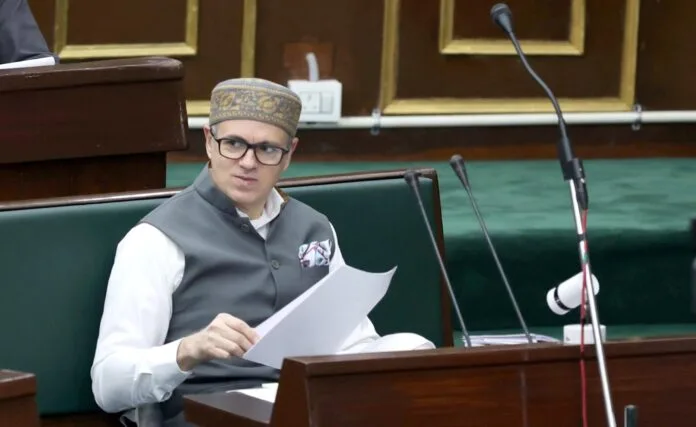
Srinagar: Jammu and Kashmir Chief Minister Omar Abdullah on Thursday announced that the government will initiate the process of regularising daily-rated, ad hoc, and other temporary employees in a legally and financially sustainable manner in 2026. The move comes alongside efforts to fill nearly 30,000 vacant posts across government departments this year.

Addressing the Assembly during the discussion on departmental grants and cut motions, Abdullah acknowledged that the issue of temporary workers has persisted for decades. “These employees have been struggling for 20, 30, and even 40 years. No government has been able to fully resolve the issue,” he said.

He added that a committee under the Chief Secretary has been constituted to examine the matter and ensure that any policy framed avoids legal or financial roadblocks. “Once the committee submits its report and the groundwork is completed in a transparent manner, we will place everything before the people,” Abdullah said.

The Chief Minister emphasized that regularisation cannot be achieved overnight. “I am not willing to mislead these employees by merely signing a paper without proper preparation,” he noted, adding that the total number of workers to be regularised — whether 70,000, 80,000, or one lakh — will be determined according to a proper timetable.

Currently, over one lakh daily wagers and casual labourers are engaged across various departments in Jammu and Kashmir. The registered workforce includes:

  • 69,696 casual labourers
  • 8,836 daily-rated workers
  • 8,534 seasonal labourers
  • 5,757 food and civil supplies helpers
  • 2,153 part-time sweepers
  • 1,929 hospital development fund employees

On employment generation, Abdullah clarified the distinction between the creation of posts and actual appointments. While the government has created posts, it has already filled around 6,000–6,500 positions and aims to fill nearly 30,000 vacant posts this year without creating additional positions.

He assured the Assembly that all recruitments will be conducted in a transparent and time-bound manner, coordinated with the Selection Board and Public Service Commission, to avoid legal challenges that have derailed past recruitment drives.

PM Modi Unveils ‘MANAV’ Vision, Advocates Human-Centric and Democratic AI

0

New Delhi: Prime Minister Narendra Modi on Thursday launched the ‘MANAV’ vision for artificial intelligence, emphasizing a human-centric, ethical, and inclusive approach. Speaking at the AI Impact Summit, he highlighted the need for AI to serve humanity, ensure welfare and happiness, and remain under human control.

Under the MANAV framework, M stands for moral and ethical systems, A for accountable governance, N for national sovereignty, A for accessible and inclusive, and V for valid and legitimate. Modi stressed that India sees AI as a fortune and future, not a threat, advocating open-source and shared AI codes that allow young innovators to contribute globally.

The summit drew global participation, including UN Secretary-General Antonio Guterres, French President Emmanuel Macron, Brazilian President Luiz Inacio Lula da Silva, and CEOs from leading technology companies. Modi said India’s approach to AI prioritizes child safety, ethical use, and empowerment of the Global South, while enabling the technology to enhance human capabilities and open new opportunities in innovation, entrepreneurship, and creative roles.

Highlighting India’s potential, he noted that the country, home to one-sixth of humanity and the largest youth population, has already seen three Indian companies launch AI models and apps at the summit, reflecting the nation’s depth of talent and innovation.

“AI must have an open sky, but the reins must remain in human hands,” Modi said, citing GPS as an example where AI offers guidance but humans make the final decisions. He stressed that India is not just participating in the AI revolution but leading and shaping it, balancing rapid technology adoption with ethical governance and long-term responsibility for future generations.