Friday, July 10, 2026
Home Blog Page 48

Hetmyer’s 85 Powers West Indies to 107-Run Win Over Zimbabwe in T20 World Cup

0

A blazing knock by Shimron Hetmyer propelled the West Indies cricket team to a commanding 107-run victory over Zimbabwe national cricket team in a Super Eights clash of the ICC Men’s T20 World Cup on Monday.

Opting to bat first, West Indies posted a mammoth 254/6 in 20 overs — the second-highest team total in T20 World Cup history. Hetmyer smashed a scintillating 85 off just 34 deliveries, hammering seven sixes and seven fours. In the process, he registered the fastest fifty for West Indies in T20 World Cups.

Hetmyer stitched a 122-run partnership off 52 balls with skipper Rovman Powell, who contributed a brisk 59. After their departure, Sherfane Rutherford (31) and Romario Shepherd (21) added late fireworks to push the total beyond the 250-mark.

Zimbabwe’s chase never gained momentum as they were bowled out for 147 in 17.4 overs. No. 8 batter Brad Evans offered resistance with a 21-ball 43.

The West Indies bowling attack was led by Gudakesh Motie (4/28) and Akeal Hosein (3/28), who shared seven wickets between them to seal a dominant win.

Brief Scores:

West Indies: 254/6 in 20 overs (Shimron Hetmyer 85; Richard Ngarava 2/47).

Zimbabwe: 147 all out in 17.4 overs (Brad Evans 43; Gudakesh Motie 4/28, Akeal Hosein 3/28).

‘Essential For Unifying Society’: Mohan Bhagwat Bats For Nationwide UCC

0

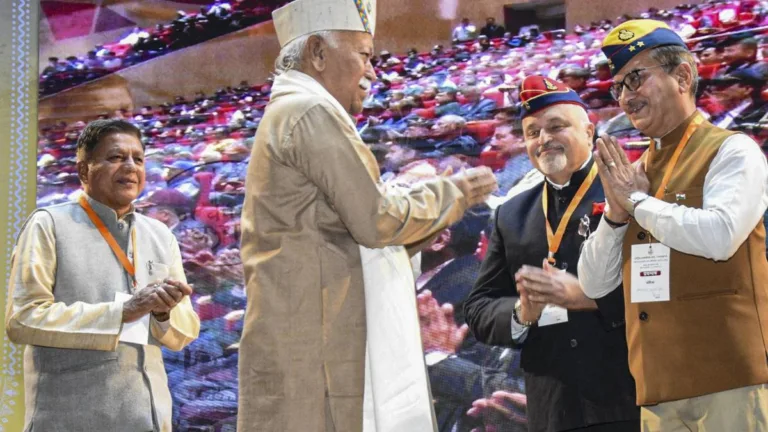
RSS chief Mohan Bhagwat has advocated for the nationwide implementation of the Uniform Civil Code, modelled after the one in Uttarakhand, terming it essential for unifying society.

At a former servicemen’s event on Monday evening to mark the 100th anniversary of the Rashtriya Swayamsevak Sangh (RSS), Bhagwat said, “It would be a very good thing if the UCC is implemented… It would be good if it happened across the country. I believe it should be implemented in this way (like in Uttarakhand).”

Uttarakhand was the first state in the country to implement the Uniform Civil Code (UCC) on January 27 last year.

Terming the UCC essential for unifying society, the RSS chief said that after the draft proposal for Uttarakhand was put up for public discussions, it drew suggestions from 3 lakh people, which were all looked into.

Asked about the UGC regulations aimed to curb caste-based discrimination at higher educational institutions, which have been stayed by the Supreme Court, Bhagwat refused to comment, saying the matter is currently before the top court.

Addressing the event attended by veterans and serving officers from the military and paramilitary forces, the RSS chief said that while the country is independent, defence forces will always be needed to safeguard the freedom.

He said the Sangh was established without any external resources and, despite facing severe sanctions twice, it continued to progress on the strength of the society’s self-confidence.

Bhagwat also urged the former servicemen to attend Sangh camps and programmes to observe the dedicated work of the volunteers and to engage in service activities as per their interests and capabilities. (AGENCIES)

J&K | Road Accidents Decline 13% Over Three Years To 5,287 In 2025

0

The Jammu and Kashmir government has recorded a 13.6 per cent decline in road accidents over the past three years, with the number of incidents falling from 6,120 in 2023 to 5,287 in 2025, officials said on Monday.

The downward trend is attributed to improved enforcement, extensive road safety awareness programmes and the strengthening of road safety mechanisms across the Union Territory. Official data show that accidents dropped to 5,726 in 2024 before further decreasing in 2025.

Several initiatives were undertaken during 2024 and 2025, including over 10,000 awareness programmes each year, health and eye check-ups of drivers, and first-aid training. The government also implemented the Good Samaritan and Road Accident Victim Fund (RAVF) schemes to provide cashless treatment for victims.

According to the officials, traffic enforcement agencies have shifted fully to the e-challan system. In 2024, authorities issued 40,197 e-challans, seized 429 vehicles and suspended 2,259 driving licences. Enforcement intensified in 2025 with 52,543 e-challans issued, 1,528 vehicles seized and 1,641 driving licences suspended. Additionally, 10,439 vehicles were blacklisted and 1,192 registration certificates were cancelled in 2025.

Preventive measures included an audit of 4,545 registered school buses in 2025. Officials found that 472 buses were defective, 450 of which rectified the issues following formal notices. Similarly, 102 driving training schools were inspected, with 81 found compliant while 21 were served notices, the officials said, adding that speed-limiting devices are also being checked during vehicle fitness certification.

The road safety policy, originally notified in 2016, was revised in 2025 to align with the national standards on the recommendations of the Supreme Court Committee on Road Safety. To bolster enforcement, the government procured 213 motorcycles, 19 mobile interceptor vehicles, 16 highway patrol vehicles, 23 cranes, 685 body-worn cameras, 64 breath alcohol analysers and other traffic control infrastructure through the Road Safety Fund, they said.

The Legal Metrology Department inspected 218 helmet sellers to ensure the sale of BIS-marked helmets, booked 69 cases and seized 4,750 substandard helmets.

Intelligent Traffic Management Systems are now operational in Jammu and Srinagar under the Smart City Mission. A 107.32-crore rupee project covering 25 junctions and 188 corridors has been planned for the rest of the Union Territory, the officials said, adding that further road safety audits are now mandatory for new road projects.

The officials said compensation under the RAVF remains Rs 1 lakh for death, Rs 75,000 for permanent disability, Rs 50,000 for grievous injury and Rs 10,000 for minor injury.

The Jammu and Kashmir Road Transport Corporation (JKRTC) continues to provide services to remote and interstate areas. While there is a proposal for an e-bus from Jammu to Patnitop and Sudhmahadev-Mantalai, officials deemed it presently “not feasible” due to a lack of charging infrastructure beyond Udhampur.

The JKRTC currently operates 20 electric buses on city routes with a 100-kilometre range, though a proposal to procure 200 more electric buses under the PM e-Drive scheme is underway, they said.

High Court Seeks UT Response On Public Service Guarantee Act Implementation

0

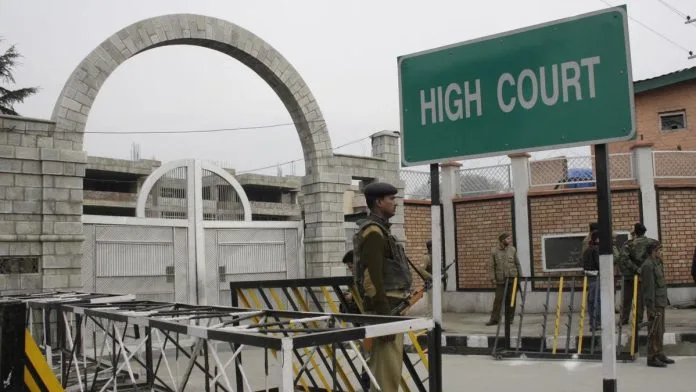
The High Court of Jammu & Kashmir and Ladakh has issued notice to the union Territory administration on a Public Interest Litigation seeking effective implementation of the Public Service Guarantee Act (PSGA), 2011.

The PIL, filed by environmentalist and social activist Sheikh Ghulam Rasool, alleges widespread non-compliance with the Act across several government departments.

The petitioner contended that despite repeated government circulars mandating adherence, departments such as Home, Revenue and Transport have failed to maintain records of inspections, awareness programmes, and penalties imposed under the law.

The division bench comprising Chief Justice Arun Palli and Justice Rajnesh Oswal heard the matter on Monday through virtual mode at Srinagar.

According to the petition, responses obtained through RTI applications revealed that the General Administration Department (GAD) had no records regarding expenditure on mandatory trainings, awareness initiatives, or inspections.

It further alleged that the Public Service Management Cell, established in 2012, has failed to perform its statutory duties under Rule 17 of the PSGA Rules. The petitioner was represented by advocate Naveed Bukhtiyar

Deputy Advocate General Hakim Aman Ali accepted notice on behalf of the UT administration and sought time to obtain instructions and file a response.

The court granted the request and listed the matter for further hearing on March 4. (Agencies)

India Advises Nationals to Leave Iran Amid Evolving Security Situation

India on Monday advised all its nationals residing in Iran to leave the country by all available means of transport, including commercial flights, in view of the evolving security situation.

The Embassy of India, Tehran issued a fresh advisory amid renewed protests in Tehran and growing fears of potential US military strikes on the Gulf nation. The protests, led by students at several universities, mark the first such agitation since last month’s crackdown by authorities.

According to official estimates released in January, over 10,000 Indians, including students, are currently living in Iran.

“In continuation of the advisory issued by the Government of India on January 5 and in view of the evolving situation in Iran, Indian nationals who are currently in Iran — students, pilgrims, business persons and tourists — are advised to leave Iran by available means of transport, including commercial flights,” the embassy said.

The mission also urged all Indian citizens and Persons of Indian Origin (PIOs) to exercise due caution, avoid areas witnessing protests or demonstrations, and remain in contact with the embassy.

“All Indian nationals in Iran are requested to keep their travel and immigration documents, including passports and identity cards, readily available,” the advisory added, while asking those in need of assistance to contact the Indian Embassy.

Zscaler, Together With Bharti Airtel, Announce Launch of AI & Cyber Threat Research Center to Advance Cyber Resilience and Trusted AI Adoption

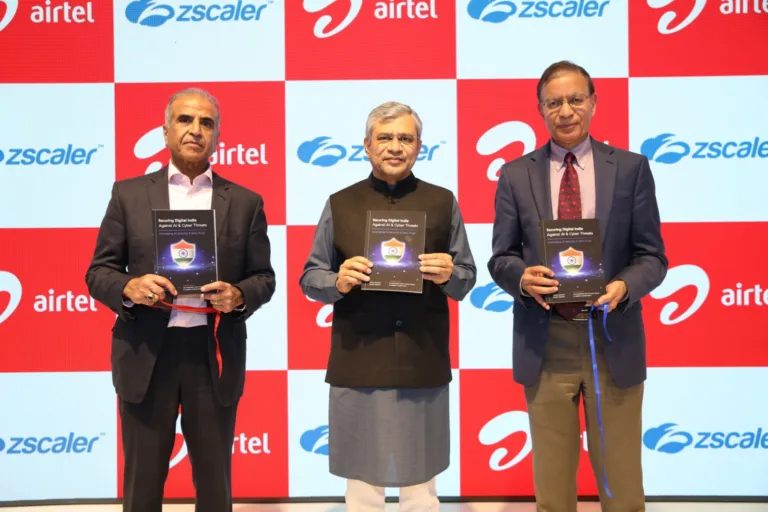
Jammu, February 20, 2026 – Zscaler, Inc., the leader in cloud security, in partnership with Bharti Airtel (“Airtel”), one of India’s largest telecommunication service providers, today announced the launch of the AI & Cyber Threat Research Center – India. This multi-stakeholder digital initiative is dedicated to advancing national cyber resilience, protecting sectors, industries and assets that are essential to India’s economic and national security, such as telecommunications, banking, and energy, as well as digital users, and accelerating trusted AI adoption across India’s rapidly expanding digital ecosystem. 

India has long been a key hub for Zscaler’s technology innovation and cyber research, with a significant share of Zscaler’s research talent based in the country. The research center will serve as an expansion of Zscaler’s operations into a national platform for collaboration between the private sector, public sector, academia and the government. The center is designed “In India, For India,” with the goal of strengthening the nation’s cyber defenses and building a future-ready talent pipeline to support India’s progress toward Viksit Bharat and a peaceful, secure, and digitally self-reliant future.

India is in the midst of a generational digital transformation, building systems not at enterprise scale, but at population scale across critical sectors – dramatically expanding the national attack surface. At the same time, the threat landscape is evolving at machine speed, with nation state and financially-motivated attackers increasingly leveraging AI to probe, target, and weaponize vulnerabilities in minutes. Zscaler’s research arm, ThreatLabz India, has observed millions of infiltration attempts each month, including notable campaigns such as:

● Nation-state cyber espionage activity using the theme of regional geopolitical tensions, which attempted to target multiple Indian entities;

● A surge in attempts to infiltrate India’s private and public sectors, with 1.2 million intrusion attempts originating from 20,000 sources targeting 58 Indian digital entities; and 

● An increase in zero-day exploit attempts aimed at multiple industries in India. 

As threats grow in sophistication, traditional perimeter-based security models are no longer adequate, and disruptions to essential services can threaten national economic stability – making secure-by-design foundations and a modern architectural shift imperative to protect national digital systems in an increasingly borderless, AI-enabled environment.

The objectives of the AI & Cyber Threat Research Center – India are anchored in four strategic pillars: 

1. Protect: Deliver real-time, actionable intelligence to strengthen India’s national cyber resilience and digital-first businesses.

2. Remediate: Partner directly with government agencies to neutralize and prevent cyber-attacks.

3. Facilitate: Drive the adoption of modern security frameworks, specifically focusing on AI-driven defenses and Zero Trust architecture.

4. Build: Strengthen the cybersecurity talent pipeline through specialized AI and Zero Trust certifications to bridge the national skills gap. 

As founding members, Zscaler and Airtel will combine the former’s global intelligence with the latter’s local operational reach to create a stronger, faster research-to-response loop for India. Zscaler will deploy a specialized threat research team focused on India. This team will leverage the Zscaler Zero Trust Exchange™ platform, which processes over 500 billion daily transactions, to extract threat intelligence to secure India’s public and private sectors. Airtel will contribute deep visibility into IoT and mobile traffic, collaborating with Zscaler to monitor networks and develop new solutions, enabling faster identification of suspicious activity and more effective coordination with ecosystem stakeholders. Looking ahead, additional members from India’s critical public and private sectors will be invited to join the center to expand collaboration and strengthen cyber resilience across India.

“At Airtel, our commitment has been to safeguard our customers and the nation’s digital fabric. This partnership with Zscaler marks a significant extension of this commitment that will combine the power of our AI capabilities and deep scale for cybersecurity research to protect the country’s expanding digital ecosystem,” said Gopal Vittal, Executive Vice-Chairman, Bharti Airtel. “We will focus on addressing challenges unique to our market to build a safer, more resilient digital India where every citizen and enterprise can connect and thrive with confidence. Our research-backed preventive mechanism will also encourage peaceful and secure engagements on digital platforms.”

“India is building digital systems at an unmatched population scale. You cannot secure this level of ambition with legacy firewalls and VPNs that were never designed for a hyper-connected world. It demands a modern Zero Trust architecture that is secure-by-design,” said Jay Chaudhry, CEO, Chairman, and Founder, Zscaler. “With the AI & Cyber Threat Research Center – India, we will bring the full power of the world’s largest security cloud to protect the nation’s public and private sectors. By combining actionable intelligence from over 500 billion daily transactions with local expertise, we aren’t just building readiness; we are empowering a new generation of defenders to stay ahead of the adversary.”


Artificial Snow Essential to Safeguard Gulmarg’s Winter Sports: Omar Abdullah

0

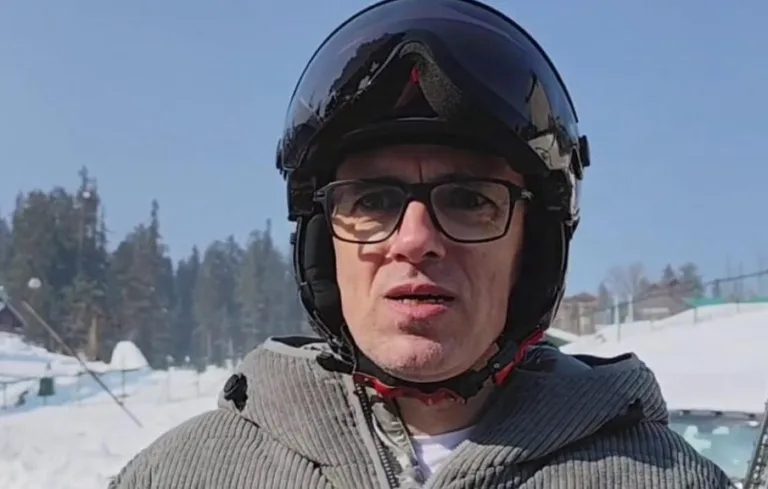
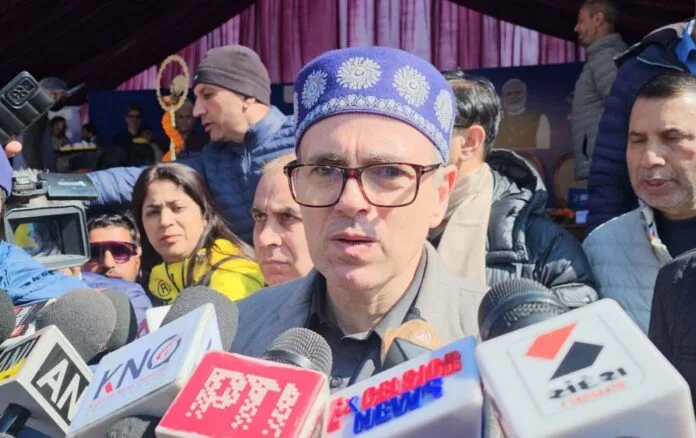
Chief Minister Omar Abdullah on Monday stressed the urgent need for artificial snow generation in Gulmarg, warning that climate variability poses a serious threat to traditional winter sports in the region.

Addressing the inauguration of the Khelo India Winter Games at Gulmarg, the Chief Minister welcomed participants and highlighted the importance of adapting to changing weather patterns. He noted that recent snowfall trends have become increasingly unpredictable, compelling authorities to rethink long-term infrastructure planning for winter sports.

Abdullah said the government is committed to developing Gulmarg as an international skiing destination and ensuring consistent sporting activity despite climate-related challenges. He underlined that relying solely on natural snowfall is no longer sustainable and called for the introduction of artificial snow generation systems to secure the future of winter games.

While acknowledging possible concerns over artificial snow projects, he said such measures are necessary to prevent the loss of tourism opportunities and protect the livelihoods of thousands of local stakeholders, including hoteliers, guides, transport operators, and small businesses dependent on the winter season.

The Chief Minister also assured full administrative support for athletes and sports infrastructure to nurture more international-level competitors from Jammu and Kashmir. Congratulating skier Arif Khan for bringing laurels to the region, he expressed hope that more talented athletes would emerge from the games.

He added that participation in sports is as important as winning medals and said sustained investment in winter sports and tourism would position Gulmarg among the world’s leading skiing destinations while ensuring economic stability for local communities.

Supreme Court Says Pre-2018 NHAI Land Acquisition Cases Cannot Be Reopened for Interest Claims

0

The Supreme Court of India on Monday orally observed that land acquisition cases settled before 2018 cannot be reopened for the grant of compensation with interest to farmers whose land was acquired under the National Highways Authority of India (NHAI) Act.

A special bench comprising Chief Justice Surya Kant and Justice Ujjal Bhuyan made the observation while hearing in open court NHAI’s review plea against a 2019 judgment of the apex court. In its 2019 verdict (Tarsem Singh case), the court had ruled that farmers whose lands were acquired under the NHAI Act between 1997 and 2015 would be entitled to “solatium” and interest, holding that Section 3J of the Act was unconstitutional for violating Article 14 (right to equality).

Representing NHAI, Solicitor General Tushar Mehta argued that the 2019 ruling imposed a massive financial burden of approximately ₹32,000 crore and should apply only prospectively. However, the bench indicated that while pending claims could continue, matters that had attained finality prior to 2018 could not be reopened.

“The cut-off date appears to be 2008, provided claims were alive then. Pre-2018 matters cannot be reopened,” the Chief Justice observed, adding that while parity in terms of solatium may be considered in certain cases, reopening closed matters for interest claims would not be permissible.

Earlier, on February 4, 2025, the apex court had rejected NHAI’s plea seeking prospective application of the 2019 ruling and reaffirmed the principles laid down in the Tarsem Singh judgment. The court had emphasised that excluding solatium and interest under Section 3J created an unjust classification among similarly situated landowners, violating Article 14.

The court clarified that its 2019 decision was intended to remedy inequality faced by landowners whose lands were acquired by NHAI between 1997 and 2015. However, it did not direct the reopening of cases that had already attained finality.

After brief arguments on Monday, the bench granted time to the parties to file written submissions and listed the matter for further hearing after two weeks.

J&K and Ladakh High Court Reserves Order on PSA Detention of AAP MLA Mehraj Malik

The High Court of Jammu and Kashmir and Ladakh on Monday reserved its verdict on a petition challenging the detention of AAP MLA Mehraj Malik under the Public Safety Act (PSA).

Malik, who serves as president of the Aam Aadmi Party’s Jammu and Kashmir unit, was detained on September 8 last year under the stringent PSA for allegedly disturbing public order. He was subsequently lodged in Kathua jail.

On September 24, Malik moved a habeas corpus petition before the High Court, contesting his detention and seeking compensation of ₹5 crore.

The matter was heard by Justice Mohammad Yousuf Wani, who reserved the case for pronouncement of orders. Advocate Appu Singh Slathia, who also represents the AAP as its spokesperson, said the court has granted both parties — Malik’s legal team and the State — one week to file written synopses or any additional submissions.

Describing the proceedings as a long and challenging legal battle, Slathia expressed hope and confidence in the judicial process. She also appealed to Malik’s supporters and party workers to remain calm and maintain a positive outlook as they await the court’s decision.

Omar Abdullah Calls for Artificial Snow in Gulmarg to Safeguard Winter Sports, Tourism

Chief Minister Omar Abdullah on Monday underscored the urgent need for artificial snow generation in Gulmarg to protect winter sports and sustain tourism, warning that climate variability poses a growing challenge to traditional winter games in the region.

Addressing the opening ceremony of the Khelo India Winter Games in Gulmarg, the Chief Minister welcomed athletes from across the country and highlighted the importance of adapting to changing weather patterns. He observed that snowfall in recent years has become increasingly unpredictable, affecting the planning and smooth conduct of winter sporting events.

Stressing the government’s commitment to developing Gulmarg as an international skiing destination, he said reliance solely on natural snowfall is no longer viable. He advocated for the installation of artificial snow generation systems to ensure consistent sporting activity and safeguard the future of winter games in the region.

While acknowledging that artificial snow projects may invite certain concerns, Abdullah maintained that such measures are essential to prevent disruptions to tourism and protect the livelihoods of thousands dependent on the winter season, including hoteliers, guides, transport operators and small businesses.

Reaffirming support for athletes and sports infrastructure, he said the administration would take all necessary steps to nurture more international-level competitors from Jammu and Kashmir. Congratulating skier Arif Khan for bringing laurels to the region, he expressed confidence that many more athletes would emerge through sustained investment in winter sports.

He added that participation in sports is as important as winning medals and emphasized that long-term investment in winter sports and tourism will help position Gulmarg among leading global skiing destinations while ensuring economic stability for local communities.