Friday, July 10, 2026
Home Blog Page 27

SIT Files Chargesheet in Assassination Attempt Case on Farooq Abdullah

The Special Investigation Team (SIT) on Friday presented a chargesheet before the court of the Chief Judicial Magistrate, Jammu, in the high-profile case related to the alleged assassination attempt on Farooq Abdullah, former Chief Minister of Jammu and Kashmir.

The incident occurred on March 11, 2026, at Royal Park Banquet Hall in Greater Kailash, Jammu, where Dr Abdullah had attended a marriage function.

According to police officials, as Dr Abdullah was leaving the venue around 10:10 pm, the accused, identified as Kamal Singh Jamwal, allegedly flashed a revolver and attempted to fire at him from close range. However, alert security personnel deployed with the protectee acted swiftly and successfully foiled the attack attempt.

Following the incident, a case under FIR No. 29/2026 was registered at Gangyal Police Station under Section 109 of the Bharatiya Nyaya Sanhita (BNS) and Section 3/25 of the Arms Act.

On March 14, Bhim Sen Tuti constituted a seven-member SIT under the supervision of the Deputy Inspector General of Police, Jammu-Samba-Kathua Range, to conduct a detailed investigation into the case.

Police sources said the SIT carried out an extensive probe, including forensic examination, witness statements, and analysis of security footage, before filing the chargesheet in court.

The case has drawn significant political and security attention due to the high-profile nature of the target and concerns regarding the safety of political leaders in the region.

Sakina Itoo Orders Suspension of Amar Singh College Principal, Professor Over Alleged Harassment Incident

Sakina Itoo has ordered the suspension of the Principal and an Assistant Professor of Amar Singh College following a reported harassment incident at the institution.

According to official sources, the minister took serious note of the matter and directed the concerned authorities to initiate immediate action. An inquiry has also been ordered into the incident, with instructions to complete the investigation within one week.

Sources stated that strict action will be taken against those found guilty after the completion of the probe. The development comes amid growing concern over the alleged incident and increasing demands for accountability from students and civil society groups.

Meanwhile, the Higher Education Department has assured that a fair and transparent investigation will be conducted to ensure justice and maintain a safe and secure academic environment in colleges across Jammu and Kashmir.

The incident has sparked discussions regarding student safety, institutional accountability, and the need for stronger grievance redressal mechanisms within educational institutions in the Union Territory.

Omar Abdullah Backs TVK Chief’s Right to Prove Majority in Tamil Nadu

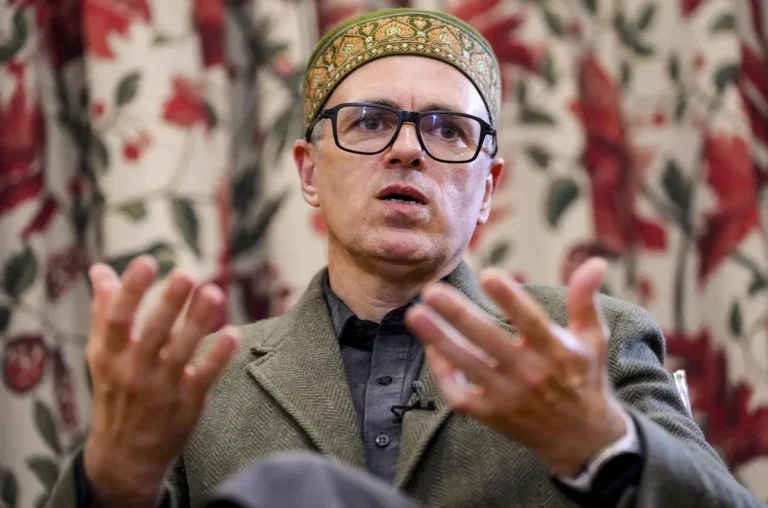
Jammu and Kashmir Chief Minister Omar Abdullah stated on Friday that Tamil Nadu’s Governor should not stop TVK leader Vijay from forming the government. Abdullah insisted that Vijay deserves a chance to demonstrate his majority in the assembly.

On Thursday, Tamil Nadu Governor Rajendra Vishwanath Arlekar dismissed TVK chief Vijay’s request to form a government, claiming the party lacks the necessary numbers to do so.

The Tamilaga Vettri Kazhagam (TVK) currently does not hold a simple majority required to govern Tamil Nadu. Despite receiving support from the Congress party, which has five MLAs, TVK still falls short of the 118 seats needed in the 234-member Tamil Nadu Assembly.

Abdullah emphasized that the imposition of President’s rule in Tamil Nadu lacks justification. He referenced numerous Supreme Court rulings underscoring the importance of inviting the single largest party to attempt forming a government and to prove its majority on the assembly floor.

“If we look at the Supreme Court’s judgement, then President’s rule should not apply. Multiple cases illustrate that after elections, the largest party should get an opportunity to form the government and prove its majority in the assembly,” Abdullah stated during a press interaction regarding the political landscape in Tamil Nadu.

He drew parallels to historical instances, recalling when former prime minister A B Vajpayee formed a government that lasted 13 days before admitting he did not have the numbers. The President of India at the time did not prevent him from assuming office.

“This precedent further backs the argument that Tamil Nadu’s Lok Bhavan lacks justification for halting the process,” Abdullah remarked.

He strongly advocated that Vijay should be granted the opportunity to lead the government and ascertain whether he can secure the necessary majority during assembly proceedings. “If he can prove his majority, he will continue; otherwise, he will resign,” he concluded.

Omar Abdullah’s comments come amidst intensified political speculation and debates surrounding governance in Tamil Nadu, as parties maneuver to align positions in the assembly. As the situation unfolds, eyes remain on the Tamil Nadu political scene.

India Carries Out Maiden Flight-Trial Of New Weapon System

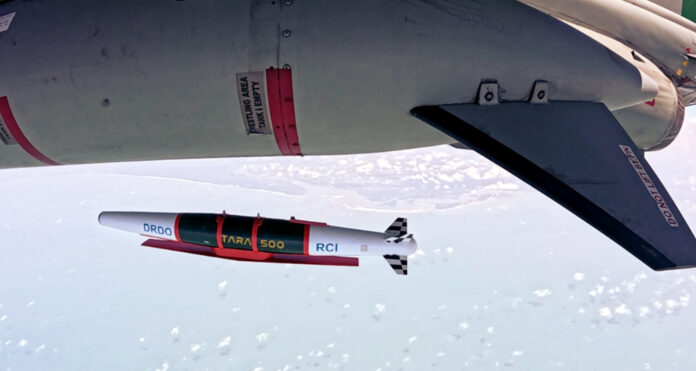
India has successfully carried out the maiden flight-trial of an indigenously developed glide weapon system off the coast of Odisha.
The Tactical Advanced Range Augmentation (TARA) system, developed to convert unguided warheads into precision guided weapons, was tested on Thursday, according to the defence ministry.
“The Defence Research and Development Organisation (DRDO) and the Indian Air Force (IAF) successfully conducted the maiden flight-trial of TARA weapon off the coast of Odisha,” it said.
It said TARA is India’s first indigenous glide weapon system to convert unguided warheads into precision guided weapons.
The weapon system has been designed and developed by Research Centre Imarat (RCI), Hyderabad along with other DRDO laboratories to enhance the lethality and accuracy of a low-cost weapon to neutralise ground-based targets, the ministry said in a statement.
It is the first glide weapon to utilise state-of-the-art low-cost systems, it added.
Defence Minister Rajnath Singh has congratulated DRDO, the Indian Air Force and the industry partners involved in the project for the maiden flight-trial of the weapon system.
He described it as a significant development in advancing India’s indigenous defence capabilities. (PTI)

J-K LG given telecom control powers during public safety events

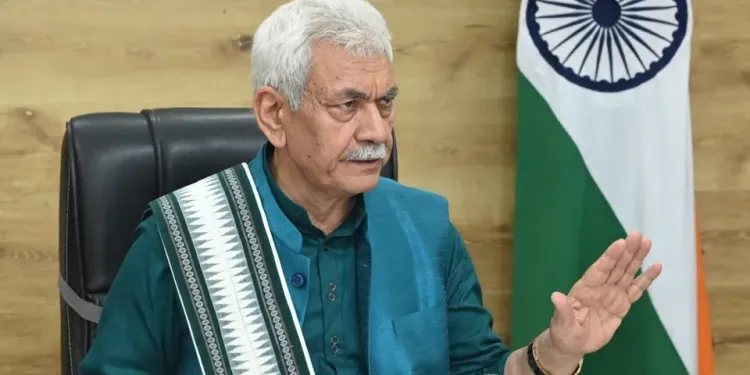
The Centre has authorised the Jammu and Kashmir LG to exercise powers, such as interception of signals, suspension of service and decryption of messages, related to telecom services in the UT during public safety events or national emergency, an official notification said.
According to the order issued on Thursday, the President directed the LG to exercise the powers and discharge the functions of the state government under Sub-Section 20 (2) of the Telecommunications Act, 2023 (44 of 2023), which deals with situations involving public safety and national security, within the Union territory.
“In pursuance of clause (1) of article 239 of the Constitution, the President hereby directs that the administrator (whether known as the lieutenant governor) of the Union territory of Jammu and Kashmir shall, subject to the control of the President and until further orders, exercise the powers and discharge the functions of the state government under Sub-Section (2) of Section 20 of the Telecommunications Act, 2023 (44 of 2023), within the said Union territory,” the notification published in gazette on Thursday said.
Using the powers, the LG can block the transmission, allow interception, order decryption of messages, and suspend telecom services in the event of any public emergency or in the interest of public safety.

Bharat is sacred, bound together by a sense of oneness: PM Modi

Prime Minister Narendra Modi said on Friday that every part of Bharat is sacred, bound together by a sense of oneness that transcends geography, and in a world often marked by divisions, this spirit of unity is more relevant than ever.
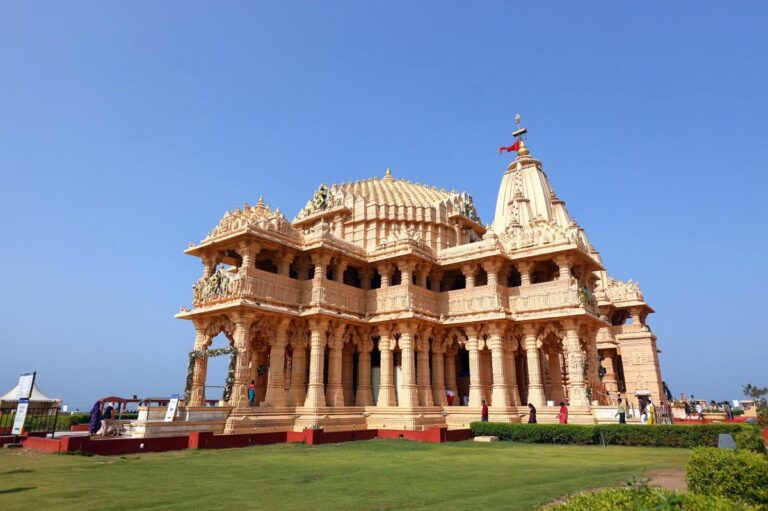
Modi, in a signed article marking 75 years since the restored Somnath Temple was reopened to devotees, said the struggles and sacrifices of those who laid down their lives to protect the temple in Gujarat and those who rebuilt it time and again will never be forgotten.
He said in a world often marked by divisions, this spirit of unity is more relevant than ever and Somnath will continue to stand tall in all its glory because the sense of unity and shared civilisational consciousness lives on in the hearts of every Indian.
“Countless individuals from different corners of India contributed to restoring its glory. They saw every part of Bharat as sacred, bound together by a sense of oneness that transcended geography. In a world often marked by divisions, this spirit of unity is more relevant than ever,” he said.
He said as a tribute to this, remembering the extraordinary courage of a thousand years, there will be special pujas at Somnath for the next thousand days. It is gladdening to see several people donating for these pujas as well, he said.
“I urge my fellow Indians to travel to Somnath in this special time. When you stand on the shores of Somnath, let its ancient echoes speak to you. You will not only be overwhelmed by devotion but will also feel the strong pulse of a civilisational spirit that refuses to fade, that is unbroken and unyielding,” he said.
Modi said the devotees will experience Bharat’s unconquerable spirit and understand why, despite every effort, the Indian culture remained undefeated and the people will have the opportunity to behold the vision of eternal triumph, which will surely be unforgettable.
The prime minister said that at the start of 2026, he had gone to Somnath for the Somnath Swabhiman Parv, marking a thousand years since the first attack on the Somnath Temple.
Now, he said, he will be back in Somnath on May 11 to mark 75 years since the inauguration of the restored temple by the then President of India, Rajendra Prasad.
He said that in less than half a year, it is a privilege to be attending two important milestones relating to Somnath and its journey from ruin to renewal or what everyone describes as from Vidhvans to Srijan.
“Somnath gives us a civilisational message. The vast sea before it evokes timelessness. The waves tell us that no matter how fierce the storms are or how turbulent the tides are, one can always rise again with dignity and strength.
“The waves return to the shore, as though reminding every generation that the spirit of the people can never be subdued for long,” he said.
Modi said Indian ancient scriptures say that a ‘pradakshina’ of the divine Somnath is equal to a ‘pradakshina’ of the whole earth. He said while people have come here to pray, they have also experienced the remarkable continuity of a civilisation whose flame could never be extinguished.
“Empires rose and fell, tides changed, history moved through conquest and upheaval, yet Somnath continued to endure in our consciousness. It is time to remember the countless greats who stood firm in the face of tyranny,” he said.
The prime minister said there were Lakulisha and Soma Sarman, who transformed Prabhasa into a great centre of philosophy.
He said Chakravarti Maharaja Dharasena IV of Vallabhi built the Second Temple there centuries ago and Bhima Deva, Jayapala and Anandapala will always be remembered for defending civilisational honour against invasions.
Modi said it is said that Raja Bhoja, too, helped with the reconstruction and Karna Deva and Siddharaja Jayasimha played a vital role in restoring Gujarat’s political and cultural strength.
Bhava Brihaspati, Kumarapala Solanki and the Pashupata Acharyas rebuilt and sustained the shrine as a great centre of worship and learning and Vishaladeva Vaghela and Tripurantaka protected its intellectual and spiritual traditions, he said.
“Mahipaladeva and Ra Khangar were instrumental in reviving worship after destruction. Punyashlok Ahilyabai Holkar, whose 300th birth centenary is being marked, ensured the continuity of devotion in the most difficult of times,” he said.
The PM said there were the Gaekwads of Baroda, who safeguarded the rights of pilgrims, and the country’s soil is blessed to have nurtured brave personalities like Veer Hamirji Gohil and Veer Vegdaji Bhil, whose sacrifice and courage have become a part of Somnath’s living memory.
In the 1940s, he said, when the spirit of freedom swept across India and the foundations of a new republic were being laid under the leadership of towering figures like Sardar Patel, one thing continued to trouble him deeply — the condition of Somnath.
“On 13th November 1947, during Diwali time, he stood next to the dilapidated ruins of the temple with sea-water in his hands and said, ‘On this auspicious day of the (Gujarati) New Year, we have decided that Somnath should be reconstructed. You, people of Saurashtra, should do your best. This is a holy task in which all should participate,” he said.
Modi said following the clarion call of Sardar Patel, it was not only the people of Gujarat but also the people of the whole of India responded enthusiastically.
Unfortunately, he said, fate did not allow Sardar Patel to witness the fulfilment of the dream he had so passionately championed as before the restored Somnath Temple could open its doors to devotees, he had departed from this world.
Yet, his (Patel’s) impact continued to be felt over the sacred shores of Prabhas Patan, he said.
“His vision was championed by Shri KM Munshi, ably supported by the Jamsaheb of Nawanagar. In 1951, when the temple was complete, it was decided to call the President of India, Dr Rajendra Prasad, for the ceremony. Overcoming strong objections from the then Prime Minister Pandit Nehru, Dr Prasad graced the ceremony, thus making it even more special and historic,” he said.
Modi said his mind also goes back to October 2001, when he had just taken over as chief minister of Gujarat and on October 31, 2001, the Jayanti of Sardar Patel, the Gujarat government had the honour of organising a programme to mark 50 years since the Somnath Temple opened its doors.
He said it also coincided with the 125th birth anniversary celebrations of Sardar Patel and the then Prime Minister Atal Bihari Vajpayee and the then Home Minister LK Advani attended the programme.
Modi said during his speech on May 11, 1951, President Rajendra Prasad said that the Somnath Temple proclaims to the world that anything with unparalleled faith and love cannot be destroyed. Prasad expressed hope that this temple will live in the hearts of people.
“He (Prasad) also said that the restoration of the temple was a fulfilment of Sardar Patel’s dream, but taking that spirit forward, it is important that we restore prosperity to the lives of people. These are important and inspiring messages he gave,” he said.
“This is the path we have been walking for over a decade. I consider it my good fortune that, inspired by the principle of ‘Vikas Bhi, Virasat Bhi’, from Somnath to Kashi, Kamakhya to Kedarnath, Ayodhya to Ujjain, Trimbakeshwar to Srisailam, our team has had the opportunity to equip our spiritual centres with the latest facilities while at the same time preserving their traditional character,” Modi said.
This, he said, along with efforts to improve connectivity, ensures more people can visit them and it boosts the local economy, secures livelihoods and deepens the spirit of ‘Ek Bharat, Shreshtha Bharat’.


Earthquake jolts parts of J&K, epicenter in Kishtwar

A Mild earthquake tremors were felt in several parts of Jammu and Kashmir on Friday morning.
As per details available, an earthquake of magnitude 3.5 struck Kishtwar district at around 09:57:54 IST.
Officials said the epicentre was located in Kishtwar region at Latitude 33.289 North and Longitude 76.739 East with a depth of 10 kilometres.
No reports of any loss of life or damage to property were received from anywhere in the Union Territory till the filing of this report.

ISI-linked Module Planned Attacks On Delhi Temple, Dhaba, Military Camp: Probe

Pakistan’s intelligence agency ISI had allegedly planned attacks on a historic temple in Delhi, a popular dhaba on the Delhi-Sonipat highway and a military camp in Haryana through operatives linked to the Shahzad Bhatti module, sources said on Friday.
According to the sources, the revelations emerged during the interrogation of nine alleged operatives of the module arrested by the Delhi Police Special Cell under their ‘Gang Bust Operation 2.0’ from multiple states.
Investigators found that one of the accused had conducted reconnaissance of a historic temple in Delhi and sent photographs of the premises to Pakistan-based handlers through social media platforms, the source said.
The module had allegedly planned to target police personnel and paramilitary forces deployed at the temple and carry out firing to create panic and disruption, he said.
The source also added that the accused were also tasked with carrying out a grenade attack on a popular ‘dhaba’ on the Delhi-Sonipat highway, frequented by thousands of people daily, with the intention of causing large-scale damage and casualties.
“A military camp in Hisar was also allegedly surveyed and videos of the area were shared with handlers across the border. Some police stations in Uttar Pradesh were also on the target list,” the source added. (AENCIES)

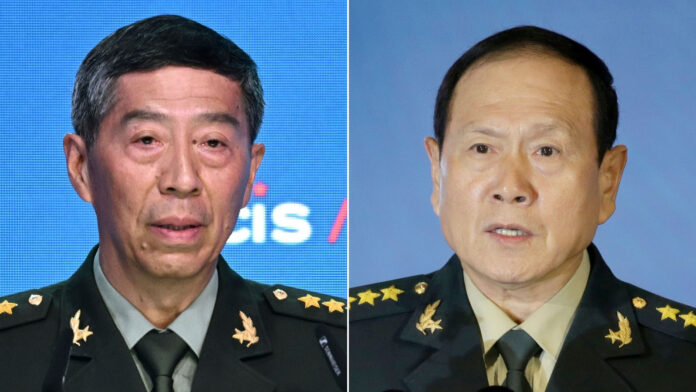
Two Former Chinese Defence Ministers Sentenced To Death For Corruption

Two former Chinese defence ministers, Wei Fenghe and Li Shangfu, were sentenced to death with a two-year reprieve over graft charges on Thursday, official media reported.
Wei and his successor Li, who worked under President Xi Jinping’s watch, were expelled from the ruling Communist Party in 2024.
Wei served as Defence Minister from 2018 to 2023, and Li barely served a few months as his successor.
Li, a Chinese aerospace engineer who headed the People’s Liberation Army’s all-important Rocket (Missile) Force, was personally picked up for the top defence post by Xi himself. (PTI)

Sentinels Of Simari: One Year After Sindoor, Villagers Try To Reclaim Narrative Of Normalcy

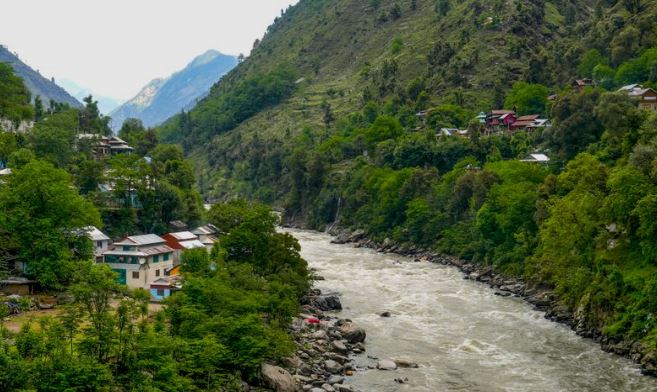
A river runs through it, cleaving the village between India on side of the gushing waters and Pakistan Occupied Jammu and  Kashmir on the other. If Operation Sindoor has a ground zero, it is Simari where the sound of artillery fire still echoes for villagers trying to shake off memories from that night one year ago.
It is from this frontier village surrounded by high mountains that the Army fired shells across the Krishan Ganga river to signal the start of Operation Sindoor on the intervening night of May 6-7, 2025, India’s response to the terror attack in Pahalgam to dismantle terror outlets in Pakistan.
One year on, silence seems to have settled over the picturesque hamlet on the foothills of the Shamshabari mountains in Tangdhar sector, about 180 km from Srinagar. Life has resumed its everyday routine but outsiders are met with quiet and a certain distrust. Many walk away, saying they only understand Pahari.
Simari, at the literal edge of the country, has a population of 500 and just about 80 houses. There are a dozen odd modern concrete structures alongside traditional mud and timber dwellings. If it were not for the roaring river waters, people from one side to the other could literally shout out to be heard. The river is also a constant reminder that this is a divided land – both literally and metaphorically.
And Operation Sindoor was felt not as a news report about what is happening to others but as a storm of fire passing overhead. Ghulam Qadir is amongst the few who talks, albeit reluctantly. “We didn’t just hear the about the war… we felt it as shells lit the skies,” Qadir told PTI. Community bunkers were home for the few days after that first night of shelling.
He is proud of his village. Simari’s local middle school has been designated Polling Booth Number One. A hand-painted slogan greets visitors with the declaration: ‘Democracy starts from here’.
“Now you should understand we are the first village in the country and the torch bearers of democracy in the country,” he snapped back when asked how it felt to be the resident of the country’s last village.
The school is sign of Simari’s resilience. Despite being physically separated from the rest of the country by a security fence, people here view themselves as the primary guardians of the country’s democracy. The village is mainly dependent on army troops deployed in the area and many work as labourers for them.
As commemorative events are held across the country to mark the first anniversary of Operation Sindoor, life in Simari is a delicate balance between everyday mundaneness and the fear that their village’s very remoteness could make them the centre of conflict.
For Iqbal, the drones from across the border were more difficult to deal with than the shelling. The Army opened fire several times to thwart their advances.
“Some of the intruding objects (drones) fell in our area. These were successfully removed by the Army,” he said, lauding the Army for providing all kinds of relief during those turbulent days.
Located eight kilometres from Teetwal area, which was developed under the border tourism plan, accessing the village is not easy. Tarred roads give way to landslides and fast flowing waters from the slopes around.
The language spoken is Pahari and the culture and customs differ from the Kashmiri heartland or Kupwara district in North Kashmir.
India carried out airstrikes on nine terror infrastructures in Pakistan and Pakistan Occupied Kashmir. About 100 terrorists were killed. (Agencies)