Thursday, July 23, 2026
Home Blog Page 253

Gill, Pant Fifties Carry India to 205/3 at Lunch on Day 3 Against Bangladesh

0

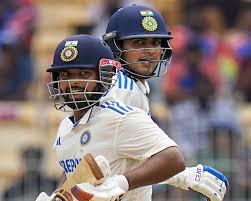
Chennai, Sept 21: Shubman Gill and Rishabh Pant powered India to a dominant position on the third day of the first Test against Bangladesh, as the hosts reached 205 for 3 at lunch in their second innings at the MA Chidambaram Stadium. Gill, unbeaten on 86, and Pant, not out on 82, forged an impressive 138-run partnership for the fourth wicket, extending India’s lead to 432 runs.

Resuming the day at 81 for 3, Gill (33*) and Pant (12*) steadily built India’s innings. Gill, known for his elegant stroke play, brought up his half-century off 79 balls, showcasing his growing maturity in Test cricket. Pant, playing his first Test since 2022, also reached his fifty off 88 balls after a cautious start.

Pant’s innings gained momentum when he hit off-spinner Mehidy Hasan Miraz for a boundary early in the session, and from there, he took on the Bangladesh bowlers with aggressive intent. One of the highlights was a scooped six over fine leg off Mahmud Hasan, entertaining the Chennai crowd.

Bangladesh’s bowlers struggled to capitalize on the cool, damp morning, allowing India to add 124 runs in the session without losing a wicket. Pant was given a reprieve on 72 when Najmul Hossain Shanto dropped a catch off Shakib Al Hasan.

India’s commanding lead and solid partnerships have put them in control of the match, with both Gill and Pant looking well set for bigger scores.

Goyal to Review India-ASEAN Trade Pact Progress in Laos

0

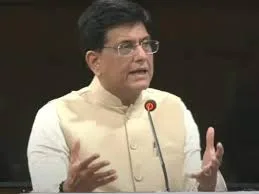
New Delhi, Sept 20: Commerce and Industry Minister Piyush Goyal has embarked on a two-day visit to Vientiane, Laos, to participate in the 21st ASEAN-India Economic Ministers (AEM-India) meeting and the 12th East Asia Summit Economic Ministers Meeting (EAS EMM). A key focus of his visit will be reviewing the progress of talks regarding the India-ASEAN Free Trade Agreement (FTA) in goods.

The ongoing review of the ASEAN-India Trade in Goods Agreement (AITIGA) is a high priority for India, with the aim to make the trade pact more business-friendly and reduce complexities for smoother transactions. Both sides aim to conclude the review by 2025. This agreement, originally signed in 2009, has been a cornerstone of India’s trade relationship with the ASEAN region, which comprises 10 Southeast Asian nations.

During his visit, Goyal will hold bilateral meetings with his counterparts from countries like Korea, Malaysia, Switzerland, Myanmar, and Laos. These meetings are expected to strengthen India’s economic partnerships beyond ASEAN.

ASEAN remains a vital trade partner for India, contributing around 11% to India’s global trade. In the last fiscal year (2023-24), India’s exports to ASEAN totaled USD 41.2 billion, while imports from the region stood at USD 80 billion.

The upcoming fourth round of talks on the India-ASEAN trade pact review is scheduled for November, following the completion of the third round of negotiations in August in Jakarta, Indonesia.

India’s collaboration with ASEAN, which started in 1992, has evolved into a Comprehensive Strategic Partnership as of 2022. For the past two years, ASEAN has been India’s second-largest trading partner. This review is crucial for addressing longstanding concerns of Indian businesses, particularly in tackling trade barriers and preventing the misuse of the agreement.

The ASEAN member nations include Brunei, Cambodia, Indonesia, Laos, Malaysia, Myanmar, the Philippines, Singapore, Thailand, and Vietnam.

BJP Will Not Allow Reservation to be Withdrawn: Tarun Chugh

0

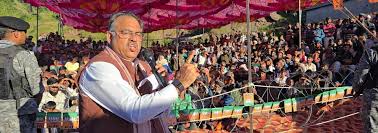
Jammu, Sept 20: BJP National General Secretary Tarun Chugh emphasized the party’s unwavering commitment to the peace and prosperity of Jammu and Kashmir, urging the region’s citizens to stand united for a stronger future under the leadership of Prime Minister Narendra Modi.

Speaking at a meeting in the Budhal constituency, Chugh highlighted the significant development efforts in Jammu and Kashmir, saying that the region has been on a path of rapid growth under Modi’s visionary leadership. He called on the people to embrace the ideals of national integration and unity, embodied by the BJP’s principles of ‘Antyodaya’ and ‘Sabka Saath, Sabka Vikas, Sabka Vishwas’ (Collective Effort, Inclusive Growth, Everyone’s Trust).

Chugh reminded the audience of the BJP’s historic move to abrogate Articles 370 and 35A, fully integrating Jammu and Kashmir into India. He warned against the divisive agendas of the National Conference (NC), Congress, and the People’s Democratic Party (PDP), which have repeatedly called for the restoration of Article 370 and the rollback of reservation benefits.

He strongly refuted these opposition calls, stating, “We will not allow the reservation given to Gujjars and Paharis to be taken back, even after ten lifetimes.” Chugh reiterated the BJP’s dedication to ensuring that the region continues to prosper, with ongoing development projects that will transform Jammu and Kashmir like never before.

Chugh further attacked NC and Congress for aligning with Pakistan’s agenda, asserting that under Modi’s leadership, India has taken decisive steps to defend its integrity and counter any attempts to destabilize the country. He also paid tribute to Dr. Shyama Prasad Mukherjee for his sacrifices in fighting for Jammu and Kashmir’s complete integration with India, famously opposing the concept of “two symbols, two laws, and two constitutions.”

Chugh concluded by reaffirming the BJP’s vision of a ‘Viksit Jammu Kashmir for a Viksit Bharat’ (Developed Jammu and Kashmir for a Developed India) and urged the people to support the BJP in ensuring a prosperous and unified future for the region.

PM Narendra Modi Embarks on 3-Day Visit to the US

0

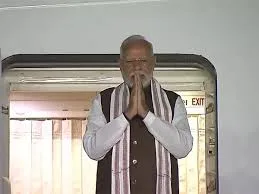
New Delhi, Sep 21: Prime Minister Narendra Modi departed for a three-day visit to the United States, during which he will attend the annual Quad summit, address the ‘Summit of the Future’ at the United Nations General Assembly, and engage with top American technology leaders.

In a departure statement, Modi highlighted the importance of the Quad, a strategic partnership between India, the US, Japan, and Australia, which he described as a key forum for promoting peace, progress, and prosperity in the Indo-Pacific region. The Quad summit, hosted by US President Joe Biden in his hometown of Wilmington, Delaware, is scheduled for Saturday.

“I look forward to joining my colleagues President Biden, Prime Minister Albanese, and Prime Minister Kishida for the Quad Summit,” Modi said. He emphasized the forum’s role in fostering collaboration among like-minded nations in ensuring a stable Indo-Pacific.

In addition to attending the Quad summit, the prime minister will also engage in a bilateral meeting with President Biden. The two leaders are expected to discuss ways to deepen the India-US Comprehensive Global Strategic Partnership. “My meeting with President Biden will allow us to review and identify new pathways to further deepen India-US relations for the benefit of our people and global good,” Modi said.

Following the Quad summit, Modi will travel to New York, where he will participate in an Indian community event on Long Island on September 22. He is also slated to address the Summit of the Future at the UN General Assembly on September 23. This summit will focus on charting a global roadmap for addressing humanity’s challenges in the years to come.

“The Summit of the Future is an opportunity for the global community to chart the road ahead for the betterment of humanity,” Modi remarked, adding that he will share the perspectives of “one-sixth of humanity,” underscoring India’s significant stake in a peaceful and secure future.

Modi expressed his eagerness to engage with the Indian diaspora and key American business leaders, acknowledging their role in strengthening the unique partnership between India and the US, the world’s largest and oldest democracies.

Cong-NC-PDP Nexus with Pak Exposed, BJP Stand Vindicated: Dr. Jitendra Singh

0

JAMMU, Sept 19: Union Minister Dr. Jitendra Singh today claimed that an “unholy nexus” exists between Pakistan and certain political parties in Jammu & Kashmir, including Congress, National Conference (NC), and the People’s Democratic Party (PDP). He said this nexus has been exposed following a statement made by Pakistan’s Defence Minister Khawaja Asif.

“The cat is out of the bag, and the BJP’s stance over the decades has been vindicated,” Dr. Singh stated during a press conference at the BJP media center in Jammu. The Minister accused these political parties of working in tandem with Pakistan to retain power in the region.

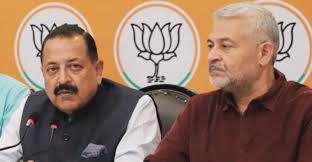
Flanked by former Deputy Chief Minister Kavinder Gupta and J&K BJP spokesperson Arun Gupta, Dr. Jitendra Singh said that Pakistan’s Defence Minister’s statement revealed that Pakistan, NC, Congress, and PDP are on the same page when it comes to restoring Article 370, which granted special status to Jammu & Kashmir. “Our stand has now been vindicated,” Dr. Singh said, while alleging that these parties often acted on directives from Pakistan.

Nexus During Elections

Dr. Jitendra Singh highlighted the pattern of election boycotts in Jammu & Kashmir, claiming they were coordinated by Pakistan and favored NC, Congress, and PDP. He asserted that these parties formed governments with as little as 5-8% voter turnout, which further evidenced their connection with Pakistan.

He added that leaders from these parties were complicit in the unrest and violence in the region. “For years, we have maintained that the instigators of terrorism, separatism, and sectarianism are as guilty as the terrorists themselves and should be prosecuted under the same laws,” Dr. Singh remarked.

Historical Ties with Pakistan

Referring to historical incidents, Dr. Jitendra Singh recounted that National Conference leader Farooq Abdullah had visited Pakistan nearly 50 years ago to meet with Amanullah Khan, a key figure behind the so-called “Azadi” movement in Kashmir. He also cited Abdullah’s post-1987 election remarks, where he reportedly encouraged his cadres to go to Pakistan for arms training after a disputed election led to rising tensions in the region.

BJP’s Resolve

Dr. Singh made it clear that the BJP would not allow the region to return to an era of militancy and unrest. “These parties want to push J&K back into an era of turmoil, but BJP will not let that happen,” he said, stressing that Prime Minister Narendra Modi’s efforts to restore peace in the region will not be undermined.

“At any cost, the BJP will not allow Congress and NC to throw Jammu & Kashmir back into the same era of terrorism. Prime Minister Modi has painstakingly pulled Jammu & Kashmir out of that mayhem, and it is our responsibility to prevent these vested interests from reversing the progress,” Dr. Singh concluded.

Israel Strikes Hundreds of Targets in Lebanon as Hezbollah Vows Revenge for Device Blasts

0

Beirut, Lebanon, Sept 20: Israel announced that it had struck hundreds of Hezbollah targets in southern Lebanon, hours after Hezbollah leader Hassan Nasrallah vowed to retaliate for two unprecedented attacks that sabotaged communication devices used by the group, killing 37 and wounding nearly 3,000.

While Israel has not confirmed involvement in the device explosions, Hezbollah has blamed it for the attacks. Speaking publicly for the first time since the sabotage, Nasrallah described the strikes on Hezbollah’s communication devices as a “massacre” and a potential “act of war,” vowing retribution.
“Israel will face tough retribution and just punishment, where it expects it and where it does not,” Nasrallah warned in his address on Thursday, September 19, 2024.

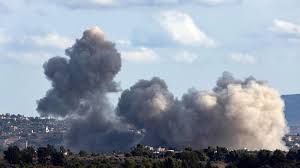
As Nasrallah delivered his speech, Israeli warplanes roared over Beirut, breaking the sound barrier. Soon after, the Israeli military confirmed airstrikes on around 100 launchers and other terrorist infrastructure in southern Lebanon. According to Lebanon’s state-run National News Agency, Israel conducted at least 52 airstrikes. Hezbollah responded with 17 attacks on military sites in northern Israel.

The series of attacks escalates tensions between Israel and Hezbollah, a situation that has persisted for nearly a year. Israel has primarily focused its firepower on the Palestinian militant group Hamas in Gaza, but the ongoing clashes with Hezbollah signal a shift toward Lebanon’s border. This comes after a year of near-daily exchanges between Hezbollah and Israeli troops.

International mediators have continuously attempted to avert a full-scale war between Israel and Lebanon and contain the conflict’s regional implications. Hezbollah maintains that its actions are in solidarity with Hamas, and Nasrallah vowed to continue attacking Israel as long as the war in Gaza continues.

Widespread Destruction and Casualties
The recent exchange of fire has resulted in hundreds of deaths in Lebanon, primarily among fighters, and dozens in Israel, including soldiers. Tens of thousands of civilians on both sides of the border have been displaced, seeking safety from the escalating conflict.

Speaking to Israeli troops, Defense Minister Yoav Gallant stated, “Hezbollah will pay an increasing price” as Israel works to secure the safe return of its citizens near the northern border. “We are at the start of a new phase in the war,” Gallant added.

Lebanon’s Foreign Minister Abdallah Bou Habib condemned Israel’s strikes as a “blatant assault on Lebanon’s sovereignty,” warning that this escalation could signal a broader conflict. Lebanon filed a complaint with the United Nations, accusing Israel of “cyber-terrorism” and labeling the device explosions as war crimes.

Iran, which supports Hezbollah, warned Israel of a “crushing response” from the resistance front. Tehran’s ambassador to Lebanon was reportedly wounded in the blasts.

Global Reactions and Calls for Restraint
U.S. Secretary of State Antony Blinken urged all parties to avoid further escalations, emphasizing the importance of restraint to achieve a ceasefire in Gaza. President Joe Biden’s administration reiterated its belief in the possibility of a diplomatic resolution between Israel and Hezbollah.

Palestinian President Mahmud Abbas, in Madrid, called for a new peace conference to address the ongoing Israeli-Palestinian conflict, which has only intensified since Hamas’s October 7 attack on Israel. The Hamas attack claimed 1,205 lives, primarily civilians, according to official Israeli figures. Out of 251 hostages taken by Hamas militants, 97 are still being held in Gaza, including 33 confirmed dead.

Israel’s retaliatory campaign in Gaza has killed at least 41,272 people, mostly civilians, according to figures provided by Gaza’s health ministry, which is run by Hamas. The United Nations has acknowledged the reliability of these figures.

Lebanese Panic Amid Device Blasts
The sudden influx of casualties from the blasts overwhelmed medics in Lebanon and spread panic among the population. Residents of Baalbek described the situation as terrifying.
“What happened in the last two days is so frightening. It’s terrifying,” said Lina Ismail, speaking from Baalbek.

Preliminary findings from a Lebanese investigation suggest that the communication devices were booby-trapped, with the explosions triggered remotely via emails sent to the devices. A source close to Hezbollah claimed that the pagers were recently imported and had been sabotaged prior to their arrival in Lebanon.

The New York Times reported that the devices were produced by Hungary-based BAC Consulting for Taiwanese manufacturer Gold Apollo, with intelligence sources suggesting that BAC was a front for Israeli operations. Hungarian officials have denied any direct involvement in the manufacturing process.

SC Seeks Info from Centre on Non-Appointment of Judges Despite Collegium’s Reiteration

0

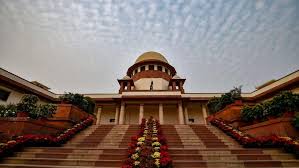
New Delhi, Sep 20: The Supreme Court on Friday directed the Centre to provide details on the number of judicial appointments recommended by the Collegium that have been reiterated but remain unaddressed, along with reasons for the delay and the level at which they are pending.

The bench, headed by Chief Justice D Y Chandrachud and comprising Justices J B Pardiwala and Manoj Misra, issued the directive while hearing a Public Interest Litigation (PIL) that sought the imposition of a time limit on the Centre for notifying judicial appointments recommended by the Supreme Court Collegium.
“The Supreme Court Collegium is not a search committee (for judges) whose recommendations can be stalled,” Chief Justice Chandrachud remarked during the hearing.

Attorney General (AG) R Venkataramani, representing the Centre, was asked to furnish a list of names reiterated by the Collegium and to explain why these appointments are still pending.
“If you can please make a list of the names reiterated and why it is pending and at what level it is pending… Show us why it is pending,” the CJI told the AG.

The bench noted that some judicial appointments are currently in the pipeline and expressed hope that these will be finalized soon. The court then adjourned the hearing, accommodating the AG’s request for more time.

The PIL, filed by advocate Harsh Vibhore Singhal, calls for fixing a time frame within which the Centre must notify appointments recommended by the Collegium. It argues that the absence of a fixed period allows the government to arbitrarily delay the process, which undermines judicial independence and disrupts the constitutional and democratic order.
Lawyer Prashant Bhushan also referenced the case of senior advocate Saurabh Kirpal, whose appointment as a high court judge has not yet been confirmed despite repeated recommendations by the Supreme Court Collegium.

PM Modi Critiques Congress-NC Alliance in Katra Rally

0

Prime Minister Narendra Modi launched a scathing attack on the Congress-National Conference (NC) alliance, following a show of support from Pakistan’s Defence Minister, Khwaja Asif, regarding the restoration of Articles 370 and 35A. Speaking at a massive rally in Katra, Modi asserted that this backing signifies an alignment with Pakistan’s agenda, which he categorically opposes.

Modi emphasized that the alliance aims to revert to an era marked by violence and instability, urging voters to reject Congress, NC, and the PDP for their past failures. He proclaimed, “No power on Earth can bring back Article 370,” reinforcing his commitment to maintain peace in Jammu and Kashmir after its abrogation.

During his address, Modi pointed to the detrimental impact of these parties, stating, “They have inflicted wounds in the region for years.” He urged the crowd to ensure the political sunset of these parties, reinforcing that their votes should reflect a desire for progress and development.

The Prime Minister highlighted the strides made in regional development, promising that statehood would eventually be restored to Jammu and Kashmir. He recalled recent acts of terrorism, paying tribute to victims, and declared that under BJP governance, the region is on a path toward sustained peace.

Modi criticized Congress leader Rahul Gandhi for his remarks abroad, framing them as an insult to Indian beliefs. He accused the Congress of prioritizing its electoral gains over national unity and culture, alleging that their policies have historically marginalized the Jammu region.

Emphasizing infrastructure development, Modi detailed ongoing projects like the Chenab rail bridge, which he claimed brought global attention to the region, and improvements in road connectivity that would benefit local farmers and boost tourism.

He concluded by appealing for support for the BJP, promising to elevate Jammu and Kashmir to new heights of development and ensuring that the needs and aspirations of its people are prioritized.


Fake Doctor Arrested for Selling Fraudulent Medical Degrees to Over 400 Students

0

A significant scam involving the sale of fraudulent medical degrees has come to light with the arrest of Vijay Sharma, a self-proclaimed doctor who allegedly duped over 400 students out of approximately Rs 3.7 crore. The police revealed this alarming case on Wednesday.

According to Superintendent of Police Manush Pareek, the investigation uncovered that Khusro Memorial P.G. College had issued counterfeit MBBS degrees from various universities, misleading students who were unaware of the deception until they sought licenses or job placements.

Details of the Scam
Vijay Sharma claimed to possess a Bachelor of Medicine and Surgery (MBBS) degree, which was later confirmed to be false during the police inquiry. The college management, including Sharma, collected substantial fees from the students, leading to the significant financial loss.

Sharma, who had been evading authorities, was apprehended by police on Wednesday. During questioning, he admitted to his role in the scheme to create and sell fake degrees, which were reportedly sourced from universities in Orissa, Himachal Pradesh, Roorkee, and Kanpur.

Arrests and Ongoing Investigation
The police had previously arrested two individuals connected to the college, including its owner, and sealed the institution as part of the ongoing investigation. Superintendent Pareek stated that the funds generated from this fraudulent activity were allegedly used to acquire valuable properties.

Sharma’s criminal background includes three prior cases related to fraud and forgery. Before his current endeavors, he had completed a course in Naturopathy and Yoga Sciences and operated a consultancy that issued fake degrees to unsuspecting graduates.

Conclusion
This case highlights a growing concern regarding the proliferation of fraudulent educational institutions and the impact of such scams on students’ futures. Authorities are urging anyone who may have been affected by this scheme to come forward as the investigation continues.

Police officials emphasize the importance of verifying the legitimacy of educational credentials to prevent further exploitation. The community remains on high alert as this shocking case unfolds, shedding light on the darker side of the education sector

Voter Sentiment in Ramban: Hope for Change Amidst Infrastructure Challenges

0

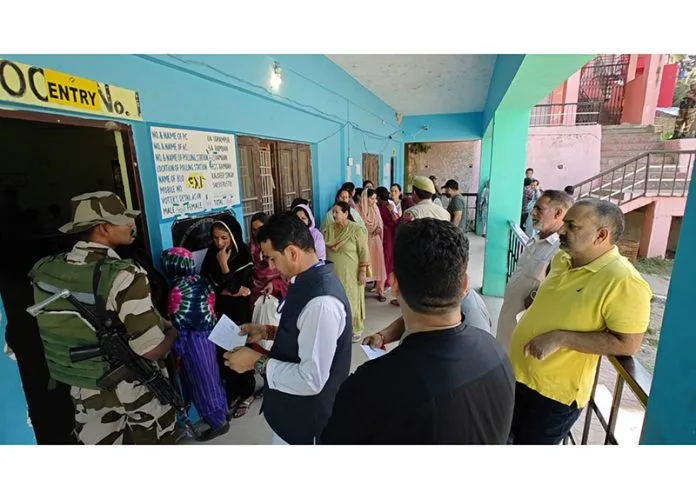
As voters lined up at polling stations in the mountainous district of Ramban, the palpable enthusiasm was juxtaposed with the stark realities of daily life. Bad roads and garbage-strewn streets, especially around government schools serving as polling sites, highlighted the pressing issues residents hope the new government will address.

The polling station at Government Model Higher Secondary School Ramban saw a significant turnout as the first phase of the Legislative Assembly elections began. Voters expressed a mix of hope and urgency, driven by the desire for improved infrastructure, particularly water supply and road conditions.

Local Concerns and Aspirations
Among those casting their votes was Rukhsana Begum, a 24-year-old housewife from the Ashri area. Accompanied by her husband and mother-in-law, she voiced her hopes for better roads. “I voted for a candidate who can prioritize our issues,” she said, adding that ration shortages at government depots had left many families struggling for the past six months.

Naseema Begum, 25, from the Seri area, echoed similar concerns about road conditions and flooding in her neighborhood. Meanwhile, first-time voter Kanika, a 22-year-old pursuing a PG degree in Political Science, expressed her desire for the restoration of statehood and development in her district.

The Youth’s Responsibility
For many young voters like Shreya Sharma, also 22, this election represents a pivotal moment. She articulated a sense of responsibility, highlighting the dilapidated roads and inadequate veterinary services in her area. “We must vote for change,” she emphasized.

Another first-time voter, Arushi Raina, 25, waiting at the Government Middle School Girls’ Polling Station, expressed frustration over ongoing water supply issues in her locality. “In 2024, it’s unacceptable that we still face such basic problems,” she said.

Voices from the Community
The sentiment for change was echoed by Babli Devi, 50, and Shahzan Begum, 39, both from Maitra. They raised concerns about unemployment, rising prices, and the impact of bad roads on pregnant women during emergencies.

Specially-abled voter Mohd Rafiq, 42, made his way to the polls in a wheelchair. After voting, he planted a sapling at the Pink Polling Station, emphasizing the struggles of disabled individuals in Ramban. “Many have faced delays in pension verification, leaving us in dire straits,” he shared.

Jon Mohd, 50, a businessman, expressed his hopes for better governance, stating, “I voted for a candidate who can bring real development to our area.”

Infrastructure Challenges Persist
At another polling station in Boys Middle School, Nanak Chand, 70, a farmer, shared his frustrations about irregular water supply in his locality. “We often wait days for water,” he lamented, but like many others, he remained hopeful for change with the new government.

Conclusion
As Ramban votes in this historic election, the prevailing sentiment is one of hope intertwined with urgency. Residents are looking to their elected representatives to address long-standing issues that affect their daily lives. With the first phase of voting complete, the community eagerly anticipates the outcome, hoping for a regime that prioritizes infrastructure development and better living conditions.