Wednesday, July 22, 2026
Home Blog Page 243

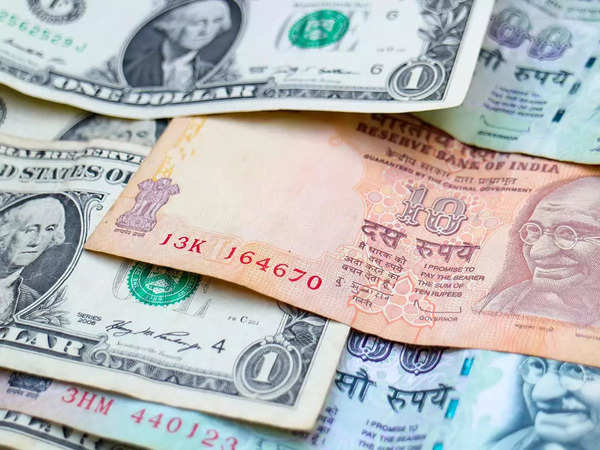
Rupee Gains 5 Paise, Closes at 84.05 Against US Dollar

Mumbai, Oct — The rupee rebounded from its all-time low, appreciating by 5 paise to close at 84.05 against the US dollar on Monday, buoyed by strong domestic equity markets.

Forex traders noted that while the rupee was weighed down by a strong US dollar and elevated crude oil prices, support from the Reserve Bank of India’s (RBI) intervention, backed by record-high forex reserves, helped lift the local currency.

At the interbank foreign exchange market, the rupee opened at 84.06 against the greenback and traded within a narrow range of 84.05 to 84.07, ultimately settling at 84.05, marking a 5 paise increase from its previous close. On Friday, the rupee had fallen 12 paise to a record low of 84.10 against the US dollar.

Anuj Choudhary, Research Analyst at Sharekhan by BNP Paribas, warned that foreign fund outflows and geopolitical uncertainties in the Middle East could create a negative bias for the rupee. “Strength in the US dollar may further pressure the rupee,” he added, though positive momentum in domestic markets could offer support. Choudhary projected the USD-INR spot price to trade within a range of 83.90 to 84.30 in the near term.

Meanwhile, the dollar index, which measures the greenback’s performance against six major currencies, rose 0.08 percent to 102.97. Brent crude, the global oil benchmark, fell 2.51 percent to USD 77.06 per barrel.

On the domestic equity front, the Sensex surged 591.69 points, or 0.73 percent, to close at 81,973.05 points, while the Nifty gained 163.70 points, or 0.66 percent, to end at 25,127.95 points.

Despite the positive equity performance, foreign institutional investors (FIIs) were net sellers on Monday, offloading shares worth Rs 3,731.59 crore, according to exchange data.

Anil Kumar Bhansali, Head of Treasury and Executive Director at Finrex Treasury Advisors LLP, observed that the rupee “looks vulnerable to buying by FPIs and oil companies” following the RBI’s decision to let it cross the 84.00 mark on Friday. He also pointed out that Hyundai’s IPO doesn’t seem very attractive to foreign investors.

Additionally, retail inflation for September surged to a nine-month high of 5.49 percent, driven by rising vegetable prices. This was up from 3.65 percent in August, with the last comparable peak in December 2023 at 5.69 percent.

India’s forex reserves fell by USD 3.709 billion to USD 701.176 billion for the week ending October 4, following a sharp rise of USD 12.588 billion in the prior week to an all-time high of USD 704.885 billion.
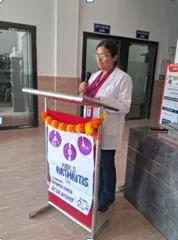
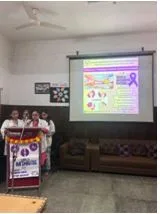
World Arthritis Day observed in JIAR under World Ayurveda Day Celebration

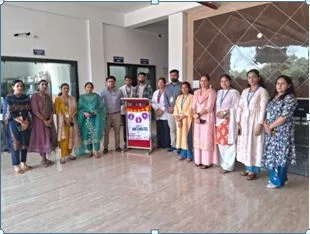
On October 14, 2024, the JIAR campus celebrated World Arthritis Day as part of the World Ayurveda Day celebrations. World Arthritis Day, established in 1996, aims to raise global awareness of arthritis.

Various presentations, short videos, reels, and awareness lectures were delivered to students and staff members.

The event focused on highlighting and promoting discussions about rheumatic and musculoskeletal diseases, their prevention, and facilitating access to effective arthritis treatment.


The event was organized by Dr. Rachin Shivgotra, Associate Professor in the PG Department of Kriya Sharira, and Dr. Shweta Chouhan, Associate Professor in the Department of Agad Tantra.

EAM Jaishankar to Visit Pakistan on Tuesday for SCO Meeting

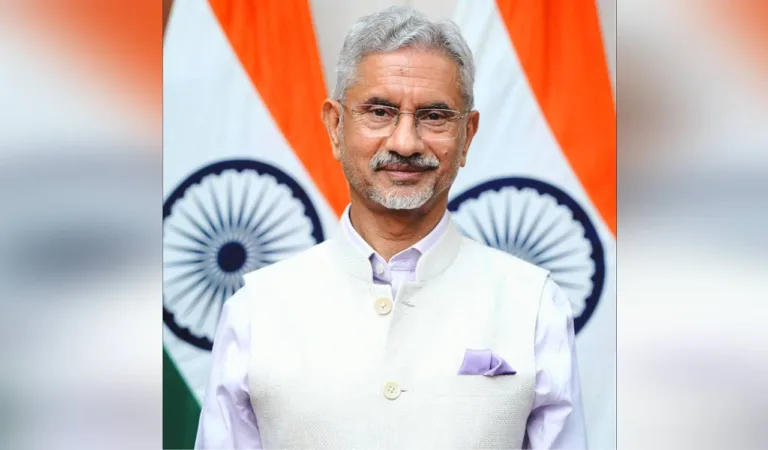
LAHORE, Oct 14: External Affairs Minister S. Jaishankar is scheduled to arrive in Pakistan on Tuesday to participate in a meeting of the Shanghai Cooperation Organisation (SCO), marking the first high-level visit from India in nearly nine years amidst ongoing tensions between the two nations.

Upon his arrival in Islamabad, Jaishankar is expected to attend a banquet reception hosted by Pakistan Prime Minister Shehbaz Sharif for delegates from the SCO member countries.

However, both India and Pakistan have confirmed that no bilateral talks will take place between Jaishankar and Pakistan’s Finance Minister Ishaq Dar during the summit.

Jaishankar’s visit comes at a time when relations between India and Pakistan remain strained over issues related to Kashmir and cross-border terrorism. He is anticipated to spend less than 24 hours in Pakistan.

The SCO Council of Heads of Government (CHG) meeting will be held on October 15 and 16. The last Indian Foreign Minister to visit Pakistan was Sushma Swaraj in December 2015 for a conference on Afghanistan.

In August, Pakistan extended an invitation to Prime Minister Narendra Modi for the SCO summit. Jaishankar’s trip is viewed as a significant move from India, emphasizing its commitment to the SCO.

In a recent address, Jaishankar expressed India’s desire for good relations with Pakistan but stressed that this cannot come at the expense of ignoring cross-border terrorism.

Relations between the two countries worsened following India’s airstrike on a Jaish-e-Mohammed terrorist camp in Balakot in February 2019, which was a response to the Pulwama terror attack. The situation further deteriorated after India revoked the special status of Jammu and Kashmir on August 5, 2019, leading Pakistan to downgrade diplomatic ties with India.

While India maintains that it seeks normal relations with Pakistan, it insists that Pakistan must foster an environment free of terrorism and hostility to facilitate such engagement.

The last significant visit by a Pakistani official to India occurred in May 2023, when Bilawal Bhutto Zardari attended a meeting of SCO foreign ministers in Goa, marking the first visit of a Pakistani foreign minister to India in almost 12 years.

Supreme Court Declines to Hear Petition Challenging LG’s Authority to Nominate 5 MLAs to J&K Assembly

0

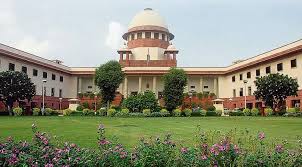
NEW DELHI, Oct 14: The Supreme Court on Monday declined to entertain a plea challenging the Lieutenant Governor’s (LG) authority to nominate five Members of the Legislative Assembly (MLAs) to the Jammu and Kashmir Assembly.

A bench comprising Justices Sanjiv Khanna and PV Sanjay Kumar advised the petitioner to first approach the High Court of Jammu and Kashmir and Ladakh, stating that bypassing the High Court could lead to oversights. “In many cases where we have entertained at first instance, we see many things get left out,” the court noted.

Senior Advocate Abhishek Manu Singhvi, representing the petitioner Ravinder Kumar Sharma, argued that allowing an unelected LG to nominate MLAs could undermine the electoral mandate.

As per the Jammu and Kashmir Reorganisation Act of 2019, the LG is empowered to nominate five MLAs to represent displaced Kashmiri people and those from Pakistan-occupied Kashmir. The 90-member elected assembly’s majority mark increases from 45 to 48 due to these nominations.

In the recent assembly elections, the INDIA coalition—comprising the J&K National Conference, Indian National Congress, and the Communist Party of India (Marxist)—secured 49 seats, surpassing the 48-seat majority even with the addition of the five nominated MLAs.

Army Chief Gen Dwivedi Embarks on Japan Visit to Strengthen Defence Ties

0

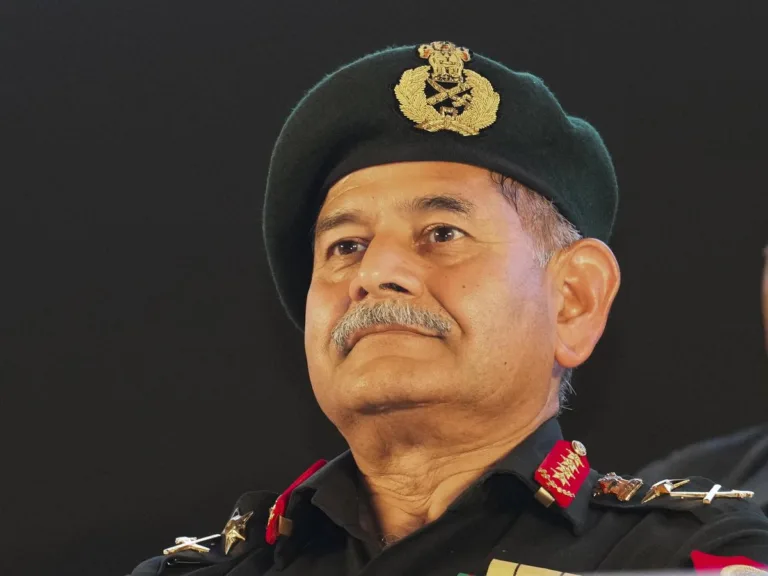
NEW DELHI, Oct 14: Army Chief General Upendra Dwivedi has embarked on a four-day visit to Japan, from October 14 to 17, with the goal of strengthening defence cooperation between India and Japan.

As part of the visit, Gen Dwivedi will lay a wreath at the Hiroshima Peace Park and offer floral tributes to Mahatma Gandhi at his statue, symbolizing a commitment to peace.

The Defence Ministry emphasized that this visit represents a “significant step in enhancing defence cooperation” between the two countries. On the first day, Gen Dwivedi is scheduled to meet Sibi George, India’s Ambassador to Japan, and participate in discussions on India-Japan relations at the Indian Embassy in Tokyo.

On October 15, the Army Chief will meet with senior Japanese military leaders, including General Yoshida Yoshihide, Chief of Staff of the Joint Self Defence Force, and General Morishita Yasunori, Chief of Staff of the Japan Ground Self-Defence Force (JGSDF), as well as Ishikawa Takeshi, Commissioner of the Acquisition, Technology, and Logistic Agency (ATLA). The discussions will focus on strengthening military cooperation between the two nations.

During his visit to the Ministry of Defence in Ichigaya, Gen Dwivedi will pay homage at the memorial and receive a Guard of Honour from the JGSDF. His itinerary also includes interactions with the JGSDF’s senior leadership and a visit to the National Institute of Defence Studies.

On October 16, accompanied by JGSDF Chief of Staff, Gen Dwivedi will visit the Fuji School and meet with Lt. Gen Kodama Yasuyuki, Commanding General of the school. He will receive a briefing and observe an equipment and facility display.

The visit will conclude in Hiroshima on October 17, where Gen Dwivedi will lay a wreath at the Hiroshima Peace Park and pay respects to Mahatma Gandhi’s statue. This trip is aimed at deepening military cooperation and exploring new avenues of collaboration between India and Japan, according to the Defence Ministry.

TAC Security Joins Forces with Google as MASA Assessor

Chandigarh, Oct 14 – TAC InfoSec Ltd, a leading global cybersecurity company specializing in vulnerability management, announced its partnership with Google on Monday as an authorized lab for Mobile Apps Security Assessment (MASA) under the App Defense Alliance (ADA). This collaboration allows TAC Security to help developers and organizations meet Google Play Store’s stringent mobile application security standards by rigorously testing apps for vulnerabilities and ensuring top-tier security compliance.

Previously, TAC Security was the only recommended and preferred assessor for Google’s Cloud Application Security Assessment (CASA) program. Trishneet Arora, Founder, Chairman, and CEO of TAC Security, expressed excitement over this new milestone, stating, “Joining the exclusive club of Google-approved MASA authorized labs presents a tremendous opportunity to accelerate client growth, given the vast potential of over 10,000 developers on the Play Store.”

Arora further added, “This achievement, along with recent global acquisitions, aligns with our vision to become the largest vulnerability management firm in the world by 2026.”

Google Play currently hosts nearly 3.5 million Android apps. Through the ADA’s MASA program, developers can undergo an independent security review that awards a security badge to compliant apps on the Play Store, helping to build trust and increase downloads by reassuring users of best security practices.

In September 2024, TAC Security successfully completed the acquisition of CyberSandia, a U.S.-based cybersecurity firm contracted to provide IT services for the State of New Mexico. The company also appointed Hector Balderas to its Board of Directors in the US and expanded its global reach by acquiring TAC Cyber Security Consultancy L.L.C., a wholly-owned subsidiary in the UAE, to cater to growing cybersecurity demands in the Gulf Cooperation Council (GCC) and the broader Middle East.

Make In India’ Has Turned Into ‘Fake In India’: Congress

0

New Delhi, Oct 14: The Congress on Monday sharply criticized the Modi government’s flagship ‘Make in India’ initiative, calling it a collection of empty promises or “jumlas,” and alleging that it has transformed into “Fake in India.”

Congress General Secretary (Communications) Jairam Ramesh pointed out that the ambitious goals set when the program was launched in 2014 have fallen flat, claiming that economic policy-making over the past decade has been far from stable, predictable, or sensible.

Ramesh, in a post on X (formerly Twitter), provided a status update on the four key objectives the Modi government had outlined during the program’s inception.

“Jumla One: Increase the growth rate of Indian industry to 12-14% per year. Reality: Since 2014, the annual growth rate for manufacturing has averaged only around 5.2%,” he stated.

“Jumla Two: Create 100 million industrial jobs by 2022. Reality: The number of manufacturing workers has actually fallen from 51.3 million in 2017 to 35.65 million in 2022-23,” Ramesh added.

Highlighting the third goal, he said, “Jumla Three: Increase the share of the manufacturing sector to 25% of GDP by 2022, later revised to 2025. Reality: The share of manufacturing in India’s Gross Value Added (GVA) has dropped from 18.1% in 2011-12 to just 14.3% in 2022-23.”

Ramesh’s final critique, “Jumla Four,” addressed the aim to make India the “new factory of the world,” replacing China. “Far from replacing China, we have become even more dependent on it. Imports from China have risen from 11% in 2014 to 15% in recent years,” he remarked.

Further, Ramesh accused the Modi government of creating an economic atmosphere filled with fear and uncertainty, discouraging private investment, while alleging that one or two big business conglomerates close to the government have been unfairly favored. “Make in India has simply become Fake in India,” Ramesh charged.

On the program’s 10th anniversary, Prime Minister Narendra Modi had lauded the ‘Make in India’ initiative, calling it a transformative movement that has turned India into a powerhouse of manufacturing and innovation, asserting that “Bharat is unstoppable.” However, the Congress’s sharp critique suggests the party sees the initiative as a failure that has failed to live up to its lofty promises.

“Reclaiming What Was Lost: PDP’s Waheed Para on the Revocation of Presidential Rule in J&K”

SRINAGAR, Oct 14: People’s Democratic Party (PDP) leader Waheed Para hailed the revocation of President’s rule in Jammu and Kashmir as a pivotal step towards reclaiming the rights and dignity lost by the people over the past 6-7 years. He emphasized that the people of Kashmir had voted with the hope of restoring their identity, special status, and the return of Article 370.

Para, speaking to a news agency, stated, “The people of Kashmir have voted for dignity and for the restoration of Article 370 and statehood. They have voted to reclaim the special status that was taken away on August 5, 2019. This vote is not just about ending Presidential rule, but about restoring their pride and protecting their identity. I believe this marks the beginning of the process to recover what has been lost.”

He also expressed hope that the National Conference (NC), which has garnered significant support, would deliver on the promises made to the people. “There are high expectations from this government. We hope they will fulfill the commitments they made in their manifesto, which secured their votes,” Para added.

On Sunday, the President’s rule in Jammu and Kashmir was officially revoked, clearing the way for the formation of a new government following the recently concluded assembly elections in the Union Territory. The Ministry of Home Affairs issued a gazette notification confirming the development.

This announcement came just days after National Conference Vice President Omar Abdullah met with Lieutenant Governor Manoj Sinha to formally stake the NC’s claim to form the government. Abdullah had submitted letters of support from various parties, including the Congress, independents, and the Aam Aadmi Party (AAP).

Following his meeting with LG Sinha, Abdullah mentioned that the swearing-in ceremony could take place by Tuesday (October 15) or Wednesday (October 16), as the LG said it would take 2-3 days to finalize the paperwork.

NC President Farooq Abdullah stated that the top priority of the new government would be the restoration of statehood to Jammu and Kashmir.

The NC-Congress alliance, which won a combined 48 seats in the 90-seat assembly, is now set to form the first elected government in Jammu and Kashmir since the abrogation of Article 370 and the region’s reorganization into two Union Territories in 2019. The NC alone secured 42 seats, with Congress winning six.

IMF Urges Pakistan to Eliminate Preferential Treatment for Agriculture and Textile Industries

Islamabad, Oct 14: The International Monetary Fund (IMF) has called on Pakistan to promptly eliminate preferential treatment, tax exemptions, and various protections for its agriculture and textile sectors. According to a report by The Dawn, the IMF claims that these practices have hindered the country’s growth potential for decades.

In its staff report on the underlying issues affecting Pakistan’s struggling economy, the IMF criticized both sectors for not only failing to contribute significantly to national revenue but also for consuming substantial public funds while remaining inefficient and uncompetitive. The IMF emphasized that as part of the recently approved USD 7 billion Extended Fund Facility (EFF), Pakistan must abandon economic practices from the past 75 years to break free from its recurring boom-bust cycles.

The report, released on October 10, highlighted that Pakistan has significantly lagged behind comparable nations, leading to stagnation that has deteriorated living standards and pushed over 40.5% of the population below the poverty line. The IMF pointed out that Pakistan has struggled to develop more sophisticated export products, with a low share of knowledge-intensive exports due to a lack of innovation. In 2022, Pakistan ranked 85th on the Economic Complexity Index, the same position it held in 2000.

The report noted that the country’s export basket is heavily weighted toward agriculture and textiles, including cotton yarn, rice, woven fabrics, beef, and leather apparel, which has limited its ability to shift resources toward more technologically advanced products. Although Pakistan does export some high-value goods, such as medicines and medical instruments, these sectors operate within a distorted economic framework.

The IMF report identified tariffs on intermediate and final goods as significant barriers to competitiveness and domestic market growth, which hinder the country’s transition to more advanced manufacturing. It stated that existing microeconomic distortions, such as public procurement of agricultural goods and fiscal incentives for low productivity sectors, have stymied reallocation efforts.

The textile sector was specifically identified as having the highest tax gap relative to its value added, benefiting from subsidies, preferential pricing on inputs, and concessional financing schemes between 2007 and 2022. The IMF emphasized the need for the government to simplify trade policies in the upcoming National Tariff Policy (2025-29) and to avoid using tariffs as a means to protect inefficient sectors, as such strategies weaken exports and inhibit participation in global value chains.

Additionally, the report cautioned against trade policies designed to promote specific domestic sectors, including export subsidies and local content requirements, which could lead to resource misallocation and potential violations of international obligations. The IMF pointed out that Pakistan’s export growth has been notably weak compared to regional peers, particularly stagnant during the 2010s.

The report also indicated that several complex goods lie within the technological reach of Pakistan’s current export basket, such as glassware, paints, chemicals, and rubber products. However, to foster the development of these new industries, the country must establish a level playing field for businesses and avoid targeted policies that favor certain sectors. The IMF stressed the importance of greater integration into global trade and easier access to imports, both as intermediate inputs for production and as final goods, to promote domestic competition. Removing fiscal incentives would help reduce resource misallocation and encourage fair pricing across firms.

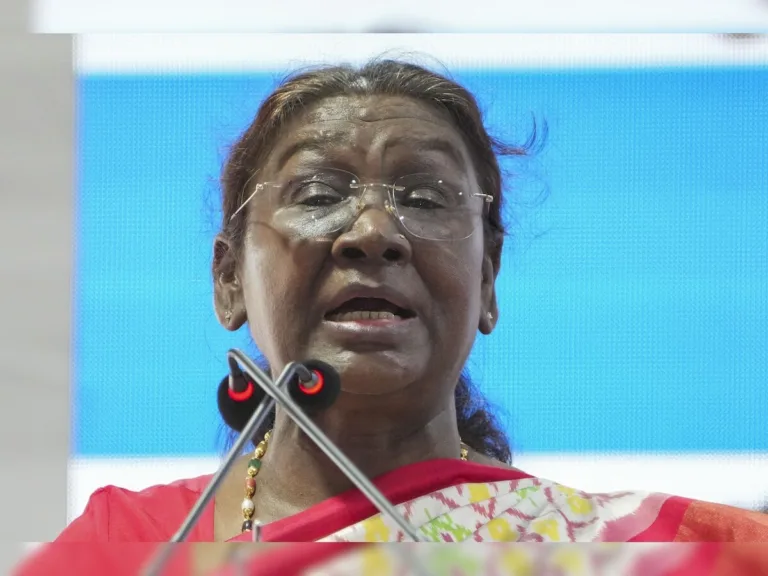
President Murmu Engages with Indian Community in Algeria

Algiers, Oct 14 : President Droupadi Murmu praised the contributions of the Indian diaspora in promoting India’s global standing during her visit to Algeria, marking the first-ever visit by an Indian Head of State to the North African nation.

Murmu arrived in Algiers on Sunday, the first stop of her three-nation tour aimed at deepening India’s engagement with Africa. During her visit, she is scheduled to meet Algerian President Abdelmadjid Tebboune on Monday and will visit the King Abdulla Science and Technology Centre, a project developed by Indian firm Shapoorji Pallonji.

Shortly after her arrival, President Murmu interacted with members of the Indian community at a special reception. A statement from Rashtrapati Bhavan shared on social media platform X highlighted her address, saying, “The Indian community in Algeria serves as a bridge advancing India’s interests and soft power.”

In her speech, Murmu emphasized the role of the Indian diaspora in Algeria, noting that with India moving swiftly on its developmental path, the support and goodwill of Indian communities abroad, including in Algeria, remain crucial. “With the collective efforts of 1.4 billion Indians, we embark on a new journey of hopes and aspirations,” she remarked.

Murmu also spoke about the longstanding ties between India and Algeria, recalling India’s early support for Algeria’s independence struggle and the deep personal connections shared by leaders of both countries. “When Algeria gained independence in 1962, India was among the first to establish diplomatic relations,” she said, emphasizing the enduring friendship despite geographic distance.

Highlighting cultural connections, she spoke of the popularity of Indian films and TV shows in Algeria and the fond memories Algerians have of Indian teachers and doctors who worked in the country in the 70s and 80s. She noted the unique bond, adding that some Algerian brides even wear Indian sarees during their three-day wedding celebrations.

Murmu lauded the approximately 4,000 Indians living in Algeria, many of whom work on challenging projects in remote areas, and acknowledged the presence of Indian public and private companies operating in the country. She emphasized that these Indians are effectively India’s ambassadors, playing a key role in enhancing India’s image abroad.

“As India marches forward in the Amrit Kaal, we will continue to foster strong relationships with countries like Algeria, driven by the spirit of South-South cooperation,” she concluded, reaffirming India’s commitment to strengthening ties with African nations.

Following her visit to Algeria, President Murmu will continue her tour with stops in Mauritania and Malawi.