Saturday, July 18, 2026
Home Blog Page 210

Javed Rana Reviews Progress on Water Supply Schemes in Pir Panjal Region

0

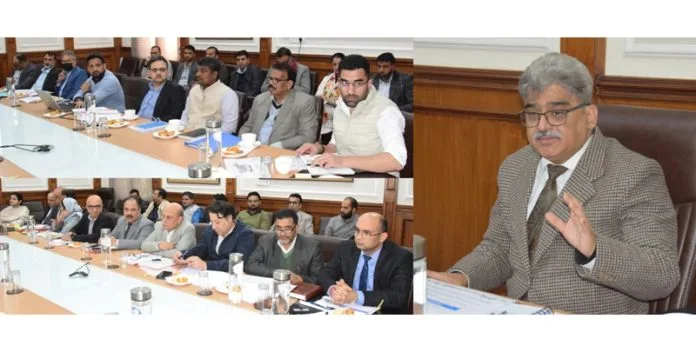
Javed Ahmad Rana, the Minister for Jal Shakti, Forest, Ecology & Environment, and Tribal Affairs, chaired a crucial meeting at the Civil Secretariat today to review the implementation of Water Supply Schemes (WSSs) in the Pir Panjal region. The meeting was held to assess the progress of various activities under the Jal Shakti Department, with a special focus on the ongoing Jal Jeevan Mission (JJM) projects in the districts of Poonch and Rajouri.

The meeting saw the participation of Chief Engineer PHE, Jammu, and Superintending Engineer, Jammu, who attended in person, while officers from the Poonch and Rajouri districts joined through video conferencing.


Focus on Timelines and Fund Utilization

Minister Javed Rana conducted a comprehensive review of the various water supply schemes, with particular emphasis on their completion timelines, physical targets, and fund utilization. He stressed the importance of efficient and timely implementation of these schemes to ensure uninterrupted access to clean drinking water in the region.

“I want to make it clear that any delays in the completion of these water supply schemes will not be tolerated. We are setting clear timelines for the completion of all ongoing projects,” said Rana during the meeting. “If the work is not done as per schedule, we will have to redo it. We cannot afford to compromise on quality or efficiency.”


Quality of Work is Non-Negotiable

While reviewing the progress, the Minister emphasized that maintaining the highest standards of quality in the execution of all water supply schemes is non-negotiable. “We are committed to providing the people of Pir Panjal with sustainable and reliable water supply systems, but that requires diligence, quality control, and a commitment to excellence at every stage of the project,” he added.

Rana’s statement reflects the urgency to address water scarcity in the region, especially in the backdrop of the ambitious goals set under the Jal Jeevan Mission, which aims to provide tap water connections to every rural household in India by 2024.


Implementation of Jal Jeevan Mission in Poonch and Rajouri

The Jal Jeevan Mission has been a cornerstone of the government’s efforts to improve water supply infrastructure in rural India. The Minister took a close look at the implementation of JJM in the districts of Poonch and Rajouri, areas that have historically faced challenges in providing adequate and reliable water supply to their populations.

Rana directed the officers to expedite the pace of work on the water supply schemes while ensuring that the projects align with the guidelines of JJM. “The goal is not only to complete these schemes but to do so with precision, ensuring that the quality of water, the sustainability of the infrastructure, and the efficiency of service delivery are up to the mark,” he said.


Next Steps and Follow-Up Actions

To ensure that the work moves forward without delays, the Minister has instructed officers to regularly monitor the progress of each water supply scheme and submit reports on a bi-weekly basis. Furthermore, the district authorities in Poonch and Rajouri have been tasked with conducting field inspections to assess the quality of ongoing work.

“The priority is to complete these schemes on time and with quality assurance. I will personally oversee the progress and ensure that these projects deliver as promised to the people of Pir Panjal,” Minister Javed Rana concluded.


Upcoming Plans:

  • Field Inspections: Officers from the Jal Shakti Department will conduct regular on-ground inspections to ensure the quality and pace of work.
  • Public Awareness Campaign: An outreach program to educate local communities on the benefits and proper use of the new water supply systems.

Key Takeaways:

  • Timelines Set for Completion: Minister Javed Rana has laid down strict deadlines for the completion of Water Supply Schemes in the Pir Panjal region.
  • Quality Control Emphasized: The Minister has insisted on maintaining high standards of quality in all water supply projects.
  • Focus on Jal Jeevan Mission: Special attention is being given to the implementation of the Jal Jeevan Mission in Poonch and Rajouri districts to improve rural water supply infrastructure.

NC Leaders Pay Tribute to Sheikh Mohammad Abdullah on 119th Birth Anniversary

Srinagar, Dec 5, 2024 – National Conference (NC) leaders gathered today to mark the 119th birth anniversary of the party’s founder, the revered Sheikh Mohammad Abdullah, also known as Sher-e-Kashmir. The solemn occasion saw the NC president, Dr. Farooq Abdullah, along with Chief Minister Omar Abdullah, his sons Zahir and Zamir, and other senior party leaders visiting the Sheikh’s grave at Hazratbal. The leaders offered Fateha Khawani (prayers) to honor the legacy of the political icon.

The event was attended by a large number of party workers and functionaries, who paid homage to Sheikh Abdullah for his pivotal contributions to the development of Jammu and Kashmir. His leadership was particularly instrumental in the fields of education, healthcare, and land reforms, where he worked tirelessly to uplift the marginalized communities.


Reinstatement of Public Holiday Sought

During the ceremony, a number of prominent NC leaders expressed concern over the removal of December 5 as a public holiday, a decision made in 2020. Altaf Kaloo, Member of Legislative Assembly (MLA) from Pahalgam, highlighted the significance of this day, urging that it be reinstated as a public holiday in memory of Sheikh Abdullah’s monumental role in the region’s history.

“We commemorate this day annually, continuing a long tradition. However, after August 5, 2019, the public holiday on this day was canceled. This holiday should be reinstated to honor Sheikh Abdullah’s legacy,” said Kaloo.


Proposal Pending Approval

A proposal to reinstate the holiday was submitted last month by the Omar-led government to Lieutenant Governor Manoj Sinha. However, it is still awaiting approval. The cancellation of the holiday has become a contentious issue among the party workers and supporters of Sheikh Abdullah, who believe that his memory deserves to be formally recognized by the state.


A Tribute to Social Justice and Empowerment

During the event, Hasnain Masoodi, MLA from Pampore, spoke about Sheikh Abdullah’s enduring influence on the region’s social and political landscape. “Under his leadership, we defeated tyranny and laid the foundation for social justice. This day is respected across Kashmir for the freedom and dignity he brought to our people,” Masoodi said.

Minister for Education, Health, Medical Education, and Social Welfare, Sakina Itoo, described Sheikh Abdullah as a “towering personality” with a profound impact on the subcontinent. “Sheikh Abdullah liberated the people of Jammu and Kashmir from mental subjugation and gave them a sense of dignity. Today, we remember a leader who changed the course of history for the people of Jammu and Kashmir,” she added.


Legacy of Empowerment

Sakina Itoo further praised Sheikh Abdullah’s legacy, noting how he taught the people of Kashmir to “live with their heads held high.” His contributions, she emphasized, were not just in governance but also in empowering the Kashmiri people with the tools of education, social justice, and equal rights.

“His influence reached far beyond the borders of Kashmir, inspiring generations to come. He will always be remembered as a symbol of progress and empowerment,” Itoo concluded.


Remembering a Visionary Leader

Sheikh Mohammad Abdullah’s legacy continues to shape the politics and social fabric of Jammu and Kashmir. His efforts in land reforms and his leadership in providing education and healthcare to the underserved areas of the region remain cornerstones of his enduring influence.

As NC leaders and workers gather in tribute, they reiterate their commitment to continuing his vision for a just and prosperous Jammu and Kashmir. The call for the reinstatement of the December 5 public holiday remains a central demand, as his admirers continue to push for recognition of his lasting contribution to the region.

Opposition MPs Protest in Parliament Over Adani Allegations: “Modi Adani Ek Hai”

0

Raising Slogans, Wearing Stickers, and Demanding Probe into Adani’s Indictment

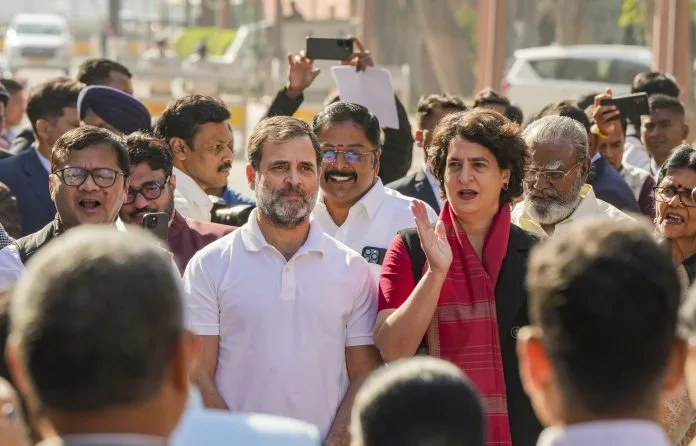
New Delhi, December 5, 2024 – In a dramatic and unusual protest outside Parliament, leaders of several opposition parties in the INDIA bloc, including Congress, RJD, and Left parties, wore black jackets emblazoned with provocative stickers reading “Modi Adani Ek Hai” (Modi and Adani are One) and “Adani Safe Hai” (Adani is Safe). They raised slogans and demanded a joint parliamentary probe into the ongoing Adani controversy following the industrialist’s indictment in a US court on charges of bribery and fraud.

Protest in the Heart of Power

The protest, led by Congress leader Rahul Gandhi and supported by prominent lawmakers like Priyanka Gandhi Vadra, took place at Parliament’s Makar Dwar, rather than the steps leading directly to the Parliament building, after a warning from the Lok Sabha Secretariat about obstructing the movement of MPs and affecting safety protocols.

Rahul Gandhi: “Modi Can’t Escape Responsibility”

Speaking to reporters during the protest, Rahul Gandhi remarked, “Prime Minister Narendra Modi cannot initiate an investigation into the Adani Group because it would directly implicate him. Modi and Adani are two sides of the same coin, and this connection cannot be ignored. The Prime Minister must come to the House and speak on the issue, and the people of India deserve to know the truth.”

Gandhi’s sister, Priyanka Gandhi Vadra, also joined the protest, demanding that Parliament discuss the serious charges against Adani, including his recent indictment in the US courts. The Congress party has made it clear that it will not rest until a joint parliamentary committee (JPC) probe into the matter is initiated.

The Adani Indictment: A Game-Changer

The allegations against Gautam Adani have created a storm, especially after a US court’s indictment of the Adani Group’s senior executives for bribery and fraud. While opposition parties argue that the charges validate their calls for a thorough investigation, the Adani Group has steadfastly dismissed the claims as “baseless.”

The Congress party has stepped up its demand for the establishment of a JPC, arguing that the Prime Minister’s silence on the issue only deepens suspicions about his involvement in protecting Adani.

Cross-Party Unity and TMC’s Absence

The protest saw leaders from several opposition parties coming together to demand accountability. However, the Trinamool Congress (TMC), led by Mamata Banerjee, chose to stay away from the demonstration. The absence of the TMC raised questions about the depth of opposition unity on this issue.

Lok Sabha Secretariat’s Advisory

In a response to the ongoing protests, the Lok Sabha Secretariat issued an advisory reminding MPs not to obstruct movement around the Parliament gates. This move came after several opposition leaders staged protests in front of Makar Dwar on Tuesday and Wednesday, despite security concerns flagged by Speaker Om Birla.

The Call for Justice

As the protest gained momentum, leaders like Rahul Gandhi repeated their demand for the immediate arrest of Adani, urging that his alleged crimes should not be swept under the rug. Priyanka Gandhi echoed this sentiment, emphasizing that the issue had gone beyond political rivalry and was a matter of national importance.

Adani Group’s Response

The Adani Group has responded to the allegations, labeling them as “baseless” and stating that they are committed to upholding the highest standards of corporate governance. However, their rebuttal has not quelled the opposition’s demands for a full-scale investigation.


What’s Next?

The ongoing tension between the ruling BJP and the opposition parties is expected to escalate, with more protests and debates planned in Parliament. Whether a joint parliamentary committee will be formed to investigate the allegations against Adani remains to be seen. For now, the opposition has made it clear: the matter is far from over.

Chief Secretary Atal Dulloo Reviews Progress in J&K Medical Colleges and Health Services

In a key meeting held today, Chief Secretary Atal Dulloo conducted a thorough review of the Health & Medical Education (H&ME) Department’s initiatives to expand medical education and improve health services across Jammu and Kashmir. The meeting, attended by senior officials including the Secretary H&ME, Secretary PWD, MD NHM, Principals of Medical Colleges, and other concerned officers, focused on the steps being taken to increase MBBS, Post-Graduate (PG), and Post-Doctoral seats in medical institutions across the Union Territory (UT).


Expansion of Medical Seats and Specializations:

Dr. Dulloo began the session by addressing the Principals of Medical Colleges, seeking a detailed account of their efforts to introduce new specializations such as MD/MS, DM/MCH, and DNB in their respective institutions. The Chief Secretary emphasized the importance of expanding academic offerings to meet the growing healthcare needs in J&K.

  • Addition of MBBS Seats: The Chief Secretary directed the Principals of seven new Medical Colleges to take concrete steps to add 50 more MBBS seats in addition to the existing intake capacity of 100 seats per college. He highlighted the need to optimally utilize available infrastructure and manpower to achieve this target, alongside expanding other specializations.
  • Focus on Specialization Courses: Dr. Dulloo stressed the need for a well-formulated action plan to introduce specialized courses in all medical colleges and district hospitals within the next year. This would enhance the quality of medical education and cater to the increasing demand for specialized healthcare professionals.

Upgrading Healthcare Services:

In addition to educational reforms, the Chief Secretary also took stock of the ongoing efforts to upgrade healthcare services in the UT. He specifically reviewed the status of health projects across J&K, many of which are aimed at improving infrastructure and services in district hospitals.

  • Tertiary Care Services: Dr. Dulloo advised the medical college principals to devise a concrete plan of action to enhance tertiary care services in the newly established medical colleges and district hospitals within the coming year. This would ensure that patients receive advanced medical care without having to travel long distances.
  • Human Resource Augmentation: The Chief Secretary highlighted the critical role of adequate staffing in medical colleges and hospitals. He called for a comprehensive review of the existing human resources, particularly teaching staff, and urged the authorities to fill vacant positions, especially those of Professors. He emphasized that proper staffing is essential to improve the quality of education and healthcare services.

IT-Enabled Health Services:

As part of the efforts to modernize healthcare in J&K, the Chief Secretary also took stock of the IT-based services implemented in the UT’s hospitals. These services, aimed at digitizing healthcare delivery, include programs like Tele-ICU, e-Sanjeevani, Tele-Radiology, and e-Sahaj.

  • Expansion of IT Modules: Dr. Dulloo recommended accelerating the adoption of these IT modules to create a seamless and universal health service system in J&K. He stressed the importance of integrating these services into remote districts, particularly under the Tele-ICU program, to minimize the need for patient referrals to tertiary care centers.
  • Linking Far-Off Districts: To further enhance accessibility to healthcare, Dr. Dulloo suggested linking far-off districts with GMCs (Government Medical Colleges) through the Tele-ICU program. This initiative is expected to provide critical care support to patients in underserved regions and reduce the burden on medical facilities in urban areas.

Key Takeaways:

  • 50 Additional MBBS Seats: New Medical Colleges urged to expand MBBS intake to enhance medical education capacity.
  • Specialization Courses: Emphasis on introducing MD/MS, DM/MCH, and DNB programs to cater to specialized medical needs.
  • Upgradation of Tertiary Care: Action plans to improve services at newly established medical colleges and district hospitals within the year.
  • Human Resource Enhancement: Call for filling vacant teaching positions to strengthen medical education and healthcare services.
  • Expansion of IT Services: Push for widespread adoption of Tele-ICU, e-Sanjeevani, and other digital tools to improve healthcare delivery and reduce referrals.

Government’s Efforts to Accelerate Grievance Redressal and Empower Citizens Dr. Jitendra Singh Shares Key Updates in Lok Sabha

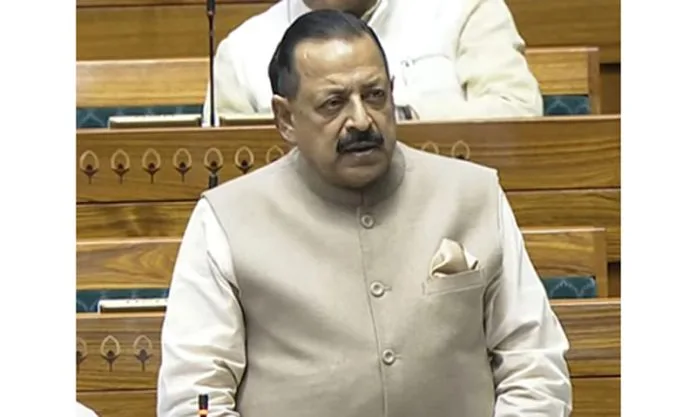
Union Minister of State for Science and Technology, Earth Sciences, and various departments, Dr. Jitendra Singh, on Wednesday, shared significant updates on the government’s efforts to improve grievance redressal mechanisms in the country, with a focus on accessibility for rural citizens.

In his statement to the Lok Sabha, Dr. Singh highlighted the notable progress made through the CPGRAMS (Centralized Public Grievance Redress and Monitoring System) portal, citing a progressive decline in grievance redressal time. He revealed that more than 28 lakh citizens from 795 districts have been registered on the portal, with an average of 70,000 new registrations every month. The Minister emphasized the importance of collaboration with Common Service Centres (CSC) to extend the reach of grievance redressal services, particularly in remote rural areas.


Key Developments in Grievance Redressal:

  • 28 Lakh Citizens Registered: Over 28 lakh citizens from 795 districts have successfully registered on the CPGRAMS portal, ensuring their access to timely grievance redressal.
  • CPGRAMS 10-Step Reform: The government has introduced a 10-step reform to enhance the functionality of CPGRAMS, which includes:
    • Regional language support on the portal
    • Citizen engagement through feedback call centers
    • Simplified registration process
    • Launch of the CPGRAMS mobile application
  • Focus on Rural Outreach: Collaborations with CSCs, leveraging Village Level Entrepreneurs (VLEs), have enabled the resolution of 4.68 lakh grievances in 2023 and 2024. Furthermore, the 20th of every month is now observed as CSC-CPGRAMS Day, aiming to enhance awareness among rural populations, particularly those involved in farmer-centric schemes such as PMAY (Pradhan Mantri Awas Yojana) and PM-KISAN (Pradhan Mantri Kisan Samman Nidhi).
  • Improved Pension Grievance Redress: Through the Centralized Pension Grievance Redress and Monitoring System (CPENGRAMS), the government has successfully reduced the backlog of pension grievances. As of now, no case has been pending for over two years. Between November 2022 to October 2024, 168,964 grievances were resolved.

Pension Grievance Redressal:

Dr. Jitendra Singh also shared details about targeted efforts to resolve pension grievances, especially those related to family pensioners and super-senior pensioners. Specific categorization of such grievances, including delays in starting family pensions and additional pensions, has been implemented for more effective monitoring.

The government’s 100-day action plan has been instrumental, with a month-long Special Campaign launched in July 2024 achieving 94% redressal for family pension grievances. Regular reminders and monthly Inter-Ministerial Review Meetings (IMRMs) have been conducted to track progress, ensuring the timely resolution of pension issues.


Key Policy Changes and Initiatives:

  • Decentralized Redressal Mechanism: As per policy, pension grievances are redressed in a time-bound manner by the concerned Ministries/Departments, and interim replies are provided for cases that are not resolved within the prescribed timelines.
  • Quality of Redressal Monitored: The quality of grievance redressal is consistently monitored through feedback centers. If a case is rated poorly, appeals are filed to ensure accountability and prompt resolution.
  • Emphasis on Timely Resolution: The Department has revised its policy to ensure final redressal of grievances within 21 days, down from the previous 30-day timeline. This change reflects the government’s commitment to improving efficiency and service delivery.

Looking Ahead:

The government’s focused efforts on grievance redressal are part of a broader initiative to enhance citizen engagement and accessibility, especially in rural and remote areas. By integrating technology, simplifying processes, and collaborating with local partners like CSCs, the government aims to provide efficient, transparent, and timely resolution of public grievances.

Lieutenant Governor chairs review meeting of Home Department

0

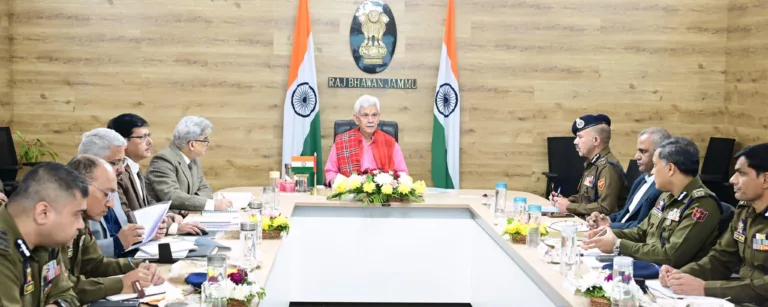
Jammu, December 3, 2024 — Lieutenant Governor Shri Manoj Sinha today chaired a high-level meeting at Raj Bhawan to review the functioning of the Home Department. The meeting was attended by Chief Secretary Shri Atal Dulloo, Principal Secretary Home Shri Chandraker Bharti, Director General of Police (DGP) Shri Nalin Prabhat, DGP Prisons Shri Deepak Kumar, and other senior officials from the Jammu and Kashmir Police and related departments.

Reviewing Key Issues and Security Concerns

During the meeting, the Lieutenant Governor was briefed on several important aspects, including Security Related Expenditure (SRE), manpower positioning, and ongoing infrastructure works. The discussion also covered critical matters related to the functioning of subordinate departments, such as the J&K Police, Prisons, Fire & Emergency Services, Home Guards, SDRF, Prosecution, and Forensic Sciences.

Focus on Modernization and Capacity Building

Shri Manoj Sinha emphasized the importance of modernization and capacity building within the Home Department. He called for continued improvements in infrastructure and the enhancement of security protocols to meet emerging challenges effectively.

The meeting also involved a review of the current status of various departments, with a focus on ensuring their efficient functioning and readiness to address public safety and security concerns.

Javed Rana meets several deputations; assures prompt redressal of grievances SRINAGAR,

0

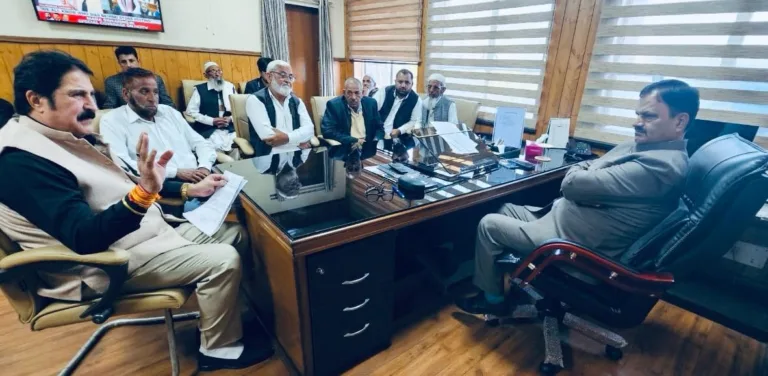
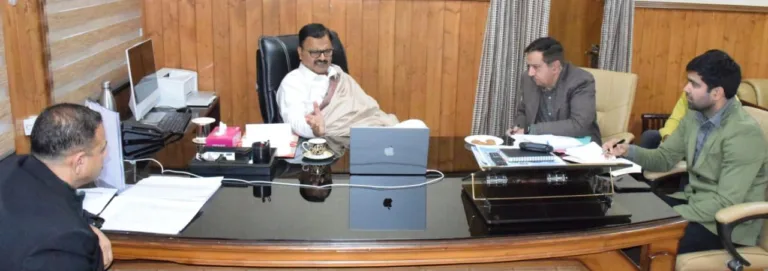
Minister of Jal Shakti, Forest, Ecology & Environment, and Tribal Affairs, Javed Ahmad Rana, met with several deputations today at the Civil Secretariat, where they raised various demands and grievances. The deputations highlighted critical issues affecting their localities and sought the Minister’s intervention in resolving them.

Water Shortage and Road Connectivity Concerns in Nagrota Block

A delegation from Nagrota block, led by former Minister Yogesh Sawhney, raised concerns about the severe water shortage and poor road connectivity in the region. They reported that the dilapidated condition of the roads was causing significant inconvenience to commuters and urged immediate action to address the issue.

Engineers Demand Restoration of SHGES

Another delegation, comprising engineers engaged under the former ‘Self Help Group of Engineers Scheme’ (SHGES), called for the restoration of the scheme. The engineers emphasized that SHGES had provided an alternative employment opportunity for unemployed engineering graduates in the region. They urged the Minister to reinstate the scheme, which they said would greatly ease their livelihood challenges.

India Calls for Global Collaboration on Land Restoration at UN Conference

0

India emphasized the crucial role of healthy land in regional stability and called for international collaboration to tackle land degradation and climate change. Union Environment Minister Bhupender Yadav made these remarks during India’s statement at the 16th UN Conference on Desertification in Riyadh.

Yadav invited countries to join Prime Minister Narendra Modi’s ‘Ek Ped Maa Ke Naam’ (Plant for Mother) campaign, which aims to combat land degradation and restore ecosystems through large-scale tree planting. He stressed that healthy land is fundamental not only to environmental well-being but also to regional stability, helping to create stable communities and strong economies by reducing the factors that drive migration.

India’s Comprehensive Approach to Land Degradation

In his address, Yadav outlined India’s commitment to addressing land degradation through a comprehensive approach that enhances drought resilience, restores ecosystems, and promotes biodiversity. He highlighted that India’s initiatives are aligned with the goals of COP16, which focuses on combating desertification and promoting land restoration.

“Our Honourable Prime Minister, Narendra Modi, launched the ‘Plant for Mother’ campaign, which has already seen the planting of over one billion saplings this year,” Yadav stated. He urged all nations and their citizens to join the initiative, describing it as a “unique tribute to Mother Earth” that would significantly contribute to addressing land degradation and climate change.

‘Plant for Mother’ Campaign: A Global Initiative

Launched on World Environment Day, June 5, the ‘Plant for Mother’ campaign aims to plant 140 crore (1.4 billion) trees by March 2025. The initiative encourages people to plant trees as a symbol of love, respect, and honor for their mothers, with the goal of restoring degraded areas and combating climate challenges.

Yadav emphasized that restoring land and building resilience to droughts require active community involvement. The Green India Mission, he noted, follows a “whole of government” and “whole of society” approach, with community participation at its core.

Collaboration and Knowledge Sharing

The minister also highlighted the importance of partnerships and knowledge sharing to improve drought preparedness and resilience. He stressed that collaboration between government, industry, and communities is essential to strengthen early warning systems, drought-resilient farming, and sustainable livelihoods.

Earlier in the day, during a ministerial dialogue on finance, Yadav underscored that adequate financing is key to achieving the objectives of the UN Convention to Combat Desertification (UNCCD). He pointed to the World Drought Atlas, released on Monday, as a valuable resource to guide the mobilization of financial resources for drought mitigation and land restoration efforts.

India’s Progress on Land Restoration

In his address, Yadav also shared India’s progress on land restoration, noting that the country has already restored 22.5 million hectares of degraded land, with a target of restoring 26 million hectares by 2030.

India’s Taxation System Among the Best in the World, Says Lok Sabha Speaker Om Birla

0

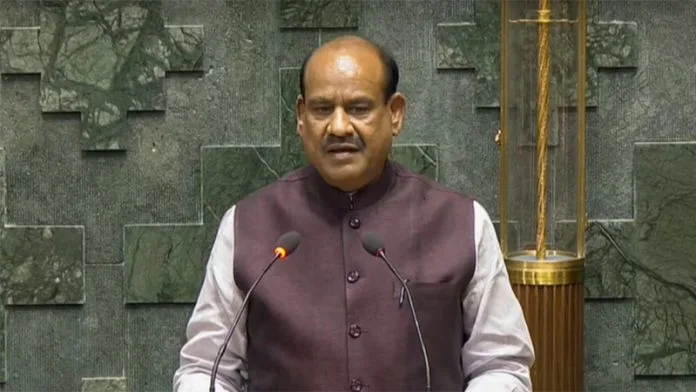
Lok Sabha Speaker Om Birla on Tuesday praised India’s taxation system, calling it one of the best globally, thanks to its transparency, adherence to the rule of law, and stability in tax policies.

Speaking at an event for officer trainees of the Indian Revenue Service (Customs and Indirect Taxes), Birla emphasized that the country’s robust tax framework had made India an attractive investment destination for businesses and individuals worldwide.

A Stable and Transparent System

Birla noted that India’s tax system, supported by clear and consistent policies, has become a model for other nations. “The stability and transparency of India’s tax policies have played a key role in boosting investor confidence,” he stated, adding that these factors have made India a preferred choice for global investors.

GST and Tax Reforms

During his address, Birla also highlighted the importance of tax reforms, particularly the Goods and Services Tax (GST), which he said had significantly simplified the country’s tax structure. The introduction of GST, alongside other measures, has streamlined taxation processes, making it easier to do business in India.

“The government and Parliament have continually worked towards improving the taxation system, which is why India’s tax framework is now regarded as one of the most transparent and reliable worldwide,” the Lok Sabha Speaker added.

Birla’s remarks came as part of his address to the future leaders of India’s revenue service, underscoring the importance of continued innovation and reform in the taxation sector.

Chief Minister Omar Abdullah Reviews Civil Aviation Department’s Progress

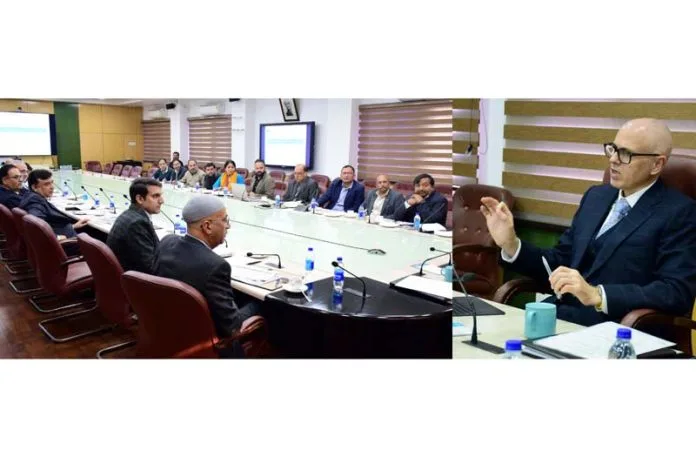
Chief Minister Omar Abdullah chaired a crucial meeting at the Civil Secretariat today to assess the functioning and progress of the Civil Aviation Department in Jammu and Kashmir. The meeting was attended by Advisor to the Chief Minister Nasir Aslam Wani, Additional Chief Secretary Dheeraj Gupta, Secretary Civil Aviation Aijaz Asad, as well as representatives from the Airports Authority of India and the Directors of Jammu and Srinagar Airports.

Key Areas of Discussion

The meeting focused on several important topics concerning the state’s civil aviation infrastructure, including the department’s aircraft fleet, revival plans, helicopter procurement, and pilot training initiatives. Abdullah also reviewed the budgetary allocations and financial progress under the Capital Expenditure (Capex) and Revenue Expenditure (Revex) budgets, aiming for greater efficiency and development within the sector.

A key highlight of the meeting was the ongoing subsidized helicopter service, which has been operating under the Ministry of Home Affairs since April 2017. Currently, the service connects five approved routes — three in the Jammu region and two in Kashmir. The Chief Minister directed officials to expand this service, with a particular focus on introducing point-to-point routes that would connect remote and far-flung areas, ensuring optimal utilization and sufficient passenger load for each flight.

Focus on Modernization and Economic Growth

Chief Minister Omar Abdullah reiterated his commitment to modernizing civil aviation infrastructure in Jammu and Kashmir. He emphasized that enhancing connectivity through improved air services would play a crucial role in the region’s economic growth, particularly in boosting tourism, business, and other key sectors.

Additionally, the meeting included a review of ongoing projects under the Regional Connectivity Scheme-UDAN. Presentations were delivered by the Directors of Jammu and Srinagar Airports, outlining the current and future expansion plans for these critical facilities.

Jammu Airport’s Civil Enclave Project

The Director of Jammu Airport presented an update on the New Civil Enclave Project, detailing the project’s scope and progress. The total cost of the project is Rs 861.37 crore, with the approved cost standing at Rs 697.83 crore. As of November 2024, the physical progress achieved is 16%, while the financial progress stands at 14%.

The project will feature a centrally air-conditioned terminal building with a peak-hour passenger capacity of 2,000 and an annual capacity of 4.5 million passengers. Other critical infrastructure will include fire and water pump rooms, landscaping, water and sewage treatment plants, and parking facilities for up to 250 vehicles.

The Chief Minister stressed the need for swift land acquisition, particularly the vacating and transferring of land currently occupied by the Animal Husbandry Department. This is necessary to ensure the timely completion of the project by the Airports Authority of India.

Addressing Cost Escalations and Future Challenges

The meeting also discussed challenges related to cost escalations affecting the hangar and annex building projects. Abdullah emphasized the need to address these issues to avoid delays and keep the projects on track.