Monday, July 20, 2026
Home Blog Page 208

India Backs UN Resolution for Immediate Ceasefire in Gaza

0

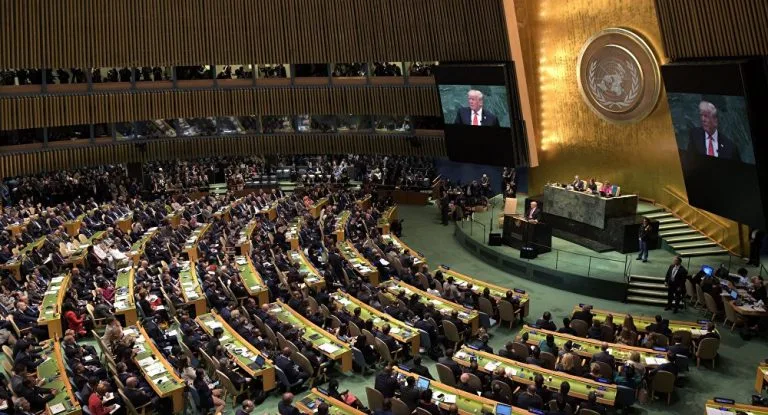
In a significant move, India joined 157 other nations in voting in favor of a United Nations General Assembly resolution demanding an immediate, unconditional, and permanent ceasefire in Gaza. The resolution, introduced by Indonesia, was approved during the 10th emergency special session of the 193-member assembly on Wednesday.

The resolution called for an end to hostilities, the immediate and unconditional release of all hostages, and compliance with international law, particularly in protecting civilians. Among the nine nations opposing the resolution were Israel and the United States, while 13 countries, including Albania and Ukraine, abstained.

Key Highlights of the Resolution

  • Ceasefire and Hostage Release: The resolution demanded the immediate implementation of a ceasefire, the release of hostages, the exchange of prisoners, and the return of the remains of those killed.
  • Humanitarian Assistance: It emphasized urgent access for the civilian population in Gaza to essential services and humanitarian aid, rejecting any efforts to starve the population.
  • Compliance with International Law: All parties were called upon to adhere to international law, particularly regarding the treatment of detainees and the protection of civilians, including women and children.
  • Two-State Solution: The resolution reaffirmed the commitment to a two-state solution, envisioning Israel and a sovereign Palestinian State living side by side in peace and security.
  • Territorial Integrity: It rejected any attempts at demographic or territorial changes in Gaza and stressed the importance of unifying Gaza and the West Bank under the Palestinian Authority.

India’s Stance on Palestine

This vote aligns with India’s consistent support for a peaceful resolution to the Israeli-Palestinian conflict. Last week, India also voted in favor of another General Assembly resolution titled “Peaceful settlement of the question of Palestine,” which called for Israel’s withdrawal from territories occupied since 1967, including East Jerusalem. The resolution, tabled by Senegal, received broad support with 157 votes in favor and only eight against.

Humanitarian Focus

The General Assembly’s resolution highlighted the urgent need for unimpeded humanitarian assistance in Gaza. It demanded safe and unhindered delivery of aid across all regions, particularly for civilians in besieged areas. The resolution also stressed the importance of allowing displaced Palestinians to return to their homes and ensuring the full withdrawal of Israeli forces from Gaza.

International Reactions

The vote underscores the global community’s call for an end to the escalating violence in Gaza. However, the opposition by Israel and the United States reflects the complexities of achieving consensus on such measures.

India’s affirmative stance reinforces its long-standing support for the Palestinian cause while advocating for a peaceful and just resolution in the Middle East. This vote underscores New Delhi’s commitment to upholding international law and addressing humanitarian concerns amid the ongoing crisis.
J&K Wushu Athletes Amit Kumar and Kartavya Verma Represent India at IWUF World Championship in China

0

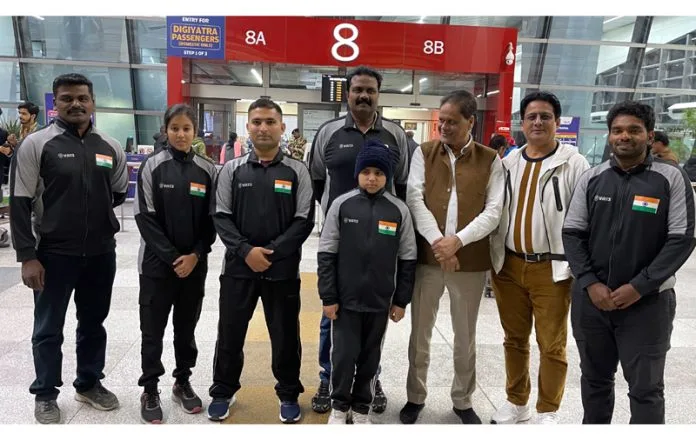
Amit Kumar and Kartavya Verma, two promising Wushu athletes from Jammu & Kashmir, are making their mark on the international stage as part of the 8-member Indian contingent competing at the International Wushu Federation (IWUF) World Wing-Chun Championship in Foshan, China. The prestigious event is being held from December 11 to 16.

Both athletes earned their spots in the Indian team based on their outstanding performances at the National Championships and the selection trials held at the KIC Meerut. Amit Kumar, a National Medallist in the senior division, and Kartavya Verma, a National Medallist in the sub-junior division, are representing India with immense pride and potential at this global competition.

Congratulating the athletes, J&K Wushu Association President Vijay Saraf, along with Senior Vice President Ranjeet Kalra and General Secretary Bhavneet, expressed their support and wished them success. The athletes also received praise from Dronacharya Awardee Kuldeep Handoo, who commended their dedication and hard work, while thanking the J&K Sports Council and Sports Authority of India for their invaluable support.

Kartavya Verma, a product of the Khelo India Centre in Jammu, has become a shining example of the region’s thriving sports development programs and the growing prominence of athletes from Jammu & Kashmir in national and international sports.

J&K Women’s Cricket Team Dominates Mizoram with a Stellar Batting Display

0

Jasia Akhtar led the way with a scintillating 165 runs off 111 balls, including 20 fours and 8 sixes, as Jammu and Kashmir posted a commanding total in their match against Mizoram. Akhtar’s brilliant knock anchored the innings, while Chitra Singh Jamwal played a solid supporting role, contributing 75 runs off 114 balls.

In the latter stages, Rubia Syed smashed an unbeaten 71 off just 29 balls, featuring 2 fours and 8 sixes, to propel J&K’s total even further. Despite early wickets falling to openers Rudrakshi Chib (12) and Bawandeep Kaur (8), the middle order ensured that the team posted a formidable score, showcasing their depth and resilience.

In reply, Mizoram struggled to get going and were bundled out for just 130 runs. Felfel Pautu top-scored for Mizoram with 48 runs, while Anita Lodhi added 27.

For Jammu and Kashmir, the bowling attack was led by Mariya Noorain, Sandhya Sayal, and Rudrakshi Chib, who each claimed 3 wickets. Ananya Sharma also chipped in with a wicket to seal Mizoram’s fate.

Jasia Akhtar was named Player of the Match for her exceptional century, helping J&K to a dominant victory.

Defence Ministry Signs Rs13,500 Crore Deal with HAL for 12 Sukhoi Jets

0

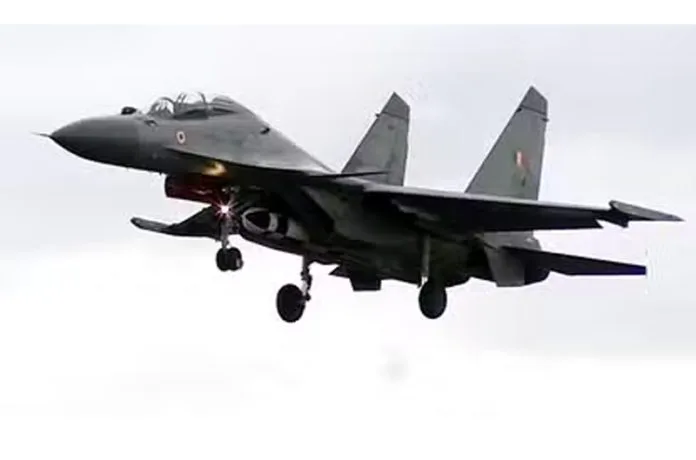
The Defence Ministry on Thursday announced that it has signed a significant deal worth ₹13,500 crore with Hindustan Aeronautics Ltd (HAL) for the procurement of 12 Sukhoi Su-30MKI fighter jets. This deal is part of efforts to enhance the capabilities of the Indian Air Force and strengthen India’s defence infrastructure.

The Russian-origin Su-30MKI jets, which are crucial for India’s air dominance, will now be manufactured by HAL under an intergovernmental framework. The deal is particularly noteworthy as the jets will feature 62.6% domestic content, with key components being produced by the Indian defence industry.

In a statement on X (formerly Twitter), the Ministry of Defence stated, “MoD signed a ₹13,500 Cr deal with Hindustan Aeronautics Limited (#HAL) to procure 12 Su-30MKI fighter jets. These aircraft will feature 62.6% domestic content, with key components to be manufactured by the Indian #defenceindustry.” The Ministry added that this deal is a milestone in India’s pursuit of self-reliance in defence manufacturing, aligning with the country’s broader goals of Atmanirbhar Bharat (self-reliant India).

The agreement highlights India’s growing capabilities in aerospace manufacturing and reinforces the government’s commitment to boosting indigenous defence production to meet the needs of the Indian armed forces.

Nepal Army Chief Gen Ashok Raj Sigdel Meets Defence Minister Rajnath Singh

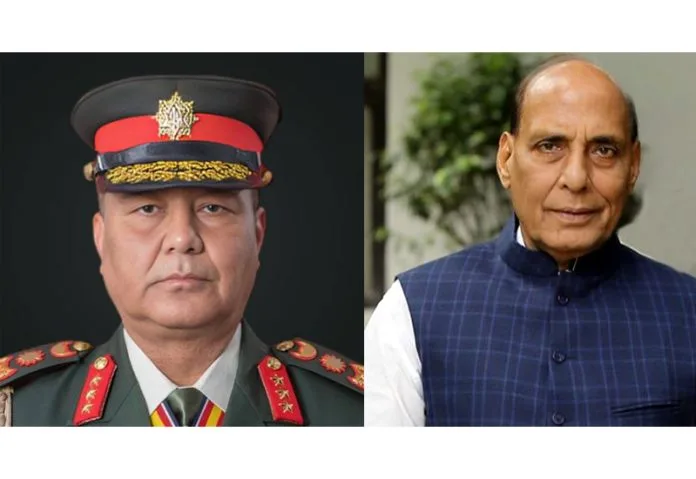
General Ashok Raj Sigdel, Chief of Army Staff of Nepal, met with Defence Minister Rajnath Singh in New Delhi on Thursday to discuss various aspects of India-Nepal bilateral relations. The meeting focused on strengthening defence cooperation and addressing mutual concerns between the two neighbouring countries.

During the discussions, Rajnath Singh emphasized that as close neighbours, India and Nepal share similar perspectives on several issues. He reaffirmed India’s commitment to enhancing its relations with Nepal under the framework of the ‘Neighborhood First Policy’. The Defence Minister expressed his deep satisfaction with the current state of bilateral ties, noting their robustness and mutual respect.

Rajnath Singh also highlighted key areas of defence cooperation between the two nations, including training programs, joint military exercises, and workshops. These efforts aim to enhance the capability of the Nepal Army. Additionally, the two leaders discussed the supply of defence equipment and other materials to further strengthen Nepal’s military preparedness.

In a symbolic gesture of the strong ties between India and Nepal, Rajnath Singh congratulated General Ashok Raj Sigdel on being conferred the Honorary rank of General of the Indian Army, a prestigious distinction that has been traditionally awarded to the Chiefs of the Nepal Army.

General Sigdel is currently on a four-day visit to India, during which he is expected to hold additional discussions on enhancing defence cooperation and regional security.

Uttar Pradesh Ministers Extend Invitation for Maha Kumbh Mela 2025 to J&K LG

Anil Kumar, Minister for Science & Technology in the Uttar Pradesh Government, and Danish Azad Ansari, Minister of State for Minority Welfare, Uttar Pradesh, today called on Lieutenant Governor Manoj Sinha in Jammu to extend an official invitation for the Maha Kumbh Mela 2025. The invitation was extended on behalf of Uttar Pradesh Chief Minister Yogi Adityanath.

During the meeting, the ministers requested that cultural organizations and citizens from Jammu and Kashmir actively participate in the Maha Kumbh Mela, which is recognized as the world’s largest public gathering and spiritual pilgrimage. The religious festival is scheduled to be held in Prayagraj from January 13 to February 26, 2025, and will attract millions of devotees from across India and abroad.

The ministers emphasized the importance of J&K’s involvement in this sacred event, highlighting the opportunity for cultural exchange and spiritual connection. The Maha Kumbh Mela is expected to be a grand celebration, and J&K’s participation would showcase the region’s rich cultural heritage.

Meanwhile, Balwant Singh Mankotia, Member of Legislative Assembly from Chenani, also called on Lieutenant Governor Manoj Sinha to discuss regional matters and ongoing developmental initiatives in the Chenani area.

Khatana Endorses Union Govt’s Steps on Terrorism, Employment, and Rohingya Issue

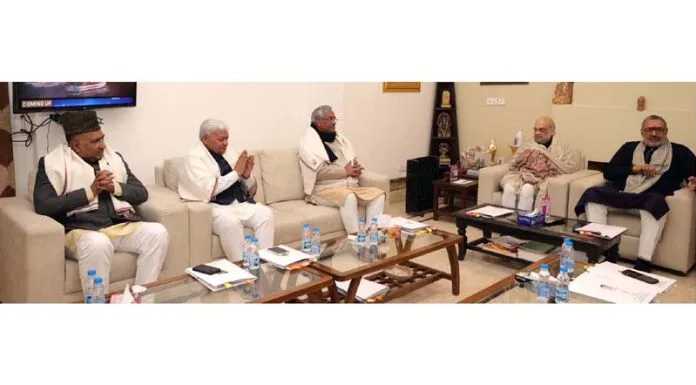
Jammu: Rajya Sabha MP Gulam Ali Khatana has praised the Union Government’s proactive measures to eliminate terrorism in Jammu and Kashmir. Khatana, during a recent meeting with Union Home Minister Amit Shah, Cooperation Minister Giriraj Singh, and Union Textile Minister Giriraj Singh, discussed several key issues affecting the region, including terrorism, employment, and the controversial Rohingya issue.

Khatana highlighted that the back of terrorism in the region has been broken, with terrorists and their supporters feeling the heat. He commended the efforts of the Union Government and the J&K administration, stating that the terrorist infrastructure has been severely disrupted, forcing those involved in such activities to go into hiding.

The meeting also focused on the law and order situation in Jammu and Kashmir. Khatana accused the National Conference (NC) government of misleading the public, particularly regarding the Rohingya refugees. He advocated for the deportation of Rohingyas from the region, stating that J&K’s youth already face unemployment and the region cannot afford to provide jobs to outsiders. Khatana urged the UT government to support the Union Government’s stance on the issue and ensure that these migrants are sent back.

On the topic of economic development, Khatana called for a job-oriented mining policy to support local miners, stressing that they should not be harassed and must be provided with opportunities to sustain their livelihoods. He also pushed for a policy that ensures revenue from mining benefits the government, not a select few individuals.

Agriculture and Horticulture were also on the agenda. Khatana emphasized the need for a job-oriented agriculture policy to make farming more attractive to the youth. He proposed the creation of awareness camps throughout the UT, organized by the Agriculture and Horticulture Departments, to promote government schemes designed to support these sectors.

In addition, Khatana stressed the urgency of addressing unemployment in J&K through a comprehensive employment-generation policy in both the public and private sectors. He also raised concerns over the management of the Waqf Board, urging for better governance and transparency.

Khatana’s proposals underscore the need for a more robust framework for economic and social development in Jammu and Kashmir, aligning the region with national progress.

Union Cabinet Approves ‘One Nation One Election’ Bill: Reports

0

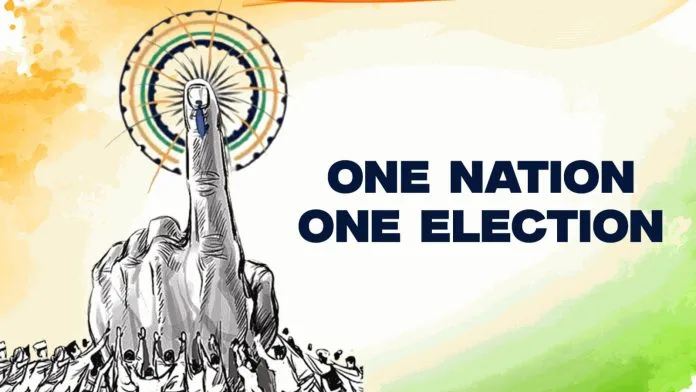
NEW DELHI, Dec 12 — In a significant political development, the Union Cabinet has reportedly approved the “One Nation, One Election” Bill, which aims to synchronize the elections for the Lok Sabha and State Assemblies across the country. The proposed legislation is seen as a step toward streamlining the electoral process, reducing election-related costs, and ensuring more efficient governance.

The bill, if passed, would allow for simultaneous elections at the national and state levels, thus ending the practice of holding separate elections at different times, which often leads to political instability and the frequent deployment of resources for multiple rounds of voting. The government believes this reform will not only reduce the financial burden of elections but also help maintain political focus and improve governance.

The proposal is expected to be debated in Parliament in the coming weeks. Proponents argue that “One Nation, One Election” will foster stability, while critics have raised concerns about its potential impact on the federal structure of India and the autonomy of state governments.

This move is part of the broader vision of electoral reforms to ensure that elections do not disrupt governance and administrative functions, allowing for uninterrupted development work.

Stay tuned for further updates on the progress of the bill as it moves through the legislative process.

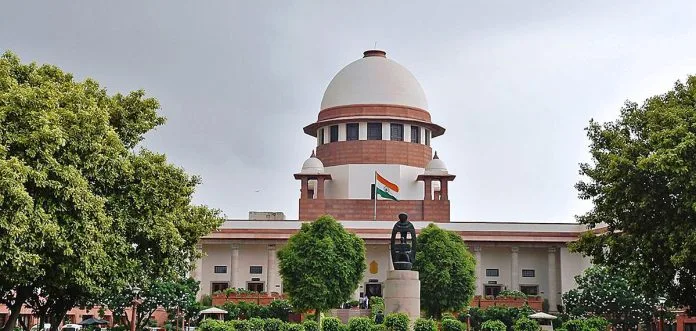
Supreme Court: Mere Harassment Not Enough to Charge Abetment of Suicide, Must Prove Direct Incitement

0

NEW DELHI, Dec 12 – The Supreme Court has ruled that mere harassment is not sufficient to convict someone under the offence of abetment of suicide, and there must be clear evidence of direct or indirect incitement to suicide. The ruling came from a bench of Justices Vikram Nath and P.B. Varale, who delivered their verdict on an appeal challenging a Gujarat High Court order. The High Court had earlier refused to discharge a woman’s husband and two in-laws, who were accused of harassing her and driving her to suicide.

The case, registered in 2021, involved charges under sections 498-A (cruelty to a married woman) and 306 (abetment of suicide) of the Indian Penal Code (IPC), with the latter carrying a penalty of up to 10 years in jail and a fine.

Clear Mens Rea Required for Abetment of Suicide

In its December 10 judgment, the bench emphasized that for a conviction under section 306 of the IPC, clear mens rea (intention to cause harm or incite the act) is necessary. The court stated, “Mere harassment, by itself, is not sufficient to find an accused guilty of abetting suicide.” The prosecution must prove that the accused took direct or active steps to incite the victim to take their own life.

The bench pointed out that the presence of mens rea cannot be presumed or inferred. It must be explicitly evident in the actions of the accused. Without clear proof of intent to provoke or contribute to the suicide, the essential element of abetment under the law is not met.

Discharge of Charges for Abetment of Suicide

In this case, the court discharged the husband and two in-laws from the charge of abetment to suicide (section 306 of IPC), although it upheld the charge against them under section 498-A (cruelty). The bench noted that an FIR had been registered by the woman’s father in 2021, accusing the three men of harassment leading to his daughter’s suicide.

The woman, who had been married in 2009, reportedly faced physical and mental harassment, particularly after failing to conceive a child in the first five years of marriage. She was found dead in April 2021, having allegedly committed suicide by hanging. Despite the woman’s long marriage and her father’s complaint, the court found insufficient evidence to link the accused directly to her act of suicide.

Prosecution Must Prove Direct Act of Incitement

The Supreme Court made it clear that, under section 306 of the IPC, the prosecution must establish that the accused had contributed to the victim’s suicide through direct or indirect actions. The court stressed that “concrete proof” of the accused’s actions, closely linked to the time of the incident, is essential to prove that the accused had pushed the victim toward suicide.

The bench remarked, “Mere allegations of harassment are insufficient to establish guilt. There must be evidence of a positive act by the accused that directly or indirectly led to the victim’s decision to commit suicide.”

Lack of Direct Evidence of Harassment

Although the court acknowledged that the woman had faced cruelty, it noted that the accused had not shown any direct intent to incite her to suicide. The court said, “It appears that the appellants did not have the requisite mens rea, and neither did they commit any positive or direct act or omission to instigate or aid in the commission of suicide.”

Additionally, the bench noted that the woman had been married for 12 years before her death, and no formal complaint of harassment had been lodged during this time. While it accepted that this fact didn’t rule out the possibility of cruelty, the court emphasized that the lack of complaints over the years weakened the case for abetment.

Proceeding with Cruelty Charges

While discharging the accused from the charge of abetment of suicide, the Supreme Court upheld the charge under section 498-A of the IPC. The bench directed that the trial under this provision proceed. Section 498-A pertains to subjecting a married woman to cruelty, a serious offense in Indian law.

Conclusion

The Supreme Court’s ruling underscores that while harassment may contribute to a tragic outcome, it is not sufficient to convict someone of abetment to suicide without clear, direct evidence that the accused’s actions directly led to the victim’s death. The judgment reinforces the need for a thorough examination of facts and circumstances, and a clear demonstration of mens rea, when it comes to the sensitive and serious charge of abetment of suicide.

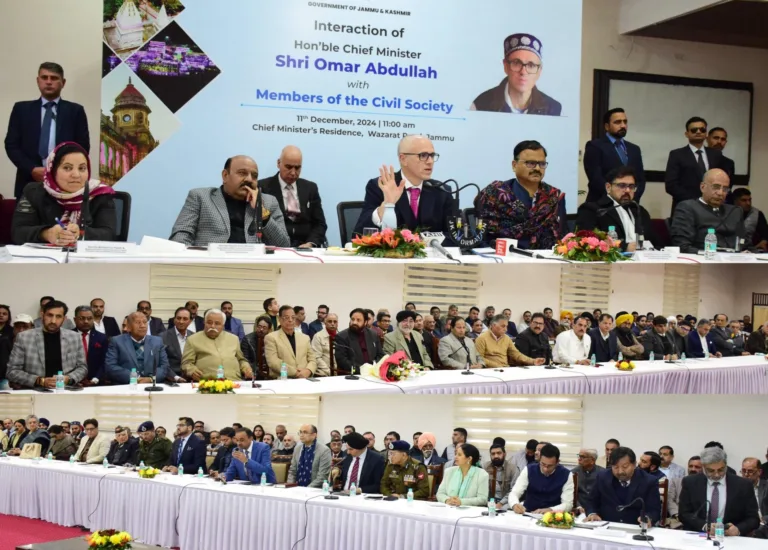
Omar Abdullah Engages with Jammu’s Civil Society: A New Era of Unity and Inclusivity “Jammu & Kashmir, United in Governance: Reviving the Darbar Move”

In a landmark engagement with Jammu’s civil society, Chief Minister Omar Abdullah reaffirmed his commitment to balanced governance that places equal emphasis on both Jammu and Kashmir regions. The extensive interaction, held at the Chief Minister’s official residence on Wazarat Road, was a historic moment marking his first meeting with Jammu’s civil society since taking office.

The event, attended by a distinguished gathering of key political and administrative figures, including Deputy Chief Minister Surinder Kumar Choudhary, Ministers Sakeena Itoo, Javed Ahmad Rana, and Satish Sharma, as well as Advisor Nasir Aslam Wani, signaled a fresh chapter in the region’s political dialogue. Senior officials from both the civil and police administrations were also present, underscoring the government’s resolve to listen and act on the needs of the people.

Jammu’s Equal Importance in Governance

Chief Minister Omar Abdullah emphasized that Jammu is just as vital to the governance of Jammu and Kashmir as Kashmir itself. “My government represents all citizens across the region,” he said. “Jammu and Kashmir must progress together, with equal focus on both regions. The unique challenges faced by each region must be addressed with a tailored approach, but both deserve equal attention and resources.”

Reviving the Darbar Move: A Symbol of Unity

A key highlight of the interaction was Omar Abdullah’s announcement to revive the Darbar Move, a centuries-old practice that symbolizes the unity of Jammu and Kashmir. The Darbar Move traditionally involved the seasonal shifting of government offices between Jammu and Srinagar, reinforcing the connection between the two regions.

The Chief Minister described the Darbar Move as a “symbol of Jammu and Kashmir’s unity and inclusivity,” and voiced his determination to bring it back, stating: “The Darbar Move was not just a practice but a reflection of our shared heritage, fostering collaboration and understanding across the regions. Reviving it will enhance communication and encourage greater inclusivity in governance, allowing the government to serve the people in a more connected way.”

Building a Stronger Future Together

The civil society interaction also served as a platform for open discussions on governance, regional development, and the security landscape. Representatives from various sectors raised concerns and offered suggestions on a wide array of issues, from infrastructure development to the restoration of peace and economic revival.

The Chief Minister assured the gathered leaders and citizens that his government would continue to focus on policies that promote equitable growth, bridge regional disparities, and foster a sense of belonging for everyone in Jammu and Kashmir.

A Vision for Jammu and Kashmir

The interaction concluded with a call for cooperation and shared responsibility. Chief Minister Omar Abdullah’s message was clear: the future of Jammu and Kashmir lies in unity, inclusivity, and an unwavering commitment to the welfare of all its people, no matter their region.

With a firm resolve to bridge divides and revive the traditions that bind the regions, the Chief Minister’s engagement with Jammu’s civil society marked a defining moment in the ongoing journey toward a more prosperous, peaceful, and united Jammu and Kashmir.