Saturday, July 18, 2026
Home Blog Page 181

CPI(M) Demands Restoration of Jammu & Kashmir Statehood, Criticizes Modi Government’s Failures

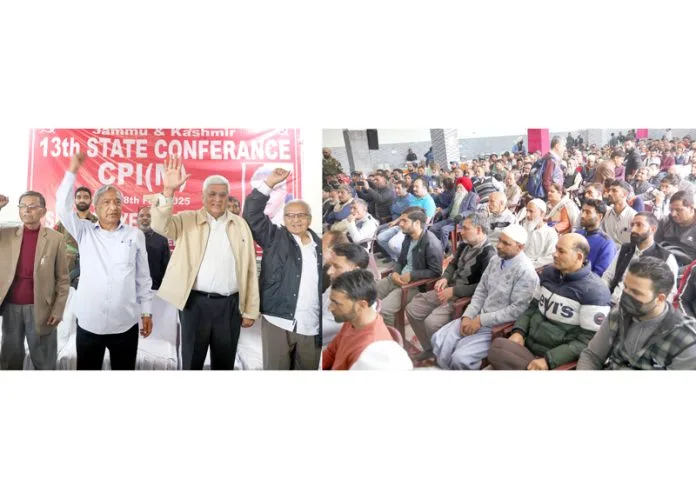
Senior leaders from the Communist Party of India (Marxist), including Polit Bureau Coordinator Prakash Karat and MLA Mohd Yousuf Tarigami, have called on Prime Minister Narendra Modi to fulfill his government’s promise of restoring statehood to Jammu and Kashmir (J&K). Speaking at the CPI(M)’s 13th State Conference today, the leaders underscored the need for unity among secular forces to push for the restoration of J&K’s constitutional status.

Prakash Karat Calls for Action from Modi Government

Addressing the gathering, Prakash Karat condemned the actions taken by the Modi administration following the revocation of Article 370, which had granted special status to the region. He referred to the deprivation of statehood as a “great injustice” to the people of Jammu and Kashmir, urging the Prime Minister to fulfill his earlier commitments. Karat reiterated that the CPI(M) would continue to highlight the Modi government’s failures on all fronts, both domestically and internationally.

Unresolved Issues with the US Deportations

During the conference, Karat also touched on a diplomatic concern regarding the treatment of Indian citizens deported from the United States. Recent pictures surfaced showing Indian nationals being humiliated and handcuffed while being deported, leading Karat to question the government’s response. “Prime Minister Modi should have raised this issue directly with U.S. President Donald Trump during his visit,” Karat stated. “Indian citizens should not be subjected to such inhumane treatment. The Prime Minister’s silence on this matter is unacceptable.”

M Y Tarigami Urges Secular Unity

Senior CPI(M) leader M Y Tarigami also addressed the conference, emphasizing the importance of bringing together all secular parties in support of restoring J&K’s statehood. “This is not just a regional issue but a national one. The people of Jammu, Kashmir, and Ladakh deserve better,” Tarigami stated, adding that the BJP’s divisive propaganda should not distract from the pressing needs of the people.

He further highlighted the historical significance of J&K’s special laws, such as the state subject laws introduced by the Maharaja in 1927 to protect land and jobs for the locals. “This issue transcends community and region; it is about the rights and welfare of every resident of J&K and Ladakh,” Tarigami said.

Jammu’s Economic Struggles Under Scrutiny

The CPI(M) also pointed out the deteriorating economic conditions in Jammu, with rising unemployment and the cessation of the Darbar Move – a long-standing tradition that affected both the state’s economy and public sector workers. “People are suffering from economic uncertainty, and the so-called ‘nationalism’ promoted by the BJP is not a solution,” Tarigami remarked, calling for a renewed focus on the welfare of the people rather than political rhetoric.

A Call for Change

As the CPI(M) continues to push for the restoration of statehood and the protection of local rights, the party’s leadership insists that the political future of Jammu and Kashmir lies in the hands of its people, not in the hands of any government that disregards their aspirations.

PM Modi Optimistic About Achieving Rs 9 Lakh Crore Textile Export Goal Ahead of 2030 Target

0

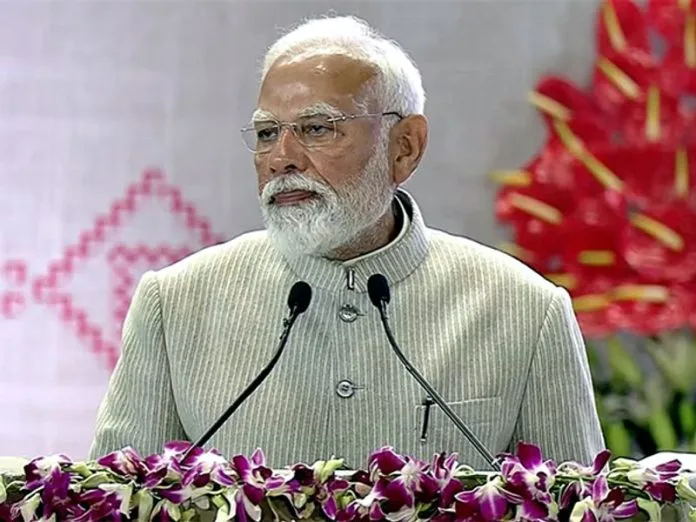
Prime Minister Narendra Modi expressed confidence in the future of India’s textile sector on Sunday, stating that he is optimistic that the country will achieve its goal of Rs 9 lakh crore in textile exports ahead of the 2030 target.

Speaking at the Bharat Tex 2025, the country’s largest textile event being held in New Delhi, Modi noted that India is currently the 6th largest exporter of textiles and apparel globally, with exports valued at approximately Rs 3 lakh crore. He set a target to triple this figure and achieve exports worth Rs 9 lakh crore in the near future, underlining the substantial progress made in the sector due to consistent policies and hard work over the past decade.

“The mood I saw today at the exhibition gives me confidence that we may achieve these figures earlier than 2030,” Modi said, expressing optimism about the growth trajectory of India’s textile industry.

Modi highlighted that the success of India’s textile sector is attributed to consistent policy support, which has helped double foreign investment in the sector. He also pointed to the impressive 7% growth in textile and apparel exports, a sector that contributes 11% to the manufacturing sector and is a significant job creator.

The Prime Minister emphasized the need to focus on sustainability and the future of the textile industry, particularly in tackling fashion waste. He pointed out that by 2030, fashion waste is expected to reach 148 million tonnes, with a quarter of textile waste currently not being recycled. He urged the industry to transform this challenge into an opportunity, promoting efficient use of resources and minimal waste generation.

Regarding the new Cotton Mission announced in the General Budget 2025, Modi stated that it will play a pivotal role in enhancing cotton productivity, particularly extra-long staple cotton, ensuring a reliable cotton supply, and making Indian cotton globally competitive. He highlighted the mission’s importance in strengthening the value chain of the textile industry.

Additionally, Modi projected that India’s textile recycling market could reach USD 400 million in the coming years, while the global recycled textile market is estimated to reach USD 7.5 billion. He called on the textile industry to capitalize on this growing market share with the right direction.

The Prime Minister also urged the banking sector to recognize the unique needs of the textile industry, particularly in financing small textile units that employ large numbers of people. “One textile unit may need an investment of just Rs 75 crore but can employ up to 2,000 people,” he said.

Modi outlined his 5F vision for the textile sector – Farm to Fibre; Fibre to Factory; Factory to Fashion; Fashion to Foreign – a strategy aimed at creating new opportunities for farmers, weavers, designers, and traders, and promoting Indian textiles globally.

Addressing the future of the textile industry, Modi emphasized the importance of innovation and collaboration. He called on the textile sector to work with reputed institutions like IITs to develop new tools and technologies. He also pointed out that artificial intelligence is increasingly being used to forecast trends and create new styles in the textile market.

Modi praised the significant role that Bharat Tex is playing in boosting investment, exports, and growth in the textile industry, highlighting that over 120 countries are participating in the event. The exhibition provides entrepreneurs with the opportunity to expand their businesses from local to global markets.

The Prime Minister also lauded the efforts to promote the handloom sector, citing the success of geographical indication (GI) tagging, which has benefited handloom brands by increasing their recognition and market value. He called for the fusion of traditional and modern techniques to develop new products that appeal to youth both in India and internationally.

On sustainability, Modi announced that the textile ministry had signed an MoU with the Standing Conference of Public Enterprises and e-Marketplace to promote upcycling in the industry. He revealed that pilot projects for door-to-door collection of textile waste are being conducted in cities like Navi Mumbai and Bengaluru.

In closing, Modi expressed his vision for India’s textile industry to combine traditional sustainable techniques with cutting-edge technologies, benefiting artisans, weavers, and millions of women associated with the sector.

Bharat Tex 2025, taking place from February 14-17, continues to serve as a strong platform for global collaboration, investment, and innovation in the textile industry

Strong Earthquake Tremors Felt in Delhi and NCR; No Immediate Reports of Damage

0

Early on Monday, strong tremors from a 4.0 magnitude earthquake struck the national capital and adjoining regions. The earthquake’s epicenter was located in the Jheel Park area of Dhaula Kuan. The tremors were felt widely, causing people in high-rise buildings across Delhi, Noida, Greater Noida, and Ghaziabad to rush out of their homes in panic. However, there have been no immediate reports of damage or injuries.

Prime Minister Narendra Modi took to social media to reassure residents. In a post on X, he urged everyone to stay calm and follow safety precautions, while remaining alert for possible aftershocks. “Tremors were felt in Delhi and nearby areas. Urging everyone to stay calm and follow safety precautions, staying alert for possible aftershocks. Authorities are keeping a close watch on the situation,” Modi wrote.

According to the National Center for Seismology, the earthquake struck at a focal depth of 5 kilometers at 5:36 am. Shallow earthquakes, originating from depths of 5 to 10 kilometers, are typically more intense and can cause more damage than deeper quakes.

The Jheel Park region has experienced several smaller earthquakes over the years, including a 3.3 magnitude tremor in 2015. There were also reports of a loud sound being heard as the ground shook, adding to the anxiety of the residents.

The Delhi Police reassured citizens, tweeting, “We hope you all are safe, Delhi!” and urged residents to use the emergency 112 helpline for any assistance. Several locals took to social media to share their experiences. A woman on a morning walk in Noida Sector 20 mentioned, “We were walking in the park, so we didn’t feel it strongly. But it was quite strong. People came rushing out.”

Naresh Kumar, a resident of West Delhi, said it was the first time he had experienced such a strong tremor. Meanwhile, Ratanlal Sharma, who was waiting at New Delhi railway station, described the sudden jolt as “like a train suddenly coming to a screeching halt.”

The earthquake prompted widespread fear, with residents from across Delhi-NCR rushing out of their homes, some fearing possible aftershocks. A resident in Ghaziabad described how everyone in their high-rise building rushed downstairs in panic due to the intensity of the tremors.

AAP leaders also expressed concern. “A strong earthquake just hit Delhi. I pray to God that everyone is safe,” said AAP leader Atishi in a post on X, which was later shared by AAP supremo Arvind Kejriwal, who also prayed for everyone’s safety.

The National Capital Region (NCR) is situated around 250 kilometers from the seismically active Himalayan collision zone, which is prone to frequent tremors from both far- and near-field earthquakes. Delhi falls under Seismic Zone IV in India’s seismic zoning map, making it one of the more seismically vulnerable regions in the country.

The earthquake has left many in Delhi and surrounding areas on edge, as residents remain vigilant for any potential aftershocks. Authorities are continuing to monitor the situation closely.

Delegation of Shri Amarnathji Yatra Bhandara Organisation Meets Lieutenant Governor Manoj Sinha

0

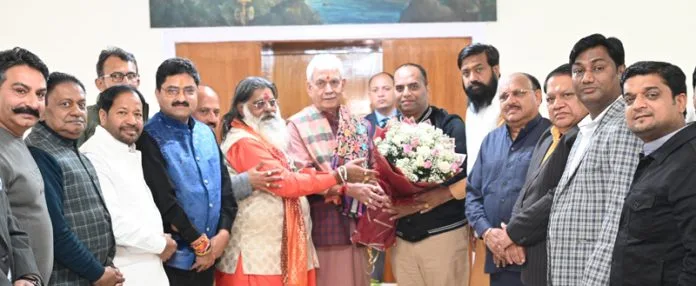
A delegation from the Shri Amarnathji Yatra Bhandara Organisation (SAYBO), led by its president Rajan Kapoor, called on Lieutenant Governor Manoj Sinha today to discuss important matters concerning the smooth operation of bhandaras during the upcoming Shri Amarnath Ji Yatra in 2025.

During the meeting, the delegation highlighted several key issues, including the need to expedite the verification process for members of langar organizations. They also raised concerns about improving mobile connectivity and other logistical aspects to ensure the smooth operation of the bhandaras, which play a crucial role in supporting the pilgrims during the yatra.

The Lieutenant Governor assured the delegation that appropriate measures would be taken to address the issues raised by them and ensure that the Yatra and related activities proceed seamlessly.

Dr. Mandeep K. Bhandari, CEO of the Shri Amarnath Ji Shrine Board, was also present during the meeting, contributing to the discussion.

Modi Government’s Repeated Betrayal Over Statehood, Says JKPCC Chief Tariq Hameed Karra

0

In a direct response to the Union Minister Kiren Rijiju’s statement on the delay in granting Statehood to Jammu and Kashmir, JKPCC (Jammu and Kashmir Pradesh Congress Committee) Chief Tariq Hameed Karra today launched a scathing attack on the Modi-led government, accusing it of betraying its promises and undermining the future of J&K.

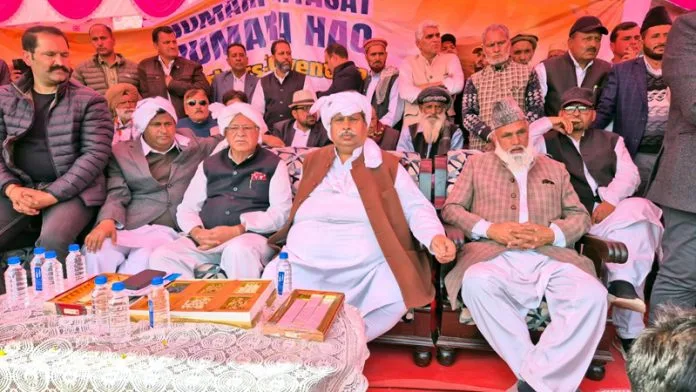
Addressing a large workers’ convention at Doongi, District Rajouri, Karra denounced the Centre for its reluctance to restore Statehood to Jammu and Kashmir, despite repeated commitments made by the Prime Minister, Home Minister, and the Centre. He described Rijiju’s statement as a clear indication of the government’s true intentions, which have now shifted from promises to indifference, leaving the people of J&K disillusioned.

“The Modi Government’s refusal to set a timeline for the restoration of Statehood is a clear sign that they are not serious about honoring their promises. From statements in Parliament to promises made before the Supreme Court and during public rallies, the Centre has repeatedly let down the people of Jammu and Kashmir,” Karra said, further criticizing the Centre for its broken commitments.

In his ongoing campaign, “Hamari Riyasat, Hamara Haq” (Our State, Our Right), Karra appealed to the people of J&K to prepare for a collective fight to reclaim their dignity, status, and rights as a State.

Accompanied by senior Congress leaders, including Working President Raman Bhalla, MLA Rajouri Iftikhar Ahmed, former Minister Shabir Ahmed Khan, DDC Rajouri Sain Abdul Rashid, and several others, Karra highlighted the contrasting developments in J&K during the UPA government. He pointed out the establishment of vital infrastructure projects such as Medical Colleges, degree colleges, ITIs, sports stadiums, and more, particularly in the border belt of Rajouri-Poonch.

However, Karra sharply criticized the BJP for neglecting the region’s growth during its 10 years in power, particularly in sectors like connectivity, education, and healthcare. He also highlighted the abandonment of the Railway project initiated by Rahul Gandhi after his visit to Rajouri in 2012, which was later scrapped despite a detailed survey and projected cost of ₹13,608 crore.

“During the UPA government, there were numerous development projects for Rajouri. However, BJP leaders continue to make false claims while ignoring the real needs of the border areas,” Karra remarked.

Karra also expressed deep concern over the rising unemployment levels in the region, blaming the previous administration’s anti-youth policies. He emphasized the plight of daily wagers, adhoc, and temporary employees in various government departments, while pointing out that teacher recruitment had been halted, and recruitment for the army had been limited to the controversial Agniveer scheme. This, he noted, has contributed to an all-time high unemployment rate in the region.

Raman Bhalla, the Working President of JKPCC, sharply criticized the BJP-led government for undermining the powers of elected representatives by centralizing authority with the Lieutenant Governor. “Despite having elected representatives and a government in place, BJP continues to deprive the people of Jammu and Kashmir of their rightful powers and status,” Bhalla added.

MLA Rajouri, Iftikhar Ahmed, raised several crucial issues faced by the local residents, including the demand for tehsil status, issues related to water, power, and ration distribution, and large-scale unemployment. He urged the government to pay immediate attention to these concerns.

Shabir Ahmed Khan, DCC President, echoed the sentiments of the party, emphasizing the long-standing neglect of the Rajouri-Poonch region by the BJP government. He especially highlighted the abandonment of key infrastructure projects, including the railway and road projects, leaving the region further isolated.

As the call for the restoration of Statehood grows louder in Jammu and Kashmir, Congress is firmly positioning itself as the voice of the people, continuing to challenge the BJP government on its repeated betrayals and its failure to deliver on promises. The battle for the dignity and rights of Jammu and Kashmir remains at the heart of the Congress Party’s mission in the region.

Gaurav Gogoi Criticizes Imposition of President’s Rule in Manipur

0

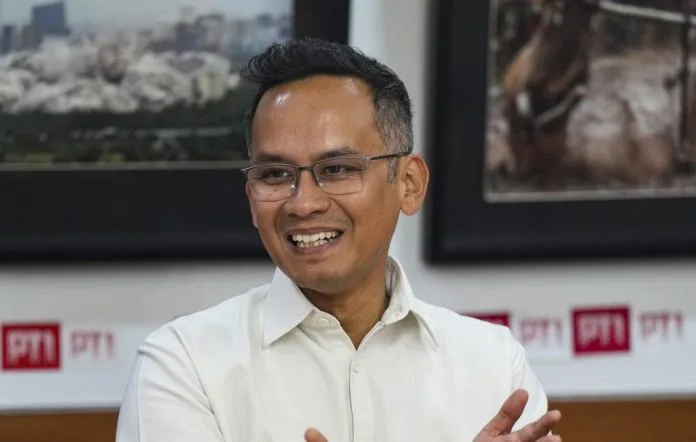
Congress leader Gaurav Gogoi criticized the imposition of President’s Rule in Manipur, calling it a symbol of the collective failure of Prime Minister Narendra Modi, Union Home Minister Amit Shah, and the BJP leadership in the Northeast. The President’s Rule was imposed on Thursday, with the state assembly suspended, following the resignation of Chief Minister N Biren Singh.

Gogoi, who is also the Congress deputy leader in the Lok Sabha, pointed out that there is still no clear plan for peace and reconciliation in the state. He suggested that the imposition of President’s Rule was a result of the disarray within the state BJP, asserting that the people of Manipur and India deserve better leadership.

The ethnic violence that has plagued Manipur since May 2023, which saw brutal clashes between the Meitei community in the Imphal Valley and the Kuki-Zo tribal groups in the surrounding hills, has resulted in over 250 deaths and left thousands displaced.

CBSE Board Exams Begin for Class 10 and 12 Students

0
  • Start of Board Exams:

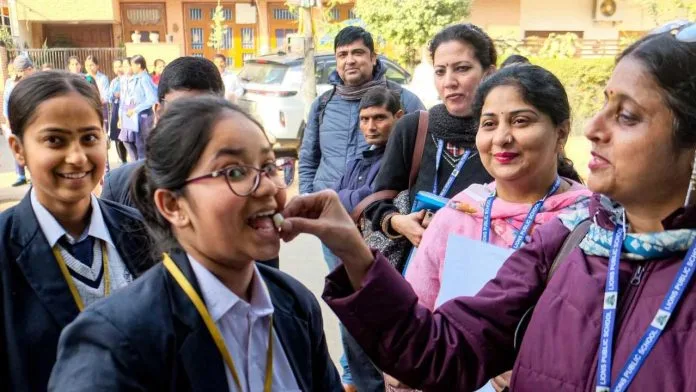
    • The CBSE board exams for Class 10 and 12 commenced on Saturday, with more than 42 lakh students registered to appear at over 7,800 centres both in India and abroad.
  • Exam Participation:

    • A total of 24.12 lakh students are appearing for Class 10 exams in 84 subjects, while 17.88 lakh students are set to take the Class 12 exams across 120 subjects.
  • Exam Centres:

    • The exams are being conducted at 7,842 centres across India and 26 centres abroad.
  • First Day of Exams:

    • On the first day, Class 10 students appeared for English (Communicative) and English (Language and Literature) papers, while Class 12 students took the Entrepreneurship exam.
  • Exam Dates:

    • Class 10 exams will conclude on March 18, while Class 12 exams will finish on April 4.
  • Counselling Service for Students:

    • To support students and reduce exam-related stress, CBSE has launched its annual counselling service. A team of 66 trained professionals, including principals, counsellors, special educators, and psychologists, will provide voluntary assistance to students.
    • The service is available Monday to Saturday, from 9:30 am to 5:30 pm.
    • Additionally, 51 counsellors are based in India, and 15 will connect with students from Nepal, Japan, Qatar, Oman, and the UAE.

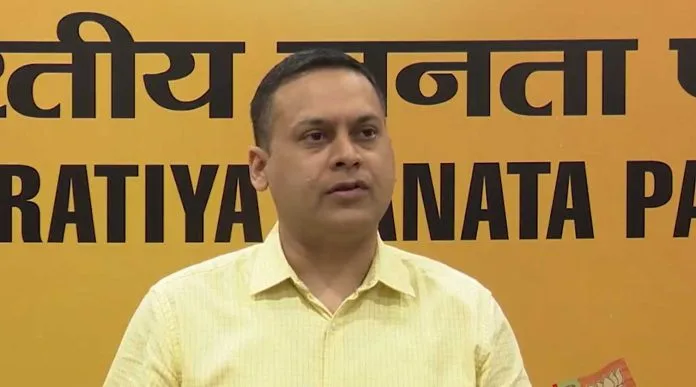
Amit Malviya Criticizes Mamata Banerjee Government Over Women’s Safety, Corruption, and Economic Decline

0
  1. Attacks on Women’s Safety:

    • Senior BJP leader Amit Malviya accused the Mamata Banerjee-led West Bengal government of failing to protect women, citing incidents in Sandeshkhali and RG Kar Hospital as examples of atrocities against women.
    • Malviya questioned the effectiveness of the state’s ‘Lakshmir Bhandar’ scheme, which provides financial assistance to women, accusing the government of not truly prioritizing women’s welfare.
  2. Shielding Perpetrators of Atrocities:

    • Referring to the Sandeshkhali sexual abuse case, Malviya claimed the TMC government protected the perpetrators, including Shahjahan Sheikh, despite the public outrage.
    • He also condemned the state’s handling of the rape and murder of a female medic at R G Kar Medical College, accusing the chief minister of attempting to shield those responsible, undermining her claims of supporting women’s empowerment.
  3. Corruption in the TMC Government:

    • Malviya targeted the TMC government for its involvement in corruption, specifically alleging that ruling party members were engaged in syndicates and mafias, intimidating the common people.
    • He criticized the culture of “cut money” in state projects, accusing TMC MPs and MLAs of taking bribes. Malviya asserted that the people of West Bengal would vote out the corrupt government in 2026.
  4. Economic Decline in West Bengal:

    • Malviya highlighted the closure of around 4,000 industrial units and the migration of 1.5 lakh labourers from West Bengal due to lack of job opportunities.
    • He criticized the state government for failing to revive industrial growth and present any concrete plan for the revival of industries, noting that the state’s budget showed no strategy for industrial development.
  5. BJP’s Vision for Good Governance:

    • Malviya emphasized that the BJP’s governance would prioritize tackling corruption, improving law and order, and creating a safer environment for women.
    • He promised that once in power, the BJP would foster investment opportunities by improving the state’s infrastructure and security.
  6. TMC’s Opposition to BJP and RSS Events:

    • Malviya condemned Mamata Banerjee for obstructing political activities of opposition parties, including the BJP and RSS, citing a recent case where the Calcutta High Court had to intervene to allow the RSS to hold a rally in Purba Bardhaman.
    • He accused Banerjee of trying to suppress alternative voices and warned that such tactics would not be tolerated going forward.
  7. Concerns Over Electoral Integrity:

    • Malviya dismissed Mamata Banerjee’s concerns about bogus names on electoral rolls, calling them a false narrative rooted in her fear of losing the 2026 elections. He claimed that the Election Commission would prevent any manipulation of the polls.

This article covers Amit Malviya’s criticism of the Mamata Banerjee government, highlighting issues related to women’s safety, corruption, economic decline, and the political climate in West Bengal.

Various Leaders Meet with Lieutenant Governor Manoj Sinha

0
  1. hakti Raj Parihar’s Meeting:

    • Shakti Raj Parihar, the MLA from Doda West, met with Lieutenant Governor Manoj Sinha to discuss several development issues impacting the region.
  2. Security Situation Briefing:

    • Shashank Anand, Inspector General of BSF Jammu Frontier, also met with the Lieutenant Governor. He provided a briefing on the current security situation in the border area and discussed the importance of border security.
    • The Lieutenant Governor emphasized the need for heightened vigilance and effective coordination among security agencies to address any potential security threats.
  3. Mahamandleshwar Sadhvi Sanjananand Giri Ji’s Meeting:

    • Mahamandleshwar Sadhvi Sanjananand Giri Ji met with the Lieutenant Governor to discuss the upcoming Chatuspath Yatra, a nationwide spiritual journey. The Yatra’s aims include promoting spirituality, environmental awareness, social welfare, and peace.
    • The Lieutenant Governor assured full administrative support to facilitate the smooth conduct of the Yatra across the Union Territory.
  4. Chatuspath Yatra Vision:

    • The Yatra, which will pass through several states and Union Territories, is designed to spread messages of peace, harmony, sustainable living, and spiritual growth.
  5. Public Delegation Meeting:

    • A public delegation, led by MLA Daleep Singh Parihar from Bhaderwah, also met with the Lieutenant Governor to discuss relevant matters.

Chief Minister Omar Abdullah Emphasizes Healthcare Improvement

0

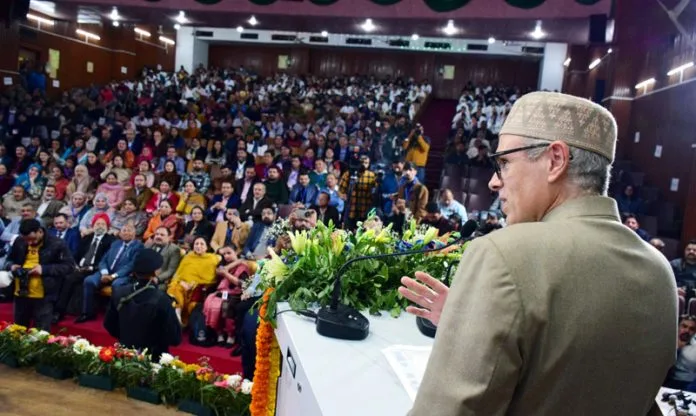
Chief Minister Omar Abdullah addressed the first-ever National Conference-cum-Workshop, JK MediCon-2025, organized at Government Medical College (GMC) Jammu. The event was a collaboration between the J&K Medical Council and the Student Research Development Council (SRDC), with prominent attendees including Health Minister Sakeena Itoo and former CM Dr. Farooq Abdullah.

Key Points:

  1. Emergency Case Handling and Capacity Expansion:

    • Omar stressed the need for improved emergency services and healthcare capacity at various GMCs, particularly in rural areas. This would reduce the pressure on major hospitals like GMC Jammu and GMC Srinagar.
  2. Access to Healthcare in Rural Areas:

    • The Chief Minister highlighted the importance of ensuring doctors serve beyond urban centers to offer proper healthcare access to rural populations, despite the unpopularity of this stance.
  3. Government’s Commitment to Healthcare:

    • Omar emphasized that the government is committed to making healthcare more accessible by improving facilities in peripheral areas, addressing the reasons why people flock to urban hospitals.
  4. MediCon-2025 Discussions:

    • The conference aimed to foster discussions on critical medical topics, including advancements in medical technology, ethics in medicine, and the role of Artificial Intelligence (AI) and robotics in healthcare.
  5. Medical Ethics and Profit Concerns:

    • Omar raised questions about the ethical implications of profit-driven healthcare, especially in corporate hospitals, where doctors are judged by revenue rather than patient care.
  6. Advancements in AI and Robotic Surgery:

    • The potential of AI and robotic surgery in medicine was discussed, but Omar expressed concerns about fully entrusting human lives to machines, stressing the irreplaceable value of human contact in healthcare.
  7. Praise for Doctors’ Dedication:

    • Omar praised doctors for their dedication, acknowledging their vital role in saving lives and providing care during vulnerable moments.
  8. Future Growth Plans for GMC Jammu:

    • The Chief Minister also expressed support for the future growth of GMC Jammu and pledged to contribute to its development, ensuring that future proposals are implemented.

This addresses the key issues highlighted by Omar Abdullah at the conference, focusing on improving healthcare infrastructure and addressing the challenges faced by both medical professionals and patients.